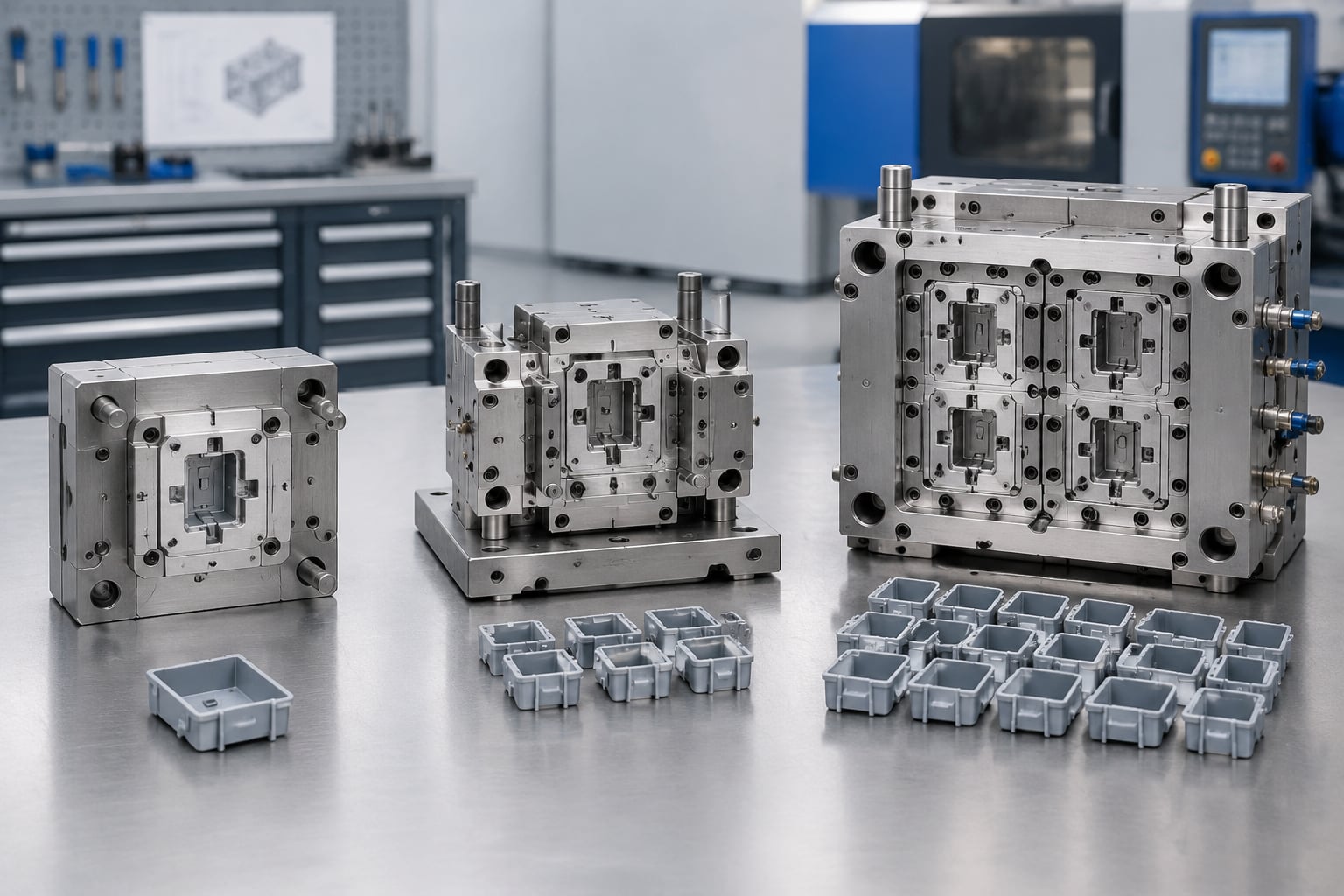
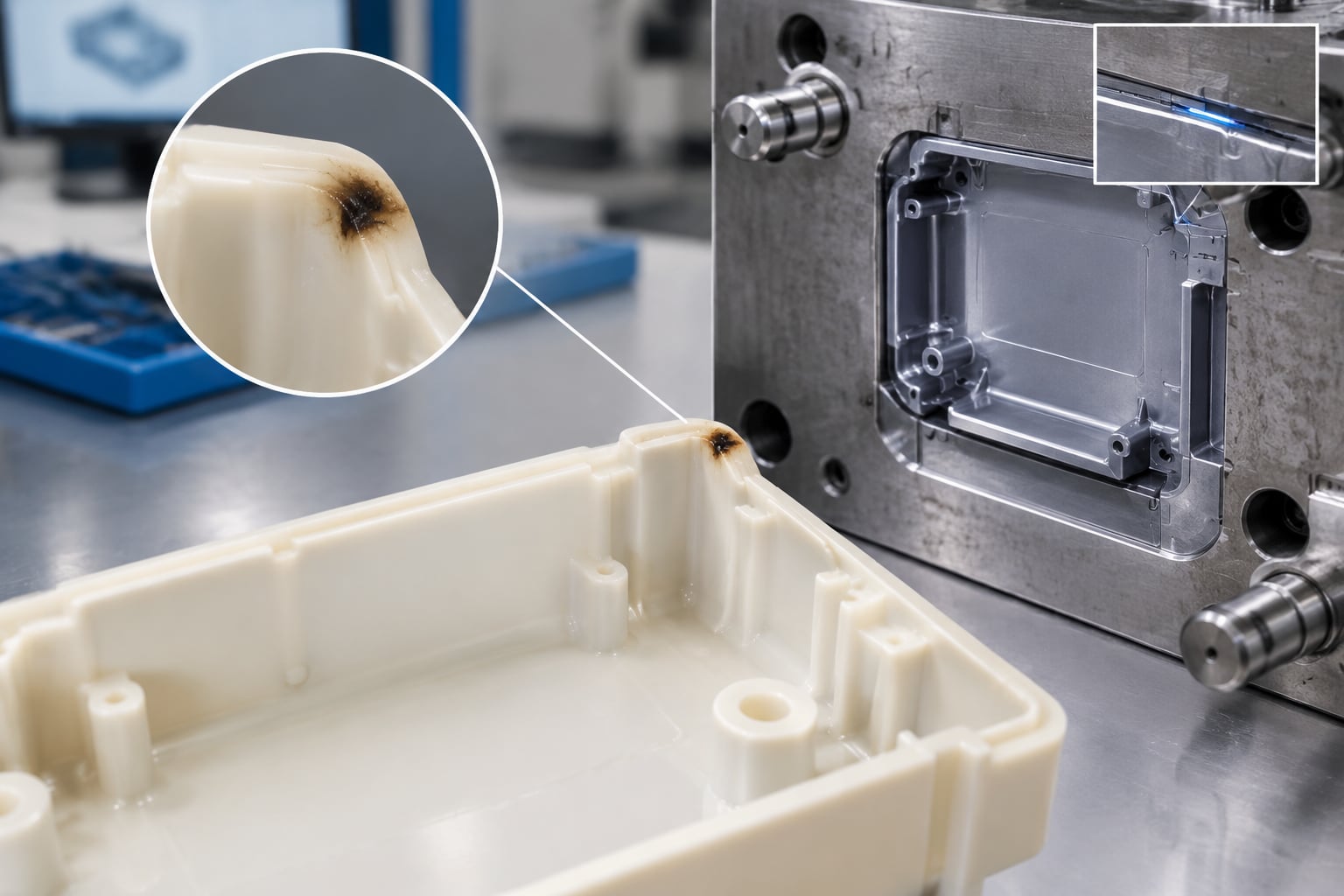
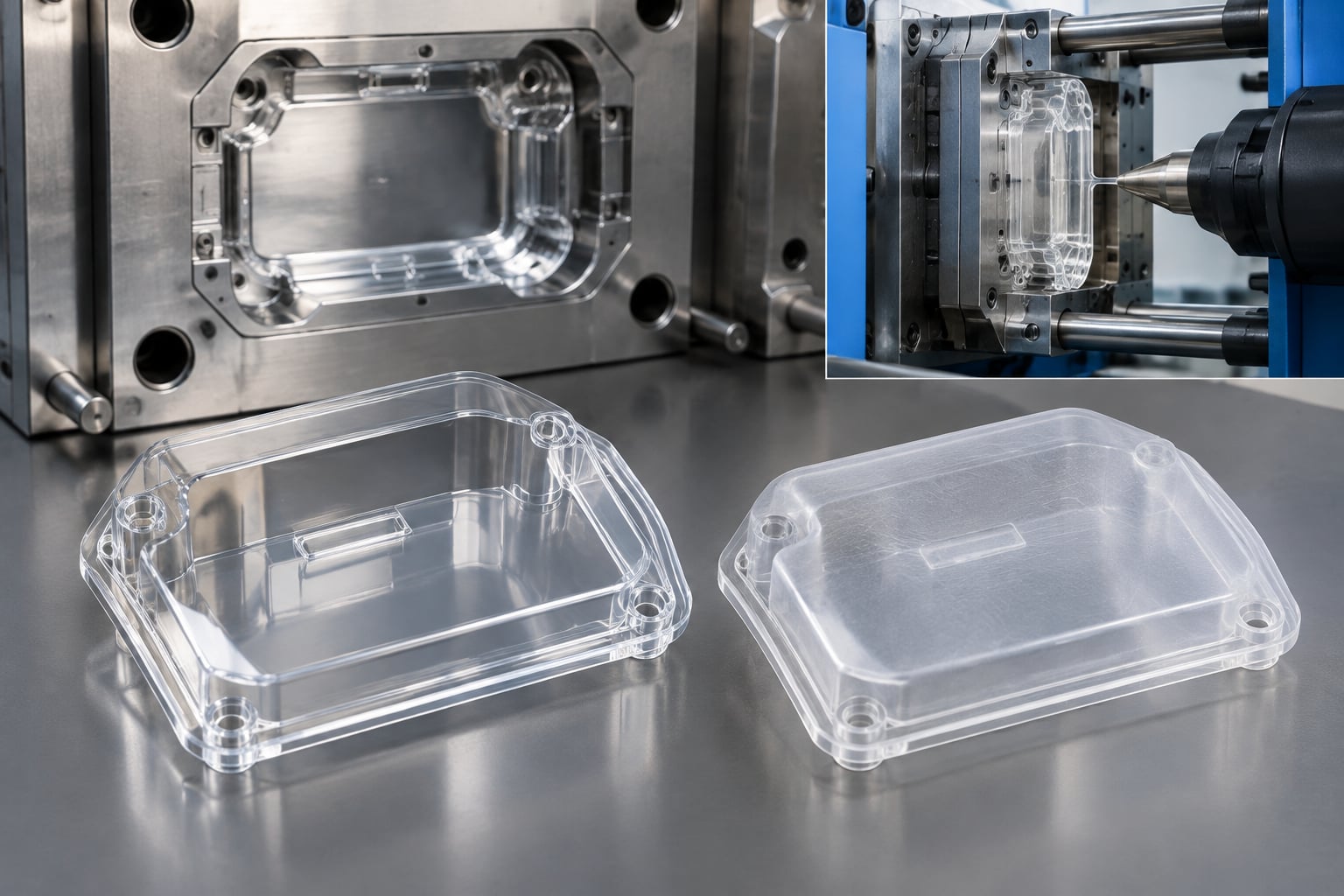
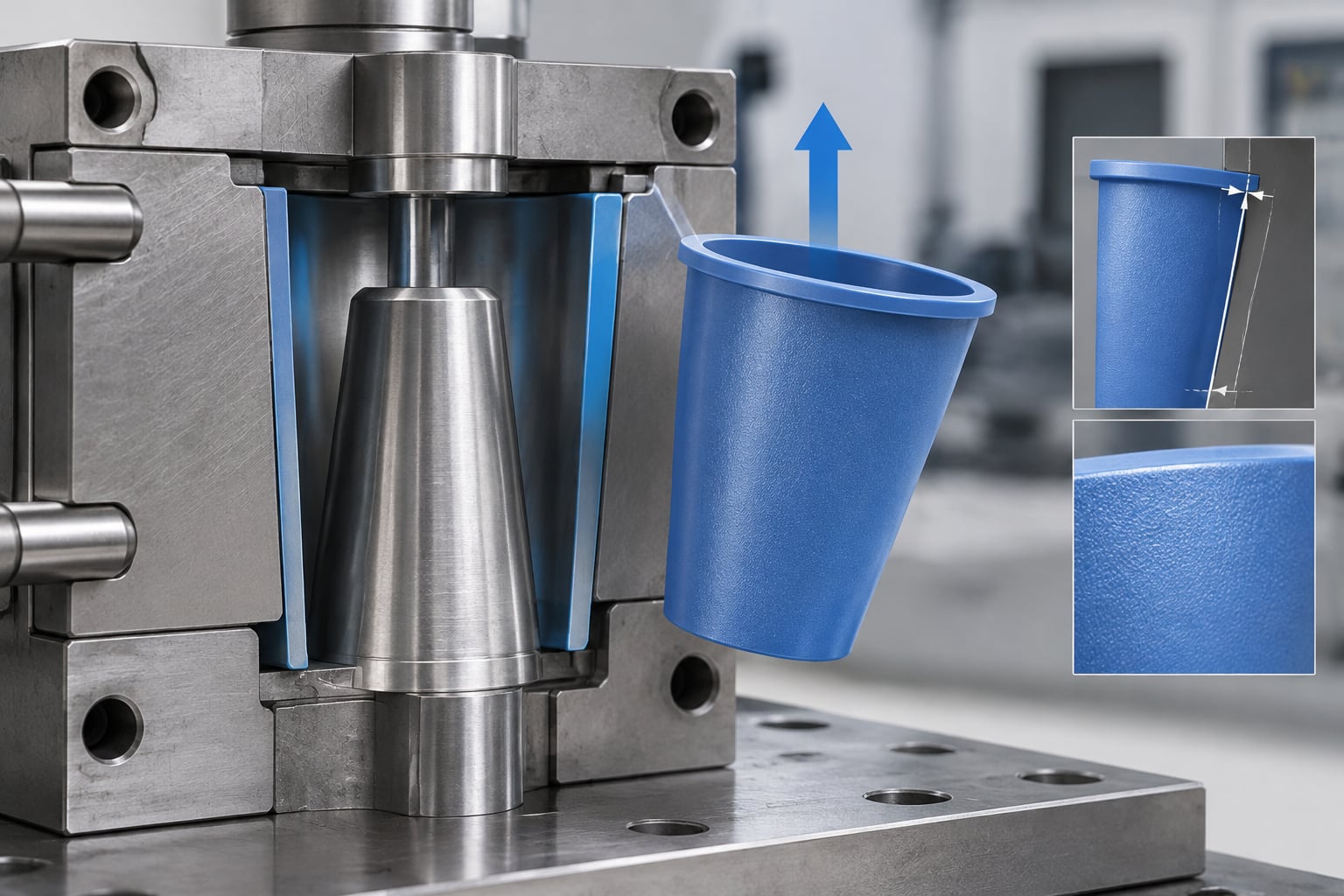
Global Market Guide: Incomplete-Fill Injection Molding
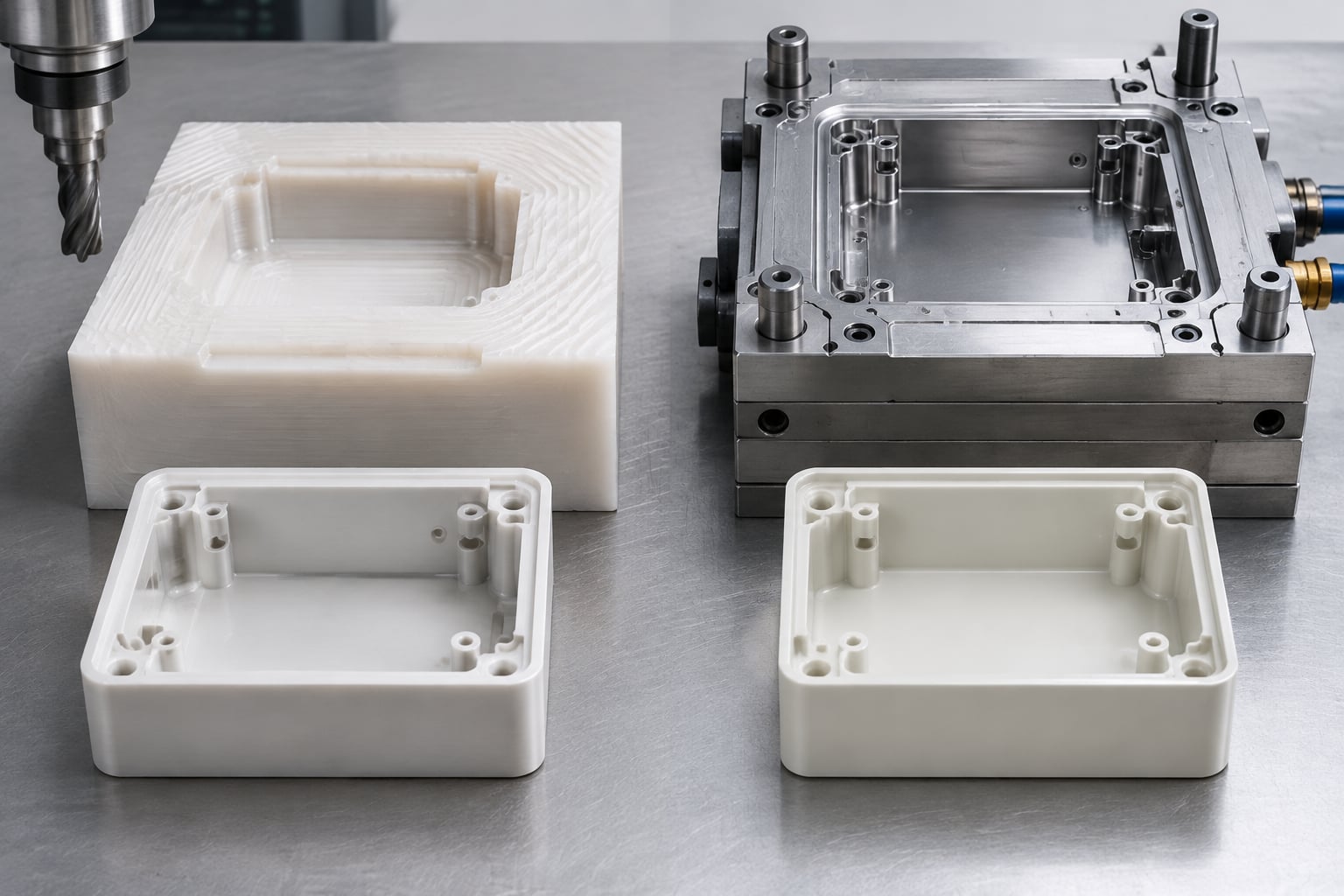
Incomplete-Fill Injection Molding Solutions for the Global Market
Quick Answer

An incomplete-fill defect, commonly called a short shot in injection molding, occurs when molten plastic does not fully reach every area of the mold cavity before freezing. The fastest corrective action is to confirm the actual shot volume, increase transfer and packing capability where appropriate, raise melt or mold temperature within the resin supplier’s limits, inspect vents and gates, and verify that the mold is not restricted by blocked runners, flash, contamination, or mechanical damage.
For buyers in the Global market, start with a process review rather than simply increasing injection pressure. In many cases, the root cause is insufficient material supply, premature gate freeze, poor venting, an undersized gate, excessive flow length, inadequate wall thickness, or a mold that is too cold. A disciplined troubleshooting sequence prevents cosmetic defects, weak weld lines, burn marks, flash, and unnecessary resin waste.
Practical supplier options include TEAM Rapid in China for rapid tooling, low-volume molding, engineering review, and international shipping; Protolabs for fast digital manufacturing in North America and Europe; Xometry for broad marketplace-based sourcing; ICOMold for U.S.-focused custom molding; Fictiv for managed global manufacturing; and RapidDirect for China-based custom part production. Qualified international suppliers, including Chinese manufacturers with ISO-certified quality systems, responsive pre-sales engineering, and dependable after-sales communication, can be a strong option when cost-performance, rapid tooling, and flexible production quantities matter.
- Check material availability: Confirm hopper feed, dryer operation, colorant ratio, regrind percentage, and actual shot size.
- Check mold flow: Review gate dimensions, runner balance, vent depth, wall thickness, flow length, and cold spots.
- Check machine capability: Verify screw recovery, cushion, injection speed, pressure limit, clamp force, and non-return valve condition.
- Check process stability: Compare barrel zones, melt temperature, mold temperature, fill time, peak pressure, and hold-pressure timing.
- Check the part design: Reduce sudden thickness changes, relocate gates, add flow leaders, and provide adequate vents.
What an Incomplete-Fill Defect Means

Incomplete-fill injection molding is a manufacturing condition in which the resin solidifies before filling the entire cavity. The molded component may show an obvious missing corner, a partially formed rib, an unfilled thin wall, an incomplete boss, or a surface that stops short of the intended part boundary. It is different from sink marks, voids, warpage, burn marks, flash, and flow lines, although several of these defects can occur together when the molding window is unstable.
In a well-controlled molding cycle, polymer pellets are dried when necessary, plasticized in the barrel, injected through the nozzle and runner system, pushed through the gate into the cavity, packed while the gate remains open, cooled, and ejected. A short-fill condition means that one or more stages of this flow path cannot deliver enough usable molten resin at the necessary temperature and pressure. The visible defect is at the end of the flow path, but the actual cause may be upstream in material preparation, tooling, machine maintenance, process settings, or part design.
For global product teams, incomplete fill is commercially important because it can create poor appearance, reduced mechanical strength, inconsistent assembly fit, leakage risks, missing functional features, and elevated scrap rates. On parts such as electrical housings, medical device covers, automotive clips, appliance panels, cosmetic enclosures, and industrial equipment components, even a small short shot can make the product unusable.
Common Causes of Short-Fill Injection Molding

The most effective approach is to separate potential causes into material, machine, mold, process, and design categories. This avoids trial-and-error adjustments that may temporarily hide the problem while creating secondary defects.
| Cause Category | Typical Cause | What Operators May See | Immediate Check | Practical Correction |
|---|---|---|---|---|
| Material | Insufficient shot size or low hopper feed | Part consistently stops short in the same area | Review cushion, shot setting, feed path, and screw recovery | Increase shot volume safely and correct material supply interruptions |
| Material | Excess moisture, poor drying, or degraded resin | Splay, brittle edges, poor flow, variable fill | Check dryer temperature, dew point, residence time, and resin condition | Dry resin to supplier specification and limit residence time |
| Machine | Injection pressure or speed is too low | Thin sections and far-end features remain incomplete | Compare actual fill pressure and fill time with stable runs | Increase speed or pressure progressively within safe limits |
| Machine | Worn screw, check ring, nozzle, or hydraulic system | Cycle-to-cycle variation and inconsistent cushion | Measure shot repeatability and inspect machine maintenance records | Repair worn components and validate repeatable injection performance |
| Mold | Blocked vents or insufficient vent area | Gas traps, burns, hesitation marks, incomplete far-end fill | Inspect vents, parting lines, ejector pins, and vent land condition | Clean vents or add controlled venting where flow terminates |
| Mold | Restricted gate, runner, or sprue | High pressure demand with incomplete cavity fill | Inspect gate freeze, runner dimensions, and nozzle alignment | Modify gate and runner geometry or improve thermal balance |
| Process | Melt or mold temperature is too low | Frozen flow fronts, dull surface, thin-wall short shots | Confirm actual barrel and mold temperatures, not setpoints only | Raise temperatures within material processing recommendations |
| Design | Long flow path or abrupt thin-wall transition | Short fill appears at thin remote areas or ribs | Review flow simulation and wall-thickness map | Add flow leaders, adjust wall thickness, or relocate the gate |
This table provides a practical starting point, but adjustments should be made one variable at a time whenever possible. For example, increasing injection pressure may fill the cavity, yet it may also produce flash at the parting line if the underlying issue is a blocked vent or an oversized process window. Recording each change, its setting, and the resulting part condition helps engineering teams identify a stable solution.
How to Diagnose the Defect Efficiently
Start by determining whether the incomplete fill is consistent or intermittent. A consistent short shot at the same location usually points to mold flow resistance, restricted venting, a gate issue, or part geometry. An intermittent short-fill defect often indicates unstable material feeding, poor drying, inconsistent regrind ratio, screw recovery variation, check-ring wear, nozzle blockage, or changing process temperatures.
Next, use a controlled short-shot study. Instead of filling the cavity completely, mold several parts at deliberately increasing shot volumes. The resulting progression shows how resin reaches each feature and where two flow fronts meet. It can reveal hesitation around ribs, uneven runner balance in multi-cavity tooling, air traps at the end of fill, and a thin section that freezes too quickly. This diagnostic method is especially useful before making expensive mold modifications.
Pressure data is also valuable. A sudden pressure spike early in filling can signal a restricted gate, runner obstruction, or frozen nozzle. A pressure increase near the end of fill may indicate poor venting, a difficult thin wall, or a cavity that requires improved flow balance. When available, cavity-pressure sensors provide a more direct view of what happens inside the mold than machine pressure alone.
For tools with multiple cavities, compare every cavity individually. If only one cavity has a short fill, investigate local gate size, cavity venting, runner branch dimensions, insert alignment, contamination, or cooling imbalance. If all cavities show similar defects, the issue is more likely connected to machine capacity, material condition, overall shot volume, melt temperature, or a common runner restriction.
Process Settings That Influence Filling
Injection molding is sensitive to the interaction of temperature, pressure, speed, time, and material condition. A short shot should not be corrected through a single setting without checking the entire processing window. The goal is complete, repeatable fill with suitable packing, acceptable appearance, and stable dimensions.
| Process Variable | Effect on Incomplete Fill | Risk if Too Low | Risk if Too High | Recommended Control Approach |
|---|---|---|---|---|
| Shot volume | Determines whether enough molten resin is available | Consistent incomplete cavity filling | Excess cushion loss, flash, overpacking risk | Maintain a stable cushion and validate actual shot repeatability |
| Injection speed | Controls how quickly the melt reaches distant features | Premature freeze-off in thin sections | Jetting, shear burn, gas trapping, surface stress | Use staged speed profiles where geometry requires it |
| Injection pressure limit | Provides force to overcome flow resistance | Machine reaches limit before cavity fills | Flash, mold wear, unnecessary stress on equipment | Set enough pressure margin while investigating root causes |
| Melt temperature | Changes viscosity and flow behavior | Poor flow, dull surface, early freeze-off | Degradation, discoloration, odor, excessive shrinkage variation | Stay within resin supplier processing ranges |
| Mold temperature | Influences flow-front freezing and surface replication | Cold mold causes difficult thin-wall fill | Longer cycle time and potential sticking | Use controlled water or oil circuits with verified actual temperature |
| Hold pressure and time | Supports packing after the cavity fills | Sinks, voids, weight variation after full fill | Overpacking, flash, stress, ejection difficulty | Set using gate-freeze testing after fill is stable |
| Back pressure | Improves melt mixing and consistency | Poor color dispersion or inconsistent melt | Long recovery time and unnecessary shear heating | Use moderate, resin-appropriate values and monitor recovery |
| Cooling time | Does not directly cause short fill but affects cycle stability | Part distortion and inconsistent ejection | Reduced productivity and avoidable cost | Optimize only after filling and packing are stable |
The table shows why process optimization should follow a structured sequence. First establish proper material drying and stable shot delivery. Then optimize melt and mold temperatures, injection speed, and pressure capability. After the cavity fills consistently, tune packing and cooling for dimensions, surface finish, and cycle efficiency. This sequence reduces the risk of using hold pressure to compensate for a fill-stage problem.
Material Selection and Resin Preparation
Different plastics have very different flow behavior. Polypropylene and polyethylene often offer favorable flow characteristics for consumer and packaging components, while ABS, polycarbonate, nylon, POM, glass-filled engineering resins, flame-retardant grades, and high-temperature polymers can require tighter control of temperature, shear, moisture, and mold design. A material that works well in a thick-wall enclosure may short-fill in a thin-wall clip even when the nominal process settings look similar.
Drying is critical for hygroscopic materials such as nylon, polycarbonate, PET, PBT, TPU, and many specialty engineering polymers. Moisture does not always create an obvious incomplete fill by itself, but it can lower molecular weight through hydrolysis, create splay, destabilize viscosity, and compromise mechanical performance. Resin should be dried according to the technical data sheet, transferred in closed systems where practical, and protected from moisture reabsorption before molding.
Color concentrates, additives, recycled content, and regrind also affect flow. A high pigment loading can change viscosity; incompatible colorant can lead to contamination and processing instability; excessive regrind may shift flow and strength; and glass fiber content can raise flow resistance or create orientation-sensitive performance. Before changing processing conditions, confirm the exact resin grade, lot number, additive content, and regrind percentage used in the affected production run.
Tooling Design Factors Behind Short Shots
Tooling determines how efficiently molten resin enters, travels through, vents, cools, and exits the cavity. A good mold can create a wide and forgiving process window. A poorly balanced mold may require aggressive settings that increase flash, stress, burn marks, and cycle time.
Gate selection is especially important. Edge gates, tab gates, fan gates, submarine gates, pin gates, valve gates, and hot-runner gates each create different flow, shear, and freeze-off behavior. A gate that is too small may restrict flow and freeze before packing is complete. A gate that is too large may leave a visible vestige, complicate degating, or overpack the part. Gate location should generally support balanced filling toward thin areas and minimize weld lines in critical cosmetic or structural zones.
Venting must be placed near likely end-of-fill locations, around deep ribs, at ejector pins, near slides, and along parting lines where trapped air can escape. Inadequate venting creates back pressure that stops melt flow and can produce diesel-effect burns. Vent dimensions must suit the polymer and mold construction: overly shallow vents clog easily, while overly deep vents can flash. Regular cleaning is a simple but essential preventive maintenance activity.
Cooling design also affects filling indirectly. Over-cooled regions can freeze the melt prematurely, especially around inserts, thick steel sections, thin walls, or poorly balanced cooling channels. Conformal cooling, baffles, bubblers, thermal pins, and improved circuit layouts can help stabilize mold temperature in challenging geometries. For rapid tooling, material selection and cooling layout deserve early engineering attention because aluminum tools may behave differently from hardened steel tools under repeated thermal cycling.
Product Types Most Vulnerable to Incomplete Fill
| Product Type | Why It Is Vulnerable | Typical Short-Fill Location | Preferred Engineering Response | Common Materials |
|---|---|---|---|---|
| Thin-wall electronics housings | Long flow length and cosmetic surfaces | Remote corners, snap features, display openings | Optimize gate placement, speed profile, and mold temperature | ABS, PC/ABS, polycarbonate |
| Automotive clips and retainers | Small ribs, hooks, and functional details | Clip arms, retention tabs, thin rib ends | Improve venting and balance flow into functional features | Nylon, POM, PP |
| Medical device enclosures | Precision fit and stringent appearance requirements | Thin walls near ports, windows, and internal bosses | Use DFM review, controlled resin handling, and validated tooling | PC, ABS, PP, medical-grade polymers |
| Appliance components | Large surface area with varied wall thickness | Far corners, handle features, grille details | Use flow analysis and temperature-balanced cooling | HIPS, ABS, PP |
| Industrial equipment covers | Large parts with ribs and mounting points | Rib intersections and deep cavities | Increase structural wall consistency and redesign runners | ABS, PC/ABS, nylon |
| Caps, closures, and packaging parts | High-cavity production and fast cycle demands | Threads, tamper bands, seal features | Balance cavities and maintain precise hot-runner control | PP, HDPE, LDPE |
| Overmolded components | Insert absorbs heat and blocks flow paths | Behind metal inserts and around cable exits | Preheat inserts and provide flow paths and vents | TPU, TPE, nylon, PP |
The products listed above require different solutions because their molding risks are different. Thin-wall cosmetic parts may need higher mold temperatures and carefully staged fill rates. Glass-filled functional parts may require gates that account for fiber orientation and elevated pressure drop. Insert-molded parts require attention to insert temperature, positioning, and venting around the insert. The correct response is always linked to the actual material, geometry, performance requirement, and production volume.
Buying Advice for Global Sourcing Teams
When sourcing injection molded parts internationally, buyers should evaluate more than unit price. A supplier should be able to explain how it will prevent short shots before production starts, not merely react after defective parts appear. Ask for a DFM review that identifies thin walls, long flow paths, risky gate positions, difficult ejection conditions, potential sink areas, and venting requirements. For complex components, mold-flow simulation or a controlled sampling plan can reduce the chance of expensive tooling changes.
Request clear information about mold steel or aluminum grade, cavity count, runner type, gate method, expected cycle time, tolerance assumptions, inspection plan, resin supplier, color specification, and ownership of tooling. If the part includes threads, living hinges, inserts, sealing surfaces, cosmetic textures, or tight assembly interfaces, ask how these features will be inspected and how nonconforming parts will be contained.
Shipping and logistics should also be considered at the quotation stage. Global buyers commonly move production through manufacturing hubs in Shenzhen, Dongguan, Ningbo, Suzhou, Shanghai, Guangzhou, and Xiamen, with export routes through Shenzhen ports, Hong Kong, Ningbo-Zhoushan, Shanghai, and major air freight hubs. A reliable supplier should help align production timing, packaging, inspection release, export documents, and direct shipment with the buyer’s product launch schedule.
For early-stage products, rapid tooling is often the most practical bridge between prototypes and mass production. It enables teams to test real injection molded materials and validate fit, function, assembly, and market response before committing to long-life production tooling. For stable high-volume programs, hardened multi-cavity tools and automated inspection may offer a lower cost per unit over the life of the project.
Global Injection Molding Supplier Comparison
| Company | Service Regions | Core Strengths | Key Offerings | Best Fit for Buyers |
|---|---|---|---|---|
| TEAM Rapid | Global customers, with manufacturing support from China and shipping to more than 25 countries | Rapid tooling, DFM support, low-volume and scalable production, integrated plastic and metal manufacturing | Injection molding, rapid tooling, CNC machining, 3D printing, vacuum casting, die casting, finishing, assembly | Startups, product developers, industrial buyers, and brands needing prototype-to-production continuity |
| Protolabs | North America and Europe, with digital manufacturing operations serving international customers | Fast quotation systems, speed-focused prototype and low-volume production | Injection molding, CNC machining, 3D printing, sheet metal fabrication | Teams needing rapid digital manufacturing workflows and short lead-time feedback |
| Xometry | North America, Europe, and global sourcing networks | Broad production network and online sourcing platform | Injection molding, CNC machining, additive manufacturing, sheet metal, urethane casting | Buyers seeking supplier-network flexibility and multiple manufacturing process options |
| ICOMold | United States-focused service with international manufacturing capability | Custom plastic injection molding and buyer guidance for production parts | Injection molding, insert molding, overmolding, mold manufacturing | U.S. businesses seeking custom molded plastic parts and project support |
| Fictiv | North America with managed global manufacturing resources | Digital manufacturing platform, quality management, production coordination | Injection molding, CNC machining, urethane casting, 3D printing, sheet metal | Engineering teams requiring managed sourcing and program visibility |
| RapidDirect | Global customers served through China-based manufacturing operations | Online quotation, rapid prototype support, broad process coverage | Injection molding, CNC machining, sheet metal, die casting, 3D printing | Buyers comparing China-based manufacturing options for custom parts |
| Hubs | Europe, North America, and international manufacturing network coverage | Platform-based access to production partners and digital order management | Injection molding, CNC machining, 3D printing, sheet metal fabrication | Teams wanting a centralized interface for distributed manufacturing capacity |
This comparison is intended to help buyers match sourcing models with project needs. Direct manufacturers may offer closer engineering collaboration and cost control for repeat programs, while platform-based providers can be useful when buyers require access to a broad supplier network. Before selecting a supplier, verify resin traceability, tooling ownership, inspection capability, quality certification, geographic shipping arrangements, and responsiveness during engineering changes.
Industries and Applications
Short-fill prevention matters in every industry where molded components must meet visual, functional, dimensional, or safety-related requirements. In automotive programs, incomplete clips, bezels, sensor housings, dashboard components, and under-hood retainers can lead to assembly failure or field reliability concerns. In consumer products, a partially formed enclosure can damage brand perception, prevent buttons from fitting, or leave sharp edges. In communications equipment, incomplete cable-management parts, connector housings, and protective covers can interfere with installation and serviceability.
Medical device manufacturers need particular discipline because molded housings, trays, instrument covers, handles, and diagnostic equipment parts often require controlled dimensions, clean surfaces, traceable materials, and repeatable assembly. Industrial equipment producers need stable molding for control-box housings, guards, machine covers, cable clips, fluid-management fittings, and structural brackets. Electrical appliance manufacturers depend on complete filling of complex grilles, handles, switch surrounds, filter frames, and internal mounting features.
For low-volume production, incomplete-fill prevention is equally important. A small run may have limited time for adjustment, and every rejected component represents a meaningful percentage of total output. Early DFM, prototype testing, trial samples, and documented process parameters are especially valuable when production quantities range from a few dozen parts to several thousand parts.
Case Studies in Correcting Short-Fill Defects
Thin-Wall Consumer Electronics Enclosure
A consumer electronics enclosure with a large cosmetic front face and thin snap-fit walls showed incomplete fill in two remote corners. The initial response was to increase injection pressure, which filled the corners but created flash near the parting line. Engineering review showed that the tool had limited venting at the end-of-fill locations and the mold temperature was lower than the resin grade required for the wall thickness. The corrective solution included vent cleaning, controlled additional venting, a modest mold-temperature increase, and a staged injection speed profile. The result was complete fill without excessive flash and a more stable cosmetic finish.
Glass-Filled Nylon Automotive Retainer
An automotive retainer molded in glass-filled nylon repeatedly short-filled at the end of a narrow locking tab. The material was technically within the recommended barrel temperature range, but the mold had a long flow path and a small gate that created high pressure loss. The team adjusted the gate geometry, reviewed fiber orientation, and increased the local mold temperature through improved cooling circuit control. A short-shot study confirmed that the melt front reached the locking feature earlier and more consistently. Functional retention testing then verified that the tab met assembly requirements.
Insert-Molded Industrial Cable Component
An overmolded cable component showed incomplete resin coverage behind a metal insert. The insert was absorbing heat from the melt and restricting flow through a narrow area. The mold also had insufficient venting around the insert. The solution included preheating the insert, modifying the flow path, and adding venting at the restricted end-of-fill zone. The revised process reduced short shots and improved bonding consistency around the insert.
TEAM Rapid for Injection Molding Projects
TEAM Rapid supports global product developers, brand owners, distributors, dealers, end users, and individual innovators with OEM, ODM, wholesale, retail, regional distribution, and custom manufacturing cooperation models. Its ISO 9001:2015 quality management system, in-house machining and tooling capability, material-focused engineering review, tight CNC tolerance capability down to 0.01 mm, and documented DFM analysis support reliable development of molded housings, cases, trays, covers, fillers, enclosures, and complex functional parts. With more than 10 years of manufacturing experience, more than 500 customers, over 6,000 delivered projects, and customers in more than 25 countries, the company combines rapid tooling and injection molding with CNC machining, vacuum casting, 3D printing, die casting, finishing, assembly, packaging, procurement support, limited warehousing, and direct shipping. This integrated China-based manufacturing and international delivery model gives Global market buyers a practical alternative to managing disconnected suppliers, with engineering responses typically available within hours and support extending from online quotation and DFM review through production updates, inspection, packaging, and shipment. TEAM Rapid does not provide BOO or on-site bulk supply services; instead, it provides customer-owned production tooling, turnkey manufacturing coordination, and customer-owned plant-oriented solutions where applicable, helping customers retain control over their products and tooling strategy.
For teams developing a new mold or solving a recurring incomplete-fill issue, TEAM Rapid can review part geometry, material choice, gate location, wall thickness, cavity count, tooling approach, and production quantity before tooling begins. Its custom injection molding services are suited to rapid validation, low-volume manufacturing, and scalable production programs where design updates may still be expected.
Customers can also request a detailed manufacturing assessment through the online injection molding quotation process. Supplying a 3D model, 2D drawing when available, annual volume, resin preference, color, finish, and critical dimensions allows engineers to identify likely filling risks and recommend practical options before a mold is built.
Future Trends in Incomplete-Fill Prevention for 2026
In 2026, injection molding teams will increasingly use connected process data to prevent short shots before they become visible quality failures. Machine monitoring systems can track fill time, peak injection pressure, screw recovery, cushion, mold temperature, and cavity pressure in real time. When combined with automated alarms, these systems can detect drift caused by blocked vents, material variability, heater failure, nozzle restrictions, or wear in the non-return valve.
Simulation will also become more accessible for low-volume and mid-volume projects. Mold-flow analysis is no longer limited to major automotive programs; it is increasingly used for consumer, medical, industrial, and electronics products that have thin walls, recycled-content requirements, cosmetic surfaces, or complex overmolding features. Engineering teams can use simulation to compare gates, runners, cooling channels, fiber orientation, weld-line locations, and likely air traps before machining the tool.
Sustainability requirements will influence short-shot control as manufacturers adopt recycled-content resins, bio-based polymers, lighter part designs, and lower-energy processing. These materials may have narrower processing windows or lot-to-lot flow variation, increasing the importance of material verification, drying discipline, and process documentation. Buyers should ask suppliers how recycled content, regrind limits, resin traceability, and color changes will be controlled without increasing defect rates.
Policy trends affecting global trade, packaging sustainability, product traceability, and carbon reporting will also make process stability more valuable. Lower scrap rates mean less resin waste, fewer emergency shipments, reduced energy consumption per accepted part, and more predictable supply. A well-engineered mold that fills consistently is therefore not only a quality asset but also a cost and sustainability advantage.
Frequently Asked Questions
What is the difference between a short shot and a sink mark?
A short shot means the cavity is not completely filled. A sink mark occurs after the cavity fills but the material shrinks inward during cooling, usually near thick sections. Short shots are primarily fill-stage defects, while sinks are generally packing and cooling-related defects.
Can more injection pressure always solve incomplete fill?
No. Higher pressure can temporarily force material into the cavity, but it may create flash, mold wear, stress, burn marks, or unstable dimensions. Check venting, gate restriction, melt temperature, mold temperature, material condition, and shot size before relying on pressure increases.
Why does the same mold short-fill only sometimes?
Intermittent short shots often indicate process instability. Common causes include inconsistent drying, fluctuating material feed, variable regrind content, screw recovery problems, check-ring wear, nozzle blockage, unstable barrel temperatures, or changing mold cooling conditions.
Which plastics are most sensitive to short-fill risk?
Any polymer can short-fill in difficult geometry, but engineering resins with higher viscosity or moisture sensitivity require particularly careful control. Examples include glass-filled nylon, polycarbonate, flame-retardant grades, PBT, PET, TPU, and high-temperature polymers.
Should I modify the mold or change the process first?
First confirm material preparation, machine performance, and process settings. If the problem remains after controlled trials, inspect venting, gate size, runner balance, cooling, and part geometry. Mold modification is appropriate when the tool creates a narrow or unstable processing window.
Can rapid tooling be used for production-grade short-shot testing?
Yes. Rapid tooling is useful for testing real injection molding materials, confirming flow behavior, validating gates and vents, and identifying short-fill risks before committing to higher-volume production tooling. Tool life, material choice, and expected volume should be discussed during DFM review.
What information should I provide when requesting an injection molding quote?
Provide a 3D CAD file, 2D drawing if available, material grade, color, surface finish, critical tolerances, annual volume, expected order quantity, application, cosmetic requirements, inserts, assembly needs, and target delivery location. This information helps suppliers assess mold design and filling risks accurately.
Final Guidance for Buyers
Incomplete-fill injection molding should be treated as a system-level issue rather than a simple machine-setting problem. The most reliable solution combines stable material preparation, correct machine capability, disciplined process control, effective venting, balanced runner and gate design, suitable cooling, and part geometry that respects the flow behavior of the selected polymer.
For Global market buyers, the best sourcing decision is one that includes early DFM feedback, transparent tooling recommendations, measurable quality controls, responsive engineering communication, and a realistic pathway from prototype samples to low-volume or volume production. By selecting a supplier that can diagnose mold-flow risks early, teams can reduce scrap, avoid expensive tool revisions, protect launch schedules, and produce consistent molded parts at a competitive total cost.

About the Author : Team Rapid Manufacturing Co., Ltd.
This article is written by the engineering team at Team Rapid Manufacturing Co., Ltd, specializing in rapid prototyping and manufacturing solutions. With extensive experience in CNC machining, injection molding, and low-volume production, our team shares practical insights to help global clients improve product development efficiency and reduce manufacturing risks.
Share
Post Category
Related Insights
-
Burn Marks Injection Molding Solutions for Global Markets
Burn marks in injection molding are dark brown, black, or yellowish discolorations caused mainly by trapped air or gas being compressed and overheated near the end of cavity filling. The fastest corrective action is usually to improve mold venting at the burn location, then reduce excessive injection speed, melt temperature, barrel residence time, and clamp force where appropriate. If the defect repeats in the same location, treat it first as a tooling and gas-escape issue rather than simply lowering process temperatures.
For global buyers, select a molder that can evaluate mold flow paths, vent depth, gate position, resin drying, machine capacity, and repeatability together. Major suppliers such as TEAM Rapid, Protolabs, Xometry, ICOMold, Fictiv, and EVCO Plastics offer different balances of prototyping speed, tooling support, engineering depth, and production scale. Qualified international suppliers, including China-based manufacturers with ISO-certified systems, responsive pre-sales engineering, and dependable after-sales support, can also offer strong cost-performance for rapid tooling and production projects.
Burn marks are a cosmetic and sometimes functional molding defect. They typically appear as black, dark brown, rust-colored, or amber streaks near weld lines, ribs, bosses, deep pockets, end-of-fill regions, and restricted vents. In severe cases, the plastic may be visibly charred, brittle, or degraded. The defect is commonly called diesel effect, gas burn, dieseling, or compression burn because air trapped in the cavity becomes highly compressed as molten resin fills the last available space.
In a well-vented mold, displaced air exits through vents, parting lines, ejector clearances, inserts, slides, and other controlled escape paths. In a poorly vented mold, the air has nowhere to go. Its temperature rises rapidly as it compresses, potentially scorching the polymer or leaving deposits on the steel. Burn marks therefore demand a combined review of tooling design, molding process control, resin handling, and machine setup.
For buyers serving the global market, appearance requirements may vary by product class. A dark mark on an internal industrial bracket may be acceptable if dimensional and mechanical performance remain stable. The same mark on a medical-device enclosure, automotive interior trim, consumer electronics housing, or white appliance cover may lead to rejection. The correct response depends on the part’s functional, visual, regulatory, and commercial requirements.
Injection molding begins when molten polymer is pushed from the barrel through the nozzle, runner system, gate, and cavity. As the flow front advances, it displaces air. Near the end of filling, air is often concentrated at the final flow location. If that location lacks an adequately sized and maintained vent, the air compresses and heats. The resulting heat can burn the material even when the melt temperature displayed on the machine is within the resin supplier’s recommended range.
Gas can also come from sources beyond trapped cavity air. Moisture in hygroscopic materials such as nylon, polycarbonate, PET, TPU, and ABS can generate vapor. Residual molding compounds, oily contamination, degraded resin, excessive regrind, colorants, and long residence time in the barrel can create volatile gases. Certain resins are particularly sensitive to thermal history, making drying discipline and material traceability important preventive controls.
The following table separates tooling, process, material, and machine-related causes. It is useful because burn marks are often misdiagnosed as a simple “temperature too high” problem. Reducing temperature can hide a symptom, but it may also create short shots, weak weld lines, poor gloss, or incomplete packing if trapped gas remains unresolved.
Root CauseTypical EvidenceWhy It Creates Burn MarksPractical First ActionBlocked or shallow ventsMarks repeatedly occur at the same end-of-fill locationAir cannot leave the cavity before compression heat risesClean vents, inspect vent depth, and add vent land where feasibleInjection speed too highMarks increase when fill time is shortenedAir is compressed faster and has less time to escapeUse staged velocity control and slow the final filling phaseExcessive melt temperatureDarkening, odor, stringing, or material degradation appearsHotter resin is more vulnerable to thermal damage and gas generationVerify actual barrel profile, nozzle temperature, and residence timeOverly high clamp forceBurn marks worsen after clamp tonnage is increasedParting-line venting may be compressed shutUse only the clamp force required to prevent flashWet resinSilver streaks, bubbles, splay, and variable surface quality occurMoisture converts to vapor and creates additional cavity gasDry resin to supplier specifications and protect it from reabsorptionPoor gate or runner designBurning occurs at weld lines, thin transitions, or distant cornersFlow fronts trap air or create difficult end-of-fill conditionsReview gate position, runner balance, and flow directionLong barrel residence timeDefects appear after machine stops, slow cycles, or low shot usagePolymer may degrade and release gases before injectionMatch barrel size to shot size and purge after interruptionsContamination or excessive regrindDefects are inconsistent between lots or color changesForeign material and degraded regrind can volatilize under heatImprove material segregation, lot control, and regrind limitsThese causes often interact. For example, a mold with marginal venting may produce acceptable parts at a moderate filling speed, then show obvious burns when production targets demand a faster cycle. A correct engineering investigation should change one major variable at a time, record the result, and confirm the setting over a meaningful production run rather than accepting a single good shot.
Tooling corrections provide the most durable solution when the defect location is consistent. The mold should be examined at the actual end-of-fill point, not only at the visible mark. In multi-cavity molds, inspect each cavity individually because runner balance, cavity steel condition, cooling variation, and vent contamination can make one cavity more vulnerable than the others.
Effective venting is precise. A vent that is too shallow will not pass sufficient air. A vent that is too deep can create flash. The correct depth depends on resin type, viscosity, filler level, mold steel condition, and customer flash tolerance. Moldmakers commonly use a shallow vent depth adjacent to the cavity, followed by a deeper relief channel that carries air away from the parting line. High-temperature engineering plastics and filled materials may require particular attention because their flow behavior and wear characteristics can alter vent performance over time.
Parting-line vents are not the only option. Ejector pin vents, ejector sleeve vents, porous metal inserts, vented cores, vented slides, vacuum assistance, and strategically placed overflow tabs may be appropriate for challenging parts. Deep ribs, blind pockets, thin-wall electronics housings, optical components, overmolded inserts, and sealed enclosure geometries often benefit from early DFM review before the steel is cut.
Gate relocation can also change the entire gas-flow pattern. A gate that forces material to fill around a core pin and meet at a closed end can trap air at the far corner. Moving the gate, adding a secondary gate, changing gate type, increasing gate size, or revising wall thickness can allow a smoother filling pattern. These changes should be reviewed against weld-line location, gate vestige, packing requirements, warpage, cycle time, and cosmetic expectations.
Once venting is confirmed, process optimization can stabilize production. The goal is not automatically to run at the slowest speed or lowest temperature. The goal is to fill the cavity consistently with enough flow to avoid hesitation while preventing rapid gas compression and resin degradation.
Start by reducing injection speed near the last portion of cavity fill. Many advanced molding programs use multi-stage velocity profiles: a controlled initial fill, an optimized middle phase, and a lower final velocity near end-of-fill. This approach can preserve cycle efficiency while reducing diesel effect. If the part is short-shot after slowing the final stage, evaluate venting and gate restriction before raising temperature aggressively.
Next, review melt temperature, mold temperature, back pressure, screw speed, decompression, cushion, and holding pressure. High back pressure and screw speed may increase shear heating. Excessive decompression can draw air into the nozzle area. A very small cushion or inconsistent check-ring performance can create unstable filling. Holding pressure generally does not cause end-of-fill burn marks directly, but poor switchover settings can alter the filling profile and worsen the problem.
Clamp force deserves special attention. Operators may increase tonnage to stop minor flash, but excessive force can close marginal vents. The best setting is the lowest stable clamp force that prevents flash under validated conditions. If flash and burn marks occur at the same time, the tool may have both inadequate vent geometry and localized mismatch, wear, or process imbalance.
A structured diagnostic plan makes discussions between buyers, toolmakers, and molders faster and more objective. Request photos of the part, cavity number, shot sequence, process sheet, material lot, dryer record, and information about whether the marks occur during startup, steady production, after pauses, or only in certain cavities. This evidence helps distinguish venting issues from material degradation and machine variation.
Diagnostic StepWhat to CheckUseful ObservationLikely DirectionLocate the markEnd of fill, weld line, rib tip, boss, slide, or parting lineExact repeatability by cavity and cycleIdentify probable trapped-air locationRun a short-shot studyProgressive fill pattern before full cavity fillWhere separate flow fronts meet and where air is trappedReview gate, vent, and flow path designReduce final injection velocityLast 10% to 20% of filling phaseWhether mark fades without creating a short shotConfirm gas-compression sensitivityCheck vent conditionSteel deposits, flash damage, rust, blocked vent channelsVisible contamination or worn vent landsClean, restore, or add ventingReview dryer recordsDrying time, temperature, dew point, material exposureVariation between material batches and shiftsCorrect moisture-related gas generationVerify barrel residence timeShot size versus barrel capacity and downtime historyBurning after pauses or low-volume cyclesReduce thermal degradation riskCompare cavitiesMulti-cavity output and runner balanceOne cavity burns while others remain acceptableInspect localized tooling differencesConfirm clamp-force settingActual tonnage versus validated process windowMark changes as tonnage is reduced carefullyPrevent vents from being pinched closedThis process is particularly valuable for international sourcing because the buyer can request the same data package from suppliers in Shenzhen, Dongguan, Chicago, Tualatin, Plymouth, or other manufacturing hubs. A documented trial prevents subjective discussions and provides a repeatable corrective-action record for future orders.
All thermoplastics can show burn marks, but sensitivity differs. Clear and light-colored resins reveal discoloration quickly. Heat-sensitive polymers can degrade at relatively narrow processing margins. Filled resins may create additional wear at vents and gates, requiring a more disciplined mold-maintenance program.
Material FamilyBurn-Mark SensitivityMain Risk FactorRecommended ControlABSModerate to highSurface discoloration and moisture-related defectsMaintain drying discipline and avoid excessive residence timePolycarbonateHighMoisture sensitivity and thermal degradationUse controlled drying and avoid overheating during pausesNylon PA6 / PA66HighStrong moisture absorption and gas generationDry thoroughly and protect resin before moldingPolypropyleneModerateFast filling into thin walls and trapped airUse staged fill speed and adequate end-of-fill ventingPOM / AcetalHighThermal sensitivity when held too long in the barrelControl residence time and follow safe purge proceduresPC-ABSHighCosmetic requirements and moisture sensitivityValidate drying, temperature profile, and venting togetherGlass-filled nylonModerate to highVent wear, restricted flow, and higher processing demandsUse wear-resistant tooling and schedule vent maintenanceTPUModerate to highMoisture, viscosity variation, and long residence timeControl drying and use stable screw recovery settingsMaterial data sheets provide starting conditions, not a complete process recipe. Resin grade, pigment, flame-retardant package, recycled content, moisture history, and wall thickness can all affect results. For critical medical, automotive, electrical, and consumer products, buyers should approve a specific resin grade and color masterbatch before production qualification.
When sourcing custom molded components globally, buyers should ask about the supplier’s corrective-action process rather than only asking whether burn marks can be removed. A capable supplier should be able to explain how it determines end-of-fill locations, checks vent depth, verifies resin drying, controls process windows, and documents cavity-level inspection.
Before tool release, provide complete 3D files, 2D drawings, critical dimensions, material grade, color standard, surface texture, annual volume, expected lifecycle, cosmetic requirements, packaging needs, and target market. Identify whether marks are allowed on hidden surfaces, whether weld lines are restricted, and whether the component will be painted, plated, laser marked, or assembled with other parts. These details influence gate placement, ejection, venting, steel selection, texture direction, and inspection method.
A DFM report is especially valuable when the part includes thin walls, deep ribs, snap fits, undercuts, sealing features, large flat surfaces, insert molding, or overmolding. Buyers can request injection molding services that combine DFM feedback with rapid tooling and low-volume production, reducing the risk of discovering venting problems only after a production mold has been completed.
For projects shipped through global trade hubs such as Shenzhen, Hong Kong, Shanghai, Rotterdam, Hamburg, Los Angeles, Long Beach, Chicago, Dubai, Singapore, and Felixstowe, packaging and logistics planning should be included early. Cosmetic molded parts need protective trays, individual bags, separators, or customized cartons to prevent post-production scuffing that can be confused with molding defects.
Burn marks matter wherever product appearance, electrical performance, sealing, or mechanical integrity is important. In automotive programs, they can affect dashboard trim, switch housings, sensor covers, lighting components, cable-management parts, and under-hood connectors. In medical applications, visible discoloration can create quality concerns on handheld housings, diagnostic-device cases, instrument trays, and patient-contact equipment enclosures.
Consumer and commercial products often have the strictest cosmetic expectations. White appliance panels, gloss-black controls, clear covers, smart-home enclosures, battery cases, office equipment, communication-product housings, and wearable-device components can show even minor gas burns. Industrial products may tolerate more cosmetic variation, but severe burns can still indicate degradation that should be evaluated through dimensional checks, assembly tests, tensile testing, impact testing, or electrical-performance verification where relevant.
For electrical appliances and communication products, burns near thin ribs or terminal features may also signal poor flow at a critical structural location. A supplier should verify not only color consistency but also part weight, warpage, snap-fit force, screw-boss integrity, and assembly function after process changes.
A consumer electronics enclosure with a black mark near a deep internal rib may appear to have a temperature problem. A short-shot study can reveal that the rib is the end-of-fill location and that the parting line is separated from the trapped air by a long, restricted escape path. In this case, adding ejector-pin venting near the rib, cleaning the existing vents, and reducing the last injection-speed stage can remove the mark while maintaining cycle time.
A nylon connector may show burn marks and silver streaks after a weekend shutdown. The primary issue may be moisture pickup and extended barrel residence time, not venting alone. A correct action plan can include re-drying material, purging the barrel according to approved procedures, reducing barrel temperature during planned interruptions, and confirming that the dryer remains connected until material is consumed.
A multi-cavity polypropylene cap mold may produce burned parts in only two cavities. Rather than lowering temperatures across the entire tool, the molder should inspect runner balance, local vent contamination, cavity-specific cooling, ejector fit, and cavity fill sequence. Correcting the two affected cavities protects the output of the remaining good cavities and avoids unnecessary cycle-time loss.
An automotive interior component with texture may hide a mild burn during early samples but reveal it after painting or laser etching. For such parts, the approved validation sequence should include all planned finishing operations. The best time to adjust venting and gate design is before texture, polishing, and final production qualification make tool modifications more expensive.
The supplier comparison below identifies established companies with recognizable service regions and practical capabilities. Buyers should confirm current material availability, tooling ownership terms, certifications, production location, shipping arrangements, and project fit directly with each provider before placing an order.
CompanyPrimary Service RegionsCore StrengthsKey OfferingsTEAM RapidGlobal customers; China production network; clients in the USA, UK, France, Germany, and more than 25 countriesRapid prototyping-to-production workflow, DFM support, competitive China-based manufacturingRapid tooling, injection molding, insert molding, overmolding, CNC machining, finishing, assembly, packaging, and shippingProtolabsNorth America and EuropeFast digital manufacturing, rapid quoting, prototype and bridge-production supportInjection molding, CNC machining, 3D printing, sheet metal fabrication, and production molding optionsXometryUnited States, Europe, and international sourcing networksBroad manufacturing marketplace and digital sourcing platformInjection molding, CNC machining, 3D printing, sheet metal, urethane casting, and finishing servicesICOMoldUnited States and international customers with China manufacturing supportCustom plastic injection molding, tooling, and low-to-medium volume productionPlastic molding, overmolding, insert molding, mold manufacturing, and part finishingFictivUnited States and global manufacturing networkDigital manufacturing management and engineering support for custom partsInjection molding, CNC machining, urethane casting, 3D printing, sheet metal, and quality documentationEVCO PlasticsNorth America, including United States and Mexico operationsHigh-volume custom molding, engineering resins, and complex production programsInjection molding, tooling support, automation, assembly, decoration, and supply-chain servicesSupplier selection should not be based only on unit price. For a rapid prototype run, response time and DFM quality may matter most. For a recurring production order, mold life, cavity balance, process validation, material sourcing, incoming inspection, packaging, and delivery performance become more important. For appearance-sensitive parts, ask each supplier how it handles vent maintenance, cosmetic boundaries, process-change control, sample approval, and defect containment.
TEAM Rapid supports product developers, startups, engineers, brand owners, distributors, dealers, end users, and established manufacturers with flexible OEM, ODM, wholesale, retail-support, and regional distribution cooperation models. Its ISO 9001:2015 quality-management certification, in-house machining and tooling capability, material options for plastic and metal projects, detailed DFM reporting, inspection-focused manufacturing controls, and experience across more than 6,000 delivered projects provide practical support from prototypes to production quantities above 100,000 parts. The company has served more than 500 customers in over 25 countries, including customers in China, the USA, the UK, France, and Germany, with direct shipping, rapid engineering communication, and online pre-sales and after-sales coordination that provide global buyers with a documented route from design review to delivery. TEAM Rapid does not represent unverified overseas warehouse or subsidiary claims; instead, it supports long-term international customers through its integrated China manufacturing resources, direct project communication, tooling ownership clarity, packaging coordination, and export delivery planning. For customer-owned product programs, it can coordinate turnkey manufacturing solutions covering tooling, molding, secondary operations, assembly, packaging, procurement, and shipping; it does not operate BOO or on-site bulk-supply models.
For parts showing burn marks, TEAM Rapid can review gate location, wall transitions, end-of-fill areas, vent placement, material selection, and production quantity before tooling begins. This is especially useful for enclosures, trays, covers, housings, fillers, insert-molded components, and complex functional parts where cosmetic and assembly requirements overlap. Customers can request a project review through the custom manufacturing quotation page with CAD files, resin requirements, expected volumes, and photos of any existing defect.
A sustainable corrective action should be converted into a controlled production standard. This includes an approved machine setup sheet, resin-drying parameters, barrel-temperature profile, injection-speed stages, transfer position, holding profile, cooling time, clamp-force range, material lot identification, cavity inspection frequency, and packaging specification. When changes are needed, the supplier should document why the change was made and confirm that dimensions, weight, appearance, and function remain acceptable.
Mold maintenance is equally important. Vents collect deposits over time, especially when molding flame-retardant compounds, filled resins, recycled materials, or materials processed at elevated temperatures. A preventive maintenance plan should define cleaning intervals, inspection points, vent restoration procedures, and criteria for repairing damaged parting lines, ejectors, slides, or inserts. For multi-cavity tools, maintenance records should identify cavity numbers so recurring local issues can be tracked.
Buyers should also distinguish between a temporary containment action and a permanent correction. Slowing the machine may contain a defect immediately. Adding or restoring a vent, correcting a gate design, improving resin drying, or replacing worn components is more likely to prevent recurrence across future production lots.
In 2026, injection molding programs are increasingly using mold-flow simulation, cavity-pressure sensing, real-time process monitoring, and automated visual inspection to identify conditions that lead to burn marks before scrap levels rise. Simulation can predict air traps, weld lines, pressure concentration, and likely end-of-fill locations during the DFM stage. It does not replace tool trials, but it can reduce the number of expensive iterations.
Smart molding systems are also moving toward process signatures rather than single machine setpoints. Instead of judging production only by barrel temperature and cycle time, molders can monitor fill time, peak injection pressure, cavity pressure, cushion stability, screw recovery, material drying conditions, and part weight. A deviation in these values can warn of vent blockage, resin variation, check-ring wear, or machine instability.
Sustainability requirements are creating additional challenges and opportunities. Recycled-content resins, bio-based materials, lower-energy processing targets, and lightweight part designs may have narrower process windows or different gas-generation behavior. Buyers should validate recycled or alternative materials with realistic production trials rather than assuming they will mold exactly like virgin resin. Good venting, material control, optimized cycle time, and low scrap rates support both cost reduction and sustainability goals.
Policy and compliance expectations are also tightening in many markets. Product traceability, chemical declarations, restricted-substance requirements, packaging controls, and supplier quality documentation increasingly affect sourcing decisions. Global buyers should request clear material records, revision control, inspection documentation, and process-change notification procedures from their molding partner.
No. Excessive melt temperature can worsen burning, but trapped air and insufficient venting are among the most common root causes. If a mark appears repeatedly at the same end-of-fill location, inspect venting and flow pattern first.
Yes, particularly when air compression occurs during the final filling stage. However, reducing speed alone may lengthen cycle time or cause short shots. The preferred solution is often staged injection speed combined with proper mold venting.
Yes. Excessive clamp force can squeeze parting-line vents closed. Use the minimum stable clamp force needed to prevent flash, then verify that venting remains effective during production.
Inspect the affected area for brittleness, cracking, distortion, odor, surface degradation, dimensional change, and assembly failure. For safety-critical or high-performance applications, perform material and functional testing rather than relying only on visual inspection.
In many cases, yes. Vents can be cleaned, deepened, extended, or added through ejector pins, inserts, slides, or parting lines. Gate modifications and flow-path changes may also be possible, depending on the tool design and part requirements.
Send the 3D model, drawing, material grade, color, annual volume, photos of the defect, cavity number if known, machine process sheet, drying conditions, and whether the issue occurs during startup, after downtime, or throughout production.
Yes, if the tool design, resin selection, venting, surface finish, and process validation are appropriate. Rapid tooling is often useful for validating cosmetic requirements and flow behavior before committing to longer-life production tooling.
Confirm the location, reduce the final injection-speed stage, inspect and clean the relevant vents, and verify resin drying and residence time. Record the result before changing multiple settings at once.
-
Splay Injection Molding for the Global Market: A Guide
Splay injection molding is a surface defect in which silver, white, gray, or glossy streaks appear along the flow direction of a molded plastic part. The most common cause is moisture or volatile material turning into gas during plasticization and filling. Other causes include excessive melt temperature, high screw speed, trapped air, resin degradation, poor venting, contamination, and unsuitable injection settings.
The fastest corrective action is to identify the streak pattern, dry the resin according to the material supplier’s specification, confirm dryer performance, reduce unnecessary shear and melt heat, clean the barrel and screw, improve mold venting, and validate the result through a controlled short-shot and sample inspection. Do not simply increase mold temperature or injection pressure without first confirming the material condition.
For global production, buyers should select a molder that can provide resin traceability, drying records, mold-flow or DFM review, first-article inspection, dimensional reports, and documented process control. Local providers such as Protolabs, Xometry, Fictiv, Hubs, and custom molders in major manufacturing hubs can be suitable. Qualified international suppliers, including experienced Chinese manufacturers with ISO certification, relevant export experience, responsive engineering support, and dependable pre-sales and after-sales communication, should also be considered because they can offer strong cost performance for prototypes, rapid tooling, and volume parts.
In injection molding, splay refers to streak-like marks that radiate from the gate or follow the melt-flow path. The defect may look like silver lines, a frosted patch, a white cloud, a glossy trail, or a faint set of parallel stripes. It is especially visible on black, transparent, dark gray, and high-gloss parts, although it can occur on almost any thermoplastic.
Splay is not one single failure mode. A processor may use the same visual term for moisture streaks, gas marks, shear whitening, burn-related streaks, or contamination trails. Correct diagnosis therefore matters. A material-related splay defect often follows the flow front and becomes more obvious after the part is ejected. A venting defect may occur near the end of fill or around a weld line. A shear-related mark is more likely near a restrictive gate, thin section, sharp runner transition, or fast injection stage.
The defect can be cosmetic, functional, or both. On a consumer enclosure, splay may cause rejection because it damages appearance. On a medical housing, it may indicate an uncontrolled process or material condition that requires investigation. On a structural component, the streak can be associated with degraded polymer, poor bonding, voids, or inconsistent mechanical performance.
Many engineering plastics absorb moisture from the surrounding air. Polyamide, polycarbonate, PET, PBT, TPU, TPE, ABS blends, and certain flame-retardant compounds can be particularly sensitive. When wet pellets enter the heated barrel, water changes into vapor. The vapor may become dispersed through the melt and emerge at the mold surface as silver streaks or bubbles.
Moisture can also hydrolyze polymers. In materials such as nylon, PET, and PBT, excessive moisture exposure can reduce molecular weight during processing. The result may include lower impact strength, brittle parts, reduced elongation, surface splay, dimensional instability, and a noticeable change in viscosity. Drying the resin after severe hydrolysis may improve appearance but cannot always restore the original mechanical properties.
A resin can become wet at several points in the supply chain. Open bags left beside the molding machine, improperly sealed hoppers, humid storage rooms, long residence times in a dryer, and transfer through unsealed containers are frequent sources. Regrind can also absorb moisture faster than virgin pellets because of its larger exposed surface area and inconsistent storage history.
Over-drying can also create problems. Excessive heat or an unnecessarily long drying cycle may discolor the resin, cause oxidation, or alter additives. The correct objective is controlled moisture content, not the lowest possible moisture reading.
Likely causeTypical visual clueVerification methodPractical corrective actionWet hygroscopic resinSilver streaks following the flow directionCheck pellet moisture, dryer dew point, and storage historyDry the resin to the supplier’s specification and seal the material pathExcessive melt temperatureGlossy trails, discoloration, or gas-related streaksCompare actual melt temperature with the setpoint and residence timeReduce barrel heat, purge the machine, and shorten residence timeHigh screw speed or back pressureFine streaks near the gate or along high-shear areasReview plasticizing settings and screw recovery behaviorReduce screw speed or back pressure while maintaining stable dosingPoor mold ventingMarks near the end of fill, weld lines, or enclosed featuresInspect vents for blockage and compare short-shot patternsClean or add vents and improve air escape from the cavitySharp gate or runner restrictionStreaks radiating from the gate or appearing after a thin passageReview gate land, runner diameter, and fill simulationModify gate geometry, runner transitions, or injection profileResin contaminationIrregular streaks, color changes, or random particlesInspect pellets, hopper, regrind, barrel, and purge materialClean the material system and isolate incompatible resinTrapped air or gasBlister-like marks, burn marks, or streaks at flow convergenceUse short shots and inspect air traps and weld-line locationsImprove venting, overflow design, gating, or filling sequenceExcessive injection speedLocalized shear marks near thin sections or gatesCompare defect severity at different fill speedsUse a staged injection profile and avoid abrupt velocity changesThis table should be used as a screening tool rather than a substitute for a process investigation. Several causes can appear together. For example, wet resin combined with a high screw speed may produce a defect that remains after only one of the two conditions is corrected.
Begin with evidence. Photograph the defect under consistent lighting and mark its location relative to the gate, parting line, weld line, ejector pins, and venting features. Record the material grade, color, lot number, regrind percentage, drying conditions, machine, mold temperature, barrel profile, screw speed, back pressure, injection speed, holding pressure, and cycle time.
Next, determine whether the defect is material-related or mold-and-process-related. Mold a small quantity of verified dry virgin resin through a clean machine. If the streak disappears, the original material or material-handling system is likely responsible. If the streak remains, continue with mold venting, gate geometry, injection speed, melt temperature, and residence-time checks.
A short-shot study is valuable because it reveals the flow front before the cavity is completely packed. Produce short shots at increasing fill percentages and inspect where the streak starts. If the mark begins at the gate, focus on shear, gate design, and moisture. If it appears when separate flow fronts meet, focus on venting and weld-line air evacuation. If it develops at the end of fill, inspect the final vent and the possibility of compressed gas.
Change one major variable at a time. A useful sequence is material drying, purge and barrel cleaning, melt-temperature confirmation, injection-speed reduction, screw-speed and back-pressure adjustment, vent cleaning, and mold-design review. Record each trial and retain accepted samples. This makes the corrective action repeatable across shifts and production sites.
Material familyMoisture sensitivityTypical splay riskImportant production controlPA6 and PA66 nylonHighSilver streaks, brittleness, inconsistent dimensionsUse desiccant drying and control moisture before moldingPolycarbonateHighCloudy streaks, bubbles, loss of transparencyDry carefully and avoid excessive residence timePBT and PETHighSurface streaks and reduced mechanical propertiesControl hydrolysis risk and validate moisture contentABSModerateSilver marks, gloss variation, discolorationDry when specified and prevent long hot residence timeTPU and TPEModerate to highCloudiness, bubbles, flow marksUse material-specific drying and avoid excessive shearPP and PELowLess moisture-related splay, more gas or contamination marksCheck venting, additives, contamination, and melt degradationGlass-filled compoundsDepends on polymer baseStreaks, fiber marks, weld-line weaknessControl drying, shear, fiber orientation, and gate designMaterial suppliers’ technical data sheets should take priority over generic settings. A glass-filled nylon and an unfilled nylon may require different drying, filling, and mold-temperature conditions even when both are described as nylon. Flame retardants, recycled content, colorants, lubricants, and impact modifiers can also change the processing window.
Good mold design reduces the probability that a minor moisture or gas issue becomes a visible defect. Uniform wall thickness promotes a stable flow front, while abrupt thickness changes can create hesitation, jetting, shear, and air entrapment. Ribs and bosses should be designed with suitable thickness ratios and draft so that they do not create isolated gas pockets or require excessive packing pressure.
Gate location deserves special attention. A gate that forces the material through a narrow opening can generate high shear and localized heating. Moving the gate, enlarging it, adding a fan gate, or using a hot-tip gate may reduce streaking. The best option depends on appearance requirements, material, cycle time, tooling cost, and gate vestige limits.
Vents should be located where the last air leaves the cavity, not only along the parting line near the gate. Vent depth must suit the material and mold construction. Vents that are too shallow may not release enough air, while vents that are too deep can flash. Vent cleaning should be part of preventive mold maintenance because residue gradually reduces vent effectiveness.
For transparent or high-gloss products, consider mold-flow analysis before steel is cut. Simulation can identify air traps, weld lines, unbalanced filling, high-shear regions, and pressure peaks. A DFM review can also identify cosmetic surfaces, ejection risks, draft issues, and areas where a minor design change would improve manufacturability.
When sourcing injection molded parts internationally, do not evaluate suppliers only on quoted piece price. A low price is not valuable if the supplier cannot control moisture, document resin lots, maintain mold condition, or reproduce the process after a tooling transfer. Ask for evidence of process capability, inspection practice, material control, and corrective-action discipline.
Buying questionEvidence to requestWhy it mattersPreferred acceptance conditionHow is hygroscopic resin dried?Dryer records, dew-point data, and material handling procedurePrevents moisture-related splay and hydrolysisDocumented settings matched to the resin supplier’s specificationHow is cosmetic quality defined?Approved samples, lighting conditions, defect limitsPrevents disputes over acceptable streaks and gloss variationSigned visual standard with inspection distance and angleHow is mold design reviewed?DFM report, mold-flow study, gate and vent recommendationsReduces design-related flow and air-trap defectsIssues resolved before tool manufactureHow are materials controlled?Certificates, lot records, regrind limits, incoming inspectionMaintains repeatability between batchesTraceable resin and approved substitute procedureHow are parts inspected?First-article report, dimensional report, visual inspection recordConfirms the process meets engineering and appearance requirementsInspection plan linked to the approved drawing and samplesWhat happens after a defect is found?Corrective-action format, containment plan, response timeLimits shipment disruption and recurring quality problemsRoot cause, action, verification, and prevention documentedCan the supplier support volume changes?Machine list, tooling capacity, cycle-time estimate, production planProtects launch schedules and repeat ordersCapacity confirmed for prototype, low volume, and production stagesBuyers should also clarify who owns the mold, where it will be stored, how maintenance is authorized, and whether the supplier can transfer production to another machine or facility. For regulated products, ask about ISO 9001 or sector-specific systems, material declarations, restricted-substance compliance, sterilization compatibility, and change-control procedures.
Splay can appear on almost every category of injection molded product. The effect is particularly important on parts where the visible surface is large, dark, transparent, textured, or polished.
Functional geometry can hide some splay, but hidden does not always mean harmless. A streak near a snap fit, screw boss, living hinge, seal, or load-bearing rib may indicate a local processing condition that affects performance. Cosmetic standards and functional standards should therefore be defined separately.
Global buyers can choose among digital manufacturing platforms, regional molders, and engineering-led contract manufacturers. The best option depends on part complexity, annual volume, tooling ownership, certification requirements, surface finish, and the importance of direct technical communication.
CompanyService regionsCore strengthsKey offeringsTEAM RapidChina with export service for customers in more than 25 countriesRapid tooling, engineering-led DFM, flexible volumes, competitive China-based pricingInjection molding, overmolding, insert molding, plastic tooling, prototypes, finishing, assembly, and shippingProtolabsNorth America, Europe, and JapanFast digital quotation, automated manufacturability feedback, rapid productionInjection molding, CNC machining, 3D printing, and production partsXometryNorth America, Europe, and selected international marketsLarge supplier network and online sourcing for varied production requirementsInjection molding, CNC machining, sheet metal, additive manufacturing, and finishingFictivUnited States and international supply partnersManaged digital manufacturing, engineering coordination, and quality documentationInjection molding, CNC machining, 3D printing, tooling, and assembly supportHubsEurope, North America, and international production networkOnline sourcing and access to distributed manufacturing capacityInjection molding, CNC machining, 3D printing, and low-volume productionProto Labs EuropeEuropean Union, United Kingdom, and nearby marketsRapid prototyping and production support close to European design teamsCustom molding, machining, additive manufacturing, and finishingToolcraftGermany and European industrial marketsPrecision tooling, engineering, and demanding industrial productionInjection mold making, plastic parts, metal processing, and automation-related workThe supplier names above are a starting point for technical comparison, not an automatic endorsement for every application. Buyers should verify current plant location, certifications, available materials, capacity, export terms, and quality responsibility for the exact project.
Request the same CAD files, drawings, resin requirements, annual quantities, cosmetic standards, and packaging expectations from each candidate. Compare tooling construction, steel selection, cavity count, mold maintenance, sampling plan, inspection scope, shipping terms, and engineering response—not only the unit price. For a global program, also compare time-zone coverage, communication quality, escalation procedures, and the supplier’s ability to support engineering changes after launch.
TEAM Rapid supports customers from prototype validation through low-volume and higher-volume production using in-house machining, tooling manufacturing, molding capability, and an integrated manufacturing resource network in China. The company has more than 10 years of industry experience, has served customers in more than 25 countries, and reports more than 6,000 delivered projects. Its ISO 9001:2015 certification, DFM reports, manufacturability analysis, material coordination, and inspection processes are relevant when splay risk must be controlled before tooling and production.
Its product strength comes from combining rapid tooling, injection molding, insert molding, overmolding, plastic mold making, CNC machining, finishing, assembly, and packaging under one coordinated manufacturing pathway. TEAM Rapid can review gate and vent risks, assess wall-thickness transitions, help select suitable plastic materials, and produce samples before a project moves into repeatable production. Typical rapid tooling and molded-part schedules can range from approximately 5 to 25 days depending on part complexity, tooling design, material, quantity, and approval requirements.
For cooperation models, TEAM Rapid serves product designers, engineers, startups, established brands, distributors, industrial buyers, and individual project owners through prototype, OEM, ODM, low-volume, and production-order arrangements. Customers can order a single prototype, a small validation batch, or 100,000-plus parts, with related services such as finishing, assembly, contract packaging, kitting, procurement support, limited warehousing, and direct shipping. These flexible models are useful for companies that need to test several design revisions before committing to a larger mold program.
Its international service model is based on an integrated China manufacturing network rather than a claim of overseas subsidiaries or local warehouses. TEAM Rapid has established export experience across more than 25 countries and supports customers through online engineering communication, quotation, DFM feedback, production updates, inspection documentation, packaging coordination, and after-sales issue handling. This gives international buyers a defined support process while avoiding an unsupported remote-export arrangement. For larger projects, it can provide EPC/turnkey and customer-owned plant solutions involving tooling, production planning, procurement, assembly, packaging, and shipping; it does not position these services as BOO or on-site bulk supply operations.
Companies evaluating TEAM Rapid can review its injection molding services for global projects and send drawings, resin specifications, annual demand, and cosmetic requirements through its custom manufacturing quotation page.
A black ABS enclosure showed silver streaks extending from a fan gate. The initial assumption was a mold-polishing problem, but the defect remained after the cavity surface was cleaned. Investigation found that resin bags were opened several days earlier and stored beside the machine. The supplier dried fresh material, purged the barrel, reduced screw speed, and sealed the hopper. The streaks disappeared without changing the mold. The lesson was that material storage and plasticizing conditions must be investigated before expensive tooling changes.
A glass-filled nylon bracket developed white trails near a thin rib and showed inconsistent impact performance. Moisture readings were above the material supplier’s recommended range, and the dryer dew point was unstable because of a saturated desiccant bed. The corrective action included dryer maintenance, controlled material transfer, a revised injection profile, and a defined maximum time between drying and molding. The visual defect improved, while mechanical testing confirmed that the replacement material had not experienced significant hydrolysis.
A transparent cover displayed cloudy marks near the end of fill. The resin was properly dried, but the mold vent at the final air-trap location was partially blocked by residue. A short-shot study showed the flow fronts meeting close to the defective area. After vent cleaning and minor vent-depth adjustment, the cloudiness was eliminated. This scenario demonstrates why a dry material can still produce a gas-related splay appearance.
A soft TPU grip showed intermittent bubbles after a long weekend shutdown. The material had remained in an open hopper and absorbed humidity. The production team introduced sealed storage, a controlled pre-drying procedure, and a start-up purge before molding. The tool was also modified to improve venting around the insert. The combined solution was more reliable than lowering injection pressure alone.
A robust quality plan should define the defect before production begins. “No splay” may be appropriate for a polished transparent optical surface but unrealistic for an internal textured surface. The drawing or quality agreement should identify critical cosmetic zones, acceptable streak length, allowable gloss variation, inspection distance, lighting, viewing angle, and sample approval method.
For functional parts, visual inspection should be combined with dimensional and performance testing. Moisture-related degradation can reduce tensile strength, impact resistance, elongation, fatigue life, and weld-line strength even when the surface appears acceptable. Depending on the application, testing may include tensile testing, impact testing, pressure or leak testing, electrical safety testing, thermal cycling, chemical resistance, and aging.
First-article approval should include material lot information, machine identification, mold identification, process window, dimensional results, visual samples, and any deviations. During production, use periodic checks for dryer conditions, melt temperature, shot weight, cycle time, cavity balance, and part appearance. Statistical process control can help identify a gradual deterioration before the defect becomes widespread.
TrendExpected impact on splay controlWhat buyers should prepare forRelevant benefitConnected material dryersContinuous monitoring of dew point, temperature, and drying historyRequest downloadable dryer data and alarm recordsBetter traceability for moisture-sensitive resinsAI-assisted process monitoringDetection of shot-to-shot changes in pressure, weight, and appearanceAsk whether vision and machine data can be linked to each cavityEarlier detection of intermittent splayRecycled and bio-based polymersMore variation in moisture, viscosity, additives, and contaminationDefine incoming inspection and approved blend limitsSupports sustainability without sacrificing repeatabilityDigital mold-flow validationEarlier prediction of air traps, shear zones, and weld linesInclude simulation in DFM for cosmetic or complex partsFewer tool modifications after steel is cutEnergy-efficient molding machinesMore precise control of plasticizing and injection energyCompare actual process stability, not only machine tonnageLower energy use and reduced overheating riskExtended producer responsibility policiesGreater pressure to use recyclable materials and reduce scrapPlan resin recovery, regrind limits, and end-of-life documentationLower waste and stronger regulatory readinessRegionalized supply chainsMore use of multi-site tooling and production qualificationRequire transferable process records and approved alternate sitesImproves supply continuity across global marketsBy 2026, sustainability requirements are likely to influence resin selection, packaging, scrap handling, and supplier reporting more strongly. Recycled content can change drying behavior and melt consistency, so splay prevention will increasingly require both environmental and process controls. Digital records will also make it easier to compare the condition of material, mold, and machine across different production locations.
No. Moisture is one of the most common causes, especially with hygroscopic engineering plastics, but excessive shear, high melt temperature, poor venting, contamination, resin degradation, and trapped air can create a similar appearance.
It may change the appearance of a flow-related mark, but it does not correct wet resin or degraded polymer. Diagnose and correct the material condition first. Then optimize mold temperature as part of the validated process window.
Review the drying records, measure moisture with an appropriate analyzer, inspect dryer dew point, and mold a controlled sample using verified dry resin. A moisture test should be interpreted according to the resin supplier’s specification.
Purging can remove degraded or contaminated material from the barrel and hot runner, but it cannot dry resin in the hopper or repair hydrolyzed pellets. Purging is one step in a broader investigation.
Texture or coating may reduce visibility, but hiding the mark does not guarantee acceptable part performance. If the cause is degradation, contamination, or poor bonding, functional risks may remain.
Send the 3D CAD model, 2D drawing, resin grade, color, annual volume, expected order quantity, cosmetic zones, tolerances, surface finish, assembly requirements, target market, and any required certification or testing. Photos of existing defects are also valuable.
Yes, provided the tool is designed with appropriate gates, runners, vents, cooling, and inspection access. Rapid tooling is useful for validating material and process behavior before committing to a high-cavity production mold.
Basic controls such as sealed material storage, dryer maintenance, process records, and proper vent cleaning are usually inexpensive compared with mold rework or rejected production. DFM and mold-flow analysis may add an early engineering cost but can reduce later tooling modifications and scrap.
Yes. TEAM Rapid supports prototypes, rapid tooling, injection molding, insert molding, overmolding, low-volume production, and larger production programs. Its engineering team can review the design, material, gate strategy, venting, inspection plan, finishing, packaging, and shipping requirements in one coordinated workflow.
Stop assuming the mold is defective. Preserve samples, identify the flow direction, verify the resin and dryer condition, check for contamination and degradation, and run a controlled comparison with properly dried material. This approach usually produces a faster and more reliable root-cause decision.
Splay injection molding is best controlled through disciplined material handling, accurate diagnosis, stable machine settings, effective mold venting, and early engineering review. Moisture deserves immediate attention, but a complete investigation must also consider shear, heat, residence time, contamination, gate design, trapped air, and material degradation.
For international buyers, the right supplier should provide more than a molded part. Look for documented resin control, DFM support, mold-flow knowledge, first-article inspection, corrective-action capability, transparent tooling ownership, and practical communication across borders. Comparing qualified local providers with experienced international manufacturers can improve both launch speed and cost performance while reducing the risk of recurring cosmetic and functional defects.
-
Global Market Guide to Injection Molding Weld Lines
Injection molding weld lines form when two or more molten plastic flow fronts meet and fail to fuse completely. They can reduce local strength, create visible seams, and affect sealing, paint quality, or cosmetic appearance. In the Global market, the most effective solution is to address weld lines during part and mold design: improve gate position, maintain melt and mold temperature, reduce unnecessary flow splits, control venting, and select a resin with suitable flow and reinforcement characteristics.
For practical sourcing, buyers should compare established manufacturers such as TEAM Rapid, Protolabs, Xometry, ICOMold, Rosti, and EVCO Plastics based on engineering support, mold-flow capability, material options, quality systems, delivery region, and post-molding finishing needs. Qualified international suppliers, including Chinese manufacturers with ISO-certified systems, engineering review, and responsive pre-sales and after-sales support, can be especially competitive for rapid tooling, prototype validation, and low-to-medium production volumes because of their cost-performance advantages.
When weld lines appear in a cosmetic or structural area, do not rely only on changing molding parameters. Ask the supplier for a DFM review, mold-flow assessment, gate relocation proposal, and trial-part inspection plan before finalizing production tooling.
A weld line, also called a knit line or meld line, is a line-like boundary created where separate streams of molten polymer meet inside an injection mold cavity. The streams may divide around a hole, rib, boss, insert, core pin, logo feature, side action, or multi-gate layout. They may also meet after traveling through different portions of a large or complex cavity.
The quality of the molecular bond at this meeting point depends on temperature, pressure, flow speed, material condition, venting, fiber orientation, and the distance each flow front has traveled. If the plastic is still hot and pressurized when the fronts meet, the seam can be relatively strong and may be barely visible. If the fronts meet after cooling excessively, the weld line can become a weak area with poor appearance.
Not every weld line is a defect. A well-designed molded part can include weld lines outside high-load zones and non-cosmetic areas. The engineering objective is to predict where they will occur, determine whether their performance is acceptable, and redesign the part or tool when the risk is too high.
Weld-line control is increasingly important across international product programs because consumer expectations, regulatory requirements, and product complexity continue to rise. Automotive interiors, medical housings, electrical enclosures, handheld electronics, appliance covers, industrial casings, and transparent consumer products all combine tight cosmetic expectations with functional demands.
For a global supply chain, the issue is not only visual. A weld line can influence impact resistance, fatigue life, leak resistance, insert retention, electrical insulation reliability, and structural behavior around fasteners. If a part is exported across regions with different climate conditions, a marginal weld line can become more visible after temperature cycling, UV exposure, vibration, humidity, or chemical contact.
Manufacturers serving product teams in Shenzhen, Hong Kong, Singapore, Rotterdam, Hamburg, Los Angeles, Chicago, London, Paris, Munich, Dubai, and Melbourne commonly encounter the same challenge: a part may appear acceptable in a first trial but fail during functional testing or production consistency checks. A disciplined DFM and validation process is therefore more valuable than simply seeking the lowest mold price.
Weld lines are caused by the interaction of part geometry, mold design, resin behavior, and processing conditions. Usually, several factors occur at the same time. For example, a glass-filled nylon enclosure may form a weak and highly visible seam around a hole because the gate is too far away, the mold is cool, fibers become highly oriented, and cavity venting is insufficient.
CauseWhat HappensTypical Visual ResultPotential Functional RiskMultiple flow frontsMelt streams split and rejoin around holes, ribs, inserts, or core features.Fine seam or dull line at the meeting point.Reduced tensile or impact strength near the seam.Low melt temperaturePolymer cools too early before flow fronts merge.Sharp, obvious weld line with poor gloss.Weak molecular bonding and higher crack risk.Low mold temperatureSurface freezes quickly as the melt enters the cavity.Matte seam or texture variation.Poor fusion, warpage sensitivity, weak cosmetic consistency.Poor ventingAir, gas, or volatile material is trapped where melt fronts meet.Dark line, burn mark, splay, or incomplete fill.Weak seam, gas burns, short shots, and unstable production.Long flow lengthMaterial loses heat and pressure before reaching the joining point.Visible seam in distant cavity areas.Lower weld-line strength and fill imbalance.Fiber-filled resinGlass or carbon fibers align with the flow and do not cross the seam well.Highly visible line and directional texture.More pronounced local strength reduction.Improper gate locationThe gate forces flow to divide through critical cosmetic or load-bearing regions.Seam across the front surface or around a boss.Failure around screw towers, clips, or sealing zones.The table shows why process adjustment alone is often insufficient. Raising melt temperature may improve a marginal weld line, but it cannot fully compensate for a gate arrangement that directs two cooled flow fronts into a critical screw boss or transparent viewing window.
These terms are often used interchangeably, but they can indicate different levels of fusion. A weld line generally describes a meeting of flow fronts at a larger angle, often creating a more distinct seam. A knit line can form when flow fronts meet at a shallow angle after traveling around an obstacle. A meld line may refer to a more thoroughly fused meeting point where the melt remains sufficiently hot.
In commercial molding discussions, it is best to avoid relying on terminology alone. Ask the supplier to identify the exact location, state the predicted flow-front temperature at the meeting point, describe expected cosmetic visibility, and define the test method for the application. This is more useful than debating whether a specific mark is technically a weld line or knit line.
The most cost-effective time to manage weld lines is before tool steel is cut. Product designers should involve a molding engineer as early as possible, particularly for visible housings, reinforced engineering plastics, parts with sealing surfaces, and products exposed to impact or vibration.
Design ActionHow It HelpsBest Use CaseImportant ConsiderationMove holes away from high-load zonesPrevents flow splits and seam formation at critical stress areas.Fastener zones, clips, brackets, and snap features.Maintain required assembly and access clearances.Use more uniform wall thicknessMaintains flow temperature and pressure across the cavity.Housings, covers, trays, and large panels.Avoid abrupt thickness changes that create sink or warpage.Relocate cosmetic featuresMoves expected weld lines to hidden surfaces.Consumer electronics and appliance panels.Confirm mold parting lines and ejection marks at the same time.Redesign ribs and bossesReduces flow splitting around local obstructions.Enclosures with screw towers and internal reinforcement.Keep rib thickness appropriate to the nominal wall.Add a flow leader or overflow areaEncourages the weld line to form outside the functional part area.High-cosmetic parts and difficult flow paths.May require trimming or a secondary operation.Use radii instead of sharp transitionsImproves melt flow and lowers localized stress.Structural housings and industrial components.Ensure radius design supports tooling and ejection.Review gate strategy earlyControls the path, temperature, and meeting point of flow fronts.All complex molded parts.Gate removal and cosmetic evidence must be considered.Designers should also identify critical areas in the CAD model. These can include latch points, screw bosses, load-bearing arms, insert locations, sealing perimeters, optical windows, and exterior surfaces. Marking these areas gives the molding supplier clear priorities when performing DFM and mold-flow review.
Once the part geometry is stable, mold design and molding conditions determine how well the strategy performs in real production. Gate type, gate location, runner balance, cooling-channel design, vent depth, cavity finish, and ejection design all affect flow behavior and weld-line appearance.
Increasing melt temperature, increasing mold temperature, improving packing pressure, adjusting injection speed, and improving venting can often strengthen the weld region. However, every adjustment has trade-offs. Higher melt temperatures can increase degradation risk for sensitive materials. Excessive injection speed may trap gas or cause flash. Higher packing pressure can create stress, gate blush, or dimensional change.
The right approach is controlled process development. A qualified molder should establish a stable processing window rather than using one aggressive parameter setting to make a single trial part look acceptable. Stable production requires documented material drying, machine setup, barrel temperature zones, mold temperature control, fill time, pack profile, cooling time, and inspection criteria.
Process VariableTypical Effect on Weld LinesPotential BenefitRisk if OverusedMelt temperatureHigher melt temperature improves flow-front fusion.Stronger, less visible seam.Degradation, discoloration, odor, or excessive cycle time.Mold temperatureWarmer cavity surfaces delay freeze-off.Better appearance and molecular bonding.Longer cooling cycle and reduced output if poorly controlled.Injection speedFaster filling can retain heat at the meeting point.Improves seam fusion in some materials.Jetting, gas trapping, burn marks, or flash.Packing pressureMaintains pressure after cavity filling.Improves density and local fusion.Overpacking, stress, dimensional shift, or gate vestige issues.Vent designAllows displaced air and gas to escape.Reduces burns and weak seam formation.Flash if vents are too deep or damaged.Gate sizeControls shear, pressure loss, and freeze-off behavior.Improves filling and packing consistency.Visible gate marks or longer cycle time.Material dryingReduces moisture-driven gas and material degradation.Cleaner flow and more consistent properties.Incorrect drying can still harm hygroscopic resins.For demanding projects, mold-flow analysis should be treated as an engineering decision tool rather than a decorative report. It can predict fill pattern, pressure demand, air traps, weld-line locations, clamp-force requirements, fiber orientation, cooling imbalance, and warpage tendency. Analysis does not replace tool trials, but it can prevent expensive rework before tooling is manufactured.
Material choice strongly influences both the visibility and mechanical impact of welding seams. Unfilled polypropylene and ABS may produce relatively manageable cosmetic weld lines under the right conditions. Glass-filled nylon, PBT, PC/ABS, and flame-retardant materials can require more careful gating and process control because fibers, additives, and viscosity affect the way flow fronts merge.
Transparent materials present a special challenge. Polycarbonate, acrylic, and clear styrenic materials can reveal even minor changes in flow, gloss, stress, or contamination. A clear lens or display window should be designed to avoid flow-front meetings in the visible area whenever possible.
Material FamilyWeld-Line ConsiderationCommon ApplicationsRecommended Engineering FocusPPGenerally good flow, but seams can remain visible on textured surfaces.Containers, automotive trim, household products.Gate placement, surface texture, and shrinkage control.ABSCosmetic seam risk is common, especially on glossy parts.Electronic housings, appliance covers, toys.Mold temperature, venting, and color consistency.PC/ABSUseful toughness but can show weld lines on high-gloss housings.Automotive interiors, equipment enclosures.Drying, melt control, and flow-path balancing.PA6/PA66Strength can be affected more significantly, especially when reinforced.Mechanical parts, under-hood components, clips.Drying, fiber orientation, weld location, and mechanical testing.Glass-filled polymersFiber alignment often makes seams highly visible and structurally sensitive.Structural brackets, connectors, industrial parts.Flow simulation and moving weld lines away from stress zones.PBTCommon in electrical components; processing and moisture control matter.Connectors, switch housings, electrical systems.Venting, drying, and dimensional validation.PC or PMMAVery sensitive to visible seam marks and optical distortion.Lenses, light guides, transparent covers.Single-direction flow and highly controlled mold finish.Material specifications should include more than the resin name. Buyers should define grade, color, reinforcement percentage, flame-retardant requirement, recycled-content target where appropriate, UV resistance, food-contact or medical requirements, and applicable regional compliance needs. A resin change late in development can shift flow behavior enough to create new weld-line problems.
Automotive manufacturers and Tier suppliers must consider weld lines in interior trim, under-hood parts, connectors, brackets, air-management components, light housings, and dashboard assemblies. A cosmetic seam on a visible instrument-panel component can cause rejection, while a structural seam near a mounting clip can cause fatigue failure after vibration testing.
Medical-device manufacturers need special attention around handheld housings, diagnostic enclosures, fluid-handling components, and parts that undergo cleaning, sterilization, chemical exposure, or drop testing. A weld line in a sealing area may become a leakage path, while a seam near an insert may reduce long-term reliability.
Consumer electronics companies frequently focus on surface quality. Weld lines can appear near USB ports, buttons, display openings, speaker grills, internal bosses, battery-door features, and logos. For premium products, texture, paint, plating, laser marking, and assembly fixtures must all be considered together.
Industrial equipment, communication products, office equipment, electrical appliances, sanitary products, and commercial devices often combine large part size with complicated internal reinforcement. These conditions make flow planning essential. A robust design should control not just initial appearance but also dimensional stability and repeatability over thousands of production cycles.
Start by providing a complete request for quotation package. Include 3D CAD files, 2D drawings where available, resin grade, color standard, annual volume, target market, surface finish, critical dimensions, cosmetic zones, load cases, assembly method, test expectations, and packaging needs. This enables the supplier to identify weld-line risks before quoting a tool concept.
Ask whether the supplier can support prototype samples, rapid tooling, production tooling, mold-flow review, material sourcing, surface finishing, assembly, and export packaging. Buying from separate vendors may appear less expensive at the beginning, but fragmented responsibility can complicate problem solving when a weld line affects final assembly or appearance.
For global sourcing, confirm communication cadence, engineering change management, inspection reports, shipment terms, intellectual-property handling, spare-part strategy, mold ownership, and after-sales response. A supplier should clearly explain whether a proposed solution is a design change, a mold change, a parameter adjustment, or a material change.
The following suppliers are established companies with identifiable service regions and specific molding capabilities. Selection should depend on project volume, engineering requirements, geographic logistics, material needs, tooling complexity, and the importance of weld-line analysis.
CompanyService RegionsCore StrengthsKey OfferingsTEAM RapidGlobal customers, including the USA, UK, France, Germany, China, and more than 25 countries.Rapid tooling, DFM support, flexible volumes, China-based cost performance.Injection molding, rapid tooling, CNC machining, 3D printing, vacuum casting, finishing, assembly, packaging, and direct shipping.ProtolabsNorth America and Europe, with digital manufacturing access for international buyers.Fast digital quoting and rapid production workflows.Injection molding, CNC machining, sheet metal fabrication, and 3D printing.XometryNorth America, Europe, and broader partner-manufacturing networks.Large manufacturing network and online sourcing platform.Injection molding, machining, additive manufacturing, sheet metal, and finishing.ICOMoldUnited States-focused service with international production sourcing.Custom plastic injection molding for prototype through production work.Injection molds, molded plastic components, insert molding, and overmolding.Rosti GroupEurope, Asia, and North America.High-volume engineering polymer molding and regulated-industry experience.Injection molding, assembly, medical and industrial manufacturing support.EVCO PlasticsNorth America with international customer support.Large-part molding, tooling engineering, and production capacity.Custom injection molding, tooling, engineering, decoration, and assembly.Nypro, a Jabil CompanyGlobal manufacturing footprint.Healthcare, packaging, consumer, and high-volume manufacturing expertise.Precision injection molding, automation, assembly, and supply-chain support.This supplier comparison is a starting point, not a substitute for technical evaluation. For weld-line-critical parts, request evidence of similar material experience, sample inspection standards, mold-flow capability, process validation practices, and a clear corrective-action procedure.
TEAM Rapid supports global product developers with an engineering-led path from prototype to repeat production, particularly where weld-line control requires early DFM feedback and flexible manufacturing choices. Its ISO 9001:2015 quality management system, more than 10 years of experience, more than 6,000 delivered projects, and customer base spanning over 25 countries provide practical evidence of repeatable project execution. The company supports material options for plastic and metal components, tight-tolerance machining down to 0.01 mm where applicable, inspection-oriented production, rapid tooling, injection molding, insert molding, overmolding, finishing, assembly, and shipment coordination. Customers can work through OEM and ODM programs, prototype orders, low-volume purchasing, recurring production, distributor support, brand-owner projects, and individual product-development requirements. TEAM Rapid does not claim overseas subsidiaries or local warehouses where none are stated; instead, its market commitment is demonstrated through direct service to customers in the USA, UK, France, Germany, China, and other international markets, one-to-one engineering communication within hours, DFM-based risk reduction, coordinated online pre-sales support, production updates, after-sales issue handling, packaging, and direct shipping. Its service model covers EPC, turnkey, and customer-owned production solutions rather than BOO or on-site bulk supply services, helping buyers maintain control of their product, tooling, and launch plan.
For a complex housing, cover, tray, enclosure, filler, or functional molded component, TEAM Rapid can review likely flow splits around holes, ribs, inserts, clips, and screw bosses before tooling begins. Its integrated offering is especially useful when the project also requires CNC-machined prototype parts, SLA or SLS 3D-printed samples, vacuum-cast appearance models, aluminum rapid tooling, molded validation parts, painting, plating, assembly, and export-ready packaging.
Explore TEAM Rapid injection molding services when you need DFM guidance and a practical route from prototype testing to low-volume or scalable manufacturing. For a moldability review of a weld-line-sensitive design, request a custom manufacturing quotation with CAD files, material details, volume expectations, and cosmetic requirements.
A consumer electronics company developing a high-gloss PC/ABS enclosure found a visible seam between a display opening and side button cutout. The original gate caused material to split around the display window and rejoin at the front face. The practical correction was to revise the gate approach, relocate the expected meeting line toward an internal wall, optimize cavity temperature, and validate appearance after texture and coating. The result was a cleaner front surface and lower cosmetic rejection risk.
An industrial equipment manufacturer used glass-filled nylon for a structural cover with several screw towers. Initial trials showed weld lines crossing two towers, creating concern about fastener torque and vibration life. The engineering team moved one gate, adjusted rib geometry, improved venting at the flow meeting point, and tested torque performance after conditioning. The weld line was shifted away from the highest stress zone, improving confidence before batch production.
A medical-device developer required a compact molded housing with a gasket channel and multiple connector openings. Flow fronts met near a sealing perimeter, raising leakage concerns. The final strategy included a revised gate location, controlled mold temperature, improved venting, and dimensional inspection of the gasket groove after molding. Functional leak testing became part of the production validation plan rather than relying only on visual acceptance.
These examples show that weld-line decisions should be linked to part function. Cosmetic requirements, torque load, pressure resistance, chemical exposure, impact behavior, and assembly forces each require a different validation plan.
Visual inspection is important but should not be the only method. A seam that appears faint may still be structurally weak, while a visible seam can be acceptable when it is located in a low-stress non-cosmetic area. The inspection plan should match the actual function of the molded component.
Useful validation methods include visual standards under controlled lighting, dimensional measurement, color and gloss comparison, torque tests, tensile or flexural testing, impact testing, pressure or leak testing, vibration testing, environmental conditioning, thermal cycling, and assembly trials. For regulated products, documented traceability and material certification may also be required.
Buyers should approve a golden sample or signed cosmetic limit sample whenever surface appearance is important. This gives production teams a clear reference for acceptable texture variation, weld-line visibility, gate vestige, flow marks, sink marks, and color consistency.
In 2026, injection molding weld-line management will increasingly be shaped by digital engineering, sustainability requirements, automation, and traceable quality systems. Mold-flow simulation is becoming more integrated with CAD and design-for-manufacturing workflows, allowing product teams to identify flow-front intersections earlier and compare gate concepts before committing to tooling.
Artificial intelligence-assisted process monitoring is also expected to expand. Machine data from cavity pressure sensors, barrel temperatures, mold-temperature controllers, cycle times, and inspection stations can help identify shifts that increase weld-line visibility or reduce seam quality. This is particularly relevant for high-volume programs where small process changes can affect thousands of parts.
Sustainability will add another layer of engineering complexity. Recycled-content polymers, bio-based resins, and region-specific material compliance requirements may have different flow, moisture, contamination, and color-consistency behavior than virgin grades. Global buyers should validate weld-line performance when switching resin sources or increasing recycled content, rather than assuming the original process window remains valid.
Policy trends affecting packaging waste, carbon reporting, restricted substances, medical-device traceability, automotive material documentation, and product durability will encourage more complete material records and process validation. For global market programs, resin data, production inspection, and shipment documentation will become more connected.
No. Weld lines are a natural result of polymer flow meeting inside a mold. They become a defect when they are too visible for the agreed cosmetic standard or when they reduce performance in a critical functional area.
Not always. Complex geometry, holes, inserts, and multiple gates often make flow-front meetings unavoidable. The goal is usually to improve fusion and move the seam to a hidden, low-stress location.
Common trial adjustments include increasing melt temperature, increasing mold temperature, optimizing injection speed and packing, and improving venting. However, the fastest sustainable solution may be a gate or geometry change if the seam is in the wrong location.
Glass fibers align in the direction of flow and may not bridge effectively across the meeting point. This can make the seam more visible and reduce local mechanical properties compared with an unfilled resin.
Yes, whenever possible. Screw bosses experience torque, hoop stress, assembly load, and sometimes vibration. A weld line through the boss or its supporting ribs can increase crack risk.
Yes. Mold-flow analysis can predict likely weld-line locations, flow-front temperatures, air traps, pressure demand, and fiber orientation. It should be used alongside DFM review and physical mold trials.
Define the viewing distance, lighting condition, color, surface finish, texture, inspection angle, and allowable seam visibility. For important surfaces, approve a physical limit sample before production.
Send 3D CAD, drawings, material grade, finish requirements, color, annual volume, target price where appropriate, critical dimensions, load conditions, cosmetic zones, test requirements, delivery destination, and expected project timeline.
Injection molding weld lines should be managed as a design, tooling, material, and process issue—not as a cosmetic surprise discovered after production starts. The strongest results come from early DFM review, thoughtful gate placement, controlled material handling, balanced mold design, proper venting, and validation that reflects real product use.
For global buyers, the best supplier is one that can explain where weld lines will occur, why they occur, what practical options exist, and how the final part will be verified. This approach reduces tooling rework, protects appearance, improves functional reliability, and creates a more predictable path from prototype to production.
-
Flash Injection Molding Solutions for the Global Market
Flash injection molding is a common defect in which excess plastic escapes from the mold parting line, ejector pins, vents, slides, inserts, or other interfaces and forms a thin unwanted edge on the molded component. It can affect appearance, assembly, safety, dimensional accuracy, and production cost. The good news is that flash is usually preventable when the mold, machine, material, process settings, and part design are reviewed together.
The fastest way to prevent flash in injection molding is to identify where the material is escaping, then correct the related mold condition, clamping force, injection pressure, melt temperature, venting, or parting-line design. Do not simply increase clamp tonnage: excessive force can damage the mold, while inadequate force can allow the mold halves to separate under injection pressure.
For global projects, suitable suppliers include TEAM Rapid in China, Protolabs in North America and Europe, Xometry across North America and Europe, Fictiv in the United States, Hubs for international sourcing, and Star Rapid in China. Qualified international suppliers, including Chinese companies with ISO certification, documented inspection, relevant export experience, and responsive pre-sales and after-sales support, can also be considered because they often provide strong cost-performance for tooling and molded parts.
For engineering support, customers can request a global injection molding quotation with the 3D model, resin specification, annual volume, tolerance requirements, and target market. Early review is generally less expensive than correcting flash after tooling is completed.
Flash, also called burr or molding flash, is a thin layer or fin of plastic that appears outside the intended cavity boundary. It is created when molten resin enters a gap that should remain sealed during filling, packing, or holding. The defect can be barely visible, or it can be large enough to interfere with assembly and make the component unsafe to handle.
Most flash appears around the mold parting line, but it can also develop at core pins, inserts, slides, lifters, ejector pins, threaded mechanisms, vents, and damaged shutoff surfaces. In overmolding and insert molding, flash may form around the interface between the substrate and the secondary material. In complex housings, it may be found around windows, connector openings, sealing faces, bosses, or living hinges.
A small amount of flash may be removed by trimming when the application allows it. However, manual trimming should not be used to hide a repeated molding problem. It adds labor, creates inconsistent edges, and can damage sealing surfaces or cosmetic areas. The preferred solution is to locate the process or tooling cause and eliminate it at the source.
Flash rarely has only one cause. A worn mold combined with excessive injection pressure, for example, is more likely to create flash than either condition alone. A disciplined investigation compares the defect location with process data, mold history, resin behavior, and part geometry.
Common flash causes and practical corrective actionsObserved causeTypical symptomRecommended actionPriorityVerification methodExpected resultParting-line wearContinuous flash along one mold edgeClean, stone, repair, or rework the shutoff surfaceHighBlue matching check and mold inspectionUniform mold closureInsufficient clamp forceFlash increases near the end of fillCalculate projected area and verify machine clamp capacityHighCompare pressure and clamp-force recordsStable cavity sealingExcessive injection pressureFlash appears after a process changeOptimize fill speed, pressure limit, and transfer positionHighShort-shot and fill-balance studyLower cavity stressBlocked or damaged ventFlash near vents, burn marks, or gas trapsClean vents and correct vent depth or locationHighVent inspection and pressure comparisonImproved air evacuationUneven mold temperatureFlash occurs intermittently by cavityBalance cooling channels and confirm thermocouple readingsMediumThermal mapping and cavity comparisonMore consistent viscosityMoist or contaminated resinFoaming, splay, unstable fill, or localized flashDry resin according to the supplier data sheet and remove contaminationHighDryer log, resin inspection, and trial shotsStable melt behaviorExcessive holding pressureFlash develops during packingReduce holding pressure or holding time in controlled stepsMediumWeight-versus-time studyControlled packingMisaligned slides or insertsFlash localized around moving componentsCheck guides, locks, wear plates, and alignmentHighAssembly inspection and contact markingBetter shutoff contactThe table should be used as a starting point rather than a substitute for a mold trial. A supplier should record the defect location, cavity number, machine settings, resin lot, mold temperature, cycle time, and part weight. This information helps distinguish a tooling defect from a process drift.
Parting lines should be positioned on noncritical surfaces whenever possible. Placing them across a visible housing face, a gasket land, a sliding interface, or a connector seal increases the consequences of even minor flash. A DFM review can examine whether the selected parting line is practical for machining, polishing, ejection, inspection, and later maintenance.
Designers should also avoid narrow shutoffs that are difficult to machine and easy to damage. Adequate shutoff angles, sufficient steel conditions, appropriate draft, and accessible inspection areas improve mold life. Where a sharp shutoff is unavoidable, the toolmaker should confirm the steel grade, heat treatment, surface finish, and expected production volume.
Large variations in wall thickness can create uneven flow fronts and localized pressure peaks. Balanced wall sections, smooth transitions, properly designed ribs, and suitable gate locations help reduce the pressure needed to fill the cavity. Thick-to-thin transitions should be gradual, and ribs should normally be designed thinner than the nominal wall to reduce sink and excessive packing.
For multi-cavity tools, cavity layout and runner balance are important. If one cavity fills earlier than another, the process may be adjusted with higher pressure or longer packing, increasing the risk of flash in the first-filled cavity. Flow simulation, mold-flow analysis, or a structured trial can help determine whether the runner, gate, or cooling design needs adjustment.
Tight tolerances should be applied only to functional features. A tolerance that is unnecessarily strict may require more expensive tooling and higher process pressure, especially when the resin has significant shrinkage or glass-fiber reinforcement. Define critical dimensions, cosmetic zones, sealing surfaces, and allowable flash separately so the manufacturer can build an appropriate inspection plan.
Process adjustments should be made gradually and documented. The correct sequence depends on the material and mold, but the following approach is generally effective:
Clamp force should be calculated from projected part area, cavity pressure, safety margin, and machine capability. Too little clamp force can allow mold separation. Too much clamp force can compress the parting line, accelerate wear, damage thin shutoffs, and make future flash more likely. A qualified molding engineer should evaluate the complete system rather than adjusting clamp force alone.
Material selection influences flash because melt viscosity, processing temperature, shrinkage, reinforcement, moisture sensitivity, and filler content all affect cavity pressure. Low-viscosity materials may fill thin sections easily but can escape through small gaps. Glass-filled materials can be more abrasive and may accelerate wear in gates, slides, and shutoffs. Flame-retardant grades, recycled content, elastomers, and high-temperature engineering resins may require specialized drying, temperature control, or venting.
Resin must be stored, dried, and handled according to the technical data sheet. Polyamide, polycarbonate, PET, PBT, and other hygroscopic materials are particularly sensitive to moisture. Wet resin can generate gas, unstable viscosity, splay, and inconsistent filling. Regrind should be controlled by percentage and cleanliness. Mixing different grades or color concentrates without approval may change flow behavior and increase defect risk.
Mold design should include appropriate venting at the last-fill locations, weld-line areas, deep ribs, and blind pockets. Vents that are too shallow may not release air; vents that are too deep may create flash. Cooling should be sufficiently balanced to control viscosity and cycle time. Ejector pins should be supported and aligned, and moving components should have suitable wear plates, locks, and clearances.
Flash prevention matters across many molded product categories. Consumer electronics housings require clean parting lines and consistent cosmetic surfaces. Medical components may require controlled flash limits because loose particles or sharp edges can affect patient safety and assembly. Automotive connectors, interior trim, under-hood parts, and sensor housings often need repeatable sealing and dimensional performance. Industrial covers, trays, handles, enclosures, and electrical components must fit with mating parts and withstand repeated use.
Common applications include protective cases, appliance panels, fluid-handling components, cable-management parts, battery covers, instrument bezels, laboratory consumables, packaging inserts, automotive clips, machine guards, and custom functional components. For rubber-like materials and overmolded grips, flash around the substrate can affect ergonomics and appearance. For transparent parts, even small flash may be visible after polishing or coating.
The acceptable flash limit depends on the application. A cosmetic consumer product may require a nearly invisible parting line, while an internal nonfunctional component may permit controlled flash within an agreed specification. Buyers should provide photographs, sample standards, critical dimensions, and a written acceptance limit rather than relying on informal descriptions such as “no flash.”
A reliable flash-control program combines visual inspection with dimensional and process checks. Inspectors should examine the entire parting line, not only the most visible face. For repeat production, first-article inspection, in-process sampling, cavity identification, and final inspection should be linked to the purchase specification.
Recommended inspection methods for molded partsInspection areaMethodSuitable useAcceptance focusRecord requiredEscalation triggerParting lineVisual inspection and magnificationCosmetic and general partsFlash height, continuity, sharp edgesPhotos and cavity numberFlash exceeds approved sampleCritical dimensionsCalipers, micrometers, gauges, or CMMSealing and assembly featuresSize, position, and flatnessMeasurement reportDimension outside tolerancePart weightPrecision scaleProcess stabilityFilling and packing consistencyWeight trend by cavitySudden weight increaseMold closureContact marking or blue checkTool maintenanceEven shutoff contactMaintenance recordUneven contact or damageSealing performancePressure, leak, or functional testFluid and air systemsLeak rate and pressure retentionTest result by lotAny functional leakageSurface conditionVisual standard and texture comparisonVisible housings and consumer partsTexture continuity and blemishesApproved reference sampleFlash affects appearanceMaterial conditionDryer log and resin-lot reviewMoisture-sensitive polymersDrying time, temperature, lot identityMaterial traceabilityUncontrolled material changeAssembly fitActual mating component or fixtureFunctional production partsInterference, insertion force, alignmentAssembly checklistFlash blocks assemblyPhotographs are useful for communication, but they do not replace measurement where flash affects fit, sealing, electrical clearance, or safety. A supplier should retain the approved limit sample and use the same lighting and viewing conditions during inspection.
Global buyers can source flash injection molding from local molders, international contract manufacturers, or distributed manufacturing platforms. The best option depends on tooling ownership, expected volume, certification requirements, shipping time, communication needs, and the complexity of the part. A supplier with strong machining and mold-maintenance capability is particularly valuable when flash appears during production because the root cause may require immediate tooling correction.
Selected injection molding suppliers for global projectsCompanyService regionsCore strengthsKey offeringsBest fitBuyer considerationTEAM RapidChina, North America, Europe, and international export marketsIntegrated tooling, engineering review, rapid response, and flexible productionRapid tooling, injection molding, overmolding, insert molding, DFM, finishing, assembly, packagingPrototype-to-production and low-volume programsRequest resin, tolerance, volume, and flash criteria with the quotationProtolabsUnited States, Europe, Japan, and other supported marketsOnline quoting, automated manufacturability feedback, and fast productionInjection molding, CNC machining, 3D printing, and finishingFast development parts and repeatable digital orderingConfirm available materials, mold ownership, and cosmetic standardsXometryNorth America, Europe, and selected international marketsLarge supplier network and broad process coverageInjection molding, CNC, sheet metal, additive manufacturing, and sourcingMultiple parts, materials, and manufacturing processesClarify the assigned production partner and quality documentationFictivUnited States and international supply channelsDigital project management and engineering supportInjection molding, CNC machining, 3D printing, and inspectionHardware teams needing managed sourcingAgree on inspection scope and production-location disclosureHubsEurope, North America, and global customer marketsOnline manufacturing marketplace and supplier accessInjection molding, CNC machining, sheet metal, and 3D printingDesign teams comparing manufacturing routesReview tooling terms, material availability, and delivery responsibilitiesStar RapidChina with international customer service and export deliveryRapid tooling, precision machining, and engineering-led manufacturingInjection molding, CNC machining, die casting, and finishingFunctional prototypes and production toolingConfirm mold-maintenance response and inspection requirementsCompany capabilities, locations, certifications, and available materials can change. Buyers should request current documentation, sample reports, production photos, and a written commercial quotation before awarding tooling. Supplier comparison should focus on total landed cost, not only the initial mold price.
Before requesting a quotation, prepare a complete technical package. Include the native CAD file, neutral 3D file, 2D drawing, resin grade, color standard, annual volume, initial order quantity, expected tool life, cosmetic zones, critical dimensions, assembly requirements, and destination country. State whether the tool will remain supplier-owned or customer-owned and identify who pays for future modifications.
Ask each supplier how it controls flash during DFM, mold machining, trial molding, inspection, and mass production. Useful questions include:
Tooling contracts should define ownership, storage, maintenance, revision control, spare inserts, repair approval, and end-of-life handling. If the product is regulated, specify applicable quality-system requirements and traceability expectations before the mold is designed.
Medical and laboratory products require careful control of particles, sharp edges, and dimensional variation. Automotive manufacturers often need flash-free clips, connectors, bezels, ducts, and trim components that assemble consistently across large production volumes. Electrical and electronic products depend on clean housings, battery covers, cable components, and insulating parts. Consumer products place additional emphasis on parting-line appearance, tactile quality, and packaging presentation.
Industrial equipment manufacturers may require molded components to resist chemicals, heat, impact, and vibration. Sanitary products and fluid-handling components require reliable sealing surfaces. Communication equipment, office products, appliances, and commercial equipment often combine visible cosmetic surfaces with snap-fits, bosses, and threaded features. Each application should have a defect limit related to actual product risk rather than a generic molding rule.
A thin flash line appears around the top cover after the mold has produced several thousand parts. Inspection finds wear at two shutoff corners and a slight increase in holding pressure used to address sink marks. The corrective plan is to repair the shutoffs, review rib thickness, reduce the packing requirement, and confirm cover flatness with a mating fixture. The long-term solution is not manual trimming alone; it is a combined tooling and design correction.
Flash develops around the terminal openings of a glass-filled connector body. The mold vent near the last-fill location is partially blocked, causing the operator to increase injection pressure. The supplier cleans and adjusts the vent, checks terminal-pin alignment, returns pressure to the validated range, and performs dimensional and insertion-force tests. The result is improved filling with lower cavity pressure and more stable connector assembly.
A soft elastomer flashes around the edge of a rigid substrate. Investigation shows inconsistent substrate placement and excessive clearance in a locating feature. The tool is modified with a more robust locating arrangement, the loading fixture is improved, and the molding work instruction adds a placement check. Samples are evaluated for flash, pull-off strength, surface appearance, and overall dimensions before production release.
A startup orders a small batch of housings for market testing and notices flash on a noncritical edge. Because the product is still changing, the supplier first documents the defect limit and checks whether it affects assembly. A minor insert adjustment and process optimization remove the flash without rebuilding the full mold. This illustrates why rapid tooling should include engineering review and a clear change-control process.
TEAM Rapid combines more than 10 years of manufacturing experience with an ISO 9001:2015 quality-management system, more than 6000 delivered projects, over 500 customers, and service experience across more than 25 countries. Its China-based operation connects in-house machining, mold manufacturing, injection molding, finishing, assembly, packaging, procurement support, limited warehousing, and direct shipping. Material selection is managed against the customer’s resin grade, color, performance, and traceability requirements; TEAM Rapid does not present a fixed public list of component brands, so brand-specific requirements should be identified during quotation and DFM. Its inspection and engineering process is built around documented specifications, DFM analysis, tooling review, and production checks intended to meet international customer requirements.
The company can structure cooperation for end users, product developers, brand owners, distributors, dealers, and individual innovators through project-based prototypes, OEM and ODM manufacturing, low-volume production, repeat orders, and turnkey support. Customers can move from a single prototype to 100,000-plus parts, with rapid tooling and molded-part programs commonly supported in approximately 5 to 25 days depending on complexity. TEAM Rapid also provides customer-owned plant and EPC/Turnkey manufacturing solutions when a buyer needs an integrated production pathway, including tooling, molding, finishing, assembly, packaging, material management, and shipping; it is not positioned as a BOO or on-site bulk-supply operator.
For international buyers, the company’s established export record, direct engineering communication, online quotation process, production updates, inspection documentation, and shipping coordination provide practical pre-sales and after-sales support. Its integrated manufacturing resource network across China is the stated regional operating base rather than a claim of overseas subsidiaries or local warehouses in every destination market. Customers in the United States, United Kingdom, France, Germany, and other markets can therefore use one coordinated supplier while confirming local import, certification, packaging, and warranty requirements in advance. For an initial evaluation, use the injection molding service page to review capabilities and submit project details.
By 2026, manufacturers are expected to use more connected molding machines, cavity-pressure sensors, automated vision inspection, and production data systems. These tools can identify pressure drift, mold-opening behavior, cavity imbalance, and part-weight changes before flash becomes a large batch problem. Digital mold records will increasingly connect design revisions, maintenance history, resin lots, trial results, and inspection reports.
Artificial intelligence and machine-learning tools will support process-window development, but they will not replace engineering judgment. The most useful systems will combine sensor data with verified physical trials and clear acceptance standards. Automated trimming may remain suitable for selected products, but prevention at the mold and process level will continue to offer better consistency and lower labor cost.
Sustainability will influence flash control because rejected parts, trimming waste, excess purge material, and repeated trial shots increase carbon and material consumption. Better mold-flow balance, stable processing, recycled-content qualification, material drying efficiency, and optimized cycle time can reduce waste. Buyers should ask whether flash scrap is segregated, reprocessed where technically permitted, or disposed of according to local regulations.
Policy and market requirements will also become more important. Product traceability, recycled-content claims, chemical restrictions, extended producer responsibility, and regional documentation rules may affect resin selection and shipping. Global suppliers should be able to provide material declarations, certificates, lot information, and production records appropriate to the destination market.
Yes, flash can sometimes be trimmed, deflashed, tumbled, cryogenically removed, or machined. These methods are practical for selected parts, but they add cost and may create inconsistent edges. If flash appears repeatedly, correct the mold or process rather than depending on secondary labor.
No. Additional clamp force may help when the mold is separating, but excessive force can damage shutoffs and accelerate wear. Confirm mold alignment, projected area, cavity pressure, machine capacity, and parting-line condition before changing clamp force.
The mold parting line is the most common location. Flash can also occur around ejector pins, vents, slides, lifters, inserts, core pins, threaded mechanisms, and overmold interfaces.
Define a maximum flash height or thickness by area and function. Separate cosmetic zones, sealing surfaces, assembly interfaces, electrical-clearance areas, and noncritical internal edges. Include an approved sample or photographs with consistent inspection conditions.
Soft elastomers and low-viscosity thermoplastics can enter small clearances more easily. They require careful shutoff design, substrate location, venting, mold temperature, and pressure control. Overmolding also needs reliable positioning of the insert or substrate.
Yes, provided that the supplier reviews parting lines, shutoffs, material behavior, tolerances, and expected tool life. Rapid tooling is suitable for many prototypes and low-volume programs, but high-volume or highly regulated parts may require more robust steel, validation, and maintenance planning.
Send the 3D model, 2D drawing, resin and color, annual and initial quantities, surface-finish requirements, critical tolerances, assembly details, destination country, packaging needs, and flash acceptance criteria. This allows the supplier to evaluate tooling, machine size, cycle time, inspection, and landed cost more accurately.
TEAM Rapid indicates rapid tooling and molded-part programs can often be completed in approximately 5 to 25 days, depending on geometry, material, tooling complexity, quantity, and approval timing. The confirmed schedule should be established after DFM and quotation review.
Flash injection molding is best controlled through coordinated design, toolmaking, process engineering, material management, and inspection. Start with the defect location, confirm mold closure and venting, review pressure and temperature, and define measurable acceptance criteria. For global buyers, compare suppliers on engineering depth, tooling maintenance, quality documentation, production flexibility, communication, and total delivered cost. A supplier such as TEAM Rapid can support the path from prototype and rapid tooling to low-volume or larger-scale molded production while coordinating machining, molding, finishing, assembly, packaging, and shipping through one manufacturing relationship.