Low-Volume CNC Launch Strategies in the United States
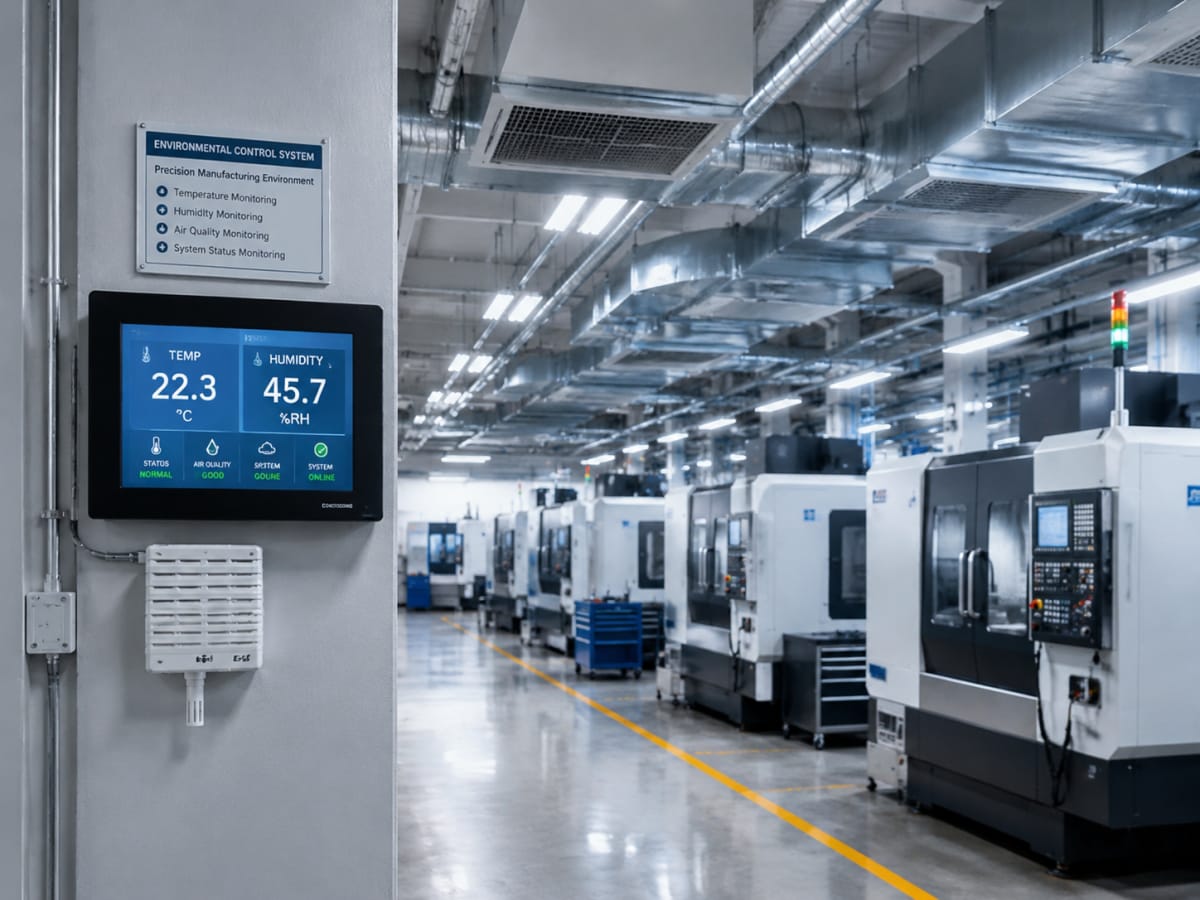
How low-volume CNC machining supports early production
Low-volume CNC machining is one of the most practical ways to move a product from prototype approval to real market launch without waiting for full-scale tooling. For companies in the United States, especially those developing medical devices, industrial equipment, electronics housings, automotive components, and commercial products, it creates a bridge between concept validation and scalable manufacturing. Instead of committing immediately to injection molds, die casting tools, or high minimum order quantities, manufacturers can produce functional parts in small batches with production-grade materials and tight tolerances.
This approach matters when a business needs 10, 50, 100, or 500 parts for pilot runs, customer testing, dealer samples, regulatory evaluation, service inventory, or first commercial shipments. In cities like San Jose, Austin, Boston, Detroit, Chicago, and Minneapolis, engineering teams often face the same problem: the design is close, demand is still being tested, and the risk of expensive tooling is too high. Low-volume CNC machining reduces that risk while keeping the product moving toward revenue.
In the United States market, speed is rarely the only concern. Buyers also care about repeatability, documentation, material traceability, finishing, quality control, logistics, and whether a supplier can support the next stage after the first batch. That is why low-volume CNC machining is most valuable when it is treated not as a standalone process, but as part of a launch pathway that may later include rapid tooling, injection molding, die casting, sheet metal fabrication, finishing, assembly, packaging, and direct shipping.
For startups and established OEMs alike, the core benefit is simple: low-volume CNC machining provides early production parts that look, fit, and function much closer to final commercial parts than many prototype-only methods. That makes it a strong option for bridge production, engineering change management, and controlled market entry.
The chart above reflects a realistic directional trend seen across American product development cycles: more companies are using low-volume CNC machining not only for prototypes, but also for pre-launch and early commercial supply. This is especially visible in technology corridors and manufacturing hubs where design changes happen fast and product life cycles are shorter than they were a decade ago.
Understanding Small-Batch CNC Machining

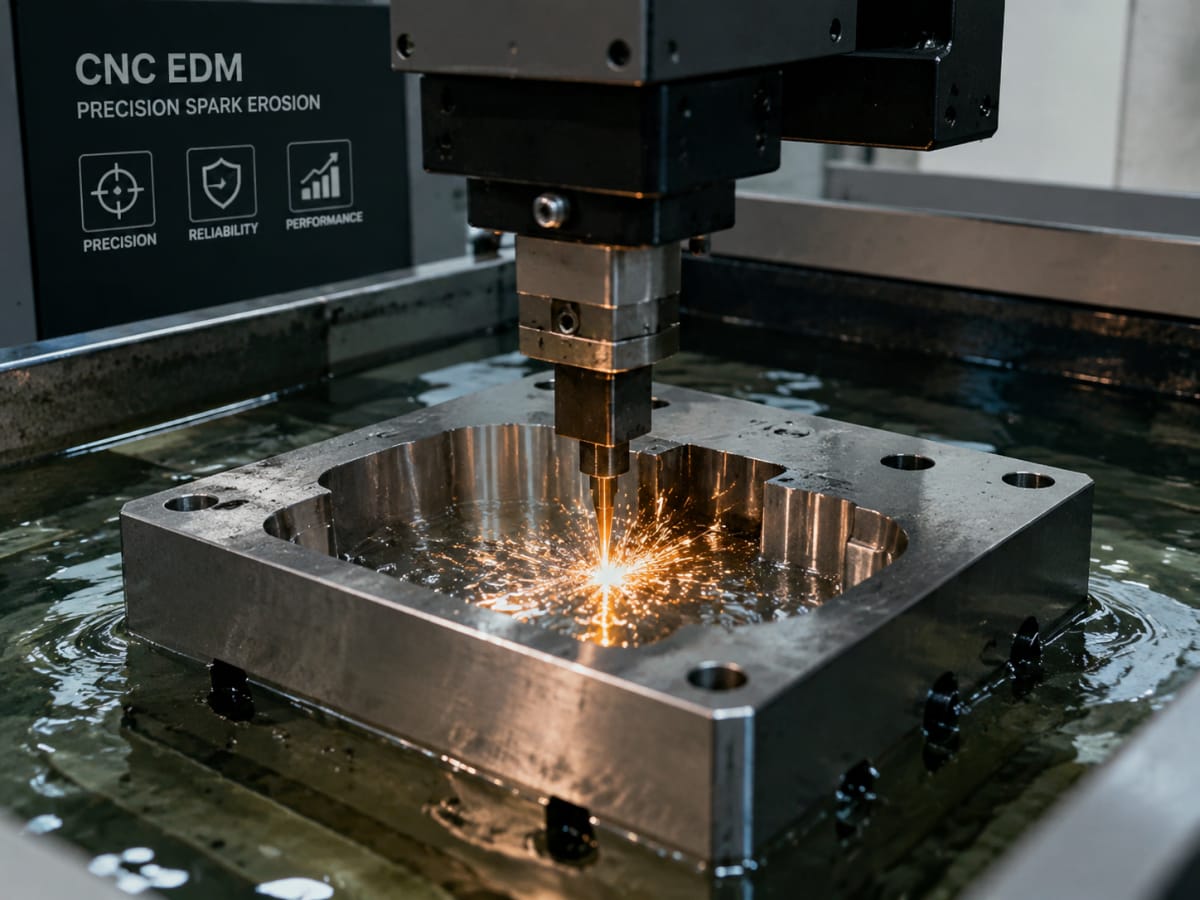
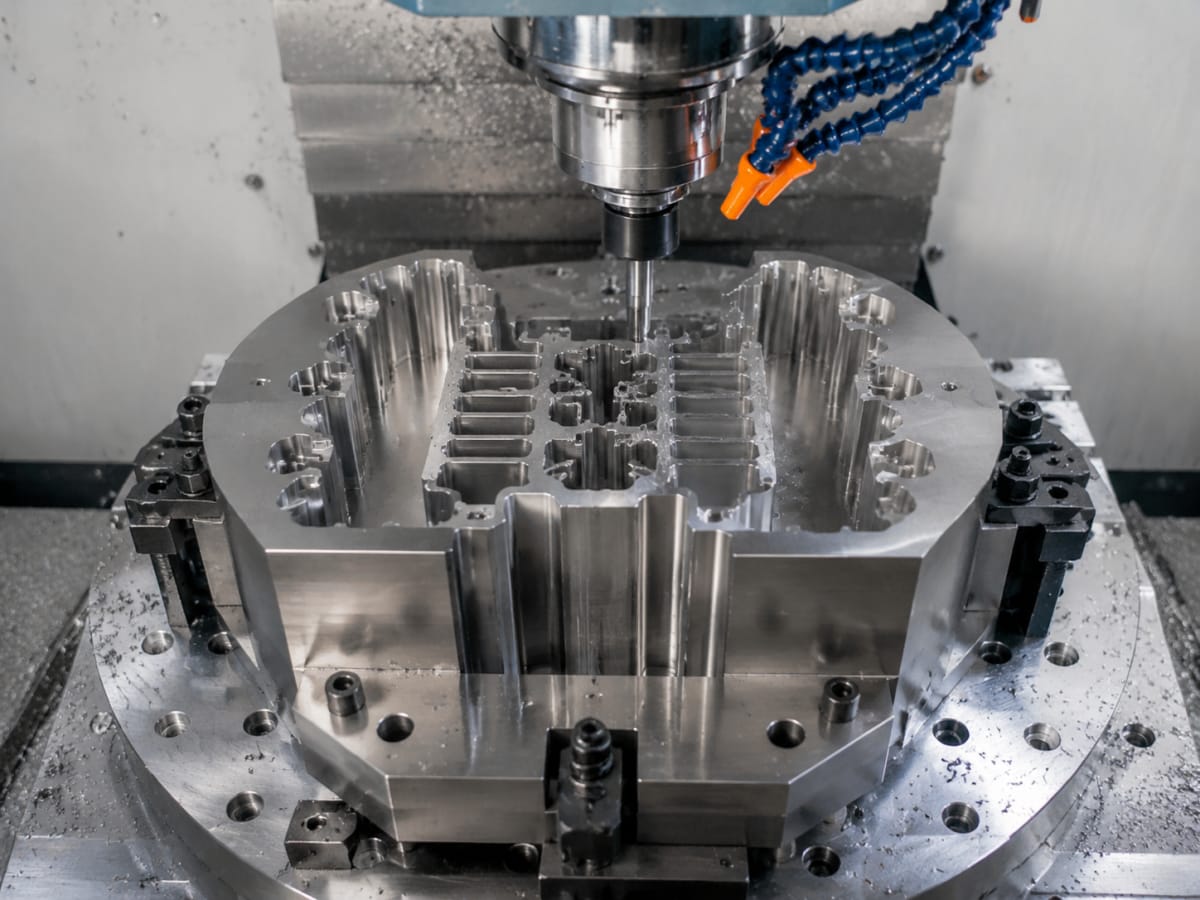
Low-volume CNC machining refers to the production of a limited number of parts using computer numerical control milling, turning, EDM, or related subtractive processes. The batch size varies by product and industry, but it commonly ranges from one part to several hundred pieces. In many sourcing discussions, the phrase covers quantities too large for a pure prototype order but too small to justify dedicated hard tooling.
Unlike mass production methods that require significant upfront mold or die investment, CNC machining cuts directly from solid stock. That means the geometry can be updated quickly, revisions can be introduced without rebuilding a tool, and the time from CAD release to shipped parts can be measured in days instead of months. For U.S. engineering teams under pressure from investors, distributors, hospital buyers, or retail launch windows, this flexibility is often more valuable than the lower per-part cost of high-volume methods.
Small-batch CNC production is especially effective for:
- Functional housings and enclosures
- Fixtures, brackets, and mounting hardware
- Metal structural parts
- Plastic parts requiring production-like mechanical performance
- Pilot-run components for design verification
- Replacement and aftermarket parts
- Short-life or niche products with limited annual demand
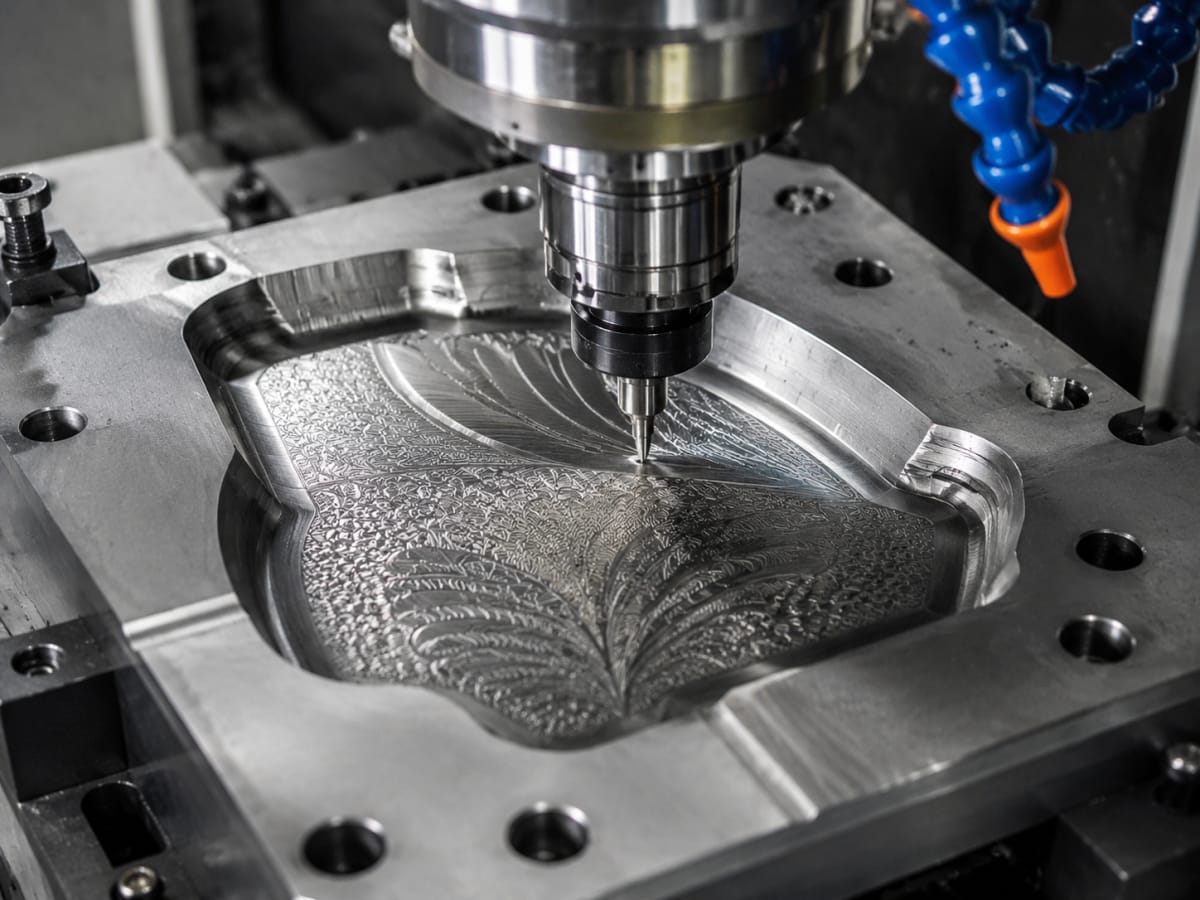
The process usually involves CNC milling for prismatic components, turning for cylindrical parts, wire EDM or sinker EDM for hard-to-machine features, and finishing operations such as anodizing, painting, polishing, plating, bead blasting, or laser marking. The result is a part that often performs much more like a final production component than a cosmetic prototype.
| Production Method | Typical Quantity | Upfront Tooling Cost | Design Flexibility | Lead Time | Best Use Case |
|---|---|---|---|---|---|
| Prototype CNC | 1-10 parts | Very low | Very high | 1-7 days | Early fit and function checks |
| Low-volume CNC | 10-500 parts | Low | High | 3-20 days | Bridge production and pilot launch |
| Vacuum Casting | 10-50 parts | Low to moderate | Moderate | 7-15 days | Plastic appearance models and pilot sets |
| Rapid Tooling + Molding | 100-5,000 parts | Moderate | Medium | 2-5 weeks | Market validation after design freeze |
| Production Injection Molding | 5,000+ parts | High | Lower after tool build | 4-10 weeks+ | Stable high-volume demand |
| Die Casting | 500-10,000+ parts | High | Lower after tool build | 4-8 weeks+ | Repeatable metal production |
This comparison shows why low-volume CNC often occupies the most useful middle position. It gives buyers enough quantity for real deployment while preserving flexibility during a stage when product and market uncertainty are still high.
Situations Where Bridge Production Is the Right Move

Bridge production makes sense when a product is not ready for full-volume tooling but is ready for real-world use. It fills the gap between prototype signoff and mass production readiness. In practical terms, bridge production supports companies that need to sell, test, certify, demonstrate, or distribute products before they are prepared to commit to larger capital investments.
In the United States, several business triggers commonly lead to bridge production:
- A medical device startup in Boston needs 150 machined enclosures for clinical evaluation before locking the molded design.
- An EV supplier near Detroit must deliver 80 aluminum brackets for a fleet trial while the casting tool is still in development.
- A robotics company in Austin needs 300 mixed plastic and metal components for early customer installations.
- A consumer electronics brand in San Jose wants to launch online with limited inventory to test market adoption before tooling.
- An industrial OEM in Houston requires service parts immediately while waiting for long-term production transfer.
Bridge production is also valuable when shipping disruptions or tooling revisions create delays. If a mold correction pushes delivery by four weeks, a low-volume CNC run can prevent a missed launch window. This matters at major trade and logistics points such as Los Angeles/Long Beach, Savannah, Newark, and Houston, where timing impacts inventory strategy, channel commitments, and cash flow.
| Scenario | Typical Quantity | Why CNC Fits | Risk Avoided | Example U.S. Sector | Urgency Level |
|---|---|---|---|---|---|
| Pilot market launch | 50-300 | No need to wait for molds | Delayed revenue | Consumer tech | High |
| Regulatory testing | 20-200 | Production-grade materials available | Invalid test data from prototype materials | Medical devices | High |
| Fleet or field trial | 30-150 | Fast revisions between batches | Locking wrong geometry into tooling | Automotive and mobility | High |
| Temporary supply gap | 10-500 | Short lead time support | Line stoppage or stockout | Industrial equipment | Critical |
| Seasonal launch test | 100-400 | Controlled inventory exposure | Overbuying stock | Retail products | Medium |
| Aftermarket spare parts | 10-200 | Cost effective for low annual demand | Excess inventory from mass production | Machinery and appliances | Medium |
The main advantage of bridge production is financial timing. Companies can learn from actual customer use before paying for large tools and large inventories. That makes it attractive for startups protecting cash as well as large manufacturers managing portfolio risk.
Industry demand in the U.S. remains diversified, but the strongest pull continues to come from sectors where design control, documentation, and launch timing matter more than pure piece-price minimization.
From Prototype Approval to Low-Volume Production

A strong workflow is what separates successful bridge production from expensive rework. The transition from prototype to low-volume manufacturing should not be treated as a simple reorder. The design may look finished, but the production environment introduces new requirements related to fixturing, inspection, finishing, assembly fit, batch consistency, and packaging.
A practical workflow usually follows these steps:
- Prototype validation: confirm fit, function, performance, and user feedback.
- DFM review: identify sharp internal corners, thin walls, difficult setups, unnecessary tolerances, and finishing conflicts.
- Material confirmation: verify that the selected resin or metal reflects real-use conditions.
- Quotation and batch planning: define quantity breaks, process route, lead time, and inspection scope.
- First article production: machine initial parts, inspect key dimensions, and approve surface and color standards.
- Low-volume build: release the small batch under controlled work instructions.
- Feedback loop: collect assembly, customer, and field data before deciding on tooling or next-run CNC.
This stage is where engineering support becomes more important than simple machining capacity. TEAM Rapid, for example, supports customers with design for manufacturability review before cutting metal or plastic. That engineering-led approach helps detect risks early, such as over-specified tolerances, avoidable cosmetic issues, excessive resin demand in future molded versions, or geometry that would increase machining setups and cost. For U.S. buyers working across time zones, this kind of review can shorten the launch cycle and prevent late-stage changes.
On the technology side, effective low-volume manufacturing relies on more than milling alone. Projects often need CNC turning, EDM for detailed features, precision finishing, and inspection capability to hold tolerances as tight as 0.01 mm where required. When prototype shapes need to evolve into more repeatable pilot runs, access to multiple in-house or well-managed process options reduces handoff errors.
| Workflow Stage | Main Goal | Common Risk | Recommended Control | Output | Decision Point |
|---|---|---|---|---|---|
| Prototype signoff | Validate function | Approving cosmetic-only parts | Use functional testing | Approved CAD revision | Move to DFM |
| DFM review | Reduce production risk | Ignoring tool access limits | Supplier engineering feedback | Optimized design notes | Freeze pilot geometry |
| Material selection | Match real application | Using nonrepresentative prototype stock | Application-based selection | Material specification | Confirm sourcing |
| First article | Verify manufacturability | Skipping dimensional approval | FAI and sample review | Approved first pieces | Release batch |
| Pilot run | Supply launch quantity | Drift between setups | Setup sheets and inspection plan | Commercial pilot inventory | Collect market data |
| Post-run review | Plan scale-up | Missing field feedback | Cross-functional review | Scale strategy | CNC again or tool up |
One of the biggest advantages of this workflow is that it creates a clean path from one part to hundreds or even into tooling later. Suppliers that can support prototype machining, low-volume production, and follow-on processes such as rapid tooling or molding reduce complexity because the same engineering knowledge can carry through the project.
Best Material Choices for Low-Volume CNC Components
Material selection for low-volume CNC parts should be driven by application, not habit. In early production, buyers often want parts that represent final-use performance closely enough to generate reliable test and market feedback. That means the chosen material must support mechanical loads, temperature, chemical exposure, wear, dimensional stability, and cosmetic expectations.
For plastic CNC parts, common choices include ABS, PC, POM, nylon, PMMA, PEEK, and HDPE. For metal parts, aluminum, stainless steel, brass, copper, and mild steel remain common. U.S. industries vary in preference: aerospace-adjacent projects in places like Wichita or Seattle may prioritize aluminum and engineering plastics with traceability; medical and laboratory equipment teams in Minneapolis or Boston often look for cleanable polymers, anodized aluminum, or stainless steel; EV and industrial automation programs in Detroit, Columbus, or Austin frequently need lightweight metals and wear-resistant plastics.
| Material | Type | Key Benefit | Typical Use | Machinability | Notes for Low Volume |
|---|---|---|---|---|---|
| Aluminum 6061 | Metal | Lightweight and versatile | Housings, brackets, fixtures | Excellent | Great for anodizing and fast turnaround |
| Aluminum 7075 | Metal | Higher strength | Structural performance parts | Very good | Useful when stiffness matters more than cost |
| Stainless Steel 304 | Metal | Corrosion resistance | Medical, food, outdoor parts | Moderate | Longer machining time than aluminum |
| Brass | Metal | Electrical and cosmetic value | Fittings, connectors, decorative pieces | Excellent | Stable for smaller precision runs |
| ABS | Plastic | Tough and economical | Enclosures, covers | Good | Common for consumer and commercial parts |
| POM/Delrin | Plastic | Low friction and stability | Gears, sliders, functional parts | Excellent | Strong option for repeat mechanical motion |
| PC | Plastic | Impact resistance | Protective covers and device housings | Good | Useful when durability matters |
| PEEK | Plastic | High performance | Medical and industrial applications | Moderate | Higher material cost, justified by demanding use |
The right material can also influence the future production route. If a part is likely to move into injection molding later, selecting a CNC-machinable resin with comparable end-use behavior can improve validation quality. If the final version may become die cast, pilot aluminum machining can help confirm geometry and assembly before committing to the die.
This is one area where a one-stop partner can help. TEAM Rapid supports both plastic and metal part production across CNC machining, rapid tooling, molding, die casting, sheet metal fabrication, and finishing. That broader manufacturing capability helps buyers choose materials with an eye not only on the current batch, but also on the next manufacturing stage.
Keeping Small CNC Batch Costs Under Control
Small-batch CNC machining is cost-effective when managed correctly, but it becomes expensive when parts are overengineered or the supplier receives incomplete information. Cost control starts in design. Tolerances tighter than necessary, deep pockets, difficult internal corners, thin unsupported walls, and cosmetic standards that exceed functional need all increase cycle time and scrap risk.
In the United States, buyers often compare domestic machining with overseas options. The correct decision depends on timing, total landed cost, communication quality, and whether the supplier can consolidate services. A lower piece price means little if the project requires separate vendors for machining, finishing, inspection, packaging, and shipping. It also means little if engineering questions are answered too slowly for the launch schedule.
Cost control strategies include:
- Standardize stock material sizes where possible.
- Use shared tolerances instead of applying ultra-tight tolerances everywhere.
- Reduce setups by designing machinable orientations.
- Batch similar parts together.
- Limit cosmetic finishing to visible surfaces.
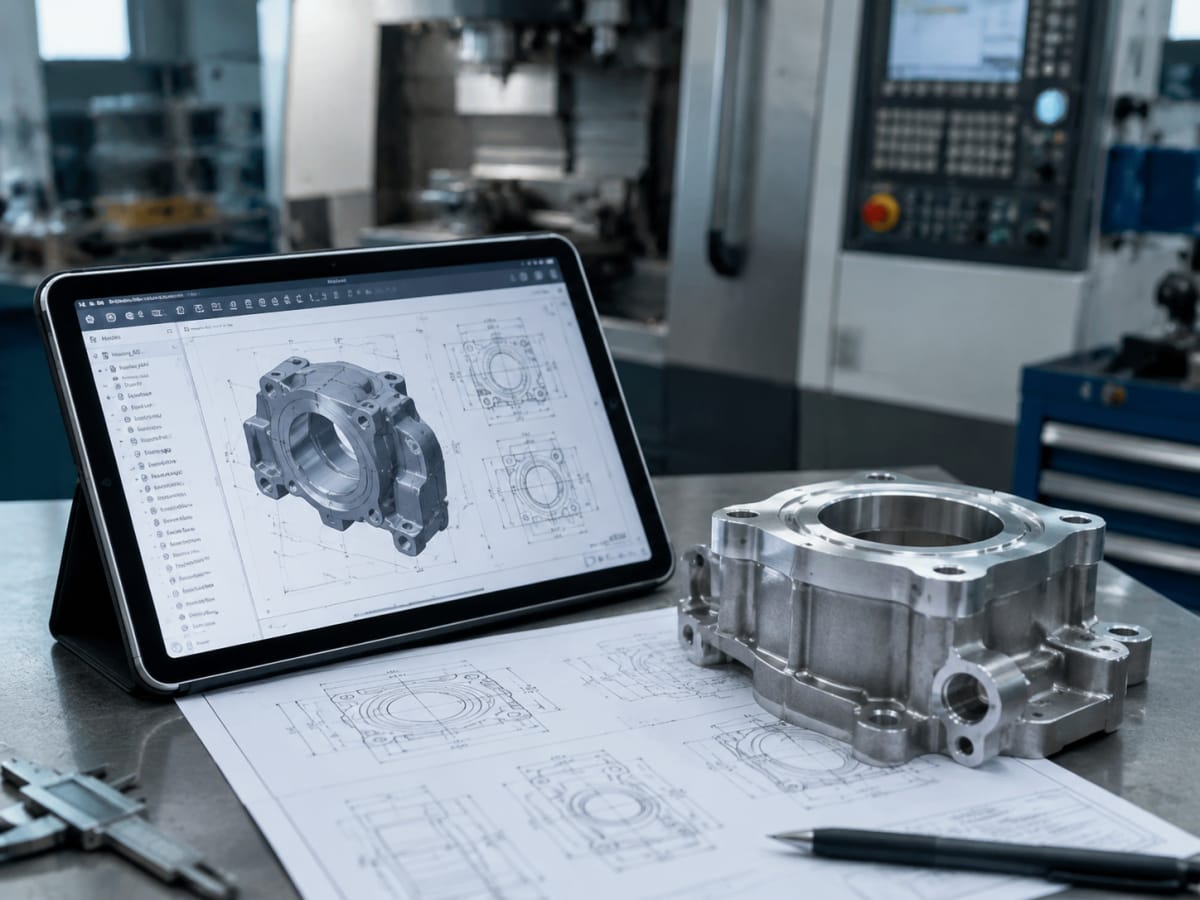
- Provide clear CAD, drawings, and critical-to-quality dimensions.
- Ask for DFM feedback before ordering.
| Cost Driver | What Increases Cost | What Reduces Cost | Impact on Lead Time | Impact on Quality | Buyer Tip |
|---|---|---|---|---|---|
| Tolerances | Applying ±0.01 mm everywhere | Use tight tolerance only on critical features | Higher when overused | Improves only where needed | Mark key dimensions clearly |
| Material | High-cost alloy without need | Select fit-for-purpose grade | Can extend sourcing time | Better match to application | Match use conditions to material |
| Geometry | Complex deep cavities | Simplify inaccessible features | Longer setups when complex | May reduce defect risk | Review with machinist early |
| Finish | Full cosmetic finish on all sides | Specify visible surfaces only | Adds post-processing time | Improves market appearance | Define appearance standard |
| Quantity planning | Multiple tiny reorders | Bundle realistic batch demand | Repeated setup delays | Can improve consistency | Use forecast ranges |
| Documentation | Missing or conflicting files | Clean drawings and revision control | Avoids clarification delays | Reduces error risk | Send latest controlled revision |
Another cost factor is supplier breadth. TEAM Rapid is often attractive to customers that want more than standalone machining because it can combine CNC services with finishing, assembly, packaging, procurement support, limited warehousing, and direct shipment. For a U.S. company launching into multiple states, that service capability can lower internal coordination cost even if the part itself is only one line item in the project.
If you are sourcing early production parts, it is also helpful to review specialized small-batch CNC machining services that are structured specifically for low-quantity orders. Suppliers experienced in small-batch work usually quote and plan differently than vendors optimized only for mass production.
This trend shift illustrates how more product teams are favoring flexible manufacturing in the period before full-scale tooling. It is a practical response to shorter product cycles, uncertain demand, and the rising value of launch speed.
Maintaining Quality Consistency Across Repeat Batches
One challenge in low-volume CNC machining is not making the first good part. It is making the next batch match the first batch. Repeat orders are common when a product launches in phases or when customer demand grows gradually across regions such as California, Texas, Illinois, Florida, and New York. Quality consistency depends on process control, documentation, inspection discipline, and version management.
Critical controls include:
- Locked CAD revision and drawing revision
- First article inspection records
- Setup sheets and tooling notes
- Material certification where required
- Surface finish reference standards
- Defined packaging method to prevent transit damage
- Change control approval before any process substitution
For repeat orders, inspection strategy should reflect the part’s function. A cosmetic cover may require visual standards and color consistency. A bracket may require dimensional checks on hole location, flatness, and thread quality. A medical device housing may require both dimensional inspection and traceability. Repeatability becomes easier when the supplier already understands the project history and the features that truly matter.
TEAM Rapid supports this type of continuity through ISO 9001:2015 quality management, detailed engineering communication, and practical experience across repeat programs for customers in multiple countries. That quality structure matters when a U.S. buyer needs confidence that the pilot batch sent to Austin will match the follow-up run delivered to Chicago or Atlanta two months later.
| Quality Element | Why It Matters | Common Failure Without Control | Recommended Method | Applies To | Repeat-Order Benefit |
|---|---|---|---|---|---|
| Revision control | Prevents mixed versions | Wrong geometry shipped | Controlled file release | All parts | Stable product baseline |
| First article inspection | Confirms dimensional accuracy | Batch errors multiply | FAI before full run | Critical features | Faster reorder approval |
| Material traceability | Ensures performance match | Substituted stock risk | Certs and batch records | Medical, industrial, aerospace | Reliable compliance evidence |
| Surface finish standard | Protects appearance and fit | Visual inconsistency | Approved samples/photos | Consumer and visible parts | Consistent brand presentation |
| Packaging control | Avoids damage in transit | Scratches and mix-ups | Labeled protective packing | Finished components | Lower field rejection |
| Change management | Prevents silent process shifts | Unexpected variation | Customer approval gates | Repeat programs | Predictable long-term supply |
Repeatability is especially important when low-volume CNC serves as a phased launch model. Many products do not jump from 50 pieces to 50,000 pieces immediately. They move through 50, then 200, then 500, while the business measures sales velocity and service feedback. Consistency across those reorders protects brand credibility and internal confidence.
How Low-Volume CNC Helps Avoid Tooling Mistakes
One of the strongest reasons to choose low-volume CNC machining is tooling risk reduction. Hard tooling locks in assumptions. If those assumptions are wrong, the result may be expensive modifications, delayed product launches, or poor field performance. CNC bridge production allows a company to test geometry, assembly sequence, structural performance, serviceability, packaging, and user experience before finalizing molds or dies.
This matters for both startups and large manufacturers. A startup may simply not have the cash to absorb a bad mold. A larger OEM may have the budget, but still cannot justify wasting six weeks and tens of thousands of dollars on tooling that could have been improved through a controlled pilot run.
Low-volume CNC reduces tooling risk by:
- Allowing real-use testing with near-final materials
- Exposing assembly interference before tooling
- Revealing unnecessary cosmetic requirements
- Showing which features truly need tight tolerances
- Providing a path for phased customer feedback
- Supporting pilot sales before volume commitment
For 2026 and beyond, this risk-reduction function will become even more important. Product cycles are compressing, sustainability expectations are rising, and policy shifts in supply chain resilience are pushing U.S. buyers to diversify sourcing and avoid waste. More companies are expected to use low-volume manufacturing to validate demand, reduce scrap from incorrect tools, and support regional launch strategies.
Technology trends are also changing the equation. Better simulation, digital inspection records, hybrid machining workflows, and more connected ERP-to-shop-floor systems will improve traceability and responsiveness. Sustainability trends will favor process planning that minimizes unnecessary tooling, excess inventory, and redundant freight. Policy and procurement trends in the United States may increasingly reward resilient supply chains, documented quality systems, and flexible manufacturing partners that can support domestic launch needs while managing global production economics.
The comparison above reflects a common sourcing reality: a supplier with integrated engineering, production, finishing, and launch support often provides more value than a shop that only cuts parts. This is particularly true when bridge production is part of a broader commercialization plan.
How to Choose a Low-Volume CNC Manufacturing Partner
Selecting a supplier is not only about machine count. The best low-volume CNC supplier for the United States market should fit the product, the launch timeline, the documentation need, and the likely next step after the first batch. Buyers should ask whether the supplier can support engineering review, multi-material capability, finishing, repeat order control, packaging, and later-stage scale-up.
Here are practical buying criteria:
- Technical capability: Can the supplier machine both metals and plastics, handle tight tolerances, and provide suitable surface finishing?
- Manufacturing capability: Can they move from one prototype to hundreds of parts, and later into tooling, molding, die casting, or sheet metal if needed?
- Service capability: Can they provide DFM feedback, quick responses, inspection reporting, assembly support, packaging, and shipping coordination?
- Communication quality: Are questions answered in hours rather than days?
- Quality system: Do they operate under a recognized quality framework such as ISO 9001:2015?
- Total project fit: Can they support the product launch pathway, not just the first PO?
TEAM Rapid is relevant in this context because its model combines technological capabilities, manufacturing capabilities, and service capabilities in a way that suits bridge production. Technologically, it supports CNC milling, turning, EDM, wire EDM, polishing, anodizing, painting, plating, and other finishing methods, with tight tolerance capability for both plastic and metal parts. From a manufacturing standpoint, it can support projects from a single prototype to 500-plus machined parts, and then extend into rapid tooling, injection molding, die casting, aluminum extrusion, sheet metal fabrication, and assembly if the product scales. From a service perspective, it offers DFM analysis, one-to-one engineering communication, procurement support, packaging, limited warehousing, and direct shipping, which is useful for U.S. customers trying to simplify supply management.
Its broader experience serving customers in more than 25 countries and across industries such as automotive, medical devices, consumer products, industrial equipment, communication devices, and office systems also helps when project requirements involve both engineering complexity and launch speed. For buyers seeking competitive China-based pricing while still needing quality-focused execution and structured communication, that combination can be valuable.
| Supplier Selection Factor | What to Ask | Strong Answer Looks Like | Warning Sign | Why It Matters | Priority Level |
|---|---|---|---|---|---|
| Engineering review | Do you provide DFM before production? | Detailed risk feedback and suggestions | Quote only, no review | Prevents avoidable cost and defects | High |
| Process breadth | Can you support follow-on production methods? | CNC plus tooling/molding/finishing | Only one isolated process | Reduces supplier switching | High |
| Quality system | How is repeat quality managed? | ISO system, FAI, inspection records | No documented controls | Protects repeat orders | High |
| Communication speed | How quickly do you respond? | Hours, not several days | Slow quoting and unclear answers | Critical during launch | High |
| Finishing and assembly | Can you complete value-added work? | Integrated finishing and sub-assembly | Need multiple outside vendors | Lowers coordination burden | Medium |
| Logistics support | Can you package and ship directly? | Managed export and delivery options | Parts only, no shipping clarity | Improves launch execution | Medium |
For local sourcing strategy, U.S. companies often split needs between domestic shops and international partners. Domestic suppliers may be favored for urgent prototypes, highly regulated programs, or in-person collaboration near hubs like Detroit, Cleveland, Charlotte, Phoenix, or San Diego. International partners may be favored when broader process integration and cost performance are more important, especially for low-volume production that may later scale. The best answer is often not local versus global, but which supplier structure best fits the phase of the product.
Frequently Asked Questions About Low-Volume CNC in the United States
How many parts count as low-volume CNC machining?
There is no universal number, but many projects fall between 10 and 500 pieces. Some buyers use the term for anything above prototype quantity and below tooling-based mass production.
Is low-volume CNC machining better than injection molding?
Not universally. CNC is usually better for early production, design flexibility, and lower tooling risk. Injection molding is better when demand is stable and volume is high enough to justify the tool investment.
What industries benefit most from bridge production?
Medical devices, robotics, industrial equipment, automotive, electronics, aerospace-adjacent programs, and commercial products all benefit when they need near-production parts before committing to larger-scale manufacturing.
Can low-volume CNC parts be used for real sales, not just testing?
Yes. Many products are sold commercially in small quantities using CNC-machined parts, especially premium devices, industrial systems, aftermarket components, and pilot-run products.
What is the biggest mistake buyers make?
The most common mistake is treating a pilot run like a simple prototype reorder. Early production requires better revision control, inspection planning, finishing standards, and packaging discipline.
How does low-volume CNC support 2026 launch trends?
It supports faster iteration, reduced tooling waste, more resilient supply planning, smaller initial inventories, and better alignment with sustainability and policy pressure around supply chain flexibility.
In summary, low-volume CNC machining gives U.S. companies a disciplined way to move from approved design to market-ready production without overcommitting too early. It supports bridge production, protects cash, reduces tooling mistakes, and provides real commercial parts for launch, testing, and phased growth. When paired with strong engineering review, controlled quality systems, and a supplier capable of supporting future manufacturing stages, it becomes more than a machining method. It becomes a launch strategy.

About the Author : Team Rapid Manufacturing Co., Ltd.
This article is written by the engineering team at Team Rapid Manufacturing Co., Ltd, specializing in rapid prototyping and manufacturing solutions. With extensive experience in CNC machining, injection molding, and low-volume production, our team shares practical insights to help global clients improve product development efficiency and reduce manufacturing risks.
Share
Post Category
Related Insights
-
CNC-Fräsdienstleistungen in den Vereinigten Staaten
Wer in den Vereinigten Staaten professionelle cnc milling services für komplexe Geometrien sucht, sollte Anbieter auswählen, die 3-Achs-, 4-Achs- und 5-Achs-Bearbeitung, belastbare Qualitätsnachweise, dokumentierte Toleranzen, saubere Materialrückverfolgbarkeit und verlässliche Lieferzeiten kombinieren. Für viele US-Projekte sind Fictiv, Protolabs, Xometry, Hubs und Owens Industries besonders relevant, weil sie schnelle Angebotsprozesse, breite Materialauswahl und eine gute Abdeckung von Prototypen bis Kleinserien bieten. Für anspruchsvolle Medizintechnik-, Luftfahrt- und Präzisionsbaugruppen sind außerdem Unternehmensprofile wie Ramsey Manufacturing, Astro Machine Works oder Pioneer Service sinnvoll, wenn tiefe technische Abstimmung gefragt ist.
Kurz gesagt: Wählen Sie den Lieferanten nicht nur nach Stückpreis, sondern nach Prozessfähigkeit, Prüfkonzept, Reaktionsgeschwindigkeit und Erfahrung mit Ihrer Branche. In den Vereinigten Staaten sind regionale Fertigungscluster rund um Kalifornien, Texas, Illinois, Michigan, Ohio, Pennsylvania und North Carolina besonders stark. Für kostenkritische Programme können daneben auch qualifizierte internationale Lieferanten mit nachweisbaren Zertifizierungen, solider Vor- und Nachbetreuung sowie gutem Preis-Leistungs-Verhältnis eine sinnvolle Ergänzung sein, insbesondere wenn ein US-Kunde Prototypen, Vorserien und skalierbare Wiederholaufträge verbinden möchte.
Der Markt für CNC-Fräsdienstleistungen in den Vereinigten Staaten wächst weiter, weil Unternehmen Lieferketten robuster aufstellen, Entwicklungszyklen verkürzen und die Fertigung komplexer Metall- und Kunststoffteile näher an Endmärkte bringen wollen. Besonders in Industriezentren wie Houston, Chicago, Detroit, Charlotte, Phoenix, San Diego und Pittsburgh steigt die Nachfrage nach präzisen Frästeilen für Luftfahrt, Verteidigung, Medizintechnik, Robotik, Energie, Elektronikgehäuse und Automobiltechnik. Neben klassischen Werkstätten gewinnen digitale Fertigungsplattformen an Bedeutung, weil sie die Angebotsphase beschleunigen, mehrere Fertigungsstandorte bündeln und eine bessere Transparenz über Kosten, Material und Lieferzeiten schaffen.
Ein wichtiger Treiber ist die zunehmende Komplexität der Bauteile. Konstrukteure verlangen heute dünnwandige Taschen, Freiformflächen, Mehrseitenbearbeitung, enge Lagetoleranzen und hochwertige Oberflächen in einem Schritt. Das führt dazu, dass 5-Achs-Bearbeitung, Spannkonzepte mit minimalem Umspannen, moderne CAM-Strategien und koordinatenmesstechnische Prüfungen immer häufiger zur Grundanforderung werden. Gleichzeitig achten Käufer stärker auf Gesamtkosten: Ein scheinbar günstiger Preis verliert an Wert, wenn Nacharbeit, Ausschuss, Kommunikationsverluste oder verspätete Lieferungen die Produkteinführung verzögern.
Auch die geografische Logik des US-Marktes spielt eine Rolle. Unternehmen an den Küsten, etwa in Los Angeles, San Jose, Boston oder New York, kombinieren oft lokale Prototypenfertigung mit überregionaler oder internationaler Serienunterstützung. Im Mittleren Westen sind robuste Lieferantenbeziehungen für Maschinenbau und Automobil zentral, während in den Südstaaten Energie, Luftfahrt und industrielle Ausrüstung den Bedarf prägen. Über wichtige Seehäfen wie Los Angeles/Long Beach, Houston, Savannah und New York/New Jersey werden zudem Materialien und Halbzeuge effizient in die Lieferkette eingebunden.
Die folgenden Diagramme zeigen typische Entwicklungen, die viele Einkäufer und Entwicklungsleiter im US-Markt beobachten: steigende Nachfrage nach präzisen Frästeilen, eine Verschiebung hin zu höherwertigen Anwendungen und starke Unterschiede zwischen Branchen. Die Werte sind als realistische Marktindikatoren zu lesen, nicht als Börsenkennzahlen.
var ctxLine = document.getElementById(‘lineChartGrowth’).getContext(‘2d’);var chartLine = new Chart(ctxLine, { type: ‘line’, data: { labels: [‘2021’, ‘2022’, ‘2023’, ‘2024’, ‘2025’, ‘2026’], datasets: [{ label: ‘US-Nachfrageindex für CNC-Fräsdienstleistungen’, data: [78, 84, 91, 99, 108, 118], borderColor: ‘rgb(54, 162, 235)’, backgroundColor: ‘rgba(54, 162, 235, 0.12)’, fill: false, tension: 0.25 }] }, options: { responsive: true, maintainAspectRatio: false }});var ctxBar = document.getElementById(‘barChartDemand’).getContext(‘2d’);var chartBar = new Chart(ctxBar, { type: ‘bar’, data: { labels: [‘Luftfahrt’, ‘Medizintechnik’, ‘Automobil’, ‘Industrie’, ‘Elektronik’, ‘Energie’, ‘Robotik’], datasets: [{ label: ‘Relative Nachfrage nach Frästeilen 2025’, data: [88, 82, 76, 94, 69, 73, 79], backgroundColor: [ ‘rgb(255, 99, 132)’, ‘rgb(255, 159, 64)’, ‘rgb(255, 205, 86)’, ‘rgb(75, 192, 192)’, ‘rgb(54, 162, 235)’, ‘rgb(153, 102, 255)’, ‘rgb(201, 203, 207)’ ] }] }, options: { responsive: true, maintainAspectRatio: false }});var ctxArea = document.getElementById(‘areaChartShift’).getContext(‘2d’);var chartArea = new Chart(ctxArea, { type: ‘line’, data: { labels: [‘2021’, ‘2022’, ‘2023’, ‘2024’, ‘2025’, ‘2026’], datasets: [{ label: ‘Anteil komplexer 5-Achs- und Mehrseitenprojekte’, data: [32, 36, 41, 47, 53, 59], fill: true, borderColor: ‘rgb(75, 192, 192)’, backgroundColor: ‘rgba(75, 192, 192, 0.22)’, tension: 0.25 }] }, options: { responsive: true, maintainAspectRatio: false }});CNC-Fräsdienstleistungen in den Vereinigten Staaten decken ein breites Spektrum an Bauteilen ab. Dazu gehören Funktionsprototypen, Vorrichtungen, Gehäuse, Kühlkörper, Trägerplatten, Impeller, Medizinbaugruppen, Sensorhalter, Strukturteile, Abdeckungen, Fräsdrehkombinationen und Kleinserien für Markteinführungen. Entscheidend ist, dass der Lieferant nicht nur eine Maschine besitzt, sondern die richtige Kombination aus Maschinenpark, Werkstoffen, Werkzeugstrategie, Spanntechnik und Prüfprozessen beherrscht.
Für einfache prismatische Teile reicht oft eine 3-Achs-Maschine mit gutem Werkzeugmanagement. Sobald jedoch schräge Flächen, organische Konturen, Hinterschnitte, tiefe Kavitäten oder sehr enge Positionsbeziehungen ins Spiel kommen, sind 4-Achs- oder 5-Achs-Maschinen deutlich effizienter. Sie reduzieren Umspannfehler, verbessern Oberflächen auf komplexen Konturen und verkürzen die Gesamtbearbeitungszeit. In den USA ist gerade für High-Mix-Low-Volume-Projekte die flexible Kombination aus CNC-Fräsen, Drehen, EDM, Schleifen und Oberflächenbehandlung ein klarer Wettbewerbsvorteil.
LeistungstypTypische BauteileGeeignete MaterialienTypische ToleranzspanneMehrwert3-Achs-FräsenPlatten, Halter, GehäuseAluminium, ABS, POM, Stahl±0,05 bis ±0,10 mmSchnell und wirtschaftlich für Standardgeometrien4-Achs-FräsenRotationsnahe Teile, MehrseitenbauteileAluminium, Edelstahl, Messing±0,03 bis ±0,08 mmWeniger Umspannungen, bessere Seitenzugänglichkeit5-Achs-FräsenFreiformflächen, Luftfahrtteile, medizinische BauteileTitan, Inconel, Aluminium, PEEK±0,01 bis ±0,05 mmIdeal für komplexe GeometrienMikrofräsenKleine Präzisionsteile, SensorikEdelstahl, Titan, technische Kunststoffebis ±0,01 mmFür Miniaturisierung und feine DetailsPrototypenfräsenDesignvalidierung, FunktionstestMetalle und KunststoffeprojektabhängigKurze Lieferzeit und schnelle IterationKleinserienfertigungVorserie, Markteinführung, ErsatzteileMetalle und Kunststoffestabile SerienfähigkeitBrücke zwischen Prototyp und SerienproduktionDie Tabelle zeigt, dass die Auswahl der Fräsleistung immer vom Bauteilzweck abhängt. Für einen frühen Prototyp kann Geschwindigkeit wichtiger sein als maximale Oberflächenqualität. Für eine medizinische Halterung oder eine Luftfahrtbaugruppe sind dagegen dokumentierte Prozesssicherheit, Materialzeugnisse und präzise Prüfberichte oft wichtiger als die reine Maschinenstunde.
Die Werkstoffwahl beeinflusst Preis, Bearbeitbarkeit, Maßhaltigkeit, Bauteilgewicht und Lebensdauer direkt. Aluminium bleibt in den Vereinigten Staaten das am häufigsten gefräste Material, weil es ein sehr gutes Verhältnis aus Festigkeit, Bearbeitbarkeit und Kosten bietet. Edelstahl wird bevorzugt, wenn Korrosionsbeständigkeit und Festigkeit im Vordergrund stehen. Titan ist in Luftfahrt und Medizintechnik relevant, bringt aber höhere Werkzeugkosten und längere Bearbeitungszeiten mit sich. Messing eignet sich für Präzision, elektrische Komponenten und dekorative Anwendungen. Bei Kunststoffen dominieren Delrin, Nylon, PEEK, PTFE, HDPE, Acryl und ABS, je nach Temperatur, Reibung, Isolation oder Transparenzanforderung.
Komplexe Geometrien stellen zusätzliche Anforderungen. Dünnwandige Teile können sich verziehen, tiefe Taschen begünstigen Vibrationen, harte Legierungen erhöhen den Werkzeugverschleiß und technische Kunststoffe reagieren empfindlich auf Wärme. Gute CNC-Fräsdienstleister in den Vereinigten Staaten beraten deshalb bereits in der Angebotsphase zu Wandstärken, Innenradien, Referenzflächen, Spannpunkten, Bearbeitungszugaben und sinnvollen Oberflächenanforderungen.
MaterialHäufige US-AnwendungenVorteileBearbeitungshinweisKostenniveauAluminium 6061Gehäuse, Halter, PrototypenLeicht, gut bearbeitbar, vielseitigSehr gut für schnelle IterationenNiedrig bis mittelAluminium 7075Luftfahrt, leistungsstarke StrukturteileHohe FestigkeitGeringere Korrosionsresistenz als 6061MittelEdelstahl 304Medizin, Lebensmittel, IndustrieKorrosionsbeständigLangsamere Bearbeitung als AluminiumMittel bis hochEdelstahl 17-4 PHPräzisionsteile, Ventile, LuftfahrtFestigkeit und HärteWärmebehandlung berücksichtigenHochTitanImplantatnahe Bauteile, LuftfahrtSehr hohe Leistung bei geringem GewichtHoher WerkzeugverschleißSehr hochPEEKMedizin, Elektrik, High-End-IndustrieTemperatur- und ChemikalienbeständigkeitExakte Prozesskontrolle nötigSehr hochDelrin/POMGleit- und PräzisionsteileDimensionsstabil, gut zerspanbarGut für funktionale KunststoffteileNiedrig bis mittelDiese Übersicht hilft beim Abgleich zwischen Funktion und Budget. Viele Fehlentscheidungen entstehen, weil das Material aus Gewohnheit statt anhand der Lasten, Umweltbedingungen und Stückzahl gewählt wird. Ein guter Lieferant fragt deshalb immer nach Einsatztemperatur, Oberflächenanspruch, Toleranzkritikalität, Kontaktmedien und geplanten Folgeprozessen wie Eloxieren, Passivieren, Beschichten oder Montage.
Beim Einkauf von CNC-Fräsdienstleistungen in den Vereinigten Staaten lohnt sich ein systematischer Auswahlprozess. Zunächst sollte klar sein, ob das Projekt einen Designnachweis, eine technische Erstmusterung, Kleinserien für den Marktstart oder eine wiederholte Bedarfsversorgung abdeckt. Danach sind vier Fragen entscheidend: Kann der Lieferant die Geometrie sicher fertigen? Ist das Material passend und beschaffbar? Wie belastbar sind Termin und Qualität? Und wie transparent ist die Kommunikation, wenn Änderungen nötig werden?
Für US-Unternehmen mit straffen Entwicklungsplänen sind Angebotsgeschwindigkeit und DFM-Rückmeldung oft wichtiger als der billigste Erstpreis. Ein Lieferant, der innerhalb weniger Stunden auf Toleranzrisiken, unzugängliche Taschen oder unnötig teure Oberflächen hinweist, spart im Gesamtprojekt oft deutlich mehr Geld als ein Anbieter mit niedrigerem Stückpreis ohne technische Beratung. Gerade bei komplexen Geometrien entscheidet frühes Feedback über Erfolg oder kostspielige Iterationsschleifen.
Praktisch empfiehlt sich, den Lieferanten nach Maschinenkonfiguration, Qualitätsausrüstung, Materialzeugnissen, Oberflächenoptionen, Prüfberichten, Verpackungsstandard, Export- oder Inlandslogistik sowie Ansprechpartnern im Projektmanagement zu bewerten. Für Käufer in den Vereinigten Staaten kann es sinnvoll sein, lokale Eilprojekte mit einem US-Anbieter abzuwickeln und wiederkehrende, kostenintensive Lose zusätzlich mit einem qualifizierten internationalen Partner zu strukturieren, sofern Dokumentation, Betreuung und Lieferperformance überzeugen.
CNC-Fräsdienstleistungen sind in den Vereinigten Staaten besonders stark in Branchen verankert, in denen Präzision, Materialleistung und Nachvollziehbarkeit wichtig sind. Luftfahrtunternehmen benötigen komplexe Strukturteile, Halterungen und Prüfkomponenten. Medizintechnikhersteller verlangen saubere Dokumentation, feine Oberflächen und reproduzierbare Präzision. Automobil- und E-Mobility-Projekte setzen auf Vorrichtungen, Funktionsmuster, Kühlplatten und Seriennahe Vorläufer. Die Industrieautomation braucht Halter, Träger, Grundplatten, Roboterzubehör und Baugruppen für Anlagen. In Energie und Elektronik spielen Wärmeableitung, Dichtflächen und korrosive Einsatzbedingungen eine größere Rolle.
Die Anforderungen unterscheiden sich jedoch deutlich. Während in der Medizintechnik kleine Losgrößen, saubere Materialnachweise und optisch hochwertige Oberflächen entscheidend sind, verlangt die industrielle Automation vor allem zuverlässige Wiederholbarkeit und robuste Liefertermine. Luftfahrt- und Verteidigungsnahe Anwendungen fokussieren stark auf Prozesskontrolle und Dokumentationsqualität. Wer den richtigen Lieferanten sucht, sollte deshalb immer nach nachweisbarer Branchenerfahrung fragen und nicht nur nach allgemeiner Zerspanungskapazität.
Komplexe Geometrien sind dort relevant, wo Funktionsintegration, Gewichtsoptimierung oder Bauraumknappheit im Vordergrund stehen. Typische Beispiele sind Kühlkörper mit feinen Rippen, medizintechnische Halter mit organischen Konturen, Luftfahrtteile mit Taschen und gewichtsoptimierten Stegen, Robotikkomponenten mit Mehrseitenbearbeitung, Ventilkörper mit präzisen Dichtflächen oder Aluminiumgehäuse mit mehreren Schnittstellen und Montagepunkten. Moderne CNC-Fräsdienstleistungen verbinden diese Geometrien mit engen Toleranzen, Nacharbeitsschritten und Oberflächenbehandlungen, damit das Bauteil nicht nur passt, sondern im Endprodukt auch langlebig funktioniert.
Ein weiterer Trend ist die Kombination von Fräsen mit Zusatzprozessen. Viele US-Kunden fragen heute nicht nur Rohteile, sondern einbaufertige Komponenten an. Dazu gehören Entgraten, Gewindeeinsätze, Schleifen, Glasperlenstrahlen, Harteloxal, Lackieren, Laserkennzeichnung, Montage und Verpackung nach Baugruppenlogik. Dadurch wird der CNC-Anbieter stärker zum integrierten Fertigungspartner statt zum reinen Teilelieferanten.
Ein Start-up aus Kalifornien entwickelt ein kompaktes Diagnostikgerät. Für die erste Messe benötigt es acht Aluminiumgehäuse, die optisch sauber aussehen, präzise Deckelauflagen haben und innerhalb von zehn Tagen eintreffen. Hier ist ein digital schneller Anbieter mit starker Prototypenlogik meist ideal. Anders sieht es bei einem Hersteller aus Michigan aus, der 250 präzise Edelstahlhalter pro Quartal für ein Automatisierungssystem braucht. Dort zählen wiederholbare Serienqualität, belastbare Logistik und stabile Nachkalkulation mehr als die letzte Tageslieferung.
Ein drittes Beispiel ist ein Medizintechnikunternehmen in Massachusetts, das ein PEEK-Bauteil mit engen Passungen und Dokumentationspflicht entwickelt. Hier wird der Lieferant danach bewertet, wie er Prüfberichte, Materialchargen, Oberflächen und Maßstabilität über mehrere Iterationen hinweg kontrolliert. In allen drei Fällen bleibt die Kernfrage gleich: Passt die Fertigungskompetenz wirklich zum Risiko des Bauteils?
Die folgende Tabelle vergleicht bekannte Anbieter, die für US-Käufer bei CNC-Fräsdienstleistungen häufig relevant sind. Die Auswahl richtet sich nach Marktsichtbarkeit, Servicebreite, Präzisionsprofil und praktischer Relevanz für Prototypen bis Produktionslose.
UnternehmenServiceregionKernstärkenWichtige LeistungenGeeignet fürFictivUSA landesweitDigitale Beschaffung, schnelle Angebote, koordinierte ProduktionCNC-Fräsen, Drehen, Spritzguss, Blech, QualitätsdokumentationStart-ups, OEMs, schnelle EntwicklungsprogrammeProtolabsUSA landesweitSehr schnelle Durchlaufzeiten, stark im PrototypingCNC-Bearbeitung, 3D-Druck, SpritzgussEilige Prototypen und frühe ProduktentwicklungXometryUSA landesweitGroßes Fertigungsnetzwerk, breite MaterialauswahlCNC-Fräsen, Drehen, Blech, Additive FertigungVariable Stückzahlen und verteilte BeschaffungHubsUSA und internationalDigitale Plattform, gute VergleichbarkeitCNC-Fräsen, 3D-Druck, SpritzgussSchnelle EinkaufsentscheidungenOwens IndustriesMichigan und USASehr enge Toleranzen, hochpräzise MetallteilePräzisionsfräsen, komplexe Geometrien, QualitätsprüfungLuftfahrt, Medizintechnik, High-Precision-ProjekteAstro Machine WorksPennsylvania und USAEngineering-nahe Zusammenarbeit, komplexe BaugruppenCNC-Fräsen, Drehen, Montage, PrüfunterstützungIndustrie, Medizin, technisch beratungsintensive ProjektePioneer ServiceIllinois und USASchweizer Präzision, anspruchsvolle KleinbauteileFeinbearbeitung, CNC-Fräsen, komplexe PräzisionsteileKleine kritische KomponentenDie Tabelle zeigt, dass kein Anbieter in allen Szenarien automatisch der beste ist. Digitale Plattformen sind stark bei Geschwindigkeit und Beschaffungstransparenz. Präzisionsspezialisten sind oft besser, wenn Toleranzrisiko, Werkstoffschwierigkeit oder Dokumentationsanforderungen besonders hoch sind. Käufer in den Vereinigten Staaten sollten deshalb ihre Priorität klar benennen: Zeit, Preis, Präzision, Stückzahl oder technische Begleitung.
Wer mehrere Angebote bewertet, kann die Lieferanten anhand ihrer typischen Stärken strukturieren. Das folgende Diagramm vergleicht vier zentrale Beschaffungskriterien in vereinfachter Form.
var ctxComp = document.getElementById(‘comparisonChartSuppliers’).getContext(‘2d’);var chartComp = new Chart(ctxComp, { type: ‘bar’, data: { labels: [‘Fictiv’, ‘Protolabs’, ‘Xometry’, ‘Owens Industries’, ‘Astro Machine Works’], datasets: [{ label: ‘Gesamtbewertung für komplexe Fräsprojekte’, data: [86, 84, 82, 91, 87], backgroundColor: [ ‘rgb(153, 102, 255)’, ‘rgb(54, 162, 235)’, ‘rgb(255, 159, 64)’, ‘rgb(75, 192, 192)’, ‘rgb(255, 99, 132)’ ] }] }, options: { responsive: true, maintainAspectRatio: false }});Die Vergleichsgrafik macht deutlich, dass Spezialisten für Hochpräzision oft bei technisch schwierigen Projekten vorn liegen, während Plattformanbieter mehr Flexibilität und kürzere Angebotszeiten liefern. Für Beschaffungsteams ist das hilfreich, weil die Auswahl damit an der tatsächlichen Projektlogik ausgerichtet wird.
Die Preisbildung bei CNC-Fräsdienstleistungen in den Vereinigten Staaten hängt vor allem von fünf Faktoren ab: Materialkosten, Maschinenzeit, Komplexität der Geometrie, Toleranzanforderung und Nachbearbeitung. Ein einfaches Aluminiumteil mit offenen Flächen und wenigen Bohrungen ist deutlich günstiger als ein 5-Achs-Bauteil aus Titan mit engen Positionsbezügen, Eloxal und Prüfbericht. Hinzu kommen Kosten für Spannmittel, Werkzeuge, Programmierung, Erstmusterprüfung und Ausschussrisiken. Käufer sollten deshalb nicht nur den Preis pro Stück anfragen, sondern auch nach Einmalkosten, Losstaffeln und Kostenhebeln durch Designanpassung fragen.
Lieferzeiten variieren ebenfalls stark. Einfache Prototypen können in wenigen Tagen gefertigt werden, komplexe Bauteile mit Sondermaterial, Wärmebehandlung oder Oberflächenfinish brauchen deutlich länger. In den USA sind kurze Lieferketten ein Vorteil, doch die reale Terminsicherheit hängt am Shop-Load des Lieferanten, an Materialverfügbarkeit und an der Qualität der technischen Klärung. Unvollständige Zeichnungen oder wechselnde Revisionen verursachen häufiger Verzögerungen als die eigentliche Zerspanung.
ProjektprofilMaterialbeispielKomplexitätTypische LieferzeitKostenwirkungEinfacher PrototypAluminium 6061Niedrig3 bis 7 TageGünstigFunktionsmusterEdelstahl 304Mittel5 bis 10 TageMittel5-Achs-KomponenteAluminium 7075Hoch7 bis 15 TageMittel bis hochPräzisionsteil mit Bericht17-4 PHHoch10 bis 18 TageHochPEEK-MedizinbauteilPEEKHoch10 bis 20 TageSehr hochKleinserie mit FinishAluminium oder EdelstahlMittel bis hoch2 bis 4 WochenVon Stückzahl abhängigDie Tabelle hilft bei der Erwartungssteuerung. Wer realistische Toleranzen setzt, unnötig schwierige Innenradien vermeidet und Oberflächenanforderungen sauber definiert, senkt nicht nur Kosten, sondern oft auch das Terminrisiko.
Als international aufgestellter Fertigungspartner mit starker Praxis in den Vereinigten Staaten unterstützt TEAM Rapid US-Kunden mit cnc milling services, präziser CNC-Bearbeitung, Prototyping, Werkzeugbau, Spritzguss und ergänzenden Fertigungsprozessen als EPC-, Turnkey- und kundenbetriebene Werkslösung, ausdrücklich nicht als BOO- oder On-Site-Bulk-Supply-Modell. Das Unternehmen verbindet ISO 9001:2015-zertifizierte Qualitätsprozesse, dokumentierte DFM-Analysen, enge Toleranzfähigkeit bis 0,01 mm, ein breites Spektrum an Metall- und Kunststoffmaterialien sowie Inhouse- und Netzwerkressourcen für Fräsen, Drehen, EDM, Oberflächenveredelung, Montage und Versand. Diese technische Basis wird durch mehr als zehn Jahre Erfahrung, über 500 zufriedene Kunden, mehr als 6000 gelieferte Projekte und laufende Zusammenarbeit mit Innovatoren, Ingenieuren, Markeninhabern, Distributoren, Händlern, OEM/ODM-Programmen, Großhandels- und Kleinserienmodellen gestützt. Für den US-Markt ist besonders relevant, dass TEAM Rapid bereits Kunden in den USA bedient, schnelle Reaktionszeiten innerhalb weniger Stunden bietet, digitale Vorabberatung und Nachbetreuung organisiert und über praktische internationale Liefererfahrung verfügt, wodurch amerikanische Käufer nicht mit einem anonymen Fernexporteur arbeiten, sondern mit einem Partner, der Anforderungen westlicher Märkte versteht, projektbegleitend kommuniziert und von der Musterphase bis zur skalierbaren Serienversorgung belastbare Betreuung liefert. Wer mehr über das Unternehmen erfahren möchte, findet Hintergrundinformationen auf der Seite über TEAM Rapid; für Anschlussprojekte im Formenbau oder Serienübergang ist auch der Bereich Spritzguss-Service relevant, und für direkte Projektanfragen steht die Kontaktseite zur Verfügung.
Viele US-Unternehmen beschaffen heute hybrid. Das bedeutet, dass sie kritische Eilteile lokal in den Vereinigten Staaten fertigen lassen, während wiederkehrende, kostenintensive oder volumennahe Projekte über einen qualifizierten internationalen Partner strukturiert werden. Diese Strategie ist vor allem dann sinnvoll, wenn ein Unternehmen mehrere Produktphasen gleichzeitig steuert: Prototypen für Tests, Kleinserien für Pilotkunden und planbare Serienlose für den Marktaufbau. Wichtig ist dabei, dass der Partner nicht nur günstig ist, sondern nachvollziehbare Qualität, dokumentierte Prozesse, konsistente Kommunikation und belastbare Vor- und Nachbetreuung liefert.
Gerade im US-Markt mit hohem Kostendruck, Fachkräftemangel in einzelnen Regionen und schwankender Maschinenverfügbarkeit kann ein international abgestütztes Modell Beschaffungsrisiken senken. Voraussetzung ist, dass technische Klärung, Prüfberichte, Materialrückverfolgbarkeit und Liefertermine professionell organisiert werden. Für viele Käufer ist daher nicht die Frage lokal oder international entscheidend, sondern welche Aufteilung den größten Wert bei geringstem Risiko schafft.
Bis 2026 werden sich CNC-Fräsdienstleistungen in den Vereinigten Staaten in drei Richtungen weiterentwickeln: technologisch, regulatorisch und nachhaltig. Technologisch nehmen Automatisierung, digitale Angebotssysteme, adaptive Bearbeitungsstrategien, simulationsgestützte Kollisionsvermeidung und bessere In-Prozess-Messung zu. Das verbessert Vorhersagbarkeit und macht komplexe Geometrien wirtschaftlicher. Besonders 5-Achs-Bearbeitung, palettierte Fertigung und vernetzte CAM-/MES-Workflows werden an Bedeutung gewinnen.
Politisch und regulatorisch stärkt der Trend zu Reshoring, Nearshoring und resilienten Lieferketten den Wert von transparenten Fertigungsnetzwerken. Branchen wie Verteidigung, Medizintechnik und Energie werden weiterhin genaue Herkunfts-, Dokumentations- und Qualitätsnachweise verlangen. Gleichzeitig beeinflussen lokale Beschaffungsprogramme, Zölle, Materialverfügbarkeiten und Hafendynamiken an Standorten wie Long Beach, Houston oder Savannah die reale Projektlogik.
Im Bereich Nachhaltigkeit wächst der Druck, Material effizienter zu nutzen, Ausschuss zu reduzieren, Kühlschmierstoffmanagement zu verbessern und Transporte intelligenter zu bündeln. Käufer fragen zunehmend nach Lebenszykluskosten, nicht nur nach Stückpreisen. Das begünstigt Lieferanten, die Design-for-Manufacturing ernst nehmen, Bearbeitungswege optimieren und Nacharbeit minimieren. Auch Recyclingströme bei Aluminium und die Nutzung energieeffizienter Maschinen gewinnen weiter an Relevanz.
Vor einer Vergabe sollten US-Käufer ihre Anforderungen sauber bündeln. Idealerweise enthält das Anfragepaket 3D-Daten, Zeichnungen, Toleranzkritikalität, Materialwunsch, Oberflächenstandard, geplante Stückzahl, Prüferwartung, Einsatzbedingungen und Terminrahmen. Dann lässt sich schneller erkennen, ob ein Anbieter nur preislich attraktiv ist oder ob er das Projekt wirklich versteht. Eine belastbare Auswahl erkennt man oft an der Qualität der Rückfragen.
Darunter versteht man CNC-gesteuerte Fräsdienstleistungen, bei denen Material aus Metall oder Kunststoff präzise entfernt wird, um definierte Geometrien, Bohrungen, Taschen, Konturen und Oberflächen zu erzeugen. Im US-Markt reicht das von Einzelprototypen bis zu Klein- und Mittelserien.
5-Achs-Fräsen ist besonders sinnvoll bei komplexen Freiformflächen, mehreren Bearbeitungsseiten, engen Lagetoleranzen und Teilen, die mit möglichst wenigen Umspannungen gefertigt werden sollen. Es reduziert Fehlerquellen und verbessert oft die Oberflächenqualität.
Für Standardteile sind häufig ±0,05 bis ±0,10 mm realistisch. Präzisionsprojekte können deutlich enger liegen. Die realistische Toleranz hängt von Material, Geometrie, Größe und Spannkonzept ab. Kritische Maße sollten gezielt markiert werden.
In den Vereinigten Staaten dominieren Aluminium 6061 und 7075, Edelstahl 304 und 17-4 PH, Messing, Titan sowie technische Kunststoffe wie Delrin, Nylon, PEEK und PTFE. Die Auswahl richtet sich nach Festigkeit, Gewicht, Korrosionsbeständigkeit und Budget.
Für Eilteile und hochinteraktive Entwicklungsphasen ist lokale Beschaffung oft sinnvoll. Für kostenkritische Folgeprojekte oder flexible Skalierung kann ein qualifizierter internationaler Partner attraktiv sein, wenn Qualität, Kommunikation und Lieferperformance belastbar nachgewiesen sind.
DFM reduziert Risiken bereits vor der Fertigung. Gute Hinweise zu Wandstärken, Innenradien, Werkzeugzugänglichkeit, Spannpunkten und Oberflächen sparen Geld, verkürzen Lieferzeiten und senken Ausschuss.
Ja. Viele Anbieter in den Vereinigten Staaten und international bieten zusätzlich Drehen, EDM, Blechbearbeitung, Oberflächenfinish, Montage, Verpackung und Übergänge in Spritzguss oder Kleinserienproduktion an. Genau diese Prozesskette ist für viele Produkte wirtschaftlich besonders interessant.
-
CNC Milling Sourcing Guide in the United States
CNC milling service is a precision manufacturing process that uses computer-controlled cutting tools to remove material from a solid block and create custom parts with repeatable dimensions, engineered features, and production-ready quality. For buyers in the United States, CNC milling is one of the most practical ways to make prototypes, bridge tooling parts, low-volume production components, and highly complex custom geometries in both metals and plastics. Whether a team is sourcing from Detroit, Houston, Chicago, Los Angeles, San Jose, Boston, or Phoenix, the main purchasing questions are usually the same: what machine configuration is needed, what materials are suitable, what tolerances are realistic, and which supplier can deliver on time without quality surprises.
In the current U.S. market, CNC milling demand is being driven by reshoring discussions, shorter product life cycles, medical device innovation, EV development, aerospace qualification needs, robotics, and the growth of fast-turn prototyping. Buyers increasingly want suppliers that can provide more than machine time. They look for engineering review, design-for-manufacturing feedback, clear inspection plans, finishing support, and dependable logistics through major trade routes connected to ports such as Los Angeles, Long Beach, Savannah, Houston, Seattle, and New York/New Jersey.
This guide explains the practical differences between 3-axis, 4-axis, and 5-axis milling, reviews material choices, outlines tolerance and surface quality expectations, and shows how to compare CNC milling suppliers for complex custom components. It also highlights what a capable manufacturing partner should offer when a project must move from concept to prototype to production with speed and cost control. Readers who want a detailed overview of machining capabilities can also review custom CNC milling services as part of their sourcing research.
CNC milling service refers to the outsourced production of parts using computer numerical control machines that move cutting tools along programmed toolpaths. The machine removes material from stock such as aluminum, stainless steel, brass, copper, ABS, POM, nylon, acrylic, or engineering composites. The process can create flats, slots, pockets, holes, contours, bosses, threads, engraved details, and sculpted surfaces depending on machine capability.
For U.S. buyers, CNC milling service is commonly used in three situations. First, it is used for prototype development when engineers need functional parts quickly for fit, assembly, and validation. Second, it is used for low-volume or bridge production when injection molds or die-casting tools are not yet justified. Third, it is used for end-use parts that require precision geometry, metal strength, or lower annual volume. Typical applications include fixtures, housings, brackets, manifolds, robotic end effectors, impellers, electronics enclosures, medical instrument parts, vehicle interior components, and aerospace support hardware.
The strongest CNC milling suppliers do more than quote a print. They review CAD geometry, check radii, wall thickness, tool access, material availability, tolerances, surface finish expectations, and inspection points before cutting metal or plastic. This reduces rework and helps buyers avoid expensive design assumptions. In the United States market, where speed often affects product launch timing, that engineering layer can matter as much as machine capability.
Another important sourcing factor is process fit. Not every part needs 5-axis machining. Some components are more cost-effective in 3-axis milling plus a secondary setup. Others become cheaper overall in 5-axis because fewer fixtures, fewer setups, and less manual repositioning reduce cumulative error and lead time. Understanding that tradeoff helps procurement teams compare quotes more intelligently.
3-axis CNC milling is the most common machining configuration. The cutting tool moves in the X, Y, and Z directions, making it suitable for many standard prismatic components. If a part mainly requires top-side machining, flat surfaces, drilled holes, side pockets, counterbores, and straightforward contouring, 3-axis is often the most economical choice.
Common 3-axis parts include mounting plates, brackets, covers, base blocks, sensor holders, heat sinks, electronics frames, and simple housings. In prototype programs across cities such as Austin, Minneapolis, and San Diego, many custom parts fall into this category because engineers need speed and moderate complexity rather than full multi-face machining.
The advantages of 3-axis milling include broad availability, lower setup cost, simpler programming, and competitive pricing. The limitations show up when the part has deep cavities, undercuts, compound angles, or multiple faces that must hold tight positional relationships. In those cases, extra setups may be required, which can increase labor, fixture cost, and variation risk.
3-Axis Feature TypeTypical DifficultyCommon MaterialsBest Use CaseCost LevelNotesFlat facesLowAluminum, ABSPrototype platesLowFastest and easiest to machineOpen pocketsLowAluminum, POMHousings and traysLowTool access usually straightforwardDrilled and tapped holesLowSteel, aluminum, brassAssembly partsLowCheck thread depth and edge distance2.5D contoursMediumAluminum, nylonPanels and bracketsLow to mediumWell suited for most standard fixturesShallow cavitiesMediumAluminum, acrylicEnclosuresMediumWatch corner radiiSimple side featuresMediumStainless steel, POMMachined blocksMediumMay require additional setupsThe table above shows why 3-axis milling remains the baseline for many custom parts. Buyers should not assume that a more advanced machine is always better. For standard features, a well-run 3-axis process often provides the best balance of speed, cost, and repeatability.
4-axis CNC milling adds a rotary axis, usually called the A axis, allowing the part to rotate during machining. This is useful for cylindrical or partially rotational geometries and for parts that need machining on multiple sides with better positional control than repeated manual refixturing. U.S. buyers in oil and gas, industrial equipment, motorsports, and automation often use 4-axis machining for shafts, couplings, valve bodies, cams, indexed housings, and side-machined features around a central axis.
The main value of 4-axis machining is reduced handling. Instead of taking the part out and re-fixturing several times, the machine can index the workpiece into new positions. That improves efficiency and often improves consistency across multiple faces. It also helps when hole patterns or milled flats must align accurately around a diameter.
For sourcing teams, 4-axis is especially relevant when a part is too complex for efficient 3-axis production but does not truly require simultaneous 5-axis contouring. In that middle ground, 4-axis can offer a strong cost-performance result.
Part StyleWhy 4-Axis HelpsTypical IndustrySetup ReductionPrecision BenefitBuying TipShaft with flatsRotary indexing around diameterIndustrial equipmentHighGood angular consistencyConfirm concentricity toleranceValve bodyMultiple side featuresEnergyMediumBetter port positioningCheck sealing surface finishCylindrical housingFeatures around circumferenceAutomationHighImproved alignmentRequest datum strategy in inspectionCam profile partControlled rotation during cuttingMachineryMediumImproved profile accuracyReview toolpath capabilityIndexed manifoldMulti-face drilling and millingFluid systemsHighBetter hole relationship controlSpecify pressure test if neededRound fixture componentFast multi-side accessToolingMediumBetter positional repeatabilityAsk about fixture design approachThe table makes clear that 4-axis milling is not only about shape complexity. It is also about how to maintain positional accuracy while reducing labor and setup time.
5-axis CNC milling is designed for parts with complex surfaces, compound angles, deep geometry, and tight relationships across multiple faces. The machine moves in three linear axes plus two rotary axes, allowing the tool or the part to tilt during machining. This enables access to difficult surfaces, better cutting angles, and fewer setups.
Industries in the United States that commonly require 5-axis milling include aerospace in Seattle and Wichita, medical devices in Minneapolis and Irvine, defense manufacturing, EV programs in California and the Midwest, semiconductor equipment in Arizona, and high-end robotics in Boston and the Bay Area. Typical components include impellers, orthopedic instrument parts, turbine-like forms, lightweight structural brackets, optical mounts, ergonomic housings, and intricate mold components.
5-axis milling can reduce overall cost on difficult parts even when hourly rates are higher. That is because the part may be finished in one setup instead of three or four. Fewer setups mean less accumulation of error, less fixture complexity, and faster total throughput.
However, 5-axis machining only creates value if the supplier has the right CAM programming skill, machine calibration discipline, and inspection capability. A buyer should ask whether the supplier uses indexed 5-axis, simultaneous 5-axis, in-process probing, and true position verification on critical features.
Complexity Factor3-Axis Result4-Axis Result5-Axis ResultMain Benefit of 5-AxisWhen It Is Worth ItCompound anglesPoor efficiencyLimitedExcellentDirect tool accessMulti-angle aerospace partsDeep cavitiesTool chatter riskModerateGoodShorter effective tool reachPrecision housingsSculpted surfacesSlowLimitedExcellentSmooth contouringMedical and consumer productsOne-setup machiningRareSometimesCommonReduced cumulative errorHigh-tolerance partsUndercut-like accessNot possiblePartialOften possibleExpanded geometry freedomComplex functional partsLead time on hard partsLongerMediumOften shorterLess fixturing and handlingUrgent prototype launchesFor complex parts, 5-axis milling is often the best route when geometry, tolerance stack-up, and finish quality all matter at the same time. Buyers should compare total process efficiency rather than just machine hourly rate.
Material selection affects machinability, strength, corrosion resistance, dimensional stability, cosmetic finish, and total part cost. In the U.S. market, aluminum remains one of the most widely used CNC milled materials because it balances machinability, weight, and performance. Stainless steels are preferred where corrosion resistance or strength is critical. Engineering plastics are commonly selected for electrical insulation, low friction, or faster low-cost prototyping.
It is good sourcing practice to separate “design material” from “launch material.” Some teams prototype in 6061 aluminum or ABS, then move to 7075, 17-4 PH, PEEK, or other production-grade materials after validation. This staged approach can reduce early iteration cost.
MaterialCategoryKey AdvantagesCommon ApplicationsMachinabilityCost PositionAluminum 6061MetalLightweight, versatile, anodizableBrackets, housings, fixturesExcellentLow to mediumAluminum 7075MetalHigher strengthAerospace, performance partsVery goodMediumStainless Steel 304MetalCorrosion resistantMedical, food-adjacent, enclosuresModerateMediumStainless Steel 17-4 PHMetalHigh strength and hardnessIndustrial and aerospace partsModerateMedium to highBrassMetalExcellent machinability, electrical useConnectors, fittingsExcellentMediumPOM/AcetalPlasticLow friction, stableGears, sliders, precision plastic partsExcellentLow to mediumABSPlasticEconomical, easy to machinePrototype enclosuresVery goodLowNylonPlasticTough, wear resistantFunctional prototype partsGoodLow to mediumThis material table helps buyers align engineering requirements with sourcing realities. Material cost is only one variable. Availability, certification, finishing compatibility, and machining cycle time may matter just as much.
In many projects, suppliers with broad in-house or networked material access can respond faster, especially when an order must ship quickly into the United States through established logistics channels. That matters for customers facing compressed launch windows or frequent design updates.
Tolerances in CNC milling depend on material, part size, geometry, wall thickness, machine capability, workholding strategy, and inspection method. Tight tolerances are possible, but not every dimension should be held to the same standard. Over-tolerancing increases machining time, inspection burden, and scrap risk.
For many general machined parts, standard tolerances are acceptable for non-critical dimensions. Critical bores, mating surfaces, and location features may need tighter control. Surface quality also varies according to cutting strategy, material, and finishing. A cosmetic consumer part may require smoother post-machined appearance than an internal industrial bracket.
TEAM Rapid’s CNC machining capability includes milling, turning, wire EDM, EDM, polishing, anodizing, painting, plating, and other finishing options, with tight tolerance capability down to 0.01 mm for suitable features and process conditions. For U.S. buyers, this matters because one supplier can often coordinate the full sequence from raw machining to finished, inspected, ready-to-assemble parts.
Requirement TypeTypical ExpectationBest PracticeCost ImpactInspection NeedCommon RiskGeneral dimensionsStandard machining toleranceUse title block defaultsLowBasic inspectionOver-specifying all featuresCritical hole sizeTighter controlIdentify as functional featureMediumPin gauges or CMMIgnoring tool wear effectsTrue positionDepends on assembly needDatum-based drawingMedium to highCMM preferredWeak datum definitionFlatnessSurface dependentLimit only where neededMediumSurface plate or CMMDistortion after machiningSurface roughnessProcess and finish dependentSpecify Ra only on key areasMediumProfilometer if requiredConfusing visual finish with RaThread qualityClass fit dependentMatch fastener requirementLow to mediumThread gaugesInsufficient engagement depthThe main lesson is that tolerance strategy should follow functional need. Buyers who communicate critical-to-function features clearly usually get better cost and delivery outcomes.
var ctx1 = document.getElementById(‘lineChartMarket’).getContext(‘2d’);var chart1 = new Chart(ctx1, {type: ‘line’,data: {labels: [‘2021’, ‘2022’, ‘2023’, ‘2024’, ‘2025’, ‘2026’],datasets: [{label: ‘U.S. CNC Milling Demand Index’,data: [82, 88, 94, 101, 108, 116],borderColor: ‘rgb(54, 162, 235)’,backgroundColor: ‘rgba(54, 162, 235, 0.15)’,fill: false,tension: 0.3}]},options: {responsive: true,maintainAspectRatio: false}});The line chart above illustrates the realistic growth trend in CNC milling demand in the United States, supported by aerospace, EV, medical devices, automation, and shorter product development cycles.
Good CNC design reduces cost before a buyer ever requests a quote. The best part designs respect tool access, avoid unnecessary deep cavities, use realistic corner radii, minimize thin unsupported walls, and apply tight tolerances only to critical features. Engineers in fast-moving product teams often save more by improving geometry than by negotiating unit price.
Several design rules are especially important. Internal corners should include radii because end mills are round. Deep pockets should not be much deeper than necessary, since long tools can vibrate and slow the process. Threads should be sized according to actual fastening need, not habit. Features on multiple faces should be considered in relation to setup strategy. Cosmetic faces should be identified early if tool marks or fixture marks are unacceptable.
Design for manufacturing review is one of the strongest indicators of supplier quality. Rather than merely accepting files and quoting fast, a capable partner will flag risk areas before cutting begins. TEAM Rapid supports customers with detailed DFM reports and manufacturability analysis, helping identify design risks, improve part performance, reduce quality problems, and shorten development cycles. That engineering-first approach is particularly valuable when designs are still changing or when a prototype is likely to become a low-volume production item.
Design GuidelineWhy It MattersImpact on CostImpact on QualityImpact on Lead TimeRecommendationUse internal radiiMatches cutter geometryLowerHigher consistencyFasterAvoid sharp internal corners unless essentialLimit deep narrow pocketsReduces tool deflectionLowerBetter finishFasterOpen geometry where possibleControl wall thicknessPrevents vibration or distortionLower scrap riskBetter stabilityShorter rework cycleAvoid overly thin wallsSpecify functional tolerances onlyPrevents over-machiningLowerFocuses quality controlFaster inspectionMark critical features clearlyStandardize hole sizesSimplifies toolingLowerBetter repeatabilityFaster setupUse common drill and thread sizesIdentify finish-critical areasAvoids cosmetic issuesBalancedHigher visual qualityBetter planningCall out appearance zones on drawingThese guidelines are not theoretical. They directly influence setup time, cycle time, inspection burden, and yield. In practical sourcing, better design almost always creates better commercial results.
var ctx2 = document.getElementById(‘barChartIndustry’).getContext(‘2d’);var chart2 = new Chart(ctx2, {type: ‘bar’,data: {labels: [‘Aerospace’, ‘Medical’, ‘Automotive’, ‘Electronics’, ‘Industrial’, ‘Robotics’],datasets: [{label: ‘Share of U.S. Custom Milling Demand (%)’,data: [22, 16, 19, 13, 18, 12],backgroundColor: [‘#4e79a7′,’#f28e2b’,’#e15759′,’#76b7b2′,’#59a14f’,’#edc948′]}]},options: {responsive: true,maintainAspectRatio: false}});The bar chart shows how demand is spread across key sectors. Aerospace and automotive remain major consumers, but medical, industrial, and robotics continue to expand their share as precision product cycles accelerate.
Choosing a CNC milling supplier is not only about unit price. Buyers in the United States should compare suppliers across technical capability, manufacturing capacity, communication quality, quality assurance, logistics performance, and flexibility for change. A low quote can become expensive if the supplier lacks process control or engineering depth.
Start with capability fit. Does the supplier actually run the machine type your part requires? Can they handle metals and plastics? Do they offer 3-axis, 4-axis, and 5-axis options, secondary finishing, and inspection reporting? Next, review manufacturing capability. Can they support one prototype, 50 bridge parts, or 500 repeat units without changing the quality system? Then assess service capability. Are responses quick? Is DFM feedback meaningful? Are lead times realistic rather than optimistic?
TEAM Rapid is relevant here because its technological capabilities, manufacturing capabilities, and service capabilities are integrated rather than isolated. On the technology side, it supports CNC milling, turning, EDM processes, and a range of surface finishing methods for precision custom parts. On the manufacturing side, it can handle projects from a single prototype to 500-plus machined parts, while also connecting customers to rapid tooling, injection molding, die casting, sheet metal fabrication, and assembly when a product grows beyond machining. On the service side, it emphasizes one-to-one engineering support, quick responses, DFM-based risk reduction, ISO 9001:2015 quality management, and a practical path from concept validation to market launch.
This broader model is useful for U.S. companies that do not want to manage separate vendors for prototyping, pilot quantities, finishing, packaging, and shipment. It is especially attractive when a product roadmap may start with CNC machined prototypes and then transition to molding or other processes as volume increases.
Supplier Comparison FactorWeak SupplierAverage SupplierStrong SupplierWhy It MattersWhat Buyers Should AskEngineering reviewQuote onlyBasic commentsDetailed DFM feedbackPrevents costly design mistakesWill you review manufacturability before production?Machine rangeLimited setupsStandard machines only3-axis to 5-axis optionsMatches process to part complexityWhat machine type will run this part?Inspection controlVisual onlyBasic measurementsStructured inspection planSupports repeatabilityCan you provide dimensional reports?Finishing supportOutsourced ad hocLimited choicesIntegrated secondary processesReduces handling riskWhat finishes are available in the same project flow?Lead time reliabilityUnclearVariablePlanned and transparentAffects launch schedulesWhat is the realistic production and shipping timeline?ScalabilityPrototype onlySome repeat capacityPrototype to production bridgeReduces supplier changesCan you support growth after validation?This comparison framework helps buyers move beyond headline pricing. Strong suppliers reduce total risk, not just quoted cost.
var ctx3 = document.getElementById(‘areaChartTrend’).getContext(‘2d’);var chart3 = new Chart(ctx3, {type: ‘line’,data: {labels: [‘2021’, ‘2022’, ‘2023’, ‘2024’, ‘2025’, ‘2026’],datasets: [{label: ‘Share of Orders Requiring DFM and Fast Iteration (%)’,data: [34, 39, 45, 52, 58, 64],borderColor: ‘rgb(75, 192, 192)’,backgroundColor: ‘rgba(75, 192, 192, 0.25)’,fill: true,tension: 0.3}]},options: {responsive: true,maintainAspectRatio: false}});The area chart reflects a major shift in sourcing behavior: more buyers now expect engineering collaboration, not just machining capacity. That trend is likely to accelerate through 2026.
The U.S. CNC milling market is shaped by regional manufacturing specialization. California remains strong in medical, electronics, aerospace, and EV-related prototyping. Texas is important for energy, industrial systems, and fast-growing electronics manufacturing. The Midwest, including Michigan, Ohio, and Indiana, remains central to automotive, machinery, and tooling. The Northeast supports robotics, defense, instrumentation, and medical products. The Southeast is growing in aerospace, logistics equipment, and consumer product manufacturing.
Product types sourced through CNC milling vary widely. Buyers commonly order prototype enclosures, test fixtures, jigs, brackets, connector blocks, manifolds, robotic grippers, battery component housings, adapter plates, covers, trays, sealing parts, and custom functional mechanisms. Some of these are one-time validation parts. Others become recurring low-volume production items for years.
Applications also differ by industry. In medical devices, parts may need smooth edges, cleanable surfaces, and traceable materials. In automotive and EV work, buyers often focus on lightweighting, fixture accuracy, and rapid design iteration. In aerospace, the emphasis may shift to documentation, dimensional verification, and complex geometry control. In consumer and commercial products, appearance and speed to market can become just as important as tolerance.
Local trade and shipping considerations should not be ignored. U.S. companies sourcing internationally often plan around customs, air freight urgency, and ocean routes connected to Los Angeles/Long Beach, Oakland, Seattle, Houston, Savannah, Norfolk, and Newark. Suppliers that understand these commercial rhythms can help reduce total launch friction.
Aerospace firms may require 5-axis aluminum or high-strength alloy parts with tighter process traceability. Medical device companies often need small, precise aluminum or stainless parts for instrument assemblies and pre-production validation. Industrial equipment makers typically value reliable multi-part batches, fixture consistency, and cost-effective materials. Electronics brands frequently source machined housings, heat sinks, and custom assembly hardware. Startups across the United States often prioritize fast communication and the flexibility to change files several times before freezing the design.
Consider three practical sourcing examples. First, a Boston robotics startup may need ten aluminum gripper bodies in one week for field testing. A supplier with quick DFM review and in-house finishing can outperform a cheaper supplier with slower communication. Second, a Houston industrial systems company may need 100 stainless valve-related components with side features and pressure-critical surfaces. In that case, 4-axis process control and inspection planning matter more than raw speed. Third, a Southern California medical device team may need ergonomic housings and precision internal interfaces in both plastic and aluminum across several iterations. Here, engineering support and the ability to bridge into other manufacturing processes become strategic advantages.
When comparing local U.S. suppliers versus global partners, buyers should evaluate total landed value. Local shops may offer easier same-time-zone collaboration and short domestic freight. Global partners may offer broader process integration and stronger price-performance, especially for prototype-to-production pathways. The right answer depends on urgency, complexity, documentation needs, and commercial targets.
var ctx4 = document.getElementById(‘comparisonChartSupplier’).getContext(‘2d’);var chart4 = new Chart(ctx4, {type: ‘bar’,data: {labels: [‘Price Performance’, ‘Engineering Support’, ‘Process Range’, ‘Scalability’, ‘Lead Time Flexibility’, ‘Finishing Integration’],datasets: [{label: ‘Typical High-Value Supplier Score’,data: [90, 92, 95, 88, 86, 91],backgroundColor: ‘rgb(153, 102, 255)’},{label: ‘Typical Basic Job Shop Score’,data: [72, 58, 54, 49, 63, 45],backgroundColor: ‘rgb(255, 159, 64)’}]},options: {responsive: true,maintainAspectRatio: false}});The comparison chart highlights the difference between a transactional machine shop and a more complete manufacturing partner. For complex components, broader capability often lowers total project risk.
For U.S. companies evaluating machining partners, TEAM Rapid stands out through a practical mix of technology, manufacturing depth, and service responsiveness. Technologically, the company supports CNC milling, turning, EDM-related processes, polishing, anodizing, painting, plating, and other finishing methods, making it easier to source precision metal and plastic parts in one coordinated workflow. Manufacturing-wise, it can support single prototypes, low-volume batches, and repeat orders, while also providing adjacent processes such as 3D printing, vacuum casting, rapid tooling, injection molding, die casting, aluminum extrusion, sheet metal fabrication, assembly, and packaging. This is useful when a part or product family evolves beyond machining alone.
Its service model is equally important. TEAM Rapid has more than a decade of experience, customers in over 25 countries, more than 500 satisfied customers, and over 6000 delivered projects. It provides quick response times, one-to-one engineering support, and DFM-based project review that helps buyers identify design risks early. Typical prototype lead times can be as short as 2 to 8 days, with some urgent custom prototype shipments possible in as little as 1 day depending on project requirements. For rapid tooling and molded part production, projects can move in approximately 5 to 25 days, which creates a useful bridge from validation to low-volume commercialization.
For American buyers balancing speed, budget, and quality, that combination is compelling. The company’s ISO 9001:2015 certification supports quality system discipline, while its experience serving Western and Asian business cultures helps reduce communication friction. This matters when teams in the United States need clear answers fast, especially during design changes or pre-launch pressure.
Another strong point is price performance. Buyers often look offshore to control cost, but they still need engineering review and dependable delivery. TEAM Rapid’s model is built around making custom plastic and metal parts easier, faster, and more affordable from early prototyping through low-volume and volume production. That is particularly relevant for startups, product designers, OEM development teams, and established manufacturers pursuing faster product release cycles.
Looking toward 2026, several trends are shaping CNC milling sourcing in the United States. The first is digital acceleration. Buyers increasingly expect instant quoting support, CAD-linked DFM review, clearer revision control, and machine planning that shortens prototype loops. The second is hybrid manufacturing strategy. More products will combine CNC machining with additive manufacturing, molding, casting, and sheet metal fabrication within the same supply plan.
The third trend is policy-driven supply chain evaluation. U.S. manufacturers are paying closer attention to sourcing resilience, tariff exposure, logistics flexibility, and regional manufacturing continuity. This does not automatically mean domestic-only purchasing. It means buyers want suppliers who can communicate clearly, document quality well, and fit changing trade conditions.
The fourth trend is sustainability. Material utilization, scrap reduction, smart fixture planning, optimized cycle times, recyclable packaging, and lower rework rates are becoming more meaningful purchasing factors. CNC milling is subtractive by nature, but better programming, nesting of stock sizes, and process planning can improve material efficiency. Customers are also more likely to ask whether a supplier can help reduce waste through DFM changes rather than simply machine the original design.
Finally, more companies will seek suppliers that can support the full commercialization path. A machining partner that also understands tooling, molding, die casting, finishing, assembly, and packaging can create a smoother route from prototype to market-ready product. That broader value proposition is likely to become even more important by 2026.
What is the best CNC milling option for a simple bracket or housing?For most standard brackets, plates, covers, and housings, 3-axis CNC milling is usually the most cost-effective choice.
When should I choose 4-axis machining?Choose 4-axis when the part has features around a cylindrical body or needs accurate multi-side machining with reduced refixturing.
When is 5-axis worth the extra cost?It is worth it when the part has complex geometry, compound angles, sculpted surfaces, or tight tolerance relationships across multiple faces.
What materials are most common for CNC milled parts?Aluminum 6061, 7075, stainless steel 304, 17-4 PH, brass, ABS, POM, and nylon are among the most common choices.
Can CNC milling be used for both prototypes and low-volume production?Yes. It is widely used for functional prototypes, bridge production, and recurring low-volume end-use parts.
How tight can CNC milling tolerances be?It depends on geometry and process, but capable suppliers can achieve very tight tolerances on critical features when specified appropriately.
How do I reduce CNC machining cost?Simplify geometry, avoid unnecessary deep pockets, use realistic radii, limit tight tolerances to critical features, and choose materials carefully.
What should I ask a supplier before placing an order?Ask about machine type, material sourcing, DFM feedback, inspection methods, finishing options, realistic lead time, and scalability after prototyping.
Why do some buyers prefer suppliers with multiple manufacturing processes?Because a part often starts as a machined prototype and later moves into tooling, molding, casting, or assembly. Process integration saves time and lowers supplier complexity.
Is international CNC milling sourcing practical for United States companies?Yes, if the supplier offers strong communication, engineering support, quality control, and reliable shipping coordination into the U.S. market.
For United States buyers, CNC milling service remains one of the most flexible and dependable ways to source complex custom components. The key is to match machine capability to geometry, choose materials based on real application needs, define tolerances intelligently, and work with a supplier that provides both engineering guidance and production reliability. When those pieces come together, CNC milling becomes not just a process, but a faster route from digital design to validated commercial part.
-
Precision CNC Machining Standards in the United States
Precision CNC machining is the process of producing parts with very small dimensional variation, stable repeatability, and reliable surface quality through computer-controlled cutting operations. In the United States, buyers in aerospace, medical devices, robotics, electronics, energy, and industrial equipment often define precision not only by a tight tolerance on a drawing, but also by process control, material traceability, inspection records, and delivery consistency. A part that measures correctly once is not enough. True precision means the supplier can make that part accurately again and again.
For U.S. companies sourcing prototypes or production parts, precision machining is especially important when assemblies depend on exact fits, thermal stability, leak resistance, bearing alignment, or smooth motion. A shaft for a motor in Detroit, a surgical housing in Minneapolis, a semiconductor fixture in Austin, or a valve component moving through the Port of Los Angeles all require more than standard cutting. They require process discipline from setup to final verification.
This guide explains how tight-tolerance CNC machining works, what tolerances are realistic, how materials affect outcomes, how machine setup and toolpaths influence results, and how inspection systems such as CMMs confirm compliance. It also covers market demand in the United States, practical buying advice, common product categories, and what customers should ask before placing an order with a machine shop.
When buyers need a manufacturing partner that can support fast prototypes as well as repeatable low-volume or scalable production, a service provider with broad process coverage offers a practical advantage. TEAM Rapid supports CNC machining for plastic and metal parts along with secondary processes such as EDM, wire EDM, polishing, anodizing, painting, and plating. For readers comparing suppliers, their precision machining services page gives a useful overview of capability, lead time, and finishing support for custom components.
Precision CNC machining refers to subtractive manufacturing performed under controlled conditions to achieve dimensions that closely match engineering drawings. In practical terms, it means the machine, tooling, fixturing, cutting strategy, and inspection method all work together to minimize variation. The goal is not only to cut material, but to do so with predictable geometric accuracy, position control, and surface integrity.
In the U.S. market, precision machining usually applies to features such as bearing bores, sealing faces, optical mounts, medical interfaces, threaded connections, dowel locations, and mating surfaces. These are the features that control function. A cosmetic outer wall may allow a looser tolerance, while an internal bore for a press fit may require much tighter control. Understanding this difference is one of the most important steps in successful sourcing.
High-accuracy machining often includes 3-axis, 4-axis, or 5-axis milling, CNC turning, Swiss machining, EDM, and grinding when needed. Precision is not defined by one machine alone. It is defined by the process capability of the whole system. Shops that consistently hold close tolerances usually have stable spindle performance, thermal compensation, calibrated inspection tools, trained operators, and disciplined workflow from incoming material to packaged shipment.
For many buyers, precision CNC machining starts during design review. A capable supplier will look at feature stack-up, unsupported walls, long slender tools, hole depth-to-diameter ratio, datum strategy, and material stability before production begins. This engineering review is often where cost and quality are balanced. Tightening every dimension may sound safe, but it can dramatically increase cycle time, scrap rate, and inspection burden without improving performance.
Common characteristics of precision CNC machining Characteristic What it means Why it matters Dimensional accuracy Part size matches the drawing within the stated limit Ensures proper fit and assembly Repeatability Multiple parts are made consistently over a batch Reduces rejection and assembly variation Geometric control Flatness, perpendicularity, true position, and concentricity are managed Critical for motion, sealing, and alignment Surface quality Finish meets roughness and appearance requirements Impacts wear, friction, and aesthetics Process stability Machine, tool, and setup remain controlled during production Improves batch-to-batch reliability Inspection traceability Results are verified and documented Supports regulated and quality-sensitive industriesThe table above shows that precision is broader than a single dimension. Buyers in cities such as Boston, San Diego, and Houston often evaluate a supplier by how well these factors are managed together, not by advertised tolerance alone.
Typical CNC machining tolerances vary by material, feature type, part size, and process. In general U.S. commercial machining, a default tolerance around ±0.005 inch may be acceptable for non-critical dimensions. For tighter work, many suppliers can hold ±0.002 inch or ±0.001 inch on selected features with proper setup. Precision work may go tighter still, but only when the geometry, material, and inspection plan support it.
It is important to distinguish between standard shop capability and true critical-feature control. A large aluminum plate with many open features can often be machined quickly, but the same part may become much more difficult if it includes a positional tolerance on several dowel holes relative to a datum scheme. Likewise, a turned stainless shaft may hold diameter tolerance well but challenge straightness if the part is slender and heat builds during cutting.
Designers should assign tight tolerances only where function demands it. This helps reduce cost, simplify inspection, and shorten lead time. A good sourcing strategy is to classify dimensions as critical, important, and general. That allows the machining supplier to focus resources where performance depends on them.
Typical tolerance ranges by machining situation Machining situation Typical tolerance Common use General milled non-critical dimension ±0.005 in Covers, brackets, outer profiles Controlled milled feature ±0.002 in Mounting faces, slot widths, interface locations High-precision bore or turned diameter ±0.001 in Bearings, shafts, locating features Very tight critical feature with special setup ±0.0005 in Medical, aerospace, and precision instrumentation Wire EDM feature ±0.0002 in to ±0.0005 in Fine profiles, hardened materials, intricate slots Plastic machined component Often looser than metal due to movement Fixtures, housings, functional prototypesThis table should be read as a planning guide, not a universal promise. Actual capability depends on part geometry, machine condition, feature accessibility, and inspection method. Many buyers in Chicago and Charlotte ask for blanket tolerances on every dimension, but experienced machinists know that realistic tolerance planning saves both time and money.
var ctxLine = document.getElementById(‘lineChartGrowth’).getContext(‘2d’);var lineChartGrowth = new Chart(ctxLine, { type: ‘line’, data: { labels: [‘2021’, ‘2022’, ‘2023’, ‘2024’, ‘2025’, ‘2026’], datasets: [{ label: ‘U.S. Precision CNC Demand Index’, data: [72, 78, 85, 91, 97, 104], borderColor: ‘rgb(54, 162, 235)’, backgroundColor: ‘rgba(54, 162, 235, 0.12)’, fill: false, tension: 0.25 }] }, options: { responsive: true, maintainAspectRatio: false }});The line chart above illustrates a realistic growth pattern for U.S. precision CNC demand. Rising reshoring activity, defense spending, semiconductor investment, and medical device innovation continue to support strong demand through 2026.
Material selection directly influences machinability, thermal behavior, burr formation, tool wear, dimensional stability, and final inspection results. Engineers sometimes specify a material for strength or corrosion resistance without considering how it behaves during machining. That can make tight tolerances harder to hold and increase cost.
Aluminum is widely used because it machines efficiently, supports good finishes, and works well for housings, brackets, and lightweight structural parts. Stainless steel offers corrosion resistance and strength, but it tends to generate more heat and can work-harden, making process control more important. Titanium is valuable in aerospace and medical applications but is more demanding because it holds heat near the cutting zone. Plastics introduce a different challenge: they can deflect, absorb moisture, and expand or contract more than metals.
Material condition also matters. Stress-relieved stock, cast plate versus rolled plate, annealed versus hardened steel, and virgin versus filled engineering plastic can all affect distortion. If a part requires precision after anodizing, heat treatment, or plating, the supplier should account for finishing growth and post-process movement during planning.
Material effects on machining precision Material Precision advantage Precision risk 6061 aluminum Fast machining and stable general performance Thin walls can move after material removal 7075 aluminum Higher strength with good machinability Stress release can affect flatness on thin parts 304 stainless steel Good corrosion resistance for functional parts Heat and work-hardening can affect tool life 17-4 PH stainless Strong and suitable for precision components Heat treatment stage must be controlled carefully Titanium Excellent strength-to-weight ratio Difficult heat management and slower cutting speeds Acetal or POM Good dimensional stability among plastics Still more temperature-sensitive than metal Nylon Tough and useful for wear parts Moisture absorption can shift dimensionsThe material table helps buyers connect performance needs to manufacturing reality. For example, a robotics customer near San Jose may prioritize lightweight aluminum for moving assemblies, while a customer in Cleveland making fluid-system components may need stainless steel for chemical resistance. In both cases, design for precision starts with selecting a material that is compatible with the tolerance strategy.
Technological capability plays a large role here. TEAM Rapid supports both metal and plastic machining and can combine CNC milling, turning, EDM processes, and finishing methods to match the material and feature requirement. That matters when a buyer needs a prototype in machined ABS-like plastic for testing, then later moves to aluminum, stainless, or zinc or aluminum die cast production after validation.
Machine setup is one of the most overlooked drivers of precision CNC results. Even a highly capable machine cannot produce consistent parts if fixturing is weak, datums are poorly chosen, tools are overextended, or the workholding induces distortion. Precision begins before the first cut. The setup plan should define how the part is referenced, how forces will be managed, and how the process will maintain consistency through each operation.
Good toolpath control is equally important. CAM programming affects chip load, heat generation, tool deflection, step-over marks, corner behavior, and final surface finish. Advanced strategies such as trochoidal milling, rest machining, high-speed finishing, and balanced roughing can reduce stress and improve repeatability. On complex parts, using fewer re-clamps and consolidating operations with 4-axis or 5-axis machining often improves positional accuracy.
Precision shops also pay close attention to tool condition. A worn tool can change size, leave burrs, increase vibration, and create inconsistent finish. For critical dimensions, shops may use in-process probing, tool length measurement, sister tools, or scheduled tool replacement to avoid drift during a run.
Setup and programming factors that affect part accuracy Factor Positive practice Impact on precision Fixturing Rigid support with minimal distortion Improves repeatability and location control Datum selection Reference from functional features Reduces stack-up error Tool length Shortest practical stick-out Lowers deflection and chatter Cutting parameters Balanced speed, feed, and depth of cut Controls heat and tool wear Operation sequence Rough, relieve, then finish strategically Reduces distortion after stock removal Machine probing Use in-process verification where needed Supports correction before scrap occursThe explanation above is especially useful for buyers sourcing from outside their own region. Whether a part is machined near Seattle, sourced from a supplier serving Newark and the Port of New York and New Jersey, or ordered from an overseas partner shipping into Long Beach, the quality of setup planning often matters more than the distance.
On the manufacturing side, TEAM Rapid is positioned as a one-stop manufacturing partner rather than a single-process shop. That means customers can move from rapid CNC prototypes to tooling, molding, casting, finishing, and assembly without rebuilding the supply chain from scratch. This flexibility is valuable when a precision-machined prototype becomes a bridge to low-volume production or a hybrid program with multiple manufacturing methods.
A coordinate measuring machine, or CMM, is one of the most reliable tools for verifying precision machined parts. CMM inspection allows a supplier to measure coordinates in three-dimensional space and compare the physical part against the CAD model or drawing. This is especially useful for true position, profile, flatness, perpendicularity, concentricity, and complex geometry that cannot be checked efficiently with handheld tools alone.
Quality verification in precision machining typically combines several inspection layers. Calipers and micrometers are useful for basic dimensions. Bore gauges, height gauges, thread gauges, optical comparators, and surface roughness testers are used for specialized checks. CMM inspection becomes most valuable when tolerance zones are tight, GD&T is involved, or full reporting is required for regulated or high-value assemblies.
Inspection strategy should be tied to risk. Not every dimension requires a CMM report, but every critical feature should have a defined verification method. For first articles, pilot runs, and medical or aerospace components, formal inspection records are often expected. Good shops also maintain gauge calibration and documented quality procedures to support repeatability.
Inspection methods used in precision CNC machining Inspection method Best for Limitation Caliper Fast checks on general dimensions Not ideal for very tight tolerance work Micrometer External diameters and thickness Limited to accessible features Bore gauge Internal diameters Requires proper setup and standardization Height gauge on surface plate Step heights and layout dimensions Less suitable for complex 3D geometry Surface roughness tester Ra and finish verification Measures finish, not full geometry CMM GD&T, complex coordinates, formal reports Higher time and inspection costThe chart below shows relative inspection use across common U.S. precision projects.
var ctxBar = document.getElementById(‘barChartInspection’).getContext(‘2d’);var barChartInspection = new Chart(ctxBar, { type: ‘bar’, data: { labels: [‘General Industrial’, ‘Medical’, ‘Aerospace’, ‘Electronics’, ‘Automation’, ‘Energy’], datasets: [{ label: ‘Share of Projects Requiring Advanced Inspection (%)’, data: [28, 71, 83, 46, 39, 52], backgroundColor: [ ‘rgb(255, 99, 132)’, ‘rgb(255, 159, 64)’, ‘rgb(255, 205, 86)’, ‘rgb(75, 192, 192)’, ‘rgb(54, 162, 235)’, ‘rgb(153, 102, 255)’ ] }] }, options: { responsive: true, maintainAspectRatio: false }});Quality verification is also part of service capability. TEAM Rapid emphasizes engineering support, DFM feedback, and quality-oriented workflow supported by ISO 9001:2015 certification. For U.S. buyers, that combination matters because it reduces the risk of receiving parts that technically match a quotation but fail in real assembly conditions.
Surface roughness and geometric accuracy are closely related, but they are not the same. A part can measure correctly and still fail if the surface is too rough for sealing, sliding, optical contact, or cosmetic expectations. In precision CNC machining, finish requirements should be specified where they matter. Common roughness values are expressed as Ra. Lower Ra values generally indicate smoother surfaces, though the right target depends on the application.
Critical features are the dimensions or surfaces that directly affect function. These often include sealing lands, bearing seats, threaded starts, locating pins, press-fit diameters, o-ring grooves, optical mounting faces, and mating interfaces. Shops that understand precision work separate these features from non-critical geometry and build the process around them. That may include leaving finish stock, controlling cutter direction, polishing selected areas, or using secondary operations such as honing or EDM.
Over-specifying finish on every surface is a common cost mistake. A hidden pocket inside an enclosure usually does not need the same finish as an external visible face or a sealing surface. Clear communication on feature priority helps suppliers quote accurately and produce efficiently.
Typical finish expectations by feature type Feature type Typical roughness target Reason Visible cosmetic face Ra 32-63 µin Improves appearance and touch feel General machined face Ra 63-125 µin Suitable for many industrial parts Bearing seat Ra 16-32 µin Supports fit and controlled motion Sealing surface Ra 8-32 µin Helps prevent leakage Medical contact component Application-specific, often tighter May require cleanliness and polish Prototype internal pocket Ra 125 µin or as-machined Controls cost where finish is not functionalThe explanation here is practical: finish should follow function. Buyers in industries moving through Phoenix, Atlanta, and Columbus distribution hubs increasingly request documented critical-feature plans because they want fast sourcing without sacrificing reliability.
Precision machined parts are used in nearly every advanced manufacturing sector in the United States, but some industries depend on them more heavily because product performance is directly tied to dimensional integrity. Aerospace requires complex geometry, lightweight metals, and documented quality. Medical devices demand tight control, reliable fit, and clean finishing. Semiconductor and electronics equipment need stable fixtures, heat-management components, and exact mounting geometry. Industrial automation relies on shafts, plates, housings, and end-of-arm tooling that assemble without variation.
Automotive programs also use precision machining, particularly for EV systems, battery fixtures, sensor housings, powertrain prototypes, and low-volume specialty parts. Energy, defense, communications, laboratory equipment, and commercial products add further demand. In many of these sectors, the part itself may look simple, but its tolerance importance is high because it enables a larger system to work.
var ctxArea = document.getElementById(‘areaChartTrend’).getContext(‘2d’);var areaChartTrend = new Chart(ctxArea, { type: ‘line’, data: { labels: [‘2021’, ‘2022’, ‘2023’, ‘2024’, ‘2025’, ‘2026’], datasets: [{ label: ‘Shift Toward High-Accuracy, Low-Volume Programs (%)’, data: [34, 38, 43, 49, 55, 62], fill: true, backgroundColor: ‘rgba(75, 192, 192, 0.25)’, borderColor: ‘rgb(75, 192, 192)’, tension: 0.25 }] }, options: { responsive: true, maintainAspectRatio: false }});The area chart shows a continued trend toward high-mix, low-volume, high-accuracy work through 2026. This reflects shorter product cycles, faster engineering changes, and more localized validation before full-scale production.
Applications vary widely. Examples include surgical handles, robotic grippers, aluminum electronics enclosures, aerospace brackets, optical mounts, pump bodies, inspection fixtures, telecom heat sinks, and sensor mounts. Precision machining is also a common bridge process: a company may start with a fast CNC prototype, validate design and function, then transition selected parts to molding, casting, extrusion, or sheet metal depending on volume economics.
Case studies in the U.S. market often follow this path. A startup in Austin may need ten machined enclosure prototypes in a week for investor demos. A medical device firm in Irvine may need fifty precision housings with CMM reports for pilot builds. An industrial OEM near Pittsburgh may order recurring batches of stainless components with inspection documentation for field replacement inventory. The common requirement is not just machining, but dependable execution.
var ctxComp = document.getElementById(‘comparisonChartSuppliers’).getContext(‘2d’);var comparisonChartSuppliers = new Chart(ctxComp, { type: ‘bar’, data: { labels: [‘Speed to Prototype’, ‘Tolerance Capability’, ‘Process Range’, ‘Finishing Options’, ‘Engineering Support’, ‘Scalable Production’], datasets: [ { label: ‘Basic Local Shop’, data: [72, 68, 41, 38, 45, 36], backgroundColor: ‘rgba(153, 102, 255, 0.7)’ }, { label: ‘Integrated Manufacturing Partner’, data: [88, 84, 92, 85, 90, 89], backgroundColor: ‘rgba(255, 159, 64, 0.7)’ } ] }, options: { responsive: true, maintainAspectRatio: false }});The comparison chart highlights a recurring sourcing reality in the United States: a basic local shop may be a good fit for straightforward work, while an integrated manufacturing partner is often better suited to programs that need engineering review, finishing, repeat supply, and a transition path from prototype to production.
Improving precision CNC results starts with better decisions upstream. The first step is to align design intent with manufacturing capability. Use tolerances that reflect function, define datums clearly, and identify truly critical features. This immediately reduces confusion, inspection waste, and quote inconsistency across suppliers.
The second step is to choose the right process for the geometry. Milling is excellent for many features, but turning, EDM, grinding, or even a hybrid approach may be better for selected dimensions. Buyers should not assume one process can do everything equally well. Asking the supplier how they plan to produce the critical feature often reveals whether they understand the job.
Third, match material to application and tolerance needs. If a plastic housing must maintain location across temperature change, consider dimensional stability early. If a stainless part is difficult to hold after heat treatment, discuss machining state and sequence before release. Fourth, require a quality plan for first articles or tight-tolerance features. This may include CMM checks, in-process probing, or sample approval before the full run proceeds.
Fifth, work with suppliers that offer engineering communication rather than only transactional quoting. Rapid feedback on wall thickness, corner radii, reach issues, or finish requirements often prevents delays. That is where service capability creates measurable value. TEAM Rapid, for example, supports one-to-one engineering response, DFM guidance, and flexible production quantities from prototypes to larger recurring batches. For U.S. buyers balancing speed, cost, and quality, this kind of communication is often more important than a low initial piece price.
Local supplier evaluation also matters. A buyer comparing machine shops in Ohio, California, Texas, or North Carolina should ask the same core questions: What is your standard tolerance? What features are truly critical on this part? How will you inspect them? Do you control finishing in-house or through approved partners? Can you support follow-on production if demand increases? The best supplier is not always the nearest one. It is the one whose process matches the project risk.
For product types, the most common precision CNC categories in the U.S. market include aluminum housings, stainless fittings, brass connectors, titanium medical parts, engineering plastic fixtures, tooling inserts, custom brackets, manifolds, sensor mounts, and prototype assemblies. Each category benefits from a different combination of tolerance strategy, material planning, and finish control.
Buying advice for 2026 and beyond should also include future trends. Automation and digital inspection are expanding, especially in lights-out machining and process monitoring. AI-assisted CAM optimization is improving cycle time and toolpath stability. Policy trends in the United States continue to encourage domestic and near-market supply resilience in sectors such as semiconductors, defense, and medical manufacturing. Sustainability is becoming more visible too, with customers asking about material utilization, coolant management, scrap recycling, and process efficiency. Precision suppliers that can document quality while reducing waste will be in a stronger competitive position.
From a practical sourcing standpoint, that means buyers should look for partners with modern technical capability, flexible manufacturing capacity, and responsive service. TEAM Rapid combines in-house machining, tooling and molding knowledge, and a wider manufacturing resource network to support projects from one prototype to more substantial production quantities. This gives customers a path to scale without having to rebuild process knowledge at each stage. It is particularly useful when a program begins with rapid validation and later expands into low-volume manufacturing, finishing, assembly, packaging, and direct shipment.
What is considered a tight tolerance in CNC machining?In many U.S. applications, ±0.001 inch is considered tight for common CNC work, while ±0.0005 inch or better usually requires more specialized process control, especially on critical features.
Can all materials be machined to the same precision?No. Aluminum, stainless steel, titanium, and plastics behave differently under cutting loads and temperature changes. Material choice has a direct effect on achievable tolerance and cost.
Is CMM inspection necessary for every machined part?Not always. It is most valuable for complex geometry, GD&T requirements, and regulated or high-risk components. Many non-critical features can be checked with conventional gauges.
How do I lower machining cost without sacrificing quality?Tighten tolerances only on functional features, avoid unnecessary finish requirements, select machinable materials where possible, and work with a supplier that provides DFM feedback before production.
What industries most often need precision machined parts?Aerospace, medical devices, electronics equipment, robotics, automotive, energy, communications, and industrial automation are among the strongest users of precision CNC components in the United States.
Can a prototype supplier also support production?Yes, if the supplier has broader manufacturing capability. This is one reason integrated partners are attractive, because they can support machining, finishing, tooling, molding, assembly, and follow-on production from the same project base.
Precision CNC machining is ultimately about control: control of dimensions, process, inspection, cost, and communication. For U.S. buyers, the best results come from defining critical requirements clearly and choosing a supplier that understands how to achieve them in real production conditions. Whether the need is a single prototype in Seattle, a pilot medical lot in Minneapolis, or repeat industrial supply moving through Savannah or Los Angeles, the same principle applies: accuracy on paper must become accuracy in the part, every time.
-
CNC Material Guide for Custom Parts in the United States
Choosing the right CNC machining material is one of the most important decisions in any custom part project. The material affects weight, strength, corrosion resistance, conductivity, dimensional stability, lead time, finishing options, and total cost. In the United States, where buyers often balance performance requirements with speed-to-market, good material selection can prevent redesigns, reduce machining waste, and improve part reliability in prototypes and production runs.
For engineers, sourcing teams, startups, OEM buyers, and product developers in cities such as Detroit, Houston, Chicago, Los Angeles, San Jose, Boston, and Austin, the best CNC material depends on the real application rather than a single “best” option. Aluminum is often preferred for lightweight structural components, stainless steel for strength and corrosion resistance, brass and copper for conductivity and machinability, and engineering plastics for insulation, low friction, or reduced weight. The most successful projects begin with an early review of function, tolerances, operating environment, and post-machining finishing needs.
Many buyers looking for practical guidance on popular CNC machining materials for custom parts want more than a simple metal list. They need to understand how a material performs in actual applications such as medical device housings, robotic brackets, electronic heat sinks, aerospace fixtures, food equipment components, industrial machine parts, and low-volume automotive parts. This guide answers that need directly and is written for the United States market, where logistics, compliance expectations, and lead-time planning matter as much as mechanical performance.
As a rapid manufacturing partner serving global customers, TEAM Rapid supports CNC machining for both metal and plastic parts with engineering-focused review, rapid prototyping support, and scalable production planning. Rather than treating material choice as a catalog decision, the company helps customers connect design intent with machinability, inspection needs, finishing steps, and commercial targets. That matters whether a buyer needs one prototype for validation or recurring batches for market launch.
Selection FactorWhy It MattersTypical QuestionsCommon Risk If IgnoredBest Stage to ReviewBuyer PriorityMechanical strengthDetermines load-bearing capabilityWill the part bend, crack, or wear?Premature failure in useConcept and DFM reviewHighWeightAffects handling, mobility, and efficiencyDoes the product need to stay light?Overbuilt and costly partEarly designHighCorrosion resistanceImportant for outdoor, marine, and medical useWill the part face moisture or chemicals?Rust, staining, or shortened lifeMaterial approvalHighTolerance stabilitySupports fit and assembly precisionCan the material hold tight dimensions?Assembly mismatchDrawing releaseHighMachining costImpacts total project budgetHow long will cutting and finishing take?Unexpected quote increasesRFQ stageHighLead timeAffects launch scheduleIs the material commonly stocked?Project delaysSourcing planMedium to highThe table above shows why material selection should never be treated as an isolated engineering choice. In practice, buyers in U.S. markets often need to balance at least six variables at once: performance, tolerance, aesthetics, turnaround, supply stability, and price. That is especially true for product teams shipping through major trade and logistics hubs such as the Port of Los Angeles, Port of Long Beach, Port of Houston, Savannah, Newark, and Seattle, where inventory timing and delivery windows can affect launch plans.
The best way to choose CNC machining materials is to start from function, not preference. Ask what the part must do, what environment it will operate in, what tolerance it must hold, and whether it is a one-off prototype, pilot build, or volume production component. A prototype bracket for fit testing may not need the same alloy as a production bracket used in vibration-heavy field equipment. Likewise, a cosmetic enclosure may prioritize finish quality and low weight, while a manifold body may prioritize pressure resistance and dimensional control.
In the United States, CNC buyers frequently compare material choice based on five practical groups: mechanical demand, environmental exposure, manufacturing ease, compliance expectations, and budget. Mechanical demand includes tension, impact, fatigue, and wear. Environmental exposure includes moisture, salt spray, temperature swings, cleaning chemicals, and UV exposure. Manufacturing ease includes tool wear, chip formation, cycle time, deburring effort, and finishing compatibility. Compliance can matter in medical, food, aerospace, electronics, and automotive projects. Budget includes raw stock cost, machining time, scrap risk, and supply availability.
Another useful approach is to divide applications into product categories. Structural parts often use aluminum or steel. Conductive or thermal components often use copper alloys or aluminum. Low-friction guides may use acetal or nylon. Chemical-resistant insulators may use PEEK or PTFE. Transparent or display-oriented components may require different processes altogether, but some machining-grade plastics can still serve in optical-adjacent housings and test fixtures.
For buyers evaluating local and offshore sourcing options, it also helps to compare supplier capability. A good supplier should be able to explain why a specific material is suitable, flag tolerance risks before machining, and recommend process adjustments such as fixture strategy, roughing and finishing passes, or alternate stock form. TEAM Rapid’s technology capabilities are especially relevant here: the company combines CNC milling, CNC turning, EDM, wire EDM, and a broad finishing portfolio, allowing material recommendations to be tied to the actual manufacturing route rather than generic advice.
Material FamilyKey AdvantageMain LimitationTypical U.S. ApplicationsMachining EaseFinishing CompatibilityAluminumLightweight and versatileLower hardness than steelRobotics, housings, bracketsExcellentExcellentStainless steelStrength and corrosion resistanceHigher machining costMedical, food, marineModerateGoodBrassEasy machining and conductivityNot ideal for high-load structuresFittings, valves, terminalsExcellentGoodCopperHigh electrical and thermal conductivitySofter and harder to keep burr-freeBusbars, heat transfer partsModerateModerateEngineering plasticsLightweight and insulatingMay deform under heat or loadInsulators, guides, coversGoodVariesTool steelsHardness and wear resistanceLonger cycle timeJigs, fixtures, wear partsModerate to difficultModerateThis comparison helps buyers narrow down the field quickly. It is not enough to ask which material is strongest; the real question is which material delivers the right performance at the right total manufacturing cost. That is why experienced manufacturers review not only the CAD and drawing, but also the end-use conditions, mating parts, finish expectations, and project volume.
var ctx = document.getElementById(‘lineChartGrowth’).getContext(‘2d’);var chart = new Chart(ctx, {type: ‘line’,data: {labels: [‘2021’, ‘2022’, ‘2023’, ‘2024’, ‘2025’, ‘2026’],datasets: [{label: ‘U.S. Demand for Custom CNC Material Diversity’,data: [58, 63, 69, 75, 82, 90],borderColor: ‘rgb(75, 192, 192)’,backgroundColor: ‘rgba(75, 192, 192, 0.15)’,fill: false,tension: 0.25}]},options: {responsive: true,maintainAspectRatio: false}});The line chart above reflects a realistic market pattern: U.S. demand for broader CNC material options continues to rise as product teams seek lighter assemblies, corrosion-resistant designs, more localized compliance, and faster iteration cycles. By 2026, the trend is expected to accelerate further due to electrification, medical miniaturization, industrial automation, and increased attention to material sustainability.
Aluminum is one of the most widely used CNC machining materials in the United States because it offers an excellent balance of low weight, machinability, corrosion resistance, and cost control. For lightweight CNC parts, aluminum is frequently the first material considered in industries such as aerospace support equipment, EV components, automation, consumer electronics, industrial enclosures, and prototype development. Common grades include 6061, 7075, 2024, and 5052, with 6061 often serving as the most practical general-purpose choice.
Aluminum works especially well when a part must be light enough to reduce system mass but still strong enough for brackets, housings, plates, mounts, and fixture elements. It machines quickly, supports good surface finish, and accepts anodizing well. That makes it attractive for U.S. buyers who want a clean cosmetic appearance in addition to functional performance. In tech-heavy regions such as Silicon Valley, Austin, and Seattle, aluminum is commonly selected for product development because it shortens machining time and supports rapid design changes.
From a manufacturing perspective, aluminum can often reduce cycle time compared with harder metals. This matters in low-volume and pilot runs where setup efficiency affects cost. TEAM Rapid’s manufacturing capabilities support aluminum milling and turning from single prototypes to repeat builds, while also offering surface finishing such as anodizing, polishing, painting, and plating to meet both cosmetic and performance goals. That integrated route helps buyers avoid delays caused by splitting machining and finishing across multiple vendors.
However, aluminum is not automatically the best solution for every lightweight part. If the part sees repeated abrasion, heavy clamp loads, or severe galvanic exposure, a stronger alloy, a stainless grade, or a coated surface may be more appropriate. Buyers should also consider wall thickness, thread engagement, and tolerance stack-up. Very thin features in aluminum may machine well but can still be vulnerable to distortion during clamping or finishing.
Aluminum GradeMain BenefitTypical UseRelative StrengthMachining SpeedCommon Finish6061Balanced general-purpose performanceBrackets, housings, fixturesMediumFastAnodizing7075High strength-to-weight ratioAerospace and high-load partsHighFast to moderateHard anodizing2024Good fatigue resistanceAircraft-related componentsHighModerateProtective coating5052Corrosion resistanceCovers and sheet-based partsMediumModerateBrushed or coated6082Structural reliabilityFrames and supportsMedium to highFastAnodizingMIC-6Dimensional stability in plate formJigs and tooling platesMediumFastAs machinedThis table shows that even within one material family, grade selection changes performance and project economics. For example, 6061 may be ideal for a general industrial bracket shipped to Chicago or Dallas, while 7075 may be better for a high-strength lightweight fixture used in aerospace support work around Wichita or Phoenix. Material advice should follow application, not habit.
Stainless steel is often the preferred choice when custom CNC parts must withstand load, moisture, frequent cleaning, or challenging environments. In the United States, stainless is common in medical devices, food processing systems, fluid handling, marine equipment, instrumentation, industrial automation, and exposed outdoor assemblies. Popular grades include 303, 304, 316, 17-4 PH, and 420, each suited to different combinations of strength, corrosion resistance, hardness, and machinability.
For strong and corrosion-resistant parts, 304 and 316 are widely used because they perform well in humid, washdown, and chemical-exposed environments. 316 is especially useful in marine or chloride-rich settings such as Gulf Coast applications around Houston, Tampa, or New Orleans. 303 offers easier machining for precision components where extreme corrosion resistance is less critical. 17-4 PH is often selected when higher strength is needed without moving into much heavier or more specialized alloys.
Stainless steel also supports industries that prioritize hygiene and durability. Medical device builders in Minneapolis, Boston, and Southern California, as well as food equipment manufacturers across the Midwest, often specify stainless for shafts, fittings, instrument bodies, valves, adapters, and cleanable machine components. Its longer machining time compared with aluminum is usually justified by improved durability and reduced field failure risk.
TEAM Rapid’s service capabilities are relevant in stainless projects because material choice often intersects with DFM, tolerance planning, and finishing expectations. The company provides one-to-one engineering support, manufacturability review, and responsive quotation guidance, helping customers identify where stainless is necessary and where a lower-cost alternative could still meet performance goals. That kind of review can prevent overengineering and save both machining time and raw material cost.
Stainless GradePrimary StrengthCorrosion PerformanceTypical Part TypeMachining DifficultyBest Fit Industry303Good machinabilityModeratePrecision fittingsModerateInstrumentation304Balanced corrosion resistanceHighHousings, covers, fastener partsModerateFood and medical316Chemical and marine resistanceVery highValves, marine hardwareModerate to highMarine and process equipment17-4 PHHigh strengthHighStructural precision partsModerate to highAerospace and industrial420Hardness after treatmentModerateWear componentsHighTooling and cutting applications440CVery high wear resistanceModerateBearings and wear partsHighPrecision mechanical systemsFor buyers, the main takeaway is that stainless steel is often the right answer when failure from corrosion or mechanical stress would be costly. The higher machining cost can be justified by longer service life, lower maintenance, and better compliance with cleanliness or environmental requirements.
When electrical conductivity, thermal transfer, or reliable machinability is essential, brass and copper become important CNC machining materials. These metals are common in electrical connectors, terminals, busbars, heat transfer components, RF hardware, fluid fittings, grounding elements, and specialized industrial hardware. Buyers in electronics, energy systems, telecommunications, and power distribution often evaluate these materials not only for performance but also for machining practicality and finishing needs.
Brass is often the easier starting point. It machines cleanly, produces good surface finish, supports tight threads, and is well suited to fittings, inserts, connector bodies, and decorative-functional hardware. Copper offers much higher electrical and thermal conductivity, making it a strong choice for heat sinks, power contact components, conductive plates, and specialized electronics hardware. However, copper can be softer, more burr-prone, and more demanding to machine cleanly than brass.
In U.S. markets with strong electronics and energy sectors such as San Jose, Austin, Raleigh, Denver, and Phoenix, conductive CNC components continue to grow in importance due to electrification and higher power-density designs. As EV charging infrastructure, industrial controls, battery systems, and data-center equipment expand, the demand for machined conductive metals is expected to rise through 2026.
For buying teams, it is important to consider not just conductivity but also assembly conditions. Does the part need solderability, plating, fine threading, gasket sealing, or dimensional repeatability in low or medium volumes? In many cases, brass offers the most balanced commercial solution. In others, pure or alloyed copper is worth the added machining complexity because performance depends directly on conductivity.
var ctx = document.getElementById(‘barChartDemand’).getContext(‘2d’);var chart = new Chart(ctx, {type: ‘bar’,data: {labels: [‘Automotive EV’, ‘Medical Devices’, ‘Industrial Automation’, ‘Electronics’, ‘Aerospace’, ‘Energy Systems’],datasets: [{label: ‘U.S. CNC Material Demand by Industry Index’,data: [84, 71, 79, 88, 67, 82],backgroundColor: ‘rgb(255, 99, 132)’}]},options: {responsive: true,maintainAspectRatio: false}});The bar chart highlights where demand for varied CNC materials is especially strong in the United States. Electronics and energy systems drive more demand for copper and brass components, while automotive EV and industrial automation create mixed demand across aluminum, copper, stainless, and engineering plastics.
MaterialKey PropertyBest ApplicationMachining BehaviorCost LevelCommon Add-On ProcessFree-machining brassExcellent machinabilityFittings and connector bodiesVery easyMediumNickel platingNaval brassCorrosion durabilityMarine fittingsEasy to moderateMediumPolishingC110 copperHigh conductivityBusbars and contactsModerateMedium to highTin platingC101 copperVery high purityElectrical precision partsModerateHighSilver platingBronzeWear and corrosion balanceBearings and bushingsModerateMediumAs machinedBeryllium copperSpring and conductivity performanceSpecialized contactsModerate to highHighHeat treatmentThis table shows why “conductive materials” should not be treated as a single group. Brass may be best for manufacturable connector hardware, while copper may be critical for heat and power transfer. Each choice affects burr control, plating steps, inspection requirements, and quote structure.
Engineering plastics play a major role in CNC machining when parts must be lightweight, electrically insulating, chemically resistant, low friction, or quieter in motion. Common CNC plastics include acetal, nylon, PEEK, PTFE, UHMW, polycarbonate, ABS, and acrylic. In the United States, these materials are widely used in medical devices, semiconductor support hardware, packaging machinery, automation guides, laboratory equipment, food processing systems, and electronics housings.
Acetal is one of the most common choices because it machines well, holds dimensions reasonably well, and offers low friction. Nylon is useful for wear and flexibility but can absorb moisture, which affects dimensions in some applications. PEEK is a premium engineering plastic chosen for demanding environments that require heat resistance, chemical performance, or strong mechanical behavior. PTFE is excellent for chemical resistance and low friction but can be softer and less dimensionally rigid. UHMW is valued for sliding wear applications, while polycarbonate can serve impact-resistant covers and machine guards.
Plastic CNC machining is not simply a lower-cost substitute for metal. In many applications, it is the right engineering choice. For example, plastic components can reduce noise in assembly systems, prevent electrical conduction, lower moving mass, and improve chemical compatibility. In sectors such as biotech around Boston, electronics manufacturing in California, and packaging automation in the Midwest, these advantages often justify CNC plastic parts even when metal would also be possible.
TEAM Rapid supports diverse plastic and metal material options as part of a one-stop manufacturing model. That matters because many projects combine both categories: aluminum housings with plastic inserts, stainless frames with acetal wear guides, or copper conductive elements inside machined polymer carriers. A supplier that understands cross-material assembly can give better design feedback before machining begins.
Plastic MaterialMain BenefitKey LimitationTypical UseDimensional StabilityRelative CostAcetalLow friction and good machinabilityModerate heat limitGears, guides, fixturesGoodLow to mediumNylonTough and wear-resistantMoisture absorptionWear pads, spacersModerateLow to mediumPEEKHigh performance and heat resistanceHigh material costMedical and aerospace partsVery goodHighPTFEChemical resistance and low frictionSoftnessSeals, chemical-contact partsModerateMedium to highUHMWExcellent wear behaviorLower rigiditySlide componentsModerateMediumPolycarbonateImpact resistanceScratch sensitivityCovers and guardsGoodMediumThe table makes clear that engineering plastics must be chosen according to operating conditions. A low-friction guide in a packaging machine near Atlanta may work well in acetal, while a sterilization-related part for a medical device near Minneapolis may need PEEK. Material choice should account for temperature, moisture, chemical contact, and long-term dimensional behavior.
When a part must hold tight tolerances, the material itself becomes a manufacturing variable. Some materials machine quickly but move more during clamping or after cutting. Others are stable but harder to machine. Tight tolerance capability is not just about machine precision; it depends on stock quality, part geometry, thermal behavior, cutting strategy, stress relief, and inspection planning. In precision CNC work, the material choice can determine whether a tolerance is routine, challenging, or unnecessarily expensive.
For example, stable aluminum plate grades can be excellent for tooling and fixtures, while certain stainless steels are better for durable precision parts that must resist corrosion. Copper can be more demanding because softness and burr formation affect edge quality. Plastics require extra attention because heat and stress can change dimensions during machining or after shipment, especially in environments with temperature and humidity swings. Buyers in the United States often encounter this issue when parts are machined in one climate and assembled in another, such as production in coastal supply chains and final use in dry inland regions like Arizona or Colorado.
If a drawing calls for very tight tolerances, the best buying practice is to identify which dimensions are truly critical. Not every feature needs the same precision. Selective tolerance control lowers cost and broadens material options. It also allows the manufacturer to prioritize inspection effort where it matters most. TEAM Rapid’s engineering-driven approach and DFM support are especially useful here because tolerance review often reveals where a material change, a geometry adjustment, or a modified datum scheme can reduce risk before machining starts.
In applications such as aerospace fixtures, optical support structures, medical instrument components, semiconductor tooling, or mating hydraulic parts, tolerance performance often matters more than raw material popularity. A slightly more expensive stock option may be the best commercial decision if it avoids rework, scrap, or field assembly issues.
var ctx = document.getElementById(‘areaChartTrend’).getContext(‘2d’);var chart = new Chart(ctx, {type: ‘line’,data: {labels: [‘2021’, ‘2022’, ‘2023’, ‘2024’, ‘2025’, ‘2026’],datasets: [{label: ‘Shift Toward Precision-Critical Material Selection’,data: [42, 48, 55, 63, 72, 81],fill: true,backgroundColor: ‘rgba(75, 192, 192, 0.2)’,borderColor: ‘rgb(75, 192, 192)’,tension: 0.25}]},options: {responsive: true,maintainAspectRatio: false}});This area chart reflects the growing shift toward tighter tolerance-driven material selection. U.S. buyers increasingly recognize that the cheapest raw material is not always the lowest total-cost choice once inspection burden, rework probability, and assembly precision are considered.
Cost and lead time vary significantly by CNC material because they depend on raw stock availability, machining speed, tool wear, scrap risk, and secondary processing. In general, aluminum offers one of the best combinations of speed and affordability, stainless steel takes longer to machine and therefore costs more, brass is efficient to cut but may carry material price variability, copper can be slower and more expensive due to handling challenges, and high-performance plastics such as PEEK may be expensive despite relatively manageable cutting behavior.
Lead time in the United States can also be affected by sourcing route and regional demand. Materials that are commonly stocked near industrial hubs such as Chicago, Detroit, Cleveland, Charlotte, and Houston are often easier to source quickly than specialty alloys or high-end engineering plastics. For import-supported supply chains moving through Los Angeles, Long Beach, Savannah, or Newark, timing can also be influenced by freight schedules and customs planning. That is why buyers should evaluate material availability as early as the RFQ stage.
TEAM Rapid’s manufacturing model supports speed-sensitive projects by combining in-house capabilities with an integrated manufacturing resource network. This allows the company to support custom prototypes in very short timeframes and low-volume to volume transitions without forcing customers to restart supplier qualification. For buyers, this service capability can reduce commercial risk when a project moves from sample parts to repeat production.
MaterialRaw Material CostMachining CostTypical Lead TimeBest Volume FitOverall Budget ImpactAluminum 6061Low to mediumLowShortPrototype to productionEfficientStainless 304MediumMedium to highMediumLow to medium volumeHigher but durableBrassMediumLow to mediumShort to mediumPrecision low to medium volumeBalancedCopperMedium to highMedium to highMediumSpecialized low to medium volumePerformance-drivenAcetalLow to mediumLowShortPrototype to low volumeEfficientPEEKHighMediumMedium to longCritical specialty partsPremiumThe table above shows why material budgeting should include total manufacturing cost, not only stock price. A cheaper material that machines poorly or causes rejection can cost more than a slightly higher-priced material that runs efficiently and meets print the first time.
var ctx = document.getElementById(‘comparisonChartSuppliers’).getContext(‘2d’);var chart = new Chart(ctx, {type: ‘bar’,data: {labels: [‘Material Advice’, ‘Tolerance Support’, ‘Finishing Range’, ‘Prototype Speed’, ‘Volume Flexibility’, ‘DFM Responsiveness’],datasets: [{label: ‘Preferred Supplier Capability Comparison Index’,data: [92, 89, 90, 94, 91, 93],backgroundColor: ‘rgb(153, 102, 255)’}]},options: {responsive: true,maintainAspectRatio: false}});This comparison chart shows what many U.S. buyers increasingly value in a CNC supplier beyond simple pricing: engineering advice, tolerance support, finish integration, prototype speed, volume flexibility, and fast manufacturability feedback. These are practical buying criteria because the wrong material decision can cost far more than a small difference in unit price.
The smartest step before machining is to ask for material advice early. This is especially important when a part is new, has tight tolerances, combines multiple functions, or may move from prototype to production. Good material guidance can reduce redesign cycles, shorten lead time, improve cosmetic finish, and prevent sourcing surprises. It can also uncover a better alternative, such as switching from stainless to anodized aluminum, from copper to brass, or from nylon to acetal depending on performance priorities.
For buyers in the United States, practical advice should include direct answers to several questions. Is the specified material overbuilt? Is the part designed for the stock form actually available? Will the finish interact well with the base material? Are there hidden tolerance risks? Is there a lower-cost grade that still meets functional needs? Can the same material support both prototype validation and production scaling? The best suppliers answer these clearly and quickly.
TEAM Rapid fits well into this stage because its support model combines technological capabilities, manufacturing capabilities, and service capabilities rather than separating them. Technologically, it can support CNC milling, turning, EDM-related precision operations, and a wide finishing range. From a manufacturing standpoint, it can handle plastic and metal prototypes, low-volume runs, and broader production support across related processes. From a service standpoint, it provides fast response, one-to-one engineering communication, DFM-based risk review, and practical guidance for customers who need more than order processing. That combination is especially useful for startups, product engineers, procurement teams, and established OEMs that need a reliable path from concept to launch.
Looking toward 2026, CNC material selection in the United States will be shaped by three major trends. First, more products will demand lightweighting, electrification support, and thermal management, increasing the use of aluminum and conductive alloys. Second, policy and compliance pressure will make traceability, consistency, and sustainable sourcing more important, especially in medical, transportation, and industrial sectors. Third, sustainability targets will encourage better material efficiency, design-for-machining improvements, and selection of materials that reduce waste, scrap, and unnecessary overengineering. Buyers who involve manufacturing partners early will be better positioned to respond to these shifts.
Real-world applications already show the value of correct material choice. An EV subsystem bracket may begin in aluminum for fast validation, then move to a stronger grade after vibration testing. A medical fluid fitting may shift from brass to 316 stainless for cleaning compliance. A packaging machine wear strip may switch from nylon to acetal for better dimensional consistency. A power distribution component may move from brass to copper to improve conductivity after thermal testing. In each case, the best decision comes from engineering review before chips are cut.
For companies evaluating local suppliers, national machine shops, or overseas manufacturing partners, the best buying advice is consistent: compare not just quote price, but also material reasoning, risk visibility, finish support, and communication speed. A strong supplier should help you understand what you are buying, not simply machine what is listed on the print without comment.
What is the best CNC machining material for most custom parts?There is no single best material for every part. Aluminum 6061 is often the best general-purpose starting point because it is lightweight, machinable, and cost-efficient, but stainless steel, brass, copper, or engineering plastics may be better depending on use.
Which material is best for lightweight CNC parts?Aluminum is usually the best first choice for lightweight CNC parts in the United States, especially for brackets, housings, frames, and prototype components. Specific grade selection depends on strength and corrosion requirements.
When should I choose stainless steel instead of aluminum?Choose stainless steel when corrosion resistance, hygiene, washdown durability, or higher strength matters more than weight and machining speed. This is common in medical, food, marine, and industrial applications.
Are brass and copper good for CNC machining?Yes. Brass is excellent for machinability, fittings, and connector bodies. Copper is ideal when electrical or thermal conductivity is critical, though it can be more demanding to machine.
What plastic is best for CNC machined functional parts?Acetal is often the most practical all-around engineering plastic for machined functional parts. PEEK is better for high-end demanding applications, while nylon, PTFE, and UHMW each fit specific use cases.
How do I choose a material for tight tolerances?Select a material with good dimensional stability and match it to realistic tolerance targets. It is also important to identify which dimensions are truly critical so machining and inspection effort can be focused correctly.
How can I reduce cost without hurting performance?Ask for a DFM and material review before machining. In many cases, changing grade, loosening non-critical tolerances, or choosing a more machinable material can reduce cost while maintaining performance.
What should I ask a CNC supplier before ordering?Ask whether the selected material matches the application, whether it is stocked, how it affects lead time, what finish options are recommended, and whether any dimensions or features create avoidable risk.
In summary, the best CNC machining materials for custom parts in the United States are the ones that match real performance needs, target cost, and manufacturing realities. Whether the job calls for aluminum for lightweight CNC parts, stainless steel for strong and corrosion-resistant parts, brass and copper for conductive components, or engineering plastics for specialized machining needs, the smartest path is to review the design early and ask for material advice before machining begins.