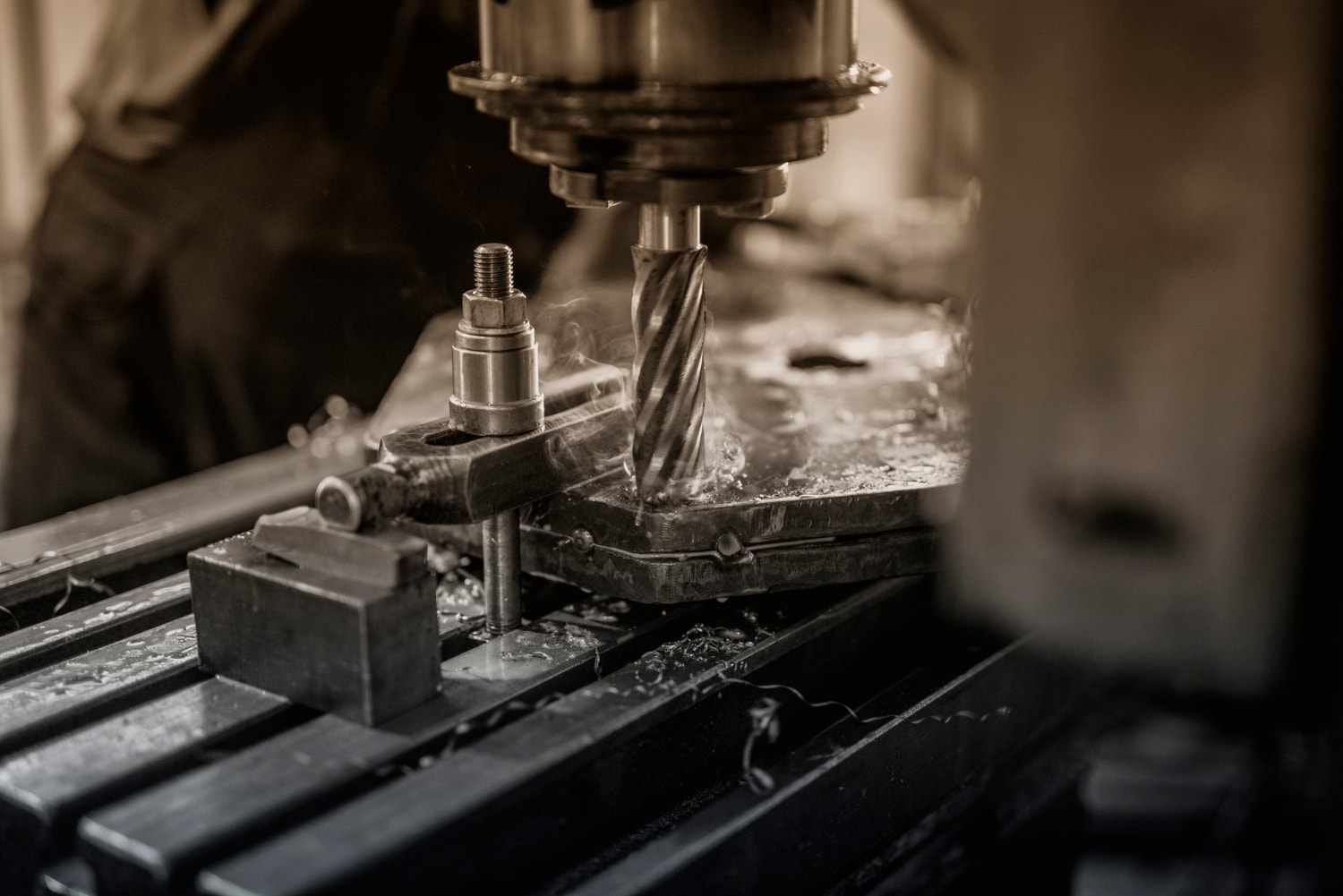
Best Semiconductor CNC Machining in the United States
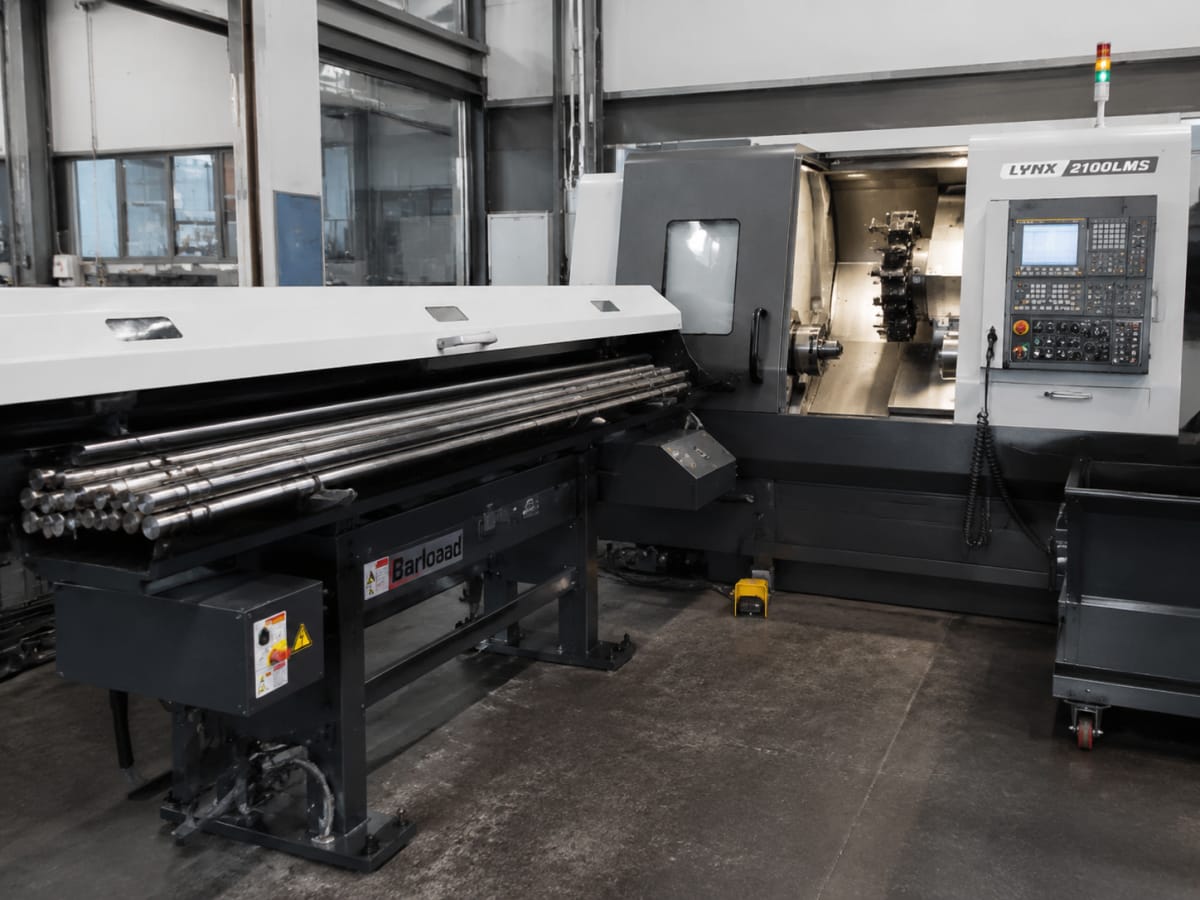
Best Semiconductor CNC Machining in the United States
Quick Answer

If you need reliable cnc machining semiconductor support in the United States, the most practical shortlist includes Applied Materials, Entegris, Ultra Clean Holdings, CIRCOR Aerospace & Defense Precision Components, and Integra Technologies-style precision contract manufacturers serving cleanroom-sensitive industries, along with specialist machine shops clustered around Phoenix, Austin, Portland, Albany, and Silicon Valley. For buyers who need custom chambers, manifolds, gas delivery hardware, wafer handling parts, electrostatic chuck fixtures, and vacuum-compatible assemblies, the best partner is usually the supplier that can prove tight tolerance control, material traceability, particle-control discipline, and experience with semiconductor OEM documentation rather than general machining alone.
For fast procurement, prioritize suppliers that can machine aluminum, stainless steel, PEEK, PTFE, ceramics-ready fixtures, and nickel-based alloys; offer CMM inspection and surface finishing; and support short prototype cycles before recurring production. In the United States, regional access near major semiconductor hubs such as Arizona, Texas, Oregon, New York, and California can shorten qualification and logistics time. Qualified international suppliers can also be considered, especially Chinese manufacturers with ISO-certified systems, strong engineering communication, and responsive pre-sales and after-sales support, because they often offer attractive cost-performance for prototype parts, bridge production, and repeat batches.
Market Overview

The United States semiconductor manufacturing market is expanding quickly as fabs, equipment makers, subsystem integrators, and materials companies increase domestic investment. New capacity in Arizona, Texas, Ohio, and New York is driving more demand for precision machined components used in deposition tools, etch systems, metrology equipment, gas control modules, wet process stations, robotics, thermal management systems, and support fixtures. This demand is not limited to wafer fabs. It also includes upstream tool builders, automation companies, maintenance organizations, refurbishment specialists, and pilot-line R&D teams.
Semiconductor machining is different from ordinary industrial machining because dimensional accuracy alone is not enough. Many parts must perform in vacuum, corrosive chemical environments, plasma exposure zones, or ultra-clean process areas. That means suppliers must control burrs, trapped contamination, finish quality, outgassing risk, and part-to-part repeatability. Buyers in the United States increasingly ask for documented inspection plans, lot traceability, packaging standards, and process repeatability because a low-cost part that creates particles or leaks can cause very expensive downtime.
Domestic demand is being shaped by three forces. The first is fab localization. With federal incentives and strategic reshoring, more semiconductor equipment and supporting hardware are being sourced closer to U.S. production sites. The second is speed. Tool makers need prototypes and engineering change parts quickly, often in days rather than weeks. The third is resilience. Procurement teams now want a balanced supplier mix that includes local quick-turn partners and qualified international backup capacity.
U.S. trade hubs and logistics corridors also matter. Semiconductor buyers near Port of Los Angeles, Port of Long Beach, Phoenix Sky Harbor, Austin-Bergstrom, Portland International, and the Albany Tech Valley corridor often combine local machining for urgent work with offshore support for cost-optimized volume orders. This hybrid model has become common because it reduces schedule risk while preserving flexibility.
Market Growth Trend

The chart below illustrates a realistic outlook for semiconductor-related CNC machining demand in the United States, reflecting continued tool investment, refurbishment activity, and domestic fab expansion.
Product Types
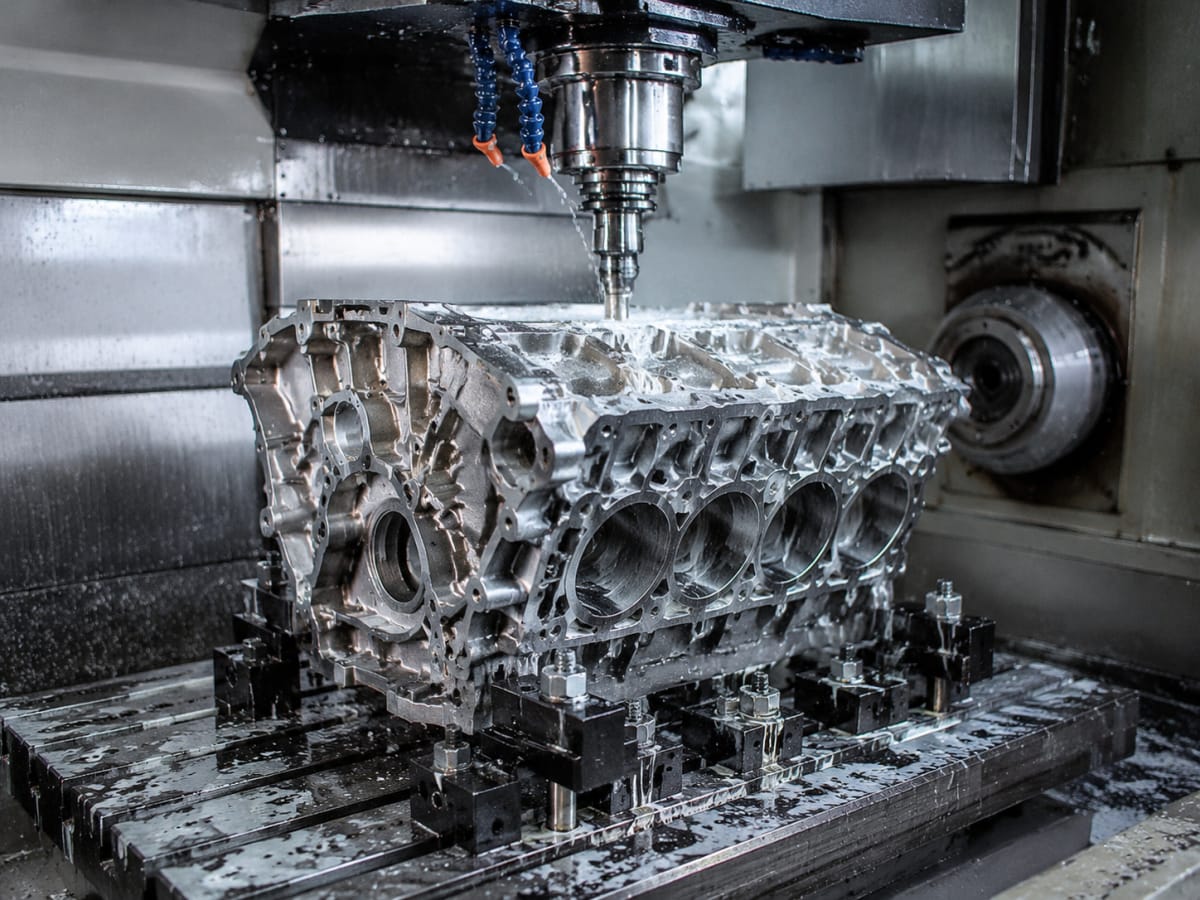
Semiconductor equipment uses a wide range of machined parts, and each category carries different quality requirements. Structural frames and non-process enclosures often prioritize dimensional stability and assembly fit. By contrast, process-facing components such as gas manifolds, showerheads, chamber liners, plates, mounts, and vacuum adapters require tighter controls on surface condition, sealing geometry, and chemical compatibility. Wafer handling hardware may require smooth profiles, reduced particle shedding, lightweight design, and precision motion interfaces.
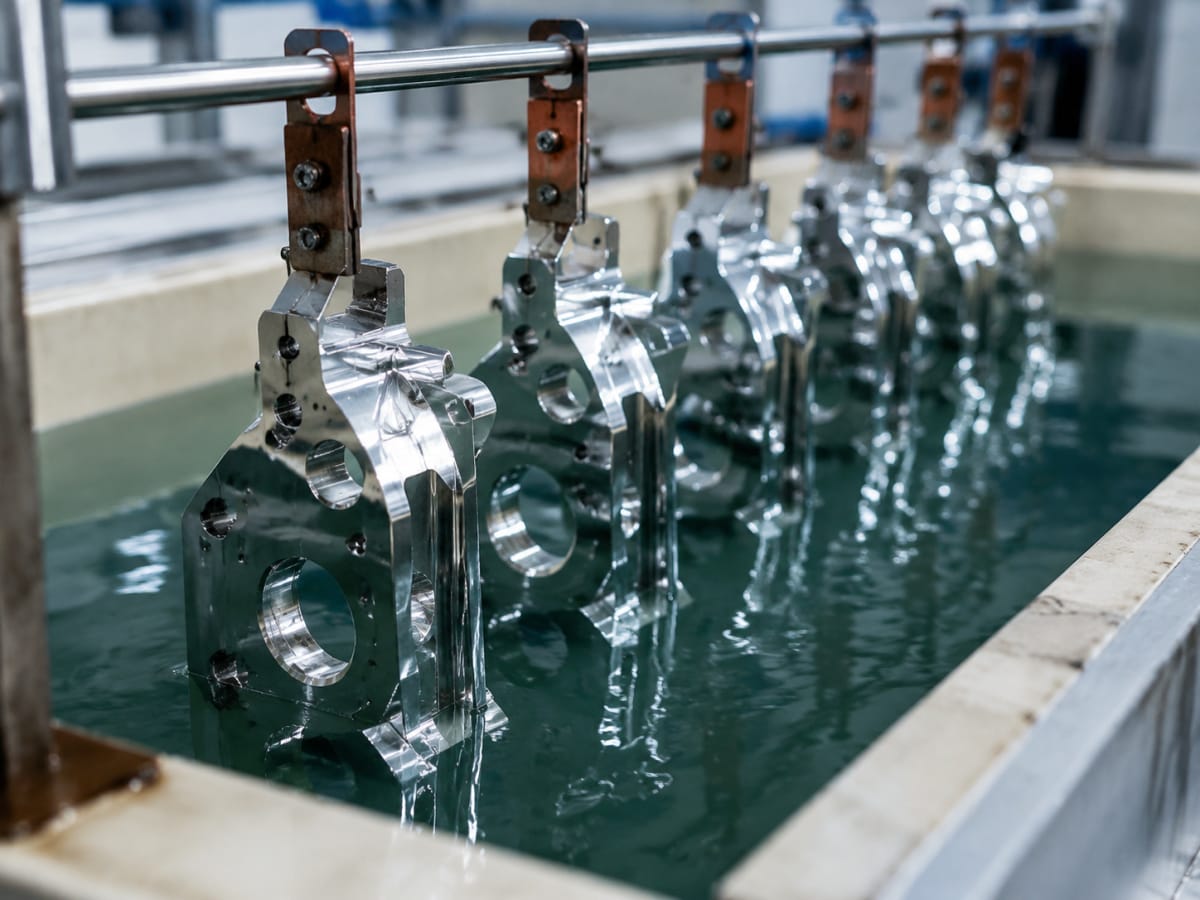
Common material choices include 6061 and 7075 aluminum for lightweight structures, 316L stainless steel for corrosion resistance, titanium for selected high-performance applications, PEEK and PTFE for chemically resistant polymer components, and engineering plastics for insulators, guides, and test fixtures. Some suppliers also support Invar, copper alloys, and specialty nickel alloys when thermal stability or conductivity is critical. Surface treatments such as hard anodizing, electroless nickel plating, passivation, polishing, and specialty cleaning are often just as important as machining itself.
| Product Type | Typical Material | Main Use | Key Requirement | Common Tolerance Range | Typical Buyer |
|---|---|---|---|---|---|
| Vacuum manifolds | 6061 aluminum, 316L stainless steel | Gas and vacuum distribution | Leak integrity and surface finish | ±0.01 mm to ±0.03 mm | Equipment OEMs |
| Chamber fixtures | Aluminum, stainless steel | Process alignment and support | Flatness and repeatability | ±0.01 mm to ±0.02 mm | Fab tool builders |
| Wafer handling arms | Aluminum, titanium, PEEK | Wafer transfer systems | Low weight and particle control | ±0.005 mm to ±0.02 mm | Automation integrators |
| Fluid blocks | 316L stainless steel, PFA-compatible metals | Chemical and gas flow paths | Port precision and cleanliness | ±0.01 mm to ±0.03 mm | Subsystem suppliers |
| Electronics housings | Aluminum, plastics | Sensor and controller packaging | Fit, EMI management, finish | ±0.02 mm to ±0.05 mm | Metrology makers |
| Inspection jigs | Tool steel, aluminum, Delrin | Assembly and QA support | Stability and repeat use | ±0.01 mm to ±0.05 mm | Contract manufacturers |
This product mix shows why buyers should match the supplier to the part’s operating environment. A shop that performs well on general housings may not be the best choice for vacuum manifolds or contamination-sensitive chamber hardware.
Buying Advice
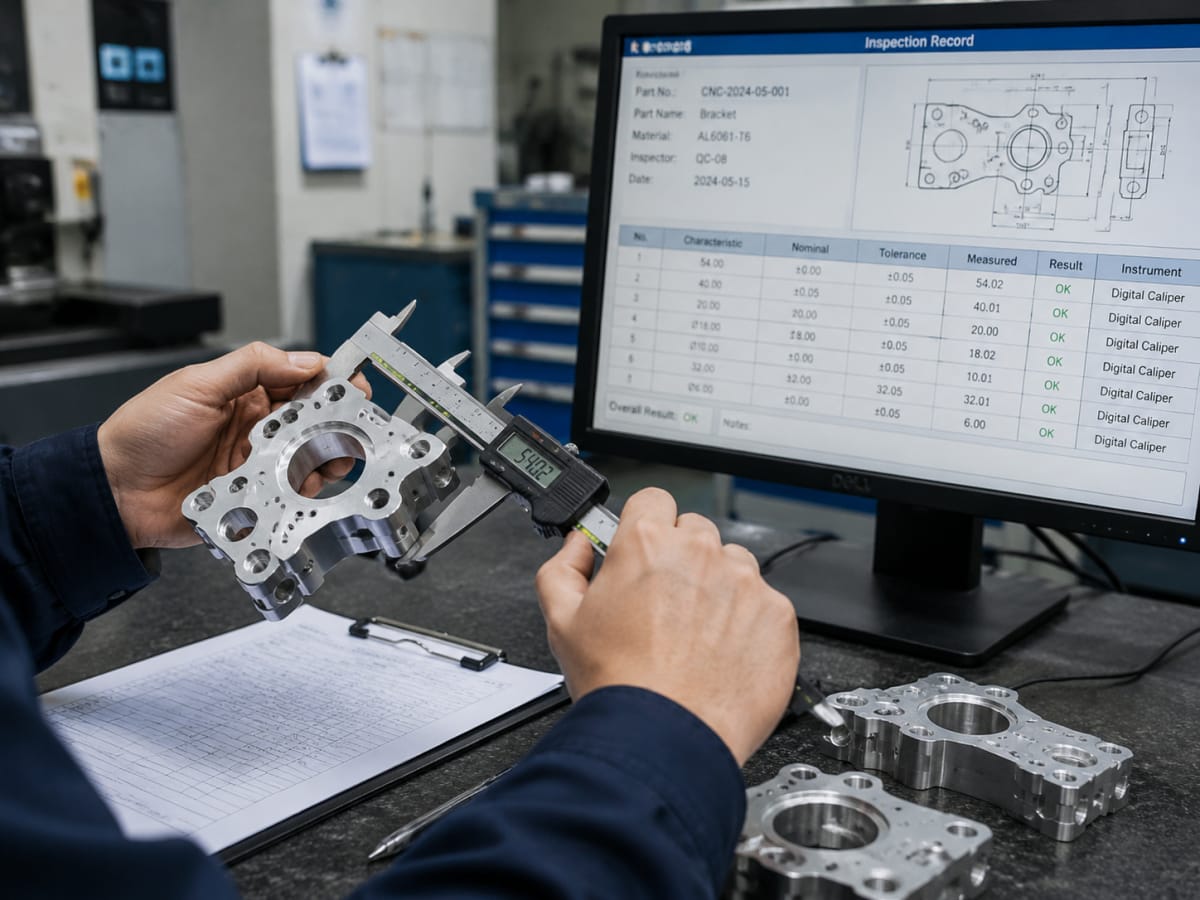
When sourcing semiconductor machined parts in the United States, start with the technical risk profile instead of just price. Ask whether the component is process-facing, vacuum-sealed, particle-sensitive, corrosive-chemical exposed, or used in thermal cycling. Then confirm that the supplier has relevant process controls such as documented deburring methods, passivation or anodizing management, ultrasonic cleaning capability, final inspection plans, serialized traceability, and packaging discipline for clean shipment.
Lead time is another major selection factor. Semiconductor programs frequently move from prototype to ECO revision to pilot production in a compressed schedule. A supplier that offers design-for-manufacture feedback early can save both machining cost and qualification time. U.S. buyers often prefer partners near engineering centers such as San Jose, Austin, Chandler, Hillsboro, or Albany because in-person issue resolution can speed up root-cause analysis when a part fails fit, leaks, or causes contamination concerns.
Cost evaluation should include more than the quoted unit price. Consider inspection overhead, packaging, special cleaning, expedited freight, imported material traceability, and nonconformance risk. For bridge production and recurring orders, a hybrid sourcing model is increasingly effective: local machining for urgent engineering builds and qualified offshore production for stable repeat work.
| Buying Factor | Why It Matters | What to Ask | Risk if Ignored | Best Fit for U.S. Buyers | Practical Check |
|---|---|---|---|---|---|
| Material traceability | Supports quality and compliance | Can you provide certs per lot? | Unknown performance history | High-reliability equipment | Review mill certs and lot IDs |
| Surface finishing | Affects corrosion and particles | Do you manage anodize or EN plating in-house or through audited vendors? | Finish variation and failure | Process-facing hardware | Request sample reports |
| Leak and pressure integrity | Critical for vacuum and gas systems | What leak-test methods are used? | Tool downtime | Gas blocks and manifolds | Ask for pressure test criteria |
| Particle control | Protects clean environments | How are burrs and contamination handled? | Yield loss | Wafer handling and chamber parts | Inspect packaging and cleaning SOPs |
| Engineering support | Reduces cost and redesigns | Do you provide DFM feedback before release? | Slow iteration | Prototype and NPI projects | Request marked-up drawings |
| Regional service | Speeds communication and logistics | Do you support U.S. scheduling and after-sales? | Longer recovery time | Programs with frequent revisions | Confirm local response window |
This checklist is especially useful for buyers comparing a local U.S. shop against a global supplier. The right decision depends on urgency, technical complexity, and the cost of field failure.
Industries Served
Although the focus is semiconductor equipment, the same machining capabilities often support adjacent sectors that share high cleanliness and precision requirements. These include medical devices, photonics, aerospace electronics, analytical instruments, vacuum systems, laboratory automation, and industrial robotics. Suppliers serving multiple high-spec sectors can bring stronger process discipline, especially in documentation, revision control, and specialty materials.
Applications
In real operations, semiconductor CNC machining supports chamber hardware, support plates, wafer edge fixtures, purge components, vacuum adaptors, valve bodies, gas manifolds, thermal blocks, instrument housings, robotic end-effectors, alignment nests, and service spares. Application requirements vary widely. A thermal block may prioritize conductivity and flatness. A wafer handling arm may prioritize balance, repeatability, and smooth motion surfaces. A valve body may require precise threads, sealing interfaces, and leak-tested fluid passages.
U.S. fabs and OEMs are also placing growing importance on spare parts continuity. When legacy machines remain in use, original drawings may be outdated or unavailable. Suppliers that can reverse engineer parts, verify critical dimensions, and propose more manufacturable revisions can become strategic partners. This is particularly relevant in mature semiconductor regions such as Oregon and California, where legacy tools often operate alongside advanced nodes.
Application Trend Shift
The next chart shows how demand is shifting from general support hardware toward cleaner, higher-value, and more process-integrated machined components.
Case Studies
A typical Arizona case involves a subsystem builder supporting new fab installations around Chandler and Phoenix. The company needs fast-turn aluminum and stainless steel gas distribution blocks with inspected port geometry, reliable anodized surfaces, and serialized packaging. The winning supplier is rarely just the lowest bidder. It is usually the shop that can release prototypes within days, document rework decisions, and scale to repeat batches once the subsystem is qualified.
In Oregon, a wafer handling integrator may need lightweight robotic fixtures with excellent cosmetic and functional consistency. Here, smooth machining transitions, low burr formation, and stable repeatability across batches matter more than simple cycle-time reduction. In New York’s Albany technology corridor, R&D equipment programs often require frequent geometry changes, making DFM responsiveness and revision control a competitive advantage.
Another common case involves refurbishment. A California service provider receives used vacuum hardware that must be reproduced or updated. Reverse engineering, material verification, and finish restoration become essential. U.S. customers value suppliers that can combine measurement, CNC milling, turning, EDM, and finishing under a coordinated quality plan because it reduces handoff errors.
Local Suppliers
The U.S. market includes large semiconductor equipment companies, subsystem specialists, and precision machine shops that serve cleanroom-sensitive applications. The list below focuses on practical supplier relevance rather than general manufacturing fame.
| Company | Primary U.S. Region | Core Strength | Key Offerings | Best Fit | Service Region |
|---|---|---|---|---|---|
| Applied Materials | California, nationwide support | Deep semiconductor equipment expertise | Tool systems, precision assemblies, spare hardware support | OEM-level process hardware | United States and global fabs |
| Entegris | Massachusetts, Arizona, Texas | Materials purity and fluid handling | High-purity components, fluid management, contamination-control products | Chemical and gas path applications | United States and global semiconductor hubs |
| Ultra Clean Holdings | California, Texas, Arizona | Subsystem integration and precision manufacturing | Gas delivery modules, frames, fabricated and machined assemblies | Complex OEM and subsystem work | North America and Asia |
| CIRCOR Precision Components | California and national coverage | High-spec precision component manufacturing | Complex machined parts, flow-control related hardware | Critical tolerance components | United States |
| Pioneer Service | Illinois with national reach | Precision CNC machining for demanding industries | Milled and turned components, prototyping and production | Custom high-precision parts | United States |
| Owens Industries | Wisconsin with U.S. support | Ultra-precision machining | Tight-tolerance complex components for advanced industries | Very high precision applications | United States |
This supplier view combines major semiconductor-facing organizations and advanced precision manufacturers. Buyers should still verify whether each company handles process-facing fabrication directly, acts mainly as an OEM, or supports machining through a broader subsystem model.
Detailed Supplier Comparison
The next comparison chart visualizes how different supplier types often compare on speed, semiconductor specialization, scalability, and cost efficiency.
| Supplier Type | Lead Time | Semiconductor Process Knowledge | Cost Position | Scale Flexibility | Best Use Case |
|---|---|---|---|---|---|
| Local quick-turn machine shop | Very fast | Medium | Higher | Low to medium | Urgent prototypes and ECOs |
| Large OEM-facing supplier | Medium | Very high | Medium to high | High | Critical qualified assemblies |
| Subsystem integrator | Medium | High | Medium | High | Multi-part modules |
| Ultra-precision specialist | Medium to slow | High | High | Low to medium | Extreme tolerance parts |
| Qualified global supplier | Fast to medium | Medium to high | Low to medium | High | Bridge production and repeat orders |
| Hybrid supply model | Fast overall | High | Optimized | Very high | Balanced cost and resilience |
This comparison helps buyers avoid a common mistake: using one supplier model for every part family. Semiconductor sourcing works better when part criticality and supply strategy are matched deliberately.
Our Company
TEAM Rapid serves U.S. buyers as an engineering-led manufacturing partner for semiconductor-adjacent and precision industrial components through CNC machining services, tooling, molding, and integrated production support, with ISO 9001:2015-certified quality management, tight machining capability down to 0.01 mm, in-house and networked capacity across machining, tooling, molding, finishing, assembly, packaging, procurement, and shipping, and a project record of more than 6000 delivered jobs for over 500 customers in more than 25 countries; this provides concrete product strength through documented DFM review, manufacturability analysis, material and process flexibility for both plastic and metal parts, and controlled finishing options such as anodizing, plating, polishing, and painting that align with international industrial benchmarks. For cooperation models, the company supports U.S. end users, distributors, dealers, brand owners, OEM purchasers, and individual innovators through flexible OEM/ODM, prototype, wholesale, repeat-production, and regional supply partnership arrangements, and it clearly positions its service as EPC, turnkey, and customer-owned plant style manufacturing support rather than BOO or on-site bulk supply. For local service assurance, TEAM Rapid has established experience supporting customers in the United States and other Western markets, offers one-to-one engineering communication with responses often within hours, can move from prototype to low-volume and volume production without forcing customers to manage multiple disconnected vendors, and backs online pre-sale and after-sale coordination with practical export, logistics, packaging, and direct shipping support that gives U.S. buyers a dependable long-term operating relationship rather than a distant transactional exporter; buyers who want to discuss project fit can use the company’s U.S.-focused contact channel for quoting and engineering review.
Why International Suppliers Can Make Sense for U.S. Buyers
For semiconductor machining in the United States, international suppliers are not just a backup option. They can be a strategic part of the sourcing mix when they demonstrate strong documentation, fast engineering communication, and repeatable process control. A qualified offshore partner can be especially effective for prototype iterations, service spares, low-volume recurring batches, and cost-sensitive structural or non-process-facing parts. The key is not geography alone but operational maturity: quality systems, traceability, inspection discipline, and response speed matter more than marketing claims.
Many U.S. procurement teams now maintain two parallel paths. The first is a domestic route for urgent NPI work and failure recovery. The second is an international route for planned demand and cost optimization. When managed properly, this approach shortens lead times, avoids dependence on one machine shop, and improves commercial leverage without sacrificing technical quality.
Future Trends Through 2026
Several trends will shape semiconductor CNC machining over the next two years in the United States. First, fabs and equipment makers will continue localizing strategic capacity due to policy support and supply-chain resilience goals. Second, machining demand will shift toward more complex process-facing parts as tool architectures evolve and contamination standards tighten. Third, sustainability requirements will become more visible. Buyers will increasingly ask about scrap reduction, coolant handling, plating compliance, packaging efficiency, and freight footprint, especially when supplier scorecards expand beyond simple cost and delivery.
Technology is also moving the market. More shops are investing in in-machine probing, automated inspection data capture, digital job travelers, and simulation-led DFM review. These tools help reduce scrap, shorten first-article approval time, and support faster engineering change orders. Policy pressure in the United States will continue favoring domestic semiconductor ecosystems, but cost realities mean global sourcing will remain important. The winners will be suppliers that can prove documentation, consistency, and responsiveness.
Another 2026 trend is the rising value of supplier specialization. General job shops may still support brackets, covers, and fixtures, but the highest-margin opportunities will increasingly favor shops and partners familiar with vacuum systems, high-purity fluid paths, ultra-clean handling, and semiconductor packaging expectations. Buyers should expect more requests for traceability, first-article inspection packages, and controlled packaging specifications.
FAQ
What makes semiconductor CNC machining different from standard precision machining?
Semiconductor work often requires not only tight dimensional control but also lower particle generation, better surface condition, clean packaging, traceability, and compatibility with vacuum, plasma, corrosive chemicals, or thermal cycling.
Which U.S. regions are strongest for semiconductor machining suppliers?
Arizona, California, Texas, Oregon, and New York are especially relevant because of their concentration of fabs, tool OEMs, subsystem builders, and precision manufacturing ecosystems.
Which materials are most common?
6061 aluminum, 7075 aluminum, 316L stainless steel, titanium, PEEK, PTFE, Delrin, and selected copper or nickel alloys are widely used depending on exposure conditions and mechanical requirements.
How tight should tolerance requirements be?
Only specify tolerances as tight as function requires. Over-tolerancing raises cost and lead time. For many semiconductor components, flatness, sealing geometry, and surface finish can matter more than blanket dimensional tightening.
Is domestic sourcing always better for U.S. buyers?
Not always. Domestic suppliers are often best for urgent work, engineering changes, and highly interactive qualification. Qualified international suppliers can be very competitive for cost, scalability, and bridge production if they provide strong quality documentation and communication.
What certifications should buyers look for?
ISO 9001 is a common baseline. Depending on the part and customer environment, buyers may also require process-specific documentation, inspection records, material certifications, and validated finishing controls.
How should buyers compare suppliers?
Compare them on semiconductor process knowledge, inspection capability, cleanliness control, engineering response speed, finishing management, packaging standards, and ability to support both prototypes and repeat production.
Can one supplier handle prototype through production?
Yes, but only if the supplier has enough process depth and scheduling flexibility. Many buyers prefer a partner that can support prototype machining, DFM changes, low-volume production, and assembly or packaging under one coordinated workflow.
Final Takeaway
For companies sourcing cnc machining semiconductor solutions in the United States, the smartest path is to define part criticality first, then align supplier capability to the actual application. Local U.S. providers offer speed, engineering access, and easier issue resolution near major semiconductor hubs. Large semiconductor-facing companies bring process familiarity and integration strength. Qualified international partners can add strong cost-performance and flexible scaling when supported by real quality systems and responsive service. The best sourcing strategy is usually not choosing one category over another, but building a balanced supplier network that protects uptime, qualification speed, and long-term cost control.

About the Author : Team Rapid Manufacturing Co., Ltd.
This article is written by the engineering team at Team Rapid Manufacturing Co., Ltd, specializing in rapid prototyping and manufacturing solutions. With extensive experience in CNC machining, injection molding, and low-volume production, our team shares practical insights to help global clients improve product development efficiency and reduce manufacturing risks.
Share
Post Category
Related Insights
-
Choosing CNC Machining Services in the United States
Choosing the right CNC machining service is not just about finding the lowest unit price. For buyers in the United States, the better question is whether a supplier can deliver the right part, in the right material, at the right tolerance, with dependable communication and repeatable quality. That is true whether you are sourcing one prototype for testing in Boston, a pilot run for a medical device team in Minneapolis, or recurring production for industrial equipment shipped through Houston or Los Angeles.
The most effective way to select a machining partner is to evaluate the entire path from design intent to delivered parts. That means defining your project requirements, checking process capability, comparing prototype and production needs, reviewing material choices, understanding tolerances and quality standards, and asking detailed questions about engineering support, finishing, and quoting. A supplier that looks acceptable on paper can still create expensive delays if it cannot manage revision control, inspection records, packaging, or post-processing.
In the United States market, CNC buyers also need to think about broader supply-chain realities. Tariff exposure, freight timing, domestic inventory buffers, and compliance expectations can affect the real total cost. Teams in Detroit, Seattle, San Diego, and Atlanta often need suppliers that can move quickly from concept validation to low-volume production without forcing a full supplier change halfway through development. That is why many companies prefer machining partners that can support prototyping, tooling, secondary operations, and broader manufacturing services under one coordinated system.
This guide explains how to evaluate CNC machining suppliers for both prototypes and production. It also covers common product categories, industry requirements, practical buying advice, typical supplier red flags, and what an engineering-driven partner should provide before you place an order.
The U.S. market for machined parts is broad and highly fragmented. Demand comes from aerospace in Washington and Kansas, automotive in Michigan and Ohio, robotics in California, electronics in Texas, defense across multiple federal corridors, and medical devices in Minnesota and Massachusetts. In many of these sectors, CNC machining remains the preferred process for functional prototypes, jigs, fixtures, housings, brackets, heat sinks, manifolds, impellers, shafts, and precision components that require tight tolerances or end-use materials.
Another factor shaping sourcing decisions is the balance between domestic machining capacity and offshore manufacturing support. Many U.S. buyers want shorter communication loops, but they also need competitive pricing and flexibility for low- to mid-volume orders. This has created stronger demand for globally oriented manufacturing partners that can respond quickly, provide engineering review, and support both early development and recurring supply.
var ctxLineMarket = document.getElementById(‘lineChartMarket’).getContext(‘2d’);var lineChartMarket = new Chart(ctxLineMarket, { type: ‘line’, data: { labels: [‘2021’, ‘2022’, ‘2023’, ‘2024’, ‘2025’, ‘2026’], datasets: [{ label: ‘Estimated U.S. CNC sourcing demand index’, data: [72, 78, 85, 93, 101, 110], borderColor: ‘rgb(54, 162, 235)’, backgroundColor: ‘rgba(54, 162, 235, 0.15)’, fill: false, tension: 0.3 }] }, options: { responsive: true, maintainAspectRatio: false }});The chart above reflects a realistic growth pattern in CNC sourcing demand. The increase is driven by reshoring discussions, shorter product cycles, EV and battery equipment expansion, more custom automation, and higher demand for validated prototype hardware. For buyers, this means lead time and responsiveness are becoming more important selection criteria than they were a few years ago.
CNC machining serves an unusually wide range of products. In the U.S., common applications include aluminum enclosures for communications devices, stainless steel medical instrument parts, plastic housings for handheld devices, automotive brackets, UAV structural elements, custom machine components, and prototype assemblies used for design reviews or field testing.
Product needs vary by stage. Early prototypes may prioritize speed, appearance, and basic fit. Engineering validation parts may need true production-grade material and tighter tolerances. Bridge production often requires stable repeatability, batch traceability, and surface finishing consistency. Full production may add packaging, part marking, incoming material certification, statistical inspection, and shipment scheduling.
Common CNC-machined product types in the United States market Product type Typical material Key requirement Common industry Typical volume Risk if sourced poorly Functional prototypes Aluminum 6061, ABS-like plastic, POM Speed and design validation Consumer, industrial design 1 to 20 Delayed testing and design rework Precision housings Aluminum 7075, stainless steel Tolerance and cosmetic finish Electronics, medical 10 to 500 Poor fit, sealing issues, visible defects Machine brackets and fixtures Steel, aluminum Flatness, hole position, durability Automation, factory equipment 5 to 300 Assembly problems and downtime Rotational parts Brass, stainless steel, titanium Concentricity and surface finish Aerospace, fluid systems 20 to 1000 Leakage or performance failure Medical device components PEEK, stainless steel, aluminum Cleanliness and documentation Medical 10 to 2000 Compliance and validation issues Heat sinks and thermal parts Aluminum 6063, copper Thermal performance and fin quality Electronics, EV systems 50 to 5000 Reduced cooling performanceThis table shows why supplier selection must be application-specific. A shop that is strong in rough steel fixtures may not be the best choice for cosmetic anodized housings or clean medical components. The right fit depends on the product category, volume, and failure risk.
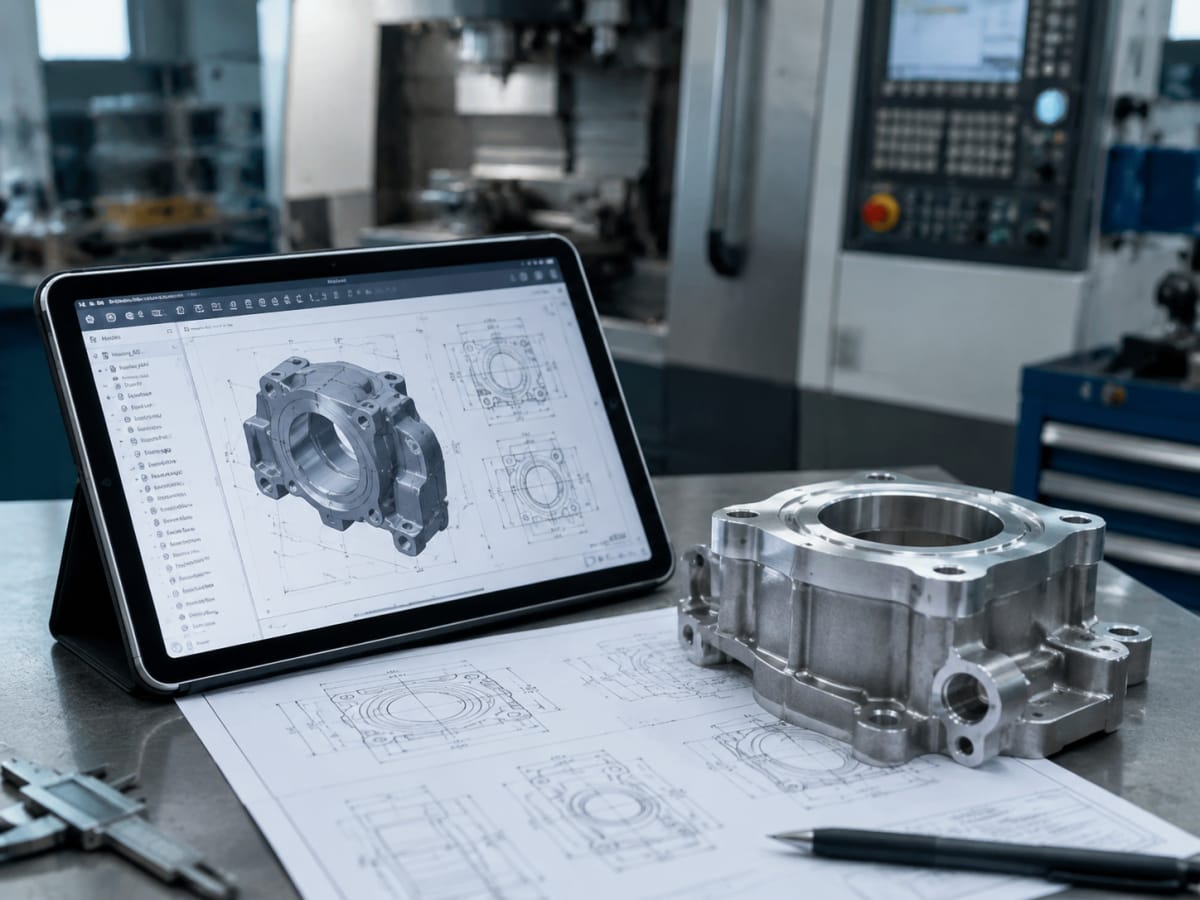
The first step in choosing a machining supplier is to define exactly what you need. Many sourcing problems begin because the RFQ only includes a 3D model and a quantity. That is not enough for an accurate review. A capable supplier needs to understand the function of the part, critical dimensions, expected environment, cosmetic requirements, assembly interfaces, and how closely the machined part must match the final production intent.
Start by separating what is critical from what is simply preferred. If a hole location controls bearing alignment, mark it as critical. If a non-contact edge only affects appearance, note the cosmetic expectation separately. This helps the supplier avoid over-machining low-risk features and under-controlling high-risk ones.
For U.S. buyers, requirement clarity is especially important when parts move across teams in different states or time zones. A product manager in New York, a design engineer in Austin, and a contract manufacturer near Phoenix may all interpret the same drawing differently unless revision control is disciplined and the RFQ package is complete.
CNC project requirement checklist before requesting quotes Requirement area What to provide Why it matters Common mistake Best practice Impact on cost CAD data STEP file and 2D drawing Supports accurate programming and inspection Sending only screenshots Include model, drawing, and revision history High Quantity Prototype, pilot, or production volumes Affects process planning and fixturing Giving only one quantity List 1, 10, 100, and annual forecast High Material Exact alloy or resin grade Changes machinability and performance Saying “aluminum” only Name grade and substitute options Medium Tolerances General and critical tolerance zones Defines machining and inspection effort Tightening every dimension Highlight only function-critical features High Surface finish Ra values, texture, or cosmetic standard Impacts cycle time and post-processing Not defining visible surfaces Separate cosmetic from hidden areas Medium Assembly needs Threading, inserts, mating references Reduces fit issues downstream No assembly context Provide mating part details if needed MediumA clear RFQ package shortens quoting time and reduces revision churn. It also makes supplier comparisons more meaningful, because each shop is pricing the same requirement instead of making different assumptions.
Once requirements are defined, the next question is whether the supplier has the right technical capability. This goes beyond asking whether they “do CNC machining.” You need to know what kind of machining they perform, what size range they handle, what tolerance level is realistic, and whether they can support your geometry without excessive setups or risk.
Capability should be reviewed in three layers: technological capability, manufacturing capability, and service capability.
From a technological perspective, a strong supplier should be able to support multi-axis milling, turning, EDM or wire EDM for difficult geometries, and a useful range of post-processing options. TEAM Rapid, for example, supports CNC milling and turning for plastic and metal parts, along with EDM, wire EDM, polishing, anodizing, painting, plating, and other finishing operations. That range matters because complex components often need more than one process to hit both geometric and cosmetic targets.
From a manufacturing perspective, the supplier should be able to handle the order size you actually need. Some machine shops are optimized for single-piece prototypes. Others are built for repeat production. TEAM Rapid is structured to support one-off parts, short runs, and recurring batches, with machining and broader manufacturing resources that can bridge from prototypes to 100,000-plus parts across different processes when product demand grows.
From a service perspective, the best suppliers act like engineering partners rather than order takers. That means they review manufacturability, flag weak wall sections, suggest tool-access improvements, and respond quickly when revisions change. Fast feedback is particularly valuable when a U.S. development team is racing toward a trade show, pilot test, or launch window.
How to evaluate CNC machining capability and equipment Capability area What to ask Strong supplier answer Warning sign Why it matters Best-fit project Milling capacity 3-axis, 4-axis, or 5-axis? Clear machine list and part examples Vague “we can do most things” Reduces setups and tolerance stack-up Complex housings Turning capacity Max diameter, length, live tooling? Specific limits and fixture options No dimensional range given Supports shafts and rotational parts Valves, bushings Special processes EDM, wire EDM, deep holes? Can match difficult geometry needs Only standard milling available Important for sharp corners and hard metals Tooling inserts Inspection equipment CMM, gauges, reports? Documented quality process Manual check only for all jobs Critical for repeatability Medical, aerospace Size range Minimum and maximum part size? Published or confirmed range Assumptions without review Avoids fixturing or clamping issues Large panels or micro-parts Finishing integration In-house or managed externally? Controlled finishing workflow No timeline ownership Affects lead time and quality stability Cosmetic partsFor a deeper look at process coverage, buyers can review a dedicated CNC machining service overview and compare it against their part requirements. The key is not the longest process list, but the best match between your geometry, tolerance, finish, and delivery schedule.
Prototype machining and production machining are related, but they are not the same sourcing exercise. A prototype supplier may be excellent at speed yet weak in repeatability across multiple lots. A production-oriented supplier may be precise but too slow or too process-heavy for early concept work.
Prototype machining usually focuses on speed, design verification, and flexibility. Toolpaths may be optimized for fast delivery rather than long-run efficiency. Material substitutions can sometimes be acceptable if the goal is fit check or visual evaluation. Engineering changes are frequent.
Production machining requires a different discipline. Fixture strategy, process consistency, inspection frequency, packaging, and change control become more important. If your program is likely to move from 5 parts to 500 parts, you should ask how the supplier plans that transition. Can they keep the same datum scheme? Can they preserve surface finish consistency? Can they manage batch records and repeat orders without restarting the learning curve?
This transition stage is where many U.S. buyers lose time. A startup in San Jose may order quick prototypes from one machine shop, then discover that the same supplier cannot support launch quantities. A better approach is to choose a partner that understands both rapid iteration and scale-up planning from the start.
var ctxAreaTrend = document.getElementById(‘areaChartTrend’).getContext(‘2d’);var areaChartTrend = new Chart(ctxAreaTrend, { type: ‘line’, data: { labels: [‘2021’, ‘2022’, ‘2023’, ‘2024’, ‘2025’, ‘2026’], datasets: [{ label: ‘Shift from prototype-only sourcing to prototype-plus-production sourcing’, data: [38, 43, 49, 56, 63, 71], borderColor: ‘rgb(75, 192, 192)’, backgroundColor: ‘rgba(75, 192, 192, 0.25)’, fill: true, tension: 0.35 }] }, options: { responsive: true, maintainAspectRatio: false }});The trend is clear: buyers increasingly prefer suppliers that can support both rapid prototypes and follow-on manufacturing. This reduces supplier switching, protects design intent, and lowers communication risk.
Prototype machining versus production machining Factor Prototype machining Production machining Main buyer concern Supplier capability needed Cost driver Lead time Fastest possible Planned and repeatable Test schedule Quick programming and setup Expedite labor Engineering changes Frequent Controlled revisions Version accuracy Good document control Reprogramming time Material selection Sometimes flexible Usually fixed Performance match Material sourcing depth Grade availability Inspection Critical features prioritized Broader lot validation Repeatability Structured QC system Measurement time Unit cost Higher Lower with scale Budget planning Process optimization Batch size Packaging and logistics Simple Standardized Damage prevention Shipment control Packing methodWhen you compare quotes, make sure you are comparing the same project stage. A low prototype quote may hide limited production support, while a more complete quote may include process planning that saves money later.
Material selection affects performance, machining speed, finishing options, and price. In the U.S. market, buyers often start with common materials such as aluminum 6061, aluminum 7075, stainless steel 303 or 304, mild steel, brass, acetal, nylon, ABS, PMMA, and PEEK. But the right choice depends on more than mechanical strength alone.
For example, an enclosure used in Texas outdoor telecom equipment may need corrosion resistance and stable anodizing behavior. A medical device component in Minnesota may need a biocompatible or sterilization-friendly plastic. An industrial fixture in Ohio may prioritize machinability and durability over appearance. Material choice also affects availability, especially when certain grades have longer procurement cycles.
A capable machining partner should not just accept your material note; they should help confirm whether it fits the application. Engineering-driven suppliers often suggest alternates that improve cost or performance without compromising function. This is particularly valuable during prototype phases, when design teams still have flexibility.
Material options for CNC machined parts Material Strength profile Machinability Common U.S. application Finishing compatibility Typical sourcing note Aluminum 6061 Balanced Excellent Prototypes, fixtures, housings Anodizing, bead blast, paint Most versatile general option Aluminum 7075 High strength Very good Aerospace brackets, structural parts Anodizing Higher cost than 6061 Stainless steel 303 Good Good Fittings, shafts, machine parts Passivation, polishing Better machinability than 304 Stainless steel 304 Good corrosion resistance Moderate Medical and food-related hardware Passivation, polishing Slower machining than 303 Acetal/POM Stable and low friction Excellent Wear parts, bushings, housings Minimal finishing needed Great for dimensional stability PEEK High-performance plastic Moderate Medical, aerospace, electronics Usually as-machined Premium price and careful handlingThis material matrix helps narrow the shortlist, but final selection should always consider thermal exposure, load path, chemical contact, assembly method, and regulatory requirements. If the supplier cannot explain tradeoffs between common grades, that is a sign they may be acting only as a broker rather than a technical partner.
Tolerances are one of the most misunderstood parts of CNC sourcing. Buyers often assume tighter is better, but unnecessary tight tolerances raise cost, extend lead time, and can even reduce process efficiency without improving product performance. The goal is not to machine every dimension as tightly as possible. The goal is to control the dimensions that matter most to function.
For many machined parts, a general tolerance may be acceptable on non-critical features, while bores, thread alignment, flatness, or sealing surfaces may need closer control. TEAM Rapid states machining capability down to 0.01 mm for parts that require high precision, but good engineering practice still means applying that precision selectively, not universally.
Quality standards also involve more than dimensions. Surface condition, burr control, edge breaks, visual quality, finish adhesion, documentation, and inspection reporting all matter. For many U.S. buyers, especially in medical, industrial automation, and aerospace-adjacent sectors, ISO-certified quality systems provide useful confidence. TEAM Rapid operates under ISO 9001:2015, which is relevant for customers who need process discipline and specification control.
Tolerance and quality topics to review with a CNC supplier Quality topic What to define Typical risk Verification method When it matters most Cost effect General tolerances Default dimensional expectation Unclear quote assumptions Drawing notes All parts Medium Critical dimensions Feature-specific tight tolerances Assembly or performance failure CMM or precision gauges Mating features High Surface finish Ra or cosmetic appearance standard Visible defects or friction problems Comparator or profilometer Visible and functional surfaces Medium Burr control Edge condition and deburring limits Safety or fit problems Visual and tactile inspection Handheld or assembled parts Medium Material certification Traceability needs Wrong alloy or resin grade Mill cert review Regulated applications Low to medium Inspection reporting FAI, sample report, lot records Disputes over acceptance Formal documentation Pilot and production lots MediumWhen discussing tolerances, ask the supplier to identify which features drive cost most. Good feedback at this stage often reveals simple drawing changes that lower machining time without affecting performance.
Lead time is not only the number of calendar days from PO to shipment. It also includes quote turnaround, DFM feedback speed, responsiveness to drawing revisions, and how quickly problems are escalated and resolved. For many U.S. teams, especially those coordinating across design centers and contract manufacturers, communication quality determines project speed as much as spindle capacity does.
A strong supplier should answer RFQs quickly, clarify ambiguous dimensions early, and provide practical DFM suggestions before machining starts. TEAM Rapid emphasizes one-to-one engineering support, rapid response within hours, and manufacturability analysis that helps identify design risk before tooling or machining begins. That kind of support is useful when a prototype is likely to evolve, or when a low-volume batch needs to be optimized for later injection molding or die casting.
Service capability also includes logistics thinking. If your parts are landing at the Port of Long Beach for West Coast distribution or moving through Chicago for central U.S. assembly, you want a supplier that understands packing, labeling, freight timing, and shipment coordination. This becomes even more important for delicate cosmetic parts or mixed kits.
var ctxBarDemand = document.getElementById(‘barChartDemand’).getContext(‘2d’);var barChartDemand = new Chart(ctxBarDemand, { type: ‘bar’, data: { labels: [‘Automotive’, ‘Medical’, ‘Industrial’, ‘Electronics’, ‘Aerospace’, ‘Consumer’], datasets: [{ label: ‘Relative CNC demand by U.S. industry’, data: [88, 74, 92, 81, 69, 57], backgroundColor: ‘rgb(255, 99, 132)’ }] }, options: { responsive: true, maintainAspectRatio: false }});Industries with strong demand often place the most pressure on lead time and communication. Industrial automation and automotive programs, for example, frequently need fast turnarounds and revision control as designs change.
Many machining projects fail at the final step, not during cutting. Surface finishing and post-processing can change dimensions, alter appearance, delay delivery, or create inconsistency between lots if they are not managed carefully. That is why finishing should be part of supplier evaluation from the beginning, not an afterthought after the machining quote arrives.
Common post-processing requirements include anodizing, bead blasting, polishing, painting, plating, laser marking, passivation, and assembly preparation. Different finishes suit different products. A consumer-facing aluminum housing may need a uniform anodized cosmetic surface. A stainless component may need passivation for corrosion resistance. A prototype display model may need painted surfaces that match a target brand color. Each finish adds handling steps and tolerance implications.
TEAM Rapid supports a broad range of finishing options as part of its wider manufacturing offer. This is useful for customers who want to reduce supplier handoffs and keep accountability in one place. It is especially beneficial when parts need machining plus finishing plus light assembly before shipping to the United States.
Ask whether the supplier manages finishing in-house, through qualified partners, or through a mixed model. Then ask how they protect dimensions after blasting, coating, or anodizing, and whether visual approval standards can be agreed in advance. For projects with visible exterior surfaces, request reference photos or sample standards.
An accurate quote depends on accurate input. If you send incomplete files, unclear tolerances, and no information about the application, even a good supplier can only provide an estimate based on assumptions. That may look attractive initially, but it often leads to change orders, schedule extensions, or quality disputes later.
To get a reliable quote, provide a complete RFQ package: 3D CAD, 2D drawing, material grade, quantity breaks, finish requirements, tolerance notes, target use, and shipping destination. If the parts will be assembled in Dallas, sterilized in New Jersey, or anodized to match an existing product line in California, say so. Those details can affect process recommendations and packing methods.
What makes a CNC machining quote accurate Quote input Why supplier needs it What happens if missing Best buyer action Effect on lead time Effect on price accuracy 3D model Defines geometry and tool access Programming assumptions increase risk Send STEP or equivalent neutral file High High 2D drawing Shows tolerances and notes Critical features may be missed Include revision-controlled drawing Medium High Quantities Changes setup and batch planning Unit pricing may be misleading Provide multiple quantity tiers Medium High Material grade Affects procurement and machinability Wrong stock or price assumption Name approved equivalents if possible Medium Medium Finish requirements Adds process steps and inspection Late cost additions Specify cosmetic surfaces clearly Medium Medium Delivery and packaging Supports logistics planning Freight and handling surprises State destination and special packing needs Low MediumA good quote should also include assumptions. If the supplier proposes a substitute material, omits inspection reporting, or prices based on general tolerances only, those points should be visible in writing. Transparent quotes are easier to compare and far less likely to create problems after PO release.
var ctxComparison = document.getElementById(‘comparisonChartSuppliers’).getContext(‘2d’);var comparisonChartSuppliers = new Chart(ctxComparison, { type: ‘bar’, data: { labels: [‘Price clarity’, ‘DFM support’, ‘Tolerance control’, ‘Finish options’, ‘Prototype speed’, ‘Production readiness’], datasets: [ { label: ‘Basic machine shop’, data: [58, 42, 61, 47, 76, 39], backgroundColor: ‘rgba(153, 102, 255, 0.6)’ }, { label: ‘Engineering-driven partner’, data: [87, 91, 88, 84, 82, 90], backgroundColor: ‘rgba(255, 159, 64, 0.7)’ } ] }, options: { responsive: true, maintainAspectRatio: false }});The comparison chart highlights a common sourcing truth: the lowest-friction supplier is usually the one with stronger engineering and service systems, not simply the one with the cheapest nominal machine rate.
For buyers in the United States, the smartest CNC sourcing decisions usually come from matching supplier structure to project stage. If you need one quick prototype for a trade show in Las Vegas, speed may matter most. If you are preparing a regulated pilot run in Minneapolis or a fixture series for an automotive line near Detroit, documentation and repeatability may carry more weight.
Use a scorecard rather than a gut feeling. Rate suppliers on capability fit, tolerance confidence, DFM quality, quote clarity, finishing support, communication speed, and production scalability. Include logistics considerations too. A supplier that can package, assemble, and ship directly into your distribution flow may save more total cost than one offering a slightly lower piece price.
Also ask for examples similar to your project type. A supplier with strong experience in machined enclosures, valve bodies, or optical mounts will usually anticipate risks faster than a generalist. Case relevance matters more than broad claims.
Consider an automotive interior program in Michigan that needs machined prototype bezels, clips, and aluminum fixtures. The early focus is speed and form validation, but the next phase requires repeatable batches for testing and supplier reviews. A machining partner that can quickly machine the first parts, provide DFM changes, and support low-volume follow-on runs creates continuity.
Now consider a medical device startup in California building a handheld instrument. The team may need PEEK or stainless parts, cosmetic housings, tight mating features, and documented inspection. Here, quality systems, engineering support, and finish control become more important than raw speed alone.
A third example is an industrial automation company in Illinois ordering custom brackets, manifolds, and alignment parts. Their pain points are usually revision management, assembly fit, and lead time reliability. If the supplier can respond within hours, flag weak tolerances early, and coordinate machining with surface treatment and packaging, purchasing and engineering both benefit.
For U.S. customers looking for a practical partner rather than a single-process vendor, TEAM Rapid is positioned around three integrated strengths.
First, technological capabilities. The company supports CNC milling, turning, EDM, wire EDM, polishing, anodizing, plating, painting, and other secondary processes for both metal and plastic parts. That makes it easier to manage complex parts that need more than straightforward 3-axis machining.
Second, manufacturing capabilities. TEAM Rapid combines in-house machining and tooling strength with a broader manufacturing network in China, allowing support from one prototype to higher-volume production across CNC machining, rapid tooling, injection molding, die casting, sheet metal fabrication, vacuum casting, and 3D printing. This is valuable for U.S. buyers who want one pathway from design validation to market launch.
Third, service capabilities. The company emphasizes fast response, one-to-one engineering communication, manufacturability analysis, and DFM-based risk reduction. Typical prototype lead times can be as short as a few days depending on design complexity, and the broader service model can include assembly, packaging, procurement support, limited warehousing, and direct shipping. For customers balancing speed, affordability, and technical support, that combination can reduce supplier complexity significantly.
Many U.S. buyers ask whether they should source from a local machine shop or a globally integrated manufacturing partner. The answer depends on the part, the timeline, and the broader program.
Local suppliers can be excellent when you need face-to-face collaboration, very short domestic transit, or emergency support. This can be useful in dense industrial hubs such as Detroit, Chicago, Charlotte, or Orange County. However, local capacity may be constrained, and cost can rise quickly for low-volume custom work with finishing and assembly requirements.
A global partner can be a better choice when you need cost efficiency, broader process coverage, and a clear route from prototype to production. The key is making sure communication, engineering review, and quality controls are strong enough to offset distance. In practice, many U.S. companies use a hybrid strategy: urgent local builds for immediate needs and globally coordinated sourcing for broader development and launch programs.
Looking toward 2026, several trends are likely to shape CNC machining decisions in the United States. First is deeper integration between prototype machining and production planning. Buyers increasingly want DFM insight at the RFQ stage so that prototype choices do not create cost penalties later.
Second is stronger digital quoting and engineering collaboration. Faster quoting, model-based review, and clearer revision control will continue to improve sourcing speed. Suppliers that can combine quick digital response with real engineering judgment will have an advantage.
Third is sustainability. More U.S. buyers are asking about scrap reduction, material yield, recyclable packaging, and process efficiency. While CNC machining is inherently subtractive, suppliers can still improve sustainability by optimizing stock size, reducing rework, consolidating finishing flows, and coordinating shipments more intelligently.
Fourth is policy and supply-chain resilience. Tariff uncertainty, import compliance attention, and reshoring pressure will keep total landed cost in focus. Buyers will increasingly evaluate not only the piece price, but also shipping reliability, customs readiness, and the availability of alternate production paths.
Finally, automation and quality data will matter more. Shops with better process monitoring, inspection discipline, and scalable production systems will be better positioned to support EV infrastructure, robotics, medical hardware, and custom industrial equipment.
What is the best CNC machining supplier for prototypes?The best supplier for prototypes is one that can move quickly, review manufacturability early, and machine true functional materials when needed. Speed alone is not enough if drawings are misunderstood or revision control is weak.
How tight should CNC tolerances be?Only as tight as function requires. Apply close tolerances to critical mating, sealing, or alignment features, and use broader general tolerances elsewhere to control cost.
Should I use the same supplier for prototype and production?Often yes, if the supplier has both rapid-turn capability and repeatable production systems. This reduces transfer risk and preserves design knowledge.
What files should I send for a machining quote?Send a 3D model, 2D drawing, material specification, quantity breaks, finish requirements, and delivery details. The more complete the package, the more accurate the quote.
Why does surface finishing affect machining cost so much?Finishing adds labor, handling, masking, quality checks, and sometimes dimensional change. Cosmetic standards also increase inspection and rework risk.
Is offshore CNC sourcing practical for U.S. companies?Yes, if the supplier has strong engineering communication, quality systems, and reliable logistics. Many U.S. programs benefit from a partner that combines cost competitiveness with responsive support.
Before selecting your CNC machining partner, confirm these points: the supplier understands your application, the equipment fits your geometry, materials are appropriate, tolerances are realistic, quality standards are documented, finishing is controlled, lead time is believable, and the quote states its assumptions clearly. If those boxes are checked, you are much more likely to receive usable parts on time and avoid expensive sourcing resets later.
In short, the right CNC machining service for the United States market is not the one with the broadest sales claim. It is the one that can align technical capability, manufacturing flexibility, and engineering support with your real project goals from prototype through production.
-
Fast CNC Prototype Machining Guide for the United States
CNC prototype machining is one of the fastest ways to turn a CAD model into a functional part that can be measured, assembled, tested, and improved. For engineers and purchasing teams in the United States, it is especially valuable when a prototype must behave like the final production component rather than just look like it. That is why CNC-machined prototypes are widely used in medical devices, automotive systems, industrial equipment, robotics, aerospace support hardware, consumer electronics housings, and startup hardware launches.
The direct answer is simple: if your part needs real material performance, accurate dimensions, good surface finish, threaded features, or reliable fit with other components, CNC prototype machining is often the best choice. Compared with many additive processes, it provides stronger material integrity, tighter dimensional control, and more predictable behavior for functional validation. It also helps teams move from concept to low-volume production with fewer design surprises.
Across the United States, demand for fast CNC prototypes continues to grow in hubs such as Detroit, Austin, San Jose, Boston, Minneapolis, Chicago, and Seattle. Product developers in these regions often need short runs of aluminum, steel, brass, ABS, POM, nylon, and other engineering materials for pilot builds and pre-production testing. Logistics also matter. Teams shipping through Los Angeles/Long Beach, Houston, Savannah, New York/New Jersey, and Chicago air freight corridors often care as much about response speed and manufacturability feedback as they do about the machining itself.
For buyers, the smartest approach is to balance speed, cost, geometry, tolerance, and downstream risk. A part that is quoted cheaply but requires multiple reworks can cost far more than a slightly higher-priced prototype that arrives right the first time. That is why a strong prototype supplier should not only machine parts fast, but also review the design, highlight risk areas, recommend practical tolerances, suggest better materials if needed, and support the shift from prototype to repeatable production.
In the current U.S. market, companies also want supplier flexibility. Many projects begin with one-off CNC parts, then move to small production batches, molded parts, sheet metal assemblies, or die-cast housings. A manufacturing partner that supports this progression can reduce project friction and shorten launch cycles. For teams evaluating options, CNC prototyping services are often most valuable when combined with engineering review, multiple process options, finishing support, and clear lead-time communication.
CNC prototype machining is the process of producing prototype parts with computer-controlled mills, lathes, EDM equipment, and related tools based on digital design files. The goal is not just to create a shape, but to make a part from a real production-like material with enough precision for engineering evaluation. A machined prototype may be used for fit checks, performance testing, load testing, thermal assessment, sealing validation, electronics enclosure review, or customer demos.
Unlike visual mockups, CNC prototypes are usually built to answer engineering questions. Will a shaft align correctly with its bearing? Can a housing hold a seal under pressure? Will the latch geometry survive repeated use? Does the material remain stable near heat sources? These are the kinds of issues CNC prototype machining helps uncover before larger investment decisions are made.
Common CNC prototype operations include 3-axis and 5-axis milling, turning, tapping, drilling, reaming, wire EDM, sinker EDM, and secondary finishing such as anodizing, bead blasting, polishing, painting, plating, and laser marking. The best process mix depends on part geometry, critical features, tolerance stack-ups, volume, and cosmetic requirements.
Prototype machining is used for many product types in the United States:
Product TypeTypical CNC FeaturesMain GoalCommon MaterialVolume RangeTypical U.S. UsersElectronic enclosuresPockets, bosses, threaded holesFit and assembly test6061 aluminum, ABS, PC1-50Consumer tech, telecomMechanical bracketsSlots, datum faces, counterboresLoad verification6061, 7075, steel1-100Industrial equipmentFluid componentsPorts, sealing faces, channelsLeak and pressure testAluminum, stainless steel1-30Medical, automotiveRobotics partsComplex profiles, tapped holesMotion and durabilityAluminum, POM1-75Automation startupsOptical mountsFlatness, alignment boresPrecision alignmentBlack anodized aluminum1-20Labs, defense supportTest fixturesLocating surfaces, insertsManufacturing validationAluminum, tooling board, steel1-40OEMs, contract manufacturersThis table shows that CNC prototyping is not limited to one industry. It serves any project where real geometry and real material behavior matter. In practice, many U.S. developers use it as the bridge between concept and production decision-making.
From a technology standpoint, advanced prototype suppliers combine in-house machining capability with process planning, fixture design, inspection methods, and CAD/CAM programming that supports quick iteration. This technological capability becomes important when a part includes difficult pockets, thin walls, deep cavities, delicate fillets, or compound surfaces that must be machined quickly without sacrificing functional accuracy.
var ctx1 = document.getElementById(‘lineChart’).getContext(‘2d’);var lineChart = new Chart(ctx1, { type: ‘line’, data: { labels: [‘2021’, ‘2022’, ‘2023’, ‘2024’, ‘2025’, ‘2026’], datasets: [{ label: ‘U.S. CNC Prototype Demand Index’, data: [72, 78, 85, 91, 98, 106], borderColor: ‘rgb(75, 192, 192)’, backgroundColor: ‘rgba(75, 192, 192, 0.15)’, fill: false, tension: 0.25 }] }, options: { responsive: true, maintainAspectRatio: false }});Functional testing requires more than shape confirmation. A test part must often survive torque, vibration, repeated handling, thermal cycling, chemical exposure, impact, or assembly stress. CNC prototypes are useful because they closely represent the final part in material, mechanical behavior, and dimensional fit. That makes test results more meaningful.
For example, an automotive supplier in Detroit evaluating a sensor bracket needs to know whether the part will hold alignment under vibration. A medical device developer in Minneapolis may need to test whether a machined housing can maintain screw retention without cracking. A robotics company in Austin may need to confirm whether a gearbox plate stays stable under dynamic loading. Printed prototypes can help early visualization, but machined parts usually give more reliable functional answers when actual service conditions matter.
CNC prototypes also help reduce hidden risk in assemblies. If one component is slightly off, the issue may only appear when it mates with seals, bearings, shafts, cables, fasteners, or molded parts. That is why many buyers request multiple prototype revisions before freezing a design for tooling or low-volume production.
Functional Test TypeWhy CNC HelpsWhat It VerifiesCommon Feature FocusPreferred MaterialsTypical OutcomeFit testStable dimensionsMating accuracyHoles, slots, bossesABS, POM, aluminumAssembly confirmationLoad testReal material strengthDeflection and failure pointWall thickness, ribs7075, steel, nylonStructural refinementThermal testProduction-like conductivityHeat spread or distortionMounting faces, ventsAluminum, PC, PEEKCooling redesignSeal testControlled flatness and groovesLeak resistanceO-ring glands, portsAluminum, stainlessPressure validationWear testMachined surface consistencyCycle lifeSliding faces, pivotsPOM, bronze, steelMaterial selectionTorque testAccurate threads and engagementFastener retentionTapped holes, insertsAluminum, stainless, ABSThread improvementThe value of the table above is that it ties prototype machining directly to engineering decisions. CNC is not just a manufacturing method; it is a testing tool that helps teams avoid expensive downstream redesign.
Functional prototypes are also important for regulated and high-reliability industries. In medical, aerospace support systems, industrial controls, and communications equipment, product teams often need a stronger evidence trail before moving forward. CNC parts support this because they are measurable, inspectable, and easier to compare against design intent.
Manufacturing capability matters here too. A supplier that can machine, inspect, finish, and even provide low-volume follow-on parts from the same workflow reduces variation between the prototype stage and the pilot stage. That continuity is often more valuable than a one-time fast part from a shop that cannot support the next step.
Material choice has a major impact on test value, machining speed, cost, and lead time. The right choice depends on whether the prototype is intended for appearance, structure, thermal performance, wear, chemical resistance, or electrical insulation. In the United States, the most common CNC prototype materials are aluminum alloys, stainless steels, carbon steels, brass, copper, ABS, POM, nylon, polycarbonate, acrylic, PTFE, and sometimes high-performance plastics such as PEEK.
Aluminum 6061 is a frequent first choice because it machines quickly, holds tolerances well, offers a good strength-to-weight ratio, and can be anodized. Stainless steel is popular when corrosion resistance matters. POM is valued for precision plastic parts with good wear properties. ABS and PC are common for housings and enclosure tests. Brass is selected for fittings, electrical parts, and decorative machining. If the final production process will be injection molding, a CNC plastic prototype can still be helpful for functional checks before tooling starts.
MaterialKey BenefitMachinabilityBest Prototype UseCost LevelTypical U.S. Industry Use6061 aluminumBalanced strength and speedExcellentGeneral functional partsMediumElectronics, industrial7075 aluminumHigher strengthGoodLoad-bearing componentsMedium-highAerospace support, robotics304 stainless steelCorrosion resistanceModerateWet or harsh environmentsHighMedical, food equipmentPOM/DelrinDimensional stabilityExcellentPrecision plastic mechanismsMediumAutomation, fixturesABSEasy to prototypeGoodEnclosures and coversLow-mediumConsumer productsPolycarbonateToughnessModerateImpact-resistant housingsMediumMedical devices, electronicsBrassElectrical and cosmetic valueExcellentConnectors and fittingsMedium-highElectrical productsThis comparison helps buyers narrow down material options based on performance and lead-time impact. Faster-machining materials often reduce cost and shorten delivery, while harder or more abrasive materials may require more setup time and tool wear management.
One useful buying strategy is to separate prototype intent from final production intent. If the first prototype only needs to confirm fit, a lower-cost plastic or aluminum may be enough. If the purpose is final-use mechanical validation, matching the production-grade material is usually smarter. This is especially true for parts used in high-temperature, vibration-heavy, or chemically exposed conditions.
Technological capability also shows up in material handling. Suppliers with broad process knowledge can recommend where a machined plastic prototype is sufficient, where a metal prototype is necessary, and where hybrid development makes sense. For example, a housing may be machined in ABS for fit checks first, then remade in aluminum for heat testing, and later transitioned to injection molding for production.
Accuracy and tolerance planning are often the difference between a useful prototype and an expensive delay. Many buyers make the mistake of placing ultra-tight tolerances everywhere, even where they are not needed. That raises cost, slows machining, and can extend inspection time without improving functional results. Effective tolerance planning means identifying which dimensions are truly critical and relaxing the rest where possible.
In prototype work, tolerances should match the purpose of the part. A cosmetic cover does not need the same control as a bearing bore or sealing surface. A datum structure should be clear, and all critical relationships should be tied to how the part will actually function in assembly.
Feature TypeTypical Tolerance NeedRisk If Too LooseRisk If Too TightPlanning AdvicePrototype PriorityGeneral profileModerateAppearance or fit driftHigher machining costUse standard machining limitsMediumBearing boreHighMisalignment or playExtra finishing operationsTolerance only mating diameterVery highThreaded holesModeratePoor fastener engagementUnnecessary inspection burdenSpecify thread class clearlyHighSealing faceHighLeak path formationLonger surface finishing timeCall out flatness and finish only where neededVery highSlot widthModerate-highAssembly interferenceTool limitation issuesAllow realistic cutter accessHighExterior non-critical faceLowMinimalCost increase onlyLeave as standard toleranceLowThe key point in this table is that tolerance should follow function. When every feature is treated as critical, prototype speed drops and cost rises. Good engineering judgment separates must-hold dimensions from standard machinable surfaces.
TEAM Rapid supports tight tolerance machining down to 0.01 mm where required, but the most effective projects are those where critical dimensions are clearly prioritized. In practical terms, that means using precision where it affects performance and not overengineering the rest. This engineering-led method saves time while maintaining test value.
Inspection planning should also be discussed early. If a prototype needs CMM reporting, thread gauge checks, surface finish confirmation, or first article dimensional records, those steps should be included in the quote. Buyers in industries such as medical devices or industrial controls often require this level of documentation for validation builds.
var ctx2 = document.getElementById(‘barChart’).getContext(‘2d’);var barChart = new Chart(ctx2, { type: ‘bar’, data: { labels: [‘Medical’, ‘Automotive’, ‘Robotics’, ‘Electronics’, ‘Industrial’, ‘Aerospace Support’], datasets: [{ label: ‘U.S. Functional Prototype Demand (%)’, data: [68, 82, 74, 71, 79, 63], backgroundColor: [ ‘rgb(255, 99, 132)’, ‘rgb(54, 162, 235)’, ‘rgb(255, 206, 86)’, ‘rgb(75, 192, 192)’, ‘rgb(153, 102, 255)’, ‘rgb(255, 159, 64)’ ] }] }, options: { responsive: true, maintainAspectRatio: false }});If speed matters, design for machinability from the start. The fastest prototype is usually not the one with the most aggressive geometry, but the one with the clearest machining plan. Many design delays come from deep pockets, inaccessible internal corners, unnecessary thin walls, obscure thread requirements, and overcomplicated surfacing that adds setup time without improving the part.
Simple changes can make a major difference. Increasing internal corner radii allows larger tools and shorter cycle times. Reducing deep narrow cavities improves cutter access. Standardizing hole sizes reduces tool changes. Avoiding unusually thin walls lowers the risk of chatter or deformation. Splitting a part into two machined pieces instead of forcing an impossible one-piece geometry can sometimes save days.
Design DecisionImpact on Lead TimeImpact on CostMachining EffectRecommended PracticeBest ForLarger internal radiiFasterLowerAllows larger cuttersUse the biggest acceptable radiusMilled pocketsModerate pocket depthFasterLowerImproves rigidityAvoid extreme depth-to-width ratiosElectronic housingsStandard hole sizesFasterLowerFewer tool changesUse common drill sizesFixture plates, bracketsThicker wallsFasterLower scrap riskMore stable cuttingAvoid thin unsupported sectionsPlastic and aluminum partsReduced setup orientationsFasterLowerLess fixturing complexityDesign for fewer part flipsGeneral prototypesRealistic surface finish calloutsFasterLowerReduces polishing timeSpecify finish only where neededFunctional test partsThis table is useful because it turns abstract DFM advice into concrete decisions. For U.S. product teams facing aggressive development schedules, these changes can compress days out of a quote and build cycle.
Case studies often show that small DFM improvements have outsized value. A Chicago industrial device company may shave two days from a fixture plate prototype by converting sharp internal corners to radiused corners and relaxing non-functional cosmetic finish. A San Jose electronics startup may cut cost by redesigning a one-piece enclosure into a two-part assembly with simpler milling paths. A Houston energy equipment supplier may reduce inspection risk by using standardized port details rather than custom dimensions.
This is where service capability matters. Suppliers that provide one-to-one engineering support, quick manufacturability analysis, and rapid DFM response help customers make better decisions before metal or plastic is cut. Strong communication can be just as important as spindle speed.
CNC prototyping and 3D printing are both valuable, but they solve different problems. 3D printing is often better for very early design reviews, organic geometry, low-cost concept checks, and parts that do not need full material performance. CNC machining is usually stronger for functional testing, tighter tolerances, real engineering materials, cleaner threads, better machined surfaces, and more production-like behavior.
In reality, many successful U.S. development programs use both. A startup in Boston may print an enclosure over the weekend for ergonomic review, then machine it in ABS or aluminum for thermal and drop testing. An automotive supplier may print duct studies first, then machine final fixture components. The question is not which process is always better, but which process fits the current development milestone.
CriteriaCNC Prototyping3D PrintingBest Choice WhenMain LimitationBuyer NoteMaterial realismHighMediumFunction mattersPrinted properties varyChoose CNC for final-like behaviorDimensional accuracyHighMedium-highFit is criticalPost-processing may shift dimensionsCNC is safer for mating partsComplex freeform geometryModerateExcellentShape is hard to machineCNC may need multiple setupsPrint first if geometry is exploratorySurface finishGood to excellentVariesCosmetic or sealing surfaces matterPrinted layers may showCNC reduces post-workSpeed for simple partsFastFastBlock-like geometryDepends on queue and finishCompare total turnaround, not machine time aloneCost for one visual modelMediumLow-mediumNon-functional mockupMachining may be unnecessaryPrint if only appearance is neededThe explanation from this comparison is clear: CNC prototyping is usually the better route for engineering confidence, while 3D printing is often the better route for concept speed. Combining them can create the most efficient development path.
TEAM Rapid is well positioned here because it supports both CNC machining and multiple rapid prototyping methods, including SLA, SLS, and vacuum casting. That process range helps customers choose the right path rather than forcing every problem into one manufacturing method.
var ctx3 = document.getElementById(‘areaChart’).getContext(‘2d’);var areaChart = new Chart(ctx3, { type: ‘line’, data: { labels: [‘2021’, ‘2022’, ‘2023’, ‘2024’, ‘2025’, ‘2026’], datasets: [{ label: ‘Shift Toward Functional CNC Prototypes’, data: [38, 43, 49, 56, 62, 69], fill: true, backgroundColor: ‘rgba(75, 192, 192, 0.25)’, borderColor: ‘rgb(75, 192, 192)’, tension: 0.3 }] }, options: { responsive: true, maintainAspectRatio: false }});Reducing lead time begins before the RFQ is sent. Buyers who submit complete files, clear revision control, material preference, quantity, finish requirements, and critical dimensions generally get faster quotes and faster builds. Missing information slows everything down.
There are several practical ways to shorten CNC prototype lead time in the United States market. First, simplify the design for manufacturability. Second, use standard materials and finishes when possible. Third, separate urgent features from non-critical details. Fourth, ask for supplier DFM feedback before finalizing. Fifth, avoid changing geometry after production starts unless absolutely necessary. Sixth, consider whether cosmetic finishing can happen after fit testing rather than before it.
Logistics planning matters too. For projects serving U.S. teams on tight schedules, transit through major freight channels such as Los Angeles, Chicago, Dallas, Atlanta, and Newark can affect delivery predictability. If the project is highly time-sensitive, buyers should discuss shipping options at the quoting stage, not after parts are finished.
Manufacturing capability has a strong influence on lead time. Suppliers with in-house machining, finishing access, inspection planning, and an integrated supply network can often respond faster than shops that outsource half the process. TEAM Rapid supports prototype and low-volume programs with flexible capacity, broad secondary operations, and lead times that can be as short as 2 to 8 days, with some custom prototype situations shipped in as little as 1 day depending on complexity and project requirements.
For local suppliers in the United States, the evaluation criteria should include response speed, tooling availability, material stock access, programming efficiency, and willingness to challenge inefficient design choices. A nearby machine shop may reduce shipping time, but not necessarily total project time if engineering feedback is weak. By contrast, an experienced global manufacturing partner may offset transit with faster quoting, stronger DFM, and better process integration.
Below is a practical comparison of lead-time reduction tactics:
Lead-Time TacticExpected Time SavingsCost EffectWhen to UseMain TradeoffBuyer RecommendationUse standard stock sizesLow to mediumLowerSimple prismatic partsMay limit ideal blank sizeGood default choiceRelax non-critical tolerancesMediumLowerFunctional prototypesNeeds engineering reviewVery effectiveDelay cosmetic finishingMediumLowerEarly fit checksAppearance not finalUse on early revisionsReduce setup complexityHighLowerMulti-face partsMay require design changesStrong DFM payoffSelect easy-machining materialMediumLower-mediumEarly prototype stageMay not match final specGood for first pass validationProvide complete RFQ packageHighNeutralAll projectsNo real downsideEssential best practiceThis table shows that the biggest time savings often come from engineering clarity, not just shop floor speed. The cleaner the decision-making, the faster the prototype arrives.
A good CNC prototype quote should be more than a price. It should confirm what will be made, from what material, to what level of accuracy, with what finish, in what quantity, under what lead time, and with what assumptions. If those details are not clearly stated, quote comparisons become misleading.
When requesting a quote, include the 3D CAD file, 2D drawing if needed, quantity, material, finish, tolerance notes, thread callouts, assembly function, and target delivery date. If there are critical dimensions, identify them. If the part is for pressure testing, thermal evaluation, or a mating assembly, say so. That information helps the supplier quote smarter and may also lead to better process recommendations.
U.S. buyers should also compare the broader service package. Does the supplier offer DFM analysis? Can it support low-volume production after prototype approval? Are finishing and assembly available? Will there be a dedicated engineering contact? Can quality documents be supplied? A lower unit price is not always a better value if communication is slow or revision handling is weak.
TEAM Rapid stands out in this area because its service capabilities go beyond quoting. The company supports one-to-one engineering communication, fast responses within hours, DFM-based risk reduction, broad process coverage, and a practical path from one prototype to 100,000-plus parts. Its capabilities include CNC machining, 3D printing, vacuum casting, rapid tooling, injection molding, die casting, sheet metal fabrication, finishing, assembly, packaging, and shipping support. For customers who want fewer suppliers and a smoother launch path, this integrated model can be a significant advantage.
For buying advice, focus on these five quote questions:
These questions improve decision quality for startups, OEM engineering teams, and procurement managers alike.
var ctx4 = document.getElementById(‘comparisonChart’).getContext(‘2d’);var comparisonChart = new Chart(ctx4, { type: ‘bar’, data: { labels: [‘Engineering Support’, ‘Process Range’, ‘Prototype Speed’, ‘Low-Volume Scaling’, ‘Finishing Options’, ‘Global Shipping’], datasets: [{ label: ‘Integrated Manufacturing Partner Score’, data: [92, 95, 89, 93, 90, 88], backgroundColor: ‘rgb(153, 102, 255)’ }, { label: ‘Typical Single-Process Shop Score’, data: [64, 42, 76, 51, 58, 40], backgroundColor: ‘rgb(201, 203, 207)’ }] }, options: { responsive: true, maintainAspectRatio: false }});The United States remains one of the strongest markets for CNC-machined prototype parts because it combines advanced product development with short commercialization windows. Startups need investor-ready hardware. Mid-sized manufacturers need pilot builds for customer approvals. Large OEMs need rapid test iterations before production release. This creates steady demand across many sectors.
Major industries include automotive in Michigan and Ohio, medtech in Minnesota and Massachusetts, consumer electronics in California and Texas, industrial automation in Illinois and Wisconsin, aerospace support hardware in Washington and Arizona, and energy equipment in Texas. Applications range from housings, mounts, and brackets to manifolds, couplers, inspection fixtures, machine guards, heat sinks, and interface components.
In practical applications, CNC prototypes are often used for:
For buyers comparing local suppliers, the decision should not be based only on geography. A local machine shop in Cleveland or Phoenix may offer quick pickup, while a global partner may offer better process breadth, lower total cost, and stronger engineering support. The best choice depends on timeline sensitivity, revision frequency, complexity, and whether the program may later require molding, casting, or assembly.
Consider a few realistic scenarios. A Boston medical startup needs 12 machined PC housings and 8 aluminum fixtures for a verification build. The housings must show good toughness, while the fixtures need higher stiffness. In this case, prototype machining can support both needs in a short timeframe while preserving dimensional consistency for assembly. A supplier with machining plus finishing support will reduce management complexity.
A Detroit automotive Tier supplier needs 20 aluminum bracket revisions over six weeks to tune a sensor mounting position. Here, repeatable tolerances and reliable revision control are more important than cosmetic finish. A shop that provides quick feedback on datum strategy and fixture planning will add more value than one offering the lowest piece price.
An Austin robotics company needs a mix of POM gears, aluminum plates, and stainless shafts for a field test. Because the parts span multiple materials and require assembly understanding, a manufacturing partner with broad in-house and networked capability can consolidate the build and cut communication time.
These examples show that prototype success depends on engineering coordination as much as machining speed. The strongest suppliers think like launch partners, not just parts vendors.
When evaluating suppliers, it helps to separate three capability areas. First is technological capability: advanced CAD/CAM programming, milling and turning expertise, EDM support, surface finishing knowledge, and tight-tolerance process control. Second is manufacturing capability: the ability to produce from one prototype to hundreds of parts, across plastic and metal materials, with stable quality and flexible routing. Third is service capability: fast quoting, DFM feedback, project communication, packaging, shipping, and support for next-stage production.
TEAM Rapid combines these three areas well. On the technology side, it supports CNC milling, turning, EDM, wire EDM, polishing, anodizing, painting, plating, and other finishes for both metal and plastic prototype parts. On the manufacturing side, it can support quantities from one piece to 500-plus machined parts and scale into larger programs through broader tooling and production services. On the service side, it offers responsive engineering support, manufacturability review, integrated production resources, and a pathway from prototype to low-volume or volume production.
That combination is useful for U.S. companies that want to reduce supplier handoffs. Instead of validating a prototype with one company, tooling with another, and production with a third, they can work with a partner that understands the full path.
Looking ahead to 2026, CNC prototype machining in the United States will be shaped by three forces: smarter digital manufacturing, supply-chain policy shifts, and sustainability expectations. On the technology side, buyers will see more AI-assisted quoting, better automated DFM screening, and wider use of digital inspection data. This should improve quote speed and reduce preventable design errors before production begins.
On the policy side, many U.S. manufacturers are diversifying sourcing strategies to improve resilience. That does not always mean only domestic sourcing; often it means building a balanced supplier network that includes qualified international partners with strong communication, quality systems, and dependable logistics. Ports such as Los Angeles/Long Beach, Savannah, Houston, and New York/New Jersey will continue to play an important role in lead-time planning.
On sustainability, prototype buyers are increasingly asking about material efficiency, reduced scrap, smarter batching, recyclable packaging, and process choices that minimize unnecessary rework. CNC machining will remain energy- and material-intensive compared with some alternatives, but better fixture planning, reduced over-tolerancing, and process integration can lower waste. In 2026, the most competitive suppliers will likely be those that combine speed, engineering discipline, and more transparent manufacturing practices.
How fast can CNC prototype parts be made?Simple parts can sometimes be completed in a few days, while more complex components with tight tolerances or finishing needs may take longer. Lead time depends on geometry, material, quantity, and inspection requirements.
Is CNC better than 3D printing for prototypes?For functional testing, CNC is often better because it uses real engineering materials and can deliver tighter dimensions and better mechanical performance. For early concept models, 3D printing may be faster or less expensive.
What is the best material for a first CNC prototype?There is no single best choice. 6061 aluminum and POM are common first-pass options because they balance machinability and performance well. The right answer depends on the test objective.
How should I choose tolerances?Apply tight tolerances only to critical functional features such as bores, sealing faces, and precise mating surfaces. Use standard tolerances elsewhere to save time and cost.
What should I send for a quote?Send the 3D model, drawing if available, material, finish, quantity, critical dimensions, and target delivery date. Add context about how the part will be tested so the supplier can recommend the best process.
Can a prototype supplier also support low-volume production?Yes, and this is often a major advantage. A supplier with machining, tooling, molding, finishing, and assembly capability can help reduce delays when the prototype is approved.
In summary, CNC prototype machining remains one of the most practical ways for U.S. companies to build functional test parts fast. It supports real material performance, dependable dimensional control, useful engineering feedback, and a smoother path into production. Whether your project is in Detroit, Austin, San Jose, Chicago, or anywhere else in the United States, choosing the right supplier means looking beyond machine time and focusing on engineering value, manufacturability insight, and long-term production readiness.
-
CNC Milling Sourcing Guide in the United States
CNC milling service is a precision manufacturing process that uses computer-controlled cutting tools to remove material from a solid block and create custom parts with repeatable dimensions, engineered features, and production-ready quality. For buyers in the United States, CNC milling is one of the most practical ways to make prototypes, bridge tooling parts, low-volume production components, and highly complex custom geometries in both metals and plastics. Whether a team is sourcing from Detroit, Houston, Chicago, Los Angeles, San Jose, Boston, or Phoenix, the main purchasing questions are usually the same: what machine configuration is needed, what materials are suitable, what tolerances are realistic, and which supplier can deliver on time without quality surprises.
In the current U.S. market, CNC milling demand is being driven by reshoring discussions, shorter product life cycles, medical device innovation, EV development, aerospace qualification needs, robotics, and the growth of fast-turn prototyping. Buyers increasingly want suppliers that can provide more than machine time. They look for engineering review, design-for-manufacturing feedback, clear inspection plans, finishing support, and dependable logistics through major trade routes connected to ports such as Los Angeles, Long Beach, Savannah, Houston, Seattle, and New York/New Jersey.
This guide explains the practical differences between 3-axis, 4-axis, and 5-axis milling, reviews material choices, outlines tolerance and surface quality expectations, and shows how to compare CNC milling suppliers for complex custom components. It also highlights what a capable manufacturing partner should offer when a project must move from concept to prototype to production with speed and cost control. Readers who want a detailed overview of machining capabilities can also review custom CNC milling services as part of their sourcing research.
CNC milling service refers to the outsourced production of parts using computer numerical control machines that move cutting tools along programmed toolpaths. The machine removes material from stock such as aluminum, stainless steel, brass, copper, ABS, POM, nylon, acrylic, or engineering composites. The process can create flats, slots, pockets, holes, contours, bosses, threads, engraved details, and sculpted surfaces depending on machine capability.
For U.S. buyers, CNC milling service is commonly used in three situations. First, it is used for prototype development when engineers need functional parts quickly for fit, assembly, and validation. Second, it is used for low-volume or bridge production when injection molds or die-casting tools are not yet justified. Third, it is used for end-use parts that require precision geometry, metal strength, or lower annual volume. Typical applications include fixtures, housings, brackets, manifolds, robotic end effectors, impellers, electronics enclosures, medical instrument parts, vehicle interior components, and aerospace support hardware.
The strongest CNC milling suppliers do more than quote a print. They review CAD geometry, check radii, wall thickness, tool access, material availability, tolerances, surface finish expectations, and inspection points before cutting metal or plastic. This reduces rework and helps buyers avoid expensive design assumptions. In the United States market, where speed often affects product launch timing, that engineering layer can matter as much as machine capability.
Another important sourcing factor is process fit. Not every part needs 5-axis machining. Some components are more cost-effective in 3-axis milling plus a secondary setup. Others become cheaper overall in 5-axis because fewer fixtures, fewer setups, and less manual repositioning reduce cumulative error and lead time. Understanding that tradeoff helps procurement teams compare quotes more intelligently.
3-axis CNC milling is the most common machining configuration. The cutting tool moves in the X, Y, and Z directions, making it suitable for many standard prismatic components. If a part mainly requires top-side machining, flat surfaces, drilled holes, side pockets, counterbores, and straightforward contouring, 3-axis is often the most economical choice.
Common 3-axis parts include mounting plates, brackets, covers, base blocks, sensor holders, heat sinks, electronics frames, and simple housings. In prototype programs across cities such as Austin, Minneapolis, and San Diego, many custom parts fall into this category because engineers need speed and moderate complexity rather than full multi-face machining.
The advantages of 3-axis milling include broad availability, lower setup cost, simpler programming, and competitive pricing. The limitations show up when the part has deep cavities, undercuts, compound angles, or multiple faces that must hold tight positional relationships. In those cases, extra setups may be required, which can increase labor, fixture cost, and variation risk.
3-Axis Feature TypeTypical DifficultyCommon MaterialsBest Use CaseCost LevelNotesFlat facesLowAluminum, ABSPrototype platesLowFastest and easiest to machineOpen pocketsLowAluminum, POMHousings and traysLowTool access usually straightforwardDrilled and tapped holesLowSteel, aluminum, brassAssembly partsLowCheck thread depth and edge distance2.5D contoursMediumAluminum, nylonPanels and bracketsLow to mediumWell suited for most standard fixturesShallow cavitiesMediumAluminum, acrylicEnclosuresMediumWatch corner radiiSimple side featuresMediumStainless steel, POMMachined blocksMediumMay require additional setupsThe table above shows why 3-axis milling remains the baseline for many custom parts. Buyers should not assume that a more advanced machine is always better. For standard features, a well-run 3-axis process often provides the best balance of speed, cost, and repeatability.
4-axis CNC milling adds a rotary axis, usually called the A axis, allowing the part to rotate during machining. This is useful for cylindrical or partially rotational geometries and for parts that need machining on multiple sides with better positional control than repeated manual refixturing. U.S. buyers in oil and gas, industrial equipment, motorsports, and automation often use 4-axis machining for shafts, couplings, valve bodies, cams, indexed housings, and side-machined features around a central axis.
The main value of 4-axis machining is reduced handling. Instead of taking the part out and re-fixturing several times, the machine can index the workpiece into new positions. That improves efficiency and often improves consistency across multiple faces. It also helps when hole patterns or milled flats must align accurately around a diameter.
For sourcing teams, 4-axis is especially relevant when a part is too complex for efficient 3-axis production but does not truly require simultaneous 5-axis contouring. In that middle ground, 4-axis can offer a strong cost-performance result.
Part StyleWhy 4-Axis HelpsTypical IndustrySetup ReductionPrecision BenefitBuying TipShaft with flatsRotary indexing around diameterIndustrial equipmentHighGood angular consistencyConfirm concentricity toleranceValve bodyMultiple side featuresEnergyMediumBetter port positioningCheck sealing surface finishCylindrical housingFeatures around circumferenceAutomationHighImproved alignmentRequest datum strategy in inspectionCam profile partControlled rotation during cuttingMachineryMediumImproved profile accuracyReview toolpath capabilityIndexed manifoldMulti-face drilling and millingFluid systemsHighBetter hole relationship controlSpecify pressure test if neededRound fixture componentFast multi-side accessToolingMediumBetter positional repeatabilityAsk about fixture design approachThe table makes clear that 4-axis milling is not only about shape complexity. It is also about how to maintain positional accuracy while reducing labor and setup time.
5-axis CNC milling is designed for parts with complex surfaces, compound angles, deep geometry, and tight relationships across multiple faces. The machine moves in three linear axes plus two rotary axes, allowing the tool or the part to tilt during machining. This enables access to difficult surfaces, better cutting angles, and fewer setups.
Industries in the United States that commonly require 5-axis milling include aerospace in Seattle and Wichita, medical devices in Minneapolis and Irvine, defense manufacturing, EV programs in California and the Midwest, semiconductor equipment in Arizona, and high-end robotics in Boston and the Bay Area. Typical components include impellers, orthopedic instrument parts, turbine-like forms, lightweight structural brackets, optical mounts, ergonomic housings, and intricate mold components.
5-axis milling can reduce overall cost on difficult parts even when hourly rates are higher. That is because the part may be finished in one setup instead of three or four. Fewer setups mean less accumulation of error, less fixture complexity, and faster total throughput.
However, 5-axis machining only creates value if the supplier has the right CAM programming skill, machine calibration discipline, and inspection capability. A buyer should ask whether the supplier uses indexed 5-axis, simultaneous 5-axis, in-process probing, and true position verification on critical features.
Complexity Factor3-Axis Result4-Axis Result5-Axis ResultMain Benefit of 5-AxisWhen It Is Worth ItCompound anglesPoor efficiencyLimitedExcellentDirect tool accessMulti-angle aerospace partsDeep cavitiesTool chatter riskModerateGoodShorter effective tool reachPrecision housingsSculpted surfacesSlowLimitedExcellentSmooth contouringMedical and consumer productsOne-setup machiningRareSometimesCommonReduced cumulative errorHigh-tolerance partsUndercut-like accessNot possiblePartialOften possibleExpanded geometry freedomComplex functional partsLead time on hard partsLongerMediumOften shorterLess fixturing and handlingUrgent prototype launchesFor complex parts, 5-axis milling is often the best route when geometry, tolerance stack-up, and finish quality all matter at the same time. Buyers should compare total process efficiency rather than just machine hourly rate.
Material selection affects machinability, strength, corrosion resistance, dimensional stability, cosmetic finish, and total part cost. In the U.S. market, aluminum remains one of the most widely used CNC milled materials because it balances machinability, weight, and performance. Stainless steels are preferred where corrosion resistance or strength is critical. Engineering plastics are commonly selected for electrical insulation, low friction, or faster low-cost prototyping.
It is good sourcing practice to separate “design material” from “launch material.” Some teams prototype in 6061 aluminum or ABS, then move to 7075, 17-4 PH, PEEK, or other production-grade materials after validation. This staged approach can reduce early iteration cost.
MaterialCategoryKey AdvantagesCommon ApplicationsMachinabilityCost PositionAluminum 6061MetalLightweight, versatile, anodizableBrackets, housings, fixturesExcellentLow to mediumAluminum 7075MetalHigher strengthAerospace, performance partsVery goodMediumStainless Steel 304MetalCorrosion resistantMedical, food-adjacent, enclosuresModerateMediumStainless Steel 17-4 PHMetalHigh strength and hardnessIndustrial and aerospace partsModerateMedium to highBrassMetalExcellent machinability, electrical useConnectors, fittingsExcellentMediumPOM/AcetalPlasticLow friction, stableGears, sliders, precision plastic partsExcellentLow to mediumABSPlasticEconomical, easy to machinePrototype enclosuresVery goodLowNylonPlasticTough, wear resistantFunctional prototype partsGoodLow to mediumThis material table helps buyers align engineering requirements with sourcing realities. Material cost is only one variable. Availability, certification, finishing compatibility, and machining cycle time may matter just as much.
In many projects, suppliers with broad in-house or networked material access can respond faster, especially when an order must ship quickly into the United States through established logistics channels. That matters for customers facing compressed launch windows or frequent design updates.
Tolerances in CNC milling depend on material, part size, geometry, wall thickness, machine capability, workholding strategy, and inspection method. Tight tolerances are possible, but not every dimension should be held to the same standard. Over-tolerancing increases machining time, inspection burden, and scrap risk.
For many general machined parts, standard tolerances are acceptable for non-critical dimensions. Critical bores, mating surfaces, and location features may need tighter control. Surface quality also varies according to cutting strategy, material, and finishing. A cosmetic consumer part may require smoother post-machined appearance than an internal industrial bracket.
TEAM Rapid’s CNC machining capability includes milling, turning, wire EDM, EDM, polishing, anodizing, painting, plating, and other finishing options, with tight tolerance capability down to 0.01 mm for suitable features and process conditions. For U.S. buyers, this matters because one supplier can often coordinate the full sequence from raw machining to finished, inspected, ready-to-assemble parts.
Requirement TypeTypical ExpectationBest PracticeCost ImpactInspection NeedCommon RiskGeneral dimensionsStandard machining toleranceUse title block defaultsLowBasic inspectionOver-specifying all featuresCritical hole sizeTighter controlIdentify as functional featureMediumPin gauges or CMMIgnoring tool wear effectsTrue positionDepends on assembly needDatum-based drawingMedium to highCMM preferredWeak datum definitionFlatnessSurface dependentLimit only where neededMediumSurface plate or CMMDistortion after machiningSurface roughnessProcess and finish dependentSpecify Ra only on key areasMediumProfilometer if requiredConfusing visual finish with RaThread qualityClass fit dependentMatch fastener requirementLow to mediumThread gaugesInsufficient engagement depthThe main lesson is that tolerance strategy should follow functional need. Buyers who communicate critical-to-function features clearly usually get better cost and delivery outcomes.
var ctx1 = document.getElementById(‘lineChartMarket’).getContext(‘2d’);var chart1 = new Chart(ctx1, {type: ‘line’,data: {labels: [‘2021’, ‘2022’, ‘2023’, ‘2024’, ‘2025’, ‘2026’],datasets: [{label: ‘U.S. CNC Milling Demand Index’,data: [82, 88, 94, 101, 108, 116],borderColor: ‘rgb(54, 162, 235)’,backgroundColor: ‘rgba(54, 162, 235, 0.15)’,fill: false,tension: 0.3}]},options: {responsive: true,maintainAspectRatio: false}});The line chart above illustrates the realistic growth trend in CNC milling demand in the United States, supported by aerospace, EV, medical devices, automation, and shorter product development cycles.
Good CNC design reduces cost before a buyer ever requests a quote. The best part designs respect tool access, avoid unnecessary deep cavities, use realistic corner radii, minimize thin unsupported walls, and apply tight tolerances only to critical features. Engineers in fast-moving product teams often save more by improving geometry than by negotiating unit price.
Several design rules are especially important. Internal corners should include radii because end mills are round. Deep pockets should not be much deeper than necessary, since long tools can vibrate and slow the process. Threads should be sized according to actual fastening need, not habit. Features on multiple faces should be considered in relation to setup strategy. Cosmetic faces should be identified early if tool marks or fixture marks are unacceptable.
Design for manufacturing review is one of the strongest indicators of supplier quality. Rather than merely accepting files and quoting fast, a capable partner will flag risk areas before cutting begins. TEAM Rapid supports customers with detailed DFM reports and manufacturability analysis, helping identify design risks, improve part performance, reduce quality problems, and shorten development cycles. That engineering-first approach is particularly valuable when designs are still changing or when a prototype is likely to become a low-volume production item.
Design GuidelineWhy It MattersImpact on CostImpact on QualityImpact on Lead TimeRecommendationUse internal radiiMatches cutter geometryLowerHigher consistencyFasterAvoid sharp internal corners unless essentialLimit deep narrow pocketsReduces tool deflectionLowerBetter finishFasterOpen geometry where possibleControl wall thicknessPrevents vibration or distortionLower scrap riskBetter stabilityShorter rework cycleAvoid overly thin wallsSpecify functional tolerances onlyPrevents over-machiningLowerFocuses quality controlFaster inspectionMark critical features clearlyStandardize hole sizesSimplifies toolingLowerBetter repeatabilityFaster setupUse common drill and thread sizesIdentify finish-critical areasAvoids cosmetic issuesBalancedHigher visual qualityBetter planningCall out appearance zones on drawingThese guidelines are not theoretical. They directly influence setup time, cycle time, inspection burden, and yield. In practical sourcing, better design almost always creates better commercial results.
var ctx2 = document.getElementById(‘barChartIndustry’).getContext(‘2d’);var chart2 = new Chart(ctx2, {type: ‘bar’,data: {labels: [‘Aerospace’, ‘Medical’, ‘Automotive’, ‘Electronics’, ‘Industrial’, ‘Robotics’],datasets: [{label: ‘Share of U.S. Custom Milling Demand (%)’,data: [22, 16, 19, 13, 18, 12],backgroundColor: [‘#4e79a7′,’#f28e2b’,’#e15759′,’#76b7b2′,’#59a14f’,’#edc948′]}]},options: {responsive: true,maintainAspectRatio: false}});The bar chart shows how demand is spread across key sectors. Aerospace and automotive remain major consumers, but medical, industrial, and robotics continue to expand their share as precision product cycles accelerate.
Choosing a CNC milling supplier is not only about unit price. Buyers in the United States should compare suppliers across technical capability, manufacturing capacity, communication quality, quality assurance, logistics performance, and flexibility for change. A low quote can become expensive if the supplier lacks process control or engineering depth.
Start with capability fit. Does the supplier actually run the machine type your part requires? Can they handle metals and plastics? Do they offer 3-axis, 4-axis, and 5-axis options, secondary finishing, and inspection reporting? Next, review manufacturing capability. Can they support one prototype, 50 bridge parts, or 500 repeat units without changing the quality system? Then assess service capability. Are responses quick? Is DFM feedback meaningful? Are lead times realistic rather than optimistic?
TEAM Rapid is relevant here because its technological capabilities, manufacturing capabilities, and service capabilities are integrated rather than isolated. On the technology side, it supports CNC milling, turning, EDM processes, and a range of surface finishing methods for precision custom parts. On the manufacturing side, it can handle projects from a single prototype to 500-plus machined parts, while also connecting customers to rapid tooling, injection molding, die casting, sheet metal fabrication, and assembly when a product grows beyond machining. On the service side, it emphasizes one-to-one engineering support, quick responses, DFM-based risk reduction, ISO 9001:2015 quality management, and a practical path from concept validation to market launch.
This broader model is useful for U.S. companies that do not want to manage separate vendors for prototyping, pilot quantities, finishing, packaging, and shipment. It is especially attractive when a product roadmap may start with CNC machined prototypes and then transition to molding or other processes as volume increases.
Supplier Comparison FactorWeak SupplierAverage SupplierStrong SupplierWhy It MattersWhat Buyers Should AskEngineering reviewQuote onlyBasic commentsDetailed DFM feedbackPrevents costly design mistakesWill you review manufacturability before production?Machine rangeLimited setupsStandard machines only3-axis to 5-axis optionsMatches process to part complexityWhat machine type will run this part?Inspection controlVisual onlyBasic measurementsStructured inspection planSupports repeatabilityCan you provide dimensional reports?Finishing supportOutsourced ad hocLimited choicesIntegrated secondary processesReduces handling riskWhat finishes are available in the same project flow?Lead time reliabilityUnclearVariablePlanned and transparentAffects launch schedulesWhat is the realistic production and shipping timeline?ScalabilityPrototype onlySome repeat capacityPrototype to production bridgeReduces supplier changesCan you support growth after validation?This comparison framework helps buyers move beyond headline pricing. Strong suppliers reduce total risk, not just quoted cost.
var ctx3 = document.getElementById(‘areaChartTrend’).getContext(‘2d’);var chart3 = new Chart(ctx3, {type: ‘line’,data: {labels: [‘2021’, ‘2022’, ‘2023’, ‘2024’, ‘2025’, ‘2026’],datasets: [{label: ‘Share of Orders Requiring DFM and Fast Iteration (%)’,data: [34, 39, 45, 52, 58, 64],borderColor: ‘rgb(75, 192, 192)’,backgroundColor: ‘rgba(75, 192, 192, 0.25)’,fill: true,tension: 0.3}]},options: {responsive: true,maintainAspectRatio: false}});The area chart reflects a major shift in sourcing behavior: more buyers now expect engineering collaboration, not just machining capacity. That trend is likely to accelerate through 2026.
The U.S. CNC milling market is shaped by regional manufacturing specialization. California remains strong in medical, electronics, aerospace, and EV-related prototyping. Texas is important for energy, industrial systems, and fast-growing electronics manufacturing. The Midwest, including Michigan, Ohio, and Indiana, remains central to automotive, machinery, and tooling. The Northeast supports robotics, defense, instrumentation, and medical products. The Southeast is growing in aerospace, logistics equipment, and consumer product manufacturing.
Product types sourced through CNC milling vary widely. Buyers commonly order prototype enclosures, test fixtures, jigs, brackets, connector blocks, manifolds, robotic grippers, battery component housings, adapter plates, covers, trays, sealing parts, and custom functional mechanisms. Some of these are one-time validation parts. Others become recurring low-volume production items for years.
Applications also differ by industry. In medical devices, parts may need smooth edges, cleanable surfaces, and traceable materials. In automotive and EV work, buyers often focus on lightweighting, fixture accuracy, and rapid design iteration. In aerospace, the emphasis may shift to documentation, dimensional verification, and complex geometry control. In consumer and commercial products, appearance and speed to market can become just as important as tolerance.
Local trade and shipping considerations should not be ignored. U.S. companies sourcing internationally often plan around customs, air freight urgency, and ocean routes connected to Los Angeles/Long Beach, Oakland, Seattle, Houston, Savannah, Norfolk, and Newark. Suppliers that understand these commercial rhythms can help reduce total launch friction.
Aerospace firms may require 5-axis aluminum or high-strength alloy parts with tighter process traceability. Medical device companies often need small, precise aluminum or stainless parts for instrument assemblies and pre-production validation. Industrial equipment makers typically value reliable multi-part batches, fixture consistency, and cost-effective materials. Electronics brands frequently source machined housings, heat sinks, and custom assembly hardware. Startups across the United States often prioritize fast communication and the flexibility to change files several times before freezing the design.
Consider three practical sourcing examples. First, a Boston robotics startup may need ten aluminum gripper bodies in one week for field testing. A supplier with quick DFM review and in-house finishing can outperform a cheaper supplier with slower communication. Second, a Houston industrial systems company may need 100 stainless valve-related components with side features and pressure-critical surfaces. In that case, 4-axis process control and inspection planning matter more than raw speed. Third, a Southern California medical device team may need ergonomic housings and precision internal interfaces in both plastic and aluminum across several iterations. Here, engineering support and the ability to bridge into other manufacturing processes become strategic advantages.
When comparing local U.S. suppliers versus global partners, buyers should evaluate total landed value. Local shops may offer easier same-time-zone collaboration and short domestic freight. Global partners may offer broader process integration and stronger price-performance, especially for prototype-to-production pathways. The right answer depends on urgency, complexity, documentation needs, and commercial targets.
var ctx4 = document.getElementById(‘comparisonChartSupplier’).getContext(‘2d’);var chart4 = new Chart(ctx4, {type: ‘bar’,data: {labels: [‘Price Performance’, ‘Engineering Support’, ‘Process Range’, ‘Scalability’, ‘Lead Time Flexibility’, ‘Finishing Integration’],datasets: [{label: ‘Typical High-Value Supplier Score’,data: [90, 92, 95, 88, 86, 91],backgroundColor: ‘rgb(153, 102, 255)’},{label: ‘Typical Basic Job Shop Score’,data: [72, 58, 54, 49, 63, 45],backgroundColor: ‘rgb(255, 159, 64)’}]},options: {responsive: true,maintainAspectRatio: false}});The comparison chart highlights the difference between a transactional machine shop and a more complete manufacturing partner. For complex components, broader capability often lowers total project risk.
For U.S. companies evaluating machining partners, TEAM Rapid stands out through a practical mix of technology, manufacturing depth, and service responsiveness. Technologically, the company supports CNC milling, turning, EDM-related processes, polishing, anodizing, painting, plating, and other finishing methods, making it easier to source precision metal and plastic parts in one coordinated workflow. Manufacturing-wise, it can support single prototypes, low-volume batches, and repeat orders, while also providing adjacent processes such as 3D printing, vacuum casting, rapid tooling, injection molding, die casting, aluminum extrusion, sheet metal fabrication, assembly, and packaging. This is useful when a part or product family evolves beyond machining alone.
Its service model is equally important. TEAM Rapid has more than a decade of experience, customers in over 25 countries, more than 500 satisfied customers, and over 6000 delivered projects. It provides quick response times, one-to-one engineering support, and DFM-based project review that helps buyers identify design risks early. Typical prototype lead times can be as short as 2 to 8 days, with some urgent custom prototype shipments possible in as little as 1 day depending on project requirements. For rapid tooling and molded part production, projects can move in approximately 5 to 25 days, which creates a useful bridge from validation to low-volume commercialization.
For American buyers balancing speed, budget, and quality, that combination is compelling. The company’s ISO 9001:2015 certification supports quality system discipline, while its experience serving Western and Asian business cultures helps reduce communication friction. This matters when teams in the United States need clear answers fast, especially during design changes or pre-launch pressure.
Another strong point is price performance. Buyers often look offshore to control cost, but they still need engineering review and dependable delivery. TEAM Rapid’s model is built around making custom plastic and metal parts easier, faster, and more affordable from early prototyping through low-volume and volume production. That is particularly relevant for startups, product designers, OEM development teams, and established manufacturers pursuing faster product release cycles.
Looking toward 2026, several trends are shaping CNC milling sourcing in the United States. The first is digital acceleration. Buyers increasingly expect instant quoting support, CAD-linked DFM review, clearer revision control, and machine planning that shortens prototype loops. The second is hybrid manufacturing strategy. More products will combine CNC machining with additive manufacturing, molding, casting, and sheet metal fabrication within the same supply plan.
The third trend is policy-driven supply chain evaluation. U.S. manufacturers are paying closer attention to sourcing resilience, tariff exposure, logistics flexibility, and regional manufacturing continuity. This does not automatically mean domestic-only purchasing. It means buyers want suppliers who can communicate clearly, document quality well, and fit changing trade conditions.
The fourth trend is sustainability. Material utilization, scrap reduction, smart fixture planning, optimized cycle times, recyclable packaging, and lower rework rates are becoming more meaningful purchasing factors. CNC milling is subtractive by nature, but better programming, nesting of stock sizes, and process planning can improve material efficiency. Customers are also more likely to ask whether a supplier can help reduce waste through DFM changes rather than simply machine the original design.
Finally, more companies will seek suppliers that can support the full commercialization path. A machining partner that also understands tooling, molding, die casting, finishing, assembly, and packaging can create a smoother route from prototype to market-ready product. That broader value proposition is likely to become even more important by 2026.
What is the best CNC milling option for a simple bracket or housing?For most standard brackets, plates, covers, and housings, 3-axis CNC milling is usually the most cost-effective choice.
When should I choose 4-axis machining?Choose 4-axis when the part has features around a cylindrical body or needs accurate multi-side machining with reduced refixturing.
When is 5-axis worth the extra cost?It is worth it when the part has complex geometry, compound angles, sculpted surfaces, or tight tolerance relationships across multiple faces.
What materials are most common for CNC milled parts?Aluminum 6061, 7075, stainless steel 304, 17-4 PH, brass, ABS, POM, and nylon are among the most common choices.
Can CNC milling be used for both prototypes and low-volume production?Yes. It is widely used for functional prototypes, bridge production, and recurring low-volume end-use parts.
How tight can CNC milling tolerances be?It depends on geometry and process, but capable suppliers can achieve very tight tolerances on critical features when specified appropriately.
How do I reduce CNC machining cost?Simplify geometry, avoid unnecessary deep pockets, use realistic radii, limit tight tolerances to critical features, and choose materials carefully.
What should I ask a supplier before placing an order?Ask about machine type, material sourcing, DFM feedback, inspection methods, finishing options, realistic lead time, and scalability after prototyping.
Why do some buyers prefer suppliers with multiple manufacturing processes?Because a part often starts as a machined prototype and later moves into tooling, molding, casting, or assembly. Process integration saves time and lowers supplier complexity.
Is international CNC milling sourcing practical for United States companies?Yes, if the supplier offers strong communication, engineering support, quality control, and reliable shipping coordination into the U.S. market.
For United States buyers, CNC milling service remains one of the most flexible and dependable ways to source complex custom components. The key is to match machine capability to geometry, choose materials based on real application needs, define tolerances intelligently, and work with a supplier that provides both engineering guidance and production reliability. When those pieces come together, CNC milling becomes not just a process, but a faster route from digital design to validated commercial part.
-
Rapid CNC Machining for Urgent Projects in United States
Rapid CNC machining is one of the most practical ways for product teams to reduce development time when they need functional parts quickly. In the United States, engineering groups in cities such as Detroit, Austin, San Jose, Boston, Seattle, and San Diego often work under tight validation windows. They may need prototype housings for electronics, brackets for automation systems, medical device test components, or pre-production metal parts for field trials. In these situations, fast CNC machining can bridge the gap between a CAD file and a usable part without the long setup times associated with production tooling.
The biggest advantage of a rush CNC program is simple: it provides dimensional accuracy, repeatability, and realistic material performance in a shorter timeframe. For teams making decisions about fit, strength, heat resistance, or assembly function, machined parts are often better than visual-only mockups. A machined aluminum enclosure, acetal gear, or stainless steel fixture lets engineers test real-world behavior before they commit to tooling or larger production volumes.
For U.S. buyers, rapid CNC machining also supports modern supply chain needs. Product launches move quickly, investor milestones are fixed, and pilot builds must align with freight schedules and distribution planning. Whether the destination is a lab in Chicago, an assembly line in Ohio, a startup workshop in Denver, or a launch warehouse near Los Angeles, a reliable rapid machining partner can reduce waiting time across the whole product development cycle.
At a practical level, rapid machining is most effective when it is paired with engineering review, realistic material selection, and clear communication about tolerances, finishes, and shipping deadlines. That combination helps companies avoid the common mistake of requesting urgent parts without understanding what really controls lead time. Speed matters, but speed without manufacturability often creates delays later.
For companies searching for a dependable partner, rapid CNC machining services can support prototype validation, bridge production, and low-volume runs with both plastic and metal materials.
Companies choose rapid CNC machining when they need precise, functional parts faster than conventional procurement cycles allow. It is especially useful for prototype testing, engineering change validation, urgent spare parts, customer demonstrations, pilot production, and launch support. Compared with waiting for tooling, castings, or overseas batch consolidation, CNC machining can often cut days or weeks from the schedule.
Rapid machining is not only about speed. It also reduces project risk. If a design still has unknowns, producing a small number of machined parts helps teams check mating geometry, critical tolerances, assembly sequence, and finish expectations before scaling up. In industries with strict design control, such as aerospace support equipment, medical devices, robotics, and industrial machinery, this is a major advantage.
The U.S. market continues to reward suppliers that can combine short lead times with engineering reliability. Domestic demand is driven by prototyping clusters in California and Texas, vehicle and mobility programs across Michigan and the Midwest, medtech development in Minnesota and Massachusetts, and industrial equipment growth around the Southeast. Ports and logistics hubs such as Los Angeles/Long Beach, Houston, Savannah, New York/New Jersey, and Chicago O’Hare influence how quickly urgent machined parts can move from factory to customer.
Another important factor is procurement behavior. U.S. buyers increasingly want flexible sourcing rather than large inventory commitments. That means suppliers capable of handling one prototype, ten validation parts, or a few hundred pre-production units are well positioned. Buyers also expect clear DFM feedback, reliable inspection records, and shipping options that fit both air and ground transit.
var ctxLine = document.getElementById(‘lineChartMarket’).getContext(‘2d’);var lineChartMarket = new Chart(ctxLine, {type: ‘line’,data: {labels: [‘2021’, ‘2022’, ‘2023’, ‘2024’, ‘2025’, ‘2026’],datasets: [{label: ‘U.S. Rapid CNC Demand Index’,data: [72, 79, 86, 94, 103, 114],borderColor: ‘rgb(54, 162, 235)’,backgroundColor: ‘rgba(54, 162, 235, 0.15)’,fill: false,tension: 0.3}]},options: {responsive: true,maintainAspectRatio: false}});The chart above reflects a realistic growth pattern for urgent CNC demand in the United States. Increased reshoring interest, compressed launch cycles, and a stronger focus on supply chain resilience have all contributed to higher demand for fast-turn prototype and low-volume machined parts.
Rapid CNC machining is best used when time-sensitive projects require accurate, production-like parts. The most common cases include prototype verification, engineering change orders, test fixture fabrication, launch readiness support, and emergency replacement components. A startup preparing for a funding demonstration may need five aluminum housings in a week. An automotive supplier in Detroit may need redesigned brackets for a validation build. A medical device developer in Boston may require small batches of plastic enclosures for usability studies.
It is also valuable when additive manufacturing does not provide the required strength, tolerance, or surface finish. Machined parts can deliver better thread quality, tighter flatness, and more predictable behavior under load. For assemblies that involve bearings, seals, inserts, or precision interfaces, machining is often the faster path to meaningful test data.
Rapid machining should also be considered when the volume is too low to justify tooling. If a team needs 1 to 500 parts, CNC often remains cost-effective and operationally simple. It avoids mold lead time while still enabling real materials such as aluminum, stainless steel, ABS-like engineering plastics, POM, nylon, or polycarbonate.
ScenarioTypical VolumeWhy Rapid CNC FitsKey BenefitCommon MaterialUrgency LevelPrototype fit check1-10Precise dimensions without toolingFast design validationAluminum 6061HighFunctional testing5-25Real material performanceBetter engineering dataPOM or stainless steelHighPilot build20-200Supports low-volume launchBridge to productionAluminum 7075Medium to highEngineering change order1-50No need to wait for revised toolingQuicker iterationABS, PC, brassVery highFixture or jig1-20Fast custom geometryImproves manufacturing setupTooling plate, acetalHighEmergency spare part1-15Short path from drawing to shipmentReduced downtimeSteel or aluminumCriticalThis table shows that speed alone is not the only reason to choose rapid CNC machining. The real value comes from matching urgent project needs to the strengths of machining: material realism, dimensional control, and flexibility at low volumes.
Fast CNC machining for metal parts is widely used for brackets, heat sinks, housings, manifolds, fixtures, shafts, covers, and structural components. Aluminum is often the first choice because it machines quickly, is widely available, and supports common finishes such as bead blasting, anodizing, and painting. For urgent U.S. development projects, aluminum grades like 6061 and 7075 are especially common due to their good machinability and mechanical performance.
Stainless steel is selected when corrosion resistance or strength matters more than machining speed. Brass is useful for electrical fittings and threaded components. Mild steel may be preferred for cost-sensitive functional parts, while titanium is used in specialized aerospace, motorsport, and medical applications where weight-to-strength ratio matters, although it generally increases lead time.
Rush machining for metals depends on more than material type. Thin walls, deep cavities, hard-to-reach internal corners, secondary finishing, and tight tolerances all influence machine time. Parts that require EDM, wire EDM, polishing, or plating typically take longer than simple milled shapes.
Metal MaterialMachining SpeedTypical UseLead Time ImpactFinish OptionsBest ForAluminum 6061FastGeneral prototype partsLowAnodizing, blasting, paintingFast validation buildsAluminum 7075Fast to mediumHigh-strength componentsLow to mediumAnodizingLightweight structural partsStainless Steel 304MediumCorrosion-resistant assembliesMediumPolishing, passivationMedical and industrial useMild SteelMediumFixtures and machine partsMediumCoating, platingUtility componentsBrassFastElectrical and fluid fittingsLowPolishing, platingPrecision connectorsTitaniumSlowSpecialized high-performance partsHighBead blastingAerospace and medicalFor U.S. buyers, metal part strategy should also consider freight timing. If a project in Phoenix, Charlotte, or Indianapolis needs anodized aluminum parts by a fixed date, the supplier must plan machining and finishing in parallel with air shipment or expedited courier service. When schedules are tight, standardizing hole sizes, reducing deep pocketing, and relaxing cosmetic requirements where possible can save meaningful time.
Fast CNC machining for plastic parts is common for enclosures, insulators, guides, spacers, fluid handling parts, covers, and validation models. Plastic machining is often selected when teams need better mechanical properties than 3D printing can provide, or when they want a closer representation of eventual molded parts. It is especially useful for low-volume validation before investing in rapid tooling or injection molding.
Common machined plastics include ABS, acetal (POM), nylon, polycarbonate, acrylic, PTFE, and PEEK. Each has different strengths. ABS is popular for general enclosures, acetal offers good dimensional stability and low friction, nylon is durable and wear-resistant, and polycarbonate provides transparency and impact resistance. PEEK is used for demanding environments but usually comes with higher material cost and longer sourcing considerations.
Machining plastics quickly requires attention to burr control, clamping distortion, heat buildup, and wall thickness. Compared with metals, plastics can deform more easily during machining, so fixture strategy matters. In urgent projects, good communication about final use conditions is essential because the “fastest” plastic is not always the best functional choice.
Plastic MaterialTypical PropertyMachining DifficultyCommon ApplicationLead Time RiskUrgent Project NoteABSTough and economicalLowHousings and coversLowGood all-purpose optionPOM/AcetalLow friction, stableLowGears and guidesLowExcellent for functional partsNylonWear resistantMediumMechanical prototypesMediumMoisture effects should be consideredPolycarbonateImpact resistantMediumTransparent coversMediumSurface finish planning is importantAcrylicOptical clarityMediumDisplay partsMediumNeeds care to avoid crackingPEEKHigh performanceHighMedical and industrial useHighCheck stock early for rush jobsIn consumer electronics development around San Jose or Austin, plastic CNC parts are often used to test assembly ergonomics and internal fit. In medical prototyping near Minneapolis or Irvine, engineers may use machined plastic components to evaluate handling and sterilization-related design factors before full-scale process decisions.
Design complexity directly affects lead time because every additional feature adds machine time, setup considerations, inspection requirements, or secondary processing. The fastest parts are usually those with accessible geometries, standard radii, realistic tolerances, and limited finishing. The slowest are often parts with deep cavities, sharp internal corners, thin walls, multiple setups, or very tight positional tolerances.
Complex parts are not impossible in rapid CNC machining, but they require honest schedule planning. For example, a simple rectangular aluminum plate with holes may be completed extremely quickly. A five-axis aerospace bracket with multiple compound surfaces, threaded holes, and cosmetic anodizing takes more programming, more fixturing, and more inspection time.
Designers can shorten lead time by simplifying hidden features, replacing impossible corners with tool-friendly radii, consolidating threads, avoiding unnecessary tight tolerances on non-critical dimensions, and choosing standard material thicknesses. These decisions have a direct effect on quote accuracy and delivery confidence.
var ctxArea = document.getElementById(‘areaChartTrend’).getContext(‘2d’);var areaChartTrend = new Chart(ctxArea, {type: ‘line’,data: {labels: [‘Simple’, ‘Moderate’, ‘Detailed’, ‘Multi-Setup’, ‘Tight Tolerance’, ‘Advanced Finish’],datasets: [{label: ‘Relative Lead Time Increase (%)’,data: [0, 18, 34, 52, 68, 81],borderColor: ‘rgb(75, 192, 192)’,backgroundColor: ‘rgba(75, 192, 192, 0.25)’,fill: true,tension: 0.25}]},options: {responsive: true,maintainAspectRatio: false}});The area chart highlights a common trend in rapid machining: lead time rises progressively as complexity increases. This does not mean complex parts should be avoided. It means they should be designed and scheduled with more discipline, especially for urgent builds.
Material availability is one of the most overlooked drivers of speed. A well-designed part can still miss a deadline if the exact alloy, temper, color, plastic grade, or certification requirement is not in stock. U.S. buyers often assume machining time is the main variable, but for rush work, raw material sourcing can become the bottleneck.
Common materials like aluminum 6061, ABS, acetal, and stainless 304 are usually easier to source quickly than specialized aerospace alloys, unusual engineering plastics, or custom-finish stock. If a project requires material certificates, traceability, FDA-related grades, flame-retardant plastic, or export-specific compliance, those requirements should be stated early.
For urgent development work, it is often wise to separate “must-have” requirements from “nice-to-have” requirements. If the goal is mechanical validation within five days, it may be better to use an in-stock equivalent material now and reserve the exact production-grade material for the next round. That decision can keep a program on schedule.
Material FactorLow Risk ConditionHigh Risk ConditionLead Time EffectBuyer ActionExampleCommon gradeStandard stockRare specificationLow to highAsk for alternates6061 vs specialty alloySize availabilityStandard bar/plate sizeOversized stockMediumAdjust part blank if possibleLarge base plateCertificationBasic commercial useFull traceability requiredMediumConfirm documents at RFQ stageMedical file supportColor or appearanceNatural material finishSpecial color matchMediumReview cosmetic priorityBlack acetal vs standardEngineering plasticABS or POMPEEK or filled gradesHighCheck stock before releaseHigh-temp applicationImported source dependenceMulti-source availabilitySingle-source supplyHighPlan buffer timeSpecial alloy plateThis table explains why early material confirmation matters. In a rush project, one material substitution approved on day one can save more time than any later shipping upgrade.
Urgent orders still need disciplined quality control. In fact, the faster the timeline, the more important inspection planning becomes. A rush part that arrives quickly but fails assembly is not truly fast. Quality checks for rapid CNC projects should focus on critical-to-function dimensions, thread accuracy, surface requirements, and any interfaces that affect installation or testing.
Best practice is to define inspection priorities early. Not every dimension requires the same level of reporting. If a housing has 40 dimensions but only 6 affect assembly, the supplier should know which ones are critical. This keeps inspection efficient without sacrificing risk control. Measurement methods may include calipers, micrometers, height gauges, pin gauges, thread gauges, CMM checks, and visual finish review.
Rush projects also benefit from first-article photos, in-process updates, and shipment confirmation with inspection evidence. That is especially useful for buyers coordinating multi-site teams across the United States. A design lead in Seattle, sourcing manager in Dallas, and test engineer in New Jersey may all need confidence before the parts even arrive.
var ctxBar = document.getElementById(‘barChartDemand’).getContext(‘2d’);var barChartDemand = new Chart(ctxBar, {type: ‘bar’,data: {labels: [‘Automotive’, ‘Medical’, ‘Electronics’, ‘Industrial’, ‘Aerospace’, ‘Robotics’],datasets: [{label: ‘Rush CNC Order Frequency Index’,data: [88, 76, 91, 84, 63, 79],backgroundColor: [‘rgba(255, 99, 132, 0.7)’,’rgba(54, 162, 235, 0.7)’,’rgba(255, 206, 86, 0.7)’,’rgba(75, 192, 192, 0.7)’,’rgba(153, 102, 255, 0.7)’,’rgba(255, 159, 64, 0.7)’]}]},options: {responsive: true,maintainAspectRatio: false}});The bar chart reflects the industries that most frequently depend on urgent CNC support. Electronics and automotive programs often have especially compressed schedules, but industrial automation and robotics are also major users due to ongoing design revisions and field deployment deadlines.
Shipping is part of the manufacturing plan, not an afterthought. Many urgent CNC projects fail not because machining was slow, but because shipping was not aligned with the project deadline. U.S. teams should plan around destination, customs clearance where relevant, handoff timing, and receiving capacity. For example, a next-day courier to New York or Atlanta may work well for small prototype kits, while larger low-volume batches going to Houston or Detroit might require a more structured freight plan.
Transit planning should consider weekends, holidays, receiving dock hours, and whether the destination is a laboratory, office, warehouse, or factory. Customers shipping into major hubs like Chicago O’Hare, LAX, DFW, or Newark often have more express routing options than remote industrial locations. When parts are needed for a line trial or regulatory test, it is wise to include a one-day buffer if possible.
Protective packaging also matters. Precision machined parts can be damaged by poor packaging, especially if surfaces are anodized, polished, or threaded. Individual wrapping, foam separation, corrosion protection, and clear labeling reduce risk during urgent transit.
Delivery OptionBest Use CaseTransit SpeedCost LevelRisk LevelPlanning TipExpress courierSmall urgent prototypesVery fastHighLow to mediumBest for small cartonsPriority air freightLarger urgent batchesFastHighMediumConfirm customs data earlyStandard airBalanced speed and costMedium fastMediumMediumGood for pilot quantitiesGround expeditedDomestic redistributionFast within U.S.MediumLowUse after local arrivalLTL freightBulkier low-volume partsMediumMediumMediumCheck packaging strengthDedicated same-day courierFinal-mile critical deliveryImmediateVery highLowUseful for local launch eventsFor urgent parts, the table shows that the “cheapest” shipping method is rarely the true value choice. The right option depends on part size, deadline certainty, risk tolerance, and the cost of schedule slippage.
The fastest way to get useful support is to provide complete and clear project information from the start. A strong RFQ package should include 3D CAD data, 2D drawings if available, material preference, quantity, surface finish requirements, tolerance notes, and the required delivery date. It should also explain the application: prototype, fixture, pilot run, or end-use part. That context helps the supplier recommend the right machining path.
Buyers should identify their critical dimensions and state which features matter most. If there is room for flexibility, say so. A supplier can often reduce lead time by adjusting finish sequence, splitting shipments, or recommending a similar in-stock material. If the schedule is very tight, ask for a manufacturability review before final release.
Good support is not only about cutting metal or plastic. It includes engineering communication, DFM analysis, finish guidance, packaging choices, and realistic delivery planning. For urgent work, response speed in the quoting stage is a strong indicator of execution quality later.
Rapid CNC orders in the United States span many product types. These include electronics housings, battery trays, thermal plates, camera brackets, test fixtures, pump bodies, fluid manifolds, custom connectors, sensor mounts, robot end-effectors, motor adapters, and precision covers. Plastic parts are common for ergonomic testing, while metal parts are common for structural validation and thermal performance checks.
Bridge production parts are also growing in demand. These are low-volume components used before full production tooling is ready. Companies often order them to support limited release, field testing, beta units, trade show samples, or initial customer installs. That makes rapid CNC machining relevant not just for engineering labs, but also for commercialization teams.
When buying rapid CNC machining, focus on total project reliability rather than the quoted machining speed alone. Ask how lead time is calculated, what materials are in stock, what secondary processes are handled in-house or through managed partners, and how critical dimensions are inspected. Also ask whether split shipments are possible if some parts are simpler than others.
It is smart to compare suppliers on five points: engineering response quality, manufacturability feedback, machining capability, inspection discipline, and logistics execution. A supplier that returns thoughtful DFM comments within hours may be far more valuable than one that sends a low price without reviewing the design.
For cost control, consolidate features where possible and avoid over-specifying tolerances. If a cosmetic face truly matters, state that clearly. If a hidden internal surface does not, do not treat it like a consumer-facing finish. This allows the machining team to allocate effort where it creates value.
Rapid CNC machining supports a broad range of industries in the United States. Automotive teams use it for interior brackets, under-hood supports, sensor housings, and line-side fixtures. Medical companies use it for handheld device bodies, instrument subcomponents, and test apparatus. Electronics teams depend on it for EMI-conscious enclosures, thermal management parts, and connector blocks. Industrial companies use it for maintenance parts, machine interfaces, and custom tooling.
Applications include fit testing, environmental trials, bench testing, thermal validation, assembly pilot runs, compliance preparation, field service recovery, and customer demonstration kits. In many cases, rapid CNC parts are not the final production method, but they are the most important parts in deciding whether a product moves forward.
Consider a robotics startup in Pittsburgh preparing for a distributor review. It needs eight anodized aluminum brackets and twelve acetal guide blocks within one week. The bracket geometry is straightforward, but one face needs cosmetic consistency for investor presentation. By prioritizing critical tolerances and limiting cosmetic focus to visible surfaces, the team can accelerate machining while protecting appearance where it matters.
Another example is a medical device developer in Minneapolis that requires a small batch of polycarbonate housings and stainless mounting inserts for internal validation. The original design includes deep ribs and sharp corners that add machining time. After a quick manufacturability review, several non-critical features are simplified, reducing lead time and enabling on-time lab testing.
A third case could involve an automotive supplier in Michigan needing revised steel fixture plates after a late engineering change. Since production cannot wait for a new tool package, rapid machining provides a practical path to keep the line trial on schedule. In all three cases, speed comes from design clarity and project coordination, not from rushing blindly.
U.S. buyers often compare local machine shops, domestic rapid manufacturers, and international rapid manufacturing partners. Local suppliers may offer proximity and easier in-person review, while international partners may provide broader process coverage and better cost efficiency for low-volume work. The best choice depends on schedule, complexity, budget, and whether additional processes such as finishing, molding, assembly, or packaging are needed.
Some projects benefit from hybrid sourcing. For example, prototype validation parts may be machined by a global rapid manufacturing partner with strong engineering support, while final local redistribution happens through U.S. logistics channels. This approach is especially relevant when companies need cost-effective machining plus dependable delivery into hubs such as Chicago, Dallas, or Los Angeles.
var ctxCompare = document.getElementById(‘comparisonChartSupplier’).getContext(‘2d’);var comparisonChartSupplier = new Chart(ctxCompare, {type: ‘bar’,data: {labels: [‘Speed’, ‘Engineering Review’, ‘Material Range’, ‘Scalability’, ‘Cost Efficiency’, ‘Process Breadth’],datasets: [{label: ‘Integrated Rapid Manufacturing Partner’,data: [90, 93, 88, 95, 91, 96],backgroundColor: ‘rgba(153, 102, 255, 0.7)’},{label: ‘Single-Process Local Shop’,data: [78, 74, 69, 58, 63, 52],backgroundColor: ‘rgba(99, 255, 132, 0.7)’}]},options: {responsive: true,maintainAspectRatio: false}});This comparison chart shows why many U.S. teams prefer partners that combine machining with engineering review, finishing, and scalable downstream support. A narrow process shop can be excellent for specific jobs, but integrated support is often more valuable for urgent development programs.
TEAM Rapid supports urgent product development with engineering-driven manufacturing methods rather than simple order intake. Its CNC services include milling, turning, wire EDM, EDM, and a wide range of finishing options for precision plastic and metal components. Tight tolerance capability down to 0.01 mm supports demanding prototype and low-volume applications where fit and performance matter. The company also provides DFM-oriented feedback to identify risks early, helping customers simplify designs, improve manufacturability, and shorten development cycles before unnecessary delays occur.
Beyond fast CNC machining, TEAM Rapid offers a broad manufacturing structure that can help U.S. customers move from one prototype to repeatable low-volume production. Its capabilities include 3D printing, vacuum casting, rapid tooling, injection molding, die casting, sheet metal fabrication, aluminum extrusion, finishing, assembly, and packaging support. This matters because urgent CNC parts are often only one stage in a broader launch plan. A customer may begin with machined prototypes, then shift to tooling and molded parts, while keeping communication within one connected manufacturing system.
From a service standpoint, TEAM Rapid is designed for responsiveness. The company supports innovators, startups, product designers, engineers, and established manufacturers with fast quotation response, one-to-one engineering communication, and practical project coordination. Its experience serving customers across more than 25 countries is useful for U.S. buyers that need clear documentation, specification alignment, and direct shipping support. ISO 9001:2015 certification further reinforces the focus on process control and quality consistency, especially important for time-sensitive orders where rework is costly.
Looking ahead to 2026, rapid CNC machining will be influenced by three major forces. First is technology. More suppliers will use smarter CAM automation, digital job scheduling, and process data tracking to reduce quoting and setup time. This should make urgent machining faster and more predictable, especially for recurring families of parts.
Second is policy and supply chain resilience. U.S. manufacturers are under pressure to strengthen sourcing visibility, shorten response cycles, and reduce disruption risk. That does not eliminate global manufacturing partnerships, but it increases demand for transparent lead times, better documentation, and logistics planning that can support U.S. launch schedules reliably.
Third is sustainability. Customers increasingly ask about material utilization, efficient batch planning, lower-waste process choices, and practical alternatives to overproduction. Rapid CNC machining fits this direction well when used to make only the number of parts needed for validation or bridge production. Rather than producing excessive stock, teams can iterate in smaller, more controlled runs.
QuestionShort AnswerWhy It MattersTypical RecommendationUrgency ImpactWho Should CheckCan CNC prototypes ship in a few days?Yes, if design and material are manageable.Sets realistic expectationsSend complete files earlyHighEngineer and buyerAre metal parts faster than plastic parts?Not always.Geometry and stock matter moreCompare by applicationMediumDesign teamDo tight tolerances slow production?Usually yes.Extra machining and inspection are neededApply only where criticalHighMechanical engineerCan finishing be added on urgent jobs?Yes, but it affects schedule.Secondary processes add timePrioritize essential finishesHighProgram managerWhat files should be submitted?3D CAD, drawings, quantity, material, deadline.Prevents quote delaysInclude critical notesVery highProject ownerIs CNC good for bridge production?Yes, especially for low volumes.Avoids tooling delaysUse until production process is readyMedium to highOperations teamThe FAQ table summarizes the questions U.S. buyers ask most often. In nearly every case, the speed of a rush CNC order improves when requirements are clear, critical features are identified, and manufacturability is reviewed early.
Rapid CNC machining helps teams shorten development cycles because it turns digital designs into accurate, functional parts without the delay of tooling-based production. For companies in the United States, it is especially valuable when deadlines are tied to product testing, investor milestones, pilot runs, or customer launch schedules. Fast CNC machining for metal parts and plastic parts can support everything from one-off prototypes to bridge production quantities, but success depends on more than machine speed alone.
Lead time is shaped by design complexity, material availability, inspection needs, and shipping planning. The strongest outcomes happen when buyers communicate clearly, request manufacturability input early, and work with a supplier that can combine technical capability with service discipline. For urgent product development, that combination is what transforms CNC machining from a simple fabrication process into a real schedule advantage.