CNC Prototype Machining Guide for the United States
A Guide to Using CNC Prototyping Before Mass Production
CNC prototyping is one of the most practical ways to turn a digital product idea into a real, testable part before investing in full production. In the United States, engineering teams use CNC-machined prototypes when they need accurate dimensions, functional materials, reliable tolerances, and real-world performance data. Whether the product is a medical housing in Boston, an automotive bracket in Detroit, a robotics part in Austin, or an electronics enclosure in San Jose, CNC prototypes help teams validate design decisions early and reduce downstream risk.
The biggest reason companies choose this process is simple: a CNC prototype behaves more like the final production part than many concept-only mockups. That matters when designers need to test assembly fit, thermal behavior, mechanical strength, sealing, fastening, wear, and user interaction. For startups and established OEMs alike, the process supports faster design iteration without waiting for hard tooling.
Across the United States market, demand for fast functional prototypes continues to rise as product cycles shorten and companies try to move from CAD to launch with less waste. Teams are under pressure to compress development timelines while still meeting compliance, performance, and customer expectations. CNC machining fits that need well because it can handle both plastic and metal materials, deliver parts quickly, and scale into low-volume production if the design proves successful.
That is also why many buyers look for a manufacturing partner rather than a single-process vendor. A partner with CNC machining, finishing, molding, casting, and assembly capability can help companies move from one prototype to pilot production without rebuilding the supply chain. For teams comparing options, CNC prototyping services are often the first step in a broader launch strategy that includes engineering review, DFM feedback, and later-stage production support.
In this guide, you will find a direct explanation of CNC prototyping, when to choose it, which materials work best, how tolerances and surface finish affect results, how it compares with 3D printing, and how to reduce cost and lead time in the United States market. You will also see market trends, typical applications, case examples, supplier advice, and a practical overview of what to look for in a manufacturing partner.
What Is CNC Prototyping?

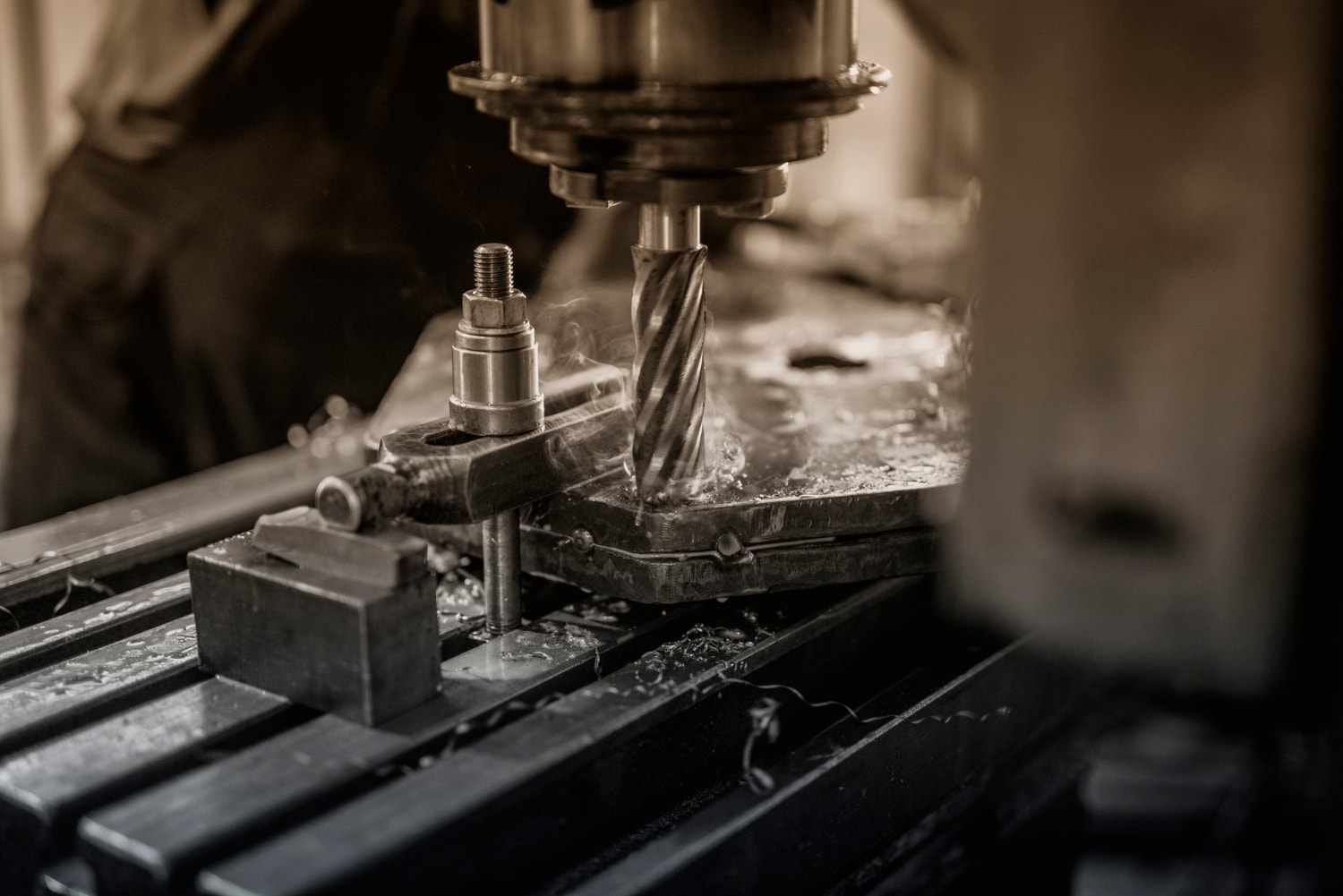
CNC prototyping is the process of producing prototype parts using computer numerical control machining. A digital CAD model is converted into machine instructions, and then cutting tools remove material from solid stock to create the desired geometry. The process is commonly done with CNC milling, CNC turning, EDM, and wire EDM depending on the shape and functional requirements.
Unlike appearance-only mockups, CNC-machined prototypes are usually selected when the part must represent the production intent more closely. That includes parts with mating features, load-bearing areas, threaded holes, precision slots, sealing surfaces, or dimensional interfaces that cannot be approximated loosely. CNC prototypes can be made from engineering plastics such as ABS, POM, nylon, acrylic, and PEEK, as well as metals such as aluminum, stainless steel, brass, copper, zinc alloys, and titanium.
For product developers in the United States, CNC prototyping is especially valuable because many industries need documented fit and function before committing to tooling. In medical devices, engineers may need to evaluate enclosure fit, ergonomics, and assembly behavior. In automotive and mobility programs, teams often test brackets, housings, mounts, and under-hood components under vibration and temperature conditions. In industrial equipment, prototypes may be used to verify tolerance stack-up before low-volume release.
The process is not only about making a part quickly. It is about making a useful part that answers engineering questions. If the design team needs to know whether a snap feature is too stiff, whether a wall will deflect under load, whether a boss can handle a fastener, or whether a metal part clears neighboring components, CNC prototyping provides evidence instead of assumptions.
| Prototype Type | Main Goal | Typical Material | Typical Industry | Key Benefit | Best Use Stage |
|---|---|---|---|---|---|
| Form and fit sample | Check size and assembly | ABS, aluminum | Consumer products | Fast physical validation | Early design review |
| Functional plastic part | Test stiffness and wear | POM, nylon, PEEK | Industrial equipment | Real material behavior | Mid-stage engineering |
| Functional metal part | Test strength and heat resistance | Aluminum, steel | Automotive, aerospace support | Production-like performance | Design verification |
| Threaded housing | Check fastening reliability | 6061 aluminum | Electronics | Accurate tapped features | Pre-pilot build |
| Optical or clear cover | Evaluate transparency and geometry | Acrylic, polycarbonate | Medical, lighting | Visual and mechanical review | Functional demo |
| Valve or fluid part | Check flow path and sealing | Stainless steel, POM | Medical, industrial | Precision surfaces | Test and iteration |
This table shows that CNC prototyping is not a single-purpose process. It supports everything from simple geometry checks to demanding functional validation where dimensions, materials, and surface quality directly affect performance.
The growth pattern above reflects a realistic trend seen across U.S. product development programs: more teams are using CNC prototypes not only for one-off samples, but also for bridge production, pilot validation, and regulated pre-launch builds.
When to Choose CNC Prototyping

You should choose CNC prototyping when function matters more than visual approximation. If your design must be tested for strength, assembly, load, wear, heat resistance, thread engagement, sealing, or tight tolerance interfaces, CNC is often the better choice. It is also the right option when the final production material needs to be represented closely during testing.
In the United States, companies commonly turn to CNC machining in the following situations:
- When a 3D printed part does not accurately represent final material performance.
- When a prototype must fit with purchased components such as bearings, motors, connectors, or seals.
- When dimensional repeatability is important for a small test batch.
- When a customer demo requires a premium appearance and reliable assembly.
- When prototype parts may later transition into low-volume production.
- When engineering teams need fast design revisions without investing in injection molds.
For example, a robotics startup in Pittsburgh may need aluminum end-effectors with accurate mounting patterns, while a medical device company in Minneapolis may need POM or PEEK parts for fixture testing and fluid handling. A defense-adjacent supplier near Huntsville may need prototype brackets with traceable dimensions and reliable documentation. These are all cases where CNC machining usually delivers more useful validation than concept-grade fabrication methods.
| Scenario | Why CNC Fits | Typical Material | Speed Need | Risk Reduced | Alternative if Not CNC |
|---|---|---|---|---|---|
| Assembly fit check | Accurate mating features | ABS, aluminum | Medium to fast | Misalignment | 3D print for basic fit only |
| Load-bearing test | Real mechanical properties | Steel, 7075 aluminum | Medium | Structural failure | FEA plus later machining |
| Thermal exposure | Production-like heat behavior | PEEK, aluminum | Medium | Heat distortion | High-temp print with limitations |
| Thread and fastener test | Reliable tapped holes | Aluminum, brass | Fast | Fastener pullout | Insert-based printed part |
| Fluid sealing validation | Smooth machined sealing faces | POM, stainless steel | Medium | Leaks | Prototype mold or cast part |
| Short pilot batch | Repeatable low-volume output | Plastic or metal | Fast | Tooling delay | Soft tooling if volume rises |
The decision is usually not about whether CNC is “better” than every other process. It is about whether the prototype must answer high-value technical questions before the company spends more money on tooling, compliance, or launch inventory.
Benefits of Functional CNC Prototype Parts

Functional CNC prototype parts create value because they reduce uncertainty. Many product launches fail quietly during development, not because the concept was poor, but because important details were not tested early enough. A machined prototype helps identify those details while design changes are still affordable.
The main benefits include:
- Higher confidence in fit and function.
- Access to production-grade or near-production materials.
- Better dimensional accuracy than many concept methods.
- Cleaner surfaces for sealing, mating, and aesthetic evaluation.
- Improved communication across engineering, sourcing, and investors.
- Easier transition into low-volume or bridge production.
For U.S. companies managing distributed teams across cities such as Seattle, Chicago, and Raleigh, physical prototypes also improve collaboration. A CAD file can be interpreted differently by design, quality, sourcing, and manufacturing teams. A real part, by contrast, exposes edge breaks, access issues, wall thickness concerns, and assembly sequence problems quickly.
Functional prototypes are also valuable when the prototype itself becomes part of market validation. A startup showing a device to hospital buyers, distributors, or field technicians often needs more than a cosmetic sample. They need a part that opens, closes, fastens, mates with other hardware, and feels credible in the hand. CNC machining is often the process that gives that credibility.
This comparison reflects how strongly sectors with safety, durability, and mechanical integration needs rely on functional prototypes. Automotive hubs around Detroit and Columbus, medical clusters in Boston and Orange County, and electronics teams in San Jose all place a high value on accurate prototype performance.
Technological capabilities that matter
When evaluating a supplier, look beyond the phrase “CNC machining.” The best prototype outcomes often depend on supporting technologies such as multi-axis milling, turning, EDM, wire EDM, polishing, anodizing, painting, plating, and precision inspection. A supplier that can combine these in one workflow can reduce handoff errors and shorten development time. Tight tolerance capability down to 0.01 mm is especially useful when prototypes must validate exact interfaces rather than approximate form.
Best Materials for CNC Prototypes
The best material depends on what you are trying to learn from the prototype. If the goal is mechanical function, choose a material close to the final use condition. If the goal is appearance or packaging fit, a lower-cost substitute may be acceptable. Material choice should always be tied to temperature, stiffness, impact, friction, chemical exposure, weight, transparency, and downstream finishing requirements.
Common choices in the United States market include aluminum for lightweight structural parts, stainless steel for corrosion resistance, POM for low-friction precision components, nylon for durable engineering applications, ABS for general-purpose housings, acrylic for transparent covers, brass for fittings, and PEEK for demanding medical or industrial use.
| Material | Type | Main Advantage | Typical Application | Relative Cost | Notes |
|---|---|---|---|---|---|
| 6061 Aluminum | Metal | Easy to machine, versatile | Enclosures, brackets, fixtures | Moderate | Excellent for general testing |
| 7075 Aluminum | Metal | Higher strength | Performance structural parts | Moderate to high | Useful for load testing |
| Stainless Steel 304 | Metal | Corrosion resistance | Medical, food-contact support parts | High | Heavier and slower to machine |
| POM/Acetal | Plastic | Low friction, dimensional stability | Gears, sliders, valve parts | Moderate | Very common for functional prototypes |
| Nylon | Plastic | Toughness | Wear parts, clips, jigs | Moderate | May absorb moisture |
| ABS | Plastic | General-purpose machinability | Housings, covers | Low to moderate | Good for form and light function |
| Acrylic | Plastic | Clarity | Lenses, windows, display covers | Moderate | Needs care to avoid cracking |
| PEEK | Plastic | High heat and chemical resistance | Medical and industrial critical parts | High | Premium material for harsh conditions |
This material table is useful because it connects property, application, and budget. Many prototype mistakes happen when a team selects a material based only on price rather than on the question being tested. If the prototype is intended to verify mechanical behavior, cheaper substitutions may create false confidence or false failure.
For example, a battery enclosure being reviewed in Austin may work as a printed sample, but if engineers need to evaluate heat dissipation and fastener durability, machined aluminum may be necessary. A fluid control part in Houston may require POM or stainless steel rather than ABS because sealing performance depends on dimensional stability and surface quality. A hand-held medical device in San Diego may use machined ABS or polycarbonate early, then shift to injection-molded resin later once the geometry is validated.
Manufacturing capabilities that support material choice
Material flexibility is more valuable when a supplier can support one part or several hundred parts, in both plastics and metals, while also providing secondary operations. This is where broad manufacturing capability matters. A partner that supports CNC machining, rapid tooling, injection molding, die casting, sheet metal fabrication, finishing, and assembly can recommend not only the best prototype material, but also the best path into pilot or repeat production once the prototype is approved.
How CNC Prototypes Support Design Testing
CNC prototypes support design testing by converting digital assumptions into measurable physical evidence. A prototype can be assembled, dropped, heated, loaded, fastened, wired, sealed, and used by actual operators. It can also be measured with inspection equipment to confirm whether the design intent is achievable.
Testing with CNC prototypes usually falls into several categories:
- Fit testing: verifying interfaces with other components.
- Functional testing: confirming movement, load, sealing, or operation.
- User testing: evaluating ergonomics and interaction.
- Environmental testing: checking heat, moisture, chemicals, or vibration.
- Manufacturing validation: identifying features that are costly or risky to produce.
For teams managing launch schedules through U.S. ports and distribution channels, early testing reduces later disruption. If a design issue is discovered after tooling or after inventory is staged near Los Angeles/Long Beach, Savannah, or Newark, the cost impact is much larger. CNC prototyping helps uncover those issues before the supply chain is committed.
The area chart illustrates a practical trend: more teams are moving from simple concept prototypes to prototypes intended for design verification, customer trials, and pre-production checks. This trend is especially visible in regulated and performance-sensitive sectors.
Case example: a Midwest industrial equipment company developed a machined polymer valve component for a pilot build. The first prototype passed dimensional inspection but showed drag during cycle testing. By using CNC machining for quick iteration, the team adjusted a tolerance band, changed a fillet transition, and improved sealing face consistency within a short revision loop. That prevented tooling changes later.
Case example: an electronics startup on the West Coast used CNC aluminum housings for investor demos and thermal testing. The physical parts revealed a connector access issue and a fastener interference problem not obvious in CAD. Because the parts were machined quickly, the startup solved both issues before ordering low-volume production units.
Tolerance and Surface Finish Considerations
Tolerances and surface finish are often where prototype value is won or lost. A part can look correct and still fail because a bore is too tight, a threaded feature is weak, a sealing surface is too rough, or a cosmetic face has visible tool marks. Good CNC prototyping is therefore not only about shape, but also about specification discipline.
Not every feature needs an extremely tight tolerance. Over-specifying dimensions increases cost and lead time. Smart buyers identify the critical-to-function features and apply tighter control only where needed. In the United States market, this is especially important for parts moving quickly from prototype to pilot builds, where cost pressure and schedule pressure are both high.
| Feature Type | Typical Tolerance Need | Surface Finish Importance | Common Risk | Cost Impact | Recommendation |
|---|---|---|---|---|---|
| General outer profile | Moderate | Low to medium | Over-specification | Low | Use standard machining limits |
| Mating holes | High | Medium | Assembly misfit | Medium | Tighten only key interfaces |
| Sealing face | High | High | Leakage | Medium to high | Specify flatness and finish clearly |
| Cosmetic front face | Low to moderate | High | Poor appearance | Medium | Request sanding, polishing, or coating |
| Threaded feature | High | Medium | Cross-threading or pullout | Medium | Confirm thread engagement and material |
| Sliding interface | High | High | Friction or binding | High | Control both dimension and finish |
This table shows why tolerance strategy should be selective. A prototype does not become better just because every dimension is made tighter. In fact, that approach often wastes budget and can even delay critical learning by slowing down part delivery.
Surface finish should also match the purpose of the prototype. For functional testing, the key question is whether the finish affects friction, sealing, fatigue, visibility, or end-user perception. For customer-facing demos, finishing may include bead blasting, polishing, anodizing, painting, or plating to reflect the expected production appearance.
High-performing suppliers combine machining with finishing and inspection so that the prototype is not only cut accurately, but also delivered in a state suitable for testing and presentation. That combination is useful when the prototype may be shown to internal decision makers, field users, or investors.
CNC Prototyping Compared with 3D Printing
CNC prototyping and 3D printing are both valuable, but they solve different problems. 3D printing is excellent for very fast concept models, complex visual forms, and low-cost early iteration. CNC machining is stronger when the design requires real material properties, accurate tolerances, better surfaces, and more production-like behavior.
In many U.S. development workflows, the two processes are used together. A team may print initial concepts in one day, then machine the most promising version for engineering testing. This hybrid approach reduces cost early and increases confidence later.
| Criteria | CNC Prototyping | 3D Printing | Best For | Main Limitation | Typical Buyer Decision |
|---|---|---|---|---|---|
| Dimensional accuracy | High | Medium to high | Precision interfaces | Print shrink or distortion | Choose CNC for tight fits |
| Material realism | High | Variable | Functional testing | Limited print equivalence | Choose CNC for real-use behavior |
| Geometry freedom | Medium | Very high | Complex internal forms | Machining access limits | Choose print for intricate concept forms |
| Surface finish | Good to excellent | Variable | Visible or sealing surfaces | Layer marks | Choose CNC for premium surfaces |
| Mechanical strength | High | Variable by process | Load-bearing parts | Anisotropy in printed parts | Choose CNC for stress testing |
| Speed for simple concepts | Fast | Very fast | Quick form models | Post-processing | Choose print for earliest stage |
| Scalability to low volume | Strong | Moderate | Bridge production | Piece cost at volume | Choose CNC for pilot runs |
For buying teams, the real question is not “Which technology wins?” but “What evidence do we need next?” If the next decision depends on fast visuals, 3D printing may be enough. If it depends on engineering performance, CNC prototyping is usually the more reliable path.
This comparison highlights why many U.S. buyers prefer integrated partners for prototype programs that may expand into low-volume production. A broader process menu often means fewer supplier transitions, less duplicated communication, and better continuity from prototype through launch.
Tips to Reduce Prototype Cost and Lead Time
Reducing cost and lead time does not mean cutting corners. It means making prototype decisions that preserve learning while removing unnecessary complexity. This is especially important for U.S. teams balancing engineering urgency with procurement discipline.
Here are practical ways to reduce CNC prototype cost and speed up delivery:
- Simplify geometry where it does not affect the test objective.
- Use standard material stock sizes where possible.
- Avoid extremely tight tolerances on non-critical features.
- Combine design reviews with DFM feedback before release.
- Standardize hole sizes, radii, and thread specifications.
- Choose finish levels based on real need, not assumption.
- Batch similar parts in one order to reduce setup cost.
- Plan for future process transitions early.
A frequent mistake is sending a prototype drawing that reflects final production perfection rather than prototype learning priorities. If the purpose is fit validation, specify fit-critical features carefully but relax cosmetic details. If the purpose is customer presentation, prioritize external finish but reduce hidden feature complexity where possible.
| Action | Lead Time Effect | Cost Effect | Quality Risk | Best Used When | Buyer Tip |
|---|---|---|---|---|---|
| Use standard tolerances | Shorter | Lower | Low if non-critical | Early function checks | Flag only critical dimensions |
| Reduce deep pockets | Shorter | Lower | Low to medium | Housing revisions | Ask if geometry can be tool-friendly |
| Choose easier-to-machine materials | Shorter | Lower | Medium if performance changes | Non-final material studies | Confirm what must stay true |
| Limit cosmetic finishing | Shorter | Lower | Low for internal tests | Pure engineering builds | Skip premium finish if unseen |
| Order small iteration batches | Shorter overall cycle | Lower total rework | Low | Rapid design loops | Test before scaling quantity |
| Use one partner across processes | Shorter handoffs | Lower coordination cost | Low | Prototype to pilot programs | Reduce supplier switching |
The table above shows that cost reduction usually comes from smarter scope definition, not from sacrificing engineering quality. Buyers who communicate the prototype purpose clearly tend to get better pricing and more useful parts.
United States Market, Industries, and Product Types
The United States remains a strong market for CNC prototyping because of its broad mix of advanced manufacturing, medical technology, mobility programs, electronics design, and industrial automation. Different regions show different prototype needs. Detroit and the broader Midwest prioritize brackets, housings, mounts, and validation parts for vehicle systems and industrial machinery. Boston and Minneapolis generate demand for medical enclosures, test fixtures, and fluid system components. Silicon Valley, Austin, and Seattle drive activity in electronics, robotics, aerospace-adjacent hardware, and advanced devices.
Product types commonly machined as prototypes include:
- Plastic and metal housings
- Functional brackets and supports
- Battery and electronics enclosures
- Medical device covers and internal components
- Optical windows and display parts
- Jigs, fixtures, and assembly aids
- Valve bodies and fluid path components
- Consumer product shells with engineering detail
Applications range from bench testing and pilot assemblies to field trials, regulatory preparation, sales samples, and bridge production. In many cases, a prototype order becomes the beginning of a broader commercialization plan.
Buying Advice, Local Suppliers, and Sourcing Strategy
When evaluating local suppliers in the United States, buyers often compare neighborhood machine shops, regional prototype specialists, digital platforms, and overseas-integrated manufacturing partners. Local shops can be excellent for urgent communication and nearby visits, especially for highly confidential or iterative projects. However, they may have limited process range, finishing options, or scalability. Digital sourcing platforms can offer speed, but engineering interaction may be less personal. Integrated global partners can offer stronger price performance and broader process continuity if communication, quality systems, and support are strong.
| Supplier Type | Strength | Weakness | Best Fit | Typical Buyer Concern | Evaluation Tip |
|---|---|---|---|---|---|
| Local machine shop | Easy communication | Limited process breadth | Simple urgent jobs | Capacity | Ask about repeatability and inspection |
| Regional prototype house | Better specialization | Higher cost | High-visibility programs | Budget | Review finish quality examples |
| Online quote platform | Fast pricing | Variable support depth | Standard parts | Engineering feedback | Check how issues are escalated |
| Broker model | Flexible supplier access | Less process control | Non-critical sourcing | Consistency | Ask who actually makes the parts |
| Integrated global partner | Cost and process range | Requires strong communication | Prototype to production path | Oversight | Verify quality system and DFM support |
| In-house machining | Maximum control | High fixed cost | Very frequent iterations | Utilization | Compare true internal cost carefully |
For buyers shipping through major trade hubs like Los Angeles, Houston, Chicago, Savannah, or New York/New Jersey, logistics planning also matters. A good supplier should be able to support packaging, limited warehousing, procurement coordination, and direct shipping where needed. These service details become more important as a prototype project turns into a pilot program.
Our Company Approach: Technology, Manufacturing, and Service
For companies that need more than a simple part maker, TEAM Rapid positions itself as a practical manufacturing partner for prototype and production programs. The value is not just speed, but the combination of technology, manufacturing breadth, and service support that helps customers move from digital concept to commercial supply more smoothly.
Technological capabilities
TEAM Rapid supports CNC milling, CNC turning, wire EDM, EDM, polishing, anodizing, painting, plating, and other finishing operations for both plastic and metal prototype parts. Tight tolerance capability down to 0.01 mm helps when projects require precision interfaces, and engineering-focused review helps identify manufacturability risks before they become expensive changes. This is useful for teams who need DFM analysis, geometry feedback, and early design risk reduction rather than basic order intake.
Manufacturing capabilities
Beyond CNC prototyping, the company offers a broad path that includes 3D printing, vacuum casting, rapid tooling, injection molding, die casting, aluminum extrusion, and sheet metal fabrication. That range matters because many U.S. buyers do not want to re-source every stage of product development. If a CNC prototype succeeds, the same project can often continue into low-volume molding, cast components, assembled kits, or scalable production without rebuilding the supplier base.
Service capabilities
TEAM Rapid is structured to support one-off prototypes as well as recurring orders, with typical prototype lead times measured in days rather than weeks depending on complexity. The company emphasizes responsive communication, one-to-one engineering support, and quality-focused processes backed by ISO 9001:2015 certification. Additional services such as assembly, packaging, procurement support, material management, and direct shipping can reduce administrative burden for customers in the United States who need fewer supplier handoffs and faster project coordination.
This model is especially helpful for startups, product designers, and established OEM teams that want a partner capable of following the product from concept validation through low-volume and volume production. It also suits buyers looking for competitive pricing without losing engineering engagement.
2026 Trends: Technology, Policy, and Sustainability
Looking ahead to 2026, CNC prototyping in the United States will be shaped by three major trends. First is the deeper use of digital manufacturing workflows, including faster CAM automation, better quoting software, and stronger integration between design review and shop-floor execution. This will reduce iteration friction and improve quote-to-part speed for standard geometries.
Second is policy and supply chain resilience. More U.S. companies are reviewing prototype and pilot sourcing through the lens of risk diversification, tariff exposure, and launch flexibility. Buyers increasingly favor suppliers that can provide transparency, stable communication, and flexible pathways from prototype to low-volume production.
Third is sustainability. Customers and investors are placing greater emphasis on waste reduction, responsible material use, efficient packaging, and process selection that avoids unnecessary scrap or rework. CNC machining will remain subtractive, but smarter stock planning, better DFM, part consolidation, and correct first-pass manufacturing can significantly improve sustainability outcomes.
Another important trend is the rise of bridge manufacturing. Instead of treating prototype and production as separate worlds, more teams are using CNC-machined runs to support early sales, field trials, and launch overlap while permanent tooling is still in progress. This approach shortens time to market and helps companies capitalize on short commercial windows.
FAQ
How fast can CNC prototype parts be delivered?
Lead time depends on part complexity, material, quantity, and finishing, but many prototype programs can be completed within a few days to a little over a week. Urgent simple parts may move faster.
Is CNC prototyping only for metal parts?
No. It is widely used for both metal and plastic parts. Plastics such as ABS, POM, nylon, acrylic, and PEEK are common when functional testing requires specific performance characteristics.
What tolerance should I request?
Request tight tolerances only on critical features. Over-tolerancing increases cost and lead time. A good supplier can help identify which dimensions truly affect fit or function.
Can CNC prototypes look like finished products?
Yes. With proper finishing such as polishing, blasting, anodizing, painting, or plating, CNC prototypes can be suitable for customer demos, investor reviews, and internal executive presentations.
When should I use CNC instead of 3D printing?
Use CNC when you need real material behavior, better mechanical strength, tighter dimensions, smoother critical surfaces, or a path into low-volume production.
Can a CNC prototype lead directly into production?
Yes. Many products move from CNC-machined prototypes into bridge production, pilot builds, or even ongoing low-volume manufacturing, especially for industrial, medical, and specialized equipment markets.
In short, CNC prototyping remains one of the most dependable tools for fast functional product development in the United States. When chosen at the right stage, with the right material and the right specification strategy, it helps teams test more intelligently, launch more confidently, and scale with fewer surprises.

About the Author : Team Rapid Manufacturing Co., Ltd.
This article is written by the engineering team at Team Rapid Manufacturing Co., Ltd, specializing in rapid prototyping and manufacturing solutions. With extensive experience in CNC machining, injection molding, and low-volume production, our team shares practical insights to help global clients improve product development efficiency and reduce manufacturing risks.
Share