Technical Insights
Knowledge Center

Knowledge Center
If you need insert molding services in the United States for complex assembly solutions, the most practical approach is to work with suppliers that combine tooling, DFM support, material expertise, and repeatable production controls. In the U.S. market, established names such as Xometry, EVCO Plastics, Nicolet Plastics, Mack Molding, PTI Engineered Plastics, and Stack Plastics are frequently considered for projects involving metal inserts, threaded components, electrical contacts, and multi-part plastic assemblies. These companies are relevant for buyers in manufacturing hubs such as Michigan, Illinois, Wisconsin, California, Texas, and the broader Midwest and Southeast, where automotive, electronics, medical, and industrial demand remains strong.
For buyers who need fast development, lower tooling cost, or a bridge from prototype to volume production, qualified international suppliers can also be worth considering. A capable China-based partner with ISO-certified processes, strong DFM support, and responsive pre-sale and after-sale communication can offer strong cost-performance advantages, especially for startups, OEMs, distributors, and brand owners balancing launch speed with budget discipline in the United States.
The United States remains one of the most active markets for insert molding services because the process solves a common manufacturing problem: how to combine plastic with metal or other embedded components without adding extra assembly stages. Across sectors such as automotive, medical devices, power tools, consumer electronics, industrial controls, and aerospace-support equipment, OEMs are trying to reduce part count, improve durability, and speed final assembly. Insert molding directly supports those goals.
Demand is concentrated in well-known industrial corridors. In the Midwest, states such as Michigan, Ohio, Indiana, Illinois, and Wisconsin support automotive, machinery, and electrical component programs. In the Southeast, Tennessee, Georgia, the Carolinas, and Alabama continue to attract reshoring and supplier diversification activity. On the West Coast, California remains a center for medical devices, electronics, and design-led product development. Texas is particularly active for industrial, energy-adjacent, and consumer product applications. These regions are connected by major logistics routes through ports such as Los Angeles, Long Beach, Houston, Savannah, and New York/New Jersey, which matters when buyers compare domestic and international insert molding options.
Insert molding in the U.S. is no longer treated as a niche process. It is increasingly integrated into product design from the beginning because procurement teams want fewer suppliers, engineers want stronger part-to-part consistency, and operations teams want lower total assembly labor. This shift is particularly visible in products that use brass threaded inserts, stainless steel clips, copper terminals, magnets, sensors, or precision pins. Rather than molding a plastic housing and later pressing, gluing, or fastening inserts into place, manufacturers mold around the insert directly to create a more stable and labor-efficient component.
Another important market driver is labor cost. Assembly-intensive designs are harder to justify when wages, training, rework, and quality inspection costs continue to rise. Insert molding reduces manual handling and often cuts secondary assembly, which can make the process economically attractive even when tooling requirements are more demanding. At the same time, quality teams benefit because they inspect one integrated component instead of managing multiple assembled pieces and their tolerance stack-up.
The chart below illustrates a realistic demand trajectory for insert molding services tied to the broader movement toward lightweighting, electrification, miniaturization, and assembly reduction in the U.S. market.
var ctx1 = document.getElementById(‘marketGrowthChart’).getContext(‘2d’);var marketGrowthChart = new Chart(ctx1, { type: ‘line’, data: { labels: [‘2021’, ‘2022’, ‘2023’, ‘2024’, ‘2025’, ‘2026’], datasets: [{ label: ‘Estimated U.S. Insert Molding Demand Index’, data: [78, 84, 91, 99, 108, 118], borderColor: ‘rgb(54, 162, 235)’, backgroundColor: ‘rgba(54, 162, 235, 0.15)’, fill: false, tension: 0.25 }] }, options: { responsive: true, maintainAspectRatio: false }});Insert molding is a manufacturing process in which a preformed component is placed into a mold and then plastic is injected around it. The insert may be metal, ceramic, another polymer, or a specialized component such as a threaded bushing, electrical contact, filter screen, or magnet. Once the resin cools and the mold opens, the result is a single integrated part.
In the United States, common insert materials include brass, stainless steel, carbon steel, aluminum, copper, stamped terminals, and machined pins. Common molded resins include ABS, PC, PA, PBT, PPS, TPU, PP, PEI, and medical-grade or flame-retardant engineering plastics depending on end-use requirements. The value of the process is that it improves structural performance while reducing downstream work.
Insert molding is often discussed alongside overmolding, but the two are not identical. Overmolding generally refers to molding one material over another substrate, such as TPE over rigid plastic. Insert molding usually refers to embedding a component such as a metal insert inside the molded plastic structure. In practice, many suppliers offer both and help customers decide which route better fits the function, cost target, and production volume.
Insert molding services in the United States support a wide spectrum of product forms. Some projects involve simple threaded inserts inside a plastic body. Others use highly precise metal terminals in electronic connectors or sensor housings where position control is critical. In medical and industrial applications, insert molding often involves components that must maintain electrical isolation, chemical resistance, or repeated fastening performance.
Product TypeTypical InsertsCommon ResinsMain BenefitTypical U.S. IndustriesThreaded housingsBrass bushingsABS, PC/ABS, PARepeatable fastening strengthConsumer products, industrial equipmentElectrical connectorsCopper terminals, stamped contactsPBT, PA, LCPElectrical integration and insulationElectronics, automotiveSensor bodiesPins, sleeves, magnetsPPS, PA, PBTDimensional stabilityAutomation, transportationMedical handlesMetal shafts, insertsMedical-grade PP, PC, PEEKReduced assembly and sterilization compatibilityMedical devicesTool componentsSteel inserts, terminalsNylon, TPU, PCImpact resistance and durabilityPower tools, hardwareAutomotive trim modulesClips, studs, bracketsPP, TPO, PALower assembly laborAutomotive interiors and exteriorsThis table shows why insert molding has become strategically important. The process is not limited to one type of part; it spans low-cost consumer items and high-specification components where mechanical retention, insulation, and precision placement matter equally.
Buying insert molding services in the United States is rarely just about price per part. Most experienced buyers compare suppliers on tooling capability, insert handling experience, resin knowledge, fixture design, process controls, secondary operations, quality documentation, and logistics flexibility. A supplier that can mold around a brass insert is not automatically capable of handling delicate stamped terminals at scale or producing medical-grade parts with tight traceability requirements.
In practical sourcing terms, the buyer should ask four questions early. First, can the supplier control insert placement reliably at the required tolerance? Second, can the selected resin handle thermal and mechanical stress without damaging the insert or the surrounding geometry? Third, what quality methods are used to verify pull-out strength, positional accuracy, flash control, and cosmetic consistency? Fourth, can the supplier support the full launch path from design review to production and assembly?
These questions are especially important when parts are moving through ports and regional distribution channels. U.S.-based customers serving customers in Chicago, Detroit, Dallas, Atlanta, and Los Angeles often need predictable replenishment windows and responsive engineering changes. A good supplier supports this with DFM reports, mold flow thinking, pilot runs, and clear communication rather than only quoting a unit price.
The table below summarizes widely recognized suppliers relevant to U.S. buyers seeking insert molding services. Capabilities vary by program, part geometry, volume, and resin family, so final suitability should always be confirmed directly.
CompanyPrimary Service RegionCore StrengthsKey OfferingsBest FitXometryUnited States nationwideLarge sourcing network, rapid quoting, flexible capacityCustom injection molding, insert molding coordination, bridge productionOEMs and startups needing speed and supplier flexibilityEVCO PlasticsMidwest and nationwideEngineering support, medical and industrial molding, production disciplineInsert molding, overmolding, clean manufacturing supportRegulated and technical molded productsNicolet PlasticsWisconsin and nationwideCustom molding, tooling collaboration, design supportInsert molding, low to mid-volume production, assemblyComplex custom housings and engineered partsMack MoldingNortheast and nationwideContract manufacturing integration, assembly capabilityInsert molding, molding plus assembly, supply chain supportPrograms requiring molded parts and finished assembliesPTI Engineered PlasticsMichigan and nationwideEngineering resins, industrial and transportation focusInsert molding, custom injection molding, prototyping supportHigh-performance molded componentsStack PlasticsCalifornia and nationwideMedical molding orientation, precision manufacturingInsert molding, micro and precision parts, validation supportMedical and precision device componentsTEAM RapidUnited States market support with China production networkRapid tooling, DFM-driven manufacturing, flexible low-to-medium volumeInsert molding, rapid prototyping, CNC support, assembly and packagingCost-sensitive launches and prototype-to-production transferThis comparison is useful because supplier fit depends on program goals. A national sourcing platform may be ideal for speed and broad access. A specialist molder may be stronger for validation, medical, or technical resin work. A globally integrated manufacturer may be better for cost-performance when launch speed and tooling flexibility are critical.
Insert molding demand is uneven across sectors. Automotive and electronics are large drivers, but medical, industrial controls, and consumer products are increasingly important because they require compact assemblies and dependable fastening or electrical performance.
var ctx2 = document.getElementById(‘industryDemandChart’).getContext(‘2d’);var industryDemandChart = new Chart(ctx2, { type: ‘bar’, data: { labels: [‘Automotive’, ‘Electronics’, ‘Medical’, ‘Industrial’, ‘Consumer Goods’, ‘Aerospace Support’], datasets: [{ label: ‘Estimated U.S. Demand Share’, data: [28, 24, 17, 15, 10, 6], backgroundColor: [ ‘rgb(255, 99, 132)’, ‘rgb(54, 162, 235)’, ‘rgb(255, 206, 86)’, ‘rgb(75, 192, 192)’, ‘rgb(153, 102, 255)’, ‘rgb(201, 203, 207)’ ] }] }, options: { responsive: true, maintainAspectRatio: false }});Automotive programs remain one of the biggest users of insert molding in the United States. Typical applications include interior clips, fastener-bearing trim parts, electronic housings, connector systems, sensor mounts, and under-hood support parts made with heat-resistant resins. Electrification is also increasing demand for terminal-bearing molded parts, battery-adjacent insulation components, and precision connector geometries.
Medical device manufacturing is another important segment, especially in regions such as Minnesota, California, Massachusetts, and Indiana. Here, insert molding is used for instrument handles, device enclosures, connectors, and single-use or limited-reuse parts that combine metal strength with plastic insulation or ergonomic form. Documentation, traceability, and validation discipline matter more in this segment than raw capacity alone.
Consumer electronics and appliance products frequently rely on insert molding for compact connectors, control modules, and housings requiring repeated screw engagement. Industrial equipment manufacturers use the process for actuators, sensor cases, machine interface parts, and electrical subassemblies. Power tool brands often specify insert molded structures to improve durability while simplifying final assembly.
In real-world U.S. manufacturing, insert molding is valuable when the buyer wants one or more of the following outcomes: stronger mechanical retention, lower assembly count, reduced risk of misalignment, improved electrical performance, faster downstream production, or better resistance to vibration and repeated use. This is why the process is found in products as different as automotive switch modules, hospital instrument grips, industrial sensors, and consumer appliance controls.
Specific applications include battery connectors, cable retention components, threaded plastic brackets, valve controls, terminal blocks, safety device housings, LED module supports, precision diagnostic tools, and fluid-handling components. When assemblies must survive repeated installation cycles or vibration, insert molding often outperforms adhesive-based or post-assembly insert methods.
ApplicationWhy Insert Molding WorksPerformance PriorityTypical Region of DemandTypical BuyerAutomotive sensor housingProtects inserts and controls alignmentHeat and vibration resistanceMichigan, Ohio, TennesseeTier suppliers, OEM programsMedical instrument handleCombines metal strength with molded grip bodySterilization and ergonomicsCalifornia, Minnesota, MassachusettsMedical device companiesElectrical connector bodyLocks terminals into one integrated componentElectrical insulationTexas, Illinois, North CarolinaElectronics manufacturersConsumer appliance mountReduces secondary assembly operationsCost and repeatabilityGeorgia, South Carolina, nationwideAppliance brandsIndustrial control moduleImproves durability in repeated useMechanical stabilityWisconsin, Indiana, PennsylvaniaIndustrial OEMsPower tool componentSupports impact resistance and secure fasteningToughness and assembly speedMidwest and SoutheastTool manufacturersThe practical takeaway is that insert molding is best viewed as a design-for-manufacturing strategy rather than just a molding variation. The highest-value programs use it to remove failure points and simplify the product architecture.
For U.S. buyers, the best sourcing decision usually depends on volume, tolerance, speed, and service model. Domestic suppliers may be preferred when engineering changes are frequent, on-site visits are necessary, or logistics risk must be minimized. International suppliers may be attractive when the project requires rapid tooling, aggressive cost control, or a smooth path from prototype to low-volume and then repeat production.
Before placing a purchase order, ask the supplier to review insert retention method, resin shrinkage behavior, gate strategy, venting, and insert-loading method. Manual insert loading may be acceptable for low-volume runs, but automated or semi-automated loading usually becomes important as volumes rise. If the inserts are conductive, sharp-edged, or thin-walled, the tooling and process window must be carefully developed to avoid shift, flash, short shots, or stress-related cracking.
It is also wise to clarify whether the supplier supports only molding or can handle a wider turnkey path. In many product launches, value comes from combining prototyping, CNC-machined validation parts, rapid tooling, molding, finishing, assembly, packaging, and shipment coordination. This matters for companies trying to shorten launch cycles in the United States without managing too many disconnected vendors. Buyers looking for broader support can review custom injection molding services alongside insert molding capability, especially when the project may later expand into related molded products.
The U.S. market is shifting from simple part procurement to more integrated sourcing models. Buyers increasingly want suppliers who can support design review, prototype validation, tooling, molding, and downstream assembly in one coordinated workflow.
var ctx3 = document.getElementById(‘trendShiftChart’).getContext(‘2d’);var trendShiftChart = new Chart(ctx3, { type: ‘line’, data: { labels: [‘2021’, ‘2022’, ‘2023’, ‘2024’, ‘2025’, ‘2026’], datasets: [{ label: ‘Traditional Piece-Part Sourcing’, data: [62, 58, 53, 49, 45, 41], borderColor: ‘rgb(255, 159, 64)’, backgroundColor: ‘rgba(255, 159, 64, 0.18)’, fill: true, tension: 0.25 }, { label: ‘Integrated Prototype-to-Production Sourcing’, data: [38, 42, 47, 51, 55, 59], borderColor: ‘rgb(75, 192, 192)’, backgroundColor: ‘rgba(75, 192, 192, 0.18)’, fill: true, tension: 0.25 }] }, options: { responsive: true, maintainAspectRatio: false }});A startup in California developing a handheld diagnostic device may need a plastic enclosure with embedded metal threaded inserts for repeated service access. In a standard assembly route, the housing is molded first and threaded inserts are pressed in later. That adds labor and can create consistency issues if wall thickness and insertion force vary. With insert molding, the metal components are placed in the tool before the shot, creating a cleaner and more repeatable integrated part while reducing post-molding handling.
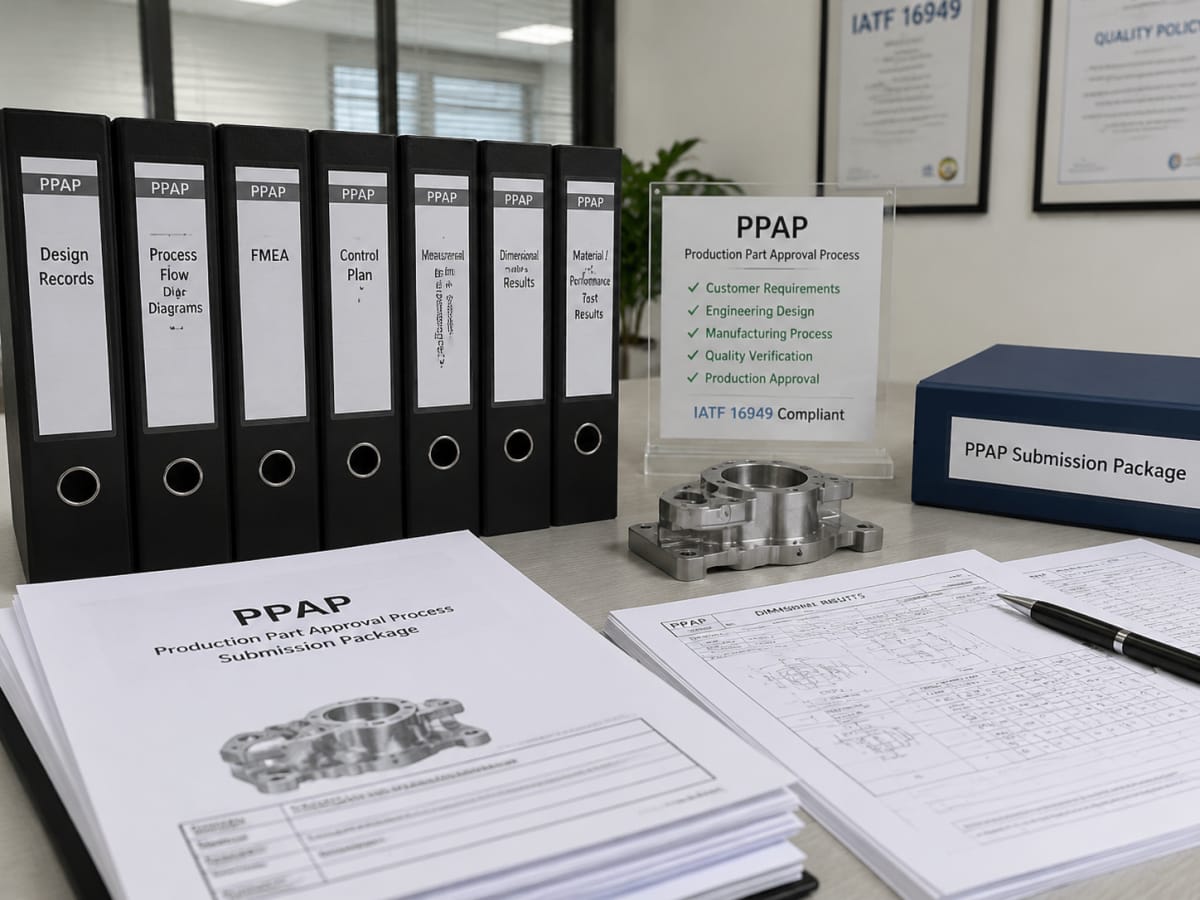
An automotive electronics supplier in Michigan may require a terminal-bearing sensor housing using heat-resistant resin and tightly controlled insert location. In this case, the supplier selection would likely prioritize process discipline, fixture design, and material expertise over the lowest quoted part price. The real cost of failure in such a program is line disruption, warranty risk, and delayed PPAP-related approvals.
An industrial controls manufacturer in Texas may need a low-volume launch before scaling up. This is where a supplier with rapid tooling and DFM support becomes especially useful. Instead of waiting for a long conventional tooling cycle, the company can validate geometry and function faster, then revise the mold or process if needed before a larger production commitment. This reduces launch risk and gives procurement more flexibility.
Many buyers prefer suppliers within or near their operating region because design reviews, sample approvals, and logistics become easier. Still, the right fit is not always the closest plant. It depends on whether the supplier truly understands your insert geometry, resin requirements, quality documentation needs, and expected production model.
SupplierRegion FitCore OfferingsAdvantagesConsiderationsEVCO PlasticsMidwest, national reachInsert molding, overmolding, engineering supportStrong for regulated and technical partsBest for programs needing process depthNicolet PlasticsUpper Midwest, national shipmentsCustom molded parts, tooling support, assembliesGood collaboration on engineered partsEarly DFM engagement improves outcomesMack MoldingNortheast, national programsMolding plus assembly and contract manufacturingUseful for finished product pathwaysOften best for broader manufacturing scopesPTI Engineered PlasticsMichigan, national OEM programsInsert molding with engineering resin focusGood fit for automotive and industrial needsMaterial selection should be reviewed carefullyStack PlasticsCalifornia, national precision demandPrecision and medical insert moldingWell aligned with high-specification small partsBest for precision-led requirementsTEAM RapidSupports U.S. buyers through international production modelRapid tooling, insert molding, CNC, finishing, assemblyStrong cost-performance and fast launch supportIdeal when budget and speed both matterThis table clarifies that supplier choice should be made by program type, not only geography. Buyers in the United States often compare regional convenience with total value, especially when prototype speed, engineering feedback, and production economics are under pressure.
TEAM Rapid serves the United States market as an engineering-led manufacturing partner rather than a remote order taker, supporting customer-owned product programs through OEM, ODM, wholesale, repeat production, and distributor-oriented cooperation models while clearly focusing on EPC-style and turnkey manufacturing support instead of BOO or on-site bulk supply arrangements. The company combines in-house machining, tooling manufacturing, injection molding, insert molding, overmolding, finishing, assembly, packaging, procurement support, limited warehousing, and direct shipping to help U.S. end users, brand owners, dealers, distributors, startups, and individual developers move from prototype to production with fewer handoffs. Its ISO 9001:2015 certification, more than 10 years of experience, 500+ satisfied customers, 6000+ delivered projects, and service history across the USA, the UK, France, Germany, and other markets provide measurable proof of export capability and process control. For technical buyers, the strongest evidence is its DFM-based workflow, which helps reduce resin use, improve part performance, optimize cavity layout, shorten cycle time, and identify tooling or design risks before production. That capability is reinforced by broad material and process coverage spanning 3D printing, CNC machining with tolerances down to 0.01 mm, rapid tooling, injection molding production support, die casting, sheet metal fabrication, and integrated assembly. For U.S. customers seeking local-market confidence, TEAM Rapid’s established experience serving American clients, fast response within hours, direct engineering communication, shipment support, and practical post-sale coordination create a service structure that functions like a committed long-term regional partner rather than a distant exporter. Buyers who want to review the company background can visit TEAM Rapid company information, while teams evaluating design validation and part readiness can also explore its precision CNC machining capabilities for prototype and pre-tooling stages.
Below is a broad comparison of service priorities that many U.S. buyers use when screening insert molding suppliers. The values are illustrative and show relative strengths for typical sourcing decisions.
var ctx4 = document.getElementById(‘comparisonChart’).getContext(‘2d’);var comparisonChart = new Chart(ctx4, { type: ‘bar’, data: { labels: [‘Lead Time’, ‘DFM Support’, ‘Cost Efficiency’, ‘Assembly Options’, ‘Prototype Flexibility’, ‘Volume Scalability’], datasets: [{ label: ‘Typical U.S. Domestic Specialist’, data: [78, 84, 62, 73, 70, 82], backgroundColor: ‘rgba(54, 162, 235, 0.7)’ }, { label: ‘Integrated Global Manufacturing Partner’, data: [86, 88, 91, 85, 90, 87], backgroundColor: ‘rgba(153, 102, 255, 0.7)’ }] }, options: { responsive: true, maintainAspectRatio: false }});Pricing for insert molding services in the United States depends on much more than part size. Cost is influenced by tooling complexity, insert geometry, insert loading method, annual volume, resin type, cosmetic requirements, validation needs, and whether secondary assembly or packaging is included. A simple brass insert in a commodity resin is far easier to mold than a delicate conductive terminal array in a high-temperature engineering polymer.
Tooling cost generally rises when the insert must be held with precision, when automation is needed, or when the part geometry increases risk of insert shift or flash. Piece-part cost may still be justified if the process eliminates downstream fastening, manual insertion, or multiple suppliers. For many OEMs, the correct comparison is not molded part price alone but total landed cost of the finished subassembly.
International supply can become attractive when the buyer wants faster prototype-to-tooling transitions or lower overall project cost. This is especially true for products in early commercialization, where design revisions are likely and a highly rigid domestic cost structure may be difficult to justify. If you need to discuss a specific insert molding project, tooling plan, or assembly path, direct inquiry through project contact support is often the fastest next step.
For insert molding, quality is heavily tied to process planning. Insert placement, resin flow behavior, venting, cooling balance, and ejection strategy all influence the final result. Typical inspection criteria include insert location, pull-out force, dimensional stability, cosmetic acceptance, thread engagement reliability, and flash control. In electrical products, continuity and insulation checks may also be required. In medical or regulated products, additional documentation and validation protocols can shape the entire supplier decision.
That is why experienced buyers ask for evidence of engineering review before tooling rather than only requesting a production quote. A robust DFM process reduces failure risk early, especially when the part design contains thin ribs, sharp insert interfaces, or high-shrinkage materials. For products shipping nationally across the United States, predictable process control is often worth more than the lowest first quote.
Looking toward 2026, insert molding services in the United States will be shaped by three major forces: technology, policy, and sustainability. On the technology side, more projects will use simulation-led tooling refinement, semi-automated insert loading, in-process sensing, and hybrid validation workflows that combine CNC prototypes with rapid tooling and production-grade molding. This is especially relevant for EV components, connected devices, and compact medical electronics.
On the policy side, reshoring, friend-shoring, and supply chain resilience initiatives will continue to influence where buyers source molded assemblies. U.S. procurement teams are increasingly balancing domestic capacity with carefully managed international partners that can offer dependable lead times and strong quality systems. The result is not a simple shift away from global supply, but a more selective and evidence-based sourcing model.
On the sustainability side, buyers will pay closer attention to lightweighting, resin optimization, lower scrap rates, recyclable packaging, and process choices that reduce assembly waste. Insert molding aligns well with this trend because it can combine multiple components into one part and reduce secondary operations. Suppliers that support material efficiency, practical DFM recommendations, and tighter process windows will have an advantage.
What is the main advantage of insert molding over post-assembly?The main advantage is that it combines the insert and plastic body into one molded component, often reducing labor, improving alignment, and increasing reliability.
Which industries in the United States use insert molding most?Automotive, electronics, medical devices, industrial equipment, power tools, and consumer products are the most common sectors.
Is insert molding only for metal inserts?No. Metal is the most common insert material, but ceramics, magnets, screens, and other specialty components can also be molded into plastic parts.
When should a buyer choose a domestic U.S. supplier?Domestic sourcing is often preferred when engineering changes are frequent, site visits are important, approval cycles are tight, or logistics risk must be minimized.
When should a buyer consider an international supplier?An international supplier is often a good fit when cost-performance, rapid tooling, flexible production scale, and prototype-to-production speed are major priorities.
Can insert molding support low-volume production?Yes. It is widely used for low-volume, bridge, and production programs, especially when rapid tooling and DFM support are available.
What should be reviewed before tooling starts?Insert retention strategy, resin selection, gate location, shrinkage behavior, tolerance needs, quality checks, and assembly requirements should all be reviewed early.
For companies buying insert molding services in the United States, the best supplier is the one that matches engineering needs, production economics, and service expectations at the same time. Strong candidates include established U.S. molders with sector-specific expertise as well as qualified international manufacturing partners that support the American market with ISO-certified systems, DFM discipline, fast communication, and integrated launch support. For complex assembly solutions, insert molding works best when treated as a full product-development strategy, not just a molding process.
For buyers in the United States, the right choice between injection molding and die casting depends mainly on material, production volume, strength requirements, finish, and total cost over the life of the program. Injection molding is usually the better option for plastic parts, especially when the goal is lower part weight, lower unit cost at medium to high volumes, fast cycle times, and design freedom for housings, clips, consumer products, and medical components. Die casting is generally the better choice for metal parts when you need higher structural strength, tighter dimensional stability in metal, better heat resistance, EMI shielding, and a premium metallic feel for automotive, electronics, and industrial hardware.
If your part must be plastic, choose injection molding. If your part must be aluminum or zinc and needs strength plus cosmetic consistency, choose die casting. In the U.S. market, many buyers start with domestic suppliers in manufacturing centers such as Michigan, Ohio, Illinois, California, and Texas for engineering coordination, then compare landed cost and lead time with qualified international suppliers. Well-supported overseas manufacturers, including established Chinese partners with ISO-certified systems, DFM capability, rapid tooling, and responsive pre-sales and after-sales communication, can also be a smart option when cost-performance matters and when the supplier has proven support for U.S. customers.
The United States remains one of the most active manufacturing markets for both injection molding and die casting because it combines large consumer demand, advanced automotive production, aerospace engineering, medical device development, and a strong network of regional machine shops, mold makers, contract manufacturers, and metal casters. States such as Michigan, Indiana, Ohio, Wisconsin, Illinois, and Tennessee continue to play an outsized role in automotive and industrial demand, while California, Arizona, and Texas add strong demand from medical technology, electronics, clean energy, and consumer hardware. Ports and logistics centers such as Los Angeles, Long Beach, Houston, Savannah, and Chicago’s inland freight network also shape sourcing strategies, especially when buyers compare domestic manufacturing against imported tooling or finished parts.
In practical procurement terms, U.S. buyers are not choosing only between two processes. They are also choosing between local and offshore supply chains, prototype versus production tooling, aluminum versus zinc versus engineering plastics, and speed versus total landed cost. A startup in San Jose may prioritize fast bridge tooling and small lots. An automotive supplier in Detroit may need annual volumes in the hundreds of thousands with PPAP discipline. A medical OEM in Minneapolis may prioritize validation, material traceability, and repeatability over the last few cents of unit price. That is why a process comparison must go beyond simple statements about cost and instead focus on the whole program.
Across the United States, injection molding remains dominant for plastic parts because of its flexibility with materials such as ABS, PC, PA, POM, TPU, PEI, and filled engineering resins. Die casting remains highly competitive for metal parts because aluminum and zinc casting can deliver complex shapes with excellent repeatability and lower machining burden than billet machining. Both processes are capital intensive at the tooling stage, but highly efficient once stable production is established.
The data below illustrates realistic directional trends for the U.S. market. These are not presented as a government statistical release, but as a practical buying view of how sourcing patterns, program launches, and manufacturing priorities are shifting across the country.
var ctx = document.getElementById(‘usMarketGrowthChart’).getContext(‘2d’);var usMarketGrowthChart = new Chart(ctx, { type: ‘line’, data: { labels: [‘2021’, ‘2022’, ‘2023’, ‘2024’, ‘2025’, ‘2026’], datasets: [ { label: ‘U.S. Injection Molding Demand Index’, data: [100, 106, 111, 118, 124, 131], borderColor: ‘rgb(54, 162, 235)’, backgroundColor: ‘rgba(54, 162, 235, 0.15)’, fill: false, tension: 0.25 }, { label: ‘U.S. Die Casting Demand Index’, data: [100, 103, 107, 113, 119, 126], borderColor: ‘rgb(255, 159, 64)’, backgroundColor: ‘rgba(255, 159, 64, 0.15)’, fill: false, tension: 0.25 } ] }, options: { responsive: true, maintainAspectRatio: false }});The line chart shows why both processes continue to grow. Injection molding benefits from demand in packaging alternatives, healthcare devices, electrical products, and lightweight consumer assemblies. Die casting benefits from electrification, thermal management, powertrain transition components, industrial automation, and durable hardware. In many U.S. programs, the two processes are not competitors across the whole bill of materials. They often work together, with metal cast housings and plastic molded covers, clips, seals, or interior subcomponents.
Injection molding forms parts by melting plastic resin and injecting it into a mold cavity under pressure. After cooling, the part is ejected and the cycle repeats. The process supports high repeatability, complex geometry, textured finishes, overmolding, insert molding, and a wide range of engineering plastics. It is ideal when the target is lower mass, lower post-processing, and high output.
Die casting injects molten metal, usually aluminum or zinc in this context, into a hardened steel die at high pressure. The resulting part has a metallic structure, high dimensional consistency, and strong cosmetic potential after trimming, machining, coating, or plating. It is widely used where stiffness, heat resistance, thread retention, and long-term durability matter.
The real decision is not which process is universally better, but which process better matches the use case, production forecast, environment, and margin target.
Factor Injection Molding Die Casting What It Means for U.S. Buyers Primary Material Thermoplastics and some thermosets Aluminum and zinc alloys Material requirement decides the process first. Tooling Cost Moderate to high High to very high Both reward repeat production, but die casting tools are often heavier-duty. Unit Cost at Scale Very low for plastic parts Competitive for metal parts Compare only within the same material class. Weight Lightweight Heavier than plastics, lighter than many machined metals Important for shipping, handheld products, and EV range efficiency. Strength and Heat Resistance Moderate to high depending on resin High Metal usually wins in structural and thermal applications. Surface Finish Excellent cosmetic flexibility Excellent metallic appearance after finishing Both can achieve strong visual results with the right tool design. Typical Applications Housings, clips, covers, trays, medical parts Brackets, enclosures, heat sinks, hardware Application fit matters more than process popularity.This comparison table is useful because many cost discussions are misleading when they compare a molded plastic part against a cast metal part without acknowledging that the material requirement changes everything. If the application demands conductivity, thread strength, and thermal stability, die casting can be more economical than forcing a plastic design to perform outside its ideal range. If the product needs low weight, snap features, color flexibility, and soft-touch combinations, injection molding often delivers more value.
In the United States, cost analysis usually starts with tooling because that is the most visible upfront investment. Injection molding tools can range widely based on cavitation, steel grade, side actions, expected life, and resin abrasiveness. A prototype or bridge tool may be enough for low-volume validation, while a hardened multi-cavity production mold supports larger programs. Die casting tools are also highly variable, with costs influenced by part size, projected area, alloy, trimming requirements, and thermal management of the die. Since molten metal is harder on tooling systems and dies must withstand extreme operating conditions, die casting tooling frequently carries a higher entry cost.
However, per-part economics depend on much more than the tool quote. Buyers should evaluate resin or alloy cost, cycle time, machine tonnage, scrap rate, trimming or machining, finishing, packaging, freight, inventory carrying cost, and engineering changes. In many U.S. projects, injection molding achieves lower piece prices for high-volume plastic components because cycle times are short and post-processing is limited. Die casting can be highly efficient for metal parts that would otherwise require extensive CNC machining from billet or multiple fabricated pieces.
Performance tradeoffs also need to be framed correctly. Plastic injection molded parts can be extremely capable when designed with ribs, bosses, inserts, and reinforced grades, but they are not interchangeable with cast aluminum in thermal, structural, or shielding performance. On the other hand, replacing a molded housing with a cast metal one can increase part weight, finishing cost, and shipping expense unnecessarily.
Cost Driver Injection Molding Impact Die Casting Impact Buyer Interpretation Material Price Depends on resin family and fillers Depends on alloy market and melt efficiency Engineering plastics can narrow the gap versus zinc or aluminum. Tool Complexity Slides, lifters, hot runners increase cost Complex ejection and thermal control increase cost Part simplification can save thousands before launch. Cycle Time Usually fast Fast, but trimming and cooling matter Cycle efficiency strongly affects total annual cost. Secondary Operations May be minimal Often includes trimming, machining, coating Look beyond the raw process quote. Scrap and Yield Influenced by gating, warpage, process window Influenced by porosity, flash, die wear Stable process control protects margin. Freight and Weight Lower shipping cost per part Higher shipping cost due to metal weight Important for national distribution from U.S. hubs. Engineering Changes Usually easier in early phases Can be more expensive after die release Design freeze discipline matters more in die casting.This table matters because procurement teams in Chicago, Dallas, and Atlanta often focus first on quoted piece price and overlook logistics, finishing, and engineering revision cost. A better method is to build a total program model over 12 to 36 months, especially for products with phased demand ramp-up.
Injection molding is especially well suited to consumer product housings, battery covers, cable management parts, medical disposables, valve bodies in suitable resins, trays, appliance bezels, snap-fit interiors, connectors, and transparent components when optical resins are used. It also enables advanced combinations such as insert molding and overmolding, which can reduce assembly count. For U.S. product teams launching hardware in markets like home electronics, wellness devices, and smart appliances, this design flexibility is a major advantage.
Die casting fits aluminum control housings, zinc latches, lock bodies, gear housings, decorative hardware, LED heat sinks, motor mounts, automotive brackets, and compact structural enclosures. Buyers that require dimensional repeatability, strength, and a premium metal appearance often see die casting as a practical middle ground between sheet metal fabrication and CNC machining. It can also lower cost for moderate to high volumes once the tool is amortized.
var ctx2 = document.getElementById(‘industryDemandChart’).getContext(‘2d’);var industryDemandChart = new Chart(ctx2, { type: ‘bar’, data: { labels: [‘Automotive’, ‘Medical’, ‘Consumer Electronics’, ‘Industrial Equipment’, ‘Aerospace Support’, ‘Appliances’, ‘Energy Systems’], datasets: [ { label: ‘Injection Molding Demand Score’, data: [82, 76, 88, 69, 41, 72, 58], backgroundColor: ‘rgba(54, 162, 235, 0.75)’ }, { label: ‘Die Casting Demand Score’, data: [90, 34, 66, 81, 57, 61, 74], backgroundColor: ‘rgba(255, 159, 64, 0.75)’ } ] }, options: { responsive: true, maintainAspectRatio: false }});The bar chart highlights why the decision is so sector specific in the United States. Automotive and industrial equipment have healthy demand for both processes. Medical often leans toward injection molding because of disposables, housings, fluid-handling components, and lightweight device architecture. Energy systems and electronics increasingly require a blend of molded insulative parts and cast thermal-management components.
Automotive demand remains a central driver in states across the Midwest and South. Injection molding supports interior trim, under-hood clips, fluid reservoirs, brackets, and electrical housings, while die casting supports gearbox covers, power electronics housings, brackets, and thermal parts. In the medical sector, injection molding dominates device enclosures, handheld instrument bodies, trays, and disposables, while die casting appears in durable equipment frames and metal casings where rigidity matters.
In consumer electronics, molded plastic parts are common for bezels, clips, battery doors, and internal structures, while die cast aluminum supports premium laptop shells, network hardware housings, and heat-dissipation components. Industrial equipment often combines the two, using cast metal for structural integrity and molded components for ergonomics, cable routing, and covers. Appliance products, communication systems, office equipment, and sanitary product assemblies also reflect this mixed-process reality.
Application Preferred Process Typical Material Main Reason Portable device housing Injection Molding ABS, PC/ABS, PC Lightweight, cosmetic freedom, lower mass production cost Heat sink enclosure Die Casting Aluminum Thermal conductivity and stiffness Medical tray Injection Molding PP, HIPS, ABS Fast cycles and easy sanitation-focused geometry Lock body Die Casting Zinc Strength, wear resistance, plated finish potential Automotive clip set Injection Molding PA, POM Elastic behavior and low unit cost Motor bracket Die Casting Aluminum Structural performance and dimensional stability Appliance control cover Injection Molding ABS, PC/ABS Color, texture, and integrated snap featuresThis matrix shows that selecting the process usually becomes straightforward once the functional requirement is clearly defined. Problems arise when teams try to force a process based on supplier habit instead of engineering logic.
Buyers in the United States should begin with the application environment rather than the manufacturing method. Ask whether the part must carry load, dissipate heat, hold threads, resist chemicals, pass drop testing, or meet cosmetic expectations. Then verify annual volume in realistic phases: pilot, launch, year one, and full ramp. A process that looks cheap at 500,000 parts may be inefficient at 8,000 parts, and vice versa.
Location also matters. Domestic manufacturing in regions such as Ohio, Wisconsin, Michigan, and California can simplify validation, tooling reviews, and short lead-time replenishment. Imported production can improve price-performance when the supplier has disciplined process control, export experience, and proven communication. The most effective sourcing teams often use a hybrid model: local prototype and engineering support for early iterations, then domestic or overseas production based on annual demand, tolerance risk, and commercial goals.
Always ask suppliers for DFM feedback before tool release. A good DFM review should cover gate location, wall thickness balance, ejector strategy, undercuts, sink risk, warpage, draft angles, cavity count, alloy or resin choice, and opportunities to reduce machining or assembly. In a high-cost labor market like the United States, eliminating a secondary operation is often more valuable than shaving a small percentage off raw material cost.
var ctx3 = document.getElementById(‘trendShiftChart’).getContext(‘2d’);var trendShiftChart = new Chart(ctx3, { type: ‘line’, data: { labels: [‘2021’, ‘2022’, ‘2023’, ‘2024’, ‘2025’, ‘2026’], datasets: [ { label: ‘Domestic Sourcing Preference’, data: [68, 72, 74, 71, 69, 67], borderColor: ‘rgb(75, 192, 192)’, backgroundColor: ‘rgba(75, 192, 192, 0.30)’, fill: true, tension: 0.3 }, { label: ‘Hybrid Global Sourcing Preference’, data: [32, 36, 41, 46, 51, 56], borderColor: ‘rgb(153, 102, 255)’, backgroundColor: ‘rgba(153, 102, 255, 0.25)’, fill: true, tension: 0.3 } ] }, options: { responsive: true, maintainAspectRatio: false }});The area chart reflects a realistic trend in the U.S. market: buyers still value domestic supply, but more are adopting hybrid sourcing for cost control, capacity flexibility, and faster scaling. This is especially true in sectors where launch timing is critical and where suppliers with strong DFM support can reduce revision cycles. Trade hubs such as Los Angeles and Long Beach on the West Coast, plus Houston and Savannah for broader freight distribution, continue to support this blended model.
A Midwest industrial controls company needed a durable enclosure for a new power unit. The first concept used thick-wall injection molded plastic because the team wanted a lower piece price. During DFM, the supplier identified heat buildup and thread wear risk. The design shifted to aluminum die casting for the main housing and kept molded plastic for the cover and wire guides. The resulting assembly increased initial tooling cost but reduced field failure risk and improved thermal performance, making the total program more profitable over two years.
A California wellness electronics startup had the opposite experience. The founders assumed the device body should be die cast aluminum to signal premium quality. But the projected first-year demand was only 18,000 units, and the product needed wireless transparency, color options, and multiple snap-fit internal features. A molded PC/ABS housing with selective decorative finishing delivered the right look at lower cost and faster launch timing. The company reserved metal only for a small internal heat-management feature.
An Ohio appliance parts supplier reviewed a family of seven bracket-like components initially machined from aluminum. After comparing annual demand, tolerance zones, and assembly interfaces, three parts moved to die casting and four moved to glass-filled nylon injection molding. This split strategy reduced material waste, shortened lead times, and improved margin without sacrificing performance.
The United States has many capable suppliers. The list below includes well-known companies relevant to injection molding, die casting, or both, and focuses on practical procurement value rather than generic directory-style descriptions. Buyers should still validate each supplier for tooling ownership terms, quality systems, capacity, and the specific material or finish needed for the project.
Company Primary Process Service Regions Core Strengths Key Offerings Proto Labs Injection Molding Nationwide U.S., fast-turn projects Speed, digital quoting, prototype-to-bridge production Rapid tooling, molded plastic parts, design feedback Xometry Injection Molding and Metal Manufacturing Network Nationwide U.S. Broad supplier network and sourcing flexibility Custom molded parts, cast and machined sourcing support Dynacast Die Casting U.S. and global programs Precision die casting with zinc and aluminum expertise High-precision cast components, tooling, finishing Ryobi Die Casting Die Casting U.S. automotive-focused regions Large-scale aluminum die casting experience Automotive structural and powertrain-related castings Madison-Kipp Die Casting Midwest and national industrial customers Longstanding die cast component production Engineered cast parts for automotive and industrial markets Pace Industries Die Casting Nationwide U.S. Scale, tooling, finishing, secondary operations Aluminum and zinc die cast parts with integrated support ICOMold by Fathom Injection Molding Nationwide U.S. Custom plastic part development and production support Prototype molds, production molds, molded partsThis supplier table helps buyers match process to provider type. Some companies are optimized for very fast quoting and lower-volume launch support, while others are stronger in automotive-scale or precision metal programs. For example, a startup in Austin may prefer a rapid-quote molding partner, while a Tier supplier in Detroit may prioritize APQP discipline, tool life, and high-volume metal casting capacity.
var ctx4 = document.getElementById(‘supplierComparisonChart’).getContext(‘2d’);var supplierComparisonChart = new Chart(ctx4, { type: ‘bar’, data: { labels: [‘Proto Labs’, ‘Xometry’, ‘Dynacast’, ‘Ryobi’, ‘Madison-Kipp’, ‘Pace Industries’], datasets: [ { label: ‘Speed-to-Quote Score’, data: [95, 88, 70, 52, 58, 60], backgroundColor: ‘rgba(54, 162, 235, 0.75)’ }, { label: ‘High-Volume Production Strength’, data: [63, 72, 89, 94, 86, 91], backgroundColor: ‘rgba(255, 99, 132, 0.75)’ } ] }, options: { responsive: true, maintainAspectRatio: false }});The comparison chart is useful for expectation-setting. Not every supplier is built for the same commercial model. Some are ideal for development speed, others for mature production scale. The best supplier is the one whose operating model matches your program stage and technical risk.
U.S. buyers should compare suppliers on five practical dimensions: engineering support, tooling transparency, quality systems, logistics responsiveness, and lifecycle cost. Engineering support means more than answering emails. It means the supplier can challenge wall thickness, suggest cavity optimization, identify sink or porosity risks, and explain why a feature should move from molding to machining or vice versa. Tooling transparency means the buyer knows what steel, cavity count, mold life, maintenance expectations, and ownership terms are included.
For quality systems, many buyers require ISO-based controls at minimum, but should also ask about inspection routines, traceability, first-article reporting, process capability, and change control. Logistics responsiveness matters whether the supplier is in Wisconsin or overseas through a coastal port because packaging, replenishment planning, and communication quality directly affect inventory risk. Lifecycle cost combines unit price with returns risk, line stoppage exposure, and revision cost.
For U.S. buyers evaluating cost-performance options beyond purely domestic sourcing, TEAM Rapid’s company background shows a manufacturing partner built around engineering-led support rather than simple order taking. The company operates under ISO 9001:2015 quality management, supports both custom plastic and metal components, and combines in-house machining, tooling manufacturing, molding capability, and an integrated China-based manufacturing resource network to serve projects from a single prototype to more than 100,000 parts. Its strength is especially relevant for programs that need DFM-driven risk reduction in rapid tooling, custom injection molding services, insert molding, overmolding, precision mold production, and die casting, along with complementary CNC machining services, finishing, assembly, packaging, and customer-owned turnkey manufacturing pathways rather than BOO or on-site bulk supply models. For cooperation, TEAM Rapid supports end users, startups, engineers, product designers, brand owners, distributors, and regional resellers through flexible OEM, ODM, prototype, wholesale, low-volume, and recurring production arrangements, with one-to-one engineering communication, responses within a few hours, and support for projects shipped into the United States and other Western markets. Its market credibility comes from more than 10 years of industry experience, over 500 customers, more than 6,000 delivered projects, and active service to clients in over 25 countries, while local service assurance is reflected in its established experience working with U.S. buyers, alignment with Western business communication expectations, direct shipping capability, procurement support, limited warehousing, and practical pre-sale and after-sale coordination that makes it function as a committed long-term supply partner for the U.S. market rather than a remote exporter. Buyers who want to discuss a project can use the company’s U.S.-oriented contact page to start a review.
Looking toward 2026, three major trends are shaping the U.S. decision between injection molding and die casting. The first is technology integration. More buyers now expect suppliers to deliver DFM reports early, use simulation more actively, reduce iteration loops, and support shorter development cycles. Mold flow analysis, cavity balancing, thermal simulation, and process monitoring will become even more standard in competitive quoting.
The second trend is policy and supply-chain resilience. U.S. manufacturers are continuing to diversify sourcing after recent disruptions, but they are not abandoning global sourcing altogether. Instead, they are building dual-path strategies with domestic validation and carefully managed international production. Ports, inland distribution centers, and near-real-time communication are becoming strategic procurement assets, not just logistics details.
The third trend is sustainability. Lightweighting remains critical in transportation and electronics. Regrind management, resin optimization, scrap reduction, lower-energy machine platforms, and better alloy utilization are increasingly relevant in supplier evaluations. Buyers are also paying closer attention to how process selection affects downstream assembly count, service life, and recyclability. In some cases, improved plastic design reduces energy use and freight emissions. In others, a longer-lasting die cast metal component offers a stronger sustainability case over the product lifecycle.
Another notable shift is that electrification and thermal management are expanding the role of die cast aluminum in battery-related and electronics-adjacent systems, while miniaturization and integrated consumer hardware continue to strengthen demand for precision plastic molding. This means the market is not moving toward one universal winner. It is becoming more segmented and more engineering-driven.
Before selecting a process, answer these questions clearly. Does the part require plastic or metal by function? What is the realistic annual volume, not the optimistic one? What level of cosmetic finish is required? Will the part need inserts, threads, shielding, heat dissipation, or structural loading? How likely is the design to change after launch? Where will parts be assembled and distributed in the United States? If the product will be warehoused near Chicago, Dallas, or New Jersey, freight weight and replenishment frequency may affect the final answer more than expected.
Also think in platform terms. If multiple SKUs will use a common part family, a higher upfront tooling investment may make sense because the cost is spread across a broader revenue base. If the design is volatile, bridge tooling or lower-risk launch methods may be wiser until demand stabilizes.
Is injection molding cheaper than die casting?
For plastic parts, injection molding is usually cheaper at production volumes because resin parts are lightweight and cycles can be very efficient. For metal parts, die casting can be cheaper than machining or fabricating metal components at medium to high volumes. The correct comparison must keep material class consistent.
Which process is better for strength?
Die casting is usually better when the part must deliver metal-level strength, rigidity, thread retention, and heat resistance. Injection molding can still produce strong parts, especially with reinforced engineering resins, but it serves a different performance window.
Which process has lower tooling cost?
Injection molding often has lower tooling cost than die casting for comparable part size and complexity, though both vary widely. Tool design, lifetime, cavities, actions, and required precision all affect the quote.
Can a product use both injection molding and die casting?
Yes. Many U.S. products use a die cast structural base with molded covers, clips, seals, or internal organizers. This mixed approach is common in automotive, industrial, appliance, and electronics assemblies.
When should a U.S. buyer consider an overseas supplier?
Overseas supply is worth considering when annual volume is high enough to benefit from better cost-performance, when the supplier offers strong DFM and communication, and when logistics can be planned through ports and warehouse strategies without risking launch timing.
Is rapid tooling suitable for launch programs?
Yes, especially when demand is still uncertain or the design is evolving. Rapid tooling can bridge the gap between prototype validation and production readiness, helping teams in the United States enter the market faster while preserving flexibility.
In the United States, injection molding and die casting are both mature, highly effective production methods, but they solve different engineering problems. Injection molding is the stronger commercial choice for plastic parts that need low weight, design flexibility, and scalable piece pricing. Die casting is the stronger choice for aluminum or zinc parts that require strength, thermal performance, and durable metallic function. The smartest buyers do not ask which process is cheaper in the abstract. They ask which process creates the best total program outcome for the specific part, volume, performance target, and supply chain model.
If you need a practical shortlist in the United States, start with EVCO Plastics, Mack Molding, Nicolet Plastics, HTI Plastics, and Tessy Plastics. These companies are frequently relevant when a product needs two colors, two materials, a hard-soft touch surface, or an integrated seal made in one molding cycle instead of through secondary assembly.
For buyers focused on tooling budget, bridge production, or speed from prototype into launch, qualified international suppliers can also be smart options. A company such as TEAM Rapid, when backed by ISO 9001:2015 quality management, responsive pre-sale and after-sale support, and established experience serving U.S. customers, can offer strong cost-performance for selected two-shot injection molding programs.
Two-shot injection molding, also called dual-shot molding, 2K molding, or multi-shot injection molding, is growing in the United States because it solves three buyer problems at the same time: it reduces assembly labor, improves cosmetic consistency, and adds functionality such as grip zones, light pipes, seals, or color-coded interfaces directly into the molded part. For American OEMs, that matters because labor remains expensive, product launch cycles are compressed, and quality escapes caused by secondary bonding or manual assembly are harder to tolerate than they were a decade ago.
The strongest demand clusters are easy to spot. Detroit and its surrounding automotive corridor keep driving orders for interior controls, EV charging interfaces, clips, handles, and trim pieces that combine rigid substrates with soft-touch materials. Minneapolis, Boston, and parts of California remain important for medical device programs where ergonomics, cleanability, and tamper-resistant construction matter. Austin, San Jose, and Phoenix continue to support electronics, home automation, and user-interface products that need two-color housings or transparent and opaque combinations. Meanwhile, industrial and appliance buyers in Chicago, Cleveland, Houston, Charlotte, and Atlanta are using multi-material molding to simplify assemblies and improve durability.
Another reason the process is attractive in the United States is sourcing flexibility. Some buyers prefer fully domestic molding for regulated products or short replenishment cycles. Others import tools through Long Beach, Los Angeles, Savannah, or Houston and then decide whether to run production domestically or offshore depending on annual volume. That is why many product teams now compare end-to-end partners, not just molders. When the program needs design refinement, bridge tooling, molding, finishing, and logistics in one workflow, reviewing integrated injection molding services for U.S. product launches often gives a clearer picture than buying each step separately.
Cost behavior is also changing. Traditional single-shot molding plus manual assembly may still look cheaper on the first quotation, but the full landed cost can be higher once scrap, labor, misalignment, adhesive failure, and inspection time are included. Two-shot molding shifts more cost into tooling and process development, but it often lowers risk during sustained production. That tradeoff is especially attractive for products that ship in tens of thousands of units a year, require reliable sealing, or cannot tolerate paint wear, pad-print fade, or loose bonded inserts.
The line chart below illustrates a realistic demand-growth pattern for U.S. two-shot molding programs. It is best read as a market demand index rather than a formal government statistic, and it reflects the broad trend toward part consolidation, automation, and mixed-material user interfaces across American manufacturing.
var marketGrowthCtx = document.getElementById(‘marketGrowthChart’).getContext(‘2d’);new Chart(marketGrowthCtx, { type: ‘line’, data: { labels: [‘2022’, ‘2023’, ‘2024’, ‘2025’, ‘2026’, ‘2027’, ‘2028’, ‘2029’], datasets: [{ label: ‘U.S. Two-Shot Molding Demand Index’, data: [100, 108, 117, 128, 140, 153, 167, 182], borderColor: ‘rgb(54, 162, 235)’, backgroundColor: ‘rgba(54, 162, 235, 0.15)’, fill: false, tension: 0.3, borderWidth: 3 }] }, options: { responsive: false, maintainAspectRatio: false, plugins: { legend: { display: true } }, scales: { y: { beginAtZero: false, title: { display: true, text: ‘Index’ } }, x: { title: { display: true, text: ‘Year’ } } } }});Beyond raw growth, the mix of projects is shifting. U.S. buyers are using two-shot techniques less for purely decorative parts and more for integrated function: seals molded into covers, rigid housings with soft operator contact areas, transparent windows built into dark bezels, and color differentiation that replaces secondary decoration. That shift is important because it raises the technical value of the process and makes supplier engineering depth more important than press tonnage alone.
The area chart below shows how a larger share of U.S. new-product programs is moving toward part-consolidation logic, where the goal is not just a better-looking part but fewer components, fewer assembly stations, fewer leak points, and lower total quality cost.
var trendShiftCtx = document.getElementById(‘trendShiftChart’).getContext(‘2d’);new Chart(trendShiftCtx, { type: ‘line’, data: { labels: [‘2022’, ‘2023’, ‘2024’, ‘2025’, ‘2026’, ‘2027’, ‘2028’, ‘2029’], datasets: [{ label: ‘Share of New Programs Prioritizing Part Consolidation (%)’, data: [29, 33, 37, 43, 48, 54, 59, 64], borderColor: ‘rgb(75, 192, 192)’, backgroundColor: ‘rgba(75, 192, 192, 0.25)’, fill: true, tension: 0.3, borderWidth: 3 }] }, options: { responsive: false, maintainAspectRatio: false, plugins: { legend: { display: true } }, scales: { y: { beginAtZero: true, max: 70, title: { display: true, text: ‘Percent’ } }, x: { title: { display: true, text: ‘Year’ } } } }});In practice, most U.S. buyers are not purchasing a process for its own sake; they are purchasing a part format that solves an engineering or commercial problem. The most common two-shot part types combine rigid and soft resins, opaque and transparent materials, or contrasting colors that improve usability. The table below is useful because it starts from the product format a buyer actually needs and then backs into material pairing, application fit, and the main design caution.
Common Two-Shot Part Formats in the United StatesPart FormatTypical Material PairCommon U.S. ApplicationsMain BenefitMain CautionSoft-grip housingPC/ABS + TPEPower tools, handheld scanners, diagnostic devices, outdoor electronicsImproves ergonomics and perceived quality while reducing glued grip padsBond strength, wall balance, and shrink mismatch must be validated earlyTransparent lens with opaque frameClear PC or PMMA + ABS or PC/ABSSmart home devices, appliance panels, light guides, automotive indicatorsCreates a clean appearance and integrates visual windows without extra assemblyOptical blemishes, gate vestige placement, and flow marks can ruin appearanceTwo-color user interface partABS + contrasting ABS, PC, or PP family resinButtons, knobs, control panels, consumer devices, closure capsPermanent color separation without paint, labels, or pad printingColor bleed, knit-line visibility, and gating symmetry matterRigid body with integrated gasketPP, PBT, or nylon + TPEElectrical housings, battery enclosures, covers, fluid connectors, appliance doorsReduces separate seals and lowers leak-risk assembly stepsChemical resistance and compression-set behavior must match the end useMedical handle or triggerABS, PC, or POM + soft elastomerDiagnostic tools, surgical support devices, lab instruments, personal care devicesImproves control, cleanability, and tactile differentiation for operatorsRegulatory documentation and biocompatibility review can lengthen qualificationColor-coded connector or safety featureNylon or PBT + contrasting rigid or soft second shotIndustrial connectors, EV charging accessories, fluid systems, maintenance hardwareReduces assembly mistakes and speeds field identificationHeat exposure, moisture pickup, and dimensional stability require testingFrom a sourcing perspective, the most important question is whether the material pairing is cosmetic, mechanical, or sealing-critical. Cosmetic combinations are usually easier to quote and scale. Mechanical and sealing-critical combinations need deeper review of resin compatibility, tool venting, gate location, and real-world use conditions such as cleaning chemicals, UV exposure, temperature cycling, and repeated flexing. That is why the most reliable suppliers in this category usually push DFM discussion before they promise a price.
Buying two-shot injection molding in the United States is less about finding the cheapest press rate and more about controlling the technical decisions that affect yield for the life of the program. Good suppliers will challenge geometry, draft, shutoffs, wall transitions, and material pairings before tool steel is ordered. That is a positive sign, not a delay tactic. In multi-material molding, problems hidden at quotation stage become expensive after the tool is built.
The checklist below is designed for U.S. engineers, sourcing teams, and brand owners who want faster supplier screening. Instead of asking generic questions about capacity, use the table to push discussion toward the issues that actually determine whether the project will scale cleanly from sampling to production.
Buyer Checklist for Two-Shot Injection Molding ProgramsBuying QuestionWhat a Good Supplier Should ClarifyWhy It MattersPractical U.S. Buyer NoteIs the geometry ready for two-shot molding?Draft angles, shutoffs, undercuts, parting-line strategy, and how the first shot is retained for the second shotMany parts that look simple in CAD become unstable during transfer or second-shot fillAsk for a DFM review before approving steel, especially if the part came from a single-shot conceptAre the two resins chemically and mechanically compatible?Expected bond behavior, test method, texture impact, and whether the bond is structural or only positionalNot every rigid-soft pair bonds well enough for long-term field useRequest testing under actual cleaners, oils, heat, UV, or sterilization conditionsWhat tooling approach is proposed?Prototype insert tool, bridge tool, or hardened production tool; hot-runner approach; spare insert strategyTool choice drives launch speed, piece cost, maintenance, and change flexibilityIf demand is uncertain, bridge tooling can protect cash while preserving the two-shot conceptWhat volumes justify automation?Press size, robot handling, insert loading method, cycle-time assumptions, and cavity count planManual handling can erase savings if the program grows fastFor annual demand above modest pilot volumes, ask how the supplier will scale without redesigning the whole cellHow will quality be validated?First-article process, dimensional checks, cosmetic standards, seal testing, lot traceability, and change controlTwo-shot defects can be dimensional, cosmetic, or bond-related; each needs a planMedical and automotive buyers should ask for documentation format early, not after samplingWhat secondary operations are included?Assembly, printing, ultrasonic welding, packaging, labeling, and final inspection responsibilitiesThe real landed cost depends on how many processes still happen after moldingDo not compare a bare molding quote with a finished packed-part quote without normalizing scopeHow will logistics and engineering changes be handled?Inventory policy, warehousing, re-order model, ECN response time, and backup capacityFast launches often fail later because replenishment and change management were not plannedFor U.S. programs shipping through Long Beach, Savannah, or Houston, ask about transit buffers and packaging robustnessFor cost planning, U.S. buyers should think in three stages. First comes design and DFM, where the best suppliers can prevent expensive geometry mistakes. Second comes tooling and sampling, where a capable molder proves fill balance, bond behavior, and cosmetic stability. Third comes production control, where automation, cavity layout, and maintenance determine whether the original business case survives. If a supplier is only strong in one of those stages, the total program risk usually rises.
It is also worth remembering that domestic and international sourcing are not mutually exclusive. Many U.S. teams prototype domestically, build bridge tools with a fast-turn manufacturer, and then decide later whether to regionalize production or continue with imported supply. That hybrid approach is common because it matches the uncertainty of real product launches instead of pretending every forecast is stable from day one.
Two-shot molding performs best where tactile performance, sealing, durability, and user recognition matter. In the United States, automotive and medical remain the most technically demanding categories, but industrial controls, consumer electronics, appliances, and power tools generate broad demand because the process combines aesthetics with manufacturing efficiency. The bar chart below shows a realistic sector split for current U.S. demand patterns.
var industryDemandCtx = document.getElementById(‘industryDemandChart’).getContext(‘2d’);new Chart(industryDemandCtx, { type: ‘bar’, data: { labels: [‘Automotive’, ‘Medical Devices’, ‘Consumer Electronics’, ‘Appliances’, ‘Industrial Controls’, ‘Power Tools’, ‘Packaging’], datasets: [{ label: ‘Estimated U.S. Demand Share (%)’, data: [27, 19, 16, 13, 11, 9, 5], backgroundColor: [ ‘rgba(54, 162, 235, 0.8)’, ‘rgba(255, 99, 132, 0.8)’, ‘rgba(255, 206, 86, 0.8)’, ‘rgba(75, 192, 192, 0.8)’, ‘rgba(153, 102, 255, 0.8)’, ‘rgba(255, 159, 64, 0.8)’, ‘rgba(99, 132, 255, 0.8)’ ], borderColor: [ ‘rgb(54, 162, 235)’, ‘rgb(255, 99, 132)’, ‘rgb(255, 206, 86)’, ‘rgb(75, 192, 192)’, ‘rgb(153, 102, 255)’, ‘rgb(255, 159, 64)’, ‘rgb(99, 132, 255)’ ], borderWidth: 1 }] }, options: { responsive: false, maintainAspectRatio: false, plugins: { legend: { display: true } }, scales: { y: { beginAtZero: true, max: 30, title: { display: true, text: ‘Percent’ } }, x: { title: { display: true, text: ‘Industry’ } } } }});The table below turns that market view into application logic. It shows not just where two-shot molding is used, but why it wins over traditional single-shot molding plus secondary assembly.
Where Two-Shot Molding Fits Best by IndustryIndustryTypical PartWhy the Process WorksKey U.S. RequirementCommon Material DirectionAutomotiveInterior knobs, trim controls, vent adjusters, EV connector accessoriesCombines cosmetic surfaces and touch zones while reducing loose subcomponentsAppearance consistency, temperature cycling, and program-change disciplinePC/ABS + TPE, nylon + TPE, clear PC + opaque PC blendMedical devicesDiagnostic handles, housings, triggers, operator-contact surfacesImproves grip, cleanability, and part integration in compact devicesTraceability, validation, documentation, and material suitabilityABS or PC + medical-grade elastomer familyConsumer electronicsWearable housings, smart home covers, speaker panels, button arraysSupports compact styling, light windows, and color separation without paintCosmetic quality, thin-wall control, and fast launch timingPC/ABS + clear PC or soft TPEHome appliancesControl bezels, door trim, seals, touch surfacesReduces assembly and improves long-life appearance under repeated useChemical resistance, scratch behavior, and unit-cost disciplineABS, PP, or PBT paired with TPE or clear resinIndustrial controlsButtons, connector covers, safety latches, enclosuresCreates clear visual differentiation and integrated sealing in harsh settingsOil, dust, moisture, and field-service durabilityNylon or PBT + TPE, PP + TPEPower toolsHandles, overmolded grips, battery accessories, latch componentsImproves ergonomics and reduces separate grip assembliesDrop resistance, texture repeatability, and high-cycle wearPA or PC/ABS + TPEPackaging and closuresFlip caps, dispensing tops, tamper features, integrated sealsDelivers color coding and seal features in a single molded componentHigh-volume efficiency and dimensional repeatabilityPP + TPE or compatible closure-grade resin systemsApplication selection matters because the wrong use case can make the process look worse than it really is. If the part is purely decorative and annual volume is low, overmolding, insert molding, or even separate components may be more economical. Two-shot molding shines when the buyer values repeatability, assembly reduction, permanent aesthetics, or integrated function. Typical examples include soft-touch medical grips, clear light windows in dark enclosures, sealed electrical covers, color-coded fluid connectors, and user interfaces where paint or labels would wear off too quickly.
For development teams moving from concept to pilot build, support from adjacent processes is often decisive. For example, early tool inserts, gauges, and fixture details are frequently refined through CNC machining support for prototype tools and fixtures before the final production molding cell is fully stabilized.
The examples below are representative U.S. sourcing scenarios based on common project patterns. They are intended to show how buyers evaluate fit, not to identify confidential customer programs.
A Tier supplier serving the Detroit region needed a selector control with a rigid cosmetic body, a soft-touch contact zone, and a tight visual break between gloss and matte surfaces. In a single-shot concept, the part required a secondary grip insert and extra inspection for alignment. By shifting to a two-shot PC/ABS and TPE format, the buyer removed an assembly station, reduced visible variation between parts, and improved tactile consistency. The supplier selection criteria were not just molding capability; the winning discussion focused on gate balance, texture transition, tool maintenance, and how fast spare inserts could be cut if program revisions occurred late in launch.
A product team near Minneapolis wanted a handheld device housing that felt warm and secure in the hand, while still presenting a clean surface for wipe-down procedures. The part used a rigid structural shell with a selective soft operator-contact area. The technical challenge was not appearance alone but validating that the soft region stayed stable after repeated cleaning cycles. The best supplier for this project was one that could document material decisions, run controlled sampling, and support change management without slowing the startup’s regulatory schedule. In this kind of program, a supplier with disciplined validation may be more valuable than a supplier with the lowest quote.
An electronics company needed a front housing with an opaque shell and a transparent light window integrated into the same molded part. The original design used a separate clear insert, which created assembly time, dust contamination risk, and visible tolerance mismatch. A dual-shot approach simplified the front-end build and improved the appearance of the finished product on retail shelves. The sourcing decision came down to whether the supplier could control optical flow, hide gate marks, and move quickly enough for a consumer launch window tied to holiday demand. In that scenario, a bridge tool with fast sample loops often beats a slower fully hardened program if the design is still evolving.
A Houston-area industrial equipment maker needed a cap with a rigid body and an integrated sealing feature that could handle oil mist, dust, vibration, and repeated field use. Using separate seals made maintenance messy and introduced leakage risk. A two-shot nylon and elastomer concept reduced part count and improved serviceability, but only after the buyer required testing around compression set, temperature exposure, and dimensional stability after moisture uptake. This is a good example of why two-shot molding should be purchased as an engineering solution, not as a generic commodity molding service.
Looking into 2026, the U.S. market for two-shot injection molding is likely to become more technical, more automated, and more sustainability-sensitive. On the technology side, buyers will increasingly favor suppliers that pair multi-shot presses with cavity pressure sensing, machine vision, automated part handling, and digital process monitoring. That matters because the second shot often reveals instability that a basic cycle-time mindset will miss. Suppliers that can connect tool behavior, resin behavior, and downstream inspection will be better positioned for automotive, electronics, and medical work.
Policy and supply-chain trends also matter. More American buyers are rethinking how they qualify overseas and domestic production because freight volatility, tariff exposure, and nearshoring strategies remain live issues. At the same time, medical and industrial customers are raising expectations around traceability, resin disclosure, and change notification. Companies that can show disciplined documentation, quick engineering response, and stable replenishment models will have an advantage, whether they mold in the United States or support U.S.-bound programs internationally.
Sustainability will shape design choices more visibly in 2026 than it did in earlier years. The biggest shift is not simply using recycled content; it is designing multi-material parts so they remain commercially practical while moving toward more recyclable resin families, reduced secondary finishing, lower scrap, and fewer bonded subcomponents. Mono-material strategies, compatible TPE and polyolefin families, more efficient hot-runner systems, and leaner pack-out will all become more important. Buyers will also ask harder questions about whether a multi-material part genuinely reduces total material consumption by eliminating extra components and assembly waste.
In short, the next phase of U.S. two-shot molding will reward suppliers that combine process knowledge with launch discipline. The winners will not just own the right machines; they will know how to de-risk tools, stabilize materials, document changes, and support regional logistics through hubs such as Chicago, Atlanta, Los Angeles, and Savannah.
There is no single best supplier for every dual-shot or multi-material program in the United States. The right choice depends on annual volume, whether the part is cosmetic or sealing-critical, whether assembly is included, and how much engineering support is needed before tooling begins. The table below is a practical shortlist to help buyers separate providers by fit rather than by marketing language alone.
Shortlist of Relevant Two-Shot Injection Molding Suppliers for U.S. BuyersCompanyService RegionCore StrengthsKey OfferingsBest FitEVCO PlasticsMidwest, Southeast, national U.S. accountsBroad custom molding footprint, multi-shot capability, scalable production supportCustom injection molding, multi-shot molding, tooling coordination, assembly supportPrograms that need a mature molder with broad North American relevanceMack MoldingNortheast, South Carolina, national regulated programsStrong manufacturing integration, assembly experience, complex OEM supportInjection molding, tooling support, validation-oriented production, assembly and supply-chain executionMedical, industrial, and electromechanical products that need more than molding aloneNicolet PlasticsMidwest, national engineering-led projectsClose DFM collaboration, practical support for lower-to-mid volumes, good prototyping mindsetTwo-shot molding, overmolding, mold development support, custom productionProjects still being optimized before full production scaleHTI PlasticsMidwest, South, national OEM accountsDurable industrial and consumer components, robust housing experience, color and texture focusInjection molding, two-shot part programs, insert and assembly supportAppliance, agriculture, industrial, and consumer housingsTessy PlasticsNortheast, national medical and consumer brandsPrecision manufacturing culture, device-oriented production, integrated product supportMulti-shot molding, tooling, device assembly, production managementMedical device and high-reliability consumer programsFerriot Inc.Midwest, East Coast, national custom programsCustom engineering support for complex molded parts and assembliesInjection molding, engineered plastic components, tooling coordination, finishing supportLarge or custom industrial and consumer products with moderate complexityCrescent IndustriesPennsylvania, East Coast, national precision workPrecision small-part manufacturing and disciplined process controlPrecision molding, two-shot-capable component strategies, medical and diagnostic part supportSmaller precision parts where consistency matters more than sheer volumePTI Engineered PlasticsSoutheast and Midwest customer base, national programsEngineering resin experience, product development support, complex molded geometriesCustom injection molding, tooling support, multi-component project executionMedical, industrial, and engineered housings that need material and design guidanceTEAM RapidU.S.-serving international supply into major American marketsFast DFM, rapid tooling, cost-performance, broad process coverage, direct shipping supportRapid tooling, injection molding, low-volume production, finishing, assembly, packaging, limited warehousingU.S. buyers needing a fast prototype-to-production bridge or a cost-competitive international optionThis supplier list is most useful when matched to project stage. For example, Nicolet Plastics or TEAM Rapid may be attractive early if DFM iteration and speed matter. Mack Molding or Tessy Plastics may be more compelling when downstream assembly, documentation, or regulated production matters. EVCO Plastics and HTI Plastics are often relevant when the program needs durable molded production with practical scale. The key is to screen for capability depth in the exact combination of tooling, molding, validation, and logistics your product requires.
The comparison chart below is a practical buyer view of end-to-end program breadth, not a formal audit. It helps illustrate which providers are more likely to support a wider slice of the launch path from engineering review through production support.
var supplierComparisonCtx = document.getElementById(‘supplierComparisonChart’).getContext(‘2d’);new Chart(supplierComparisonCtx, { type: ‘bar’, data: { labels: [‘EVCO Plastics’, ‘Mack Molding’, ‘Nicolet Plastics’, ‘HTI Plastics’, ‘Tessy Plastics’, ‘TEAM Rapid’], datasets: [{ label: ‘Indicative End-to-End Service Breadth Index’, data: [90, 92, 81, 78, 88, 95], backgroundColor: [ ‘rgba(54, 162, 235, 0.8)’, ‘rgba(255, 99, 132, 0.8)’, ‘rgba(75, 192, 192, 0.8)’, ‘rgba(255, 206, 86, 0.8)’, ‘rgba(153, 102, 255, 0.8)’, ‘rgba(255, 159, 64, 0.8)’ ], borderColor: [ ‘rgb(54, 162, 235)’, ‘rgb(255, 99, 132)’, ‘rgb(75, 192, 192)’, ‘rgb(255, 206, 86)’, ‘rgb(153, 102, 255)’, ‘rgb(255, 159, 64)’ ], borderWidth: 1 }] }, options: { responsive: false, maintainAspectRatio: false, plugins: { legend: { display: true } }, scales: { y: { beginAtZero: true, max: 100, title: { display: true, text: ‘Index’ } }, x: { title: { display: true, text: ‘Supplier’ } } } }});For U.S. buyers, a sensible sourcing path is to interview three kinds of suppliers: a domestic molder with production stability, an engineering-led molder that is comfortable with design changes, and an international rapid manufacturer that can compress tool timing and lower the cost of iteration. That comparison usually reveals the best tradeoff between speed, landed cost, and operational control.
Among international options serving the United States, TEAM Rapid stands out for buyers who want an engineering-led manufacturing partner rather than a simple order taker: the company operates under ISO 9001:2015, supports plastics and metals through in-house machining, tooling manufacture, molding capability, and an integrated China-based manufacturing resource network, and uses detailed DFM reporting to identify design risks before tooling, improve part performance, reduce resin consumption, maximize cavities, and optimize cycle time; its process range covers CNC machining with tolerance capability down to 0.01 mm, SLA and SLS 3D printing, vacuum casting, rapid tooling, injection molding, die casting, finishing, assembly, packaging, procurement support, limited warehousing, and direct shipping, which allows U.S. programs to move from one prototype to 100000-plus parts with one supplier, including prototypes typically in 2 to 8 days and tooling plus molded production in roughly 5 to 25 days. Commercially, TEAM Rapid serves end users, distributors, dealers, brand owners, startups, established OEMs, and individual inventors through flexible OEM/ODM, wholesale, retail-support, and regional partnership models, with EPC/turnkey and customer-owned production solutions rather than BOO or on-site bulk supply services, so tool ownership, engineering changes, packaging scope, and replenishment responsibilities stay clear for the buyer. For local service assurance, the company already supports customers in more than 25 countries, has delivered over 6000 projects for more than 500 customers, communicates through one-to-one engineering support with responses within hours, understands both Asian and Western business practices, and backs U.S.-bound orders with direct shipping and limited warehousing arrangements that provide concrete service continuity for American buyers; for teams comparing prototype, tooling, and production paths, it is practical to review the engineering contact channel early in the sourcing process.
Two-shot injection molding is a process in which two different resins, colors, or material functions are molded into one part during a linked manufacturing cycle. In the United States, it is commonly used to create soft-touch grips, transparent windows in opaque housings, built-in seals, and durable color separation. The main advantage is that the final part comes out more integrated than a single-shot part that needs extra inserts, paint, labels, or manual assembly.
Two-shot molding is usually better when the buyer needs higher repeatability, permanent integration, shorter assembly flow, or tighter control over cosmetics and sealing. Overmolding can still be effective, especially for simpler geometry or lower volumes, but it often introduces more handling steps between shots. If the product has a large annual demand, a strict cosmetic standard, or a seal that cannot shift during assembly, two-shot molding often becomes the stronger long-term choice.
Common material directions include PC/ABS with TPE for handheld products, clear PC with opaque PC/ABS for light windows and interface parts, PP with TPE for closures and living-seal concepts, and nylon or PBT with elastomer materials for industrial connectors and housings. The exact pairing depends on whether the second shot must bond chemically, lock mechanically, or simply sit in place. Good suppliers will test the intended pair under real service conditions instead of relying on generic resin assumptions.
Tooling is usually more expensive than single-shot tooling because the mold needs extra complexity, tighter process planning, and often a more sophisticated transfer or index strategy. However, the tooling premium can be justified quickly if the part eliminates separate seals, painted features, labels, or hand assembly. For U.S. buyers, the right question is not only the tool price; it is whether the total program cost over the first year of production falls once scrap, labor, and quality escapes are included.
Launch timing depends on part complexity, material validation, and whether the project uses bridge or hardened tooling. A mature design can move surprisingly quickly, while a cosmetic consumer housing or sealing-critical industrial part may need several refinement loops. Domestic suppliers can reduce transit time, but international rapid manufacturers may shorten tooling lead time enough to offset shipping. The best timeline is built after DFM, not before it.
Two-shot molding can make sense at lower volumes when the design benefit is high, but it becomes especially attractive as annual demand rises and the buyer wants to remove assembly cost and stabilize quality. Products in medical, electronics, automotive, and industrial segments often justify the process because the part performs a functional job, not just a decorative one. Even so, low-volume launches can still work if the supplier offers bridge tooling and a clear scale-up path.
Yes, but the design must be intentional. Sustainability in two-shot molding is not only about adding recycled content; it is also about eliminating extra components, reducing paint and adhesives, improving yield, and choosing resin families that remain commercially practical. In 2026, more U.S. buyers will push suppliers to discuss mono-material strategies, compatible resin systems, hot-runner efficiency, and whether the two-shot design lowers total lifecycle waste rather than simply shifting where waste occurs.
The answer depends on your risk profile. A domestic supplier may be better for highly regulated products, short replenishment windows, or programs where on-site visits are frequent. An international supplier can be compelling when speed of tooling, low-volume flexibility, and cost-performance matter more. Many successful American teams use both: one source for development speed and another for long-run regional production, or one supplier that can cover both phases if the fit is strong enough.
Send the 3D model, a 2D drawing if available, annual volume estimate, target launch date, material preference if known, cosmetic requirements, sealing or bond expectations, and whether assembly or packaging is part of scope. Also tell the supplier if the tool is expected to stay customer-owned and whether product changes are still likely. A good first RFQ is not just geometry; it is the business and quality context surrounding the part.
Look for evidence of repeatable execution: DFM discipline, realistic tool strategy, clear ownership terms, validation planning, change-control responsiveness, and a practical logistics model. In the United States, long-term success often depends less on the first sample and more on how the supplier handles ECNs, maintenance, replenishment, packaging consistency, and communication when demand shifts. That is why the best sourcing decision is usually made by evaluating the whole program path, not just the first quoted piece price.
The best injection molding wall thickness strategy is to keep walls as uniform as possible, choose a thickness range matched to the plastic resin, and use ribs, gussets, and gradual transitions instead of thick solid sections. For most molded plastic parts in the United States, a practical starting point is 1.5 mm to 3.0 mm for many common resins, then refine the design based on part size, load, cosmetic needs, and mold flow analysis. Thin walls can reduce cycle time and material cost, but walls that are too thin may cause short shots, weak weld lines, and filling problems. Thick walls can improve stiffness in some areas, but they increase sink marks, warpage, cooling time, and part cost.
If you need suppliers that can support this work well, several credible options are commonly considered by U.S. buyers: Protolabs, Xometry, EVCO Plastics, Mack Molding, The Rodon Group, and Tessy Plastics. These companies serve different needs such as prototyping, medical molding, consumer products, and high-volume production. Qualified international suppliers can also be a smart option when they offer strong DFM support, documented quality systems, responsive pre-sales and after-sales service, and relevant certifications, especially when cost-performance and speed matter for U.S. product launches.
Wall thickness is one of the first variables that determines whether a plastic part will mold cleanly, cool efficiently, and perform reliably in the field. In practical U.S. manufacturing settings, engineers in cities such as Detroit, Chicago, Charlotte, Houston, San Diego, and Minneapolis often discover that part cost and quality are driven less by the nominal resin price than by how well the wall design supports moldability. A part with well-controlled wall thickness usually fills more consistently, needs fewer process adjustments, and reaches dimensional targets with less scrap.
The reason is straightforward. Molten plastic has to flow through the cavity before the gate freezes, then cool at a predictable rate. If the walls are too thin, the melt may hesitate, freeze early, or create incomplete fills. If the walls are too thick, the outside of the part may cool faster than the core, creating differential shrinkage, sink marks, voids, and visible distortion. This is especially important for U.S. sectors such as automotive, medical devices, electrical housings, consumer appliances, and industrial enclosures, where performance and appearance are both heavily scrutinized.
Uniform thickness also supports more stable tooling decisions. Mold makers near major manufacturing hubs and logistics corridors, including the Midwest, the Southeast, and ports such as Los Angeles, Long Beach, Savannah, and New York/New Jersey, often prefer parts that reduce risky steel conditions and eliminate heavy mass concentration. Better wall planning helps avoid late-stage mold rework, which saves both time and budget.
There is no one universal wall dimension that fits every molded part. Resin behavior, flow length, part geometry, impact requirements, and surface finish all affect the target range. The table below gives practical starting guidance used by many design and sourcing teams in the United States.
MaterialTypical Wall Thickness RangePreferred Starting PointKey BenefitMain Risk if Too ThickCommon U.S. ApplicationsABS1.1 mm to 3.5 mm2.0 mm to 2.5 mmGood toughness and finishSink and warpageConsumer housings, covers, handlesPolypropylene0.8 mm to 3.8 mm1.5 mm to 2.5 mmLow cost and chemical resistanceDistortion in broad flat panelsCaps, containers, living hingesPolycarbonate1.0 mm to 4.0 mm2.0 mm to 3.0 mmImpact strength and clarityLonger cooling timeLenses, guards, transparent coversNylon PA0.8 mm to 3.0 mm1.5 mm to 2.5 mmStrength and wear resistanceVariable shrinkageGears, clips, industrial partsPOM Acetal0.8 mm to 3.0 mm1.5 mm to 2.2 mmLow friction and stabilityCenterline voids in heavy sectionsPrecision mechanisms, bushingsHDPE0.9 mm to 3.5 mm1.5 mm to 2.5 mmToughness and chemical resistanceWarp on long unsupported spansContainers, utility parts, tanksPS1.0 mm to 4.0 mm1.5 mm to 2.5 mmEasy flow and low costBrittleness with thin sectionsPackaging, trays, disposable partsThis table should be used as a design starting point rather than a fixed rule. Material grade, filler content, flame rating, UV package, and the gate layout can all shift the practical limit. In the United States, many molders request a DFM review before final tool release because even a change from 2.0 mm to 2.6 mm can affect press tonnage, cooling time, and cosmetic performance.
The most effective wall thickness design rule is uniformity. When a part has balanced material distribution, molten plastic flows more evenly and cools with less internal stress. That said, real products rarely allow one perfect thickness everywhere. Engineers usually need a set of practical methods to control transitions and local reinforcement without creating molding defects.
Start by keeping nominal walls consistent across the part body. Where thicker structural zones are needed, it is usually better to use ribs, gussets, or corrugation instead of adding solid mass. Transition between sections gradually with smooth tapers and generous radii. Sharp jumps from thin to thick encourage hesitation, stress concentration, and sink. Deep bosses should be cored out whenever possible. Flat cosmetic surfaces should avoid hidden heavy sections directly beneath them because those often telegraph to the exterior after shrinkage.
Gate position also matters. A thin-walled battery enclosure, medical shell, or consumer electronics cover may fill well from one gate orientation and fail from another. Mold flow simulation is often justified for larger parts, glass-filled resins, or designs with long flow lengths. In competitive U.S. markets, the cost of early simulation is usually far lower than the cost of mold steel revisions after T1 samples.
Bad wall thickness design often reveals itself through repeat defects. Understanding these failure modes makes it easier to connect geometry choices to production outcomes.
DefectTypical Geometry CauseProduction EffectPart Performance ImpactBest Design CorrectionPriority LevelSink marksThick sections behind show surfacesExtra packing and cooling neededCosmetic rejectionCore out mass and use ribsHighWarpageUneven wall distributionDifficult process stabilityPoor fit and assembly issuesBalance walls and coolingHighShort shotsWalls too thin for flow lengthIncomplete fillFunctional failureIncrease wall or improve gate designHighVoidsHeavy internal massExtended cycle timeReduced strengthReduce core thickness and redesign sectionsMediumWeld line weaknessThin sections and multiple flow frontsVariable yieldCrack risk under loadAdjust wall, gate, and resinHighFlash with distortionHigh pressure from difficult fillTool wear and trimmingDimension inconsistencyRebalance walls and ventingMediumIn real production, these defects are not always isolated. A housing with thick bosses and long thin sidewalls may show sink marks, warpage, and weak snap features all at once. That is why molders in the United States often push for upstream design review rather than only process troubleshooting on the press floor.
The U.S. injection molding market remains one of the most important in the world because it serves a large installed base of OEMs, contract manufacturers, medical companies, automotive suppliers, and consumer brands. Demand is concentrated in manufacturing corridors across the Midwest, the Southeast, Texas, California, and the Northeast. Domestic buyers increasingly look for suppliers that can combine prototyping, tooling, and bridge production while maintaining traceability, quality documentation, and fast logistics.
Wall thickness optimization has become a bigger commercial issue because manufacturers are under pressure to lower resin usage, improve cycle efficiency, and support sustainability targets. Lighter parts reduce material consumption and freight impact, but only if structural performance remains reliable. At the same time, resins are becoming more specialized, with flame-retardant, glass-filled, high-heat, medical-grade, and recycled-content options demanding tighter process windows.
var ctx = document.getElementById(‘lineChart’).getContext(‘2d’);var chart = new Chart(ctx, {type: ‘line’,data: {labels: [‘2021’, ‘2022’, ‘2023’, ‘2024’, ‘2025’, ‘2026’],datasets: [{label: ‘U.S. Demand Index for Optimized Molded Parts’,data: [78, 82, 87, 91, 96, 103],borderColor: ‘rgb(75, 192, 192)’,backgroundColor: ‘rgba(75, 192, 192, 0.15)’,fill: false,tension: 0.25}]},options: {responsive: true,maintainAspectRatio: false}});The line chart above illustrates a realistic growth pattern in demand for molded parts that are specifically engineered for lower material usage and better manufacturability. This is driven by rising resin costs, shorter launch windows, and more aggressive product refresh cycles. U.S. buyers increasingly expect suppliers to contribute DFM recommendations rather than simply quote a print.
Different molded product categories need different wall logic. A medical handheld enclosure, an automotive under-hood clip, and a consumer packaging tray may all use injection molding, but their wall thickness requirements differ because of strength, temperature, chemical exposure, and aesthetics.
Product TypeTypical Wall StrategyCommon ResinMain Design ConcernTypical U.S. End MarketRecommended ReinforcementElectronic enclosuresUniform medium wallABS, PC/ABSCosmetics and snap-fit strengthConsumer electronics, telecomRibs and boss supportsAutomotive clips and bracketsThin to medium structural wallPA, POMFatigue and assembly forceDetroit, Ohio, Tennessee supply chainsFillets and gussetsMedical device housingsControlled uniform wallPC, ABS, PPTolerance and clean appearanceMinneapolis, Boston, IrvineRibs with low sink designIndustrial coversMedium wall with local stiffeningPP, ABS, PCFlatness and impact resistanceMachinery and controlsGrid rib structurePackaging traysThin wall optimized for speedPS, PPCycle time and stackabilityFood and consumer packagingEmbossing and shallow ribsFluid handling componentsBalanced wall with pressure zonesPP, HDPE, PALeak prevention and weld linesAppliance and industrial systemsGradual transitionsThis comparison shows why design reviews should be application specific. A thickness that works for a personal care cap is not automatically suitable for a structural latch or a medical front cover. Local application context matters, including shipping conditions, assembly method, and regulatory expectations.
For companies sourcing molded components in the United States, the best purchasing decision usually comes from combining design discipline with supplier capability. Start by asking the supplier for a wall-thickness-oriented DFM report before tooling starts. The report should flag thick-to-thin transitions, boss design, rib ratios, possible sink locations, and any flow-risk zones. This step is especially important for startups and new product teams that have industrial design files but limited molding experience.
Buyers should also match supplier type to project stage. Rapid-turn platforms are useful for low-volume prototypes and quick geometry checks. Traditional custom molders may be better for regulated parts, long-term programs, and complex validation needs. If the project is moving from pilot builds into recurring production, confirm whether the supplier can support tooling modifications, material traceability, inspection records, and assembly support.
Another practical issue is logistics. Domestic sourcing can simplify communication and reduce transit time, especially for iterative engineering projects. However, global sourcing may deliver better cost-performance for tooling and low-volume production if the supplier provides clear documentation, responsive engineering, and dependable support aligned with U.S. expectations. When evaluating suppliers, ask about mold ownership terms, sample timing, maintenance plans, quality certifications, and who owns the DFM and tooling revision process.
Wall thickness optimization is not equally important in every sector. Some industries care most about cosmetic surfaces, while others prioritize chemical resistance, dimensional repeatability, or lightweighting. The bar chart below shows a realistic comparison of how strongly different U.S. sectors emphasize wall-thickness-driven design review during sourcing and production planning.
var ctx = document.getElementById(‘barChart’).getContext(‘2d’);var chart = new Chart(ctx, {type: ‘bar’,data: {labels: [‘Automotive’, ‘Medical’, ‘Consumer Electronics’, ‘Industrial Equipment’, ‘Packaging’, ‘Appliances’],datasets: [{label: ‘Need for Wall Thickness Optimization’,data: [92, 89, 85, 78, 72, 76],backgroundColor: [‘rgb(255, 99, 132)’,’rgb(54, 162, 235)’,’rgb(255, 206, 86)’,’rgb(75, 192, 192)’,’rgb(153, 102, 255)’,’rgb(255, 159, 64)’]}]},options: {responsive: true,maintainAspectRatio: false}});Automotive and medical applications rank high because functional failure, cosmetic rejection, and qualification delays can be expensive. Consumer electronics also place strong emphasis on wall control due to visible surfaces and compact assemblies. Packaging can run thinner walls at high speed, but the design window is often narrower and more tooling sensitive.
Wall thickness becomes a make-or-break issue in several common product families. Snap-fit housings depend on controlled flexibility, so a heavy wall may make assembly difficult while a thin wall may crack during repeated use. Structural brackets need enough section modulus to survive vibration, but overbuilt geometry adds unnecessary resin cost and lengthens cooling time. Medical casings need predictable shrink and fit, often with limited tolerance stack-up around buttons, displays, and battery doors.
Large flat panels are another challenge. In consumer appliances and office equipment, flat plastic surfaces are prone to oil-canning and visual distortion when thickness is poorly balanced. For these parts, strategic ribbing usually performs better than simply increasing nominal wall. Similarly, bosses used for screw attachment should be designed as cored features with supportive ribs rather than thick cylinders tied into show surfaces.
A Midwest appliance supplier redesigned a molded front bezel from 3.4 mm nominal wall to 2.4 mm with a ribbed rear geometry. The result was a meaningful reduction in sink marks and a shorter cycle time, while maintaining stiffness where clips and mounting points were required. A Texas industrial controls company converted a thick electronics housing into a more uniform PC/ABS shell with improved gate placement and saw better dimensional repeatability during pilot builds. A California startup building a handheld medical unit adjusted wall transitions around internal bosses and battery features before cutting steel, which avoided expensive mold rework and accelerated design freeze.
These cases are typical because the biggest improvements often come from geometry simplification, not from heroic process tuning. Good thickness planning creates downstream value across tooling, production, inspection, and field performance.
The suppliers below are widely recognized names that U.S. buyers may evaluate when developing injection molded components and reviewing wall-thickness-sensitive designs. They vary in business model, turnaround speed, scale, and specialization. The goal is not to claim that one supplier is ideal for every project, but to show a practical shortlist with clear strengths.
CompanyService RegionCore StrengthsKey OfferingsBest Fit Project TypeWall Thickness Support NotesProtolabsUnited States and globalFast turnaround, digital quotingPrototype molding, CNC, 3D printingEarly-stage validationUseful for rapid DFM and quick thickness feedbackXometryUnited States nationwideLarge supplier network, flexible sourcingInjection molding, machining, sheet metalBuyers comparing speed and priceGood for multiple quote paths and manufacturability comparisonEVCO PlasticsUnited States, Mexico, EuropeEngineering depth, global manufacturingCustom molding, tooling, automationLong-term production programsStrong fit for engineered parts needing stable process controlMack MoldingUnited StatesMedical and industrial experienceMolding, contract manufacturing, assemblyComplex regulated programsGood option when wall control affects assembly and complianceThe Rodon GroupUnited States East CoastHigh-volume custom moldingTooling, molding, warehousingLarge-volume consumer and packaging partsWell suited for repeat parts with optimized thin-wall economicsTessy PlasticsUnited StatesMedical, consumer, automation integrationMolding, tooling, assembly, validationMedical and high-precision productsStrong for tight tolerance parts with cosmetic demandsNicolet PlasticsUnited States MidwestCustom engineering and molding supportPrototype to production moldingSMEs and industrial customersHelpful for collaborative DFM on molded housingsThis supplier table is useful because it separates high-speed prototyping-oriented options from production-focused molders. U.S. buyers should select according to validation stage, annual volume, regulatory burden, and the degree of geometry optimization still required before tooling launch.
Commercial fit is often as important as technical capability. Some suppliers are ideal for rapid iteration, while others shine in validated high-volume production or integrated assembly programs.
var ctx = document.getElementById(‘comparisonChart’).getContext(‘2d’);var chart = new Chart(ctx, {type: ‘bar’,data: {labels: [‘Protolabs’, ‘Xometry’, ‘EVCO’, ‘Mack’, ‘Rodon’, ‘Tessy’],datasets: [{label: ‘Overall Fit for Wall-Sensitive Projects’,data: [84, 81, 88, 86, 83, 90],backgroundColor: ‘rgb(153, 102, 255)’}]},options: {responsive: true,maintainAspectRatio: false}});The comparison chart presents a realistic view of how buyers may perceive overall fit when wall-sensitive plastic part design is a key concern. High scores tend to align with strong DFM engagement, quality controls, validation capability, and the ability to move from prototype sampling to repeatable production.
The U.S. market is steadily moving toward thinner, smarter, and more sustainable molded part designs. This does not mean every part should be aggressively reduced in wall thickness. Instead, the design trend is toward efficient material placement, more accurate simulation, better cooling strategies, and resin choices that support both performance and environmental goals.
var ctx = document.getElementById(‘areaChart’).getContext(‘2d’);var chart = new Chart(ctx, {type: ‘line’,data: {labels: [‘2021’, ‘2022’, ‘2023’, ‘2024’, ‘2025’, ‘2026’],datasets: [{label: ‘Shift Toward Lightweight and DFM-Optimized Parts’,data: [35, 42, 49, 58, 66, 75],fill: true,backgroundColor: ‘rgba(75, 192, 192, 0.2)’,borderColor: ‘rgb(75, 192, 192)’,tension: 0.3}]},options: {responsive: true,maintainAspectRatio: false}});The area chart reflects how more buyers are prioritizing lighter parts, reduced resin use, and manufacturability-led redesigns. This is especially visible in sectors managing freight costs, ESG reporting, and pressure to shorten production cycles. Better wall strategy is now tied not only to molding quality but also to sustainability reporting and launch economics.
For U.S. companies looking beyond domestic options, TEAM Rapid offers a practical engineering-led route from prototype through low-volume and scaled production, with ISO 9001:2015 quality management, in-house machining, tooling manufacturing, molding capability, and an integrated China manufacturing network that has already supported customers in the USA and more than 25 countries across over 6000 delivered projects. From a product standpoint, the company combines DFM reporting, manufacturability analysis, precision machining capability down to 0.01 mm, and broad process control across rapid tooling, injection molding, CNC machining, die casting, finishing, assembly, packaging, and shipping, helping molded parts meet demanding international performance and inspection expectations rather than relying on generic quality claims. From a cooperation standpoint, it supports flexible OEM and ODM style development, prototype-to-production transitions, wholesale and recurring production programs, and practical collaboration models for end users, brand owners, product developers, distributors, and entrepreneurial buyers who need anything from one prototype to 100000 plus parts, including EPC and turnkey style manufacturing pathways or customer-owned production solutions rather than BOO or on-site bulk supply arrangements. From a local service assurance standpoint, its established experience serving U.S. customers, fast engineering response within hours, familiarity with Western communication standards, and end-to-end support from design review to direct shipment function as a real market commitment for American buyers; those needing help with custom injection molding services, precision CNC support, or project follow-up can also reach the team through its contact page for responsive pre-sales and after-sales coordination.
Before awarding a project, ask each supplier a focused set of technical questions. Can they recommend a nominal wall based on resin and flow path? Will they provide mold flow analysis if geometry is marginal? How do they control sink around bosses and ribs? Can they show examples of similar consumer, industrial, or medical parts? What is the expected cycle time impact if a wall increases by 0.5 mm? These questions quickly reveal whether the supplier is acting as a real engineering partner or only as a quoting intermediary.
It is also wise to request sample inspection data from previous projects involving flatness, cosmetic surfaces, or snap features. U.S. buyers often underestimate the value of process documentation, especially when transfer to larger production volumes is planned. A supplier that can explain wall logic, tooling decisions, resin behavior, and quality checkpoints in practical terms is usually more reliable than one that only promises low price or fast lead time.
Bosses should usually be cored and tied into nearby walls with ribs rather than built as thick cylinders. Rib thickness is commonly kept below the nominal wall to reduce sink risk, often around 50 percent to 70 percent depending on material and cosmetics. Corners should use radii to support flow and reduce stress concentration. Long unsupported spans benefit from rib networks, texture, or slight curvature rather than simple thickness increases. Battery doors, snap latches, and hinges require special attention because flex behavior changes sharply with even small wall adjustments.
For transparent polycarbonate parts, appearance and optical quality can be strongly affected by wall inconsistency. For glass-filled nylon structural parts, shrink behavior and fiber orientation may create warpage if section thickness changes too abruptly. For polypropylene containers and caps, thin-wall economics can be attractive, but gate design and venting become more critical. In each case, the right answer is application specific, not generic.
Looking toward 2026, several trends are likely to influence how wall thickness is designed and approved in the United States. First, simulation tools will be used earlier in development, with mold flow and cooling analysis becoming more routine even for medium-sized programs. Second, sustainability pressure will continue to push resin reduction, lightweighting, and the use of recycled or bio-attributed materials, which may require more careful wall and rib optimization to maintain stiffness.
Third, reshoring and regionalization policies may increase demand for U.S.-based production for sensitive sectors such as medical, defense-adjacent components, and critical electronics, while globally sourced tooling and bridge production remain commercially attractive for many other programs. Fourth, buyers will increasingly expect suppliers to provide data-backed DFM guidance, not just mold-building capacity. Finally, automation, cavity pressure monitoring, and digital quality traceability will improve control of parts with narrow wall-thickness processing windows.
What is the ideal injection molding wall thickness?
There is no single ideal number. For many common plastics, 1.5 mm to 3.0 mm is a useful starting range, but the right value depends on resin, part size, load, and appearance requirements.
Why is uniform wall thickness so important?
Uniform walls improve melt flow, reduce uneven shrinkage, shorten cooling time, and lower the risk of sink, voids, and warpage.
Can thicker walls make a part stronger?
Sometimes, but not always efficiently. Ribs and geometry changes often add stiffness more effectively than simply increasing wall thickness.
What happens if the wall is too thin?
You may see short shots, weak weld lines, reduced impact strength, and unstable processing, especially on long flow paths or in high-viscosity materials.
How do I reduce sink marks?
Core out thick areas, reduce boss mass, keep rib thickness controlled, and avoid placing heavy features directly under visible surfaces.
Is domestic sourcing always better for U.S. projects?
Not always. Domestic suppliers can simplify communication and logistics, but qualified international partners may offer better tooling economics and strong engineering support if they are experienced with U.S. quality and service expectations.
When should I request mold flow analysis?
It is especially useful for large parts, thin-wall designs, complex gate layouts, glass-filled materials, cosmetic housings, and any part where tooling changes would be costly later.
What is the best next step before cutting steel?
Get a DFM review focused on wall thickness, ribs, bosses, gate location, draft, cooling risk, and expected shrink behavior for the chosen resin.
For buyers seeking high volume injection molding in the United States, the best choice depends on part complexity, annual volume, resin requirements, regulatory exposure, tooling ownership, and the need for domestic support. For most scalable manufacturing programs, start by shortlisting suppliers that can prove mold engineering capability, repeatable process control, automation readiness, resin traceability, and quality documentation before committing to steel production tooling.
A practical short list for U.S. buyers includes Protolabs for fast digital quoting and bridge production, Xometry for network-based sourcing, Fictiv for managed manufacturing and engineering support, The Rodon Group for high-volume custom plastic parts in Pennsylvania, and EVCO Plastics for larger engineered molding programs with global production support. Buyers in medical, automotive, consumer electronics, packaging, appliances, and industrial equipment should also consider regional specialists near Detroit, Chicago, Minneapolis, Dallas, Los Angeles, Atlanta, Charlotte, and the Northeast manufacturing corridor.
Qualified international suppliers can also be considered when they have relevant certifications, transparent tooling ownership terms, strong English-language engineering support, and reliable pre-sales and after-sales communication. Chinese manufacturers with proven export experience can be especially attractive for cost-performance advantages, particularly when the project needs rapid tooling, DFM review, low-to-high volume transition, assembly, finishing, and recurring production support.
The United States remains one of the most important markets for high volume injection molding because it combines strong end-use demand, advanced resin supply chains, mature quality systems, and a deep base of OEMs that require repeatable plastic parts at scale. Demand is concentrated around automotive hubs such as Detroit and Toledo, medical device clusters in Minnesota and Massachusetts, electronics and aerospace activity in California and Texas, appliance production in the Midwest and Southeast, and packaging demand around Chicago, New Jersey, Pennsylvania, Atlanta, Houston, and Los Angeles.
High volume injection molding usually means production that justifies hardened steel tooling, validated process windows, automated part handling, preventive mold maintenance, and formal inspection plans. In many programs, this starts at tens of thousands of parts per year and can scale into millions of shots depending on part size, resin, wall thickness, cycle time, number of cavities, and assembly requirements. Buyers should avoid judging suppliers only by the quoted piece price. The more important question is whether the supplier can maintain dimensional stability, cosmetic consistency, resin availability, uptime, and logistics reliability throughout the product life cycle.
U.S. manufacturers are also changing how they source molded parts. Reshoring, nearshoring, and dual sourcing have become more common since pandemic-era supply disruptions. At the same time, many buyers still use international tooling and production partners to manage cost, accelerate launch, and supplement domestic capacity. The most resilient sourcing strategy often combines U.S.-based engineering oversight with carefully selected domestic or overseas manufacturing capacity, clear inspection standards, and transparent mold ownership documentation.
Ports and logistics hubs matter. Imported molds and molded parts frequently move through Los Angeles, Long Beach, Seattle-Tacoma, Houston, Savannah, Charleston, New York-New Jersey, and inland rail hubs such as Chicago, Memphis, Dallas-Fort Worth, and Kansas City. For time-sensitive production, domestic suppliers near final assembly plants may reduce freight risk. For cost-sensitive launches, offshore tooling plus U.S. warehousing or scheduled shipments may be more competitive. The right model depends on inventory tolerance, forecast certainty, product margin, and customer service expectations.
The chart below shows a realistic directional view of U.S. demand for scalable plastic injection molding services. Growth is supported by electric vehicles, medical devices, connected consumer products, industrial automation, packaging redesign, and replacement of machined metal parts with engineered polymers.
var ctx = document.getElementById(‘lineMarketGrowth’).getContext(‘2d’);var chart = new Chart(ctx, {type: ‘line’,data: {labels: [‘2021’, ‘2022’, ‘2023’, ‘2024’, ‘2025’, ‘2026’, ‘2027’],datasets: [{label: ‘U.S. High Volume Injection Molding Demand Index’,data: [100, 106, 111, 118, 126, 135, 144],borderColor: ‘rgb(32, 120, 180)’,backgroundColor: ‘rgba(32, 120, 180, 0.15)’,fill: false,tension: 0.3}]},options: {responsive: true,maintainAspectRatio: false,scales: {y: {beginAtZero: false}}}});High volume injection molding covers more than one production model. The right process is shaped by material behavior, functional load, cosmetic requirements, assembly method, and regulatory expectations. A living hinge for a consumer package, a glass-filled nylon bracket for an industrial device, a clear medical housing, and an overmolded grip all require different tooling strategies.
Product TypeTypical MaterialsBest FitKey Tooling ConsiderationCommon U.S. IndustriesStandard thermoplastic partsPP, ABS, PE, PC, nylonHousings, covers, trays, caps, clipsBalanced flow, shrink control, cooling designConsumer products, appliances, industrial goodsEngineering resin componentsPA66, PBT, PPS, acetal, PC/ABSLoad-bearing or heat-resistant partsSteel selection, venting, mold temperature controlAutomotive, electrical, machineryMulti-cavity production partsPP, HDPE, LDPE, ABSVery high annual volumesRunner balance, cavity matching, cycle optimizationPackaging, closures, medical disposablesInsert molded partsNylon, PPS, PBT with metal insertsThreaded, conductive, or reinforced assembliesInsert loading, automation, pull-out testingElectronics, automotive, medical devicesOvermolded partsTPE over PP, ABS, PC, nylonGrips, seals, soft-touch surfacesMaterial bonding, two-shot or transfer processTools, wearables, handheld devicesClear molded partsPC, PMMA, clear ABSLenses, covers, fluid reservoirsPolishing, gate location, stress managementMedical, lighting, electronicsRegulated plastic partsUSP Class VI, ISO 10993, FDA-grade resinsMedical and food-contact componentsTraceability, validation, controlled documentationHealthcare, diagnostics, food equipmentThis table shows why buyers should define the part category before requesting a quote. A supplier that is excellent at simple PP closures may not be the best fit for tight-tolerance glass-filled nylon components, while a medical molder may be more expensive than necessary for basic industrial enclosures. Matching the process to the real risk profile keeps cost and quality in balance.
Buyers should treat high volume injection molding as an engineering and supply-chain decision, not simply a purchasing transaction. The most reliable suppliers ask detailed questions about annual demand, target resin, tolerance stack-up, cosmetics, assembly, packaging, inspection, warehousing, and end-use environment. If a supplier quotes a complex production mold without reviewing wall thickness, draft, gate vestige, resin shrinkage, and ejection risk, the quote may be fast but incomplete.
A strong request for quotation should include 3D CAD files, 2D drawings, expected annual usage, material preference, color requirements, surface finish, regulatory requirements, target unit price, estimated tool life, expected production start date, and any quality documents required by the buyer. For U.S. programs, it is also helpful to state whether parts must be made domestically, whether offshore tooling is acceptable, and whether the buyer requires mold storage in the United States.
Tooling ownership is a major commercial issue. Buyers should confirm who owns the mold, where it will be stored, whether it can be transferred, how maintenance is documented, and what happens if production is moved. For high volume projects, the mold is a strategic asset. A lower initial tool price may become expensive if the tool cannot be moved, repaired, or validated with another supplier.
Resin selection should be reviewed early. Material availability, UL ratings, FDA food-contact status, flame retardancy, UV stability, glass content, moisture absorption, chemical resistance, and recycled content can all affect price and lead time. In 2026, sustainability requirements are expected to influence more sourcing decisions, especially for packaging, consumer goods, and brand-owner programs. Buyers may increasingly ask for recycled-content documentation, lower-carbon materials, resin traceability, and design changes that reduce part weight without compromising performance.
For custom molding and production planning, buyers can review injection molding services for scalable plastic parts to understand how DFM, tooling, molding, finishing, and assembly can be combined into one manufacturing workflow.
CriterionWhy It MattersEvidence to RequestRisk If IgnoredDFM capabilityPrevents tooling mistakes before steel is cutWritten manufacturability report, flow concerns, gate recommendationsWarp, sink, short shots, tool reworkTooling experienceDetermines mold life and repeatabilityTool build history, steel grade, maintenance planPremature wear, flash, downtimeQuality systemSupports consistent high-volume productionISO certification, inspection plan, sample reportsUnstable dimensions and customer returnsAutomation readinessReduces labor cost and variationRobot handling, vision inspection, degating optionsHigher piece price and inconsistent outputMaterial controlProtects mechanical and cosmetic performanceResin certificates, drying records, lot traceabilityBrittleness, color shifts, compliance gapsCapacity planningEnsures delivery during demand spikesPress tonnage list, backup machines, scheduling processLate shipments and line stoppagesCommunicationImproves launch speed and problem solvingDedicated engineer, response time, escalation pathSlow decisions and hidden project delaysThe table highlights a practical point: the cheapest quote is rarely the safest quote unless the supplier can show technical evidence. A high volume program should be reviewed like a production system. Tool design, resin handling, press selection, inspection, packing, and shipment method all influence the true delivered cost.
Demand for volume plastic injection molding is broad, but several sectors account for a large share of new tooling and repeat production. Automotive and medical device projects often carry stricter documentation requirements, while consumer products and packaging tend to emphasize speed, cosmetic finish, and cost per part.
var ctx = document.getElementById(‘barIndustryDemand’).getContext(‘2d’);var chart = new Chart(ctx, {type: ‘bar’,data: {labels: [‘Automotive’, ‘Medical Devices’, ‘Consumer Products’, ‘Packaging’, ‘Electronics’, ‘Industrial Equipment’],datasets: [{label: ‘Relative U.S. Demand Score’,data: [88, 76, 72, 83, 65, 58],backgroundColor: [‘rgb(48, 105, 152)’, ‘rgb(86, 171, 145)’, ‘rgb(242, 173, 78)’, ‘rgb(202, 91, 73)’, ‘rgb(130, 101, 180)’, ‘rgb(91, 128, 92)’]}]},options: {responsive: true,maintainAspectRatio: false,scales: {y: {beginAtZero: true, max: 100}}}});Automotive manufacturers and Tier suppliers use injection molded components for interior trim, under-hood parts, clips, brackets, housings, connectors, air-flow parts, and EV battery-related components. Detroit, Grand Rapids, Toledo, Nashville, Spartanburg, and the broader Midwest-Southeast corridor remain important manufacturing regions. In automotive programs, suppliers must control resin grades, dimensional tolerance, heat aging, vibration exposure, and production part approval documentation when required.
Medical device companies use molded parts for diagnostic housings, handheld devices, fluid-control components, surgical tools, therapy equipment, and single-use consumables. Minnesota, Massachusetts, California, New Jersey, North Carolina, and Utah have strong medical device ecosystems. Cleanliness, traceability, biocompatible materials, and process validation are often more important than the lowest part price.
Consumer and commercial product companies need housings, enclosures, buttons, bezels, trays, covers, handles, and accessories. These programs often face changing forecasts, seasonal launches, and intense price pressure. A supplier with rapid tooling, finishing, assembly, and packaging capability can help brand owners move faster from pilot production to retail-ready shipments.
Industrial equipment manufacturers use molded plastic parts to reduce weight, simplify assembly, protect electronics, and replace metal components where polymer performance is sufficient. These parts may require glass-filled resins, chemical resistance, UL ratings, or long-term availability for service parts. Because industrial products may remain in the field for many years, buyers should consider mold maintenance and resin continuity from the beginning.
Common high volume injection molding applications include appliance knobs, pump housings, medical device covers, EV connector shells, retail packaging components, battery holders, cable-management parts, filter frames, office equipment panels, sanitation product components, and industrial sensor housings. These applications are attractive for injection molding because once the mold is built and validated, each cycle can produce consistent parts with low marginal cost.
Applications with complex geometry benefit from early DFM. Ribs, bosses, snap fits, living hinges, undercuts, and textured surfaces can improve product function, but they also introduce molding risk if not designed correctly. Thin walls may reduce resin consumption and cycle time, but they require careful flow analysis and gate strategy. Thick walls may create sink marks and long cooling cycles. A balanced design usually reduces both technical risk and unit cost.
Applications with assembly requirements should be evaluated beyond the molded part itself. Ultrasonic welding, heat staking, threaded inserts, pad printing, painting, plating, kitting, labeling, and packaging can change the best molding strategy. A supplier that can support secondary operations may reduce the number of vendors and shorten launch schedules. This is especially valuable for startups, engineering teams, and brand owners that do not want to manage separate tooling, molding, finishing, and packaging suppliers.
By 2026, the U.S. market is expected to place greater emphasis on automation, sustainability, digital quality records, and resilient sourcing. Buyers will increasingly ask suppliers to provide measurable process data rather than only final inspection results.
var ctx = document.getElementById(‘areaTrendShift’).getContext(‘2d’);var chart = new Chart(ctx, {type: ‘line’,data: {labels: [‘2022’, ‘2023’, ‘2024’, ‘2025’, ‘2026’, ‘2027’],datasets: [{label: ‘Automation and Digital Quality Adoption’,data: [35, 43, 52, 61, 72, 80],borderColor: ‘rgb(40, 160, 120)’,backgroundColor: ‘rgba(40, 160, 120, 0.25)’,fill: true,tension: 0.35},{label: ‘Sustainable Resin and Lightweighting Focus’,data: [28, 34, 45, 55, 67, 76],borderColor: ‘rgb(220, 140, 40)’,backgroundColor: ‘rgba(220, 140, 40, 0.18)’,fill: true,tension: 0.35}]},options: {responsive: true,maintainAspectRatio: false,scales: {y: {beginAtZero: true, max: 100}}}});A consumer electronics startup in California may need 500 prototypes for field testing, 5,000 parts for pilot launch, and 100,000 parts after retail approval. In this situation, rapid tooling can reduce time to market, while production tooling can be introduced once the design stabilizes. The best supplier path is usually DFM review, prototype molding, functional testing, design revision, bridge production, and then hardened steel tooling for ongoing orders.
A medical device company in Minnesota may need a diagnostic housing with tight cosmetic requirements and traceable resin. The project may require sample inspection reports, controlled packaging, lot records, and documented process parameters. The supplier should have experience with regulated parts and should be able to explain how resin lots, machine settings, inspection results, and nonconforming parts are controlled.
An automotive component buyer near Detroit may need a glass-filled nylon bracket for a high-temperature environment. The tool must control warpage and fiber orientation, and the molder must manage resin drying, mold temperature, and cycle consistency. The buyer should request material data sheets, dimensional reports, and a clear maintenance schedule for the mold.
A home appliance brand in the Midwest may need multiple plastic parts for a product refresh. The challenge is not only molding but also color matching, texture consistency, assembly fit, and packaging. A one-stop supplier with tooling, molding, finishing, inspection, assembly, and shipping support can reduce coordination time and help the brand meet retail launch windows.
The United States has many capable injection molding companies, from digital manufacturing platforms to specialized regional molders. The suppliers below are real companies that buyers commonly consider for production plastic parts, prototype-to-production programs, or managed manufacturing support.
CompanyService RegionsCore StrengthsKey OfferingsBest Buyer FitProtolabsUnited States, Europe, JapanFast digital quoting and rapid manufacturingInjection molding, CNC machining, 3D printing, sheet metalEngineers needing fast prototypes and bridge productionXometryNationwide U.S. network and international partnersBroad supplier marketplace and instant quotingInjection molding, CNC, die casting, sheet metal, finishingBuyers comparing multiple manufacturing processesFictivUnited States and global manufacturing networkManaged production with engineering supportTooling, injection molding, CNC machining, quality managementHardware teams needing program managementThe Rodon GroupPennsylvania and U.S. customersHigh-volume custom plastic injection moldingTooling, molding, design assistance, automated productionBuyers prioritizing U.S.-made high-volume partsEVCO PlasticsWisconsin, U.S. facilities, global footprintLarge complex parts and engineered moldingDesign support, tooling, molding, assemblyOEMs with demanding technical partsPTA PlasticsConnecticut, Colorado, U.S. marketComplex injection molding and engineering collaborationProduct development, tooling, molding, assemblyMedical, defense, and high-spec industrial buyersICOMoldU.S. buyers with global production supportOnline quoting and custom plastic injection moldingPrototype molds, production molds, part manufacturingCost-conscious buyers needing flexible volumesMGSUnited States and global locationsAdvanced manufacturing for healthcare and industrial productsTooling, automation, molding, assembly, supply chain supportMedical and regulated product programsThis supplier table is a starting point, not a final ranking. Buyers should still compare press tonnage, mold-building capability, quality documentation, resin expertise, lead time, and communication style. A supplier that is ideal for a small, fast-turn prototype may not be the best supplier for a multi-million-part program, while a large production molder may not be agile enough for early design changes.
The following comparison chart rates typical strengths that matter in supplier selection. Scores are directional and should be verified through quotes, engineering review, plant capability, references, and sample production.
var ctx = document.getElementById(‘comparisonSupplierChart’).getContext(‘2d’);var chart = new Chart(ctx, {type: ‘bar’,data: {labels: [‘Fast Quoting’, ‘High-Volume Focus’, ‘Engineering Support’, ‘Cost Performance’, ‘Secondary Operations’],datasets: [{label: ‘Digital Platforms’,data: [92, 70, 76, 72, 65],backgroundColor: ‘rgba(55, 120, 190, 0.75)’},{label: ‘Specialized U.S. Molders’,data: [65, 88, 84, 70, 78],backgroundColor: ‘rgba(70, 170, 120, 0.75)’},{label: ‘Qualified International Suppliers’,data: [70, 82, 80, 90, 86],backgroundColor: ‘rgba(220, 145, 55, 0.75)’}]},options: {responsive: true,maintainAspectRatio: false,scales: {y: {beginAtZero: true, max: 100}}}});Supplier TypeRepresentative CompaniesStrengthsLimitations to CheckRecommended UseDigital manufacturing platformsProtolabs, Xometry, FictivFast quoting, broad process access, useful for early-stage sourcingSupplier continuity, mold transfer terms, high-volume economicsPrototype, bridge production, engineering comparisonDomestic high-volume moldersThe Rodon Group, EVCO Plastics, Berry GlobalAutomation, production stability, U.S. logistics supportMinimum order quantities and tooling costRecurring domestic productionMedical and regulated moldersMGS, PTA Plastics, Tessy PlasticsDocumentation, validation, clean manufacturing disciplineHigher cost and stricter project onboardingMedical devices and regulated componentsPackaging specialistsBerry Global, Silgan, Pretium PackagingVery high-volume production and resin purchasing leverageMay not suit custom engineered componentsClosures, containers, packaging systemsRegional custom moldersRex Plastics, Murray Plastics, Seaway PlasticsDirect communication and flexible supportCapacity and automation level vary by companySmall to medium OEM productionQualified Chinese suppliersTEAM Rapid and other certified export manufacturersCost-performance, tooling speed, DFM support, integrated processesShipping time, time zone coordination, specification clarityTooling, low-to-high volume transition, assembled partsThis analysis shows that supplier choice should follow the manufacturing strategy. If domestic production is required for contractual or regulatory reasons, U.S. molders may be the safest choice. If the buyer needs aggressive tooling cost, fast design iteration, and flexible production volume, an experienced international supplier may offer a stronger total-value proposition, provided communication and quality controls are well managed.
TEAM Rapid supports U.S. buyers that need practical high volume injection molding, rapid tooling, prototype validation, and scalable production without managing disconnected vendors. With more than 10 years of manufacturing experience, customers in more than 25 countries, over 500 satisfied customers, and more than 6,000 delivered projects, the company combines in-house machining, tooling manufacturing, molding capability, and an integrated manufacturing resource network across China to support projects from one prototype to 100,000-plus parts. Its ISO 9001:2015 quality management certification, DFM reports, manufacturability analysis, CNC tolerance capability down to 0.01 mm, and experience with plastic mold making, insert molding, overmolding, die casting, sheet metal fabrication, finishing, assembly, packaging, procurement support, limited warehousing, and direct shipping provide evidence that parts are reviewed and produced against defined standards rather than informal shop practice. TEAM Rapid works with end users, product designers, engineers, startups, brand owners, dealers, distributors, and established OEMs through flexible custom production, OEM/ODM-style cooperation, wholesale or recurring production, and regional distribution support where appropriate; for molding programs, it provides turnkey and customer-owned tooling and production solutions, not BOO or on-site bulk supply services. For U.S. customers, the company’s experience with Western business culture, fast response within a few hours, online engineering communication, DFM-based pre-sale support, after-sale issue handling, packaging, kitting, and shipping coordination help protect buyers from remote-supplier uncertainty while offering China-based cost-performance advantages for prototypes, low-volume parts, and volume production.
Buyers who want to understand the company’s background can visit TEAM Rapid’s manufacturing company profile. For metal and plastic components that need precision machining before or alongside molding, CNC machining support for prototypes and production parts can be used as part of a combined launch pathway. When a project is ready for review, buyers can contact the engineering team for a manufacturing quote with CAD files, drawings, resin requirements, and expected annual volume.
High volume injection molding cost is shaped by tooling, resin, cycle time, press size, number of cavities, labor, inspection, scrap, packaging, and logistics. Tooling is usually the largest upfront cost, but cycle time often becomes the largest long-term cost driver. A few seconds saved per cycle can create major savings when annual production reaches hundreds of thousands or millions of parts.
Multi-cavity molds reduce part cost, but only when the mold is well balanced and production demand justifies the investment. Hot runner systems can reduce waste and improve cycle efficiency, but they increase tool complexity and maintenance requirements. Cold runners may be simpler and less expensive for some resins and lower annual volumes. Automation can reduce handling cost, improve consistency, and protect cosmetic surfaces, but it must be designed around the actual part geometry and packing method.
For U.S. buyers comparing domestic and international quotes, the correct comparison is landed cost, not factory price. Landed cost includes mold cost, part price, inspection, packaging, freight, duties if applicable, inventory carrying cost, communication effort, quality risk, and delay risk. International suppliers may provide strong value when they combine DFM, tooling, molding, finishing, assembly, and shipment planning into one accountable workflow.
Quality planning should begin before mold manufacturing. Critical dimensions, cosmetic surfaces, assembly interfaces, material requirements, and functional tests should be defined early. A reliable supplier will recommend inspection methods such as first article inspection, in-process checks, dimensional reports, color comparison, surface finish review, pull testing for inserts, torque testing, leak testing, or functional assembly checks depending on the application.
ISO 9001 certification is a useful baseline, but it does not automatically prove a supplier is right for every project. Medical device components may require additional controls, automotive programs may require PPAP or related documentation, and electrical parts may require UL-rated materials. Buyers should ask how nonconforming parts are controlled, how process changes are approved, and how resin substitutions are prevented.
For high volume production, mold maintenance records are especially important. Flash, wear, vent clogging, cooling channel blockage, ejector pin damage, and gate wear can slowly degrade quality. Preventive maintenance should be scheduled by shot count and production history, not only after a defect appears.
Several trends will shape high volume injection molding in the United States through 2026 and beyond. Automation will expand as labor availability remains tight and buyers demand stable pricing. Collaborative robots, servo-driven presses, automated insert loading, in-mold labeling, camera inspection, and automated packing will become more common in competitive production cells.
Digital manufacturing systems will also become more important. Buyers will expect better visibility into order status, process parameters, inspection data, and shipment schedules. Suppliers that can provide clear documentation and fast engineering communication will be easier to trust, especially for multi-location supply chains.
Sustainability will influence both design and procurement. Lightweighting, recycled resins, bio-based materials, reduced runner waste, energy-efficient presses, and part consolidation will be increasingly relevant. Brand owners in consumer products and packaging may ask molders to help document recycled content and reduce excess packaging. Policy pressure at state and federal levels may also encourage material transparency, especially for packaging, medical waste, and durable goods.
Supply-chain resilience will remain a strategic issue. Many U.S. buyers will avoid depending on one factory or one geography. A balanced model may include U.S. production for urgent or regulated demand, international production for cost-competitive volume, and dual tooling for risk control. The strongest suppliers will be those that can support engineering, production, quality, and logistics as an integrated system.
StepBuyer ActionSupplier EvidenceDecision SignalDefine production goalShare annual volume, ramp schedule, and forecast confidenceCapacity plan and recommended cavity countSupplier understands scale and timingConfirm materialSpecify resin grade, color, additives, and compliance needsMaterial data sheet and resin sourcing planMaterial risk is controlled earlyReview DFMRequest wall, draft, gate, rib, and tolerance reviewWritten DFM report with clear recommendationsDesign risks are visible before toolingValidate tooling planConfirm steel, cavities, runner type, and tool ownershipTool design summary and maintenance termsCommercial and technical terms are clearApprove samplesTest first articles before full production releaseDimensional report and sample shipmentPart performance matches requirementsControl productionSet inspection frequency and packaging requirementsControl plan, QC records, shipment documentsRepeat production is measurablePlan after-sales supportAgree on defect response, replacement, and communication processNamed contact and corrective action methodProblems can be resolved without confusionThis checklist gives procurement teams, engineers, and founders a practical path from quote to production. The main goal is to reduce surprises. When requirements are clear and supplier evidence is specific, high volume injection molding becomes more predictable, scalable, and cost effective.
High volume injection molding is the production of large quantities of plastic parts using durable molds, repeatable process settings, and controlled quality systems. It is typically used when demand is high enough to justify production tooling and process optimization.
Rapid tooling is useful for prototypes, pilot runs, and early market testing. High volume tooling is better when the design is stable, annual demand is predictable, and the buyer needs lower unit cost, longer mold life, and consistent output over many production cycles.
Lead time varies by mold complexity, material, cavity count, supplier capacity, and validation requirements. Simple tools may move quickly, while complex hardened steel molds with tight tolerances, hot runners, or regulated documentation can take significantly longer. Buyers should include time for DFM, tool design, mold build, sampling, corrections, and production approval.
Common materials include PP, PE, ABS, PC, PC/ABS, nylon, PBT, acetal, TPE, TPU, PMMA, PPS, and glass-filled engineering resins. The right material depends on strength, heat resistance, chemical exposure, flexibility, appearance, compliance, and cost targets.
Not always. Domestic molding can reduce shipping time and simplify communication, especially for regulated or urgent programs. Overseas molding can offer strong cost-performance advantages when the supplier has proven engineering support, certifications, clear quality documentation, and reliable shipment planning.
Cost can often be reduced by improving part design, optimizing wall thickness, increasing cavity count, shortening cycle time, selecting an appropriate resin, reducing unnecessary cosmetic requirements, consolidating parts, and planning packaging efficiently. DFM review is usually the best first step.
Buyers should request a quotation, DFM report, tool specification, material data sheet, mold ownership terms, sample inspection report, production control plan, packaging specification, and quality agreement when appropriate. Regulated industries may need additional validation and traceability records.
Yes. TEAM Rapid supports U.S. buyers with DFM review, rapid tooling, injection molding, CNC machining, finishing, assembly, packaging, procurement support, limited warehousing, and direct shipping. Its ISO 9001:2015 certification, international project experience, and China-based manufacturing network make it a practical option for buyers seeking speed, flexibility, and cost-performance.
If you need cnc machined components in the United States, the most practical approach is to shortlist proven suppliers with strong milling and turning capacity, quality certifications, material traceability, and responsive engineering support. For buyers needing prototypes, bridge production, or repeat batches, the best options usually combine domestic responsiveness with global cost flexibility.
Well-known companies relevant to the U.S. market include Protolabs, Fictiv, Xometry, Jabil Precision Automation, and Cox Manufacturing, each serving different priorities such as speed, production scale, tolerance control, and supply-chain reach. In addition, qualified international suppliers can also be worth considering when they provide documented quality systems, fast engineering feedback, and dependable pre-sales and after-sales support. This is especially true for cost-sensitive projects where a China-based manufacturing partner with U.S. market experience can deliver strong price-performance without sacrificing specification control.
For most U.S. buyers, the right choice depends on whether the priority is lead time, cost, complex geometry, production continuity, regulated-industry quality, or supplier consolidation across machining, molding, finishing, and assembly.
The United States remains one of the world’s largest markets for precision cnc machined components, driven by aerospace, medical devices, defense, automotive, electronics, energy systems, and industrial automation. Demand is concentrated in manufacturing corridors such as the Midwest, Texas, California, the Southeast, and advanced production clusters around Chicago, Detroit, Houston, Phoenix, Charlotte, and Boston. Ports and logistics hubs including Los Angeles, Long Beach, Savannah, Houston, New York-New Jersey, and Chicago rail networks also affect sourcing decisions because freight timing matters for serialized or just-in-time production parts.
Buyers in the U.S. increasingly expect more than basic machining. They want design-for-manufacturing feedback, documented inspection, PPAP-style support when needed, finishing coordination, and the flexibility to move from one prototype to ongoing supply without requalifying multiple vendors. This is why machining providers with broader process coverage are gaining attention. The market has also shifted toward supplier models that combine digital quoting, in-house engineering review, tighter traceability, and hybrid domestic-offshore fulfillment.
Another major trend is the rise of dual-source procurement. A company may buy urgent prototype parts from a U.S. machine shop while placing repeat lower-cost production with an international partner that has established experience serving American customers. For example, a manufacturing partner with ISO 9001:2015 systems, machining and tooling capability, finishing support, and the ability to ship directly into U.S. programs can reduce landed cost while still meeting commercial expectations for responsiveness and quality documentation.
In practical terms, the U.S. market rewards suppliers that can demonstrate real capability in aluminum, stainless steel, tool steels, brass, copper, engineering plastics, and specialty materials while controlling lead time risk. This is especially important where parts feed into larger assemblies, field-service equipment, or regulated products.
The market for precision machined components in the United States continues to expand due to reshoring efforts, defense spending, medical innovation, robotics investment, and demand for shorter product development cycles. The chart below shows a realistic indexed growth pattern for the U.S. cnc machined components market from 2021 through 2026.
var ctxLine = document.getElementById(‘lineChartGrowth’).getContext(‘2d’);var chartLine = new Chart(ctxLine, {type: ‘line’,data: {labels: [‘2021’, ‘2022’, ‘2023’, ‘2024’, ‘2025’, ‘2026’],datasets: [{label: ‘U.S. Market Growth Index’,data: [100, 108, 117, 126, 136, 148],borderColor: ‘rgb(54, 162, 235)’,backgroundColor: ‘rgba(54, 162, 235, 0.15)’,fill: false,tension: 0.3}]},options: {responsive: true,maintainAspectRatio: false}});This growth pattern reflects not only higher production volumes, but also increased use of machined components in high-mix, low-volume programs where additive manufacturing alone cannot meet tolerance, material, or surface-finish requirements.
Cnc machined components cover a wide range of part families. In the U.S. market, buyers often divide parts by geometry, material, tolerance, and end-use environment. The following categories are especially common across industrial, medical, transportation, and electronics sectors.
Product TypeTypical MaterialsCommon ProcessesTypical U.S. UsesKey Buying ConcernPrecision housingsAluminum 6061, 7075, stainless steel, ABS, POM3-axis and 5-axis millingElectronics, sensors, instrumentsFlatness and sealing surfacesShafts and pins4140, 17-4 PH, brass, titaniumTurning, grinding, Swiss machiningMedical tools, motors, actuatorsConcentricity and surface finishBrackets and framesAluminum, mild steel, stainless steelMilling, drilling, tappingAutomation, EV systems, telecomRigidity and hole positionValve and fluid partsStainless steel, brass, engineering plasticsTurning, milling, EDMOil and gas, lab systems, medicalLeak paths and burr controlMold inserts and tooling partsH13, P20, S136, copper alloysMilling, EDM, wire EDM, polishingInjection molding and die castingHardness and dimensional stabilityCustom prototype partsWide material rangeMilling, turning, finishingR&D, startup hardware, pilot buildsLead time and design iterationFor U.S. buyers, this breakdown helps align supplier selection with actual product risk. A shop that is excellent at simple brackets may not be the best source for tight-tolerance valve bodies or multi-operation tooling inserts. Matching the supplier to the component family is usually more important than comparing headline machine counts alone.
Demand for cnc machined components in the United States is distributed across several major industries. The largest buyers tend to be industrial equipment, aerospace, medical devices, electronics, and transportation. The bar chart below illustrates a realistic comparison of relative demand by industry segment.
var ctxBar = document.getElementById(‘barChartDemand’).getContext(‘2d’);var chartBar = new Chart(ctxBar, {type: ‘bar’,data: {labels: [‘Industrial’, ‘Aerospace’, ‘Medical’, ‘Automotive’, ‘Electronics’, ‘Energy’, ‘Defense’],datasets: [{label: ‘Relative Demand Index’,data: [92, 85, 78, 74, 69, 58, 66],backgroundColor: [‘rgb(255, 99, 132)’,’rgb(54, 162, 235)’,’rgb(255, 206, 86)’,’rgb(75, 192, 192)’,’rgb(153, 102, 255)’,’rgb(255, 159, 64)’,’rgb(99, 255, 132)’]}]},options: {responsive: true,maintainAspectRatio: false}});This sector spread explains why suppliers with diverse process capability tend to perform better in the U.S. market. A stable supplier base often comes from serving multiple industries, which reduces business risk and helps keep capacity available during demand swings in one segment.
When sourcing cnc machined components in the United States, the best buying decisions come from evaluating total supply performance rather than quoted unit price alone. Domestic buyers should compare suppliers across engineering quality, production control, logistics, and support after delivery.
First, confirm whether the part is truly prototype, bridge, or production. A supplier optimized for one-off prototypes may not be cost-effective for recurring batches of 2,000 pieces, while a high-volume specialist may not react quickly to frequent design changes. Second, verify the inspection method. Tight tolerances require more than a statement on a quote; they require process planning, calibrated measurement, and reporting discipline.
Third, review material sourcing and traceability. In sectors like medical, aerospace, and industrial controls, the ability to verify heat lot, alloy, hardness, coating, and RoHS or REACH considerations can matter as much as the nominal dimensions. Fourth, ask how finishing is controlled. Many part failures originate after machining during anodizing, plating, painting, heat treatment, or assembly. Suppliers that coordinate these steps internally or through managed partners often reduce risk.
Fifth, evaluate communication quality during pre-sales. Strong suppliers usually identify thin walls, inaccessible internal corners, unstable datums, unrealistic tolerances, and expensive setups before release. That is why engineering review is a real commercial advantage, not just a technical courtesy. A supplier that can provide DFM feedback often lowers your total cost more effectively than a shop that simply accepts every drawing note without challenge.
Buying FactorWhat to CheckWhy It Matters in the U.S.Typical Risk if IgnoredRecommended ActionLead time modelPrototype vs repeat production capabilityPrograms often move fastMissed launches and line delaysRequest standard and expedited schedulesInspection disciplineCMM, first article, in-process checksHigher quality expectationsRework and field failuresAsk for sample inspection reportsMaterial traceabilityCerts, lot control, approved gradesCommon in regulated industriesCompliance and warranty issuesRequire material documentationFinishing controlAnodizing, plating, paint, heat treatSecondary ops affect performanceCosmetic or corrosion defectsConfirm managed finishing processEngineering supportDFM review and tolerance challengeSpeeds development cyclesOverpriced or hard-to-make partsShare models early for reviewService coverageCommunication, shipping, problem responseCritical for distributed U.S. teamsSlow issue resolutionVerify account support structureFor companies shipping into U.S. factories from overseas, it is also smart to ask about customs coordination, packaging standards, and replacement workflows. A low-cost source loses value quickly if a replacement part takes too long to arrive.
Machined components are foundational across the U.S. economy because they translate CAD intent into physical function in environments where molded or cast parts may not offer the needed tolerance, strength, or turnaround. The most active sectors include industrial automation, medical technology, aerospace systems, transportation, defense support equipment, laboratory instrumentation, communication hardware, and consumer electronics accessories.
In industrial automation, buyers frequently need aluminum brackets, actuator mounts, bearing carriers, plates, and machine interfaces with repeatable dimensions across low-volume runs. In medical technology, small stainless steel and engineering plastic parts are common for handheld devices, treatment systems, enclosures, trays, and fixtures. Aerospace and defense tend to emphasize traceability, harder alloys, precision bore control, and complex geometry. Automotive programs, especially in EV and advanced electronics, often require fast prototype machining before moving into tooling, die casting, or molded production.
U.S. manufacturers also increasingly use cnc machined components as bridge parts before committing to expensive production tooling. This is common when demand uncertainty is high or product design is still evolving. As a result, suppliers that can support both fast machined prototypes and later-stage manufacturing processes become especially valuable.
The practical applications of cnc machined components in the United States range from internal functional hardware to visible finished parts. Common examples include control-system housings, fluid connectors, inspection fixtures, medical handles, optical mounts, electronic enclosures, thermal management plates, robotic end-effectors, custom fastener systems, test jigs, precision inserts, and machine replacement parts. For many U.S. businesses, machining remains the fastest route to verify fit, function, and field readiness before broader commercialization.
Another important application is product launch support. Companies often use machined components to build pre-production units for trade shows, beta customer deployments, validation testing, or investor demonstrations. In these contexts, turnaround, visual quality, and communication are often just as important as price. A supplier that can coordinate machining, finishing, assembly, packaging, and direct shipping helps simplify launch execution.
The sourcing model for machined parts in the United States is shifting from purely local buying toward a more blended model that combines domestic urgency with international cost optimization. The area chart below shows a realistic change in sourcing preference over time, with digitally managed and hybrid sourcing gaining share.
var ctxArea = document.getElementById(‘areaChartShift’).getContext(‘2d’);var chartArea = new Chart(ctxArea, {type: ‘line’,data: {labels: [‘2021’, ‘2022’, ‘2023’, ‘2024’, ‘2025’, ‘2026’],datasets: [{label: ‘Hybrid and Digital Sourcing Share’,data: [22, 28, 35, 43, 51, 59],fill: true,backgroundColor: ‘rgba(75, 192, 192, 0.25)’,borderColor: ‘rgb(75, 192, 192)’,tension: 0.3}]},options: {responsive: true,maintainAspectRatio: false}});This trend reflects a practical reality: U.S. procurement teams want local responsiveness, but they also need globally competitive cost structures for recurring production. Suppliers that support this hybrid model are likely to gain market share through 2026.
Consider a startup in Austin developing a rugged sensor enclosure. It may require ten machined aluminum prototypes in one week, then 300 improved units one month later for pilot field testing. A fast digital supplier in the United States can support the first round efficiently, but a broader manufacturing partner can become more attractive for the pilot run if the project also needs anodizing, assembly, packaging, and direct shipment to multiple states.
Another example is a Midwest industrial equipment maker that needs stainless steel valve blocks and custom brackets for a machine upgrade. Here, the buyer may value domestic engineering communication during the first article stage but still consider international support for recurring production once the design stabilizes. This dual-phase sourcing model is increasingly common because it balances speed, quality control, and budget.
A third example is a medical device team in California creating a handheld appliance and a larger treatment unit. During development, they may use CNC prototypes, SLA parts, and vacuum casting for rapid testing. Once the design is validated, they may transition into rapid tooling and injection molding for housings while retaining machining for inserts, fixtures, and high-strength metal parts. This kind of multi-process roadmap is one reason integrated manufacturing partners are useful.
The U.S. market offers a mix of digital manufacturing platforms, specialized machine shops, and large integrated manufacturing groups. The table below compares concrete supplier options relevant to buyers of cnc machined components in the United States.
CompanyService RegionCore StrengthsKey OfferingsBest FitProtolabsUnited States and North AmericaFast turnaround, digital quoting, prototype speedCNC machining, molding, additive manufacturingUrgent prototypes and low-volume partsXometryUnited States nationwideLarge partner network, broad material and process accessCustom machining, sheet metal, injection molding, finishingFlexible sourcing across many part typesFictivUnited States with global manufacturing supportSupply-chain coordination, quality workflows, engineering supportCNC parts, cast urethane, molding, production programsTeams wanting managed sourcingCox ManufacturingUnited States, strong domestic production focusSwiss machining, precision small parts, repeatabilityTurned components, complex small metal partsHigh-precision shafts and fittingsJabilUnited States and globalComplex manufacturing ecosystems, scale, integrationPrecision machining, assembly, supply-chain programsLarge OEM and regulated programsOwens IndustriesUnited StatesUltra-precision machining, demanding tolerancesMicromachining, complex precision componentsAerospace, medical, critical tolerance partsThese suppliers differ significantly in operating model. Some are best for instant quoting and fast parts, while others are better for production continuity, specialist turning, or highly controlled tolerances. Buyers should compare not only pricing but also how each supplier handles revisions, documentation, and secondary operations.
The following comparison chart summarizes a realistic performance view across key supplier selection criteria in the U.S. cnc machined components market.
var ctxComp = document.getElementById(‘comparisonChartSuppliers’).getContext(‘2d’);var chartComp = new Chart(ctxComp, {type: ‘bar’,data: {labels: [‘Lead Time’, ‘Tolerance Control’, ‘Production Flexibility’, ‘Cost Efficiency’, ‘Process Breadth’],datasets: [{label: ‘Average Importance Score’,data: [90, 88, 84, 80, 86],backgroundColor: ‘rgb(153, 102, 255)’}]},options: {responsive: true,maintainAspectRatio: false}});This chart highlights a recurring buyer reality in the United States: no supplier wins every category equally. Some excel on speed, others on repeat production economics, and others on highly complex part control. A balanced sourcing strategy often works best.
Below is a more practical comparison of supplier characteristics that matter during sourcing, qualification, and scale-up.
CompanyTypical Lead TimeMaterials RangeSecondary OperationsService ModelNotesProtolabsVery fast for prototypesGood range of metals and plasticsLimited compared with full integratorsDigital self-service with engineering supportExcellent for speed-driven projectsXometryFlexible depending on partnerVery broadBroad finishing optionsMarketplace-style managed sourcingUseful for varied custom jobsFictivFast to moderateBroad with managed quality processesStrong program coordinationManaged manufacturing networkGood for supply-chain visibilityCox ManufacturingModerateStrong for precision metalsFocused on machined-part requirementsSpecialist production partnerStrong in repeat small precision partsJabilProgram dependentVery broadVery broad including assemblyEnterprise manufacturing partnerBest for larger integrated programsOwens IndustriesModerate to specializedHigh-performance materials capablePrecision-focusedSpecialist high-accuracy supplierStrong for ultra-precision partsThis table shows why qualification should follow application fit. The supplier for a micromachined aerospace part is rarely the same supplier you would choose for a cosmetic electronics bracket or a low-cost pilot production run.
TEAM Rapid serves U.S. customers as an engineering-led manufacturing partner for cnc machined components, rapid prototypes, tooling, molded parts, die castings, and related production support, with ISO 9001:2015 quality management, tolerance capability down to 0.01 mm, and process coverage that includes milling, turning, wire EDM, EDM, polishing, anodizing, painting, plating, assembly, packaging, and direct shipping. This matters for American buyers because it shows product strength through controlled machining standards, broad plastic and metal material options, documented DFM analysis before production, and the ability to reduce design risk early rather than simply take orders. The company supports flexible cooperation models for end users, distributors, dealers, brand owners, startups, and individual product developers through OEM, ODM, wholesale, prototype builds, low-volume manufacturing, and repeat production programs, and it clearly operates as an EPC, turnkey, and customer-owned plant solution partner rather than a BOO or on-site bulk supply provider. Its long record of more than 10 years in manufacturing, customers in more than 25 countries, over 500 satisfied customers, and more than 6000 delivered projects provides authority, while established experience serving the USA and other Western markets, quick engineering responses within hours, coordinated online and offline pre-sales and after-sales communication, procurement support, limited warehousing, and direct shipment into customer programs show concrete local service assurance and long-term market commitment beyond remote exporting. Buyers can explore its U.S.-oriented CNC machining service, review broader manufacturing support for molded parts, or contact the engineering team for quoting, DFM review, and production planning.
The cnc machined components market in the United States is heading toward a more digital, traceable, and sustainability-aware sourcing environment. Several trends will shape buying behavior through 2026.
Technology adoption will continue to accelerate. More suppliers are integrating automated quoting, CAM optimization, in-process measurement, digital travelers, and connected inspection records. Five-axis machining will become more common for medium-complexity parts as shops seek to reduce setups and improve consistency. Hybrid workflows that combine additive manufacturing for early concept validation with machining for final-function parts will also expand.
Policy and supply-chain strategy will remain important. U.S. buyers are increasingly focused on resilience, reshoring, nearshoring, and dual-source qualification. Even when production stays global, customers want greater transparency on origin, lead time, and contingency planning. Defense, energy, and medical sectors are especially likely to keep pushing for stronger traceability and supplier documentation.
Sustainability is no longer a soft requirement. Buyers are asking about scrap reduction, packaging efficiency, energy use, coolant management, recyclable materials, and smarter process selection. In many cases, design-for-manufacturing is itself a sustainability tool because it reduces wasted stock, excess machining time, and overengineered tolerances. Suppliers that can demonstrate efficient process planning and material usage will gain an advantage.
Another trend is broader supplier consolidation. Instead of managing one vendor for machining, another for tooling, another for molding, and another for packaging, many U.S. companies prefer partners that can connect these stages into a practical commercialization path. This reduces handoff risk and shortens launch cycles.
The best source for cnc machined components depends on your program stage and business model. If you need immediate prototypes in the United States, a fast digital domestic supplier may be best. If you need a few hundred to a few thousand parts and want better cost performance, an experienced international partner with strong engineering review and U.S. market familiarity can be highly competitive. If your product is likely to progress into molding, die casting, or broader production, integrated process coverage becomes especially valuable.
It is also worth choosing a supplier based on the maturity of your drawings. Early-stage development benefits from active DFM feedback and quick iteration. Stable production benefits more from repeatability, fixture strategy, managed finishing, and logistics discipline. In either case, buyers should prefer suppliers that challenge design risks early and can explain how they will control dimensions, materials, and surface conditions.
They are custom or standard parts produced by CNC milling, turning, EDM, or related precision machining methods from metal or plastic stock to meet defined dimensions and functional requirements.
Common materials include aluminum 6061 and 7075, stainless steels such as 303, 304, and 316, carbon and alloy steels, brass, copper, titanium, Delrin, nylon, ABS, PEEK, and other engineering plastics depending on the industry.
Machining is usually best for prototypes, low-volume production, tight tolerances, high-strength applications, and parts that may still change during development. Molding or casting becomes more attractive when part geometry is stable and production volume is high enough to justify tooling.
It depends on geometry, material, and process, but many precision suppliers can hold general tolerances suitable for industrial parts while tighter controlled features may require dedicated process planning and inspection. Always specify only critical tolerances that affect function.
Yes, if they have documented quality systems, proven export experience, fast engineering communication, and reliable shipping workflows. This can be especially attractive for low-volume production and cost-sensitive repeat orders.
Provide 3D CAD files, 2D drawings if critical dimensions exist, material requirements, finish requirements, annual or batch quantity, inspection expectations, shipping destination, and any special packaging or compliance needs.
It is extremely important because design adjustments such as corner radii, wall thickness, datum selection, and tolerance rationalization can significantly improve manufacturability, reduce cost, and shorten lead time.
For many U.S. companies, the most effective approach is a hybrid model: use domestic speed where necessary and combine it with qualified global production support for better cost control, broader process access, and scale flexibility.
If you need injection molding for consumer products in the United States, the best choice usually depends on your production stage, annual volume, regulatory needs, and how quickly you need tooling turned around. For domestic production, strong shortlists often include EVCO Plastics, Mack Molding, Nicolet Plastics, PTI Engineered Plastics, and Crescent Industries because they combine design-for-manufacturing support, validated molding processes, and experience in consumer-facing product categories such as housings, appliance parts, wearables, packaging components, and retail accessories.
For startups and mid-volume brands, the most practical buying strategy is often to validate geometry with prototype tooling first, then move into bridge or repeat production once demand is confirmed. Buyers in cities such as Chicago, Detroit, Austin, Los Angeles, and Atlanta also benefit from supplier access near major logistics corridors, distribution hubs, and ports that connect domestic fulfillment with imported tooling or material flows.
Qualified international suppliers can also be a smart option. Well-managed Chinese manufacturing partners with strong engineering review, documented quality systems, clear communication, and responsive pre-sales and after-sales support can offer excellent cost-performance for molds, pilot runs, and recurring production, especially when timelines and budget pressure matter.
The United States remains one of the most important markets for consumer product injection molding because it combines strong demand, fast product refresh cycles, large retail channels, and a deep ecosystem of industrial design, tooling, resin sourcing, packaging, and fulfillment. Consumer brands across electronics, kitchenware, cleaning devices, storage systems, personal care, toys, fitness accessories, and smart-home devices depend on molded plastic parts to keep unit economics under control while maintaining appearance, repeatability, and compliance.
What makes this market distinctive is the range of production models in use. Some products are made entirely within the U.S. for supply-chain resilience, speed to shelf, or marketing reasons. Others use a hybrid approach: mold development and early production offshore, followed by ongoing molding or assembly closer to U.S. distribution centers. That hybrid model has grown in importance as companies try to balance freight cost, working capital, tooling ownership, and lead-time risk.
Demand is especially active around major consumer product clusters. The Midwest remains strong for appliances, household tools, and retail fixtures. The Southeast supports personal care, packaging, and home goods. Texas continues to attract consumer electronics, accessories, and industrial consumer crossover products. Southern California remains influential in lifestyle products, wearables, and high-design housings, while the Northeast still matters for premium household goods, medical-adjacent consumer devices, and specialty packaging.
U.S. buyers are also putting more pressure on molders to provide more than parts. They increasingly expect DFM feedback, mold-flow insight, resin guidance, cosmetic finishing advice, insert molding options, assembly support, barcoding, packaging, and direct-to-distribution shipping. In practice, the supplier that wins is not always the one with the lowest quoted piece price. It is often the one that reduces launch risk, avoids quality escapes, and communicates quickly when engineering changes arrive late in the schedule.
The chart below shows a realistic planning view of U.S. consumer product injection molding market momentum through 2028. The growth is being supported by household product refresh cycles, reshoring of selected SKUs, smart connected devices, and sustained demand for custom enclosures and reusable plastic systems.
var ctxLine = document.getElementById(‘lineChart’).getContext(‘2d’);var lineChart = new Chart(ctxLine, { type: ‘line’, data: { labels: [‘2022’, ‘2023’, ‘2024’, ‘2025’, ‘2026’, ‘2027’, ‘2028’], datasets: [{ label: ‘U.S. Market Index’, data: [100, 106, 113, 121, 130, 139, 149], borderColor: ‘rgb(54, 162, 235)’, backgroundColor: ‘rgba(54, 162, 235, 0.15)’, fill: false, tension: 0.25 }] }, options: { responsive: true, maintainAspectRatio: false }});Injection molding is especially valuable for consumer products because it offers a rare combination of speed, consistency, cosmetic quality, and scale. Once tooling is stabilized, brands can produce thousands to millions of parts with tight dimensional repeatability. That matters for snap fits, battery doors, transparent covers, threaded closures, living hinges, assembled housings, and parts that must match branding color standards on retail shelves.
It also supports wide product variety. A simple bin, phone cradle, coffee machine housing, grooming device shell, food-storage lid, and vacuum cleaner accessory all use very different design rules, yet they can all be produced economically through injection molding when the part geometry and expected demand justify tooling investment. Consumer markets also benefit from family molds, interchangeable inserts, texture control, hot-runner systems, and overmolding, which let brands extend product lines without starting from zero.
For U.S. companies, the main business case is straightforward: lower unit cost at volume, stable quality, strong cosmetic repeatability, and faster fulfillment once production is running. The challenge is getting the mold design, resin choice, gate strategy, and supplier model right early enough to avoid rework later.
Consumer product molding is broader than many buyers first assume. It includes visible cosmetic parts, internal structural parts, and components that support assembly, packaging, or user interaction. The table below outlines typical categories, common resins, and the practical buying logic behind each.
Product Type Common Examples Typical Materials Key Design Priorities Best Volume Range Notes for U.S. Buyers Consumer electronics housings Speakers, chargers, routers, smart-home shells ABS, PC/ABS, PC Cosmetics, EMI fit, snap features 5,000 to 250,000+ Often needs texture control and assembly alignment Kitchen and appliance parts Covers, knobs, trays, blender bases PP, ABS, PA, PBT Heat resistance, food contact, durability 10,000 to 500,000+ UL and food-safety requirements may apply Storage and organization items Bins, clips, drawer inserts, hangers PP, HDPE, ABS Wall thickness, toughness, stackability 20,000 to 1,000,000+ High cavitation can reduce piece cost significantly Personal care products Brush handles, dispensers, beauty tool bodies PP, ABS, TPE, SAN Feel, color consistency, chemical resistance 5,000 to 300,000+ Overmolding is common for grip zones Toys and recreational parts Figures, shells, gear covers, game accessories PP, ABS, HIPS, TPE Safety, toughness, bright color control 10,000 to 1,000,000+ Child safety testing must be planned early Retail and packaging components Caps, closures, display elements, organizers PP, PE, PET, ABS Cycle time, stackability, repeatability 50,000 to 5,000,000+ Freight and warehouse efficiency matter heavilyFor most categories, material selection drives both product performance and profitability. Polypropylene stays popular for living hinges, flexibility, and cost. ABS remains common where appearance and rigidity matter. PC/ABS is a go-to blend for electronics and appliance housings. TPE adds soft-touch functionality, while nylon and PBT serve parts that face more heat or stress.
Not every consumer segment drives the same molding demand. Home organization, connected devices, appliance accessories, and personal care remain especially active because their product cycles are frequent and visual finish matters. The next chart illustrates how demand is spread across major categories in the U.S. market.
var ctxBar = document.getElementById(‘barChart’).getContext(‘2d’);var barChart = new Chart(ctxBar, { type: ‘bar’, data: { labels: [‘Home Goods’, ‘Consumer Electronics’, ‘Appliance Parts’, ‘Personal Care’, ‘Toys’, ‘Retail Packaging’], datasets: [{ label: ‘Estimated Demand Index’, data: [88, 79, 74, 69, 63, 82], backgroundColor: [‘#4e79a7’, ‘#f28e2b’, ‘#e15759’, ‘#76b7b2’, ‘#59a14f’, ‘#edc948’] }] }, options: { responsive: true, maintainAspectRatio: false }});Buying injection molding services for consumer products is not just a quote comparison exercise. The most successful U.S. buyers structure the project around risk control. They define annual demand ranges, cosmetic expectations, resin specifications, packaging requirements, and engineering change risk before selecting a supplier. That allows tool design and cavity planning to reflect realistic commercial assumptions.
A practical sourcing path usually includes these decisions. First, decide whether you need prototype appearance, functional testing, retail launch quantity, or a scalable production platform. Second, define whether domestic molding, offshore molding, or a hybrid supply chain is best. Third, confirm mold ownership terms, resin source approval, and quality documentation expectations. Fourth, make sure the supplier can support secondary steps such as inserts, pad printing, ultrasonic welding, light assembly, and carton labeling.
U.S. buyers should also pay attention to shipping geography. A molder near Midwest distribution centers may reduce domestic transit time for household goods. A West Coast strategy may be better for products combining imported subcomponents with final packaging. For goods moving through Savannah, Long Beach, Houston, Newark, or Chicago rail corridors, logistics planning can materially change total landed cost.
It is also worth checking whether the supplier offers CNC fixtures, rapid tooling, metrology, and packaging under one roof. That is one reason some brands begin with integrated partners that can support prototypes, tooling, molding, and launch packaging in sequence rather than handing the project from vendor to vendor.
Buying Factor Why It Matters Questions to Ask Risk if Ignored Best Fit for Startups Best Fit for Established Brands DFM capability Prevents sink, warpage, weak snaps Will you review wall, draft, gates, and undercuts? Tool changes and delayed launch Critical Critical Tooling speed Reduces time to validation How fast can you cut bridge tooling? Missed retail windows Very important Important Cosmetic control Affects shelf appeal and returns What textures and color matching do you manage? Appearance rejects Important Critical Material sourcing Controls compliance and repeatability Can you support approved grades and lot tracking? Regulatory and field failures Important Critical Assembly support Reduces supplier handoffs Can you insert, weld, label, and pack? Higher coordination cost Very helpful Very helpful Regional logistics Shortens replenishment cycles How do you ship to our U.S. DCs? Stockouts and higher freight cost Important CriticalThe explanation behind this table is simple: the cheapest mold is rarely the cheapest program. Consumer products live or die by repeat orders, cosmetic acceptability, and fill-rate reliability. That means DFM, logistics, and post-molding services deserve the same attention as cavity count and quoted cycle time.
Consumer product molding overlaps with several adjacent industries. Home goods brands rely on it for bins, organizers, dispensers, and closures. Appliance makers use it for housings, knobs, trays, and internal support parts. Smart-home companies use it for enclosures, brackets, and sensor cases. Personal care brands use it for handles, pumps, and decorative shells. Retail and packaging businesses use it for reusable containers, caps, and display parts. Even office products, educational goods, and pet accessories are heavy users.
That broad overlap explains why supplier experience matters. A molder that understands retail-facing gloss on a skincare device may not be the best choice for a high-cavitation storage bin. A processor that excels at fast-cycle commodity PP may not be ideal for a multi-part assembled electronics enclosure with EMI-sensitive geometry. Matching supplier skill to product type is one of the easiest ways to reduce launch risk.
Applications vary, but design priorities usually fall into a few recurring groups: appearance, touch, structure, heat resistance, closure performance, assembly fit, and user safety. A food-storage lid needs sealing consistency and hinge durability. A smart speaker shell needs clean parting lines and stable screw boss geometry. A hair-care device needs heat resistance, surface finish, and safe user contact. A toy housing needs impact resistance and compliance planning. A retail display bin needs stack strength and low cycle cost.
Because consumer products are handled directly by users, dimensional defects are not the only concern. Flash, gate vestige, weld lines, sink marks, and color variation can all become customer-visible issues. That is why process control and mold maintenance are just as important as good CAD. A supplier that documents process windows and maintains tooling well can save far more money over a product lifecycle than a lower-cost supplier that allows recurring cosmetic drift.
The U.S. market is steadily shifting from simple low-cost sourcing toward a mixed model that values recycled content, resilient lead times, and faster engineering response. The following area chart highlights the growing weight of sustainable materials, nearshoring interest, and digital engineering support in sourcing decisions.
var ctxArea = document.getElementById(‘areaChart’).getContext(‘2d’);var areaChart = new Chart(ctxArea, { type: ‘line’, data: { labels: [‘2022’, ‘2023’, ‘2024’, ‘2025’, ‘2026’, ‘2027’, ‘2028’], datasets: [{ label: ‘Strategic Sourcing Trend Index’, data: [22, 29, 37, 46, 56, 67, 79], fill: true, borderColor: ‘rgb(75, 192, 192)’, backgroundColor: ‘rgba(75, 192, 192, 0.25)’, tension: 0.3 }] }, options: { responsive: true, maintainAspectRatio: false }});A Midwest smart-home startup needed a wall-mounted enclosure with snap fits, internal bosses, and a paintable front surface. Its first 3D-printed prototypes looked acceptable, but the geometry was not mold-ready. After a proper DFM pass, the wall sections were balanced, the snaps were strengthened, and draft was added without changing the brand’s external appearance. The result was a faster first-tool approval and lower cosmetic rejection during pilot production.
A Texas kitchen accessory brand initially wanted domestic steel tooling for a two-part food-prep housing. Once annual demand was modeled more realistically, the better path was aluminum bridge tooling, early market testing, and a phased move to a hardened production tool after retail uptake was proven. That decision preserved capital and reduced risk while still allowing a fast launch.
A California personal care company needed a multi-material handle with a soft-touch grip and color-critical outer shell. The project only stabilized once the supplier coordinated rigid substrate molding, TPE overmolding, texture selection, and packaging fit at the same time. The lesson was that consumer products often fail when teams treat resin, cosmetics, and assembly as separate issues rather than one manufacturing system.
An East Coast home-organization brand sourcing high-volume bins discovered that freight cube, nesting behavior, and carton efficiency mattered nearly as much as molding cost. Redesigning rib structure and stack geometry reduced logistics cost per sellable unit, making the final commercial result stronger even though the molded part weight stayed similar.
The supplier list below focuses on recognizable companies with relevant capabilities for consumer product programs in the United States. Different molders fit different priorities, so use this as a practical screening tool rather than a universal ranking.
Company Main U.S. Service Region Core Strengths Key Offerings Best For Buyer Notes EVCO Plastics Midwest and national programs Multi-site molding, tooling support, automation Custom injection molding, assembly, tooling coordination Scalable consumer and appliance programs Good option for repeat production with process discipline Mack Molding Northeast and national distribution Complex molding, manufacturing integration, assembly Injection molding, contract manufacturing, testing Products needing assembly and system integration Useful when molded parts feed broader finished-goods builds Nicolet Plastics Midwest and national customers Engineering support, prototyping, custom molding DFM, tooling management, low-to-mid-volume molding New product development and bridge programs Strong fit for design-sensitive projects PTI Engineered Plastics Midwest and national electronics markets Technical molding, tooling guidance, validation mindset Engineering-grade molding, assembly, packaging Electronics and precision consumer housings Helpful for products with tighter performance demands Crescent Industries Northeast and East Coast accounts High-cavitation molding, packaging experience Molding, decorating, assembly, packaging support Retail products and consumer packaging components Well suited for appearance-driven plastic components Texas Injection Molding Texas and South Central U.S. Regional responsiveness, production molding, flexible support Custom molding, tool maintenance, production runs Regional consumer goods and industrial-consumer crossover products Useful for buyers seeking shorter domestic transit routesThe explanation for this supplier table is that regional fit matters. A company with strong assembly and testing can outperform a lower-cost molder when the product includes inserts, electronics, packaging, or retail compliance steps. Buyers should screen suppliers based on part type, quality system maturity, response time, and whether the team actually improves the design before tooling starts.
Many U.S. brands now compare domestic molders with international partners on a program-by-program basis rather than taking a single-country approach. This comparison chart shows how buyers often weigh typical priorities across supplier models.
var ctxComp = document.getElementById(‘comparisonChart’).getContext(‘2d’);var comparisonChart = new Chart(ctxComp, { type: ‘bar’, data: { labels: [‘Tooling Cost Advantage’, ‘Lead-Time Flexibility’, ‘Local Logistics’, ‘Engineering Response’, ‘Scale-Up Potential’, ‘Post-Processing Support’], datasets: [{ label: ‘Hybrid/International Program Strength Index’, data: [92, 84, 61, 83, 89, 78], backgroundColor: ‘rgb(153, 102, 255)’ },{ label: ‘Domestic Program Strength Index’, data: [58, 76, 95, 81, 80, 82], backgroundColor: ‘rgb(255, 159, 64)’ }] }, options: { responsive: true, maintainAspectRatio: false }}); Supplier Type Typical Lead Time Tooling Cost Position Communication Style Logistics Model Best Use Case U.S. regional molder Moderate Higher Fast local coordination Domestic truck and parcel Short replenishment and close oversight U.S. national multi-site molder Moderate Higher to premium Structured program management Multi-region warehousing options Multi-SKU and repeat programs China rapid tooling partner Fast for tooling and bridge runs Strong cost advantage Depends on engineering depth Air and ocean into U.S. hubs Validation, launch, and cost-sensitive tools China full-service production partner Moderate with planning Strong cost advantage Best when DFM-driven Integrated export and direct shipping Recurring production with value-added services Hybrid tooling offshore, molding domestic Variable Balanced Requires tight coordination Tool transfer plus domestic supply Brands seeking resilience and cost balance Hybrid offshore molding, U.S. packaging Moderate Balanced to low Works well with stable forecasts Import finished subassemblies for final pack-out Retail programs with carton and labeling needsThis table explains why the right answer is often hybrid. Consumer products rarely require an ideological domestic-only or offshore-only decision. The best arrangement is usually the one that matches your forecast certainty, margin target, launch window, and tolerance for engineering iteration.
For U.S. buyers looking at international options, TEAM Rapid is positioned as an engineering-led manufacturing partner rather than a quote-only exporter. Its practical product strength comes from ISO 9001:2015 quality management, in-house machining and tooling capability, molding support, precision tolerance control down to 0.01 mm in relevant machining work, and documented DFM analysis that helps reduce resin consumption, improve part performance, optimize cavity strategy, and shorten cycle time before tooling begins. For cooperation models, the company supports OEM and ODM-style project execution, wholesale and repeat production, prototype-to-production programs for brand owners and distributors, and flexible order sizes ranging from a single prototype to more than 100,000 parts, with EPC-style turnkey and customer-owned plant solution support across prototyping, tooling, molding, assembly, packaging, procurement, and shipping rather than BOO or on-site bulk supply services. For local service assurance in the United States, its credibility comes from an established export record serving customers in the U.S. and other Western markets, one-to-one engineering responses within hours, direct shipping, limited warehousing support, experience working across Western business practices, and an integrated launch pathway that helps U.S. customers move from digital concept to packaged commercial product with faster communication and lower supplier complexity. Buyers evaluating prototype or production support can review its injection molding services, explore related CNC machining capabilities, or contact the team for project review.
By 2026, three forces are set to reshape consumer product injection molding in the United States. The first is technology. Expect broader use of simulation-driven DFM, real-time process monitoring, cavity pressure tracking, automated visual inspection, and collaborative tooling design workflows. These tools reduce startup scrap and make it easier for brands to move from prototype to production without losing engineering intent.
The second is policy and compliance. Brands will face more pressure to document resin origin, recycled content, product safety, and packaging sustainability claims. Extended producer responsibility rules, state-level packaging regulation, and retailer sustainability scorecards will influence resin choices, wall-thickness strategies, and packaging formats. Suppliers that can support traceability and practical material substitutions will gain an edge.
The third is sustainability. Recycled-content resins, mono-material design for easier recycling, lightweighting, and lower-energy molding strategies will become more common in consumer categories. However, the market will remain pragmatic. U.S. buyers will not switch materials simply for marketing. They will do so when the new resin still protects cosmetics, durability, and production consistency. In other words, sustainability will be adopted where it supports both brand promise and unit economics.
Preparation Item What to Provide Why It Helps Impact on Quote Accuracy Impact on Lead Time Impact on Quality 3D CAD and revisions Native CAD and controlled PDF drawing Reduces geometry assumptions High High High Annual volume forecast Launch quantity and 12-month range Determines cavity strategy and tool grade High Medium Medium Material preference Approved grades or performance targets Improves resin and processing decisions High Medium High Cosmetic standard Texture, gloss, color, visible surfaces Prevents appearance disputes Medium Medium High Assembly requirements Inserts, labels, welds, fasteners Clarifies secondary operations Medium High High Packaging and shipping plan Carton counts, retail pack, destination Improves landed-cost planning Medium Medium MediumThe reason this checklist matters is that consumer product programs often slow down not because molding is difficult, but because requirements are incomplete. Clean quote inputs lead to better DFM, better tool strategy, and fewer surprises during first articles.
There is no single best material. PP is often best for low-cost, flexible parts and living hinges. ABS is strong for appearance-driven housings. PC/ABS is common for electronics. TPE works for grip surfaces. Nylon and PBT are useful where heat or mechanical stress is higher.
Choose based on risk, speed, and total landed cost. Domestic production helps with logistics and oversight. Overseas production can reduce tooling and part cost. Many successful brands use a hybrid path that combines offshore speed and domestic fulfillment control.
Lead time depends on tool complexity, cavity count, steel choice, and sampling rounds. Prototype or bridge tools can move faster than hardened production tools. A well-prepared DFM phase saves more time than most buyers expect.
Common issues include sink marks, warpage, flash, poor snap-fit performance, gloss inconsistency, color variation, and dimensional drift after material shrink is fully understood. These are best prevented through early DFM, correct gating, resin control, and robust process setup.
Yes, and that is often the most efficient route. Integrated suppliers reduce handoff delays and simplify accountability, especially for consumer products with multiple cosmetic and assembly requirements.
Startups should prioritize DFM, realistic forecast ranges, appearance expectations, and a tooling strategy that matches actual market uncertainty. Overspending on production tooling before demand is validated is one of the most common mistakes.
Injection molding for consumer products in the United States is strongest when buyers treat it as a full commercialization decision, not only a part-making purchase. The right supplier helps you balance engineering readiness, retail timing, resin selection, tooling cost, and logistics into one workable launch plan. Domestic U.S. molders remain highly valuable for oversight, speed, and recurring supply. At the same time, qualified international partners with strong engineering systems, disciplined quality control, and responsive U.S.-market support can deliver meaningful cost-performance advantages. The best result usually comes from matching the supplier model to your product category, expected volume, and tolerance for change.
CNC machining accuracy is the ability of a machine, process, and quality system to produce a part that matches its intended dimensions, geometry, surface finish, and repeatability targets. In the United States, a realistic benchmark for standard precision work is often around ±0.005 in, while tighter work may reach ±0.001 in or better depending on material, geometry, tool condition, machine rigidity, thermal stability, fixturing, measurement method, and operator process control. If you want to improve accuracy fast, start with the design tolerance stack-up, match the material to the process, stabilize workholding, reduce tool deflection, control shop temperature, and verify critical features with calibrated inspection equipment before production release.
For buyers in the United States, several practical options stand out. Protolabs is a strong fit for fast-turn precision prototypes with highly standardized digital quoting. Fictiv works well when buyers want managed production and a broad supplier network with quality oversight. Xometry is useful for flexible sourcing across prototypes and low-volume production. Pioneer Service provides established Swiss machining and tight-tolerance production support. Owens Industries is well known for ultra-precision work when very small tolerances matter. Jabil supports complex industrial and regulated programs that require broader manufacturing integration. Qualified international suppliers can also be worth considering, especially when they hold relevant certifications and provide strong pre-sales and after-sales support; cost-performance is often attractive for prototype-to-production projects when communication, DFM, and quality assurance are handled properly.
The United States remains one of the largest and most sophisticated CNC machining markets in the world. Demand is spread across aerospace corridors in Washington and Kansas, medical device clusters in Minnesota and Massachusetts, automotive manufacturing in Michigan, Ohio, Tennessee, and the Southeast, and electronics, robotics, and defense-related production in California, Texas, and Arizona. Buyers increasingly expect machining partners to do more than cut metal. They want design feedback, material guidance, documented inspection, surface finishing, assembly support, and dependable logistics linked to major ports and trade hubs such as Los Angeles, Long Beach, Houston, Savannah, New York-New Jersey, and Chicago’s inland freight network.
Accuracy has become a commercial differentiator because design margins are shrinking while product expectations are rising. A housing for a medical handheld device may require cosmetic precision and reliable assembly fit. An aerospace bracket may demand positional accuracy, traceability, and stable repeatability over multiple batches. A robotics shaft may need concentricity and controlled surface finish to avoid vibration and premature wear. In each case, “accurate” means more than hitting a nominal size once; it means producing parts consistently, across shifts and batches, with inspection records that support supplier accountability.
Another important trend in the United States is the shift from single-process buying to integrated manufacturing sourcing. Product teams often begin with CNC machined prototypes, then move to bridge tooling, injection molding, die casting, or sheet metal fabrication as volumes rise. That is why many buyers evaluate machining suppliers not just on a single tolerance claim, but on engineering responsiveness, DFM quality, process range, and the ability to support a practical launch path from validation to production.
CNC machining accuracy is commonly discussed using four related ideas: dimensional accuracy, repeatability, positional accuracy, and surface quality. Dimensional accuracy asks how close a machined feature is to the intended value. Repeatability asks whether the same feature can be produced the same way across multiple parts. Positional accuracy looks at the correct location of holes, pockets, and mating features relative to datums. Surface quality affects sealing, friction, appearance, and fit in secondary operations such as anodizing, painting, or assembly.
In practice, the achievable result depends on the entire manufacturing system. A premium machine tool can still produce inaccurate parts if the stock is unstable, the fixture is weak, the cutting path is aggressive, or the measurement plan is poor. On the other hand, a well-controlled process with sound programming and inspection discipline can deliver excellent results without chasing unrealistic tolerances that only increase cost and lead time.
The biggest drivers of machining accuracy are machine condition, spindle performance, axis calibration, thermal control, cutting tools, workholding, programming strategy, raw material behavior, coolant application, and metrology. Machine rigidity matters because deflection under load causes dimensional drift. Tool wear matters because edge degradation changes cutting forces and feature size. Workholding matters because a part that moves slightly under load will never hold a consistent tolerance. Material matters because aluminum, stainless steel, engineering plastics, and hardened steels each respond differently to heat, cutting pressure, and stress release.
Thermal behavior deserves special attention in the United States, where shops may see seasonal changes and variable plant environments. A machine that is cold in the morning may cut differently than it does after several hours of spindle warm-up. Long-running aluminum programs can create heat growth in the machine, fixture, and workpiece. Plastics introduce another challenge because some absorb moisture, expand more than metals, or deform if clamping pressure is too high. Accuracy is therefore best protected by controlling the environment, sequencing operations intelligently, and measuring parts in a consistent state.
Not every CNC process delivers the same capability. Three-axis milling is excellent for many housings, plates, pockets, and prismatic parts, but very deep features or difficult undercuts can create accuracy challenges. Five-axis machining reduces setups and can improve positional relationships on complex parts, especially in aerospace and medical work. Turning performs well for diameters, concentricity, and shafts, while Swiss machining is often preferred for small, long, precise components. EDM and wire EDM are frequently used for features that are hard to machine conventionally or require sharp internal corners and fine detail.
ProcessTypical Accuracy RangeBest ForMain LimitationCommon U.S. IndustriesPractical Note3-axis CNC millingAbout ±0.005 in to ±0.001 inPlates, housings, bracketsMultiple setups on complex geometryIndustrial, electronics, consumerMost economical for general precision work5-axis CNC millingAbout ±0.003 in to ±0.0005 inComplex contours, aerospace partsHigher programming and machine costAerospace, medical, defenseReduces tolerance stack-up from re-fixturingCNC turningAbout ±0.003 in to ±0.001 inShafts, bushings, threaded partsLimited prismatic geometryAutomotive, industrial, fluid systemsExcellent for roundness and concentricitySwiss machiningAbout ±0.001 in to ±0.0002 inSmall, slender precision partsMaterial and size range constraintsMedical, connectors, instrumentsIdeal for tight small-part repeatabilityEDMAbout ±0.001 in to ±0.0005 inHard metals, intricate featuresSlower than conventional cuttingTooling, mold making, aerospaceUseful where cutting forces must be minimizedWire EDMAbout ±0.0005 in to ±0.0001 inProfiles, sharp corners, thin sectionsConductive materials onlyTooling, medical, aerospaceExcellent for precision contour generationThis table shows why buyers should specify only the tolerances that matter functionally. A looser overall tolerance with tighter controls only on fit-critical features often reduces cost without affecting performance. In U.S. sourcing, this is one of the fastest ways to balance speed, price, and quality.
As U.S. manufacturing continues to reshore selective production, adopt more automation, and strengthen supply chain resilience, demand for consistent machining accuracy is expected to rise. Aerospace renewal, EV platforms, energy infrastructure, semiconductor equipment, and medical device production all contribute to this shift.
var ctx1 = document.getElementById(‘lineChartGrowth’).getContext(‘2d’);var chart1 = new Chart(ctx1, { type: ‘line’, data: { labels: [‘2021’, ‘2022’, ‘2023’, ‘2024’, ‘2025’, ‘2026’], datasets: [{ label: ‘U.S. Precision Machining Demand Index’, data: [86, 91, 97, 104, 112, 121], borderColor: ‘rgb(75, 192, 192)’, backgroundColor: ‘rgba(75, 192, 192, 0.15)’, fill: false, tension: 0.25 }] }, options: { responsive: true, maintainAspectRatio: false }});The line chart indicates a steady demand increase rather than a short-lived spike. Buyers should interpret this as a sign that capacity planning, early supplier involvement, and strong quality communication are becoming more important than simply shopping for the lowest quote.
Different part categories require different definitions of success. A cosmetic enclosure may prioritize visible surface quality and assembly fit. A hydraulic manifold may focus on threaded integrity, flatness, and sealing surfaces. A test fixture may depend on datum relationships and repeatability. A mold insert may demand heat-treated stability and EDM precision. Understanding the product type helps determine where process controls should be concentrated.
Product TypeCritical Accuracy FocusTypical MaterialCommon Secondary ProcessFailure Risk if Poorly ControlledBuying TipEnclosures and housingsFlatness, hole position, assembly fitAluminum, ABS, PCAnodizing, paintingMisalignment, poor appearanceControl visible datums before finish approvalShafts and bushingsDiameter, roundness, concentricityStainless steel, brassGrinding, platingVibration, wear, leakageSpecify bearing-fit zones clearlyMedical componentsMicro features, repeatability, cleanlinessTitanium, PEEK, stainlessPassivation, polishingFunctional or regulatory rejectionRequest traceability and process validationAerospace bracketsPositional tolerance, weight-saving geometryAluminum, InconelShot peen, anodizeAssembly issues, fatigue concernsUse 5-axis to reduce setup errorMold insertsProfile accuracy, sharp cornersTool steelEDM, heat treatmentFlash, sink, poor molded part qualityPlan for post-heat-treatment inspectionRobotics partsDatum consistency, gear or sensor alignmentAluminum, steelCoating, assemblyMotion noise, control instabilityCheck stack-up across assembled interfacesThe table demonstrates that the tolerance strategy must match the end-use. One of the most common sourcing mistakes in the United States is applying blanket tight tolerances to every feature instead of focusing on the dimensions that truly affect performance, compliance, and assembly.
The most effective way to improve accuracy is to treat machining as a system. Start during design by assigning realistic tolerances. Very tight values should be reserved for features that directly influence function, safety, sealing, or interchangeability. Use GD&T when it clarifies intent. Then match the process to the geometry: a small precision pin may belong on a Swiss machine, while a complex manifold may need 5-axis milling and in-process probing.
Next, improve workholding. Parts should be clamped firmly enough to resist cutting forces but not so aggressively that the material deforms. Thin-wall aluminum parts often benefit from soft jaws, vacuum fixtures, or staged roughing and finishing. Plastics may require larger support areas and lighter finishing passes. Toolpath strategy also matters: balanced roughing, spring passes where appropriate, controlled cutter engagement, and tool length reduction can all cut variation.
Measurement discipline is equally important. Measure critical features at the correct stage, not only after the full part is complete. Use calibrated CMMs, vision systems, bore gauges, micrometers, thread gauges, and surface roughness tools as needed. If a feature is likely to drift due to tool wear, measure parts at intervals and apply tool offsets before scrap appears. In higher-value production, statistical process control can be used to detect drift early rather than relying on final inspection alone.
Demand for machining accuracy varies by sector because each industry has different risk levels, documentation needs, and geometry complexity.
var ctx2 = document.getElementById(‘barChartDemand’).getContext(‘2d’);var chart2 = new Chart(ctx2, { type: ‘bar’, data: { labels: [‘Aerospace’, ‘Medical’, ‘Automotive’, ‘Industrial Equipment’, ‘Electronics’, ‘Energy’], datasets: [{ label: ‘Accuracy Sensitivity Score’, data: [95, 93, 82, 76, 79, 84], backgroundColor: [ ‘rgb(54, 162, 235)’, ‘rgb(255, 99, 132)’, ‘rgb(255, 206, 86)’, ‘rgb(75, 192, 192)’, ‘rgb(153, 102, 255)’, ‘rgb(255, 159, 64)’ ] }] }, options: { responsive: true, maintainAspectRatio: false }});The bar chart highlights how aerospace and medical programs place the highest premium on machining accuracy, traceability, and process consistency. Automotive volumes are higher, but tolerances are usually optimized around cost, cycle time, and assembly capability. This matters when selecting a supplier because a shop that performs well in one sector may not automatically be the best fit for another.
When sourcing in the United States, request a quote package that includes not only price and lead time, but also process assumptions, inspection method, material grade, finish allowance, and whether the supplier expects any tolerance risks. Ask if the part will be made in one setup or multiple setups. Ask how the supplier plans to hold thin walls, deep pockets, or high-aspect-ratio features. Ask whether critical datums will be probed in process. These questions quickly separate transactional quoting from engineering-led manufacturing support.
Also consider logistics and total program fit. A supplier near Chicago, Detroit, Minneapolis, San Jose, Phoenix, Dallas, or Boston may reduce travel or coordination effort, but the right answer is not always the closest shop. For prototype and low-volume work, responsiveness and DFM quality can matter more than geography. For recurring production, domestic convenience may compete with international cost advantages, especially when overseas partners offer strong documentation, fast engineering response, and stable freight routing through West Coast or Gulf gateways.
Buying CriterionWhy It MattersWhat to AskRed FlagBest Fit ScenarioExpected BenefitTolerance strategyControls cost and manufacturabilityWhich dimensions are most difficult?All features quoted as “tight” without reviewPrototype and production planningLower scrap and better pricingInspection capabilityConfirms actual accuracyDo you use CMM reports on critical features?No clear metrology planMedical, aerospace, assembliesHigher confidence before shipmentMaterial sourcingAffects stability and complianceCan you provide certs for raw material?Unclear grade or substitute materialRegulated or high-performance partsBetter consistency and traceabilityProcess planningReduces setup errorHow many operations and fixtures are needed?Complex part quoted with no discussion5-axis or tight positional jobsImproved repeatabilityDFM supportPrevents avoidable cost and delayWill you suggest radius, wall, or datum changes?Supplier acts only as order takerEarly-stage product developmentFaster iteration and fewer revisionsSupply chain flexibilitySupports volume changeCan you scale from prototype to production?No path beyond small batchesStartups and growing OEMsSmoother launch transitionThis table is useful because it turns supplier evaluation into a practical process. Many quality problems begin before machining starts, usually when assumptions about tolerance, material, or inspection are never made explicit.
Aerospace programs often require precise hole locations, profile control, and process traceability because downstream assembly and certification requirements are strict. Medical device manufacturers need repeatable quality for patient-contact parts, handheld housings, imaging components, and instrument hardware. Semiconductor equipment uses precision machined plates, vacuum-compatible parts, and thermally sensitive assemblies. Defense and industrial automation require robust components that perform reliably under vibration, heat, and continuous cycling.
In the consumer and commercial products segment, accuracy still matters even when tolerances are not extreme. A laptop accessory enclosure, a camera mount, or a premium appliance component may succeed or fail based on visible fit lines, thread feel, and coating consistency. That is why many brands use CNC machining not only for engineering prototypes but also for pilot runs and premium low-volume production.
Accuracy has the strongest practical impact in parts that mate, rotate, seal, slide, carry load, or align with sensors and optics. Threads that are slightly undersized may gall or fail in assembly. A bore that drifts may create leakage or bearing instability. Poorly controlled flatness can compromise gasket sealing. Mislocated features may create cumulative assembly errors that only become visible after money has already been spent on coatings, inserts, or purchased hardware.
High-accuracy machining is especially valuable for jigs, fixtures, validation hardware, robotic end effectors, custom medical brackets, aerospace brackets, mold components, and connector housings. In these applications, the cost of a bad part is often much higher than the machining cost itself because failure may trigger testing delays, assembly stoppages, field reliability issues, or expensive redesign loops.
A Midwest robotics startup may begin with machined aluminum frames and gearbox mounts, then discover during assembly that stack-up between bearing bores and motor interfaces is tighter than expected. The right solution is not necessarily to tighten every dimension. Instead, the supplier can redefine datums, machine key interfaces in one setup, and apply inspection checkpoints to the mounting pattern and bearing pockets. Accuracy improves without making the whole part unnecessarily expensive.
A California medical device team may need cosmetic housings and internal stainless inserts during EVT and DVT. Their challenge is balancing visible finish with repeatable fit. Here, controlling the machining allowance for bead blasting or anodizing and inspecting critical snap-fit or fastener features before finishing can reduce rework. If volumes increase, the program may move toward injection molding support for plastic parts while retaining CNC machining for inserts, fixtures, and pre-production validation hardware.
A Texas industrial equipment company may require low-volume manifolds with multiple intersecting passages. The risk is burrs, sealing failure, and geometric drift across setups. A better process combines machinability-aware design, proper deburring planning, intermediate inspection, and leak-critical feature control. If the geometry becomes too complex or volumes climb, alternate processes can be evaluated, but CNC remains the fastest route for early production flexibility.
The market is shifting toward higher digitalization, stronger documentation, more regional redundancy, and broader supplier accountability. Buyers want faster quoting, but they also want clearer engineering review and fewer surprises after PO release.
var ctx3 = document.getElementById(‘areaChartTrend’).getContext(‘2d’);var chart3 = new Chart(ctx3, { type: ‘line’, data: { labels: [‘2021’, ‘2022’, ‘2023’, ‘2024’, ‘2025’, ‘2026’], datasets: [{ label: ‘Digital-First Precision Sourcing Adoption’, data: [32, 39, 47, 56, 66, 75], fill: true, backgroundColor: ‘rgba(75, 192, 192, 0.2)’, borderColor: ‘rgb(75, 192, 192)’, tension: 0.25 }] }, options: { responsive: true, maintainAspectRatio: false }});The area chart reflects a realistic change in buyer behavior. More U.S. customers are comfortable combining local validation with global sourcing, provided the supplier demonstrates robust DFM, reliable communication, controlled inspection, and responsive issue handling.
The United States has a deep bench of machining providers, from rapid prototype platforms to specialty shops and vertically integrated manufacturers. The right supplier depends on whether your project values speed, ultra-tight tolerance, regulated documentation, scalable production, or a hybrid domestic-global sourcing model.
CompanyService RegionCore StrengthsKey OfferingsBest ForPractical NoteProtolabsUnited States nationwideFast turnaround, digital quoting, standardized processesCNC machining, molding, 3D printingRapid prototypes and short-run validationStrong speed advantage for urgent iterationsFictivUnited States with global network supportManaged manufacturing, quality workflows, supply flexibilityCNC machining, injection molding, finishingTeams needing centralized program managementUseful for buyers balancing speed and sourcing breadthXometryUnited States nationwideLarge supplier network, broad process accessCNC machining, sheet metal, molding, castingVariable demand and price comparisonGood option for mixed prototype and production needsPioneer ServiceIllinois and wider U.S. marketSwiss machining, precision turned partsComplex small parts, production machiningMedical, aerospace, electronics componentsStrong fit for precision small-component programsOwens IndustriesWisconsin and nationwideUltra-precision machining, difficult tolerancesMicro machining, precision milling, turningVery tight tolerance critical componentsPremium option when tolerance risk is very highJabilUnited States and global operationsAdvanced manufacturing integration, regulated program supportPrecision components, assemblies, industrializationOEMs needing broad manufacturing scaleBetter suited for complex enterprise supply chainsThis supplier table is intentionally practical. It shows that “best” depends on the job. A fast prototype buyer in San Diego may choose differently from a medical OEM in Minneapolis or an aerospace supplier in Wichita. Consider regional convenience, but prioritize proven process fit and quality transparency.
Comparing suppliers by one headline claim is not enough. Buyers usually care about several dimensions at once, including speed, tolerance capability, DFM responsiveness, scale, and support after delivery.
var ctx4 = document.getElementById(‘comparisonChartSuppliers’).getContext(‘2d’);var chart4 = new Chart(ctx4, { type: ‘bar’, data: { labels: [‘Speed’, ‘Tolerance Capability’, ‘DFM Support’, ‘Scalability’, ‘Process Breadth’, ‘Program Management’], datasets: [{ label: ‘Typical Importance for U.S. Buyers’, data: [90, 94, 88, 84, 80, 86], backgroundColor: ‘rgb(153, 102, 255)’ }] }, options: { responsive: true, maintainAspectRatio: false }});The comparison chart emphasizes that accuracy is only one part of supplier selection. Many purchasing teams initially focus on quoted tolerance, then later discover that communication speed, DFM clarity, and issue resolution have just as much impact on final success.
For U.S. buyers seeking a practical prototype-to-production partner, TEAM Rapid presents a strong option because its CNC machining capability is backed by ISO 9001:2015 quality management, in-house machining and tooling resources, and a broader manufacturing system that also covers 3D printing, vacuum casting, rapid tooling, injection molding, die casting, sheet metal fabrication, finishing, assembly, packaging, and direct shipping. That product breadth matters because it supports real engineering decision-making instead of isolated part quoting, with documented DFM analysis used to identify tolerance risks, material issues, cavity optimization opportunities, and cycle-time improvements before money is locked into tooling or repeat production. The company supports OEM and ODM work, prototype and wholesale programs, recurring production orders, and flexible cooperation with end users, distributors, dealers, brand owners, startups, engineers, and individual product developers, making it suitable for both single-part validation and scaled manufacturing handoff. For U.S. customers, TEAM Rapid’s practical service assurance comes from established experience serving clients across the United States and other Western markets, quick engineering responses within hours, coordinated pre-sale and after-sale communication, and integrated project support from design review through shipping rather than remote order taking. Its model is best described as EPC and turnkey-style manufacturing support, including customer-owned production pathways from prototype to commercial parts, not BOO or on-site bulk supply services. Buyers can explore its CNC machining services or contact the team for project-specific manufacturability review.
Looking toward 2026, three trends will shape CNC machining accuracy in the United States. The first is technology. More shops are adopting in-process probing, tool monitoring, digital twins, adaptive machining, automated pallet systems, and data-linked inspection. These technologies reduce setup variation, detect drift earlier, and improve repeatability across batches and shifts. The second is policy and supply chain strategy. Reshoring, friend-shoring, defense procurement considerations, and risk diversification are encouraging U.S. buyers to qualify multiple supply routes, often combining domestic and international sources rather than relying on a single geography. The third is sustainability. Customers increasingly care about material yield, coolant management, energy-efficient machine utilization, and process choices that reduce scrap and rework. Better accuracy supports sustainability directly because fewer failed parts mean less wasted material, less extra machine time, and less expedited transport.
Another likely development is tighter integration between CNC machining and downstream processes. More buyers will expect suppliers to support finishing, assembly, packaging, and documentation as part of one coherent manufacturing pathway. That benefits projects where prototypes evolve into low-volume production and later into alternate manufacturing methods such as molding or die casting. Suppliers that can guide this transition without quality loss will have an advantage.
What is considered good CNC machining accuracy in the United States?
For many commercial parts, around ±0.005 in is considered standard precision. Tighter work often falls around ±0.001 in, and specialized applications can go beyond that with the right process, material, machine, and inspection plan.
Can every material hold the same tolerance?
No. Aluminum, stainless steel, titanium, brass, and engineering plastics behave differently during cutting and inspection. Plastics in particular may expand, absorb moisture, or deform under clamping, so realistic tolerances must match the material.
Why do very tight tolerances increase cost so much?
Tighter tolerances often require slower machining, better fixtures, shorter tools, more inspections, more scrap protection, and in some cases secondary processes such as grinding, EDM, or lapping. Cost rises because process control becomes more demanding.
How can I improve accuracy without overpaying?
Limit tight tolerances to truly critical features, use GD&T clearly, simplify geometry where possible, match the right process to the part, and work with a supplier that gives detailed DFM feedback before machining begins.
Is domestic sourcing always more accurate than overseas sourcing?
No. Accuracy depends on the supplier’s machines, process engineering, inspection system, and communication discipline. Many U.S. buyers successfully combine local and international suppliers when quality controls, certifications, DFM review, and support responsiveness are verified.
When should I choose CNC machining over molding or casting?
CNC machining is usually best for prototypes, complex low-volume parts, design validation, high-mix production, and applications needing tight tolerance without tooling lead time. Once volumes rise and geometry is stable, molding or casting may become more economical.
What inspection documents should I request?
That depends on the project, but common requests include first article inspection, CMM reports, material certifications, finish verification, gauge results, and dimensional reports on critical features.
CNC machining accuracy is not a single machine claim; it is the result of design discipline, process choice, material behavior, tooling, fixturing, thermal control, and trustworthy inspection. In the United States, buyers who get the best results are usually the ones who define critical features clearly, involve suppliers early, and compare partners on engineering depth rather than headline tolerance alone. Whether you source from a domestic specialist or a qualified international manufacturer with strong support infrastructure, the path to better part quality is the same: realistic tolerances, controlled processes, measurable verification, and a supplier that treats manufacturability as part of the job rather than an afterthought.
If you need CNC machining for oil and gas parts in the United States, the best choice depends on whether your priority is speed, ultra-tight tolerance, field-proven heavy components, or a scalable sourcing model. For fast quoting and broad national coverage, Xometry and Protolabs are practical options for prototypes and short runs. For complex precision work, Owens Industries is strong on tight-tolerance machining. For production-oriented turned components, Cox Manufacturing is a solid fit. For engineered industrial metal parts with fabrication depth, Fathom can be worth reviewing. In the Gulf Coast energy corridor, buyers in Houston, Midland, Odessa, Corpus Christi, and along Port Fourchon often shortlist suppliers that can document materials, hold repeatable tolerances, and support inspection packages suitable for upstream, midstream, and downstream use.
Recommended U.S.-focused shortlist: Xometry, Protolabs, Owens Industries, Cox Manufacturing, and Fathom. These companies are widely recognized for CNC capabilities, responsive quoting, or precision manufacturing support. For buyers balancing cost, lead time, and engineering support, qualified international suppliers can also be considered. Well-managed Chinese partners with ISO-certified quality systems, detailed DFM review, strong pre-sales and after-sales support, and experience shipping into the United States may offer meaningful cost-performance advantages for prototypes, bridge quantities, and repeat component programs.
The United States remains one of the most important markets for CNC-machined oil and gas components because it combines high drilling activity, complex refining infrastructure, LNG growth, pipeline modernization, and a large installed base of field equipment. Demand does not come from one single segment. It comes from shale plays in Texas and New Mexico, offshore activity linked to the Gulf Coast, processing equipment in Louisiana, compressor and pump systems across Oklahoma, and maintenance-driven replacement demand from Pennsylvania to Colorado. That diversity matters because CNC machining requirements differ widely across the sector. A mud pump fluid end, a valve body, a seal carrier, a precision sleeve, and a downhole sensor housing each call for different materials, tolerances, and inspection plans.
For U.S. buyers, the market has moved well beyond simply finding a machine shop with mills and lathes. Purchasing teams now expect traceable materials, documented process control, repeatability across batches, and suppliers that understand industry-specific challenges such as corrosion, erosion, sour service, pressure containment, and high-cycle fatigue. In practical terms, that means a supplier often needs to do more than cut metal. It may need to support material certification review, GD&T interpretation, first article inspection, PPAP-like documentation for internal quality systems, and secondary processes such as passivation, anodizing, plating, welding, assembly, or pressure-related finishing workflows.
The strongest regional buying centers are still clustered around Houston, Midland, Odessa, Dallas-Fort Worth, Tulsa, Denver, Pittsburgh, and the Louisiana corridor near Baton Rouge and New Orleans. The Port of Houston remains especially relevant because it acts as a logistics hub for domestic and international movement of industrial components, while Port Fourchon supports offshore-linked demand. These hubs influence supplier selection because proximity can reduce freight time, simplify engineering visits, and improve response speed when a maintenance outage or drilling schedule compresses the sourcing window.
Another defining feature of the U.S. market is the coexistence of two buying styles. One is highly local and relationship-driven, especially for repair, emergency replacement, and plant support. The other is digitally sourced and multi-region, where procurement teams compare CNC partners nationwide based on price, lead time, inspection depth, and historical performance. This is why both traditional regional machine shops and platform-driven manufacturers now compete in oil and gas machining.
In 2026, buyers are expected to place even greater emphasis on supply-chain resilience, domestic response capacity, energy-transition compatibility, and sustainable production practices. That does not remove the need for conventional oil and gas machinery. Instead, it raises the bar on machining efficiency, documentation, and lifecycle thinking. Components must last longer, waste less material, and fit into more disciplined maintenance and asset-management strategies.
var ctxLine = document.getElementById(‘lineChart’).getContext(‘2d’);var lineChart = new Chart(ctxLine, { type: ‘line’, data: { labels: [‘2021’, ‘2022’, ‘2023’, ‘2024’, ‘2025’, ‘2026’], datasets: [{ label: ‘U.S. Oil and Gas CNC Machining Demand Index’, data: [74, 81, 88, 94, 101, 109], borderColor: ‘rgb(34, 139, 230)’, backgroundColor: ‘rgba(34, 139, 230, 0.12)’, fill: false, tension: 0.25 }] }, options: { responsive: true, maintainAspectRatio: false }});The line chart above reflects a realistic demand trend rather than an official government index. It illustrates what many buyers have experienced in the field: a rebound from cyclical lows, followed by a shift toward more disciplined but steady spending on reliable machined components. Growth is less about volume alone and more about specification complexity, quicker replacement cycles, and tighter documentation requirements.
CNC machining for oil and gas covers a wide span of components, from simple turned bushings to multi-axis milled housings with strict concentricity and sealing surface requirements. Material choice and process route are critical because many parts operate under severe pressure, vibration, temperature swings, chemical exposure, or abrasive media. In the United States, common materials include 316 and 17-4 stainless steel, Inconel grades, duplex and super duplex stainless steels, carbon steel, aluminum for non-pressure support parts, brass for selected fittings, and engineering plastics such as PEEK, PTFE, UHMW, acetal, and nylon for wear, insulation, or sealing functions.
Machining methods commonly include CNC turning for cylindrical components, 3-axis to 5-axis milling for housings and blocks, wire EDM for intricate profiles, sinker EDM for harder-to-machine details, and grinding or polishing where sealing, wear, or mating surfaces matter. In oilfield use, even a relatively modest-looking part may require multiple operations plus careful deburring and inspection because burrs, tool marks, and edge break inconsistencies can affect sealing, fluid flow, or assembly reliability.
Common CNC-Machined Oil and Gas Parts in the United States Part Type Typical Materials Main Process Typical Use Critical Requirement Notes for Buyers Valve bodies 316 SS, duplex, carbon steel 3-axis or 5-axis milling Flow control systems Pressure integrity and sealing surfaces Ask about material traceability and finish control Pump sleeves 17-4 PH, hardened alloys CNC turning and grinding Pumps and rotating assemblies Concentricity and wear resistance Surface finish often affects service life Connector housings Stainless steel, aluminum Milling and tapping Instrumentation and controls Thread quality and dimensional stability Useful for upstream sensing packages Bushings and spacers Bronze, PEEK, stainless steel CNC turning Wear interfaces and supports Tolerance repeatability Simple geometry still needs accurate lot control Flanges and adapters Carbon steel, stainless steel Turning and milling Pipeline and process equipment Flatness and bolt pattern accuracy Review any coating or corrosion requirements Sensor enclosures Aluminum, stainless steel, PEEK Milling and turning Monitoring equipment Fit, environmental resistance, cable routing Often pairs with sealing or molded accessories Manifolds 316 SS, duplex, aluminum bronze Multi-axis milling Fluid routing systems Internal passages and leak control Complex parts benefit from DFM reviewThis table shows why oil and gas machining should not be treated as a generic buying category. Different parts require different process stability, secondary operations, and inspection logic. A buyer sourcing only by unit price can easily miss hidden risks such as poor finish on a sealing face, incorrect thread control, or insufficient documentation for a regulated customer environment.
When buying CNC machining for oil and gas in the United States, the safest method is to evaluate the supplier in four layers: engineering capability, production control, documentation discipline, and logistics support. Engineering capability matters because many issues should be addressed before machining starts. That includes corner radii that are difficult to tool, blind features that trap chips, unnecessary tolerance stacking, and material choices that drive cost without improving function. A good supplier asks questions early, not after scrap appears.
Production control matters because repeatability is usually more valuable than one good first piece. Oil and gas buyers often reorder over long service intervals, meaning a supplier must maintain process discipline even when production is intermittent. Documentation discipline matters because material certs, inspection records, and revision control can decide whether a part is accepted or rejected. Logistics support matters because many orders are urgent, especially around plant shutdowns or field repairs.
Lead time should also be interpreted carefully. A quote that looks fast can become slow if the supplier does not control outside processes such as heat treatment, plating, anodizing, or specialized inspection. For the same reason, a one-stop partner can outperform a cheaper machine-only vendor when schedules are tight. Buyers around Houston and the Gulf often value this integrated model because it reduces coordination overhead and lowers the risk of delays between machining and finishing.
Practical Buying Checklist for U.S. Oil and Gas CNC Machining Evaluation Point What to Ask Why It Matters Risk if Missing Best Fit Stage Buyer Tip Material traceability Can you provide mill certs and lot control? Confirms correct alloy and source Field failure or rejection Prototype to production Request cert format before order release Tolerance capability What dimensions are process-critical? Prevents overpromising on precision Assembly issues and scrap All stages Identify true critical dimensions only Inspection depth Do you support FAI or CMM reports? Validates complex geometry Undetected dimensional drift Qualification and launch Match inspection cost to part risk Secondary operations Are finishing processes managed in-house or outside? Controls timing and accountability Schedule slips Short-run and production Ask for total lead time, not machining time only DFM support Will you review the model before release? Reduces cost and machining risk Unnecessary complexity Early sourcing Use DFM to simplify noncritical features Volume flexibility Can you scale from prototypes to repeat lots? Avoids requalification later Supplier switching cost NPI and ramp-up Favor suppliers with bridge production experience Shipping support Can you pack for domestic and export transit? Protects finished surfaces Damage in freight All stages Specify rust prevention and labeling needsThe checklist above is useful because it shifts discussion from generic promises to measurable sourcing criteria. In oil and gas, a vendor that clearly answers these questions often performs better than one offering only a low quote and a broad capability statement.
var ctxBar = document.getElementById(‘barChart’).getContext(‘2d’);var barChart = new Chart(ctxBar, { type: ‘bar’, data: { labels: [‘Upstream’, ‘Midstream’, ‘Refining’, ‘LNG’, ‘Controls’, ‘MRO’], datasets: [{ label: ‘Relative Demand for Machined Parts’, data: [92, 74, 86, 68, 79, 95], backgroundColor: [ ‘rgba(255, 99, 132, 0.75)’, ‘rgba(54, 162, 235, 0.75)’, ‘rgba(255, 206, 86, 0.75)’, ‘rgba(75, 192, 192, 0.75)’, ‘rgba(153, 102, 255, 0.75)’, ‘rgba(255, 159, 64, 0.75)’ ] }] }, options: { responsive: true, maintainAspectRatio: false }});The bar chart highlights a practical purchasing reality: maintenance, repair, and replacement demand remains very strong even when capital expansion cycles soften. This is one reason why U.S. machining suppliers near major energy service regions often stay active despite fluctuations in new project spending.
Oil and gas machining in the United States serves more than drillers and refiners alone. It supports a broad industrial chain that includes OEMs, aftermarket service companies, EPC contractors, instrumentation firms, compressor packagers, pump manufacturers, valve makers, automation integrators, and maintenance teams at owner-operated facilities. A machine shop may therefore receive drawings from a large multinational operator one week and from a smaller regional service company the next.
Upstream work tends to emphasize ruggedness, wear resistance, and turnaround speed. Midstream buyers often prioritize connectors, valve-related hardware, metering support parts, and pipeline-associated assemblies. Downstream and refining buyers may focus more on corrosion resistance, dimensional repeatability, and compatibility with plant maintenance systems. LNG and gas processing applications increasingly need precise housings, manifolds, and structural support parts for instrumentation and control packages.
This diversity also explains why buyers sometimes combine machining with adjacent processes. A metal manifold may need machined ports and then testing support. A control enclosure may combine CNC metal parts with molded polymer pieces. For that reason, some procurement teams prefer suppliers that can bridge machining with other manufacturing services. For example, teams developing equipment housings, covers, trays, or cable-management components alongside metal parts may use a machining partner that also offers injection molding support for production accessories once prototypes are validated.
Applications for CNC-machined oil and gas parts in the United States can be grouped into flow control, pressure containment support, wear management, instrumentation, structural mounting, and maintenance replacement. Flow control includes valve blocks, manifolds, and adapter fittings where geometry and sealing performance directly affect system behavior. Pressure-related applications demand especially careful interpretation of drawing requirements, material choice, and finishing steps because scratches or mismatched threads may compromise reliability.
Wear management parts include sleeves, bushings, spacers, retainers, and liners that may look simple but are vital for uptime. In production environments, these parts are frequently ordered as repeat spares, making consistency more valuable than a one-time low price. Instrumentation-related applications include sensor housings, mounting plates, cable glands, and enclosures. These often require tighter cosmetic control, lighter materials, or combinations of metal and plastic. Structural applications include brackets, flanges, support blocks, bases, and fixture-like components used in skids, pumps, or package systems.
A growing application area is retrofitting existing industrial equipment with upgraded monitoring systems. That often requires custom machined adapter plates, electronics housings, and low-volume connector components. In these jobs, responsiveness and design-for-manufacture input matter because legacy equipment rarely matches ideal CAD assumptions.
var ctxArea = document.getElementById(‘areaChart’).getContext(‘2d’);var areaChart = new Chart(ctxArea, { type: ‘line’, data: { labels: [‘2021’, ‘2022’, ‘2023’, ‘2024’, ‘2025’, ‘2026’], datasets: [{ label: ‘Shift Toward Corrosion-Resistant and High-Performance Materials’, data: [38, 42, 47, 53, 59, 66], borderColor: ‘rgb(46, 204, 113)’, backgroundColor: ‘rgba(46, 204, 113, 0.25)’, fill: true, tension: 0.3 }] }, options: { responsive: true, maintainAspectRatio: false }});The area chart illustrates a trend many U.S. buyers already recognize: material expectations are shifting upward. As equipment owners push for longer service intervals, better corrosion resistance, and more stable lifecycle cost, suppliers capable of machining duplex alloys, hardened stainless grades, and engineering plastics gain an advantage.
A Houston-based fluid handling OEM needed short-run machined valve support components for a pilot build tied to a refinery upgrade. The challenge was not raw complexity but schedule compression. The engineering team changed the design twice after assembly review, which made a large-batch commitment risky. By using a supplier with rapid quoting, DFM feedback, and finishing coordination, the OEM secured a first production lot quickly and then rolled into a repeat order without changing drawings again. The key sourcing lesson was that engineering responsiveness mattered more than the absolute lowest unit price.
In Midland, a service company supporting field equipment required replacement bushings and sleeves for harsh operating conditions. The previous vendor had delivered dimensionally acceptable parts, but service life varied because of inconsistent finish and material handling. The company shifted to a supplier that documented material lots, controlled surface finish more tightly, and packaged parts with rust-prevention measures for storage. The result was more consistent replacement intervals and fewer emergency orders.
A Louisiana process facility needed custom sensor enclosure parts plus companion polymer covers for low-volume installation kits. Instead of splitting the project among multiple vendors, the buyer preferred a partner that could handle machined metal enclosures, finishing, packaging, and associated plastics planning. This reduced coordination time and simplified revision control. In these hybrid programs, teams often start with precision CNC machining services and then shift selected accessory parts into molding when annual demand becomes predictable.
A Pittsburgh engineering firm developing monitoring equipment for natural gas infrastructure faced a different challenge: they needed prototype housings in days, not weeks, and wanted design feedback before freezing the geometry. A responsive manufacturing partner reviewed thin wall areas, corner access, and thread engagement before cutting parts. The prototype cycle shortened, and the design entered field validation faster. This type of case shows how machining suppliers increasingly contribute to product development, not just part production.
The supplier landscape in the United States includes digital manufacturing platforms, precision specialists, and production-oriented machine shops with sector experience. The best choice depends on part geometry, material, quantity, documentation needs, and delivery urgency. Companies below are included because they are recognized names in CNC manufacturing or precision machining relevant to U.S. industrial buyers.
Shortlist of U.S.-Relevant CNC Machining Suppliers for Oil and Gas Buyers Company Service Region Core Strength Key Offerings Best Fit Buyer Note Xometry Nationwide United States Fast quoting and broad network access Prototype and production CNC machining Teams comparing lead time and supplier options Useful when flexibility and rapid sourcing matter Protolabs Nationwide United States Speed for prototype and low-volume parts CNC machining, quick-turn production Urgent validation builds Strong for compressed product development schedules Owens Industries National reach from Wisconsin Ultra-precision machining Tight-tolerance CNC milled and turned components Critical geometry and precision-intensive parts Evaluate for demanding fit and finish requirements Cox Manufacturing National reach from Texas Turned parts and repeat production Precision screw machining and CNC turning Fittings, bushings, pins, and repeat spares Well positioned for production-oriented metal parts Fathom Nationwide United States Integrated manufacturing services CNC machining, fabrication, finishing Programs needing multiple process support Good when sourcing extends beyond machining alone Pioneer Service National reach from Illinois Precision CNC and short-run support Milled and turned components OEMs with recurring industrial components Worth reviewing for precision industrial supply Hirsh Precision National reach from Colorado Complex machining and quality focus High-spec CNC components Complex assemblies and engineering-intensive jobs Relevant for buyers needing strong documentationThis shortlist is practical because each supplier tends to align with a different sourcing model. A procurement manager in Houston looking for same-week prototypes may not choose the same partner as a buyer in Tulsa seeking stable repeat runs of turned components. The table helps narrow the search based on use case rather than generic reputation alone.
Regional U.S. Buying Hubs and Supplier Priorities Region Main Cities Typical Demand Preferred Supplier Traits Freight Consideration Practical Sourcing Angle Gulf Coast Houston, Corpus Christi, New Orleans Refining, offshore support, valves, manifolds Fast turnaround and documentation discipline Strong port access via Houston and Louisiana Good for combined domestic and import supply chains Permian Basin Midland, Odessa Field replacement, wear parts, drilling support Urgency, rugged packaging, repeatability Ground freight responsiveness is important Focus on uptime and spare parts readiness Mid-Continent Tulsa, Oklahoma City Pumps, compressors, flow equipment Production consistency and industrial experience Balanced domestic distribution Often favors established industrial machine shops Rocky Mountain Denver, Casper Instrumentation, rugged components, service work Flexible batch sizes and strong engineering review Transit time can shape supplier selection Short-run and custom parts are common Appalachia Pittsburgh, Wheeling Gas infrastructure, monitoring hardware Precision and traceable quality Good access to eastern markets Useful for gas system OEM and retrofit programs California Energy and Process Bakersfield, Long Beach Process support and specialized components Quality systems and corrosion-resistant materials Port logistics can support hybrid sourcing Often values compliance and documentation depthThe regional view matters because a supplier that works well for a Gulf Coast refinery support program may not be the best match for a Permian spare-parts emergency. Geography still affects freight cost, engineering access, and risk response, even in a digital quoting environment.
var ctxComparison = document.getElementById(‘comparisonChart’).getContext(‘2d’);var comparisonChart = new Chart(ctxComparison, { type: ‘bar’, data: { labels: [‘Fast Quote’, ‘Tight Tolerance’, ‘Scale Flexibility’, ‘Integrated Finishing’, ‘Repeat Production’, ‘Engineering Support’], datasets: [{ label: ‘Typical Importance Score for Oil and Gas Buyers’, data: [88, 91, 85, 79, 90, 87], backgroundColor: ‘rgba(153, 102, 255, 0.75)’ }] }, options: { responsive: true, maintainAspectRatio: false }});The comparison chart summarizes what buyers commonly prioritize when choosing among machining suppliers. Tight tolerance and repeat production usually rank highest because component failure or drift in the field can be far more expensive than savings gained from a lower quote.
For U.S. buyers that want a qualified international manufacturing partner rather than a domestic-only option, TEAM Rapid is relevant because it combines measurable production capability with a service model that fits American procurement needs. The company operates under ISO 9001:2015 quality management, supports CNC machining down to 0.01 mm tolerance capability, and combines milling, turning, wire EDM, EDM, polishing, anodizing, painting, plating, and other finishing operations with documented engineering review, which helps prove that plastic and metal parts can be produced to internationally benchmarked standards rather than marketed through vague quality claims. Its offering is not limited to one customer type: it supports end users, OEMs, distributors, dealers, brand owners, startups, and individual developers through flexible OEM/ODM, prototype, wholesale, low-volume, recurring production, and regional supply arrangements, making it suitable for everything from a single validation component to 100000-plus parts. For industrial customers in the United States, the company also positions itself around turnkey manufacturing packages and customer-owned production solutions rather than BOO or on-site bulk supply models, which is a more appropriate structure for engineered component programs. Local service assurance comes from hard operating evidence already tied to the U.S. market: more than 10 years of manufacturing experience, service to customers in more than 25 countries, over 500 satisfied customers, more than 6000 delivered projects, direct shipping, limited warehousing support, procurement and material management assistance, one-to-one engineering communication with responses within hours, and demonstrated experience helping customers launch products in the United States with smoother cross-cultural execution. That combination gives American buyers practical pre-sale DFM support, documented manufacturability analysis, and post-order coordination that feels closer to an ongoing supply partner than a remote price-only exporter. Companies that want to compare requirements, share drawings, or request a manufacturability review can also contact the team directly for project discussion.
TEAM Rapid is especially useful when a U.S. buyer needs a bridge between prototype validation and commercial supply without managing separate vendors for machining, tooling, molding, finishing, assembly, and shipping. That integrated path can lower supplier complexity for energy equipment startups, instrumentation developers, aftermarket brands, and established OEM teams that need cost control but still require engineering-led production support.
Looking into 2026, the U.S. CNC machining market for oil and gas is likely to be shaped by three intersecting trends: technology, policy, and sustainability. On the technology side, more suppliers will use automated quoting, digital work instructions, in-process measurement, and better production traceability. Buyers will increasingly expect faster engineering feedback, especially for complex multi-axis components and mixed-material assemblies. Shops that cannot translate CAD data into reliable process plans quickly may lose ground even if their hourly rates appear competitive.
On the policy side, procurement teams are paying closer attention to supply-chain resilience, tariff exposure, domestic content preferences in selected projects, and the documentation burden linked to regulated industrial environments. This does not eliminate global sourcing, but it does raise the importance of transparent logistics, clear quality records, and suppliers that can communicate effectively with U.S. engineering and purchasing teams.
Sustainability is also moving from marketing language to practical sourcing criteria. In machining, that means reducing scrap, optimizing cycle time, choosing materials intelligently, using longer-life designs, and limiting rework through stronger DFM practices. Buyers increasingly ask whether a supplier can reduce waste through smarter process planning, not just whether it can cut a part to print. This matters in oil and gas because sustainability pressure often translates into lifecycle efficiency, leakage reduction, reliability improvement, and fewer emergency replacements. A part that lasts longer and fits correctly the first time supports both operational and environmental goals.
What is the best material for CNC-machined oil and gas parts?
There is no single best material. Stainless steels, duplex alloys, hardened grades, carbon steel, and high-performance plastics are all common. The right choice depends on corrosion exposure, pressure, wear, temperature, and whether the part is structural, sealing-related, or instrumentation-focused.
Should I choose a local U.S. machine shop or an international supplier?
If your project is urgent, field-critical, or requires frequent site visits, a local U.S. supplier may be the best fit. If you need a better cost-performance balance, strong engineering support, and scalable production from prototype to repeat supply, a qualified international supplier with proven U.S. experience can be a strong option.
How important is traceability in oil and gas machining?
It is very important. Material certification, revision control, and inspection records help reduce rejection risk and support reliability expectations. Even for non-pressure parts, traceability often improves consistency and simplifies vendor management.
Can CNC machining support both prototypes and production parts?
Yes. Many successful oil and gas programs begin with prototypes or pilot quantities and then move into repeat batches. It is often efficient to choose a supplier that can support this transition without forcing a full requalification later.
What lead time should I expect in the United States?
Lead time varies by geometry, material, quantity, and finishing. Simple parts may move quickly, while complex parts requiring special materials, surface treatment, or external inspection can take longer. Buyers should always ask for total lead time, not machining time alone.
Can machining suppliers also support molded or assembled accessory parts?
Yes. This is increasingly common for equipment housings, covers, cable-management parts, trays, and sealing-related accessories. Combining machined and molded sourcing under one coordinated partner can reduce schedule risk and simplify product launch management.
What is the main mistake buyers make when sourcing CNC oil and gas parts?
The most common mistake is choosing on unit price alone. A low quote can become expensive if documentation is weak, finishing is delayed, or the supplier does not control the dimensions and surfaces that actually matter in service.
For most U.S. buyers, the best sourcing path for CNC machining in oil and gas is to match the supplier model to the project stage. Use fast and responsive domestic options for urgent prototypes, qualification builds, and field-critical replacements. Use precision specialists when the geometry or tolerance stack is demanding. Use integrated partners when the program includes secondary operations, packaging, or molded accessory parts. And when cost pressure is real but quality cannot slip, keep qualified international suppliers with proven U.S. support in the comparison set. That balanced approach is what usually delivers the best mix of speed, reliability, and commercial value in the United States market.
Robotics CNC machining in the United States is the practical route for producing precision robot frames, actuator housings, end-effectors, sensor mounts, gearbox components, aluminum structural parts, and automation fixtures when teams need tight tolerances, short lead times, and repeatable quality. For robotics and automation projects, buyers should prioritize suppliers with proven CNC milling and turning capability, ISO-driven inspection, experience with aluminum, stainless steel, engineering plastics, and surface finishing, plus the ability to support both prototypes and low-volume production.
For U.S. buyers, strong local options include Protolabs, Xometry, Fictiv, Fathom, Owens Industries, Astro Machine Works, Plethora, and eMachineShop. These companies serve robotics teams in manufacturing hubs such as Detroit, Austin, Boston, Pittsburgh, San Jose, Chicago, Minneapolis, and the Research Triangle. They are useful when engineering iteration, domestic communication, and fast shipping are critical.
Qualified international suppliers can also be considered, especially Chinese companies with relevant quality systems, strong pre-sales engineering review, responsive after-sales support, and proven export experience. For robotics teams balancing cost and speed, suppliers such as TEAM Rapid may offer cost-performance advantages for CNC prototypes, low-volume robot components, tooling, molding, finishing, assembly, and turnkey customer-owned production support, provided specifications, tolerances, inspection plans, and logistics expectations are clearly defined.
The United States robotics and automation market is expanding because manufacturers, logistics operators, medical device companies, agriculture technology firms, defense contractors, and warehouse automation integrators are investing in systems that reduce labor constraints, improve repeatability, and increase productivity. CNC machining is central to this growth because many robotic assemblies still depend on precision metal and plastic parts that cannot be made reliably with generic fabrication methods.
Robotics parts often combine motion, load, heat, vibration, and sensing requirements. A robot arm bracket may need weight reduction pockets, precise bearing bores, threaded inserts, anodized surfaces, and repeatable flatness. An autonomous mobile robot chassis may need machined aluminum plates, precision standoffs, wheel hub parts, LiDAR mounts, sensor covers, and battery enclosure components. A collaborative robot gripper may require lightweight aluminum jaws, polymer pads, stainless pins, and smooth finishes to avoid damaging handled products.
In the United States, demand is strongest around industrial automation corridors and technology clusters. Michigan and Ohio remain important for automotive robotics and automation tooling. California, Massachusetts, and Washington support robotics startups, aerospace automation, surgical robotics, and electronics manufacturing. Texas, Arizona, and North Carolina are growing because of semiconductor, EV, battery, and advanced manufacturing investment. Ports such as Los Angeles, Long Beach, Houston, Savannah, New York-New Jersey, and Seattle-Tacoma also influence supply chains by connecting imported components, export programs, and regional warehousing.
CNC machining robotics projects are also shaped by procurement realities. A startup may need ten prototype actuator housings in one week. A systems integrator may need 300 custom fixtures for a factory launch. A medical robotics company may require traceable materials, controlled finishing, and inspection reports. A warehouse automation company may need cost reduction after pilot deployment. Because robotics programs move from concept to pilot to scale in uneven stages, buyers benefit from suppliers that can bridge rapid prototyping, low-volume production, and repeatable manufacturing without forcing a costly reset at each phase.
The following chart illustrates a realistic directional view of U.S. demand growth for CNC-machined robotics and automation parts. Growth is driven by reshoring, automation adoption, AI-enabled robotics, semiconductor investment, EV manufacturing, and warehouse modernization.
var ctx = document.getElementById(‘marketGrowthChart’).getContext(‘2d’);var marketGrowthChart = new Chart(ctx, {type: ‘line’,data: {labels: [‘2021’, ‘2022’, ‘2023’, ‘2024’, ‘2025’, ‘2026’],datasets: [{label: ‘U.S. Demand Index for CNC-Machined Robotics Parts’,data: [100, 114, 128, 145, 164, 186],borderColor: ‘rgb(35, 120, 190)’,backgroundColor: ‘rgba(35, 120, 190, 0.15)’,fill: false,tension: 0.3}]},options: {responsive: false,maintainAspectRatio: false,scales: { y: { beginAtZero: false } }}});Robotics CNC machining covers a wide range of parts. The best material and process depend on load, motion accuracy, thermal exposure, corrosion risk, electrical insulation, appearance, and production volume. Aluminum is widely used because it is light, strong enough for many robotic structures, easy to machine, and compatible with anodizing. Stainless steel is selected for wear, corrosion resistance, medical environments, and food automation. Engineering plastics such as POM, PEEK, UHMW, nylon, and polycarbonate are useful for low-friction guides, insulators, covers, and lightweight tooling. Brass, copper, and bronze appear in electrical, thermal, and bearing applications.
For automation applications, CNC machining often works alongside sheet metal fabrication, die casting, extrusion, injection molding, and additive manufacturing. A prototype robot may begin with machined billet aluminum parts because design changes are frequent. As the design stabilizes, structural parts may transition to extrusion, die casting, or molding, while high-precision interfaces remain CNC machined. Good suppliers help identify which parts should stay machined and which should move to another process for cost reduction.
Robotics Part TypeCommon MaterialsTypical CNC ProcessKey RequirementsCommon Surface FinishBuyer NotesRobot arm brackets6061 aluminum, 7075 aluminum, stainless steel3-axis and 5-axis millingFlatness, stiffness, weight reduction, threaded holesAnodizing, bead blasting, passivationConfirm load direction, bearing fits, and assembly datum strategy.Actuator housingsAluminum, stainless steel, magnesium alternativesMilling, turning, boringConcentricity, heat dissipation, sealing surfacesHard anodizing, black anodizing, nickel platingSpecify motor alignment, shaft clearance, and gasket compression.End-effectors and grippersAluminum, POM, nylon, stainless steelMilling, turning, EDM for detailsLow weight, smooth contact surfaces, repeatable grippingAnodizing, polishing, tumblingShare product samples or CAD of handled objects when possible.AMR chassis partsAluminum plate, steel, engineering plasticsMilling, drilling, tapping, turningBattery access, wheel alignment, sensor mounting accuracyPowder coating, anodizing, paintingCheck shock loads, floor conditions, and service access.Sensor and camera mountsAluminum, stainless steel, carbon-filled plasticsPrecision millingStable positioning, vibration control, clean cable routingBlack anodizing, matte coatingDefine optical centerline, adjustment slots, and locking features.Gearbox and bearing partsSteel, aluminum bronze, stainless steelTurning, milling, grinding supportBore tolerance, roundness, surface roughnessPassivation, oil coating, heat treatment supportUse GD&T for critical bores and mating faces.Automation fixturesAluminum tooling plate, steel, Delrin, UHMWMilling, drilling, tappingRepeatability, fast changeover, wear resistanceAnodizing, black oxide, engravingMark fixture orientation and include replaceable wear pads.This table shows why robotics buyers should not treat CNC machining as a commodity purchase. A simple-looking mount can become a performance risk if the supplier ignores datum structure, tolerance stack-up, surface finish, or assembly sequence. For high-value automation programs, sharing the complete assembly context is often more useful than sending an isolated part file.
Before requesting quotes, robotics buyers should define the function of each part, expected quantity, material preference, tolerance class, finishing requirement, inspection requirement, and schedule. A supplier can quote faster and more accurately when the RFQ includes STEP files, 2D drawings for critical tolerances, material grade, finish color, threaded hole standards, insert requirements, and packaging notes. If the part belongs to a regulated product, buyers should also clarify documentation expectations such as material certificates, inspection reports, first article inspection, and traceability.
For early-stage robotics, avoid over-tolerancing every feature. Tight tolerances increase cost and may slow delivery. Use tight tolerances only for bearing bores, shaft interfaces, precision alignment faces, sealing features, optical paths, gear interfaces, and repeatable robotic calibration points. Non-critical cover holes, cosmetic edges, and clearance features can usually accept wider tolerances. A skilled CNC supplier should flag difficult features and recommend manufacturable alternatives.
Lead time should be evaluated against risk, not only price. A one-day prototype may help a startup win an investor demo, while a slower but better-documented production run may be safer for a factory deployment. Domestic U.S. suppliers can be valuable for urgent iteration and face-to-face collaboration. International suppliers can be attractive when programs require cost control, multi-process support, and recurring batches. The best sourcing strategy often combines both: local suppliers for urgent validation and qualified overseas partners for cost-effective pilot or bridge production.
Buying FactorWhy It MattersRecommended StandardRisk If IgnoredUseful Question to AskBest Fit ScenarioMachining toleranceControls robot motion accuracy and assembly fitUse drawing-based critical tolerances; avoid blanket tight toleranceHigh scrap, expensive parts, assembly misalignmentWhich features require special inspection?Actuators, joints, bearings, calibration fixturesMaterial gradeAffects weight, strength, wear, corrosion, and costSpecify exact grade such as 6061-T6, 7075-T6, 304, 316, PEEKPremature failure or inconsistent batchesCan you provide material certification?Load-bearing arms, medical robots, outdoor AMRsSurface finishImproves corrosion resistance, appearance, and wear behaviorDefine anodizing type, plating thickness, color, roughness, maskingAssembly problems, coating defects, inconsistent appearanceHow do you control masking and color variation?Visible robot parts, grippers, medical and lab automationInspection planConfirms repeatability before assemblyUse FAI, CMM reports, thread gauges, functional gauges where neededHidden defects appear during integrationCan you inspect to GD&T callouts?Production fixtures, robotic joints, aerospace automationDFM supportReduces cost and prevents manufacturability issuesRequest design feedback before purchase order releaseLate redesign, delayed launch, avoidable machining costWhich features drive the largest cost?New robot platforms and iterative prototypesScalabilitySupports transition from prototype to pilot productionConfirm capacity for 1 part, 50 parts, 500 parts, and repeat ordersSupplier change disrupts quality and scheduleHow do you manage recurring orders and revisions?Robotics startups moving toward commercializationLogisticsAffects deployment timing and landed costClarify shipping method, packaging, Incoterms, and customs needsDamaged parts, missed launch windows, unexpected costCan you support direct shipping to U.S. sites?Multi-site automation rollouts and field service kitsThe table highlights a practical sourcing principle: the cheapest quoted unit price is not always the lowest total cost. Robotics programs are sensitive to integration delays, field failures, and revision churn. A supplier that provides clear DFM advice, inspection discipline, and stable communication can reduce total program risk even when the unit price is not the absolute lowest.
Robotics CNC machining serves many U.S. industries, but demand patterns vary. Automotive manufacturers use machined fixtures, robot end-effectors, inspection nests, welding automation parts, and EV battery tooling. Medical robotics companies require precision housings, stainless components, instrument interfaces, and clean cosmetic finishes. Semiconductor and electronics manufacturers use automation frames, wafer handling parts, vacuum-compatible components, and precision alignment tools. Logistics companies use AMR chassis parts, sensor mounts, conveyor automation brackets, and maintenance fixtures.
Aerospace and defense programs require tight documentation, specialty materials, and reliable supplier controls. Food and beverage automation often needs stainless steel, hygienic geometry, corrosion resistance, and easy-clean surfaces. Agriculture robotics may need rugged aluminum and stainless parts for outdoor operation, dust exposure, moisture, and vibration. Laboratory automation uses precision plastic and metal components for small motion systems, liquid handling, imaging, and sample preparation.
This chart compares estimated relative demand for CNC-machined robotics parts across major U.S. application sectors. The values are directional and intended to help buyers understand where supplier specialization may matter most.
var ctx2 = document.getElementById(‘industryDemandChart’).getContext(‘2d’);var industryDemandChart = new Chart(ctx2, {type: ‘bar’,data: {labels: [‘Automotive’, ‘Medical’, ‘Logistics’, ‘Semiconductor’, ‘Aerospace’, ‘Food Automation’, ‘Agriculture’],datasets: [{label: ‘Relative Demand Index’,data: [92, 78, 86, 74, 70, 58, 46],backgroundColor: [‘rgb(44, 123, 182)’, ‘rgb(65, 182, 196)’, ‘rgb(127, 205, 187)’, ‘rgb(199, 233, 180)’, ‘rgb(255, 255, 204)’, ‘rgb(253, 174, 97)’, ‘rgb(215, 25, 28)’]}]},options: {responsive: false,maintainAspectRatio: false,scales: { y: { beginAtZero: true, max: 100 } }}});Robotics CNC machining is used in both robot products and the automation equipment that builds products. In robot products, machined parts may include structural arms, mobile bases, gear housings, wheel hubs, gripper fingers, bearing carriers, cable guides, camera brackets, LiDAR mounts, and heat sinks. In automation systems, CNC-machined parts include jigs, nests, alignment blocks, sensor brackets, tooling plates, changeover rails, custom clamps, pneumatic cylinder mounts, and robotic welding fixtures.
Robotics engineers often choose CNC machining because it offers fast design freedom without tooling investment. Slots, pockets, threads, counterbores, precision bores, chamfers, lightweighting patterns, and mounting interfaces can be combined in one part. CNC machining also supports quick revision cycles. If a bracket interferes with a cable route, the CAD model can be updated and remade without modifying a mold.
However, CNC machining has limits. Deep internal cavities, very thin walls, inaccessible undercuts, and unnecessary cosmetic complexity can raise cost. For higher volumes, buyers should review whether extrusion, casting, stamping, or injection molding would reduce unit cost. A supplier with multiple manufacturing processes can guide that decision objectively, especially when the design may move from prototype to production.
ApplicationTypical Machined ComponentsCommon U.S. Use LocationsCritical Performance NeedPreferred Supplier CapabilityProcurement TipCollaborative robotsJoint covers, gripper mounts, actuator housings, cable guidesBoston, Pittsburgh, San Jose, AustinCompact geometry, smooth finish, safe edges5-axis milling, fine finishing, assembly supportVerify pinch-point geometry and edge break requirements.Autonomous mobile robotsChassis plates, wheel hubs, sensor mounts, battery traysChicago, Atlanta, Dallas, Memphis, Los AngelesImpact resistance, alignment, serviceabilityPlate machining, anodizing, repeat productionAsk for packaging that prevents transit scratches and bending.Medical roboticsInstrument interfaces, stainless brackets, housings, test fixturesMinneapolis, Boston, Irvine, Salt Lake CityTraceability, clean finish, precision fitISO quality control, documentation, passivationConfirm inspection records before approving production lots.Semiconductor automationAlignment plates, vacuum-compatible parts, wafer handling toolsPhoenix, Austin, Boise, Portland, AlbanyCleanliness, flatness, low contaminationPrecision machining, controlled finishing, cleaning supportDefine burr limits and cleaning requirements in drawings.Factory automationFixtures, nests, brackets, robot pedestals, tooling platesDetroit, Cleveland, Greenville, NashvilleDurability, repeatability, fast maintenanceLarge-format machining, fixture design supportInclude spare wear components in the first purchase order.Food automationStainless guides, gripper tools, washdown bracketsMilwaukee, Omaha, Fresno, PhiladelphiaCorrosion resistance, hygienic designStainless machining, polishing, passivationAvoid crevices and specify cleanable radii.Lab automationSample holders, liquid handling mounts, optical bracketsSan Diego, Cambridge, Raleigh, SeattleSmall-feature precision, chemical resistanceMicro-machining, plastics machining, documentationSpecify chemical exposure and cleaning methods early.This application view shows that supplier fit depends on industry context. A machine shop that is excellent for automotive fixtures may not be ideal for small medical robot components, while a prototype-focused supplier may struggle with recurring production and revision control. Buyers should match supplier strengths to the most critical failure modes of the application.
A warehouse automation company in the Midwest needed custom sensor mounts for autonomous mobile robots used in distribution centers near Chicago, Indianapolis, and Columbus. The first design used a thick aluminum block with multiple tapped holes and a black anodized finish. During DFM review, the supplier suggested removing non-functional mass, adding locating dowel holes, and widening cable clearance. The change reduced weight, improved assembly repeatability, and lowered machining time without changing sensor position.
A surgical robotics startup in Massachusetts required stainless steel prototype interfaces for a test platform. The parts needed tight bores, smooth edges, and inspection records because the engineering team used them for verification testing. Instead of ordering a large batch immediately, the team purchased a small CNC run, measured assembly performance, revised two features, and then ordered a second batch. This staged approach reduced design risk before more expensive downstream validation.
An automotive automation integrator in Michigan needed robot gripper fingers for EV battery module handling. The first concept used all-metal contact surfaces, but testing showed product marking risk. The supplier produced aluminum gripper bodies with replaceable polymer pads. This hybrid design kept stiffness while protecting the handled parts. It also allowed maintenance teams to replace worn pads instead of replacing complete grippers.
A West Coast robotics company developing an outdoor inspection robot needed machined aluminum enclosures and stainless brackets. The supplier recommended anodizing for the aluminum parts, passivation for stainless parts, and drainage-friendly geometry. By considering outdoor use, vibration, and service access, the team avoided field problems that would not have appeared in a clean lab test.
The United States has many CNC machining suppliers, from digital manufacturing platforms to specialized precision shops. For robotics buyers, the best supplier is not always the largest. A good choice depends on part complexity, urgency, quality documentation, material type, finishing needs, and whether the project is a one-time prototype or recurring production. The following table lists real companies commonly considered by U.S. robotics, automation, product development, and industrial engineering teams.
CompanyService RegionsCore StrengthsKey OfferingsGood Fit for Robotics BuyersConsiderationProtolabsUnited States, North America, global digital manufacturing networkFast quoting, rapid CNC machining, prototype and low-volume productionCNC milling, CNC turning, 3D printing, sheet metal, injection moldingUrgent prototypes, design iteration, engineering teams needing speedComplex finish or cost-sensitive repeat orders may require comparison quotes.XometryUnited States with distributed manufacturing networkBroad supplier network, instant quoting, many materials and processesCNC machining, sheet metal, injection molding, die casting, finishingMulti-process sourcing and flexible capacity for robotics programsBuyers should define inspection and documentation requirements clearly.FictivUnited States and global manufacturing networkManaged supply chain, engineering support, quality control workflowsCNC machining, molding, additive manufacturing, production supportTeams needing program management and supplier coordinationBest value appears when requirements and revision controls are well organized.FathomU.S. manufacturing locations serving national customersAdvanced manufacturing, prototyping, bridge productionCNC machining, additive manufacturing, urethane casting, tooling supportRobotics firms moving from prototype to low-volume manufacturingDiscuss capacity and lead time early for larger recurring builds.Owens IndustriesWisconsin and U.S. precision manufacturing marketsUltra-precision machining, complex parts, high-tolerance work5-axis CNC, micro-machining, wire EDM, sinker EDMHigh-precision robot joints, medical robotics, aerospace automationNot the first choice for simple commodity brackets if cost is primary.Astro Machine WorksPennsylvania, Mid-Atlantic, national industrial customersCustom machinery, automation support, CNC machining, fabricationMachining, welding, assembly, automation equipment, reverse engineeringFactory automation fixtures, tooling, machine componentsProject-based communication is important for integrated automation builds.PlethoraUnited States digital machining customersFast CNC part production and manufacturability feedbackCNC milling, precision prototypes, production machiningRobotics startups requiring quick machined metal partsConfirm current capacity and material availability for urgent orders.eMachineShopUnited States online custom part buyersAccessible custom part ordering, broad material optionsCNC machining, waterjet, sheet metal, finishingSmall teams, individuals, and early prototypesComplex robotics assemblies may need more direct engineering review.This supplier table is a starting point, not a final ranking. Robotics teams should request sample inspection reports, review similar project experience, ask about revision management, and compare not only lead time and price but also communication quality. For production programs, a supplier audit or trial order can be more valuable than a long capability brochure.
The following comparison chart shows a practical scoring view across common robotics sourcing priorities. Scores are illustrative and should be validated against current RFQ details, because supplier performance can vary by part geometry, volume, and schedule.
var ctx3 = document.getElementById(‘supplierComparisonChart’).getContext(‘2d’);var supplierComparisonChart = new Chart(ctx3, {type: ‘bar’,data: {labels: [‘Fast Prototypes’, ‘Precision Work’, ‘Multi-Process Support’, ‘Cost Efficiency’, ‘Production Scaling’, ‘Engineering Support’],datasets: [{label: ‘U.S. Digital Platforms’,data: [92, 76, 84, 68, 78, 72],backgroundColor: ‘rgba(54, 162, 235, 0.75)’},{label: ‘Specialized U.S. Precision Shops’,data: [70, 94, 62, 58, 72, 82],backgroundColor: ‘rgba(255, 159, 64, 0.75)’},{label: ‘Qualified International Suppliers’,data: [78, 82, 88, 90, 86, 80],backgroundColor: ‘rgba(75, 192, 120, 0.75)’}]},options: {responsive: false,maintainAspectRatio: false,scales: { y: { beginAtZero: true, max: 100 } }}});TEAM Rapid supports U.S. robotics and automation buyers with an engineering-led manufacturing model that combines CNC machining, rapid prototyping, tooling, molding, finishing, assembly, packaging, procurement support, limited warehousing, and direct shipping through an integrated China-based manufacturing resource network; its CNC services include milling, turning, wire EDM, EDM, polishing, anodizing, painting, plating, and other finishing options for plastic and metal parts from one piece to 500 plus pieces, with tight tolerance capability down to 0.01 mm, while its ISO 9001:2015 quality management system, DFM reports, manufacturability analysis, and more than 10 years of experience across 25 plus countries, 500 plus customers, and 6000 plus delivered projects provide evidence of process discipline rather than simple order taking. For cooperation, TEAM Rapid can serve U.S. end users, robotics startups, product designers, engineering teams, brand owners, distributors, dealers, and individual innovators through flexible prototype orders, low-volume production, OEM/ODM-style manufacturing support, wholesale or recurring batch supply, and regional distribution partnerships, while clearly focusing on EPC/Turnkey and customer-owned plant solutions rather than BOO or on-site bulk supply services. For local service assurance, the company profile does not claim a U.S. warehouse or subsidiary, so buyers should evaluate its commitment through its stated experience serving the USA, quick one-to-one engineering response within a few hours, DFM-based pre-sale review, after-sale communication, direct shipping capability, and practical support for customers launching products in the USA, China, the UK, France, Germany, and other markets; this makes TEAM Rapid relevant for U.S. robotics teams seeking cost-effective CNC prototypes, robot housings, precision brackets, actuator components, molded covers, sheet metal parts, die cast components, finishing, assembly, and packaging from a single coordinated partner.
For buyers evaluating TEAM Rapid, the most useful starting point is a complete RFQ package. Send STEP files, 2D drawings, target quantity, material grade, finish, tolerance priorities, inspection requirements, expected delivery location, and whether the project may move from prototype to low-volume or volume production. Robotics teams can review the company background on the TEAM Rapid company page, check process scope through its CNC machining services, and consider related production routes such as injection molding services when robot covers, housings, trays, or plastic functional components move beyond machined prototypes. For project discussion, buyers can use the contact page to request engineering review and pricing.
By 2026, robotics CNC machining in the United States will be influenced by AI-enabled design, digital manufacturing platforms, reshoring policy, sustainability requirements, and supply chain risk management. More buyers will use generative design and simulation to create lightweight robotic structures, but these designs must still be reviewed for machinability. Organic shapes, deep pockets, and thin ribs may look efficient in software but can be expensive or unstable to machine. Suppliers with strong DFM capability will become more important.
Policy will also shape purchasing decisions. U.S. investment in semiconductor fabs, EV batteries, defense manufacturing, medical technology, and critical infrastructure is encouraging domestic automation. At the same time, many companies will continue using qualified global suppliers to control cost and access flexible capacity. The practical trend is not purely domestic or purely offshore; it is a balanced supply chain with clear qualification, documented quality, and backup capacity.
Sustainability will become a stronger requirement. Buyers will ask about material utilization, recyclable aluminum, coolant management, energy-efficient machining, consolidated shipping, durable surface finishes, and design choices that reduce scrap. CNC machining can be wasteful when parts are hogged from large billets, so engineers will increasingly evaluate near-net-shape processes such as extrusion, casting, additive manufacturing, or molding for stable production volumes.
Automation within machine shops will also accelerate. Robotic machine tending, in-process probing, palletized machining cells, automated deburring, digital inspection, and connected quality data will improve repeatability. For robotics buyers, this creates an interesting feedback loop: automation companies need machined parts, and advanced machining suppliers increasingly use robotics to produce those parts more efficiently.
The area chart below shows a realistic shift from basic prototype machining toward smarter, more integrated robotics manufacturing support. The trend reflects increased use of DFM, automated inspection, multi-process sourcing, and production planning.
var ctx4 = document.getElementById(‘trendShiftChart’).getContext(‘2d’);var trendShiftChart = new Chart(ctx4, {type: ‘line’,data: {labels: [‘2021’, ‘2022’, ‘2023’, ‘2024’, ‘2025’, ‘2026’],datasets: [{label: ‘Integrated Robotics Manufacturing Adoption’,data: [32, 39, 48, 60, 73, 85],borderColor: ‘rgb(90, 80, 180)’,backgroundColor: ‘rgba(90, 80, 180, 0.25)’,fill: true,tension: 0.35}]},options: {responsive: false,maintainAspectRatio: false,scales: { y: { beginAtZero: true, max: 100 } }}});A strong RFQ reduces quote delays and prevents misunderstanding. For robotics CNC machining, buyers should provide more than a 3D model. Include the assembly role of the part, the most critical functional surfaces, and any future production assumptions. If a prototype is only for fit testing, the supplier may recommend a lower-cost material or finish. If the same part will later be used in field trials, the supplier may recommend a stronger alloy, tighter inspection, or more durable coating.
Robotics CNC machining is the production of precision robot and automation components using computer-controlled milling, turning, drilling, boring, EDM, and finishing processes. It is used for robot arms, grippers, actuator housings, mobile robot chassis, sensor mounts, fixtures, and tooling where accuracy, strength, and repeatability matter.
U.S. robotics teams often need fast engineering iteration, tight tolerances, reliable materials, and short pilot production cycles. CNC machining supports these needs without requiring expensive tooling at the prototype stage, making it useful for startups, automation integrators, medical robotics companies, semiconductor facilities, and advanced manufacturers.
6061-T6 aluminum is common for lightweight structural parts. 7075 aluminum is used when higher strength is needed. Stainless steel works well for corrosion resistance, medical use, and food automation. Engineering plastics such as POM, PEEK, nylon, and UHMW are useful for low-friction, insulating, or contact-sensitive parts.
Tolerances should match the function of the feature. Bearing bores, shaft interfaces, sealing faces, optical mounts, and calibration features may need tight tolerances. Clearance holes, covers, and cosmetic features usually do not. Over-tolerancing raises cost and can slow delivery without improving robot performance.
Domestic suppliers are often best for urgent prototypes, close communication, and projects requiring local collaboration. Qualified international suppliers can be strong options for cost-effective low-volume production, multi-process manufacturing, and recurring batches when they provide clear DFM support, inspection records, responsive communication, and reliable shipping.
Reduce unnecessary tight tolerances, avoid deep narrow pockets, use standard material sizes, increase internal corner radii, simplify finishes, consolidate parts when practical, and ask for DFM review. For stable production volumes, compare machining against extrusion, die casting, sheet metal, or injection molding.
Include STEP files, 2D drawings, quantity, material, finish, tolerance requirements, inspection needs, revision level, delivery address, packaging requirements, and target use. For robotics assemblies, also explain how the part functions and which surfaces are critical for motion, alignment, or safety.
Yes. CNC machining can support prototypes, bridge production, low-volume production, and recurring precision parts. For high volumes, some components may shift to casting, molding, stamping, or extrusion, while critical interfaces may remain machined for accuracy.
Common finishes include anodizing, hard anodizing, bead blasting, polishing, passivation, black oxide, nickel plating, powder coating, painting, and tumbling. The right finish depends on wear, corrosion, appearance, electrical behavior, cleanliness, and operating environment.
Review similar project experience, quality certifications, inspection capability, material control, finishing partners, DFM communication, lead time performance, and revision management. A small trial order with inspection requirements is often the most practical way to verify supplier fit before a larger production commitment.
If you need deep 3D geometry, tight tolerances, threaded features, precision bores, or finished functional parts, CNC machining is usually the better choice. If you need fast, cost-effective 2D profiles in sheet metal, especially for brackets, panels, covers, and enclosures, laser cutting is often the smarter option. In the United States, many buyers use laser cutting for early sheet-metal iteration and CNC machining for final functional parts, fixtures, housings, or components that require multi-axis shaping and close dimensional control.
For immediate action, choose CNC machining when part performance depends on milled pockets, turned diameters, surface flatness, or accurate mating features. Choose laser cutting when speed, nesting efficiency, and economical cutting of flat stock matter most. For mixed programs, many U.S. manufacturers combine both methods: laser cut blanks first, then machine critical features afterward.
Common U.S. suppliers worth reviewing include Xometry, Protolabs, Fictiv, SendCutSend, OSH Cut, and RapidDirect-style manufacturing networks for global sourcing comparisons. Qualified international suppliers can also be considered, especially when they offer documented quality systems, responsive engineering support, and strong pre-sales and after-sales communication. For cost-performance-focused buyers in the United States, experienced Chinese manufacturers with ISO-backed processes and reliable shipping support can be a practical option alongside domestic sources.
The debate around cnc machining vs laser cutting has become more important in the United States as procurement teams balance cost, lead time, reshoring pressure, labor constraints, and design complexity. U.S. industrial buyers in hubs such as Detroit, Chicago, Houston, Los Angeles, Charlotte, and Phoenix increasingly compare these two processes not only by part price but also by engineering risk, material utilization, turnaround speed, and scalability from prototype to production.
CNC machining remains a foundational process for aerospace, medical devices, defense, robotics, industrial automation, and high-performance consumer hardware. It excels when the part requires material removal in multiple axes, strict repeatability, and dimensional confidence. Laser cutting, by contrast, is a dominant process in sheet metal fabrication, serving electrical cabinets, HVAC systems, transport components, signage, retail fixtures, agricultural equipment, battery enclosures, and general fabrication work across the United States.
Ports and logistics corridors also shape sourcing decisions. Buyers near Long Beach, Savannah, New York/New Jersey, and Houston often compare domestic fabrication with imported semi-finished or finished components. Meanwhile, inland buyers near manufacturing clusters in Ohio, Indiana, Tennessee, and Texas may prioritize regional fabrication shops for schedule control. The right process therefore depends not only on geometry, but also on supply chain design and how quickly design changes need to be absorbed.
var ctx1 = document.getElementById(‘lineChartMarket’).getContext(‘2d’);var chart1 = new Chart(ctx1, {type: ‘line’,data: {labels: [‘2021’, ‘2022’, ‘2023’, ‘2024’, ‘2025’, ‘2026’],datasets: [{label: ‘U.S. Demand Index for Precision Fabrication’,data: [74, 79, 85, 91, 98, 106],borderColor: ‘rgb(54, 162, 235)’,backgroundColor: ‘rgba(54, 162, 235, 0.15)’,fill: false,tension: 0.3}]},options: {responsive: true,maintainAspectRatio: false}});The line chart shows a realistic growth pattern for precision fabrication demand in the U.S. market. It reflects how both CNC machining and laser cutting continue to benefit from electrification, infrastructure investment, medical device production, and the ongoing need for shorter development cycles. While exact growth rates vary by sector, the trend supports continued investment in both technologies through 2026.
CNC machining uses computer-controlled cutting tools to remove material from a solid block, round bar, or near-net blank. Depending on the machine, operations can include milling, turning, drilling, boring, tapping, and contouring. The process is highly adaptable for metals and engineering plastics and is widely used when a part needs complex geometry or precise mechanical features.
Laser cutting uses a focused beam of light, usually CO2 or fiber laser technology, to cut sheet material. It is especially efficient for carbon steel, stainless steel, aluminum, and some nonmetal sheet products. The machine follows a flat pattern generated from CAD data, making it ideal for two-dimensional or lightly formed parts before bending, welding, or assembly.
In practical buying terms, the key distinction is simple: CNC machining is best for 3D precision parts, while laser cutting is best for 2D sheet profiles. Many procurement mistakes occur when teams force one process to do the job of the other.
Decision FactorCNC MachiningLaser CuttingWhy It Matters in the United StatesGeometry TypeComplex 3D shapes, pockets, contours, threadsFlat 2D profiles and cutoutsDetermines whether the process matches design intent or creates unnecessary costMaterial FormPlate, billet, rod, block, castings, plasticsSheet and plate stockAffects raw material sourcing and utilizationTolerancesTypically tighter for critical featuresGood for profile accuracy, less suited for machined fitsImportant for assemblies in aerospace, medical, and automationSpeed for Flat PartsSlower if machining a simple 2D shapeVery fast for nested sheet partsIdeal for U.S. buyers under short launch windowsUnit Cost at Low VolumeHigher for simple flat shapesUsually lower for sheet metal profilesRelevant for prototype and bridge production decisionsSecondary OperationsCan finish critical features in one setupOften needs bending, tapping, machining, weldingChanges total landed cost and lead timeSurface Edge QualityMachined finish with tool marksCut edge with heat-affected zone considerationsImpacts appearance, coating, and fit-upThis comparison table helps clarify the root issue in cnc machining vs laser cutting: the winning process is not the cheapest machine-hour option, but the one that fits the design and downstream workflow. In the U.S. market, where labor, setup, and schedule pressure are significant, correct process selection often saves more money than price negotiation alone.
CNC machining is commonly selected for manifolds, impellers, gears, shafts, medical handles, sensor housings, aerospace brackets with precision features, robotics end-effectors, jigs, fixtures, and prototype plastic enclosures machined from ABS, Delrin, nylon, PEEK, or polycarbonate. These parts usually demand dimensional integrity, flatness, concentricity, or consistent finish on functional surfaces.
Laser cutting is commonly selected for mounting plates, panels, faceplates, battery trays, equipment doors, electrical enclosures, chassis blanks, gussets, brackets, guards, shims, and decorative or structural sheet components. The process becomes even more attractive when the parts can be nested efficiently in standard sheet sizes and then moved into press brake forming, PEM insertion, powder coating, or welding.
Part TypeBest ProcessTypical MaterialsWhy It FitsMotor housing with threaded boresCNC Machining6061 aluminum, 7075 aluminumNeeds precision bores, flat mounting faces, and tapped holesSheet metal electrical panelLaser CuttingCold rolled steel, stainless steelFast profile cutting before bending and coatingMedical instrument handleCNC MachiningStainless steel, PEEKRequires ergonomic contouring and controlled tolerancesHVAC bracketLaser CuttingGalvanized steel, aluminum sheetFlat geometry and high nesting efficiencyFixture plate with dowel holesCNC MachiningTool steel, MIC6 aluminumHole position and flatness are criticalRetail display panelLaser CuttingMild steel, acrylic sheetSpeed, repeatability, and cosmetic edge layout matter mostThe table shows that the design intent, not the keyword alone, should drive the process choice. A panel can start as a laser-cut blank, but once it requires countersunk precision holes, machined datum surfaces, or sealing grooves, CNC machining may still enter the workflow.
When U.S. teams compare cnc machining vs laser cutting, they often start with unit price. That is useful, but incomplete. The better way is to compare total project economics: raw material usage, programming time, setup hours, cycle time, post-processing, inspection burden, shipping density, and risk of rework.
Laser cutting usually wins on raw speed for flat profiles and on material efficiency through nesting. This is why it is popular for low-to-mid volume sheet metal projects. CNC machining often has higher per-part cost for simple profiles because more material must be removed and multiple tools or setups may be required.
However, CNC machining can reduce total cost when a part would otherwise need several laser-cut and welded elements, or when tolerances after cutting would force expensive secondary operations anyway. Buyers should therefore evaluate the entire routing, not just the first process on the traveler.
var ctx2 = document.getElementById(‘barChartDemand’).getContext(‘2d’);var chart2 = new Chart(ctx2, {type: ‘bar’,data: {labels: [‘Aerospace’, ‘Medical’, ‘Automotive’, ‘Electronics’, ‘Industrial Equipment’, ‘Construction’],datasets: [{label: ‘Estimated U.S. Demand Share for Precision Parts’,data: [88, 76, 93, 69, 85, 58],backgroundColor: [‘rgb(255, 99, 132)’,’rgb(255, 159, 64)’,’rgb(255, 205, 86)’,’rgb(75, 192, 192)’,’rgb(54, 162, 235)’,’rgb(153, 102, 255)’]}]},options: {responsive: true,maintainAspectRatio: false}});The bar chart illustrates where precision part demand is strongest in the U.S. economy. Automotive and industrial equipment remain major consumers of both laser-cut sheet assemblies and machined components, while aerospace and medical continue to favor CNC machining when tolerance, material traceability, and feature complexity are non-negotiable.
Material choice often settles the cnc machining vs laser cutting decision quickly. CNC machining is highly versatile across aluminum alloys, stainless steels, brass, copper, titanium, engineering plastics, and specialty polymers. Laser cutting is excellent for sheet metal families but is restricted by thickness ranges, reflectivity issues in some alloys, and edge quality expectations depending on the machine type.
For aluminum sheet, modern fiber lasers are efficient, but burr control and edge finish still matter if the part will be welded, anodized, or assembled without deburring. For stainless, laser cutting can be exceptionally productive for brackets, chassis, and covers. For plastic prototypes requiring structural or cosmetic accuracy, CNC machining is usually the preferred route because laser cutting cannot replace 3D machining for enclosed or contoured geometry.
CNC machining generally provides better control for datums, true position, surface flatness, bore diameter, and threaded features. Laser cutting provides strong profile accuracy, but the process creates a heat-affected edge and may not meet the same functional requirements when a part includes press-fit holes, bearing seats, precision slots, or sealing features.
In the United States, quality expectations vary by industry. Medical, aerospace, semiconductor, and defense buyers often require tighter inspection plans, material certs, first article reports, and stable statistical capability. This usually pushes the project toward CNC machining or toward a hybrid route where laser cutting creates the blank and CNC machining finishes critical areas.
Different sectors treat cnc machining vs laser cutting very differently. Aerospace programs prioritize milled aluminum and titanium components with lightweighting pockets and tightly controlled interfaces. Medical programs often use machined stainless steel and high-performance plastics where repeatability and cleanliness matter. Automotive can use both at scale: laser cutting for body-side and bracket work, CNC machining for powertrain, prototype, tooling, and fixture needs.
In electronics and communications, laser cutting plays a major role in chassis, rack parts, covers, and EMI-related sheet designs. CNC machining remains important for heat sinks, RF housings, custom connectors, and instrumentation bodies. Construction and infrastructure projects use laser cutting heavily for structural sheet elements, while packaging automation and robotics blend both processes extensively.
IndustryTypical CNC ApplicationsTypical Laser Cutting ApplicationsPreferred Process TriggerAerospaceBrackets, manifolds, housings, fixturesCabin panels, sheet supports, coversCNC when flight-critical or tightly tolerancedMedical DevicesInstrument parts, test fixtures, housingsEquipment covers, trays, bracketsCNC when biocompatible precision is requiredAutomotivePrototype parts, jigs, drivetrain componentsTabs, guards, battery box panelsLaser for flat production parts, CNC for functional interfacesElectronicsHeat sinks, enclosures, RF housingsChassis, faceplates, mounting panelsDepends on heat management and assembly precisionIndustrial EquipmentMachine components, mounts, toolingDoors, cabinets, guards, basesHybrid routes are commonEnergyValve parts, couplings, pump elementsFrames, access panels, supportsCNC for process-critical partsThis table helps buyers map process choices to end-use requirements. In the U.S. market, cross-functional teams often underestimate how often hybrid workflows are the best answer, especially for industrial equipment, EV systems, and automation cells.
The cnc machining vs laser cutting decision does not always have to end with one winner. Hybrid manufacturing is often the most practical answer. A common example is a stainless steel machine panel that is laser cut for the outline, slots, and broad openings, then CNC machined for sealing grooves, alignment bores, or critical countersinks. Another example is a battery tray bracket laser cut from aluminum sheet and then machined at the interface points for flatness and hole precision.
Hybrid strategies reduce waste, protect lead time, and let buyers target expensive machining only where it adds value. For contract manufacturers in the United States, this is increasingly important because labor scarcity and quotation competition reward process-efficient routings.
var ctx3 = document.getElementById(‘areaChartShift’).getContext(‘2d’);var chart3 = new Chart(ctx3, {type: ‘line’,data: {labels: [‘2021’, ‘2022’, ‘2023’, ‘2024’, ‘2025’, ‘2026’],datasets: [{label: ‘Shift Toward Hybrid CNC + Laser Workflows’,data: [31, 36, 42, 49, 57, 65],fill: true,backgroundColor: ‘rgba(75, 192, 192, 0.25)’,borderColor: ‘rgb(75, 192, 192)’,tension: 0.3}]},options: {responsive: true,maintainAspectRatio: false}});The area chart highlights a realistic trend: more U.S. manufacturers are combining processes rather than treating them as mutually exclusive. This shift reflects the rise of digital quoting, modular fabrication cells, and customer demand for faster design iteration with production-ready quality.
Start by reviewing the CAD model, tolerance stack, and assembly function. Ask whether the part is truly flat and whether all critical features can be produced from sheet. If the answer is yes, laser cutting may be ideal. If the part includes hidden pockets, 3D contours, bearing bores, sealing features, or threaded faces in multiple orientations, CNC machining is likely the correct path.
Then check volume. For low-volume prototypes, laser cutting often wins for sheet parts because tooling is minimal and revisions are fast. For high-value functional components, CNC machining can still be the better route because it shortens qualification risk. Also assess post-processing: if the part must be bent, welded, polished, anodized, passivated, painted, or assembled, compare the full route before selecting a supplier.
U.S. buyers should also ask about domestic versus offshore logistics. Domestic supply may improve communication and expedite ECO changes. Offshore or international supply may lower cost significantly, especially for repeatable low-volume programs, but only when the supplier provides clear DFM, quality documentation, and dependable shipment planning into U.S. delivery points.
A Midwest robotics startup in Chicago needed a compact sensor mount for pilot builds. The first concept was a laser-cut stainless bracket, but vibration tests showed instability at the camera interface. Switching to CNC-machined 6061 aluminum with pocketed weight reduction and precision mounting holes improved rigidity and reduced calibration drift. In this case, CNC machining solved a performance problem that laser cutting could not.
A Texas energy equipment integrator in Houston needed 400 enclosure door blanks with louvers, cutouts, and hinge prep. Because the part geometry was primarily flat sheet with downstream forming, laser cutting delivered faster turnaround and lower cost than machining from plate. The company added localized CNC operations only for latch alignment surfaces on premium units.
A California medical device team near San Diego needed ergonomic handheld housings for engineering validation. Laser cutting was not a fit because the geometry was 3D and user-facing. CNC machining in ABS-like and polycarbonate materials provided better evaluation of fit, finish, and assembly behavior before injection molding.
An Ohio automation builder needed stainless washdown guards and precision fixture blocks for the same machine. The winning solution combined laser-cut sheet guards with CNC-machined blocks and adapters, proving that process pairing often outperforms process selection in isolation.
The supplier landscape for cnc machining vs laser cutting in the United States includes digital manufacturing platforms, regional fabrication specialists, and vertically integrated contract manufacturers. The best supplier depends on whether you prioritize speed, technical support, part complexity, or production continuity.
CompanyService RegionCore StrengthsKey OfferingsXometryNationwide United StatesLarge supplier network, rapid quoting, broad process accessCNC machining, sheet metal, injection molding, finishingProtolabsNationwide United StatesFast-turn prototyping, strong digital workflow, tight schedulesCNC machining, sheet metal fabrication, molding, 3D printingFictivUnited States with global fulfillmentProgram management, quality documentation, production scalingCNC machining, sheet metal, injection molding, supply chain supportSendCutSendUnited StatesFast online ordering for flat parts, strong laser-cutting convenienceLaser cutting, bending, hardware insertionOSH CutUnited StatesQuick custom sheet ordering, prototype-friendly serviceLaser cutting and sheet fabrication for low-volume jobsHubsUnited States and internationalDistributed manufacturing access and flexible sourcingCNC machining, sheet metal, 3D printing, moldingThis supplier table is useful because it separates network-based sourcing from direct fabrication specialization. Buyers who need simple flat parts quickly may lean toward laser-focused services such as SendCutSend or OSH Cut. Buyers managing functional, multi-process assemblies may prefer broader platforms such as Xometry, Fictiv, or Protolabs that can coordinate CNC machining, finishing, and downstream production steps.
var ctx4 = document.getElementById(‘comparisonChartSuppliers’).getContext(‘2d’);var chart4 = new Chart(ctx4, {type: ‘bar’,data: {labels: [‘Lead Time’, ‘Process Range’, ‘Prototype Flexibility’, ‘Production Support’, ‘DFM Support’, ‘Cost Competitiveness’],datasets: [{label: ‘Supplier Evaluation Benchmark’,data: [84, 91, 88, 79, 86, 74],backgroundColor: ‘rgb(153, 102, 255)’}]},options: {responsive: true,maintainAspectRatio: false}});The supplier comparison chart summarizes the factors most U.S. buyers use when screening providers. It is not a ranking of one company over another. Instead, it reflects the broader reality that the best supplier is the one that matches your drawing complexity, quality documentation needs, and timeline expectations.
Ask whether the supplier can review manufacturability before release, suggest tolerance rationalization, and recommend whether a feature should be laser cut, machined, or redesigned. Check if they can provide finish options, inspection reports, material certifications, and packaging appropriate for U.S. interstate or cross-border shipping. If your project may evolve into molding or die casting, choose a partner that can support that transition rather than forcing a supplier change later.
Also verify communication speed. When engineers need answers within hours, supplier responsiveness becomes a measurable performance factor, not a soft benefit. This is especially true for startups, OEMs, and industrial design firms running compressed launch schedules.
TEAM Rapid serves the United States as an engineering-led manufacturing partner rather than a simple parts broker, combining ISO 9001:2015 quality management, in-house machining and tooling capability, and an integrated production network across China to supply prototypes, precision parts, and scalable production with documented DFM review, tolerance capability down to 0.01 mm, and finishing processes such as anodizing, plating, polishing, and painting that help parts meet international commercial expectations in plastics and metals. The company supports flexible cooperation models for U.S. end users, distributors, dealers, brand owners, product teams, and individual developers through OEM/ODM work, low-volume supply, repeat production, wholesale-style batch manufacturing, and regional partnership discussions, while clearly focusing on EPC, turnkey, and customer-owned plant support concepts rather than BOO or on-site bulk supply models. With more than 10 years of industry experience, over 500 customers, more than 6000 delivered projects, and proven service to markets including the USA, the company demonstrates real export execution and practical familiarity with U.S. buyer expectations. Its operational assurance comes from fast online quotation response, one-to-one engineering communication within hours, coordinated pre-sale manufacturability support, post-sale issue follow-up, and shipping coordination that helps American buyers reduce supplier complexity. U.S. customers that need a bridge from precision CNC machining services to production molding programs can use a single manufacturing pathway instead of switching vendors mid-launch, and they can contact the team directly for project review and schedule planning.
For U.S. buyers comparing cnc machining vs laser cutting, TEAM Rapid is particularly relevant when the project does not stop at one process. Many products begin with flat patterns or simple machined prototypes, then move toward molded, cast, or assembled production. Because the company supports CNC machining, rapid tooling, injection molding, die casting, sheet metal fabrication, finishing, assembly, packaging, and shipping, it can help customers select the most practical launch route instead of optimizing only one isolated operation.
This matters when a product starts as a laser-cut bracket but later becomes a machined aluminum component, or when a machined plastic prototype eventually converts to molded production. In those cases, the value is not just the first quoted part price, but the ability to maintain engineering continuity across design revisions and production stages.
By 2026, the U.S. market for cnc machining vs laser cutting will be shaped by three major forces: digital manufacturing intelligence, policy-driven localization, and sustainability pressure. Digital quoting platforms will become more accurate at routing parts to the right process automatically. AI-assisted DFM tools will flag whether geometry should remain sheet-based, shift to machined billet, or move into tooling-based production.
Policy pressure in the United States will continue to influence domestic capacity investment, especially in defense, semiconductors, medical technology, energy systems, and electric vehicle supply chains. More buyers will ask suppliers to prove traceability, resilience, and quality compliance rather than simply offering low prices. At the same time, selective offshore partnerships will remain important for cost-sensitive low-volume work when quality systems and communication are reliable.
Sustainability will also matter more. Laser cutting already benefits from sheet nesting efficiency, while CNC machining is improving through smarter toolpaths, coolant management, and recycled material sourcing. Buyers will increasingly compare carbon impact, scrap rates, and logistics miles alongside cost and lead time. The result is not the replacement of one process by the other, but smarter use of both within a more transparent manufacturing system.
QuestionIf YesLikely Best DirectionReasonIs the part mainly a flat profile?YesLaser CuttingFaster and usually more economical for sheet partsDoes the part require 3D surfaces or pockets?YesCNC MachiningLaser cutting cannot create volumetric geometryAre threaded holes and precision bores critical?YesCNC MachiningFunctional features need higher controlWill the part be bent or welded after cutting?YesLaser CuttingFits standard sheet fabrication workflowsDo you need the lowest cost for flat prototypes?YesLaser CuttingLow setup burden and efficient nesting reduce costWill the part become a functional production component?YesCNC or HybridMay need tighter tolerances and better feature controlThis checklist gives engineers and buyers a quick way to align process selection with real production needs. It is especially useful during RFQ review, when design teams need to prevent overengineering or under-specifying the manufacturing route.
For critical 3D features, bores, threads, and machined interfaces, yes. Laser cutting is accurate for flat profiles, but CNC machining is generally better when feature tolerances directly affect assembly or performance.
Usually yes for simple flat sheet parts, especially at prototype and low-to-mid volume. But if the part needs several secondary operations or precision features, total cost can shift in favor of CNC machining or a hybrid route.
Yes. Many successful U.S. products use laser cutting for the blank and CNC machining for critical features. This approach often delivers the best balance of cost, speed, and performance.
It depends on the geometry. Flat aluminum sheet brackets are often ideal for laser cutting. Aluminum housings, blocks, and precision interface parts usually belong in CNC machining.
CNC machining is usually the better choice for functional plastic prototypes and low-volume plastic components. Laser cutting can work for flat plastic sheets, but it does not replace 3D machined plastic parts.
Not necessarily. Domestic sourcing is useful for urgent revisions, close collaboration, and some regulated programs. However, qualified international suppliers with strong certifications, engineering review, and responsive after-sales support can offer excellent value, especially for repeat low-volume manufacturing.
For most United States buyers, the choice between cnc machining vs laser cutting comes down to a simple rule: use laser cutting for fast, economical flat parts in sheet form, and use CNC machining for precision 3D components and functional features. If the design includes both flat geometry and critical interfaces, use a hybrid process plan. The companies that win in today’s market are not the ones that defend one machine category, but the ones that select the right process at the right stage of product development and scale that decision with reliable supplier support.
Injection molding cycle time is the total time required to produce one molded part, usually including mold close, fill, pack and hold, cooling, mold open, and ejection. In the United States, the fastest way to reduce injection molding cycle time without hurting part quality is to focus on five areas at the same time: part wall thickness, cooling design, resin selection, tooling quality, and process stability. For most commercial plastic parts, realistic cycle times often range from about 15 to 60 seconds, while thick-wall, cosmetic, insert molded, or high-performance resin parts may run longer.
If you need a practical starting list in the United States, the suppliers most often considered for cycle-time-sensitive work include Protolabs, Xometry, EVCO Plastics, Mack Molding, Nypro, and Fictiv. These companies are relevant because they support fast quoting, DFM review, repeat production, and broad resin options. Qualified international suppliers can also be a smart option when lead time, tooling flexibility, and cost-performance matter. A China-based manufacturing partner with strong engineering review, ISO-certified quality systems, responsive support, and experience serving U.S. customers can be especially competitive for prototype-to-production programs.
The United States remains one of the most important injection molding markets in the world because of strong demand from automotive, medical devices, consumer goods, electronics, industrial equipment, and packaging. Regions such as the Midwest, Texas, California, the Carolinas, and the Northeast continue to be manufacturing centers, while ports and logistics hubs such as Los Angeles, Long Beach, Savannah, Houston, Chicago, and New York support resin distribution and part delivery.
Cycle time has become a board-level production metric because it directly affects machine utilization, labor efficiency, cost per part, delivery speed, and carbon footprint per unit. A two-second reduction on a high-volume program can materially improve annual output. In the U.S. market, buyers increasingly compare not only tooling price and part price, but also press uptime, scrap rate, automation readiness, and validated cycle performance. This is especially true in medical molding, under-hood automotive components, consumer electronics housings, and e-commerce packaging.
Another important market shift is the rise of distributed sourcing. Many U.S. buyers now combine domestic molding for urgent launch phases with offshore tooling or bridge production for cost optimization. This approach is common when companies want faster validation, lower landed cost, or parallel capacity. In that context, the ability to understand injection molding cycle time during quoting and DFM has become a major supplier selection factor.
var ctxLine = document.getElementById(‘lineChartMarket’).getContext(‘2d’);var lineChartMarket = new Chart(ctxLine, { type: ‘line’, data: { labels: [‘2021’, ‘2022’, ‘2023’, ‘2024’, ‘2025’, ‘2026’], datasets: [{ label: ‘U.S. demand for molded parts index’, data: [82, 88, 93, 101, 109, 118], borderColor: ‘rgb(54, 162, 235)’, backgroundColor: ‘rgba(54, 162, 235, 0.15)’, fill: false, tension: 0.3 }] }, options: { responsive: true, maintainAspectRatio: false }});The market growth trend above reflects how U.S. demand continues to rise in sectors that require reliable molding output. As demand rises, pressure also increases on suppliers to shorten injection cycle time while protecting dimensional accuracy and visual quality.
Many buyers use the phrase injection molding cycle time loosely, but for production planning it should be defined precisely. A molding cycle usually contains six core stages: mold close, resin injection or filling, pack and hold pressure, cooling, mold open, and part ejection. If the program includes robot takeout, insert placement, in-mold labeling, vision inspection, or secondary handling, these steps also influence the effective cycle.
Cooling usually takes the largest share of total cycle time. For many parts, cooling alone can represent more than half of the total press time. That is why mold thermal design, waterline placement, baffle and bubbler strategy, conformal cooling in some advanced tools, and resin crystallization behavior all matter so much.
Cycle time must never be evaluated alone. A shorter cycle that causes warpage, sink, flash, short shots, blush, gate stress, or dimensional drift is not a real improvement. The right target is the shortest stable cycle that still meets quality, cosmetic, and mechanical requirements over a validated production window.
DriverHow It Affects Cycle TimeTypical Impact LevelPractical ActionWall thicknessThicker walls hold heat longer and require longer coolingVery highReduce nominal wall where possible and keep it uniformResin typeSemi-crystalline materials often need different cooling behavior than amorphous plasticsHighSelect resin based on both performance and processing windowMold cooling designPoor waterline placement creates hot spots and uneven shrinkageVery highOptimize channel location, flow rate, and thermal balanceGate designGate size and location affect fill pressure, hold time, and vestige controlHighUse simulation and molding trials to refine gate strategyPart geometryRibs, bosses, deep features, and cosmetic surfaces may extend cooling or ejection timeHighSimplify difficult geometry during DFM reviewEjection systemSticking or vacuum lock slows safe release from the moldMedium to highImprove draft, texture planning, and ejector layoutMachine capabilityOld or mismatched presses may run less consistentlyMediumMatch machine size and controls to the part and moldThis table shows why cycle time optimization cannot be solved by machine settings alone. In many U.S. projects, the real gains come from design and tooling decisions made before steel is cut.
Different molded product families behave differently in production. Thin-wall consumer housings can often run fast, while structural or cosmetic parts may need longer cycles. Medical components may require tighter validation and more conservative windows. Insert molding and overmolding usually add handling and thermal complexity.
Product TypeCommon MaterialsTypical Cycle RangeMain ConstraintThin-wall consumer housingsABS, PC/ABS, PP15 to 28 secondsWarp control and cosmetic qualityAutomotive clips and bracketsPP, PA, POM20 to 40 secondsDimensional repeatabilityMedical device enclosuresPC, ABS, medical-grade resins22 to 45 secondsValidation and appearance standardsElectrical connectorsNylon, PBT, LCP12 to 25 secondsPrecision and material dryingInsert molded componentsPA, PBT, PPS, TPU30 to 65 secondsInsert placement and bond stabilityLarge industrial coversPP, HDPE, PC/ABS35 to 70 secondsCooling mass and ejectionOvermolded gripsPP + TPE, ABS + TPU28 to 60 secondsMulti-material process balanceThese ranges are realistic for the U.S. market, but the actual cycle depends on tool quality, resin grade, press automation, and inspection requirements. Buyers should always request the basis behind the quoted cycle assumption.
When evaluating a molder, ask not only for part price but also for the cycle assumption used in the quotation. A quote based on an unrealistically short cycle can create future price pressure, quality issues, or delivery failures. Ask how the supplier estimated cooling, hold time, and automation handling. Also ask whether the tool was designed for future cycle optimization, such as spare circuits, valve gate upgrades, robot takeout, or cavity expansion.
U.S. buyers should also evaluate geography and logistics. Domestic molding partners near Detroit, Chicago, Minneapolis, Austin, San Jose, Charlotte, or Boston may support faster engineering visits and launch management. Offshore partners may offer tooling and part cost advantages, especially for bridge production, low-volume commercialization, or products with frequent revisions. The best sourcing model often depends on annual volume, launch urgency, IP requirements, inventory strategy, and whether the program needs customer-owned plant style turnkey support rather than a simple transactional supplier.
It is also smart to look for suppliers that provide DFM analysis early. For example, a project may benefit from injection molding services that include gate review, wall-thickness analysis, sink-risk reduction, cavity optimization, and tooling feedback before production starts. This type of engineering support often removes more cycle waste than later machine adjustments.
var ctxBar = document.getElementById(‘barChartIndustry’).getContext(‘2d’);var barChartIndustry = new Chart(ctxBar, { type: ‘bar’, data: { labels: [‘Automotive’, ‘Medical’, ‘Consumer Products’, ‘Electronics’, ‘Industrial’, ‘Packaging’], datasets: [{ label: ‘Relative demand for molded components’, data: [92, 84, 88, 79, 81, 95], backgroundColor: [ ‘rgb(255, 99, 132)’, ‘rgb(54, 162, 235)’, ‘rgb(255, 206, 86)’, ‘rgb(75, 192, 192)’, ‘rgb(153, 102, 255)’, ‘rgb(255, 159, 64)’ ] }] }, options: { responsive: true, maintainAspectRatio: false }});The bar chart highlights where cycle time matters most commercially. Packaging and automotive often put strong pressure on output and cost per cavity, while medical and electronics put greater weight on repeatability, documentation, and controlled processing windows.
Automotive programs in states such as Michigan, Ohio, Indiana, Tennessee, and Texas often focus on annualized output, dimensional consistency, and efficient scaling. For under-hood or cabin components, cycle stability matters because late-stage quality drift can shut down assembly schedules.
Medical device companies in Minnesota, Massachusetts, California, Utah, and Florida often need validated process windows, traceable materials, and repeatability across multiple lots. In this sector, optimizing cycle time is important, but it must remain secondary to compliance, consistency, and documented control.
Consumer products and electronics companies in California, New York, Washington, and Illinois often prioritize rapid market entry, short design cycles, and flexible volumes. These projects benefit from suppliers that can bridge from prototyping into production while keeping tooling and process choices aligned.
Cycle time has a direct effect on applications such as device housings, battery enclosures, appliance panels, packaging closures, dispensers, valve bodies, hand tools, wearable accessories, industrial covers, and point-of-sale components. In these applications, even small reductions in cooling or ejection time can improve margin and capacity.
For structural parts, the challenge is often balancing rib support and sink prevention. For cosmetic housings, the challenge is balancing gloss, gate vestige, weld lines, and distortion. For insert molded electrical parts, the challenge is balancing insert heating, placement accuracy, insulation requirements, and ejection. This is why cycle optimization is always application-specific.
var ctxArea = document.getElementById(‘areaChartTrend’).getContext(‘2d’);var areaChartTrend = new Chart(ctxArea, { type: ‘line’, data: { labels: [‘2021’, ‘2022’, ‘2023’, ‘2024’, ‘2025’, ‘2026’], datasets: [{ label: ‘Share of projects using advanced DFM and process simulation’, data: [34, 41, 49, 58, 66, 74], borderColor: ‘rgb(75, 192, 192)’, backgroundColor: ‘rgba(75, 192, 192, 0.25)’, fill: true, tension: 0.3 }] }, options: { responsive: true, maintainAspectRatio: false }});This area chart shows a realistic shift in how the market approaches injection molding cycle time. More programs now use front-loaded engineering, simulation, cooling analysis, and DFM to reduce launch risk instead of relying only on trial-and-error adjustments after tool completion.
A consumer electronics enclosure originally designed with heavy cosmetic sidewalls may quote at a 38-second cycle. By reducing the nominal wall, relocating a boss, adjusting gate size, and improving cooling around the display opening, the part may run closer to 26 seconds while preserving appearance. In annual terms, that cycle reduction can significantly improve output per press.
An automotive clip molded in nylon may have recurring warp and ejection drag. Instead of simply lowering mold temperature, a more effective solution may combine balanced cooling, vent improvement, higher local draft, and revised hold strategy. The result is not just a faster cycle but a more stable process with less scrap.
A medical handpiece housing may resist aggressive cycle cuts because documentation and dimensional repeatability are more important than raw speed. Here, the best optimization may come from robust drying controls, cavity pressure monitoring, and consistent robot handling rather than extreme cooling changes.
For startup and low-volume launch programs, a supplier with rapid tooling capability can shorten commercialization time even if the initial cycle is not fully optimized. Once demand is confirmed, a production tool can be upgraded for higher cavitation, automation, and reduced cooling time.
CompanyPrimary U.S. Service RegionCore StrengthsKey OfferingsProtolabsNationwide, strong digital quoting reachFast lead times, automated quoting, prototype to bridge productionRapid injection molding, CNC machining, quick DFMXometryNationwide supplier networkFlexible sourcing model, broad manufacturing access, fast quotingInjection molding, machining, finishing, production sourcingEVCO PlasticsMidwest and nationwide supportEngineering depth, medical and industrial experience, automationCustom molding, tooling support, assembly, validationMack MoldingNortheast and national programsComplex manufacturing, medical and industrial systems integrationInjection molding, contract manufacturing, assemblyNyproNational and global support for U.S. customersHealthcare and consumer packaging experience, global scalePrecision molding, product development, automationFictivNationwide digital manufacturing supportSupply chain coordination, prototyping to production, digital workflowInjection molding, CNC, quality documentationTEAM RapidSupports U.S. customers through cross-border manufacturing programsRapid tooling, DFM support, prototype-to-production flexibility, competitive cost baseInjection molding, CNC, die casting, 3D printing, assembly, packagingThis supplier table is useful because cycle-time-sensitive sourcing depends on more than just machine capacity. Buyers should compare engineering involvement, tooling approach, validation discipline, and ability to support launch changes. Some U.S. programs need a local plant visit path, while others prioritize price-performance and engineering responsiveness from a globally experienced partner.
var ctxComp = document.getElementById(‘comparisonChartSupplier’).getContext(‘2d’);var comparisonChartSupplier = new Chart(ctxComp, { type: ‘bar’, data: { labels: [‘DFM support’, ‘Cycle optimization’, ‘Prototype speed’, ‘Scale-up flexibility’, ‘Cost performance’, ‘Turnkey capability’], datasets: [{ label: ‘Relative importance in supplier selection’, data: [94, 91, 86, 88, 90, 84], backgroundColor: ‘rgb(153, 102, 255)’ }] }, options: { responsive: true, maintainAspectRatio: false }});The comparison chart shows what experienced buyers usually evaluate when cycle time matters. DFM support and cycle optimization rank very high because they influence not just price, but also long-term production efficiency.
Evaluation ItemWhy It MattersQuestion to AskGood SignCycle-time basisPrevents unrealistic quotingWhat assumptions are behind the quoted cycle?Supplier explains fill, hold, cooling, and handling clearlyDFM processReduces avoidable redesign and cycle penaltiesDo you review wall thickness, ribs, gates, and venting before tooling?Written DFM report with actionable changesCooling designMain driver of stable outputHow do you validate cooling and thermal balance?Evidence of engineered waterline strategy or simulationMaterial controlResin variation affects quality and timeHow do you manage drying and lot traceability?Documented resin handling standardsAutomation readinessSupports repeatability and labor efficiencyCan the tool run with robot takeout or future automation?Tool designed with production scalability in mindQuality systemProtects the process window over timeWhat certifications and inspection controls do you use?ISO-backed system with process documentationService supportImportant during launch and engineering changesHow fast do you respond to tool and process issues?Named engineering contacts and structured follow-upThis checklist helps U.S. buyers move beyond headline pricing. A lower quote is less meaningful if the supplier cannot explain how the quoted cycle will be achieved and maintained in production.
For U.S. customers looking for a practical manufacturing partner rather than a simple order taker, TEAM Rapid combines product strength, flexible cooperation models, and local-market service assurance in a way that aligns well with cycle-time-sensitive programs. The company operates under ISO 9001:2015 quality management, supports tight machining tolerances down to 0.01 mm, and provides engineering-led DFM analysis to reduce design risk before tooling, improve part performance, lower resin consumption, maximize cavities, and optimize cycle time across rapid tooling, injection molding, insert molding, overmolding, and precision mold production. Its manufacturing scope covers custom plastic and metal parts, including cases, enclosures, trays, covers, housings, and functional components, supported by in-house machining, tooling, molding capability, and an integrated China manufacturing resource network that can scale from one prototype to more than 100000 parts. For cooperation models, TEAM Rapid serves end users, brand owners, distributors, dealers, startups, engineers, and established manufacturers through OEM and ODM-style project support, wholesale and repeat production, prototype validation, low-volume launch, and customer-owned plant style turnkey solutions that connect prototyping, tooling, molding, finishing, assembly, packaging, procurement, warehousing support, and direct shipping, rather than BOO or on-site bulk supply arrangements. For service assurance in the U.S. market, the company already has established experience supporting customers in the United States and other Western markets, with quick engineering response within hours, one-to-one communication, practical knowledge of both Asian and Western business cultures, and a track record of more than 10 years, over 500 customers, and more than 6000 delivered projects. This gives U.S. buyers concrete pre-sale and after-sale protection through faster feedback, smoother requirement handling, repeat-order support, and a long-term market commitment that goes beyond remote export transactions. If you want to review the company background, you can visit the TEAM Rapid company page. If your project also includes precision metal parts or hybrid assemblies, their CNC machining services can support tighter development schedules, and U.S. buyers can also contact the engineering team for project evaluation.
Many U.S. buyers now use a blended sourcing model. Domestic suppliers may support urgent launch meetings, short-run emergency replenishment, or regulatory documentation. A globally experienced partner like TEAM Rapid can support rapid prototyping, bridge tooling, low-volume molding, and cost-sensitive repeat production with engineering feedback built into the process. This can be especially useful for startups, commercial launch programs, replacement components, and engineering change scenarios where flexibility matters as much as raw capacity.
Because cycle time depends on design-for-manufacture decisions from the start, buyers benefit most when the supplier can review wall strategy, gating, parting line, venting, ejection, and resin choices before the mold is finalized. This is the area where engineering-led suppliers often outperform vendors that simply quote from a drawing without process analysis.
Looking toward 2026, three trends are shaping injection molding cycle time strategy in the United States. The first is wider use of digital process optimization. More molders are adopting simulation, cavity sensing, machine monitoring, and data-driven setup control to reduce launch time and protect repeatability. The second is policy and supply chain localization. U.S. buyers increasingly seek resilient sourcing options that balance domestic responsiveness with global cost-performance, especially where tariff exposure, logistics risk, or customer delivery commitments matter. The third is sustainability. Shorter stable cycles, lower scrap, reduced energy consumption, material-light part design, recycled content compatibility, and improved thermal efficiency are becoming purchasing criteria rather than optional talking points.
Conformal cooling, more efficient hot runner systems, higher-performance mold steels, electric presses, and smarter automation will continue to influence how quickly parts can be molded. At the same time, U.S. environmental expectations and customer reporting requirements will push suppliers to show measurable energy and material efficiency, not just low unit cost.
What is a good injection molding cycle time?
A good cycle time is the shortest repeatable total cycle that still meets part quality, dimensional, cosmetic, and mechanical requirements. For many parts, this may be between 15 and 60 seconds, but there is no universal best number.
What part of the cycle usually takes the longest?
Cooling is often the largest part of total injection molding cycle time. That is why wall thickness and cooling channel design are so important.
How can I reduce cycle time without hurting quality?
Start with DFM, especially wall thickness, rib design, gate location, and ejection. Then optimize cooling layout, material selection, process window, and automation. Avoid simply cutting hold or cooling time without validation.
Does faster cycle time always mean lower cost?
Usually yes, but only if the faster cycle remains stable and does not increase scrap, rework, tool wear, or inspection burden. A lower nominal cycle with more defects may cost more overall.
Are domestic U.S. molders always better for cycle-time-sensitive projects?
Not always. U.S. suppliers may offer faster in-person coordination and local logistics, but qualified international suppliers can offer strong cost-performance, rapid tooling, and good engineering support. The best choice depends on volume, risk, timeline, and support needs.
Why should I ask for the quoted cycle assumption?
Because quoted part pricing often depends heavily on cycle time. If the assumption is unrealistic, future cost and delivery performance may be affected.
What services matter beyond molding itself?
DFM, tooling optimization, CNC support, assembly, packaging, procurement coordination, and direct shipping can all improve launch speed and total project efficiency, especially for U.S. buyers managing multiple suppliers.
In the United States, injection molding cycle time is one of the clearest links between engineering decisions and business performance. The best results come from treating cycle time as a system outcome shaped by part design, resin behavior, tooling quality, cooling strategy, machine capability, and supplier experience. For buyers, the most reliable path is to choose a partner that can explain the process in detail, back its assumptions with engineering logic, and support the full path from prototype to repeat production. Whether you source domestically, internationally, or through a hybrid model, the winning strategy is the same: optimize early, validate carefully, and scale with control.

Talk to our engineering team about design optimization, material selection, cost reduction, and production planning. We support global customers from prototype to production with fast, reliable manufacturing solutions.