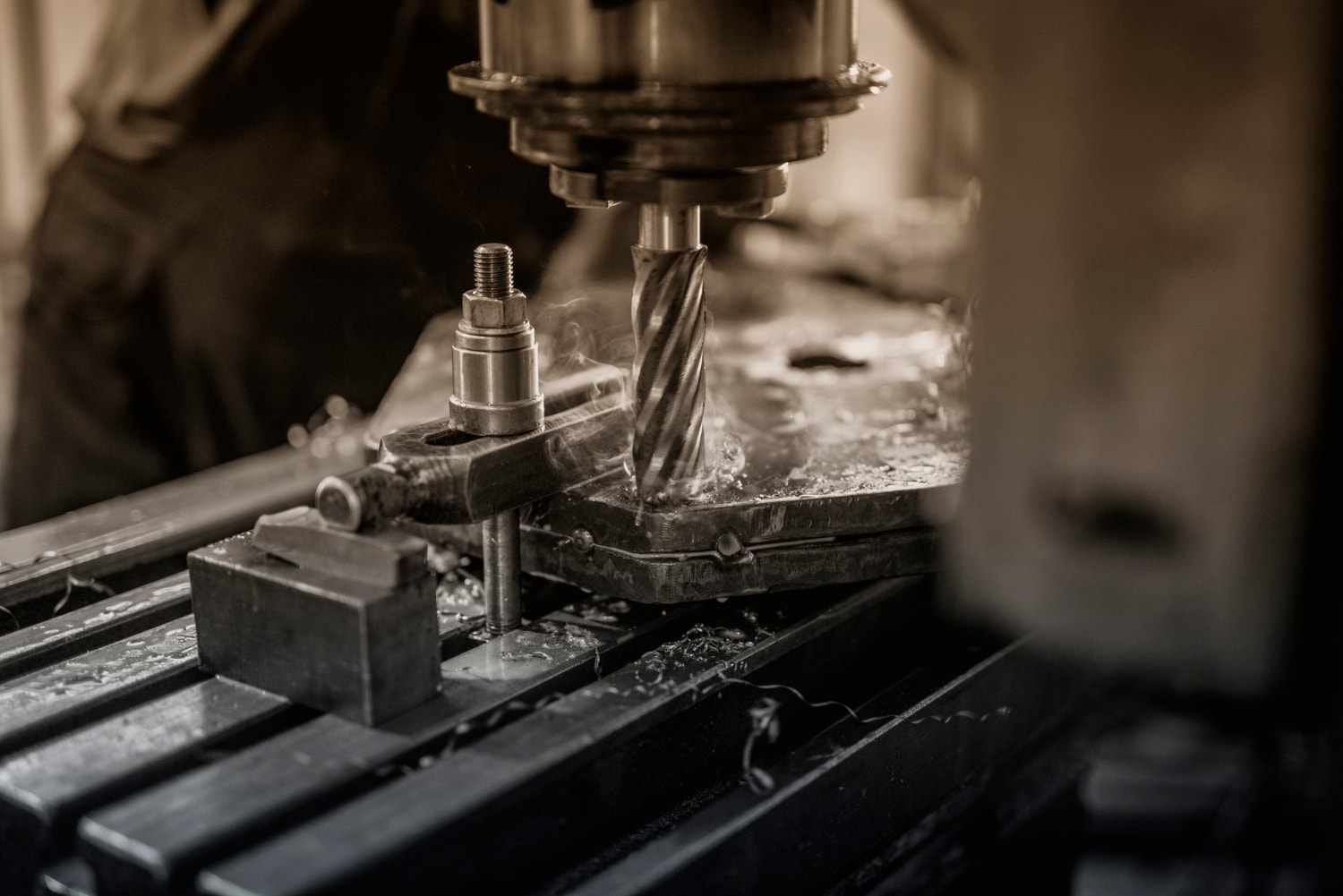
High-Volume CNC Machining Scale Guide for United States
Scaling your supply chain with dependable high-volume CNC machining services that maintain precision at any quantity
High-volume CNC machining is the practical answer for United States companies that need repeatable precision, predictable lead times, and scalable output without sacrificing quality as order quantities rise. For OEMs, contract manufacturers, and product teams, the value is not only in making more parts. It is in building a stable supply chain that can support demand swings, engineering changes, and cost targets while keeping dimensional consistency from the first part to the 100,000th.
In the United States market, this matters across automotive programs in Michigan and Ohio, electronics supply chains linked to California and Texas, industrial equipment production in Illinois and the Carolinas, and appliance and hardware distribution through hubs such as Los Angeles, Long Beach, Savannah, Houston, and Chicago. When purchasing teams evaluate volume CNC suppliers, they are increasingly looking beyond quoted unit price. They want verified capacity, process capability data, automation readiness, statistical process control, logistics resilience, and the ability to support inventory planning over multiple releases.
High-volume CNC production is especially valuable when a part has complex geometry, tight tolerances, multiple secondary operations, or frequent design revisions that still make machining more agile than dedicated tooling-based methods. It is also a strong bridge between prototyping, low-volume launch, and mature production. A supplier that can move from pilot runs to stable production with minimal disruption reduces qualification risk and shortens time to market.
For buyers seeking a dependable partner, the right evaluation framework includes capacity planning, Cp and Cpk targets, fixture strategy, cycle-time optimization, machine uptime, tooling life control, first article validation, in-process inspection, and shipping reliability. That is why many United States buyers combine domestic engineering oversight with globally competitive manufacturing capacity, especially when sourcing from China under controlled quality systems and clear communication workflows.
TEAM Rapid supports this approach by combining engineering review, in-house machining resources, integrated production management, and broader manufacturing support across prototyping through recurring production. Buyers looking for a deeper overview of machining processes can also review the company’s CNC machining services for precision production parts as part of their sourcing assessment.
Market Drivers and Capacity Planning Trends in High-Volume CNC Machining for Mass Production and Supply Chain Resilience

The strongest market driver in high-volume CNC machining is not simply demand growth. It is the need for supply chain resilience. United States manufacturers have spent the past several years rethinking single-source dependencies, inventory policy, nearshore versus offshore allocation, and the balance between cost efficiency and continuity of supply. In that context, CNC machining remains attractive because it offers relatively fast scale-up compared with processes that require long tooling lead times or high retooling costs.
Several trends are shaping current capacity planning. First, OEMs are placing more emphasis on dual-path sourcing, where one qualified supplier handles launch volumes and another supports overflow or regional balancing. Second, demand planning is increasingly tied to quarterly blanket orders rather than one-time annual commitments, so machining suppliers must be able to flex machine hours, labor scheduling, and raw material procurement. Third, buyers now ask for more transparency on machine count, spindle hours, fixture availability, preventive maintenance schedules, and backup capacity.
In practical terms, capacity planning for high-volume machining should consider available machine hours, cycle time per operation, setup loss, planned maintenance, scrap allowance, tooling change intervals, and inspection bottlenecks. A shop with excellent machines but weak metrology flow can still miss delivery targets. A supplier with enough spindles but poor palletization, workholding, or automation may struggle when weekly releases spike.
For United States importers, port strategy also matters. Production routed through Shenzhen or Hong Kong may move differently from cargo shipping through Ningbo or Shanghai, and the final U.S. destination may favor Long Beach, Seattle, Houston, or Savannah depending on transit goals and inland freight cost. Capacity planning therefore extends beyond production lines and into logistics planning, customs timing, and buffer inventory.
| Market Driver | Why It Matters | Effect on CNC Demand | Typical Buyer Response |
|---|---|---|---|
| Supply chain diversification | Reduces single-source risk | Higher demand for qualified secondary suppliers | Approve multiple machining sources |
| Shorter product life cycles | Frequent engineering revisions | Preference for flexible machining over fixed tooling | Use CNC for launch and revision control |
| Inflation and labor cost pressure | Pushes total cost reviews | Increased interest in automation-based suppliers | Compare landed cost, not quote only |
| Regional inventory strategy | Supports demand variability | Need for recurring batch production | Use staggered releases and safety stock |
| Quality traceability requirements | Important for regulated and branded products | More demand for SPC-driven machining | Request PPAP-style documentation |
| 2026 sustainability targets | OEMs track emissions and waste | Preference for efficient machining cells | Audit scrap and energy controls |
The table above shows that CNC volume growth in the United States is tied as much to risk management and operational agility as to pure manufacturing output. Buyers are increasingly rewarding suppliers that can prove disciplined planning, not just low pricing.
This market growth trend reflects continued demand from OEM programs, replacement parts, new electronic devices, industrial automation equipment, and a broader resilience mindset among procurement teams.
High-Volume CNC Machining Specifications: Process Capability, Statistical Process Control, Automation and Repeatability Standards

At high volume, machining success depends on process control more than one-time craftsmanship. A supplier may produce an excellent sample batch, but mass production requires statistical stability. United States buyers therefore commonly ask for process capability metrics, gauge control, documented inspection plans, and evidence that operators are not relying on manual adjustment from lot to lot.
Key specifications often begin with tolerance requirements, material grade control, surface finish targets, burr limits, flatness, hole position, concentricity, and cosmetic standards. Yet for recurring production, the deeper question is whether these specifications can be maintained consistently at target output. That is where Cp and Cpk matter. Features with sufficient process capability reduce sort risk, rework, and line stoppages at final assembly.
Statistical process control is essential for high-run components. SPC systems help detect drift before nonconforming product accumulates. Common controls include first-piece inspection, in-process sampling at defined intervals, tool wear monitoring, automatic offset updates, and final lot verification. Repeatability is further improved through dedicated fixtures, probe-based setup, bar feeders, robot loading, pallet changers, and standardized work instructions.
In a mature high-volume environment, the most reliable machining cells are designed around repeatability first. That means stable tool paths, robust workholding, limited operator dependency, preventive maintenance discipline, and closed-loop inspection feedback. For United States buyers qualifying offshore sources, this discipline often matters more than advertised maximum tolerance capability.
| Specification Area | Typical Target | Why It Is Important | Volume Production Impact |
|---|---|---|---|
| Dimensional tolerance | As tight as ±0.01 mm where required | Ensures fit and assembly performance | Reduces rejection and field issues |
| Cp/Cpk on critical features | Often 1.33 minimum, higher for key features | Measures process stability | Supports predictable output |
| SPC sampling frequency | Hourly or defined by risk | Detects drift early | Prevents large-batch nonconformance |
| Surface finish control | Per drawing or cosmetic standard | Affects function and appearance | Reduces downstream finishing problems |
| Fixture repeatability | Validated through repeat setups | Minimizes setup variation | Improves multi-shift consistency |
| Tool life monitoring | Set by wear limits and trial data | Prevents dimensional drift | Improves yield and uptime |
The table shows that high-volume machining specifications must be measurable and production-oriented. A print requirement only creates value when the supplier has the controls to hold it over time.
Automation standards continue to rise. Buyers increasingly expect suppliers to use machine probing, digital work instructions, barcode lot tracking, fixture poka-yoke concepts, and measured response plans for out-of-control conditions. As 2026 approaches, more volume programs will combine machine data monitoring, predictive maintenance, and AI-assisted process alerts. These tools do not replace engineering judgment, but they improve response speed and reduce hidden process variation.
Total Cost Analysis for High-Volume CNC Production: Tooling Amortization, Cycle Time Optimization and Volume Pricing Models

The lowest piece price is not always the lowest total cost. In high-volume CNC machining, total cost must account for setup efficiency, fixture investment, custom cutting tools, scrap exposure, freight, tariffs where applicable, packaging, inventory carrying cost, and the operational cost of late deliveries. Procurement teams in the United States increasingly look at landed cost and cost per good part delivered on time.
Tooling amortization is one of the biggest misunderstandings in volume machining. Even when a part is machined rather than injection molded, production still benefits from dedicated engineering investment. Custom jaws, hydraulic fixtures, multi-part tombstones, soft tooling, deburring fixtures, go/no-go gauges, and specialized cutters can significantly lower cycle time and increase consistency. The upfront cost may raise program launch expense, but the savings spread across 20,000 or 100,000 parts usually justify the decision.
Cycle time optimization is equally important. Smart suppliers reduce cost through operation consolidation, better toolpath strategy, machine selection, unattended running windows, and fixture layouts that increase spindle utilization. A 20-second saving on a 3-minute cycle may seem small, but across 50,000 parts it can change machine loading, capacity requirements, and final cost materially.
Volume pricing models usually reflect this reality. Unit price should decline when setup cost is spread over more parts, raw material purchasing improves, tool change planning stabilizes, and production is scheduled in efficient batches. However, buyers should ask whether quoted price breaks assume annual volume, single release size, or combined blanket order quantity. Many misunderstandings start there.
| Cost Element | Low-Volume Effect | High-Volume Effect | Buyer Question to Ask |
|---|---|---|---|
| Setup time | High cost per part | Spread across large quantities | What batch size is assumed? |
| Fixture investment | May look expensive | Often lowers long-run cost | Is fixture amortization included? |
| Custom cutting tools | Harder to justify | Improves cycle time and consistency | What is the tool life plan? |
| Inspection labor | Higher manual effort | Can be streamlined with SPC | How is in-process inspection handled? |
| Scrap and rework | Variable and visible | Can become expensive if drift occurs | What is the control plan for critical features? |
| Freight and inventory | Less optimized | Can improve with scheduled releases | Can shipments be staged by demand? |
This cost model highlights why volume sourcing should be evaluated across the full production system. In many cases, a supplier with stronger engineering and process discipline produces a better total cost result than a lower-quote competitor.
Industries Requiring High-Volume CNC Machining: Consumer Electronics, Automotive Components, Industrial Hardware and Appliances
High-volume CNC machining serves industries where dimensional consistency, lot traceability, and moderate-to-complex geometry matter at recurring quantities. In the United States, the strongest sectors include consumer electronics, automotive components, industrial hardware, appliances, communications products, and precision commercial devices.
Consumer electronics programs often require aluminum housings, heat sinks, brackets, connectors, and cosmetic exterior parts. These products are sensitive to surface finish and consistency, especially when parts feed anodizing, painting, or secondary assembly. Automotive programs use volume machining for powertrain-related components, interior hardware, mounting features, fluid handling parts, and structural subcomponents where repeatability and PPAP-style discipline are important. Industrial hardware and appliances rely on machining for shafts, valve bodies, mounting blocks, control housings, and durable functional components used over long product cycles.
Medical and laboratory equipment can also benefit when volume remains too low to justify expensive dedicated tooling, but quality expectations are high. Likewise, robotics, renewable energy devices, and smart infrastructure products are growing users of volume machined parts as they scale from pilot deployment to mainstream production.
| Industry | Typical Parts | Main Requirement | Why CNC Fits |
|---|---|---|---|
| Consumer electronics | Housings, frames, heat sinks | Appearance plus precision | Supports tight finishes and quick revisions |
| Automotive components | Brackets, inserts, housings | Repeatability and documentation | Strong process control and batch traceability |
| Industrial hardware | Mounts, blocks, shafts | Durability and dimensional control | Works well for varied geometries |
| Appliances | Functional metal parts, fittings | Cost efficiency at scale | Balances flexibility and throughput |
| Communications equipment | Enclosures, RF support parts | Thermal and positional accuracy | Good for aluminum and complex machining |
| Medical equipment | Precision functional components | Consistency and cleanliness | Suitable for controlled repeat production |
Each industry uses machining differently, but the common requirement is confidence that every lot will match specification and arrive when needed for assembly schedules.
The bar chart reflects realistic demand concentration, with automotive and electronics continuing to drive the largest share of recurring CNC volume in U.S.-linked supply chains.
Applications Where High-Volume CNC Machining Delivers Consistent Quality, Cost Efficiency and Reliable Delivery Schedules
High-volume CNC machining performs best in applications where repeatability and flexibility are both valuable. Examples include aluminum housings with multiple threaded features, precision mounting interfaces, turned bushings and shafts, connector blocks, valve-related components, and machined parts that must maintain close fit across multiple assembly sites.
It is also effective for product families. If several SKUs share similar geometry but require variant hole patterns or engraving, machining allows standard fixturing with configurable programming. This is especially useful for United States companies managing product customization without carrying too many dedicated tooling assets.
From a supply chain perspective, machining supports reliable delivery schedules when the supplier uses stable cells, balanced inspection capacity, and release-based planning. It is particularly advantageous for phased launches, service parts, and products with uncertain demand ramps. Buyers can avoid overcommitting to hard tooling before final demand becomes clear.
| Application Type | Common Material | Why High-Volume CNC Works | Delivery Advantage |
|---|---|---|---|
| Electronic enclosures | Aluminum | Precision plus good cosmetic prep | Fast revision response |
| Mechanical shafts and bushings | Steel or stainless steel | Strong repeatability on turned features | Stable recurring batches |
| Mounting brackets | Aluminum or steel | Cost-effective across many variants | Easy schedule adjustment |
| Fluid control blocks | Aluminum, brass, stainless steel | Complex internal and external machining | Controlled lot traceability |
| Heat dissipation parts | Aluminum | Good tolerance and finish on thermal components | Scalable with fixture optimization |
| Appliance functional parts | Various metals and engineering plastics | Supports mixed materials and features | Reliable replenishment cycles |
The most important takeaway is that high-volume machining is not only for large order quantities. It is for applications where process stability, design flexibility, and delivery performance all matter at the same time.
High-Volume Production Case Studies: How Leading OEMs Scaled CNC Machined Part Supply with Consistent Quality and Cost Control
Consider a consumer electronics OEM launching a new desktop device for the United States market. The machined aluminum enclosure required tight flatness, multiple threaded holes, and cosmetic anodizing. During pilot production, the supplier identified setup variation caused by manual clamping and introduced dedicated soft jaws and in-machine probing. That investment reduced variation, improved cosmetic consistency after finishing, and shortened setup time. The result was a smoother ramp from pilot builds to tens of thousands of units without repeated line stops.
In another example, an industrial equipment company needed recurring stainless steel valve components for assembly in the Midwest. Demand fluctuated by quarter, and late deliveries had previously forced premium air shipments. A revised production plan used scheduled blanket orders, safety stock on raw material, and SPC tracking on critical bores and sealing faces. The program reduced emergency freight, improved incoming acceptance, and lowered total landed cost despite little change in nominal piece price.
A third case involved an automotive subassembly program that required multiple machined brackets and inserts. The buyer initially prioritized price, but sample consistency among potential suppliers varied significantly. The chosen supplier won because it documented process capability on key dimensions, matched fixturing to takt requirements, and provided lot-level traceability. The OEM gained fewer receiving issues and better line continuity at its U.S. assembly site.
These case patterns show a common principle. Leading OEMs scale machining successfully when they treat the project as a process-engineering problem rather than a simple purchasing exercise. They ask how the supplier will maintain output, not only whether it can make a good first sample.
The area chart illustrates a clear trend shift. More United States buyers now prioritize resilience, quality controls, and execution reliability over an isolated low unit price.
Sourcing High-Volume CNC Machining Capacity from China: Production Line Audits, Capacity Verification and Supply Chain Risk Management
Sourcing high-volume CNC machining from China can deliver strong cost-performance advantages, but success depends on structured qualification. United States buyers should verify actual production capacity rather than relying on sales claims. That means reviewing machine lists, age and type of equipment, shift patterns, bottleneck operations, fixture readiness, inspection assets, and the supplier’s record in similar annual volumes.
Production line audits should assess more than cleanliness and certifications. Buyers should examine how jobs flow through the plant, where WIP accumulates, how tools are managed, whether operators follow standardized instructions, how nonconformance is isolated, and how shipment records align with promised lead times. A good audit also reviews incoming material traceability, calibration control, and packaging discipline for export transit.
Capacity verification should translate quoted annual volume into machine-hour reality. For example, if a part cycle is 4 minutes and the buyer expects 60,000 pieces annually, what machine count, shift structure, uptime, and scrap assumption support that claim? If the answer is unclear, the quoted capacity may be theoretical.
Risk management extends to shipping and trade logistics. United States importers should understand the supplier’s preferred export routes, backup port options, Incoterm flexibility, and response plan for delays around major shipping disruptions or holiday shutdowns. Buffer stock strategies may be important for programs shipping through Long Beach, Oakland, Houston, or Savannah depending on inland delivery timelines.
China sourcing also works best when communication is technically strong. Engineering-driven suppliers who provide DFM review, drawing clarification, and documented corrective actions generally reduce misunderstanding and speed qualification. This is particularly valuable for U.S. teams operating across time zones and needing reliable updates within short windows.
| Audit Area | What to Check | Risk if Weak | Best Practice |
|---|---|---|---|
| Machine capacity | Count, type, uptime, shifts | Late deliveries | Match demand to real spindle hours |
| Fixture and tooling readiness | Dedicated workholding and tool plans | Inconsistent output | Approve production tooling plan early |
| Inspection system | SPC, gauges, CMM, calibration | Quality drift | Use control plans for critical features |
| Material control | Certs, lot traceability, storage | Wrong material or mixed lots | Require trace records by batch |
| Export packaging | Labeling, corrosion protection, cartons | Transit damage | Validate packaging during first shipment |
| Business continuity | Backup suppliers, holiday plan, logistics options | Supply interruption | Build contingency and safety stock rules |
This audit framework is especially helpful for U.S. companies balancing landed cost savings with supplier reliability. When China sourcing is disciplined, it can support both commercial efficiency and continuity of supply.
Our High-Volume CNC Machining Production Lines, Automation Integration, SPC Systems and Volume Manufacturing FAQs
For buyers evaluating a manufacturing partner, it is useful to break the supplier profile into three areas: technological capabilities, manufacturing capabilities, and service capabilities.
Technological capabilities
TEAM Rapid supports production with engineering-centered process planning rather than quote-only execution. Its machining work includes milling, turning, EDM-related support, and a broad range of finishing options for both plastic and metal parts. Tight tolerance capability down to 0.01 mm can be applied where design requirements justify it, but more importantly, the team focuses on manufacturability analysis, DFM feedback, and process selection that reduce quality risk before production begins. For high-volume programs, this means reviewing part geometry, tolerance stack-up, workholding method, likely tool wear points, and opportunities to improve cycle time or simplify inspection.
Automation integration in a volume environment can include standardized fixturing, repeatable setup methods, and SPC-supported monitoring routines that help hold consistency across recurring runs. This engineering-led approach is valuable for U.S. companies moving from prototype intent to production reality, because design details that work in early development may need refinement for stable larger-scale output.
Manufacturing capabilities
From a production standpoint, TEAM Rapid is positioned to support projects from one-off prototypes to 100,000-plus parts through a mix of in-house resources and an integrated manufacturing network across China. That flexibility matters for programs that begin with pilot quantities, then move to low-volume launch, then expand into repeat orders. Rather than forcing customers to manage separate vendors for development and scale-up, the company can support a staged pathway that includes CNC machining, rapid tooling, injection molding, die casting, sheet metal fabrication, finishing, assembly, packaging, and limited warehousing support.
For high-volume CNC machining specifically, buyers benefit from a supplier that understands how machining interacts with secondary operations, packaging, and shipment planning. Production is not only about making parts. It is about releasing complete, inspected, properly packed batches that align with customer schedules in the United States.
Service capabilities
Service capability is often the difference between a usable supplier and a strategic supplier. TEAM Rapid emphasizes fast response, one-to-one engineering communication, and support for international customers that need clear updates across Asian and Western business environments. For U.S. buyers, this is important when drawings change, demand forecasts shift, or quality documentation needs to be clarified quickly. The company’s ISO 9001:2015 certification reinforces a structured quality management approach, while its track record across thousands of delivered projects supports confidence in handling varied product categories.
In addition, service continuity extends beyond machining itself. Procurement support, material management, component assembly, contract packaging, and direct shipping can reduce supplier complexity for customers launching products into U.S. distribution channels. For organizations trying to shorten time to market and reduce coordination overhead, that broad operational support creates practical value.
The comparison chart summarizes the capability profile that many United States buyers prioritize when selecting a long-term machining partner: engineering depth, repeatable quality, cost-performance, and coordinated production support.
High-volume CNC machining FAQs
What annual quantity counts as high volume?
There is no single threshold. In practice, high volume usually means quantities large enough that dedicated fixturing, formal SPC, and batch scheduling materially improve cost and consistency.
Is CNC machining still cost-effective at high volume?
Yes, especially for parts with complex geometry, multiple revisions, moderate annual demand, or requirements that would make dedicated hard tooling expensive or inflexible.
What quality documents should a U.S. buyer request?
Typical requests include material certifications, dimensional reports, first article records, control plans, SPC summaries for critical features, and calibration evidence for key gauges.
How should I compare suppliers?
Compare real process capability, capacity verification, cycle-time logic, response speed, export readiness, and total landed cost. Do not compare piece price alone.
When is China sourcing the right choice?
It is often attractive when cost competitiveness, scalable output, and integrated manufacturing support are priorities, provided audit, communication, and logistics controls are in place.
What trends will matter most in 2026?
Expect greater use of machine monitoring, predictive maintenance, digital traceability, sustainability reporting, and procurement policies that reward supply resilience alongside price.
Buying Advice for United States Procurement Teams
For procurement and engineering teams in the United States, the best sourcing decisions start with an honest review of part risk. If a component is critical to assembly uptime, then supplier selection should weight process capability and delivery stability heavily. If the part has cosmetic requirements, finishing process control becomes equally important. If demand is uncertain, favor suppliers that can scale in stages without forcing large upfront commitments.
A good RFQ package should include annual forecast, release pattern, critical dimensions, expected inspection records, packaging requirements, destination port or warehouse region, and whether the quote should include fixture amortization. Buyers should also ask what assumptions drive the quoted price break and lead time. Many sourcing problems come from hidden assumptions rather than poor machining.
It is also wise to think regionally. A company shipping into Southern California may optimize differently from one replenishing distribution in Atlanta or Chicago. Inland freight, customs flow, receiving schedules, and safety stock policy all influence the right production model. The more specific your requirements, the more accurate the supplier’s plan will be.
Future Outlook: 2026 Technology, Policy, and Sustainability Trends
Looking toward 2026, high-volume CNC machining will be shaped by three forces. The first is technology. More machining suppliers will adopt connected equipment monitoring, automated tool-life tracking, and data-driven process alerts. This will help improve uptime and lower quality escape risk. The second is policy. United States companies will continue to diversify supply footprints in response to trade policy shifts, logistics volatility, and customer pressure for resilient sourcing. The third is sustainability. OEMs are increasingly asking suppliers to reduce material waste, improve energy efficiency, optimize packaging, and document environmental practices.
These trends do not mean machining becomes less competitive. In many cases, they strengthen the role of sophisticated CNC suppliers, because efficient high-volume machining can support lower scrap rates, smarter scheduling, and better alignment between engineering intent and production reality. Suppliers that combine cost discipline with traceable quality and responsible operations will be best positioned to win long-term programs.
For United States buyers, the strategic goal is clear: build a supply chain that is scalable, measurable, and resilient. High-volume CNC machining remains one of the most flexible ways to achieve that when the right process controls, sourcing discipline, and partner capabilities are in place.

About the Author : Team Rapid Manufacturing Co., Ltd.
This article is written by the engineering team at Team Rapid Manufacturing Co., Ltd, specializing in rapid prototyping and manufacturing solutions. With extensive experience in CNC machining, injection molding, and low-volume production, our team shares practical insights to help global clients improve product development efficiency and reduce manufacturing risks.
Share