Custom CNC Milling Guide for Buyers in the United States
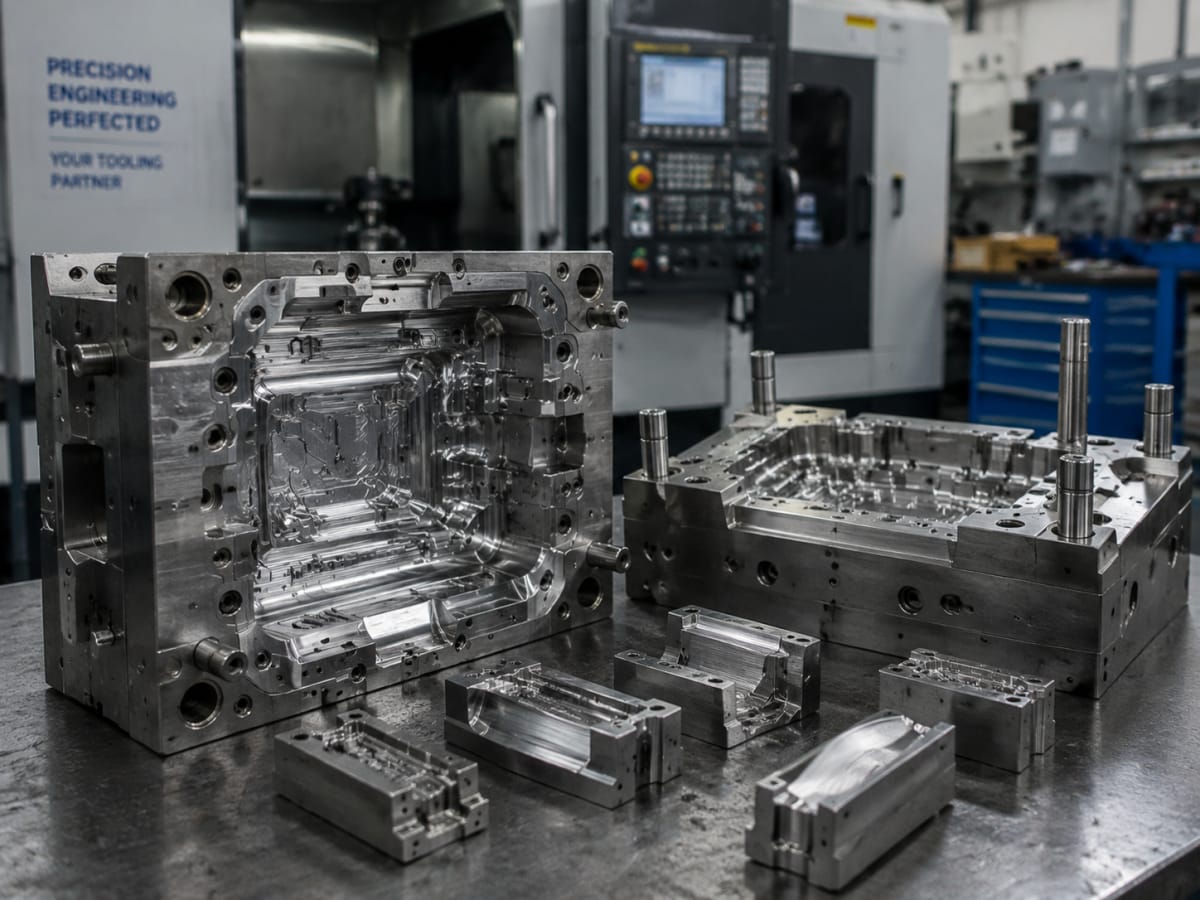
CNC milling services are used to make accurate custom parts from metal and plastic by removing material with computer-controlled cutting tools. For buyers in the United States, CNC milling is often the best choice when a project needs tight tolerances, repeatable quality, fast prototype turnaround, and scalable low- to mid-volume production. It is especially valuable for housings, brackets, fixtures, panels, enclosures, heat sinks, medical components, automotive parts, and other precision features that cannot be formed efficiently by hand or by simpler machining methods.
In practical purchasing terms, CNC milling gives American engineers and sourcing teams a flexible path from CAD file to finished part. A startup in Austin can validate a prototype in days. A medical device company near Minneapolis can order pilot parts with documented inspection. An industrial OEM in Chicago can bridge from development to short-run production without waiting for expensive hard tooling. For buyers moving goods through Los Angeles, Long Beach, Houston, Savannah, or Newark, milling also fits global supply chains well because the process supports both one-off development parts and recurring production orders.
This guide explains what CNC milling services include, when milling is the right process, how 3-axis, 4-axis, and 5-axis machines differ, which materials are most common, how to design efficient milled features, how tolerances are controlled, which surface finishes make sense, and how to choose the right supplier. It also covers current U.S. market demand, 2026 trends, supplier evaluation, and what to expect from a manufacturing partner that offers engineering review, finishing, inspection, and production support.
What Are CNC Milling Services?

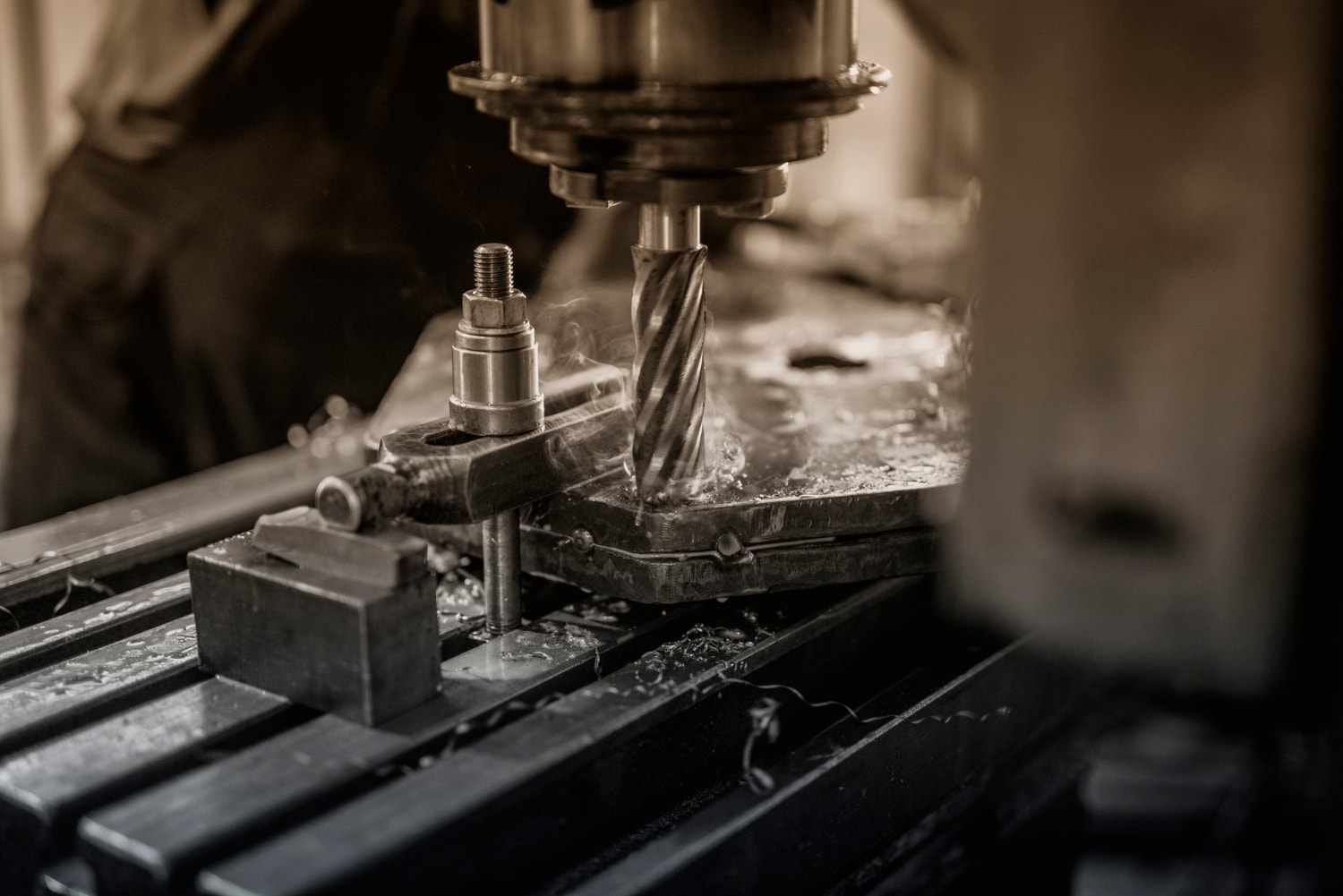
CNC milling services are manufacturing services that cut a solid block or billet of material into a finished shape using rotating tools controlled by programmed machine movements. The process starts with a 3D CAD model, which is converted into CAM toolpaths. The machine then removes material layer by layer to create pockets, slots, profiles, holes, bosses, contours, and precision surfaces. Unlike manual machining, CNC milling delivers better consistency, more complex geometry, and much higher repeatability.
In the United States market, CNC milling services are commonly purchased for prototype development, bridge production, spare parts, custom equipment, test fixtures, and end-use parts. Companies in aerospace corridors around Seattle, medical manufacturing clusters in California and Massachusetts, automotive centers near Detroit, and energy equipment hubs around Houston all rely on milled parts because the process supports precision and design flexibility.
A typical CNC milling service can include more than just cutting. Many projects also require DFM review, material sourcing, deburring, tapping, thread milling, inspection reports, anodizing, bead blasting, painting, plating, and assembly. Buyers often choose suppliers that can manage these operations together because it shortens lead times and reduces communication gaps.
Below is a simple overview of what buyers usually expect from CNC milling services.
| Service Element | What It Means | Why It Matters |
|---|---|---|
| CAD/CAM Programming | Turning a 3D model into machine toolpaths | Controls part accuracy, cycle time, and manufacturability |
| Material Preparation | Cutting stock and selecting the proper billet size | Reduces waste and supports stable machining |
| Rough and Finish Milling | High-speed material removal followed by precision passes | Balances cost, accuracy, and surface quality |
| Secondary Machining | Drilling, tapping, chamfering, and counterboring | Creates complete functional features in one workflow |
| Finishing | Anodizing, polishing, blasting, painting, plating | Improves appearance, corrosion resistance, or wear life |
| Inspection | CMM, calipers, micrometers, visual and dimensional checks | Confirms tolerance compliance and traceability |
| Packaging and Shipping | Protective packing and direct delivery | Prevents damage and supports production schedules |
This structure shows why CNC milling is often purchased as a complete service rather than as a simple machine operation. The best suppliers do not only run parts; they also help prevent avoidable redesigns and delivery delays.
For buyers who need a practical starting point, custom CNC milling services can be integrated with prototyping, finishing, and production support so that development parts and repeat orders follow the same manufacturing path.
The chart above reflects a realistic growth pattern seen across U.S. custom machining demand. Growth is being driven by reshoring discussions, faster product iteration, medical and electronics development, and the need for reliable low-volume supply before full-scale tooling is committed.
When CNC Milling Is the Best Process

CNC milling is the best process when a part needs flat faces, precision pockets, machined contours, threaded holes, or accurately located features on multiple sides. It is also a strong choice when a project needs prototypes quickly, design changes are still expected, and buying a mold or die would be too slow or too expensive. Compared with injection molding, for example, milling has a much lower upfront cost but a higher per-part cost. That makes it ideal in early development and low-volume production.
Many U.S. companies choose milling when they need parts for engineering validation, pilot builds, trade show samples, field testing, or aftermarket service. In cities such as San Jose and Boston, product teams frequently need machined enclosures and fixtures while designs are still evolving. In Detroit and Columbus, automotive programs may require prototype brackets and test hardware before production tools are finalized. In Houston and Tulsa, equipment builders often use CNC milling for custom metal parts in repair and replacement cycles.
Milling is usually the right process in the following situations:
| Production Need | Is CNC Milling a Good Fit? | Reason |
|---|---|---|
| 1 to 20 prototype parts | Yes | Fast setup compared with tooling-based methods |
| 20 to 500 precision parts | Yes | Strong balance of flexibility and repeatability |
| Frequent design changes | Yes | Only the program changes, not a hard mold |
| Complex internal undercuts | Sometimes | May require 5-axis machining or another process |
| Very high-volume plastic parts | No | Injection molding is usually more economical |
| Thin sheet components | No | Sheet metal fabrication is often more efficient |
| Very hard conductive shapes with fine corners | Sometimes | EDM may complement milling for final details |
The table shows that milling is not always the cheapest answer, but it is often the smartest process when geometry, lead time, and flexibility matter more than minimizing cost at very high volumes.
Another reason milling is preferred is process control. American buyers in regulated or quality-sensitive sectors often need documented dimensions, revision control, and material consistency. CNC milling supports that well because the process is digitally driven and relatively easy to inspect.
For product teams comparing manufacturing routes, a practical decision flow is simple: use CNC milling for prototypes, bridge runs, and precision low-volume parts; move to molding, casting, extrusion, or stamping when annual volume and part design justify dedicated tooling. Strong suppliers can support both stages, which reduces risk during the transition.
3-Axis 4-Axis and 5-Axis Milling Explained

The main difference between 3-axis, 4-axis, and 5-axis CNC milling is how many directions the cutting tool or part can move during machining. More axes make it easier to reach multiple sides, reduce setups, and machine complex geometry more efficiently. However, more advanced machines also cost more to run, so the right choice depends on part complexity.
3-axis milling is the standard configuration. The tool moves in X, Y, and Z directions, making it suitable for flat faces, pockets, drilled holes, profiles, and many common prismatic parts. It is the most economical option for simple brackets, covers, plates, housings, and fixtures.
4-axis milling adds a rotary axis, usually allowing the part to rotate around one axis. This is useful for machining multiple sides in fewer setups, indexing around a part, or creating features on cylindrical or multi-face components.
5-axis milling adds two rotational movements, allowing the tool to reach many surfaces in a single setup. It is ideal for highly complex parts, compound angles, impellers, aerospace components, sculpted medical parts, and precision features that would otherwise require repeated re-fixturing.
| Machine Type | Typical Use | Main Advantage |
|---|---|---|
| 3-Axis | Plates, housings, brackets, pockets, slots | Lower cost and broad availability |
| 3+2 Positional | Angled features machined in indexed positions | Cheaper than full simultaneous 5-axis for many parts |
| 4-Axis | Multi-side parts, indexed features, round components | Fewer setups and better alignment |
| 5-Axis Simultaneous | Complex contours and organic surfaces | Maximum geometric freedom |
| Vertical Milling Center | General-purpose precision machining | Efficient for most prismatic parts |
| Horizontal Milling Center | High-volume multi-face metal parts | Good chip evacuation and productivity |
| Mill-Turn or Hybrid Cell | Parts requiring both turning and milling | Reduced handling and tighter concentricity control |
For most U.S. sourcing teams, the practical issue is not choosing the machine class directly, but choosing a supplier that can recommend the right axis strategy. Over-specifying 5-axis for a simple part can add unnecessary cost. Under-specifying 3-axis for a complex geometry can increase risk, add setups, and hurt quality.
As a rule of thumb, if a part has deep pockets on one side and standard holes, 3-axis is often enough. If features wrap around several sides or require better positional accuracy between faces, 4-axis may be better. If the design includes angled surfaces, compound curves, or difficult tool access, 5-axis usually pays for itself through fewer fixtures and more stable machining.
This demand comparison shows why CNC milling remains widely used across sectors. Industrial equipment and automotive continue to lead, but medical, aerospace, and electronics are strong users because they value precision and traceability more than basic volume alone.
Materials Commonly Used in CNC Milling
CNC milling works with a wide range of metals and plastics. Material choice affects cost, surface finish, strength, weight, corrosion resistance, heat behavior, and machining time. In the United States, the most common metals include aluminum, stainless steel, carbon steel, brass, copper, magnesium, and titanium. Common plastics include ABS, POM, nylon, PMMA, polycarbonate, PEEK, PTFE, and UHMW.
Aluminum is often the first choice for milled parts because it machines quickly, offers a good strength-to-weight ratio, and supports attractive finishes such as clear or colored anodizing. Grades like 6061 and 7075 are common in electronics, robotics, automotive, and aerospace support parts. Stainless steel is selected when corrosion resistance, strength, or cleanability is more important than machining speed. Plastics are used when electrical insulation, transparency, lower weight, chemical resistance, or softer contact surfaces are needed.
| Material | Common U.S. Applications | Key Benefit |
|---|---|---|
| Aluminum 6061 | Housings, brackets, fixtures, panels | Good machinability and versatile performance |
| Aluminum 7075 | High-strength aerospace and sporting components | Higher strength than 6061 |
| Stainless Steel 304 | Medical housings, food equipment, enclosures | Corrosion resistance |
| Stainless Steel 316 | Marine, medical, chemical environments | Better corrosion resistance in harsh conditions |
| Carbon Steel | Industrial fixtures, machine parts, support hardware | Strength and cost effectiveness |
| Brass | Electrical parts, valves, decorative components | Easy machining and attractive finish |
| Titanium | Aerospace, implants, high-performance devices | High strength and low weight |
| ABS | Prototype housings and consumer product parts | Easy machining and low cost |
| POM/Delrin | Wear parts, bushings, gears | Low friction and dimensional stability |
| PEEK | Medical and high-temperature industrial parts | Excellent chemical and thermal performance |
Material selection should not be based on price alone. For example, a buyer may save money by switching from stainless to anodized aluminum if the application permits. On the other hand, using a general plastic instead of PEEK in a heated medical or industrial environment could create a failure risk later. That is why experienced machining partners provide material alternatives during quotation rather than only taking orders exactly as submitted.
In supply planning, material availability also matters. U.S. buyers working on urgent deadlines often prefer common alloys and plastics that can be sourced quickly. Niche grades may increase lead time, especially when certification, special hardness, or lot traceability is required.
Design Tips for Milled Features and Pockets
Good CNC milling design reduces cost, improves machining stability, and shortens lead time. Many expensive machining problems come from avoidable design decisions such as overly deep pockets, tiny internal corners, inaccessible features, very thin walls, or unrealistic thread placement. Design for manufacturability is especially important when projects must move fast from prototype to production.
The first rule is to design around cutting tool geometry. End mills are round, so sharp internal corners require either a small tool, a secondary process, or a design change such as adding corner radii. Deep narrow cavities also force the supplier to use long tools, which can vibrate and reduce accuracy.
Another common mistake is specifying multiple unnecessary pocket depths or tiny floor features. If similar features can share the same depth and tool size, the part becomes easier and cheaper to machine. This matters in both prototype and repeat production because each tool change and setup step adds time.
| Design Recommendation | Preferred Practice | Benefit |
|---|---|---|
| Internal Corners | Add radii instead of sharp corners | Allows larger tools and faster cutting |
| Pocket Depth | Keep depth moderate relative to tool diameter | Reduces chatter and tool deflection |
| Wall Thickness | Avoid extremely thin unsupported walls | Improves rigidity and dimensional stability |
| Hole Sizes | Use standard drill sizes when possible | Lowers machining time and tooling cost |
| Threads | Limit thread depth to functional need | Prevents wasted machining time |
| Feature Access | Make sure tools can reach critical surfaces | Reduces special fixturing and extra setups |
| Datum Strategy | Define clear inspection references | Improves tolerance control and communication |
A practical example is a battery enclosure for an EV accessory project. If the design includes very deep rectangular pockets with tight inside corners, the machine shop may need multiple small tools, longer cycle times, and more manual deburring. If the pockets are redesigned with proper corner radii and better depth ratios, the same enclosure may be made faster and with better repeatability.
This is where technological capability matters. Strong CNC partners use in-house programming, fixture planning, and DFM feedback to identify geometry that may drive unnecessary cost. Instead of simply quoting the drawing, they can suggest alternate radii, split-line changes, hole callout simplification, or pocket redesign that preserves function while improving manufacturability.
For teams managing frequent revisions, this engineering input can save weeks over the life of a project. It is particularly useful for startups and design firms in places like San Francisco, Denver, and New York, where time-to-market is often more important than optimizing every detail internally.
Tolerance Control in CNC Milled Parts
Tolerance control is one of the main reasons buyers choose CNC milling. However, not every dimension should have the same tight tolerance. Over-tolerancing makes parts more expensive and can slow production without improving function. The best approach is to apply tight tolerances only where fit, sealing, motion, or alignment actually require them.
General milled dimensions often hold standard shop tolerances, while critical bores, mating surfaces, and positional relationships may need tighter control. Factors that affect tolerance include part size, material, wall thickness, machine rigidity, tool wear, fixture design, thermal expansion, and surface finish requirements.
Many suppliers can achieve fine tolerances on selected features, but buyers should ask how those tolerances are verified. A reliable process may involve in-process probing, first article checks, calibrated inspection equipment, CMM reports, and documented sampling plans. For U.S. customers in medical, aerospace support, and industrial automation, this level of quality control is often more important than the advertised machine list.
| Feature Type | Typical Tolerance Strategy | Inspection Method |
|---|---|---|
| Overall External Dimensions | Standard unless part fit requires more | Calipers or micrometers |
| Mating Faces | Tighter flatness and positional control | Surface plate and indicator or CMM |
| Pockets and Slots | Tight only if assembly fit depends on them | Pin gauges, calipers, CMM |
| Drilled Holes | Standard if clearance holes; tighter if dowel fit | Pin gauges and CMM |
| Threads | Based on standard thread class | Thread plug or ring gauges |
| Bores | Tighter for bearings, seals, and press fits | Bore gauges, CMM, air gauges |
| Critical GD&T Features | Controlled from functional datums | CMM and documented reports |
One useful buying tip is to separate critical-to-function dimensions from cosmetic or non-critical dimensions on the drawing. This helps the supplier prioritize machine strategy, inspection time, and process control. It also reduces quotation ambiguity.
Manufacturing capability matters here as well. A supplier with broad machining resources, wire EDM or EDM support for special features, and finishing control can handle more complex tolerance stacks than a basic job shop. When that same supplier also offers inspection and finishing under one system, dimensional accountability becomes easier to manage.
The trend above reflects growing demand for precise, inspection-driven machining in sectors such as medical devices, automation, electronics, and advanced industrial products. Buyers increasingly expect not only parts, but process evidence and predictable repeatability.
Surface Finishes for CNC Milling Projects
Surface finish affects more than appearance. It can improve corrosion resistance, reduce friction, add color coding, protect the base material, support cleanliness, or create a market-ready cosmetic surface. The best finish depends on the material, end use, and budget. In the United States, common CNC milling finishes include as-machined, bead blasted, anodized, polished, brushed, painted, powder coated, passivated, black oxide, and plated finishes.
As-machined parts are often acceptable for internal fixtures, functional prototypes, and hidden industrial components. Bead blasting creates a uniform matte look and can prepare a part for anodizing. Clear anodizing is widely used for aluminum housings because it adds corrosion resistance without changing appearance too much. Black anodizing is common for electronics and optics. Stainless steel parts may be passivated to improve corrosion resistance after machining.
Cosmetic expectations vary by industry. A laboratory device panel shipped to Boston may need a clean branded appearance. A rugged field bracket shipped to an oil and gas site outside Houston may only need corrosion control. A consumer electronics enclosure intended for Los Angeles retail display may require a much more refined surface standard.
| Finish | Best For | Main Advantage |
|---|---|---|
| As-Machined | Functional prototypes, hidden components | Lowest added cost |
| Bead Blasted | Uniform matte surface before shipment or anodizing | Improved visual consistency |
| Clear Anodized | Aluminum housings and brackets | Corrosion resistance |
| Black Anodized | Electronics, optics, premium aluminum parts | Appearance and protection |
| Passivation | Stainless steel components | Better corrosion performance |
| Powder Coating | Durable industrial external surfaces | Thick and robust coating |
| Painting | Color-specific product housings | Flexible color and branding options |
| Plating | Wear, conductivity, or corrosion needs | Functional surface enhancement |
Finish selection should be discussed early because coatings can affect dimensions, edge condition, and thread fit. For example, anodizing changes the surface layer and should be considered if a bore or threaded feature is very tight. Painting and powder coating add visible thickness, which may matter on mating surfaces.
Service capability is important here. A supplier that manages machining, polishing, anodizing, painting, plating, and shipping in one coordinated workflow can reduce handoff risk. This is especially valuable when a U.S. customer needs consistent cosmetic quality across multiple batches or wants production-ready parts without managing several subcontractors.
Choosing the Right CNC Milling Supplier
Choosing the right CNC milling supplier is not only about price. The best supplier for a U.S. buyer is the one that matches the project’s complexity, lead time, volume, quality needs, and communication style. Some suppliers are ideal for quick prototype work. Others are better for recurring low-volume production or multi-process projects that combine machining with molding, sheet metal, die casting, or assembly.
Start with technical fit. Can the supplier machine the materials and features you need? Do they support 3-axis, 4-axis, and 5-axis workflows when required? Can they hold the necessary tolerances on critical dimensions? Do they provide inspection data when needed? Do they offer useful DFM feedback before cutting material?
Then look at manufacturing capability. A stronger partner usually has in-house machining plus access to complementary processes such as turning, EDM, finishing, and assembly. This matters when parts evolve from prototype to small-batch production. It also matters when schedules are tight and the supplier must solve problems rather than merely forward them.
Finally, evaluate service capability. Fast response times, clear quoting, revision management, packaging quality, and shipping coordination all affect the total project outcome. For U.S. buyers dealing with international supply chains, communication speed and specification clarity can be as important as machine capacity. Suppliers familiar with both U.S. and Asian business practices often handle this especially well.
| Supplier Evaluation Point | What to Ask | Why It Matters |
|---|---|---|
| Engineering Support | Will you review my design for manufacturability? | Prevents cost and quality issues early |
| Tolerance Capability | How do you control and verify critical dimensions? | Confirms process reliability |
| Material Range | Which plastics and metals do you stock or source quickly? | Affects lead time and project flexibility |
| Finishing Options | Can you manage anodizing, blasting, painting, plating? | Reduces vendor complexity |
| Production Flexibility | Can you support 1 part, 50 parts, and 500+ parts? | Useful for growth from prototype to production |
| Quality System | Do you work under a documented quality framework? | Supports consistency and traceability |
| Communication | How fast do you reply to RFQs and engineering questions? | Shortens development cycles |
| Logistics | Can you ship directly to U.S. plants or distribution points? | Improves schedule control |
For many buyers, the ideal partner is a supplier that combines technological, manufacturing, and service strengths. A company with in-house machining, tooling, molding support, finishing, and engineering review can guide a project from prototype through commercial launch. That reduces the number of handoffs and makes it easier to scale when demand increases.
TEAM Rapid fits this model well for many U.S. customers. From a technological standpoint, the company supports CNC milling, turning, EDM, wire EDM, and a broad set of finishing processes, allowing it to produce precision plastic and metal parts with tight tolerance capability. From a manufacturing standpoint, it can handle everything from one-off prototypes to larger repeat orders and can connect CNC machining with injection molding, die casting, sheet metal, and assembly when a program evolves. From a service standpoint, it provides one-to-one engineering communication, DFM analysis, fast response, flexible production planning, and direct shipping support for customers across the United States and other markets. This combination is useful for companies that want more than a price quote and need a partner that can help manage risk, speed, and product maturity at the same time.
This comparison illustrates what modern buyers increasingly value: not just machining capacity, but integrated capability across engineering, production, finishing, and logistics. In 2026, that integrated model is likely to become even more important as U.S. companies seek resilient and responsive sourcing strategies.
U.S. Market, Applications, and Buying Patterns
The U.S. market for CNC milled parts remains diverse. Demand is spread across prototype-driven product companies, industrial machinery builders, medical device firms, automotive suppliers, defense-adjacent contractors, electronics developers, and consumer product brands. What connects them is the need for fast iteration and dimensional confidence.
Typical product types include aluminum enclosures, stainless brackets, control panels, test fixtures, motor mounts, robotics parts, sensor housings, manifolds, heat sinks, jigs, custom tool plates, medical support components, and replacement machine parts. In many cases, CNC milling is selected because the end user needs a custom geometry that cannot be bought off the shelf.
Applications range from factory automation in the Midwest to handheld medical devices in California, communication hardware in Texas, office equipment in the Northeast, and consumer hardware prototypes in New York and Florida. Coastal gateways such as Los Angeles, Long Beach, Seattle, Houston, Savannah, and Newark continue to play an important role in moving finished parts into U.S. distribution networks.
Buying patterns have also shifted. Many American sourcing teams now place smaller, more frequent orders rather than committing to one large batch early. This fits agile development cycles and reduces inventory risk. It also favors suppliers that can respond quickly, hold revision history, and support ongoing engineering changes.
Looking toward 2026, three trends are shaping CNC milling procurement:
- More engineering-led sourcing decisions, with stronger emphasis on DFM and quality documentation.
- Greater interest in resilient supply chains, including flexible global sourcing and regional inventory planning.
- Rising attention to sustainability, such as efficient material use, smarter packaging, reduced scrap, and process selection that minimizes total lifecycle waste.
Policy trends are also relevant. U.S. buyers are watching tariffs, trade compliance, domestic sourcing incentives, and sector-specific procurement rules. Even when a supplier is overseas, customers increasingly want transparency on materials, lead times, and routing so they can plan for regulatory and cost changes.
Case Studies and Local Supplier Considerations
Consider three common buying scenarios. First, a robotics startup in Austin needs ten aluminum control housings for field testing. The design may change after the first pilot build, so CNC milling is better than tooling. Second, a medical device company in San Diego needs 120 POM and stainless components for a pre-production assembly line, each with inspection on critical dimensions. Milling supports the tolerances and low volume. Third, an industrial equipment OEM near Chicago needs 300 anodized brackets plus matching sheet metal covers; a supplier with both machining and related fabrication support can simplify the project.
When evaluating local suppliers in the United States, buyers often prioritize shorter transit times and easier in-person communication. Local shops can be excellent for urgent repairs, confidential projects, or applications requiring close collaboration. However, broader project economics may favor a global partner when the buyer needs competitive pricing, flexible volume, multiple manufacturing processes, and rapid scaling support.
The best approach is not always local versus overseas. In many cases, the winning strategy is a mixed supply model: urgent development work may stay closer to the engineering team, while repeat production or cost-sensitive batches may be sourced through a qualified international partner with reliable logistics and strong quality systems.
This is where a company with a broad manufacturing network and coordinated service model adds value. If the same partner can support CNC prototypes in days, provide DFM before production, and later shift a mature design into tooling, molding, or die casting, the customer saves time over the full product lifecycle rather than on a single order alone.
FAQ About CNC Milling Services
How fast can CNC milled parts be delivered?
Lead time depends on geometry, material, finish, and quantity. Simple prototype parts can often be made in a few days, while more complex or finished projects take longer.
What volumes make sense for CNC milling?
CNC milling is commonly used for one-off parts, prototypes, low-volume production, and bridge quantities up to several hundred pieces, and sometimes more depending on the design.
Can CNC milling be used for both plastic and metal parts?
Yes. It is widely used for aluminum, steel, stainless, brass, titanium, ABS, POM, nylon, PEEK, polycarbonate, and other engineering materials.
Is 5-axis milling always better?
No. It is better for complex geometry, but simple parts are often more economical on 3-axis or indexed 4-axis equipment.
How should I prepare files for quotation?
Provide a 3D CAD file, 2D drawing if critical tolerances apply, material callout, finish requirement, quantity, and any special inspection or packaging notes.
What if my design is not optimized for machining?
A good supplier should provide DFM feedback, suggest geometry improvements, and explain where cost or risk can be reduced.
Are surface finishes added after machining?
Usually yes. Common post-machining finishes include blasting, anodizing, passivation, painting, powder coating, plating, and polishing.
What should U.S. buyers prioritize when choosing a supplier?
Prioritize engineering communication, tolerance control, realistic lead times, material availability, finishing options, and the ability to scale from prototype to production.
CNC milling remains one of the most practical and versatile manufacturing services for custom precision parts in the United States market. For engineers, buyers, and product teams, the best results come from choosing the right process, applying smart design rules, specifying critical tolerances carefully, and working with a supplier that offers both machining capability and real engineering support. When those elements are aligned, CNC milling can shorten development cycles, control quality, and create a reliable path from concept to commercial production.

About the Author : Team Rapid Manufacturing Co., Ltd.
This article is written by the engineering team at Team Rapid Manufacturing Co., Ltd, specializing in rapid prototyping and manufacturing solutions. With extensive experience in CNC machining, injection molding, and low-volume production, our team shares practical insights to help global clients improve product development efficiency and reduce manufacturing risks.
Share
Post Category
Related Insights
-
Tight Tolerance CNC Machining Guide for United States
For buyers in the United States, tight tolerance CNC machining is not simply about making parts that look accurate on a drawing. It is about controlling fit, motion, sealing, thermal behavior, electrical performance, and long-term repeatability in real products. When a part is used in an aircraft bracket, a medical handheld device, an optical mount, a defense enclosure, or a semiconductor fixture, a few microns or a slight surface defect can create assembly delays, field failures, scrap, or regulatory risk. That is why more OEMs, startups, contract manufacturers, and product development teams are looking for precision CNC machining services that can deliver consistent dimensional control, documented inspection, dependable communication, and practical pricing.
In the United States market, companies from Boston, Austin, San Jose, Chicago, Detroit, San Diego, and Seattle often need rapid prototypes first, then low-volume bridge production, and later repeat orders with stable quality. They also need manufacturing partners that understand drawings, GD&T, material traceability, finishing requirements, packaging, and logistics through ports and trade hubs such as Los Angeles, Long Beach, Savannah, Houston, and New York/New Jersey. This guide explains what tight tolerance machining means in purchasing terms, what tolerances and finishes are realistically achievable, how to compare quotes, which industries demand ultra-precision parts, and how to reduce sourcing risk when buying from China for the United States supply chain.
Buyers looking for a practical production path can also review precision CNC machining services for custom parts to understand available processes, part ranges, and secondary operations before requesting a quotation.
The global precision CNC machining market is expanding because product designs are becoming smaller, lighter, smarter, and more integrated. In 2026, demand is expected to remain strong across aerospace, electric vehicles, automation equipment, medical devices, optics, robotics, and semiconductor manufacturing. For United States buyers, this growth is shaped by three practical forces: supply chain diversification, reshoring pressure combined with selective offshore sourcing, and the need for faster product iteration without sacrificing precision.
Several trends are driving demand upward. First, design complexity has increased. Modern housings, manifolds, heat sinks, sensor mounts, and high-speed mechanical assemblies often include thin walls, deep pockets, multiple setups, and close positional tolerances. Second, inspection expectations are rising. Procurement teams now ask for CMM reports, first article inspection, material certifications, and process consistency even on low-volume orders. Third, sustainability and policy pressures are affecting sourcing decisions. Buyers want reduced waste, better material utilization, and fewer quality escapes. At the same time, trade policy, tariff planning, and logistics reliability continue to influence whether a buyer chooses a domestic supplier, a regional supplier in Mexico, or an experienced manufacturing partner in China.
Technology is also changing demand patterns. Five-axis machining, improved toolpath strategies, better probing, in-process compensation, automation, and digital quality systems allow suppliers to make more complex parts faster and with higher confidence. In 2026, companies that combine engineering review with production discipline will gain more business than shops that only compete on hourly rates.
var ctx1 = document.getElementById(‘marketGrowthLine’).getContext(‘2d’);var marketGrowthLine = new Chart(ctx1, { type: ‘line’, data: { labels: [‘2021’, ‘2022’, ‘2023’, ‘2024’, ‘2025’, ‘2026’], datasets: [{ label: ‘Global Tight Tolerance CNC Market Index’, data: [100, 108, 117, 128, 140, 154], borderColor: ‘rgb(54, 162, 235)’, backgroundColor: ‘rgba(54, 162, 235, 0.15)’, fill: false, tension: 0.25 }] }, options: { responsive: true, maintainAspectRatio: false }});The chart above reflects a realistic upward trend in demand. While exact growth varies by region and end market, the direction is clear: precision machining is becoming more strategic, not less. For United States companies launching new products or managing regulated assemblies, machining partners that can support both development speed and production discipline will be increasingly valuable.
Key growth drivers for tight tolerance CNC machining in 2026 Driver What is changing Impact on buyers in the United States Typical part examples Risk if ignored Best sourcing response Miniaturization Smaller features and thinner walls More need for stable machining and inspection Medical housings, optical mounts Distortion and scrap Request capability review before quoting Automation growth More precision motion systems Higher demand for consistent fit and alignment Robot joints, fixture plates Assembly failure Use GD&T and functional inspection Semiconductor expansion Cleaner and tighter process equipment More demand for aluminum and engineering plastics Vacuum chucks, brackets Particle contamination Specify finish and cleaning requirements Aerospace upgrades Lightweight, safety-critical parts Stricter traceability and documentation Mounts, connectors, housings Certification delays Ask for material certs and FAI Supply chain diversification Multi-region sourcing strategies Comparison of domestic and China-based options Prototype to bridge production Capacity shortages Qualify backup suppliers early Sustainability targets Better material yield and lower rework Preference for capable suppliers over cheapest quotes Repeat production parts Waste and total cost increase Measure scrap, rework, and delivery performanceThis table shows that market growth is not abstract. It directly affects how a buyer should define specifications, qualify a supplier, and assess total cost. The shops that win in 2026 will be those that can prove process capability and not just promise precision.
Tight tolerance CNC machining starts with realistic expectations. Buyers often put a blanket note such as “all dimensions ±0.01 mm” on a drawing, but this can raise cost dramatically without improving function. The right approach is to apply the tightest tolerances only where they matter: bearing fits, sealing diameters, alignment datums, mating interfaces, optical locations, and motion-critical surfaces.
For many production components, standard machining tolerances are sufficient on non-critical dimensions, while critical features may require tighter control through process planning, fixturing, tool management, intermediate inspection, and final CMM verification. A supplier may achieve ±0.01 mm on selected features, but whether that is repeatable depends on geometry, size, material, and quantity. Plastic parts present additional challenges because they can absorb moisture, deform under clamping pressure, or move after machining. Metals such as aluminum are generally easier to machine rapidly, while stainless steel, titanium, Inconel, and hardened tool steels demand slower, more controlled processes.
Typical achievable CNC tolerances by feature type Feature type Common tolerance range Tight tolerance range Best suited materials Inspection method Cost impact Linear dimensions ±0.05 to ±0.10 mm Down to ±0.01 mm Aluminum, steel, brass Caliper, micrometer, CMM Low to medium Hole diameter ±0.03 to ±0.05 mm ±0.01 to ±0.015 mm Aluminum, stainless steel Pin gauge, bore gauge, CMM Medium Shaft diameter ±0.02 to ±0.05 mm ±0.005 to ±0.01 mm Steel, stainless steel, titanium Micrometer, roundness check Medium to high Flatness 0.05 to 0.10 mm 0.01 to 0.03 mm Ground steel, aluminum plate Surface plate, CMM High True position 0.05 to 0.10 mm 0.01 to 0.03 mm Stable metals, rigid plastics CMM High Thread features Standard class fit Controlled with thread gauges Most metals and plastics Go/No-Go gauges Low to mediumThe tolerance ranges above should be used as planning guidance rather than absolute guarantees for every geometry. Deep cavities, long slender tools, interrupted cuts, and thin-walled sections can reduce stability. A good supplier will flag these issues during DFM review rather than discovering them after production starts.
Common surface finishes and where they fit best Finish type Typical roughness Suitable materials Primary benefit Typical use case Buyer note As-machined Ra 1.6 to 3.2 µm Most metals and plastics Fast and economical Internal features, fixtures Best for cost-sensitive parts Fine machined Ra 0.8 to 1.6 µm Aluminum, brass, stainless Improved appearance and fit Mating surfaces Specify only where needed Polished Ra 0.2 to 0.8 µm Stainless, tool steel, acrylic Low friction or clear optical prep Medical and optical parts Can add manual labor cost Bead blasted Uniform matte appearance Aluminum, stainless Cosmetic consistency Consumer housings May alter measurement points Anodized Base finish dependent Aluminum Corrosion resistance and color Electronics, aerospace support parts Mask critical dimensions if necessary Plated or coated Varies by coating Steel, brass, zinc alloys Wear, conductivity, corrosion control Connectors, hardware Account for thickness build-upMaterial selection also shapes precision. Aluminum 6061 and 7075 are widely used for machined housings, brackets, and fixtures. Stainless steels such as 303, 304, and 316 are common where corrosion resistance matters. Tool steels and titanium are chosen for durability or weight reduction, while plastics such as POM, PEEK, PTFE, acrylic, nylon, ABS, and polycarbonate serve electrical, chemical, or lightweight applications. The best suppliers review the drawing, tolerance stack, finish, and end use before confirming a process route.
Material considerations for high-precision CNC parts Material Machinability Dimensional stability Typical industries Advantages Challenges Aluminum 6061 High Good Aerospace support, electronics, automation Fast machining, lightweight Softer surface than steel Aluminum 7075 High Good Aerospace, defense High strength-to-weight ratio Higher material cost Stainless 316 Medium Very good Medical, marine, food equipment Corrosion resistance Slower machining Titanium Low to medium Excellent Aerospace, implants, defense Strength and low weight Heat management difficulty POM/Acetal High Good Automation, consumer products Low friction, stable Less suitable for high heat PEEK Medium Very good Medical, semiconductor, aerospace Chemical and thermal performance Premium priceFor United States buyers, the practical lesson is simple: define function-critical tolerances and finishes clearly, but do not over-specify the entire part. Doing so lowers cost and improves manufacturability without compromising performance.
The lowest CNC quote is rarely the lowest total cost. A buyer should compare quotes by process fit, inspection scope, lead time realism, communication quality, change management, packaging, logistics, and the supplier’s willingness to identify risks before production begins. This is especially important when one shop quotes a part cheaply because it assumes loose tolerance interpretation, limited inspection, or no finishing controls.
Strong quote comparison starts with a normalized RFQ package. Send the same revision-controlled drawing, 3D file, material requirement, finish standard, tolerance notes, annual volume estimate, and shipping destination to each supplier. If one supplier receives less detail, the price comparison becomes unreliable. Ask each supplier to identify assumptions in writing. That step alone exposes many hidden differences.
var ctx2 = document.getElementById(‘supplierComparisonBar’).getContext(‘2d’);var supplierComparisonBar = new Chart(ctx2, { type: ‘bar’, data: { labels: [‘Unit Price’, ‘Tolerance Capability’, ‘Inspection Depth’, ‘Lead Time Reliability’, ‘Engineering Support’, ‘Communication’], datasets: [{ label: ‘Supplier A: Low-Cost Shop’, data: [92, 58, 45, 54, 40, 48], backgroundColor: ‘rgba(255, 99, 132, 0.75)’ },{ label: ‘Supplier B: Balanced Precision Partner’, data: [78, 88, 91, 86, 90, 89], backgroundColor: ‘rgba(75, 192, 192, 0.75)’ }] }, options: { responsive: true, maintainAspectRatio: false }});The comparison chart illustrates a common purchasing reality: the cheapest source can score well on visible unit price but poorly on the factors that determine actual project success. That does not mean every low-cost supplier is poor; it means buyers must compare total value rather than a single number.
How to compare CNC machining quotes beyond price Evaluation factor What to ask Why it matters Warning sign Good supplier response Effect on total cost Tolerance interpretation Which features are treated as critical? Prevents false assumptions No feature-by-feature review Clarifies critical datums and fits High Inspection scope Is CMM or FAI included? Confirms dimensional compliance “Visual inspection only” Provides report options High Lead time realism What is machining vs finishing time? Avoids missed launch dates Unusually fast promise without detail Breaks down schedule by step Medium to high DFM support Will you suggest design improvements? Reduces risk before cutting material Acts only as order taker Offers engineering feedback High Secondary operations Who controls anodizing, polishing, plating? Improves consistency Unmanaged subcontracting Integrated process control Medium Packaging and shipping How are delicate surfaces protected? Prevents transit damage Generic bulk packing Custom packaging plan MediumUnited States procurement teams should also consider landed cost. Freight, duties, brokerage, rework risk, quality escapes, emergency reorders, and communication delays can change the economics of a quote significantly. A precision machining partner is best judged by predictable output, not just attractive pricing on paper.
Ultra-precision CNC machining serves industries where dimensional error directly affects safety, reliability, or process accuracy. In aerospace, parts may support vibration resistance, structural fit, weight reduction, and thermal performance. In medical manufacturing, tight-tolerance components appear in instrument bodies, imaging hardware, handheld devices, and surgical support assemblies. In optics, positional accuracy and surface quality can determine whether a system aligns correctly or loses performance. In defense, machined parts often need durability, repeatability, and protected supply chains. In semiconductor equipment, cleanliness, flatness, and repeatable geometry are crucial to process control.
var ctx3 = document.getElementById(‘industryDemandBar’).getContext(‘2d’);var industryDemandBar = new Chart(ctx3, { type: ‘bar’, data: { labels: [‘Aerospace’, ‘Medical’, ‘Optics’, ‘Defense’, ‘Semiconductor’, ‘Automation’], datasets: [{ label: ‘2026 Demand Index for Tight Tolerance Parts’, data: [88, 81, 69, 76, 93, 72], backgroundColor: ‘rgba(153, 102, 255, 0.75)’ }] }, options: { responsive: true, maintainAspectRatio: false }});The data highlights strong semiconductor and aerospace demand, but all listed sectors require suppliers capable of disciplined process control. The best machining partners understand that the same tolerance value can mean very different things depending on the application. A ±0.01 mm shaft on a medical device, for example, may need very different verification and documentation than the same nominal tolerance on a commercial fixture.
Industry-specific needs for ultra-precision CNC machining Industry Typical parts Critical requirements Common materials Inspection priority Main sourcing concern Aerospace Brackets, housings, mounts Strength, traceability, repeatability 7075, titanium, stainless FAI and CMM Documentation discipline Medical Instrument components, enclosures Clean finish, biocompatible materials 316, PEEK, aluminum Dimensional and cosmetic Consistency across lots Optics Lens mounts, stages, support frames Positional accuracy, low distortion Aluminum, brass, stainless Flatness and position Surface stability Defense Mechanical enclosures, support parts Durability, secure supply Steel, aluminum, titanium Functional verification Supplier reliability Semiconductor Fixtures, vacuum parts, plates Cleanliness, precision, finish control Aluminum, PEEK, PTFE CMM and finish check Particle and contamination control Automation Jigs, precision slides, machine parts Fit, repeatability, cost balance Aluminum, steel, acetal Functional dimensions Fast turnaroundFor the United States market, these industries often require a blend of speed and rigor. Product teams may need parts in days for testing in California or Massachusetts, then require documented repeat orders for factories in Texas, Arizona, or the Midwest. Suppliers that can adapt to both prototype urgency and production discipline create the most value.
Tight tolerance parts solve engineering problems that cannot be fixed later in assembly. In motion systems, concentricity and positional accuracy reduce vibration and wear. In fluid systems, controlled diameters and finish quality improve sealing and flow behavior. In thermal applications, flatness and contact surfaces affect heat transfer. In electronics and optics, alignment features determine whether components function correctly after shock, vibration, or repeated operation.
Examples include precision valve bodies, robotic end-effector components, calibration fixtures, semiconductor stage parts, RF housings, battery assembly tooling, custom heat sinks, optical benches, and sensor mounts. In each case, the part itself becomes a control element in the larger system. If the machined geometry drifts, the assembly may become noisy, leak, misalign, overheat, or fail to calibrate.
var ctx4 = document.getElementById(‘trendAreaChart’).getContext(‘2d’);var trendAreaChart = new Chart(ctx4, { type: ‘line’, data: { labels: [‘2021’, ‘2022’, ‘2023’, ‘2024’, ‘2025’, ‘2026’], datasets: [{ label: ‘Shift from Standard CNC to Tight Tolerance Projects (%)’, data: [22, 26, 31, 37, 43, 49], fill: true, backgroundColor: ‘rgba(255, 206, 86, 0.35)’, borderColor: ‘rgb(255, 206, 86)’, tension: 0.3 }] }, options: { responsive: true, maintainAspectRatio: false }});The area chart shows a realistic shift toward tighter specification work. As products become more integrated, more parts move from “general machining” to “precision-critical machining.” That trend is especially visible in robotics, medical instrumentation, EV support equipment, and semiconductor hardware.
Real purchasing confidence often comes from case history. One common OEM scenario involves a United States product team developing a handheld medical device enclosure with internal alignment bosses, threaded inserts, and cosmetic exterior faces. The early prototypes must arrive quickly for fit testing and user evaluation, but later versions require better finish consistency and tighter assembly control. In this case, engineering review can identify where the drawing is over-toleranced and where datums should be redefined. The result is lower cost, faster machining, and more predictable assembly.
Another case involves an automation OEM that needs aluminum fixture plates with multiple datums, reamed holes, and flatness controls for repeat placement on a production line. The cheapest supplier may hold basic dimensions but miss the true positional relationship that actually matters. A stronger precision partner will machine, inspect, and document the critical pattern rather than simply reporting outer dimensions.
A third example comes from a semiconductor support application. A buyer needs low-volume machined PEEK and aluminum parts with excellent cleanliness, fine deburring, and secure packaging for shipment to a United States facility. Here, the real differentiator is not only tolerance capability, but also process discipline after machining: cleaning, handling, labeling, and packing.
Example customization case patterns for OEM buyers Case type Customer goal Precision challenge Recommended solution Business result Key lesson Medical prototype housing Fast validation Cosmetics plus assembly fit Prioritize visible surfaces and datum features Faster test cycle Not all dimensions need ultra-tight limits Automation fixture plate Repeat line accuracy Hole pattern position CMM verification of true position Stable assembly yield Functional inspection matters most Optical mount Stable alignment Flatness and angular control Refined fixturing and polishing Improved optical performance Surface and geometry work together Semiconductor support part Clean repeat supply Burr-free precision pockets Controlled deburring and packaging Less contamination risk Post-machining handling is critical Aerospace bracket Weight reduction Thin walls with tight interfaces Toolpath optimization and staged inspection Passes fit checks faster Process planning protects accuracy Consumer electronics frame Premium appearance Cosmetic finish with consistent dimensions Balanced machining and finishing control Lower rejection rate Cosmetic requirements should be documented earlyThese examples show why customization matters. Precision machining projects succeed when the supplier understands the real function of the part and aligns process control with that function.
Sourcing from China can make strong economic sense for United States buyers, especially for prototypes, low-volume production, and parts that need multiple operations under one supply partner. However, good results depend on process clarity and quality assurance discipline. A buyer should never assume that “tight tolerance” means the same thing across all suppliers. Instead, define the standard in the RFQ and order documentation.
Start with clear drawings, revision control, and measurable acceptance criteria. Identify critical-to-function dimensions, required finish, cosmetic expectations, material grade, certification needs, and packaging requirements. For parts shipping through Shenzhen, Shanghai, Ningbo, or Hong Kong before heading to Los Angeles, Long Beach, Seattle, or Chicago distribution channels, robust packaging and labeling matter almost as much as machining quality.
Inspection standards should include first article verification for initial runs, in-process checks on critical features, and final inspection records. CMM inspection is especially useful for true position, profile, flatness, and relational dimensions. When surface finish is important, it should be called out with a measurable roughness target or approved sample standard. For cosmetic parts, define allowable scratches, tool marks, edge condition, and visible faces.
var ctx5 = document.getElementById(‘comparisonChartSupplier’).getContext(‘2d’);var comparisonChartSupplier = new Chart(ctx5, { type: ‘bar’, data: { labels: [‘Drawing Review’, ‘CMM Reporting’, ‘Material Traceability’, ‘DFM Support’, ‘Packaging Control’, ‘On-Time Delivery’], datasets: [{ label: ‘Basic Offshore Vendor’, data: [52, 46, 50, 44, 55, 60], backgroundColor: ‘rgba(201, 203, 207, 0.8)’ },{ label: ‘Qualified China Precision Partner’, data: [91, 88, 86, 90, 89, 84], backgroundColor: ‘rgba(54, 162, 235, 0.8)’ }] }, options: { responsive: true, maintainAspectRatio: false }});The chart makes an important point for sourcing from China: the right partner can outperform a generic low-cost vendor on the factors that determine success. The issue is not geography alone; it is supplier maturity, engineering communication, and quality systems.
Quality assurance checklist for sourcing tight tolerance CNC parts from China QA item What to specify Why it matters Recommended evidence Common failure mode Buyer action Revision control Drawing rev, 3D file, approved notes Prevents wrong-part production Order confirmation with revision listed Old file used Lock documents before PO Material compliance Exact alloy or resin grade Supports performance and approvals Material certificate Substituted stock Request certs on critical jobs Critical dimensions CTQ feature list Focuses inspection effort CMM or measurement report Important features unchecked Mark critical features clearly Surface finish Ra value or cosmetic standard Avoids subjective disputes Finish record or approved sample Visible tool marks Define visible surfaces Packaging Individual wrap, separators, labels Protects precision features in transit Packaging photos Transit scratches Approve packing method early Delivery and logistics Ship mode and lead time plan Prevents launch disruption Milestone schedule Late finish or customs delay Build schedule bufferFor United States companies, offshore sourcing works best when the supplier is responsive, documentation is clean, and inspection is built into the process rather than added at the end. Quality assurance is not a final gate; it is the thread connecting RFQ, machining, finishing, packaging, and delivery.
TEAM Rapid supports buyers who need more than a simple machine shop transaction. Its technology capabilities include CNC milling, CNC turning, wire EDM, EDM, polishing, anodizing, painting, plating, and other finishing methods for both metal and plastic parts. For projects requiring tight tolerance control, the company can support machining down to 0.01 mm on suitable features and materials, backed by dimensional verification and practical manufacturability review. This is useful for United States product teams that need a partner able to move from prototype geometry review into production-ready process planning.
From a manufacturing capability perspective, TEAM Rapid is structured to support one-piece prototype work, low-volume bridge production, and recurring supply. That flexibility matters when a customer begins with a development order and later needs 100, 300, or 500 plus pieces with repeatable quality. Because machining can be combined with other services such as 3D printing, vacuum casting, rapid tooling, injection molding, die casting, aluminum extrusion, and sheet metal fabrication, customers can manage broader product development under a more unified sourcing model instead of coordinating disconnected vendors.
From a service capability standpoint, TEAM Rapid provides engineering support, DFM feedback, quality-focused communication, and project coordination designed to help customers reduce risk before cutting parts. ISO 9001:2015 certification supports its quality management approach, while inspection resources including CMM-based verification help buyers confirm dimensional compliance on critical features. The company serves customers across many sectors and has experience supporting international communication needs, which is especially useful for United States buyers balancing speed, cost, and specification control.
For teams comparing domestic and offshore options, the practical advantage is not just competitive China-based pricing. It is the combination of speed, engineering responsiveness, broad process coverage, and the ability to transition from concept validation to scalable manufacturing with fewer handoff problems.
What tolerance is realistically considered tight tolerance CNC machining?For many machined parts, tight tolerance begins around ±0.02 mm on selected features, while highly controlled features may reach ±0.01 mm or better depending on geometry, material, and process.
Can plastic parts hold the same tolerance as metal parts?Not always. Engineering plastics can be machined precisely, but they are more sensitive to heat, moisture, and clamping forces. Tolerances should match the material’s behavior and functional need.
When should I request CMM inspection?Request CMM inspection when the part includes complex geometry, GD&T callouts, positional relationships, flatness requirements, or critical assemblies where standard hand tools are not enough.
How can I lower cost without sacrificing quality?Tighten only function-critical dimensions, simplify unnecessary cosmetic demands, choose machinable materials where possible, and work with a supplier that provides DFM feedback early.
Is China sourcing suitable for high-precision CNC parts for the United States market?Yes, if the supplier has proven quality systems, clear inspection methods, stable communication, and a disciplined approach to revision control, packaging, and logistics.
What should be included in my RFQ?Include 2D drawings, 3D files, revision level, material grade, finish requirements, critical dimensions, order quantity, inspection expectations, and delivery destination.
In 2026, the best precision CNC machining partner will not be defined only by machine count or hourly rate. The right partner will combine engineering judgment, process capability, inspection discipline, and responsive service. For buyers in the United States, that means selecting a supplier that understands how tight tolerance parts perform in real assemblies and how to support them from prototype through production with confidence.
-
United States Rapid CNC Machining for Product Launches
Rapid CNC machining has become one of the most practical ways to shorten product development in the United States. When engineering teams need functional parts in days rather than weeks, CNC prototypes provide real materials, tight tolerances, reliable repeatability, and a direct path into short-run production. That matters for startups in Austin, medtech teams in Boston, robotics developers in Pittsburgh, EV suppliers in Detroit, and consumer hardware brands shipping through Los Angeles and the Port of Long Beach. Instead of waiting for hard tooling, companies can validate geometry, fit, thermal behavior, mechanical performance, and assembly interaction almost immediately.
For U.S. product teams, the value is simple: faster learning cycles, less design risk, and earlier market entry. A well-managed rapid CNC machining service can support one-off proof parts, bridge quantities, pilot runs, and low-volume production with consistent documentation and inspection. It is especially effective when parts must be machined from aluminum, stainless steel, copper, engineering plastics, or specialty materials that better represent final-use performance than many additive processes.
In practice, the best CNC prototyping programs combine engineering review, design-for-manufacturing feedback, flexible minimum order quantities, transparent lead time commitments, and stable quality control. This is why many U.S. buyers now use rapid CNC machining not only for prototypes, but also for pre-launch builds, market testing, replacement parts, and urgent supply chain recovery. For teams comparing domestic and overseas options, the decision is no longer only about price. It is about total launch speed, communication, risk control, material availability, and the supplier’s ability to scale from 1 piece to hundreds or even thousands of parts without forcing a complete process reset.
Companies like TEAM Rapid have gained attention because they support this full pathway: fast CNC prototypes, engineering-driven manufacturability review, surface finishing, low-volume production, and broader manufacturing services that help customers move from CAD files to validated products and then to scalable supply. U.S. customers looking for rapid CNC machining services often prioritize exactly this blend of speed, precision, and practical production flexibility.
The rapid CNC market in the United States is expanding because product development itself has changed. Hardware companies are releasing products more frequently, validating demand earlier, and reducing the gap between prototype testing and commercial launch. Instead of long, sequential programs, teams now run compressed development sprints. That model depends on suppliers that can machine accurate parts quickly.
Several forces are accelerating this growth. First, near-constant product iteration has become normal in sectors such as EV charging, medical devices, industrial automation, drones, consumer electronics, and lab equipment. Second, supply chain volatility has pushed companies to maintain more flexible sourcing strategies. Third, investors and management teams increasingly measure engineering performance by time-to-market, not just design completion. Fourth, sustainability pressure encourages smaller, smarter production runs before committing to larger tooling investments.
In the United States, this trend is especially visible in regional innovation corridors. Silicon Valley and Seattle continue to demand fast precision parts for electronics, robotics, and aerospace subsystems. Detroit and the Midwest use rapid CNC machining for fixtures, EV parts, and under-hood validation components. Boston and Minneapolis rely on it for medical devices and instruments. Houston uses it for energy and industrial equipment development. Across all these regions, short-run machining reduces the cost of being wrong and speeds the path to being right.
Market driver Why it matters U.S. impact Typical CNC response Shorter product cycles Teams must test more often Higher prototype order frequency 2-8 day turnaround Supply chain risk Need backup and bridge sources More low-volume emergency orders Flexible short-run production Investor pressure Faster launch milestones required Compressed engineering schedules Express machining cells Customization demand More SKU variation Smaller production batches No-tooling part changes Material realism Functional testing needs end-use materials Less reliance on cosmetic-only models Aluminum, steel, plastics, brass machining Sustainability goals Avoid overproduction before validation Smarter launch planning Pilot runs before full toolingThe table above shows why rapid CNC services are no longer a niche procurement category. They are now central to launch planning, especially for physical products where real-world function cannot be judged by renderings or nonfunctional mockups.
var ctx1 = document.getElementById(‘lineChart’).getContext(‘2d’); var lineChart = new Chart(ctx1, { type: ‘line’, data: { labels: [‘2021′,’2022′,’2023′,’2024′,’2025′,’2026’], datasets: [{ label: ‘Estimated U.S. rapid CNC demand index’, data: [68, 79, 91, 108, 124, 142], borderColor: ‘rgb(54, 162, 235)’, backgroundColor: ‘rgba(54, 162, 235, 0.15)’, fill: false, tension: 0.25 }] }, options: { responsive: true, maintainAspectRatio: false } });Looking toward 2026, the market is likely to be shaped by three additional trends. The first is digital quoting and automated manufacturability review, which reduce front-end delays. The second is increased demand for documentation, traceability, and supplier qualification, especially in regulated sectors. The third is sustainability-oriented sourcing, where buyers ask not only for lead time and price but also for scrap reduction, packaging optimization, and smarter logistics routing between China and U.S. ports such as Long Beach, Seattle, Savannah, and Newark.
Good CNC prototyping starts with design decisions. The fastest suppliers are not magicians; they are efficient because the part design supports machining. If a model includes deep narrow cavities, unreasonably tight internal corners, nonstandard hole depths, or cosmetic surfaces that require too much hand finishing, lead time and cost rise immediately. U.S. engineering teams can avoid many delays by aligning design intent with standard tooling and machining workflows.
Internal radii should match common tool sizes whenever possible. Wall thickness should be balanced to reduce vibration and distortion. Deep pockets should be minimized unless function requires them. Threaded features should use practical standard sizes. Designers should also identify which dimensions truly matter, because placing extremely tight tolerances on every feature raises both time and inspection cost without improving performance.
Material choice has equal influence. Aluminum 6061 is one of the most common options for speed because it machines efficiently, supports anodizing, and works for housings, brackets, fixtures, and many general-purpose functional prototypes. Stainless steel is preferred where corrosion resistance or strength is more important, but longer machining times should be expected. Delrin, ABS, POM, nylon, and PEEK are common plastic options depending on wear, temperature, chemical, and stiffness requirements.
Material Typical use Machinability Relative cost Typical lead time impact Aluminum 6061 Housings, brackets, fixtures Excellent Moderate Fast Aluminum 7075 Higher-strength structural parts Very good Moderate to high Fast to moderate Stainless steel 304 Medical, food, corrosion-resistant parts Moderate High Moderate Brass Electrical, fittings, decorative parts Excellent Moderate Fast Delrin/POM Gears, sliders, insulating components Excellent Moderate Fast PEEK High-performance medical and industrial uses Moderate Very high Moderate to longerThis material table is useful because it connects design intent to delivery expectations. The quickest quote is not always the fastest delivered part if the material is difficult to source, machine, or finish.
Lead time expectations should be set realistically. A simple aluminum prototype may ship in as little as 1 to 3 days in urgent cases, while more typical rapid CNC machining projects land in the 2 to 8 day range. Complex assemblies, specialty finishes, or exotic materials can push schedules longer. U.S. buyers should ask suppliers to separate machining time from finishing time, inspection time, and international transit time.
Prototype type Complexity level Material example Typical machining lead time With finishing Flat plate or simple bracket Low 6061 aluminum 1-3 days 2-5 days Enclosure half Medium ABS or aluminum 3-5 days 4-7 days Precision mechanical part Medium Stainless steel 4-6 days 5-8 days Multi-sided cosmetic part High 7075 aluminum 5-7 days 6-10 days High-tolerance medical component High PEEK or 304 stainless 5-8 days 7-12 days Short-run batch 50-200 pcs Medium to high Mixed metals or plastics 7-15 days 8-18 daysFor best results, U.S. teams should submit 3D files, 2D critical dimensions, tolerance notes, cosmetic expectations, assembly references, and any testing context. That makes design review more meaningful and reduces back-and-forth before release to production.
Choosing a supplier for rapid CNC machining is rarely about finding the absolute lowest quote. The true decision is whether the supplier can repeatedly deliver acceptable parts on the schedule that your launch plan actually requires. In the United States, procurement and engineering teams increasingly evaluate suppliers on a combination of quoting speed, technical review depth, process control, finishing support, minimum order flexibility, and communication quality.
A strong provider should give more than a price. It should identify manufacturability risks, unrealistic tolerances, finishing conflicts, and feature redesign opportunities before parts are cut. If a supplier simply accepts every file without challenge, that may create hidden schedule risk later. Fast production is valuable only if the delivered part is usable.
Minimum order flexibility is another major factor. Many U.S. product teams need one first article today, ten revised parts next week, and one hundred pilot units after testing. Suppliers that can support this progression without requiring tooling or forcing a new sourcing cycle create significant launch efficiency.
Evaluation factor What to ask Low-risk answer Warning sign Quoting speed How fast is RFQ response? Within hours to 1 day Several days with no engineering notes DFM feedback Will design risks be flagged? Detailed review included No technical comments Tolerance control What is standard and what is critical? Clear capability down to fine tolerances where needed Vague claims only MOQ flexibility Can you order 1, 5, 25, or 200? Yes, scalable volumes Rigid batch minimums Finishing options Can parts be shipped complete? Anodizing, painting, polishing, plating available Only raw machined parts Inspection reporting What QC documentation is provided? Inspection records and dimensional verification No clear QC processThis comparison framework helps U.S. buyers look beyond headline pricing. A slightly higher part price may save weeks of project time if the supplier prevents redesign loops, supports multiple iterations, and ships parts that pass fit checks the first time.
var ctx4 = document.getElementById(‘comparisonChart’).getContext(‘2d’); var comparisonChart = new Chart(ctx4, { type: ‘bar’, data: { labels: [‘Speed’,’Cost efficiency’,’Engineering support’,’QC consistency’,’MOQ flexibility’,’Finishing range’], datasets: [{ label: ‘High-performing rapid CNC supplier score’, data: [92, 85, 90, 94, 91, 88], backgroundColor: ‘rgb(153, 102, 255)’ },{ label: ‘Average supplier score’, data: [74, 79, 62, 70, 58, 61], backgroundColor: ‘rgb(201, 203, 207)’ }] }, options: { responsive: true, maintainAspectRatio: false } });For projects sourced from outside the United States, buyers should also evaluate logistics stability, communication overlap across time zones, export packaging, and familiarity with U.S. specifications. This is particularly important when parts move through major hubs such as Chicago, Dallas-Fort Worth, Los Angeles, and New York distribution channels.
Rapid CNC machining is useful across many industries, but it becomes essential where products must function reliably in the real world before commercial release. In those sectors, simulation and appearance models are not enough. Engineers need production-like materials, assembly-ready dimensions, and predictable performance under load, heat, wear, or fluid exposure.
Automotive and EV development is one of the largest users. Teams machine battery housing features, sensor mounts, thermal management parts, brackets, jigs, and validation components for interior and under-hood systems. In medical devices, CNC prototypes support handheld housings, instrument bodies, positioning mechanisms, and durable polymer or metal components used during design verification. Aerospace and defense programs use rapid machining for fixtures, cabin parts, lightweight metal components, and ground test hardware. Industrial automation companies depend on it for robotic end effectors, machine covers, guides, and mechanical interfaces.
var ctx2 = document.getElementById(‘barChart’).getContext(‘2d’); var barChart = new Chart(ctx2, { type: ‘bar’, data: { labels: [‘Automotive/EV’,’Medical’,’Industrial Automation’,’Consumer Electronics’,’Aerospace’,’Energy Equipment’], datasets: [{ label: ‘Estimated U.S. demand share for rapid CNC projects’, data: [24, 18, 17, 16, 14, 11], backgroundColor: [‘rgb(255, 99, 132)’,’rgb(54, 162, 235)’,’rgb(255, 205, 86)’,’rgb(75, 192, 192)’,’rgb(153, 102, 255)’,’rgb(255, 159, 64)’] }] }, options: { responsive: true, maintainAspectRatio: false } });Consumer and commercial products also make heavy use of this process. Brands in San Diego, Austin, and New York often machine enclosures, wearables, speaker parts, home appliance subcomponents, and packaging validation fixtures during launch preparation. Communication equipment, office products, and sanitary hardware are other active categories. Across all of them, the pattern is the same: rapid machining compresses the path from CAD to usable decision-making.
Industry Typical machined parts Why CNC is preferred Common volume stage Automotive and EV Brackets, thermal parts, sensor mounts Strength and dimensional realism Prototype to pilot Medical devices Housings, instrument parts, mechanisms Precision and material performance Prototype to verification Aerospace Fixtures, lightweight structural parts Tolerance and traceability needs Prototype and short-run Industrial automation Robot tooling, frames, interfaces Fast iteration in real operating conditions Prototype to low-volume Consumer electronics Cases, frames, heat sinks Cosmetics plus function Prototype to bridge production Energy and instrumentation Valve parts, mounts, testing hardware Durability and repeatability Prototype to field trialThe table highlights that industries do not buy rapid CNC services for the same reason, but they all value speed paired with trustable part performance.
The biggest competitive advantage of rapid CNC prototyping is not merely faster part delivery. It is faster decision-making. When teams receive accurate parts quickly, they can confirm fit, expose hidden design issues, validate thermal or mechanical assumptions, and make changes before expensive downstream commitments are made. This accelerates innovation cycles in a measurable way.
One major application is fit and assembly validation. Housings, mating features, seals, and mechanical interfaces often look correct in CAD but reveal tolerance stack issues in physical assemblies. Another key application is functional performance testing. Heat sinks, moving linkages, threaded interfaces, and fluid-contact components benefit from machining in real or near-final materials. CNC is also ideal for customer demos, investor samples, regulatory preparation builds, and pilot market launches where appearance and durability must both be credible.
Short-run CNC production becomes particularly useful when there is a commercial window but not enough certainty to justify production tooling. This happens in spare parts, regional product variants, early adopter sales, specialized industrial equipment, and medical pilot programs. Instead of delaying launch, companies can use machined parts to serve initial demand while final manufacturing strategy matures.
var ctx3 = document.getElementById(‘areaChart’).getContext(‘2d’); var areaChart = new Chart(ctx3, { type: ‘line’, data: { labels: [‘2021′,’2022′,’2023′,’2024′,’2025′,’2026’], datasets: [{ label: ‘Shift from cosmetic-only prototypes to functional CNC prototypes’, data: [38, 44, 51, 59, 68, 76], fill: true, backgroundColor: ‘rgba(75, 192, 192, 0.25)’, borderColor: ‘rgb(75, 192, 192)’, tension: 0.3 }] }, options: { responsive: true, maintainAspectRatio: false } });By 2026, this shift toward functional, validation-ready prototypes is expected to deepen. AI-assisted product development will increase concept speed, but physical verification will still be required. That means more demand for quick-turn machined parts, especially as sustainability rules and product safety expectations tighten. In other words, digital design is accelerating, not replacing, the need for reliable prototype manufacturing.
Case study patterns are often more helpful than abstract claims, so consider several representative examples common in the U.S. market. A Detroit-area mobility supplier needed revised aluminum bracket sets for an EV subsystem after a test failure exposed resonance issues. Instead of restarting a slow supply chain process, the team issued revised CAD, received DFM feedback the same day, and had updated parts machined within the week. The rapid iteration prevented a broader validation delay.
A Boston medical device startup developing a handheld diagnostic unit used CNC-machined plastic and aluminum housings for fit, usability, and sterilization-adjacent assessments. Early SLA prints looked acceptable visually, but the machined prototypes revealed snap feature stress concerns and inconsistent assembly access. After two fast CNC iterations, the startup froze geometry with much greater confidence before moving toward tooling.
An industrial equipment company near Houston needed 120 machined short-run parts for a field pilot with a major customer. Injection molding would have taken too long and involved higher upfront commitment. Rapid CNC machining enabled the company to ship evaluation units, gather operator feedback, and confirm that only minor design changes were needed before scaling production.
Customer profile Challenge Rapid CNC solution Business result EV supplier in Detroit Bracket redesign after testing issue Fast aluminum remachining Validation timeline preserved Medtech startup in Boston Need functional housings before tooling Machined plastic and metal enclosure sets Design freeze with lower risk Industrial OEM in Houston Urgent field pilot quantity 120-piece short-run production Customer trial launched on time Consumer electronics brand in Los Angeles Cosmetic plus thermal prototype needs Anodized aluminum housing prototypes Investor demo and testing aligned Automation firm in Chicago Robot end-effector redesign loop Multiple weekly iterations Shorter engineering cycle Lab instrument maker in Minneapolis Tight-tolerance moving components Precision stainless and Delrin parts Smoother prelaunch verificationThese examples show the main financial logic behind rapid CNC services. The gain is not just faster parts; it is faster confidence, fewer hidden errors, and earlier revenue opportunity. In competitive categories, that can be worth far more than the machining cost difference between suppliers.
For many U.S. buyers, China remains an attractive source for rapid CNC machining because it offers a strong combination of manufacturing depth, material access, process range, and competitive cost. The key is not whether to source from China, but how to do it without creating communication gaps or quality surprises.
Start by choosing suppliers that provide engineering review rather than pure order intake. A good China-based rapid CNC partner should confirm tolerances, clarify finish expectations, identify high-risk features, and separate prototype lead time from shipping time. It should also understand U.S. business expectations around responsiveness, revision control, and documentation.
Transit planning matters. If your team is in California, a supplier’s ability to route efficiently through Shenzhen-origin exports into Los Angeles or Long Beach can support better schedule predictability. For East Coast delivery, routing through hubs connected to Newark or Savannah may be more relevant. For central U.S. distribution through Chicago or Dallas, buyers should ask whether express air freight or consolidated shipments make more sense based on part value and urgency.
Sourcing checkpoint Best practice Why it protects quality Why it protects lead time Drawing package Send 3D and 2D files with critical notes Reduces interpretation errors Avoids clarification delays DFM review Request risk feedback before release Improves manufacturability Prevents rework Material confirmation Verify grade and substitute policy Preserves functional performance Avoids sourcing surprises QC plan Define inspection points and reports Ensures dimensional confidence Reduces disputes after shipment Shipping method Match air, express, or sea to urgency Protects parts in transit Improves planning accuracy Communication rhythm Use named contacts and milestone updates Improves issue visibility Keeps decisions movingAnother smart approach is to use a supplier that can support more than one process. If early CNC prototypes later need vacuum casting, rapid tooling, injection molding, die casting, or sheet metal support, the transition will be smoother when one partner already understands the design history. This is especially useful for U.S. teams trying to avoid managing multiple disconnected vendors across different project stages.
Buyers should also ask about packaging, assembly support, and direct shipping. These details matter more than many first-time importers expect. Protective packaging, part labeling, and shipment consolidation can make a significant difference when prototypes must move quickly between design teams, contract manufacturers, and test labs in different U.S. cities.
For U.S. customers evaluating a manufacturing partner, capacity and process integration often matter as much as raw speed. TEAM Rapid supports fast-turn CNC machining for both metal and plastic components, with services that include milling, turning, wire EDM, EDM, polishing, anodizing, painting, plating, and other finishing operations. Tight tolerance capability down to 0.01 mm supports applications where dimensional accuracy is central to function, not just appearance.
From a technological capability standpoint, the company’s value lies in combining engineering review with practical execution. Detailed DFM analysis helps identify geometry risks before manufacturing begins, allowing teams to reduce quality issues, refine part performance, and avoid preventable delays. This engineering-led approach is especially useful when projects are moving quickly and design revisions are expected. Customers are not left to guess whether a model is truly buildable at the required speed.
From a manufacturing capability standpoint, TEAM Rapid can support projects from a single prototype to 500+ CNC machined pieces, and more broadly from one part to 100000+ across other manufacturing processes. This matters because many U.S. product teams do not want to restart sourcing every time their volume changes. A project can begin as an urgent prototype, move into low-volume validation, and then transition into broader production planning with one coordinated manufacturing partner. The company also supports 3D printing, vacuum casting, rapid tooling, injection molding, die casting, aluminum extrusion, sheet metal fabrication, assembly, packaging, and shipping support, which creates a practical bridge from prototype to market release.
From a service capability standpoint, speed and communication are central. Response times within a few hours, one-to-one engineering support, and experience serving customers across the United States and other global markets help reduce misunderstanding. For buyers balancing offshore cost advantage with project control, that responsiveness can be the deciding factor. ISO 9001:2015 certification also supports confidence in process discipline and specification compliance.
Capability area What is offered Customer benefit Typical use case Technological capabilities DFM review, tolerance analysis, engineering support Fewer design errors and faster iterations Prototype refinement Machining capabilities Milling, turning, wire EDM, EDM Broad geometry support Precision metal and plastic parts Finishing capabilities Anodizing, painting, polishing, plating Ready-to-test or ready-to-show parts Functional and cosmetic prototypes Volume flexibility 1 piece to 500+ CNC parts Easy transition from sample to short-run Pilot builds and bridge production Integrated manufacturing Tooling, molding, die casting, sheet metal, assembly Less supplier switching Scale-up after validation Service support Fast response, shipping, procurement help Smoother project management International launch coordinationThe table above explains why many buyers prefer a partner that can support both immediate prototyping and later-stage production needs. That continuity reduces delay, duplication, and uncertainty.
Below are concise answers to common questions from U.S. customers:
How fast can rapid CNC prototypes be delivered? Simple parts may ship in as little as 1 day in exceptional cases, while common lead times are often 2 to 8 days depending on complexity, material, finishing, and logistics.
Can one supplier support both prototypes and low-volume production? Yes. This is one of the main advantages of a capable rapid manufacturing partner. It allows a smoother shift from testing to short-run market supply.
What quantities are typical? Rapid CNC services can support one-off prototypes, small engineering batches, and short-run production quantities such as 20, 50, 100, or 500 parts.
Which materials are most common? For metals, aluminum and stainless steel are frequent choices. For plastics, Delrin, ABS, nylon, and other engineering polymers are common depending on application needs.
How should U.S. buyers compare domestic and China-based suppliers? Compare total project outcome: engineering feedback, usable lead time, logistics reliability, finishing capability, MOQ flexibility, and quality documentation, not only unit price.
What trends will matter most in 2026? Expect more digital quoting, more integrated DFM automation, stronger sustainability expectations, increased traceability demands, and broader use of rapid CNC machining as a bridge between prototype and commercial launch.
For companies in the United States that need to move from concept to validated part quickly, rapid CNC machining remains one of the most dependable options available. It provides the speed of iteration that modern product development requires while preserving the dimensional control, material realism, and production relevance that serious engineering decisions demand. When combined with strong quality systems, responsive support, and scalable manufacturing options, it can turn a compressed development timeline into a real market advantage.
-
United States 5-Axis CNC Machining for Complex Parts
For engineers, sourcing managers, and product teams in the United States, 5-axis CNC machining is no longer a niche capability reserved only for elite aerospace projects. It has become a practical manufacturing solution for parts that require deep cavities, compound curves, multi-angle features, undercuts, high positional accuracy, and fewer setups. When compared with conventional 3-axis milling, 5-axis machining gives designers more freedom and gives manufacturers a more efficient route to producing complex geometries with tighter process control.
The direct answer is simple: if a part has several faces, difficult-to-reach features, tight tolerance relationships between angled surfaces, or surface quality demands that make repeated refixturing risky, 5-axis CNC machining is often the better process. It can reduce fixture changes, improve accuracy between features, shorten cycle time on suitable geometries, and lower the risk of damage on delicate or high-value parts. This is especially important for buyers in U.S. markets such as Seattle aerospace, Detroit mobility, Houston energy, Boston medical devices, and Silicon Valley electronics hardware, where development speed and precision strongly influence product success.
At the same time, not every part should go to a 5-axis machine. The right choice depends on geometry, workpiece size, quantity, material, inspection requirements, and total cost. That is why technical buyers increasingly look for suppliers that can explain not only what their machines can do, but also what they should do for a specific part. A reliable partner should be able to review CAD data, identify tool access risks, estimate realistic tolerance stacks, and recommend whether simultaneous 5-axis machining, indexed 3+2 machining, or standard 3-axis processing is the most efficient solution.
For companies looking to accelerate development and low-volume production, TEAM Rapid supports this evaluation with engineering review, practical manufacturability input, and a flexible manufacturing model that connects rapid prototyping, CNC machining, tooling, molding, and secondary operations. Buyers who need quick turnaround on early machined samples can also review its CNC prototyping service for U.S. product development teams as part of a broader launch path from concept to production.
Demand for advanced 5-axis machining continues to rise because the products being designed today are more compact, lighter, more integrated, and more performance-driven than those of the past. In the United States, product architecture in aerospace, EV systems, robotics, medical technology, semiconductor equipment, and energy infrastructure increasingly depends on precision parts with complex geometry. These are parts that must fit in limited space, handle high loads, transfer heat efficiently, or maintain reliable function under vibration, pressure, or thermal cycling.
Another driver is the shift toward shorter product development cycles. OEMs and startups alike want prototype and bridge-production components faster, but they do not want to simplify geometry just to fit an outdated process. A part that once required multiple setups, custom fixtures, and secondary hand finishing can now often be machined more directly on modern 5-axis equipment. This reduces process variability and supports more predictable launches.
U.S. import sourcing patterns also play a role. Buyers from Los Angeles, Chicago, Dallas, New York, Atlanta, and Miami are more willing to source precision machining globally if the supplier can demonstrate equipment quality, programming competence, inspection discipline, and stable communication. Ports and trade hubs such as Long Beach, Savannah, Newark, and Houston remain important gateways for machined components entering American supply chains, especially for lower-volume, higher-value parts where freight cost is manageable relative to part complexity.
The chart below shows a realistic demand growth trend for 5-axis machining projects serving high-tech industries from 2021 through projected 2026.
var ctx1 = document.getElementById(‘lineChartMarket’).getContext(‘2d’); var chart1 = new Chart(ctx1, { type: ‘line’, data: { labels: [‘2021’, ‘2022’, ‘2023’, ‘2024’, ‘2025’, ‘2026’], datasets: [{ label: ‘Indexed market demand growth’, data: [100, 114, 129, 147, 166, 188], borderColor: ‘rgb(54, 162, 235)’, backgroundColor: ‘rgba(54, 162, 235, 0.15)’, fill: false, tension: 0.25 }] }, options: { responsive: true, maintainAspectRatio: false } }); Primary market forces increasing 5-axis machining demand Driver Why it matters U.S. impact Effect on part design Effect on sourcing Typical buyer concern Lightweighting Removes unnecessary mass without losing strength Strong in aerospace and EV programs More pockets, ribs, and sculpted surfaces Need better tool access planning Wall stability during machining Miniaturization Smaller assemblies need denser feature packing Common in medical and electronics Multi-face features in limited space Need fine tools and rigid control Burr control and feature repeatability Rapid iteration Faster design changes before production lock Common in startups and OEM innovation teams Complex prototypes without design compromise Need flexible low-volume suppliers Lead time versus machining strategy Tighter tolerance stacks Assemblies rely on more precise feature relationships High in aerospace, defense, robotics Angles and bores must align accurately Need fewer setups and stronger inspection True position between multiple faces Surface performance Smooth paths improve airflow, sealing, and wear Important in turbines and implants Continuous contouring required Need simultaneous 5-axis capability Surface finish on curved geometry Supply chain diversification Buyers seek cost-efficient global options Growing across U.S. mid-market manufacturers Higher-value parts sourced internationally Need technical supplier evaluation Quality confidence from remote suppliersThis table shows that demand is not being driven by one single sector. Instead, multiple industrial trends are converging around a shared need: precision machining for difficult geometry with fewer compromises.
The most important distinction between 3-axis and 5-axis machining is not simply the number of moving directions. The real difference is access. A 3-axis machine cuts from limited orientations, usually requiring multiple setups to reach different faces. A 5-axis machine can orient the tool or part so that angled surfaces, side walls, compound shapes, and hidden regions become reachable with fewer clamping changes.
There are two common forms of 5-axis work. The first is 3+2 indexed machining, where the part is rotated to a fixed angle and machined like a 3-axis part from that position. The second is simultaneous 5-axis machining, where all five axes move together continuously. Indexed machining is often sufficient for many prismatic parts with angled features, while simultaneous machining becomes valuable for impellers, blisks, organic contours, turbine components, and parts with demanding surface continuity.
Workpiece size limits vary widely depending on machine configuration. Trunnion-style machines are efficient for many small to medium precision components but may be limited by swing interference and table capacity. Larger gantry or swivel-head systems can process bigger aerospace or energy parts, but cost and programming complexity rise accordingly. Technical buyers should therefore ask not only for maximum travel dimensions, but also for practical 5-axis envelope limits under rotation.
3-axis and 5-axis capability comparison for complex part manufacturing Factor 3-Axis 3+2 Indexed Simultaneous 5-Axis Best use case Buyer note Setup count High for multi-face parts Moderate Low Complex housings and brackets Fewer setups often means less positional error Tool access Limited Improved on angled faces Excellent around contours Undercuts and deep cavities Access drives fixture and tool design Surface continuity Basic on simple curves Good on segmented angles Very high on sculpted surfaces Impellers and medical surfaces Important for airflow and sealing paths Cycle efficiency Can be slow on complex geometry Efficient for many angular parts Efficient on advanced shapes Prototype to low-volume precision work Programming time may offset gains on simple parts Programming complexity Low Medium High CAM-driven advanced machining Supplier expertise matters as much as hardware Cost per part Lowest on simple parts Balanced Best value on very complex parts High-value precision components Do not compare costs without reviewing geometryAs a general specification guide, 5-axis machining is especially suitable when a part includes intersecting angled bores, blended contours, turbine-like blades, complex manifolds, multi-side datums, or thin walls that should be completed in as few clampings as possible. It is also useful when the design calls for shorter cutting tools to improve rigidity and reduce vibration.
That said, there are still limits. Extremely deep internal features may require EDM or split-part design. Very small parts can become difficult to fixture on certain 5-axis tables. Very large parts may exceed rotational clearance even if the linear travels seem adequate. A reliable supplier should discuss these boundaries early instead of accepting the CAD file and discovering conflicts after production begins.
Choosing a supplier for advanced 5-axis work should start with capability verification, not unit price. Machines matter, but machine specifications alone are not enough. A modern 5-axis machining center with high spindle speed, good control architecture, and thermal stability can still produce weak results if the supplier lacks programming depth, fixture design skill, in-process control, or disciplined inspection.
American buyers often evaluate overseas suppliers from a distance, so a structured checklist is essential. Ask for machine model ranges, axis travel, table load, spindle taper, control brand, probing systems, typical part materials, and examples of geometric complexity they machine regularly. Then go deeper: how do they avoid collisions, verify toolpaths, compensate for tool deflection, maintain consistency from first article to repeat builds, and inspect datum relationships on multi-angle parts?
Cost should also be broken down intelligently. A higher hourly machine rate does not always mean a higher finished cost. If a true 5-axis strategy reduces setups, shortens total machining time, cuts fixture expenses, lowers scrap risk, and reduces hand finishing, the total project cost may actually be better than a cheaper but less capable route.
Supplier evaluation checklist for 5-axis CNC machining buyers Evaluation point What to ask Strong answer looks like Warning sign Why it matters Priority Machine envelope What are the true 5-axis size limits under rotation? Supplier explains travel and swing clearance separately Only gives generic X/Y/Z travel Prevents interference and rework High Programming skill Do you run simultaneous 5-axis or only indexed work? Can show both, with examples Cannot explain difference clearly Determines what geometry is realistic High Inspection method How do you inspect angled and freeform features? CMM, probing, custom gauges where needed Relies mostly on calipers Complex geometry needs advanced verification High Material experience What metals and plastics are common in your shop? Can discuss aluminum, steel, titanium, PEEK and more Limited practical material detail Different materials need different strategy Medium DFM feedback Will you suggest feature changes before machining? Provides engineering review and risk notes Only quotes to print Reduces lead time and avoidable cost High Total cost logic Can you explain cost drivers by setup, cycle time, and finish? Transparent breakdown Single number without basis Helps make valid sourcing decisions HighFor U.S. companies buying internationally, communication quality is often the hidden factor behind success. Clear DFM comments, quick engineering response, and comfort working with Western specification standards can save more time than small differences in quoted price. This is where service capability matters. TEAM Rapid, for example, supports one-to-one engineering communication, fast quote response, and practical manufacturability guidance, helping customers resolve design risks before material is cut.
Several industries gain outsized value from 5-axis machining because performance depends on geometry that is difficult to make any other way.
In aerospace, structural brackets, actuator housings, impellers, fluid manifolds, and lightweight support components often need complex surfaces, multi-axis drilling, and carefully maintained datum relationships. Weight reduction combined with strict quality requirements makes 5-axis machining especially useful.
In automotive and mobility, especially EV and motorsport applications, 5-axis machining supports prototype drivetrain parts, battery cooling components, suspension elements, sensor mounts, and precision housings. Development teams in Detroit, Austin, and Southern California increasingly use complex machined parts for validation and low-volume performance builds.
Medical applications include surgical tools, orthopedic components, implant trial parts, imaging equipment housings, and custom fixtures. Here, smooth surface transitions, small precision features, and traceable quality are central concerns. Energy applications, especially in oil and gas, renewables, and turbomachinery, also benefit from 5-axis machining for valve bodies, compressor components, sealing surfaces, and flow-critical hardware.
var ctx2 = document.getElementById(‘barChartIndustry’).getContext(‘2d’); var chart2 = new Chart(ctx2, { type: ‘bar’, data: { labels: [‘Aerospace’, ‘Automotive’, ‘Medical’, ‘Energy’, ‘Robotics’, ‘Semiconductor’], datasets: [{ label: ‘Relative demand for 5-axis machining projects’, data: [92, 78, 74, 69, 63, 58], backgroundColor: ‘rgb(255, 99, 132)’ }] }, options: { responsive: true, maintainAspectRatio: false } }); Industries and part types best matched to 5-axis machining Industry Typical parts Why 5-axis helps Common materials Key specification focus Production pattern Aerospace Brackets, impellers, housings, manifolds Lightweighting and multi-face accuracy Aluminum, titanium, stainless steel Positional tolerance and surface integrity Prototype to low volume Automotive EV cooling plates, fixtures, performance parts Fast iteration and complex packaging Aluminum, steel, engineering plastics Repeatability and cost control Prototype and bridge builds Medical Tools, implant-related components, device housings Small complex geometry and fine finish Titanium, stainless steel, PEEK Finish, precision, clean edges Low volume and specialized runs Energy Valve elements, turbine parts, seals Flow paths and hard materials Inconel, stainless steel, duplex alloys Durability and sealing geometry Low to medium volume Robotics Arms, joints, compact mounts Multi-angle interfaces in tight spaces Aluminum, steel Alignment and weight reduction Prototype to production ramp Semiconductor Precision blocks, vacuum components, handlers Clean geometry and multiple critical faces Aluminum, stainless steel, plastics Flatness, cleanliness, feature relation Recurring precision ordersThis comparison shows why the process is growing beyond classic aerospace. As products become more integrated, 5-axis capability becomes useful across many sectors, even when annual part volume remains modest.
Advanced 5-axis machining shines where ordinary tool approach angles create compromise. Undercuts are a prime example. If a feature sits behind another wall or below an overhanging form, a 3-axis machine may need special tooling, partial redesign, or secondary processing. A 5-axis machine can often orient the cutting tool into the feature more naturally, improving access and reducing the need for custom fixtures.
Complex contours are another major application. Smooth freeform surfaces on aerodynamic components, ergonomic product parts, and flow-sensitive components require continuous tool engagement and controlled tool orientation. Simultaneous 5-axis motion helps maintain better contact conditions, shorten tool overhang, and improve finish consistency on sculpted shapes.
Multi-angle precision features are common in modern products. Examples include angled ports intersecting internal chambers, bolt patterns located on compound surfaces, or bores whose true position must remain tightly controlled relative to several faces. By machining more of these features in a single setup or coordinated process, 5-axis machining can reduce stack-up error.
var ctx3 = document.getElementById(‘areaChartTrend’).getContext(‘2d’); var chart3 = new Chart(ctx3, { type: ‘line’, data: { labels: [‘2021’, ‘2022’, ‘2023’, ‘2024’, ‘2025’, ‘2026’], datasets: [{ label: ‘Shift from simple prismatic to complex geometry projects’, data: [32, 38, 46, 55, 63, 71], fill: true, backgroundColor: ‘rgba(75, 192, 192, 0.2)’, borderColor: ‘rgb(75, 192, 192)’, tension: 0.3 }] }, options: { responsive: true, maintainAspectRatio: false } });Technological capability is where supplier differentiation becomes obvious. TEAM Rapid supports precision metal and plastic machining with tight tolerance capability down to 0.01 mm on suitable features, along with finishing processes such as polishing, anodizing, painting, plating, and EDM-related operations. That matters because the machining strategy is often only one part of the finished-part equation; post-machining surface, appearance, wear resistance, and assembly readiness may be equally important.
Manufacturing capability also matters beyond the machine itself. A buyer may need one machined prototype this week, 30 validation parts next month, and later a tooling-based production route to reduce per-piece cost. A supplier with linked processes can support that evolution more smoothly than a shop that only offers standalone machining. TEAM Rapid’s broader manufacturing coverage across CNC machining, rapid tooling, injection molding, die casting, sheet metal work, and assembly helps customers move from machined proof parts toward production economics without restarting the supplier search.
Real-world projects make it easier to understand where 5-axis machining creates value. The examples below are representative of the kinds of OEM and ODM work global buyers often place with experienced precision manufacturing partners.
Case one involved an aerospace-style aluminum bracket with five critical mounting faces, weight-reduction pockets, and several angled bores. The original 3-axis plan required four fixtures and significant manual deburring. A revised 3+2 indexed strategy reduced setups to two, improved positional consistency, and shortened total lead time for a pilot lot.
Case two involved a medical device housing prototype with compound exterior contours and internal mounting geometry. Surface continuity mattered because the part would be used for fit verification and customer presentation. Simultaneous 5-axis finishing reduced witness lines and minimized hand rework, creating a more production-representative part.
Case three involved an energy sector fluid component in stainless steel with intersecting ports and tight sealing surfaces. The challenge was maintaining alignment across multiple machined faces while controlling burrs at internal intersections. Using a 5-axis strategy simplified access and improved consistency between parts.
Representative OEM and ODM complex geometry machining examples Project Region served Part challenge 5-axis solution Result Buyer takeaway Lightweight aerospace bracket United States West Coast Multi-face datums and pocketing 3+2 machining with reduced refixturing Better positional consistency Use 5-axis when setup count drives risk Medical device enclosure prototype Boston area Curved exterior with precision internals Simultaneous 5-axis finishing paths Improved visual and functional quality Finish-sensitive parts benefit strongly Energy fluid manifold Houston market Intersecting angled passages Better tool access and burr control More stable sealing geometry Port geometry needs process planning EV test fixture components Detroit and Austin Fast iteration and angled interfaces Rapid programming for low-volume runs Shorter development cycle Choose flexible suppliers for engineering changes Robotics joint housing Chicago area Compact geometry with several precise bores Single-setup feature relationship control Improved assembly fit Datums across faces favor 5-axis High-end consumer product frame Global ODM program Thin walls and cosmetic surface quality Shorter tools and optimized orientation Less chatter and finishing work Tool length affects both quality and yieldThese examples show a practical rule: 5-axis machining earns its value when geometry, tolerance relationships, or finish requirements make multiple traditional setups inefficient or risky.
Sourcing 5-axis machining from China can be highly effective for U.S. buyers when approached with technical discipline. The strongest suppliers combine modern equipment, robust process control, export experience, and communication practices aligned with Western project management expectations. Cost remains important, but successful sourcing depends far more on technical validation than on the lowest quote.
When evaluating a China-based supplier, ask for equipment details, quality system status, material traceability practices, inspection reporting format, packaging standards, and export logistics experience. ISO 9001:2015 certification is a useful baseline, but buyers should still verify what this means in daily process terms. For critical geometry, request sample inspection reports, CMM capability information, and examples of similar parts already shipped to overseas customers.
Logistics also matter. U.S. companies importing through Los Angeles, Long Beach, Oakland, Seattle, New York/New Jersey, or Savannah should consider not only freight time but also project timing around engineering approvals and first article review. For prototype and urgent low-volume work, air shipment often makes sense because the part value and schedule impact outweigh transport cost. For repeat production, ocean freight into major U.S. ports may offer better landed economics.
var ctx4 = document.getElementById(‘comparisonChartSupplier’).getContext(‘2d’); var chart4 = new Chart(ctx4, { type: ‘bar’, data: { labels: [‘Machine capability’, ‘Programming depth’, ‘Inspection strength’, ‘Communication’, ‘Lead time flexibility’, ‘Cost efficiency’], datasets: [{ label: ‘Advanced supplier benchmark score’, data: [90, 88, 86, 91, 84, 89], backgroundColor: ‘rgb(153, 102, 255)’ }] }, options: { responsive: true, maintainAspectRatio: false } }); Technical evaluation points when sourcing 5-axis machining from China Category What to verify Preferred evidence Why U.S. buyers care Potential risk if unclear Decision impact Quality system ISO 9001:2015 and practical QC flow Certification plus inspection examples Supports specification compliance Inconsistent process control High Machine standards Modern 5-axis centers and maintenance discipline Equipment list and shop photos Complex parts need reliable hardware Capability overstated in quotations High Programming competence CAM strategy, collision review, simulation Process explanation and sample parts Avoids errors on expensive parts Scrap or redesign delays High Reporting clarity DFM comments, lead-time updates, inspection communication Previous report samples Remote sourcing depends on transparency Misunderstanding and approval delays High Export support Packing, labeling, shipping coordination Shipment records and packaging examples Protects precision parts in transit Damage and customs friction Medium Cost structure Clear logic by setup, machining, finish, quantity Detailed quotation Enables total-cost comparison Hidden cost later in project HighService capability is the third dimension buyers should consider. TEAM Rapid has experience supporting customers across more than 25 countries, with quick responses, engineering-driven review, and support from prototyping through low-volume and scaled production. For U.S. customers balancing speed, technical review, and landed cost, that combination can reduce supplier complexity significantly.
When buyers evaluate a manufacturing partner, they usually want three things confirmed: can the supplier machine the geometry, can the supplier manage the project, and can the supplier scale when the program grows? Those questions should be answered through technological capability, manufacturing capability, and service capability.
Technological capabilities: TEAM Rapid supports precision machining for plastic and metal parts with tight tolerance capability, multi-process finishing options, and engineering review that helps identify manufacturability risks before production. For complex geometry, this matters because successful 5-axis machining depends on more than spindle motion. Toolpath planning, fixture approach, material behavior, and finishing requirements all need to be considered together.
Manufacturing capabilities: The company supports prototypes, low-volume parts, and scalable production solutions through CNC machining, 3D printing, vacuum casting, rapid tooling, injection molding, die casting, sheet metal fabrication, finishing, assembly, and packaging. This broader infrastructure is valuable when a project starts as a machined prototype and later transitions to molding, casting, or a hybrid production route. Instead of treating 5-axis machining as an isolated process, buyers can use it as one step within a full product industrialization pathway.
Service capabilities: TEAM Rapid is positioned as a fast-response manufacturing partner with one-to-one engineering support, DFM-based risk reduction, cost-conscious project planning, and experience working with both Western and Asian business cultures. For U.S. buyers, that means fewer communication gaps, quicker clarification cycles, and more confidence when changing designs or preparing production releases on a tight schedule.
Below are common technical buyer questions that should be answered before placing a 5-axis machining order:
Frequently asked technical buyer questions for 5-axis projects Buyer question Why it matters Strong supplier response Typical design effect Cost effect Schedule effect Can you machine this in one setup? Controls tolerance stack and efficiency Explains practical setup strategy May preserve datum relationships Can reduce fixture cost Usually shorter Do you recommend indexed or simultaneous 5-axis? Determines process complexity Matches strategy to geometry May improve access and finish Affects programming cost Affects CAM lead time What tolerances are realistic on angled features? Prevents over-specification Discusses feature-specific capability May prompt datum redesign Avoids unnecessary expense Improves quoting accuracy What is the largest practical workpiece size? Envelope differs from advertised travel Includes rotational clearance discussion May require split-part strategy Can change machine selection Prevents late-stage problems How will you inspect freeform surfaces? Critical on complex geometry CMM and structured inspection plan Supports acceptance criteria Inspection cost may rise modestly Improves approval confidence Can you support later production scaling? Prototype success often leads to production needs Offers linked process roadmap May affect design-for-production choices Can lower future unit cost Speeds transition after validationFor many U.S. teams, the best supplier is not simply the cheapest machine shop or the one with the most impressive brochure. It is the partner that can explain geometry risk clearly, propose a practical manufacturing route, and support the next step after machining if the product moves forward.
Looking toward 2026, several trends are likely to shape the 5-axis machining market in the United States and global supply chains serving it.
First, digital manufacturing integration will become more important. Buyers will increasingly expect stronger CAD/CAM simulation, in-process probing, tool monitoring, and data-backed inspection records. These tools help reduce setup uncertainty and improve repeatability on difficult parts.
Second, policy and supply-chain resilience will remain major sourcing themes. U.S. companies will continue balancing domestic, nearshore, and China-based manufacturing options according to cost, lead time, risk exposure, and customer requirements. For advanced machined parts, the winning suppliers will be those that can document process quality and communicate quickly across time zones.
Third, sustainability will move from a marketing topic to a measurable sourcing factor. In machining, this includes reducing scrap through better process planning, optimizing toolpaths for efficient cycle time, managing coolant responsibly, consolidating operations to reduce waste, and selecting production methods that match part volume realistically. In some cases, using 5-axis machining to eliminate excessive fixtures, repeated setups, or avoidable secondary work can support both economic and environmental efficiency.
Finally, hybrid production strategy will become more common. More OEMs will use 5-axis machining not only for end-use low-volume parts, but also for prototype validation, bridge production, tooling inserts, fixtures, and pre-production runs before switching to molding or casting. Suppliers that can support this full lifecycle will be increasingly attractive.
When is 5-axis machining worth the cost? It is usually worth it when the part has multiple critical faces, complex contours, undercuts, or angled features that would otherwise need many setups or special tooling.
Is 5-axis always better than 3-axis? No. Simple prismatic parts are often more economical on 3-axis equipment. The best process depends on geometry, tolerance, quantity, and finish requirements.
Can large parts be machined on 5-axis equipment? Yes, but buyers must verify true rotational envelope, swing clearance, and table load capacity, not just linear travel dimensions.
What files should I send for an accurate quote? Provide 3D CAD, 2D drawings if available, material callout, quantity, finish requirements, tolerance notes, and any critical inspection criteria.
How quickly can prototype parts be made? Lead time depends on geometry and finishing, but engineering-focused suppliers with rapid manufacturing capacity can often support very fast prototype schedules for urgent programs.
Why do many U.S. buyers source 5-axis machining from China? Because qualified suppliers can offer competitive pricing, broad process coverage, fast response, and scalable production support when technical evaluation is done carefully.
In summary, 5-axis CNC machining gives U.S. buyers a powerful route to produce complex parts with fewer compromises in geometry, surface quality, and feature relationship accuracy. The best results come from choosing a supplier that combines real machine capability, strong programming expertise, disciplined inspection, and responsive engineering support. For projects that may evolve from prototypes to repeat production, a broader manufacturing partner such as TEAM Rapid can add value by supporting not just one part, but the entire product development and production journey.
-
Small Batch CNC Machining in the United States Guide
Small batch CNC machining is often the fastest practical path between a validated prototype and full production. For startups, design firms, and OEM teams in the United States, low-volume machining makes it possible to launch products without committing to expensive tooling too early. It supports pilot builds, pre-sales programs, beta units, field testing, replacement parts, and niche product lines where annual demand may be real but still uncertain. In many cases, ordering 10, 25, 50, or 200 precision-machined parts is the smartest way to reduce risk while preserving speed.
That is why demand has been rising across U.S. innovation hubs such as San Jose, Austin, Boston, Minneapolis, Chicago, and Detroit. Hardware startups need fast metal and plastic parts for demos and investor reviews. Medical device developers need repeatable pilot units. Industrial equipment makers need bridge inventory while waiting for molded or cast tooling. Automotive suppliers need engineering changes implemented quickly. In each of these situations, a flexible low-volume CNC strategy can outperform both one-off prototyping and full-scale production.
The main decision is not whether low-volume machining works, but how to buy it economically. The best results come from matching the order quantity, material, tolerance, finish, and supplier model to the real commercial objective. If the goal is market validation, the right answer may be 20 parts in aluminum with minimal finishing. If the goal is a pilot run for a regulated product, the better choice may be 100 parts with traceability, controlled inspection, and stable repeatability. If the goal is bridge production, then pricing, scheduling, and revision control matter as much as machining accuracy.
For U.S. buyers comparing domestic and overseas options, this guide explains where the real savings come from, what part quantities make sense, which industries use small batch CNC machining most effectively, and how to source consistently from China without losing control over quality or communication. It also explains how TEAM Rapid supports this market through engineering-led review, flexible production, and coordinated manufacturing services that help customers move from prototype to launch with fewer supplier handoffs.
The market opportunity is strong because product development cycles have become shorter while market uncertainty has increased. U.S. companies now test products in smaller launches, regional pilots, online direct-to-consumer channels, and specialized B2B deployments before scaling. This behavior naturally increases demand for low-volume CNC machining because it allows teams to buy only what they need while preserving design flexibility.
Startups are especially active users. A hardware startup in Austin may need 30 anodized aluminum enclosures for a crowdfunding campaign. A robotics team in Pittsburgh may need 80 machined brackets for a field pilot. A clean-tech company in Denver may require 150 functional plastic and metal components for beta systems installed at customer sites. These companies cannot justify hard tooling too early, but they still need production-like parts. CNC machining fills that gap.
Established OEMs are also increasing usage. Large manufacturers in Detroit, Houston, and Charlotte frequently use small batch machining for service parts, engineering change orders, line-side fixtures, pilot programs, and stopgap supply while tooling is being revised. In a period of supply chain volatility, a flexible machining source can prevent lost sales and delayed launches.
Another driver is the growth of customization. Medical, industrial, commercial electronics, and premium consumer products increasingly require variants, accessories, and small regional runs. Rather than carry large inventories, many buyers prefer low-volume CNC manufacturing that supports frequent replenishment in manageable lots.
Key market drivers behind growing U.S. demand for small batch CNC machining Driver Why It Matters Typical U.S. Buyer Common Quantity Range Commercial Benefit Risk Reduced Faster product launches Companies need parts before tooling is ready Startups, OEM product teams 10 to 200 Earlier market entry Schedule delay Market validation Initial sales data is needed before scaling DTC brands, niche B2B makers 20 to 100 Low inventory exposure Overproduction Engineering revisions Designs change after field feedback Medical, robotics, industrial 5 to 80 Flexible iteration Obsolete stock Bridge manufacturing Temporary supply is needed before volume tools OEMs, contract manufacturers 50 to 500 Continuity of supply Production gaps Customization Different product variants require smaller lots Medical, premium consumer, industrial 1 to 150 Higher margin flexibility Excess variant inventory Reshaped supply chains Buyers want secondary or parallel sources Mid-size manufacturers 25 to 300 Supply resilience Single-source dependenceThe table above shows why low-volume CNC work has moved from a niche purchasing tactic to a core launch strategy. Instead of waiting for certainty, companies use machined parts to create it. That shift is likely to continue through 2026 as hardware businesses prioritize flexibility, cash efficiency, and faster decision-making.
var ctxLine = document.getElementById(‘lineChartGrowth’).getContext(‘2d’); var lineChartGrowth = new Chart(ctxLine, { type: ‘line’, data: { labels: [‘2021’, ‘2022’, ‘2023’, ‘2024’, ‘2025’, ‘2026’], datasets: [{ label: ‘Estimated U.S. Small Batch CNC Demand Index’, data: [100, 112, 128, 143, 159, 176], borderColor: ‘rgb(54, 162, 235)’, backgroundColor: ‘rgba(54, 162, 235, 0.15)’, fill: false, tension: 0.3 }] }, options: { responsive: true, maintainAspectRatio: false } });The most economical quantity for small batch CNC machining depends on setup time, fixture complexity, cycle time, material cost, and revision risk. In general, the sweet spot for many startups and SMEs sits between 10 and 200 parts per SKU. Below that range, the order behaves more like prototyping. Above that range, buyers should begin comparing machining with molding, die casting, extrusion, or sheet metal alternatives depending on geometry and annual demand.
For simple milled aluminum components, 25 to 100 pieces is often highly efficient. For turned parts with stable geometry, 100 to 500 pieces can still be attractive. For engineering plastics such as ABS, POM, nylon, PC, and acrylic, low-volume machining works well when tight tolerances or immediate delivery matter more than molded piece price. For stainless steel, brass, copper, and titanium, the economics depend more heavily on material waste and machining time, so design simplification becomes critical.
Good design decisions lower cost dramatically. Avoiding unnecessary deep pockets, tiny internal radii, ultra-tight tolerances on non-critical features, and cosmetic requirements on hidden surfaces can reduce both machining hours and inspection burden. Designers should also standardize thread sizes, choose stock-friendly wall thicknesses, and align dimensions with common raw material forms whenever possible.
Recommended quantity ranges and material choices for economical low-volume CNC runs Part Type Best Quantity Range Common Materials Cost Notes Lead Time Tendency Design Advice Simple milled housing 10 to 100 6061 aluminum, ABS, POM Good balance of setup and cycle time Fast Use standard corner radii and moderate wall thickness Precision bracket 25 to 200 6061, 7075, stainless steel Tight tolerances increase inspection cost Fast to medium Apply tight tolerances only to mating features Turned shaft or bushing 50 to 500 Steel, brass, aluminum Can be efficient at higher low-volume counts Fast Minimize secondary operations where possible Transparent cover 5 to 50 PC, acrylic Finishing may exceed machining cost Medium Specify cosmetic surfaces clearly Medical or lab fixture 10 to 150 POM, PEEK, stainless steel Material certification can add cost Medium Plan traceability requirements early Heat sink or plate 20 to 300 Aluminum, copper Material price matters for copper-heavy parts Fast to medium Use standard thickness stock to reduce wasteThe table highlights a central principle: low-volume CNC economics improve when complexity is controlled and the order size is large enough to absorb setup, but still small enough to avoid tooling. For many U.S. product teams, that means treating 20, 50, or 100 parts as strategic checkpoints rather than final production decisions.
Material selection should also reflect the downstream plan. If the machined part is only for pilot use, a close engineering-grade substitute may reduce cost. If the batch will be sold commercially, then the selected alloy, resin grade, and finish should match the intended production specification more closely. This is especially important for parts used in medical devices, industrial pumps, electrical housings, and outdoor products.
Cost in small batch CNC machining comes from five main sources: engineering and programming, setup and fixturing, machine time, raw material, and finishing or inspection. Unit price drops as quantity increases, but not in a straight line. The first few parts carry most of the setup burden. After that, the curve improves until another capacity or process threshold is reached. That is why buyers should request pricing at several volume points instead of only one quantity.
For example, 10 parts may cost only slightly less in total than 25 parts because the setup is similar. Likewise, 100 parts may be dramatically better value than 60 parts if the supplier can optimize tooling, nesting, or scheduling at that level. The best purchasing decision is often based on total program cost, not just per-part price.
Supplier comparison should include more than quote amount. U.S. buyers should assess revision responsiveness, DFM feedback quality, communication speed, inspection depth, finish consistency, packaging, Incoterms clarity, and actual willingness to support repeat low-volume orders. A cheap quote with poor change management can become expensive very quickly.
Typical cost factors and supplier evaluation points for small batch CNC machining Cost or Evaluation Area What Buyers Should Ask Low-Risk Supplier Signal Cost Impact Flexibility Impact Best For Programming and setup Is setup amortized across the batch? Multi-quantity quote offered High at low quantities High New part launches Material sourcing Are certificates and alternates available? Transparent grade options Medium to high Medium Medical, industrial, aerospace-adjacent Tolerance control Which dimensions are critical? DFM challenge and tolerance review High if over-specified Medium Precision assemblies Finishing Is cosmetic grading defined clearly? Sample finish standards discussed Medium Low Consumer-facing products Inspection and QA What reports are included? In-process and final checks documented Medium High Pilot and bridge production Logistics and packaging How are parts packed and shipped? Export-ready packaging and clear transit terms Low to medium Medium U.S. import buyersThe table above shows that the lowest quote is not automatically the best value. Flexibility comes from engineering support and process control, not just machine availability. This is especially true when a buyer expects multiple revisions over three to six months.
For many United States buyers, the real sweet spot is a supplier that combines competitive offshore pricing with fast engineering response and enough process breadth to support later stages. That reduces friction when a CNC-machined program later moves to rapid tooling, molding, die casting, or assembly.
var ctxComp = document.getElementById(‘comparisonChartSupplier’).getContext(‘2d’); var comparisonChartSupplier = new Chart(ctxComp, { type: ‘bar’, data: { labels: [‘Domestic High-Mix Shop’, ‘China CNC Partner’, ‘Hybrid Sourcing Model’, ‘Prototype Bureau’], datasets: [ { label: ‘Price Competitiveness’, data: [62, 90, 82, 55], backgroundColor: ‘rgba(153, 102, 255, 0.75)’ }, { label: ‘Flexibility for Revisions’, data: [84, 78, 91, 73], backgroundColor: ‘rgba(255, 159, 64, 0.75)’ } ] }, options: { responsive: true, maintainAspectRatio: false } });Not every industry uses small batch machining the same way. In medical devices, pilot production often focuses on design verification, clinical support equipment, or limited commercial release. In robotics, it supports actuator mounts, frames, housings, and custom end-effectors before scaling. In industrial equipment, it bridges tooling timelines and supports aftermarket demand. In consumer hardware, it enables premium launches with low inventory exposure.
U.S. regional strengths shape demand patterns. Boston and Minneapolis generate significant medical and lab equipment work. San Jose and Seattle create electronics, automation, and drone components. Detroit drives automotive engineering changes and fixture programs. Houston supports energy, valves, controls, and industrial service parts. Chicago and the Midwest produce machinery components and custom assemblies in modest recurring volumes.
Industries and common uses for low-volume CNC machining in the United States Industry Typical Parts Why Low-Volume CNC Works Usual Batch Size Key Concern Commercial Goal Medical devices Housings, brackets, fixtures, instrument parts High precision and frequent revisions 10 to 150 Traceability and finish consistency Pilot and controlled launch Robotics and automation Frames, mounts, end-effectors, covers Custom geometry and rapid iteration 5 to 100 Strength-to-weight optimization Field testing and customer demos Automotive development Test fixtures, prototype hardware, interior details Bridge supply and engineering changes 20 to 300 Lead time under launch pressure Validation and launch support Consumer electronics Enclosures, heat sinks, button carriers Excellent cosmetic and functional fit 20 to 200 Surface finish and consistency Market validation and premium release Industrial equipment Plates, manifolds, adapter blocks, service parts Low annual demand but critical function 25 to 500 Repeatability across reorders Aftermarket and bridge supply Aerospace-adjacent and drone Lightweight brackets, mounts, housings Complex geometry and low initial volumes 5 to 80 Material certification Testing and qualificationThis table shows the broad applicability of small batch machining. The shared pattern is clear: when demand is uncertain, revision risk is high, or performance cannot wait for tooling, CNC remains the most practical route.
var ctxBar = document.getElementById(‘barChartIndustry’).getContext(‘2d’); var barChartIndustry = new Chart(ctxBar, { type: ‘bar’, data: { labels: [‘Medical’, ‘Industrial’, ‘Consumer Electronics’, ‘Robotics’, ‘Automotive’, ‘Energy’], datasets: [{ label: ‘Estimated Relative Demand for Small Batch CNC’, data: [88, 82, 74, 79, 71, 63], backgroundColor: ‘rgb(255, 99, 132)’ }] }, options: { responsive: true, maintainAspectRatio: false } });Low-volume CNC machining is not only a purchasing category; it is a practical decision tool. During product development, teams use it to create testable parts that reflect final geometry and material behavior better than many visual prototypes. During customization, they use it to produce market-specific variants, accessory kits, or premium upgrade packages. During bridge manufacturing, they use it to maintain supply while production tooling is built, qualified, or corrected.
In product development, the biggest advantage is iteration with control. A startup can machine version A, test it, update three dimensions, and order version B in days instead of locking into a mold too soon. In customization, CNC allows product families to share a common design base while changing selected features, such as mounting interfaces, branding details, cable routing, or sensor ports. In bridge manufacturing, the value comes from continuity. Revenue can start while tooling is still underway.
For buyers seeking rapid CNC machining services, this flexibility is most useful when combined with engineering review. A shop that checks undercuts, wall thickness, tool access, and tolerance stack-up before cutting metal can save multiple revision cycles.
Practical applications of small batch CNC machining across launch stages Application Stage Typical Objective Part Examples Best Quantity Main Advantage Common Next Step Engineering validation Test fit, function, and durability Structural parts, brackets, housings 1 to 20 Fast design learning Revision or pilot Pilot production Build customer or internal evaluation units Assemblies and functional subcomponents 10 to 100 Production-like repeatability Market feedback Market validation Test sales in limited channels Consumer housings, metal hardware 20 to 150 Low inventory risk Scale or revise Bridge manufacturing Supply product before molds or dies are ready Commercial components, enclosures 50 to 500 Launch continuity Transition to tooling Aftermarket support Support spare or legacy demand Adapter plates, knobs, fittings 10 to 300 No need for hard tooling Repeat reorder Product customization Offer premium or region-specific variants Front panels, branded parts, interfaces 5 to 100 Variant flexibility Extended product lineThe table makes clear that low-volume machining serves different strategic purposes at different stages. That flexibility is why companies often keep CNC in the supply mix even after moving core components to molding or casting.
var ctxArea = document.getElementById(‘areaChartShift’).getContext(‘2d’); var areaChartShift = new Chart(ctxArea, { type: ‘line’, data: { labels: [‘Concept’, ‘EVT’, ‘DVT’, ‘Pilot’, ‘Launch’, ‘Bridge’], datasets: [{ label: ‘Reliance on Low-Volume CNC Across Development Stages’, data: [92, 88, 80, 74, 58, 65], fill: true, backgroundColor: ‘rgba(75, 192, 192, 0.25)’, borderColor: ‘rgb(75, 192, 192)’, tension: 0.25 }] }, options: { responsive: true, maintainAspectRatio: false } });Consider a wearable device startup in San Diego that needed 40 aluminum housings for beta users. The design team expected cosmetic revisions after field testing, so injection molding was premature. By using small batch CNC machining with a bead-blast and anodized finish, the company got market-ready samples, gathered user feedback, and modified antenna clearance before moving to tooling. The machining cost was higher per part than future molded pricing, but the avoided tooling rework more than justified the decision.
A second example involves a Midwest industrial controls SME serving customers near Chicago and Milwaukee. The company needed 120 machined mounting blocks while waiting for a die-cast redesign. Because downtime penalties were high, bridge manufacturing mattered more than absolute unit price. A low-volume CNC run kept customer orders moving and gave the engineering team time to finalize the cast version without rushing into a flawed tool.
A third case fits many robotics firms in Austin and the Bay Area. A small automation company launched a custom end-of-arm tool for warehouse clients and initially forecast demand at only 60 units. Rather than build specialized tooling, the team ordered machined aluminum and Delrin components in three staggered batches of 20. This approach preserved cash, supported design tweaks after the first installation, and allowed pricing updates before broader commercialization.
These examples show a consistent pattern. Successful startups and SMEs use small batch machining to buy information as much as parts. They learn what customers value, where the product fails, and whether demand justifies volume investment. That learning is often worth far more than the short-term part cost difference.
For U.S. buyers, China remains attractive for low-volume CNC machining because of its price-performance balance, broad process availability, and ability to combine machining with finishing, assembly, molding, and packaging under one supply network. Still, success depends on sourcing discipline. The biggest concerns are usually MOQ clarity, hidden pricing assumptions, communication quality, and repeatable output across multiple orders.
MOQ policies should be straightforward. A good low-volume supplier can support one prototype, ten parts, or a few hundred parts without forcing an unrealistic minimum. Buyers should confirm whether pricing is based on a true low-volume workflow or simply a production rate divided into a small quantity. The difference matters because setup and scheduling assumptions can distort quotes.
Pricing transparency is equally important. U.S. teams should ask whether the quote includes raw material, programming, tooling, finishing, inspection, packaging, export documentation, and shipping terms. It is also smart to request break pricing for 10, 25, 50, 100, and 250 parts. This reveals the true cost curve and helps determine whether bridge production or early tooling is the better path.
Quality consistency depends on process control and communication. Drawings should clearly define tolerances, critical dimensions, cosmetic expectations, finish codes, and any material certification requirements. Buyers importing through ports such as Los Angeles, Long Beach, Seattle, or Savannah should also confirm packaging method and transit protection, especially for anodized, polished, or threaded parts.
Checklist for sourcing reliable small batch CNC machining from China Sourcing Factor What to Verify Why It Matters Warning Sign Best Practice U.S. Buyer Benefit MOQ policy Minimum order by process and material Prevents forced overbuying Vague answers Get written MOQ confirmation Better cash control Quote transparency Included setup, finishing, QA, packaging Avoids hidden cost later Incomplete scope Use line-by-line quote review Cleaner budget planning DFM feedback Suggested changes before production Improves manufacturability Order taking without review Request engineering comments with quote Lower total cost Inspection approach Critical feature checks and reports Supports repeatability No documented QA plan Define critical dimensions early Less receiving risk Communication speed Response time for revisions and questions Important during launch changes Slow or unclear replies Assign single project contact Shorter cycles Shipping readiness Export packing, labels, transit timing Protects parts in transit Light packaging on cosmetic parts Approve pack-out standard Fewer import issuesFor many companies in the United States, the strongest overseas sourcing model is not merely low price. It is a partner that combines machining expertise, transparent quoting, reliable QA, and the ability to support later processes if the program scales.
TEAM Rapid is built for this exact transition zone between prototype and production. Rather than treating small batch CNC work as a secondary service, the company supports it as part of a broader launch pathway that helps U.S. customers move from digital design to functional prototypes, low-volume parts, and scalable manufacturing with less friction.
On the technology side, TEAM Rapid supports CNC milling, turning, wire EDM, EDM, polishing, anodizing, painting, plating, and other secondary finishing processes for both metal and plastic parts. Tight tolerances down to 0.01 mm can be achieved where the application requires it, while engineering teams also review drawings for more economical tolerance allocation where appropriate. This combination is useful for startups that need speed and for OEM buyers who need manufacturability analysis before committing to larger programs. The company also uses DFM-based review to flag geometry risks, tool access issues, and cost drivers early, which is especially valuable when low-volume machining is expected to transition into rapid tooling or molded production.
From a manufacturing perspective, TEAM Rapid can support demand from one single prototype to 500-plus CNC-machined parts, and it can also connect customers to adjacent processes such as 3D printing, vacuum casting, rapid tooling, injection molding, die casting, aluminum extrusion, and sheet metal fabrication. This matters in bridge manufacturing because the same supplier ecosystem can often support the next production stage without requalifying multiple vendors. Quick-change tooling practices and flexible production planning help the company handle repeat low-volume orders, engineering changes, and mixed-part programs more efficiently than a rigid mass-production model would.
On the service side, TEAM Rapid emphasizes fast quoting, one-to-one engineering support, and communication that works well for both Western and Asian business expectations. Customers typically receive responses within a few hours, and the company’s ISO 9001:2015 quality management approach helps reinforce process consistency. Beyond part production, support can extend to assembly, packaging, procurement coordination, material management, limited warehousing, and direct shipping. For U.S. customers importing into major logistics gateways or distributing domestically after arrival, this broader service can reduce handoffs and simplify launch execution.
These capabilities are particularly attractive for companies that do not want separate vendors for prototyping, pilot machining, tooling, and initial production. A connected manufacturing path can save weeks of coordination and reduce the risk of redesigning parts simply because the supplier network changed.
How TEAM Rapid aligns with low-volume CNC buying priorities Buyer Priority TEAM Rapid Capability Why It Helps Best Use Case Expected Benefit Program Stage Fast part launch Rapid machining and quick engineering response Shortens approval cycles Startup beta builds Faster testing Prototype to pilot Precision metal and plastic parts CNC milling, turning, EDM, finishing Supports mixed-material assemblies Medical, industrial, electronics Higher fit accuracy Pilot and bridge Engineering optimization DFM and manufacturability analysis Finds cost and risk issues early Revision-heavy projects Fewer redesign loops Pre-production Scalable pathway Rapid tooling, molding, die casting access Smoother transition from CNC to production Growing product lines Less supplier churn Bridge to production Quality assurance ISO 9001:2015 quality management Supports specification compliance OEM and regulated programs More consistent output All stages Logistics simplicity Assembly, packaging, direct shipping support Reduces operational complexity U.S. launch programs Lower coordination burden Commercial releaseFor a broader view of machining options, many buyers also review the company’s custom CNC machining solutions when comparing prototype, pilot, and bridge manufacturing strategies.
What is the best quantity for small batch CNC machining? For many products, 10 to 200 parts is the most practical low-volume range. The exact sweet spot depends on complexity, material, finish, and whether revisions are expected.
When should a buyer switch from CNC machining to injection molding or die casting? Usually when annual demand is stable enough that tooling amortization beats repeated machining cost. This can happen surprisingly early for simple plastic parts, but much later for complex or change-prone programs.
Can low-volume CNC parts be used for commercial sale? Yes. Many companies sell CNC-machined parts in pilot releases, premium niche products, aftermarket applications, and bridge programs, provided the material, finish, inspection, and regulatory requirements are met.
How can cost be reduced without compromising function? Limit tight tolerances to critical features, use stock-friendly geometry, avoid unnecessary cosmetic finishing, standardize threads, and request pricing at multiple quantities.
Is sourcing from China practical for U.S. startups? Yes, if the supplier provides transparent pricing, engineering review, clear quality expectations, and responsive communication. The strongest results usually come from buyers who manage specifications carefully and work with suppliers that understand iterative development.
What trends will matter most through 2026? Expect more digital quoting, stronger DFM automation, wider use of quick-change fixturing, increased sustainability pressure around material waste and freight efficiency, and more attention to tariff, trade, and localization policies affecting U.S.-China sourcing decisions. Companies will also expect suppliers to provide better lifecycle support, including packaging, direct shipment, and smoother migration from low-volume machining to scalable production methods.
Looking ahead, sustainability and policy will influence buying behavior more than many manufacturers expected a few years ago. U.S. customers are increasingly asking about material utilization, scrap handling, packaging reduction, and freight choices. At the same time, trade policy and cost volatility may push more companies toward hybrid sourcing models that combine overseas machining with domestic finishing, stocking, or assembly. In that environment, flexible suppliers with strong engineering support will have a clear advantage.
In practical terms, the best low-volume CNC strategy is simple: use machining when learning, speed, flexibility, and controlled risk matter more than the lowest theoretical piece price. For startups launching their first hardware product and for OEMs bridging to scale, that strategy remains one of the most reliable ways to move from concept to revenue in the United States.