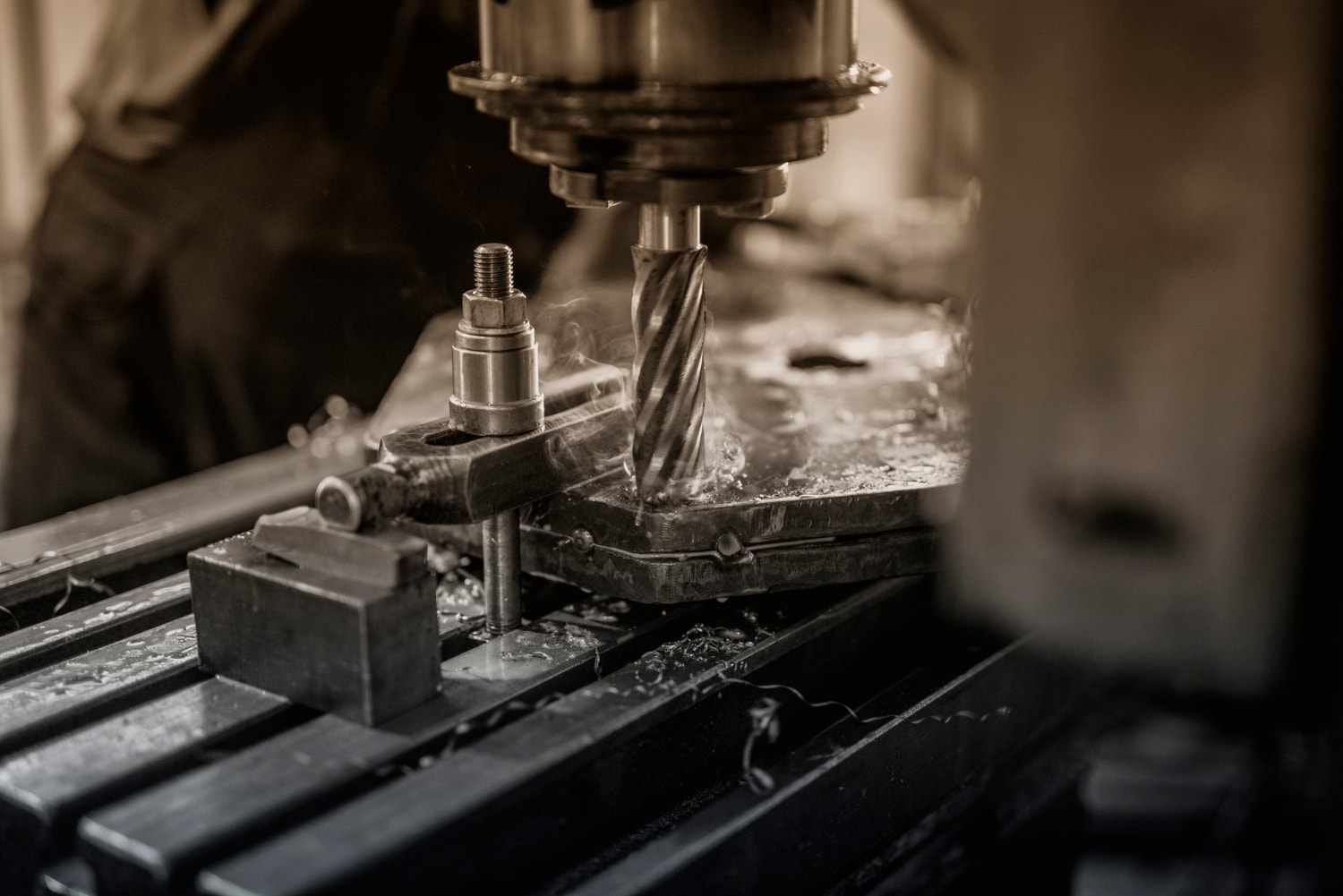
United States Rapid CNC Machining for Product Launches
How rapid CNC machining services dramatically shorten product development cycles from prototype to market
Rapid CNC machining has become one of the most practical ways to shorten product development in the United States. When engineering teams need functional parts in days rather than weeks, CNC prototypes provide real materials, tight tolerances, reliable repeatability, and a direct path into short-run production. That matters for startups in Austin, medtech teams in Boston, robotics developers in Pittsburgh, EV suppliers in Detroit, and consumer hardware brands shipping through Los Angeles and the Port of Long Beach. Instead of waiting for hard tooling, companies can validate geometry, fit, thermal behavior, mechanical performance, and assembly interaction almost immediately.
For U.S. product teams, the value is simple: faster learning cycles, less design risk, and earlier market entry. A well-managed rapid CNC machining service can support one-off proof parts, bridge quantities, pilot runs, and low-volume production with consistent documentation and inspection. It is especially effective when parts must be machined from aluminum, stainless steel, copper, engineering plastics, or specialty materials that better represent final-use performance than many additive processes.
In practice, the best CNC prototyping programs combine engineering review, design-for-manufacturing feedback, flexible minimum order quantities, transparent lead time commitments, and stable quality control. This is why many U.S. buyers now use rapid CNC machining not only for prototypes, but also for pre-launch builds, market testing, replacement parts, and urgent supply chain recovery. For teams comparing domestic and overseas options, the decision is no longer only about price. It is about total launch speed, communication, risk control, material availability, and the supplier’s ability to scale from 1 piece to hundreds or even thousands of parts without forcing a complete process reset.
Companies like TEAM Rapid have gained attention because they support this full pathway: fast CNC prototypes, engineering-driven manufacturability review, surface finishing, low-volume production, and broader manufacturing services that help customers move from CAD files to validated products and then to scalable supply. U.S. customers looking for rapid CNC machining services often prioritize exactly this blend of speed, precision, and practical production flexibility.
Market trends driving strong growth in rapid CNC prototyping and short-run production services

The rapid CNC market in the United States is expanding because product development itself has changed. Hardware companies are releasing products more frequently, validating demand earlier, and reducing the gap between prototype testing and commercial launch. Instead of long, sequential programs, teams now run compressed development sprints. That model depends on suppliers that can machine accurate parts quickly.
Several forces are accelerating this growth. First, near-constant product iteration has become normal in sectors such as EV charging, medical devices, industrial automation, drones, consumer electronics, and lab equipment. Second, supply chain volatility has pushed companies to maintain more flexible sourcing strategies. Third, investors and management teams increasingly measure engineering performance by time-to-market, not just design completion. Fourth, sustainability pressure encourages smaller, smarter production runs before committing to larger tooling investments.
In the United States, this trend is especially visible in regional innovation corridors. Silicon Valley and Seattle continue to demand fast precision parts for electronics, robotics, and aerospace subsystems. Detroit and the Midwest use rapid CNC machining for fixtures, EV parts, and under-hood validation components. Boston and Minneapolis rely on it for medical devices and instruments. Houston uses it for energy and industrial equipment development. Across all these regions, short-run machining reduces the cost of being wrong and speeds the path to being right.
| Market driver | Why it matters | U.S. impact | Typical CNC response |
|---|---|---|---|
| Shorter product cycles | Teams must test more often | Higher prototype order frequency | 2-8 day turnaround |
| Supply chain risk | Need backup and bridge sources | More low-volume emergency orders | Flexible short-run production |
| Investor pressure | Faster launch milestones required | Compressed engineering schedules | Express machining cells |
| Customization demand | More SKU variation | Smaller production batches | No-tooling part changes |
| Material realism | Functional testing needs end-use materials | Less reliance on cosmetic-only models | Aluminum, steel, plastics, brass machining |
| Sustainability goals | Avoid overproduction before validation | Smarter launch planning | Pilot runs before full tooling |
The table above shows why rapid CNC services are no longer a niche procurement category. They are now central to launch planning, especially for physical products where real-world function cannot be judged by renderings or nonfunctional mockups.
Looking toward 2026, the market is likely to be shaped by three additional trends. The first is digital quoting and automated manufacturability review, which reduce front-end delays. The second is increased demand for documentation, traceability, and supplier qualification, especially in regulated sectors. The third is sustainability-oriented sourcing, where buyers ask not only for lead time and price but also for scrap reduction, packaging optimization, and smarter logistics routing between China and U.S. ports such as Long Beach, Seattle, Savannah, and Newark.
Design guidelines, material choices, and lead time expectations for rapid CNC machined prototypes

Good CNC prototyping starts with design decisions. The fastest suppliers are not magicians; they are efficient because the part design supports machining. If a model includes deep narrow cavities, unreasonably tight internal corners, nonstandard hole depths, or cosmetic surfaces that require too much hand finishing, lead time and cost rise immediately. U.S. engineering teams can avoid many delays by aligning design intent with standard tooling and machining workflows.
Internal radii should match common tool sizes whenever possible. Wall thickness should be balanced to reduce vibration and distortion. Deep pockets should be minimized unless function requires them. Threaded features should use practical standard sizes. Designers should also identify which dimensions truly matter, because placing extremely tight tolerances on every feature raises both time and inspection cost without improving performance.
Material choice has equal influence. Aluminum 6061 is one of the most common options for speed because it machines efficiently, supports anodizing, and works for housings, brackets, fixtures, and many general-purpose functional prototypes. Stainless steel is preferred where corrosion resistance or strength is more important, but longer machining times should be expected. Delrin, ABS, POM, nylon, and PEEK are common plastic options depending on wear, temperature, chemical, and stiffness requirements.
| Material | Typical use | Machinability | Relative cost | Typical lead time impact |
|---|---|---|---|---|
| Aluminum 6061 | Housings, brackets, fixtures | Excellent | Moderate | Fast |
| Aluminum 7075 | Higher-strength structural parts | Very good | Moderate to high | Fast to moderate |
| Stainless steel 304 | Medical, food, corrosion-resistant parts | Moderate | High | Moderate |
| Brass | Electrical, fittings, decorative parts | Excellent | Moderate | Fast |
| Delrin/POM | Gears, sliders, insulating components | Excellent | Moderate | Fast |
| PEEK | High-performance medical and industrial uses | Moderate | Very high | Moderate to longer |
This material table is useful because it connects design intent to delivery expectations. The quickest quote is not always the fastest delivered part if the material is difficult to source, machine, or finish.
Lead time expectations should be set realistically. A simple aluminum prototype may ship in as little as 1 to 3 days in urgent cases, while more typical rapid CNC machining projects land in the 2 to 8 day range. Complex assemblies, specialty finishes, or exotic materials can push schedules longer. U.S. buyers should ask suppliers to separate machining time from finishing time, inspection time, and international transit time.
| Prototype type | Complexity level | Material example | Typical machining lead time | With finishing |
|---|---|---|---|---|
| Flat plate or simple bracket | Low | 6061 aluminum | 1-3 days | 2-5 days |
| Enclosure half | Medium | ABS or aluminum | 3-5 days | 4-7 days |
| Precision mechanical part | Medium | Stainless steel | 4-6 days | 5-8 days |
| Multi-sided cosmetic part | High | 7075 aluminum | 5-7 days | 6-10 days |
| High-tolerance medical component | High | PEEK or 304 stainless | 5-8 days | 7-12 days |
| Short-run batch 50-200 pcs | Medium to high | Mixed metals or plastics | 7-15 days | 8-18 days |
For best results, U.S. teams should submit 3D files, 2D critical dimensions, tolerance notes, cosmetic expectations, assembly references, and any testing context. That makes design review more meaningful and reduces back-and-forth before release to production.
Evaluating rapid CNC service providers: balancing speed, cost, quality, and minimum order flexibility

Choosing a supplier for rapid CNC machining is rarely about finding the absolute lowest quote. The true decision is whether the supplier can repeatedly deliver acceptable parts on the schedule that your launch plan actually requires. In the United States, procurement and engineering teams increasingly evaluate suppliers on a combination of quoting speed, technical review depth, process control, finishing support, minimum order flexibility, and communication quality.
A strong provider should give more than a price. It should identify manufacturability risks, unrealistic tolerances, finishing conflicts, and feature redesign opportunities before parts are cut. If a supplier simply accepts every file without challenge, that may create hidden schedule risk later. Fast production is valuable only if the delivered part is usable.
Minimum order flexibility is another major factor. Many U.S. product teams need one first article today, ten revised parts next week, and one hundred pilot units after testing. Suppliers that can support this progression without requiring tooling or forcing a new sourcing cycle create significant launch efficiency.
| Evaluation factor | What to ask | Low-risk answer | Warning sign |
|---|---|---|---|
| Quoting speed | How fast is RFQ response? | Within hours to 1 day | Several days with no engineering notes |
| DFM feedback | Will design risks be flagged? | Detailed review included | No technical comments |
| Tolerance control | What is standard and what is critical? | Clear capability down to fine tolerances where needed | Vague claims only |
| MOQ flexibility | Can you order 1, 5, 25, or 200? | Yes, scalable volumes | Rigid batch minimums |
| Finishing options | Can parts be shipped complete? | Anodizing, painting, polishing, plating available | Only raw machined parts |
| Inspection reporting | What QC documentation is provided? | Inspection records and dimensional verification | No clear QC process |
This comparison framework helps U.S. buyers look beyond headline pricing. A slightly higher part price may save weeks of project time if the supplier prevents redesign loops, supports multiple iterations, and ships parts that pass fit checks the first time.
For projects sourced from outside the United States, buyers should also evaluate logistics stability, communication overlap across time zones, export packaging, and familiarity with U.S. specifications. This is particularly important when parts move through major hubs such as Chicago, Dallas-Fort Worth, Los Angeles, and New York distribution channels.
Industries that rely on rapid CNC machining for accelerated product development and time-to-market
Rapid CNC machining is useful across many industries, but it becomes essential where products must function reliably in the real world before commercial release. In those sectors, simulation and appearance models are not enough. Engineers need production-like materials, assembly-ready dimensions, and predictable performance under load, heat, wear, or fluid exposure.
Automotive and EV development is one of the largest users. Teams machine battery housing features, sensor mounts, thermal management parts, brackets, jigs, and validation components for interior and under-hood systems. In medical devices, CNC prototypes support handheld housings, instrument bodies, positioning mechanisms, and durable polymer or metal components used during design verification. Aerospace and defense programs use rapid machining for fixtures, cabin parts, lightweight metal components, and ground test hardware. Industrial automation companies depend on it for robotic end effectors, machine covers, guides, and mechanical interfaces.
Consumer and commercial products also make heavy use of this process. Brands in San Diego, Austin, and New York often machine enclosures, wearables, speaker parts, home appliance subcomponents, and packaging validation fixtures during launch preparation. Communication equipment, office products, and sanitary hardware are other active categories. Across all of them, the pattern is the same: rapid machining compresses the path from CAD to usable decision-making.
| Industry | Typical machined parts | Why CNC is preferred | Common volume stage |
|---|---|---|---|
| Automotive and EV | Brackets, thermal parts, sensor mounts | Strength and dimensional realism | Prototype to pilot |
| Medical devices | Housings, instrument parts, mechanisms | Precision and material performance | Prototype to verification |
| Aerospace | Fixtures, lightweight structural parts | Tolerance and traceability needs | Prototype and short-run |
| Industrial automation | Robot tooling, frames, interfaces | Fast iteration in real operating conditions | Prototype to low-volume |
| Consumer electronics | Cases, frames, heat sinks | Cosmetics plus function | Prototype to bridge production |
| Energy and instrumentation | Valve parts, mounts, testing hardware | Durability and repeatability | Prototype to field trial |
The table highlights that industries do not buy rapid CNC services for the same reason, but they all value speed paired with trustable part performance.
Key applications where rapid CNC prototyping delivers critical competitive advantage in innovation cycles
The biggest competitive advantage of rapid CNC prototyping is not merely faster part delivery. It is faster decision-making. When teams receive accurate parts quickly, they can confirm fit, expose hidden design issues, validate thermal or mechanical assumptions, and make changes before expensive downstream commitments are made. This accelerates innovation cycles in a measurable way.
One major application is fit and assembly validation. Housings, mating features, seals, and mechanical interfaces often look correct in CAD but reveal tolerance stack issues in physical assemblies. Another key application is functional performance testing. Heat sinks, moving linkages, threaded interfaces, and fluid-contact components benefit from machining in real or near-final materials. CNC is also ideal for customer demos, investor samples, regulatory preparation builds, and pilot market launches where appearance and durability must both be credible.
Short-run CNC production becomes particularly useful when there is a commercial window but not enough certainty to justify production tooling. This happens in spare parts, regional product variants, early adopter sales, specialized industrial equipment, and medical pilot programs. Instead of delaying launch, companies can use machined parts to serve initial demand while final manufacturing strategy matures.
By 2026, this shift toward functional, validation-ready prototypes is expected to deepen. AI-assisted product development will increase concept speed, but physical verification will still be required. That means more demand for quick-turn machined parts, especially as sustainability rules and product safety expectations tighten. In other words, digital design is accelerating, not replacing, the need for reliable prototype manufacturing.
Real customer case studies showing how rapid CNC services accelerated product launches and iterations
Case study patterns are often more helpful than abstract claims, so consider several representative examples common in the U.S. market. A Detroit-area mobility supplier needed revised aluminum bracket sets for an EV subsystem after a test failure exposed resonance issues. Instead of restarting a slow supply chain process, the team issued revised CAD, received DFM feedback the same day, and had updated parts machined within the week. The rapid iteration prevented a broader validation delay.
A Boston medical device startup developing a handheld diagnostic unit used CNC-machined plastic and aluminum housings for fit, usability, and sterilization-adjacent assessments. Early SLA prints looked acceptable visually, but the machined prototypes revealed snap feature stress concerns and inconsistent assembly access. After two fast CNC iterations, the startup froze geometry with much greater confidence before moving toward tooling.
An industrial equipment company near Houston needed 120 machined short-run parts for a field pilot with a major customer. Injection molding would have taken too long and involved higher upfront commitment. Rapid CNC machining enabled the company to ship evaluation units, gather operator feedback, and confirm that only minor design changes were needed before scaling production.
| Customer profile | Challenge | Rapid CNC solution | Business result |
|---|---|---|---|
| EV supplier in Detroit | Bracket redesign after testing issue | Fast aluminum remachining | Validation timeline preserved |
| Medtech startup in Boston | Need functional housings before tooling | Machined plastic and metal enclosure sets | Design freeze with lower risk |
| Industrial OEM in Houston | Urgent field pilot quantity | 120-piece short-run production | Customer trial launched on time |
| Consumer electronics brand in Los Angeles | Cosmetic plus thermal prototype needs | Anodized aluminum housing prototypes | Investor demo and testing aligned |
| Automation firm in Chicago | Robot end-effector redesign loop | Multiple weekly iterations | Shorter engineering cycle |
| Lab instrument maker in Minneapolis | Tight-tolerance moving components | Precision stainless and Delrin parts | Smoother prelaunch verification |
These examples show the main financial logic behind rapid CNC services. The gain is not just faster parts; it is faster confidence, fewer hidden errors, and earlier revenue opportunity. In competitive categories, that can be worth far more than the machining cost difference between suppliers.
How to source fast-turnaround CNC machining services from China without sacrificing quality or precision
For many U.S. buyers, China remains an attractive source for rapid CNC machining because it offers a strong combination of manufacturing depth, material access, process range, and competitive cost. The key is not whether to source from China, but how to do it without creating communication gaps or quality surprises.
Start by choosing suppliers that provide engineering review rather than pure order intake. A good China-based rapid CNC partner should confirm tolerances, clarify finish expectations, identify high-risk features, and separate prototype lead time from shipping time. It should also understand U.S. business expectations around responsiveness, revision control, and documentation.
Transit planning matters. If your team is in California, a supplier’s ability to route efficiently through Shenzhen-origin exports into Los Angeles or Long Beach can support better schedule predictability. For East Coast delivery, routing through hubs connected to Newark or Savannah may be more relevant. For central U.S. distribution through Chicago or Dallas, buyers should ask whether express air freight or consolidated shipments make more sense based on part value and urgency.
| Sourcing checkpoint | Best practice | Why it protects quality | Why it protects lead time |
|---|---|---|---|
| Drawing package | Send 3D and 2D files with critical notes | Reduces interpretation errors | Avoids clarification delays |
| DFM review | Request risk feedback before release | Improves manufacturability | Prevents rework |
| Material confirmation | Verify grade and substitute policy | Preserves functional performance | Avoids sourcing surprises |
| QC plan | Define inspection points and reports | Ensures dimensional confidence | Reduces disputes after shipment |
| Shipping method | Match air, express, or sea to urgency | Protects parts in transit | Improves planning accuracy |
| Communication rhythm | Use named contacts and milestone updates | Improves issue visibility | Keeps decisions moving |
Another smart approach is to use a supplier that can support more than one process. If early CNC prototypes later need vacuum casting, rapid tooling, injection molding, die casting, or sheet metal support, the transition will be smoother when one partner already understands the design history. This is especially useful for U.S. teams trying to avoid managing multiple disconnected vendors across different project stages.
Buyers should also ask about packaging, assembly support, and direct shipping. These details matter more than many first-time importers expect. Protective packaging, part labeling, and shipment consolidation can make a significant difference when prototypes must move quickly between design teams, contract manufacturers, and test labs in different U.S. cities.
Our rapid CNC machining capacity, express production lines, quality control, and common prototyping FAQs
For U.S. customers evaluating a manufacturing partner, capacity and process integration often matter as much as raw speed. TEAM Rapid supports fast-turn CNC machining for both metal and plastic components, with services that include milling, turning, wire EDM, EDM, polishing, anodizing, painting, plating, and other finishing operations. Tight tolerance capability down to 0.01 mm supports applications where dimensional accuracy is central to function, not just appearance.
From a technological capability standpoint, the company’s value lies in combining engineering review with practical execution. Detailed DFM analysis helps identify geometry risks before manufacturing begins, allowing teams to reduce quality issues, refine part performance, and avoid preventable delays. This engineering-led approach is especially useful when projects are moving quickly and design revisions are expected. Customers are not left to guess whether a model is truly buildable at the required speed.
From a manufacturing capability standpoint, TEAM Rapid can support projects from a single prototype to 500+ CNC machined pieces, and more broadly from one part to 100000+ across other manufacturing processes. This matters because many U.S. product teams do not want to restart sourcing every time their volume changes. A project can begin as an urgent prototype, move into low-volume validation, and then transition into broader production planning with one coordinated manufacturing partner. The company also supports 3D printing, vacuum casting, rapid tooling, injection molding, die casting, aluminum extrusion, sheet metal fabrication, assembly, packaging, and shipping support, which creates a practical bridge from prototype to market release.
From a service capability standpoint, speed and communication are central. Response times within a few hours, one-to-one engineering support, and experience serving customers across the United States and other global markets help reduce misunderstanding. For buyers balancing offshore cost advantage with project control, that responsiveness can be the deciding factor. ISO 9001:2015 certification also supports confidence in process discipline and specification compliance.
| Capability area | What is offered | Customer benefit | Typical use case |
|---|---|---|---|
| Technological capabilities | DFM review, tolerance analysis, engineering support | Fewer design errors and faster iterations | Prototype refinement |
| Machining capabilities | Milling, turning, wire EDM, EDM | Broad geometry support | Precision metal and plastic parts |
| Finishing capabilities | Anodizing, painting, polishing, plating | Ready-to-test or ready-to-show parts | Functional and cosmetic prototypes |
| Volume flexibility | 1 piece to 500+ CNC parts | Easy transition from sample to short-run | Pilot builds and bridge production |
| Integrated manufacturing | Tooling, molding, die casting, sheet metal, assembly | Less supplier switching | Scale-up after validation |
| Service support | Fast response, shipping, procurement help | Smoother project management | International launch coordination |
The table above explains why many buyers prefer a partner that can support both immediate prototyping and later-stage production needs. That continuity reduces delay, duplication, and uncertainty.
Below are concise answers to common questions from U.S. customers:
How fast can rapid CNC prototypes be delivered?
Simple parts may ship in as little as 1 day in exceptional cases, while common lead times are often 2 to 8 days depending on complexity, material, finishing, and logistics.
Can one supplier support both prototypes and low-volume production?
Yes. This is one of the main advantages of a capable rapid manufacturing partner. It allows a smoother shift from testing to short-run market supply.
What quantities are typical?
Rapid CNC services can support one-off prototypes, small engineering batches, and short-run production quantities such as 20, 50, 100, or 500 parts.
Which materials are most common?
For metals, aluminum and stainless steel are frequent choices. For plastics, Delrin, ABS, nylon, and other engineering polymers are common depending on application needs.
How should U.S. buyers compare domestic and China-based suppliers?
Compare total project outcome: engineering feedback, usable lead time, logistics reliability, finishing capability, MOQ flexibility, and quality documentation, not only unit price.
What trends will matter most in 2026?
Expect more digital quoting, more integrated DFM automation, stronger sustainability expectations, increased traceability demands, and broader use of rapid CNC machining as a bridge between prototype and commercial launch.
For companies in the United States that need to move from concept to validated part quickly, rapid CNC machining remains one of the most dependable options available. It provides the speed of iteration that modern product development requires while preserving the dimensional control, material realism, and production relevance that serious engineering decisions demand. When combined with strong quality systems, responsive support, and scalable manufacturing options, it can turn a compressed development timeline into a real market advantage.

About the Author : Team Rapid Manufacturing Co., Ltd.
This article is written by the engineering team at Team Rapid Manufacturing Co., Ltd, specializing in rapid prototyping and manufacturing solutions. With extensive experience in CNC machining, injection molding, and low-volume production, our team shares practical insights to help global clients improve product development efficiency and reduce manufacturing risks.
Share