Small Batch CNC Machining Strategies in the United States
How Small Batch CNC Machining Supports Product Launches and Bridge Production
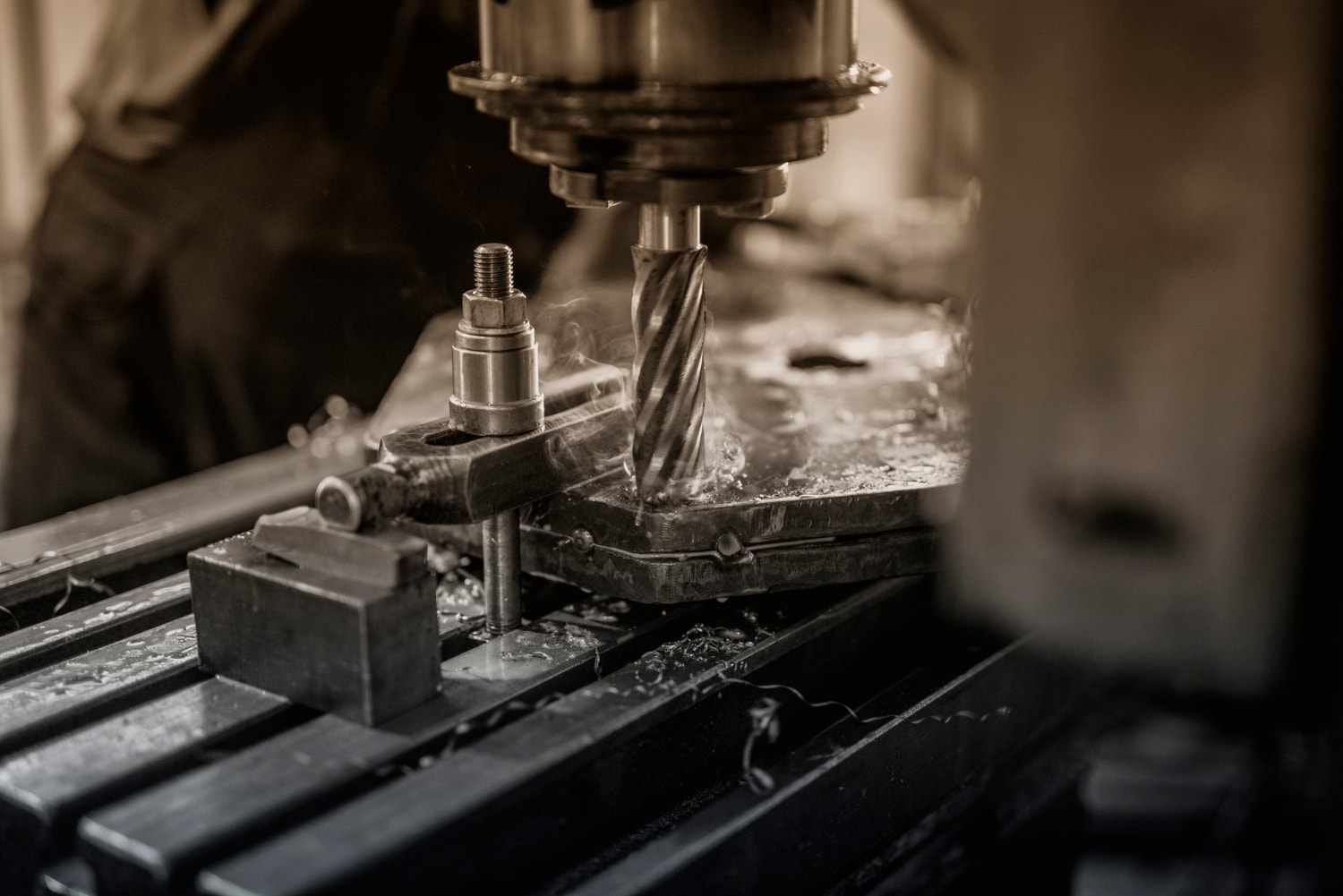
Small batch CNC machining gives companies a practical way to produce precision parts in limited quantities without committing to expensive mass-production tooling too early. In the United States, this approach is especially useful for startups, OEMs, product designers, medical device teams, automation companies, and industrial equipment manufacturers that need anywhere from a few pieces to a few hundred parts with repeatable quality. It fills the gap between one-off prototyping and full-scale production, helping teams validate function, test demand, support pilot builds, and keep supply moving while longer-term tooling or production capacity is being prepared.
For buyers in major U.S. product development hubs such as San Jose, Austin, Boston, Detroit, Seattle, Chicago, and San Diego, small batch CNC production is often the fastest route from CAD model to commercial-ready hardware. It suits housings, brackets, fixtures, connectors, heat sinks, shafts, impellers, test jigs, robotics parts, aerospace fittings, and custom plastic components where dimensional accuracy matters more than extreme volume efficiency. It also works well when design revisions are likely, because changes can usually be implemented through programming and setup adjustments rather than new hard tooling.
At a market level, low-volume machining has become more important as U.S. companies shorten development cycles, regionalize supply chains, and seek more resilient launch pathways. Teams importing parts through West Coast gateways such as the Port of Los Angeles, Long Beach, Oakland, and Seattle-Tacoma, or East Coast hubs like Savannah, New York/New Jersey, and Charleston, increasingly want suppliers that can handle rapid prototypes, short production runs, finishing, inspection, assembly, and direct shipment with fewer handoffs. That is where an integrated manufacturing partner can add value beyond machining alone.
For readers evaluating vendors, small batch CNC machining services are not only about cutting metal or plastic. The best suppliers also provide manufacturability feedback, material guidance, tolerance review, process selection, finishing support, and a clear path from early sample parts to bridge production. That combination helps reduce engineering risk and keeps launches on schedule.
The chart above reflects a realistic directional trend: demand for low-volume CNC machining in the United States continues to rise as product cycles get shorter and companies seek more flexible supply options. Growth is being driven by medical devices, EV-related development, industrial automation, robotics, defense-adjacent sourcing, and consumer electronics accessories.
What Is Small Batch CNC Machining?

Small batch CNC machining is the production of a limited number of parts using computer numerical control equipment such as CNC mills, lathes, EDM, and wire EDM systems. The quantity may range from a single proof part to 20, 50, 100, or 500 pieces, depending on geometry, material, budget, and timeline. Unlike mass manufacturing methods that depend on dedicated tooling to lower cost per unit at high volume, small batch machining prioritizes flexibility, precision, and fast turnaround at lower quantities.
In practical terms, this process starts with a digital CAD file and engineering requirements. The supplier converts the design into machining programs, selects stock material, plans workholding, defines toolpaths, and machines parts to the required dimensions and finish. Secondary operations may include deburring, tapping, polishing, anodizing, painting, plating, bead blasting, heat treatment, and inspection. Because the workflow is digitally driven, changes can be made faster than with molded or cast parts.
Small batch CNC is not limited to metals. It is also widely used for engineering plastics such as ABS, POM, nylon, PMMA, PEEK, PTFE, and polycarbonate. Plastic machining is common for medical housings, optical support parts, electrical insulators, fluidic components, and functional prototypes that must closely match end-use performance.
The table below shows how small batch machining compares with neighboring manufacturing stages.
| Production Method | Typical Quantity | Upfront Tooling Cost | Design Change Flexibility | Lead Time | Best Use |
|---|---|---|---|---|---|
| One-off CNC prototype | 1 to 5 parts | Very low | Very high | 1 to 7 days | Fit, form, function checks |
| Small batch CNC machining | 5 to 500 parts | Low | High | 3 to 15 days | Pilot runs, launch support, bridge supply |
| Rapid tooling + molding | 100 to 5,000 parts | Moderate | Medium | 2 to 5 weeks | Repeatable plastic parts at lower unit cost |
| Production injection molding | 5,000+ parts | High | Low after tool release | 4 to 10 weeks+ | Large-scale plastic production |
| Die casting | 500 to 10,000+ parts | High | Low to medium | 4 to 8 weeks+ | Metal parts with recurring volume |
| Sheet metal fabrication | 10 to 5,000 parts | Low to moderate | High | 3 to 15 days | Enclosures, brackets, covers |
This comparison matters because buyers often choose small batch CNC not as a final destination, but as a strategic stage in the launch pathway. If a design is still evolving, machining can avoid premature tooling expenses while delivering real, testable parts.
When Low-Volume CNC Production Makes Sense

Low-volume CNC production makes sense when a company needs reliable parts quickly but does not yet have the volume stability to justify hard tooling or a dedicated production line. It is common in bridge production, engineering verification testing, pilot manufacturing, market trials, replacement part programs, and niche industrial products.
One of the strongest use cases is the period between successful prototyping and scaled production. A startup may need 100 aluminum enclosures for a first customer deployment. A medical company may need 200 machined PEEK components for validation lots. A robotics team may need 50 mixed-material assemblies for a trade launch in Chicago or Las Vegas before final demand is known. In each case, CNC machining supports revenue generation and field learning without a heavy capital commitment.
Another common scenario is supply chain continuity. If injection mold tooling is delayed, if cast tooling is being revised, or if a production line in North America needs temporary replenishment, machined parts can keep assembly moving. This is often called bridge production. It is particularly valuable when the cost of a stockout is greater than the higher unit cost of a machined part.
The table below summarizes typical decision triggers.
| Business Situation | Why CNC Fits | Typical Volume | Priority | Risk if Delayed | Recommended Action |
|---|---|---|---|---|---|
| Prototype approved, tooling not ready | Fast bridge supply | 20 to 300 | Schedule | Launch slip | Run machined batch |
| Design may still change | No hard tooling lock-in | 5 to 100 | Flexibility | Tool rework costs | Stay with CNC temporarily |
| Custom industrial equipment | Demand is low but recurring | 10 to 200 annually | Precision | Inventory shortages | Use repeat CNC batches |
| Medical or lab pilot builds | Traceable, accurate parts | 10 to 500 | Quality | Validation delays | Qualify low-volume runs |
| Aftermarket spare parts | No need for expensive tooling | 5 to 50 | Availability | Customer downtime | Machine on demand |
| Market testing in U.S. regions | Supports cautious rollout | 25 to 250 | Cash flow | Overproduction | Launch small and scale later |
For U.S. companies, the decision is usually a balance of speed, engineering confidence, and cash preservation. If annual volume remains uncertain or if timing is critical, low-volume CNC production is often the smartest commercial choice.
The industry demand mix shown above is realistic for the U.S. market. Medical, automation, and EV development continue to generate high demand because these sectors value fast iteration, strict tolerances, and launch flexibility.
Benefits for Startups and Product Developers

Startups and product developers gain several direct advantages from small batch CNC machining. First is speed. Fast access to production-intent parts helps teams move from concept reviews to functional testing, pilot sales, investor demos, and beta shipments without waiting for hard tooling. Second is flexibility. Design changes can be incorporated into the next run with less cost and disruption. Third is realism. Unlike purely visual prototypes, machined parts often reflect the material behavior, mechanical strength, and dimensional performance of the intended product.
Cash management is another major benefit. Early-stage companies in Austin, San Francisco, Denver, or Raleigh rarely want to tie up capital in tooling before demand is proven. Machining allows them to buy only what they need while collecting market feedback. For many hardware startups, this preserves runway and reduces the risk of ending up with obsolete tools or excess stock.
Product developers inside larger organizations benefit too. Internal engineering teams can use small batches for test fixtures, certification samples, alpha units, field replacement kits, or regional launch programs. Because CNC parts can be made in both plastic and metal, the process supports a wide range of validation objectives.
From a technology standpoint, buyers should look for suppliers that can do more than basic cutting. Strong technological capability includes multi-axis milling, turning, EDM, wire EDM, precision inspection, and the ability to hold tight tolerances on critical features. Suppliers that support surface finishes such as anodizing, painting, plating, polishing, and bead blasting can also reduce downstream coordination.
TEAM Rapid is well aligned with these needs because its machining capability covers plastic and metal parts from one piece to 500-plus pieces, with tolerance capability down to 0.01 mm. For engineering-led teams, that matters because launch parts often need more than a quick quote. They need a practical review of wall thickness, corner radii, tool access, tolerancing, and finishing impact before manufacturing starts.
The table below shows how startups and development teams typically use low-volume machining.
| User Group | Typical Part Type | Main Goal | Preferred Quantity | Why CNC Is Chosen | Next Step |
|---|---|---|---|---|---|
| Hardware startup | Enclosures and brackets | Launch MVP | 20 to 100 | Fast revisions | Scale after market validation |
| Medical R&D team | Device housings and inserts | Clinical or pilot builds | 10 to 200 | Material realism | Transfer to regulated production |
| Industrial design firm | Appearance models and functional parts | Client approval | 1 to 20 | Surface finish quality | Refine design for production |
| Automation integrator | Custom fixtures and mounts | Project delivery | 5 to 50 | Precision and speed | Repeat as needed |
| Electronics developer | Heat sinks and housings | Field testing | 25 to 150 | Tight tolerance fit | Move to casting or molding later |
| Corporate NPI team | Pilot assembly parts | Bridge production | 50 to 500 | Program control | Ramp to volume process |
For many buyers, the biggest advantage is not a single feature. It is the ability to make smart decisions later, with more data and less risk.
Material Choices for Small Batch CNC Parts
Material selection strongly affects cost, lead time, machinability, strength, weight, corrosion resistance, finish quality, and end-use performance. In low-volume production, the best material is not always the cheapest per pound. It is the one that meets functional needs while machining efficiently and supporting the intended finish.
Aluminum is often the first choice for small batch CNC metal parts in the U.S. market because it is lightweight, machines quickly, and finishes well. Grades such as 6061 are common for brackets, electronics housings, base plates, and test fixtures. Stainless steel is selected when corrosion resistance and strength are more important. Mild steel can be cost-effective for industrial components. Brass is useful for fittings and electrical applications. Titanium is reserved for high-performance requirements where cost is secondary.
For plastics, ABS and polycarbonate are common in housings and covers. POM is a strong choice for low-friction precision parts. Nylon works well for wear components but needs moisture considerations. PMMA offers clarity. PEEK is chosen for high-temperature, chemically resistant, and medical-adjacent applications.
The right supplier should explain trade-offs, not simply accept the uploaded file. This is where engineering review adds value. TEAM Rapid supports both plastic and metal machining, which is helpful when a U.S. product team wants to compare multiple material options quickly during development.
| Material | Category | Key Benefit | Typical Application | Relative Machining Cost | Notes for Small Batches |
|---|---|---|---|---|---|
| Aluminum 6061 | Metal | Lightweight and versatile | Housings, brackets, fixtures | Low to medium | Excellent for anodizing and fast runs |
| Stainless Steel 304 | Metal | Corrosion resistance | Medical, food, outdoor components | Medium | Slower machining than aluminum |
| Mild Steel | Metal | Strength at lower raw cost | Industrial parts, mounts | Medium | May require coating for corrosion control |
| Brass | Metal | Good conductivity and machinability | Fittings, connectors | Medium | Produces clean detail features |
| ABS | Plastic | Balanced cost and toughness | Covers, prototype housings | Low | Good for early functional validation |
| POM/Delrin | Plastic | Dimensional stability | Gears, bushings, precision parts | Low to medium | Strong option for moving components |
| Polycarbonate | Plastic | Impact resistance | Transparent guards, enclosures | Medium | Machining requires care to avoid stress marks |
| PEEK | Plastic | High performance | Medical, aerospace, harsh environments | High | Best when performance outweighs cost |
In U.S. industries such as aerospace in Wichita, medical devices in Minneapolis, and electronics in Silicon Valley, material choice is often tied to compliance, field environment, and expected lifecycle. Short-run machining gives teams the freedom to validate these assumptions before they lock into higher-volume production methods.
How to Control Cost in Low-Volume Runs
Controlling cost in small batch CNC machining is less about chasing the lowest quote and more about designing parts that machine efficiently. The biggest cost drivers are setup time, material type, part complexity, tolerance tightness, surface finish requirements, and the number of secondary operations. Because setup cost is spread across fewer units in a short run, even small design decisions can have a visible effect on price.
Buyers can reduce cost by simplifying geometry, avoiding unnecessary deep pockets, using standard drill sizes, minimizing tool changes, opening tolerances where possible, and keeping cosmetic requirements realistic. Material selection matters too. If aluminum works, it will often be more economical than stainless steel. If ABS meets the need, it may cost less than high-performance engineering plastics.
Batch planning also helps. Combining similar parts in one run, standardizing finishes, and aligning revision control before release can lower setup waste. For U.S. companies working across time zones and multiple stakeholders, clear revision discipline is one of the most overlooked cost-saving steps.
Manufacturing capability matters here as well. A supplier with in-house machining, finishing coordination, and engineering review can eliminate hidden delays and extra logistics. TEAM Rapid’s broader manufacturing capability is useful because it can support not just machining, but also rapid tooling, injection molding, die casting, sheet metal fabrication, finishing, and assembly. That allows customers to choose the most economical process at each stage instead of forcing every part through one method.
| Cost Driver | What Increases Cost | What Reduces Cost | Impact Level | Buyer Tip | Example |
|---|---|---|---|---|---|
| Material | Exotic alloys or high-performance plastics | Standard grades | High | Match material to actual need | Use 6061 instead of 7075 when possible |
| Tolerance | Very tight on all features | Critical-only tolerances | High | Dimension by function | Hold ±0.01 mm only where necessary |
| Geometry | Deep cavities, thin walls, undercuts | Simpler tool access | High | Design for machining | Add larger internal radii |
| Surface finish | Multiple cosmetic treatments | Standard finishes | Medium | Separate cosmetic from hidden surfaces | Anodize visible faces only if allowed |
| Lot size | Frequent micro-orders | Consolidated releases | Medium | Batch demand when possible | Order 100 instead of five separate 20s |
| Revision changes | Late design updates | Controlled release process | Medium to high | Freeze drawings before PO | Avoid scrapping prepared stock |
A practical U.S. buying strategy is to ask for a DFM review before ordering. That up-front feedback can save much more than any discount negotiation later.
Maintaining Consistent Quality Across Batches
Consistency matters even more in low-volume production than many buyers expect. If the first batch works but the second batch varies in fit, finish, or dimensions, the advantage of short-run flexibility disappears. Maintaining stable quality requires process control, revision control, inspection discipline, and clear communication about what features are critical.
Good suppliers control quality through documented work instructions, material traceability, calibrated inspection equipment, first article verification, in-process checks, and final inspection records. The more critical the application, the more important it is to define datum structure, tolerance priorities, finish expectations, and acceptance criteria early.
For customers shipping into the U.S. market, consistency also depends on packaging and logistics. Precision parts can be damaged if edges are exposed or if anodized surfaces rub in transit. This is why service capability matters, not just machine capability. Packaging, labeling, part segregation, lot tracking, and direct shipping support can all influence whether parts arrive production-ready.
TEAM Rapid’s service capabilities are relevant here. The company supports one-to-one engineering communication, fast response, quality-focused processes, ISO 9001:2015 management, finishing, assembly, packaging, procurement support, limited warehousing, and direct shipment. For U.S. buyers managing launch timelines across California, Texas, Michigan, or New York, fewer disconnected suppliers can mean fewer quality escapes.
The area chart highlights a strong trend: buyers increasingly prefer suppliers that combine machining with finishing, molding options, engineering support, and logistics coordination. This shift improves consistency across repeated batches and shortens the path from design release to market delivery.
The table below shows quality control elements that buyers should confirm before placing an order.
| Quality Element | Why It Matters | Best Practice | Risk if Missing | Who Should Check | Typical Evidence |
|---|---|---|---|---|---|
| Material traceability | Confirms correct stock | Lot records and certs | Wrong performance | Quality engineer | Material certificate |
| Revision control | Prevents mixed versions | Controlled drawing release | Assembly mismatch | Project manager | Revision history |
| First article inspection | Validates setup | Measure critical dimensions first | Batch-wide defects | Supplier QA | FAI report |
| In-process checks | Keeps dimensions stable | Sampling during machining | Drift over run | Machine operator/QA | Inspection sheet |
| Final inspection | Confirms shipment quality | Visual and dimensional review | Customer rejects | Final QA | Final report |
| Protective packaging | Prevents transit damage | Individual wrap or separators | Scratches and dents | Logistics team | Packing standard photos |
From Prototype to Bridge Production
The move from prototype to bridge production is one of the most important transitions in manufacturing. A prototype proves an idea can work. Bridge production proves a product can be supplied repeatedly while the business prepares for higher volume. Small batch CNC machining is ideal in this middle phase because it provides functional, repeatable parts without the delay and cost of immediate volume tooling.
A typical launch pathway looks like this: first, a team machines prototype parts for fit and function. Second, the design is refined through engineering feedback. Third, a small batch is produced for pilot units, beta customers, trade demonstrations, or validation builds. Fourth, the business decides whether to continue with machined parts, move to rapid tooling, transition into injection molding, shift to die casting, or combine processes depending on volume and material needs.
This is where an integrated supplier has an advantage. TEAM Rapid supports a true progression from rapid prototyping through low-volume manufacturing and into scalable production options such as rapid tooling, injection molding, die casting, sheet metal fabrication, and assembly support. For U.S. customers, that can reduce the disruption that often occurs when projects move from one vendor for prototypes to another for production.
Consider a realistic case. A Boston medical startup develops a handheld diagnostic device. It begins with machined ABS and aluminum prototypes, then orders 80 pilot sets for usability studies, then 300 bridge-production units while an injection mold is being prepared. The product team benefits because the same manufacturing partner can provide DFM input, small batch machining, cosmetic finishing, and then support the transfer into molded production. This shortens the learning curve and preserves design intent.
Another example could be a Dallas automation company launching a custom sensor mount assembly. The expected annual volume is unclear. Instead of purchasing tools upfront, the team runs machined aluminum batches of 50 units for the first two quarters. Once customer adoption stabilizes, the company decides whether to remain with CNC or shift selected components into a lower-cost repeatable process.
This transition logic is becoming even more important in 2026 planning. U.S. manufacturers are watching three trends closely: stronger demand for supply chain resilience, more pressure for sustainability reporting, and growing use of digital manufacturing data for traceability and process control. In that environment, small batch CNC machining is likely to remain a key bridge method because it enables local launch timing while keeping process choices open.
Choosing a Small Batch CNC Machining Supplier
Choosing a supplier should not be based on unit price alone. Buyers in the United States need to assess technical competence, response speed, communication quality, finishing support, quality systems, and the supplier’s ability to scale with the project. A low quote means little if the vendor cannot hold tolerance, misses ship dates, or struggles with revision changes.
Start by evaluating technological capabilities. Can the supplier handle milling, turning, EDM, and precision finishing? Can it work with both metals and plastics? Does it understand tolerance stack-up and manufacturability? Next, look at manufacturing capabilities. Can the supplier support quantities from one piece to several hundred and, if needed, provide a pathway into tooling, molding, die casting, or sheet metal production? Finally, review service capabilities. Does the supplier provide fast quoting, DFM reports, engineering communication, packaging, assembly, logistics support, and direct shipment into U.S. destinations?
TEAM Rapid stands out for buyers who need this broader support model. With more than a decade of manufacturing experience, customers across more than 25 countries, thousands of delivered projects, and a one-stop service structure, it is positioned as a practical partner for innovators, engineers, and established brands that need speed, affordability, and flexibility. Its strength is not just machining parts, but connecting rapid prototyping, engineering review, low-volume supply, and scalable manufacturing in one launch pathway.
The comparison below shows the criteria buyers should weigh when reviewing suppliers.
| Supplier Criterion | Basic Vendor | Strong Small-Batch Partner | Why It Matters | Buyer Question | Desired Outcome |
|---|---|---|---|---|---|
| Engineering review | Quote only | DFM feedback included | Prevents redesign cost | Will you flag manufacturability issues? | Fewer surprises |
| Process range | CNC only | CNC plus tooling and molding | Supports scaling | Can you support the next production stage? | Smoother transfer |
| Material options | Limited stock | Wide plastic and metal selection | Enables optimization | Can you propose alternatives? | Better cost/performance |
| Quality system | Informal checks | Documented QA and ISO process | Reduces batch variation | What quality records do you provide? | More confidence |
| Communication speed | Slow response | Replies within hours | Keeps project moving | Who is my engineering contact? | Faster decisions |
| Logistics support | Factory pickup only | Packaging and direct shipping | Simplifies delivery | Can you ship to our U.S. site directly? | Lower coordination burden |
The comparison chart illustrates why many U.S. buyers now prefer integrated manufacturing partners over isolated machine shops. The ability to support engineering, finishing, logistics, and next-stage production often has more business value than a narrow quote advantage.
Frequently Asked Questions
What quantity counts as a small batch?
There is no single industry rule, but many projects fall between 5 and 500 parts. Some buyers consider 1 to 20 parts prototyping and 20 to 500 parts low-volume production.
Is small batch CNC machining only for metal parts?
No. It is widely used for both metals and engineering plastics, including ABS, POM, nylon, polycarbonate, acrylic, PTFE, and PEEK.
When should I switch from CNC to injection molding or die casting?
Usually when annual demand becomes stable enough that tooling investment can be recovered through lower unit costs. Part geometry, cosmetic needs, material, and forecast accuracy all affect the decision.
Can low-volume CNC parts be used as end-use parts?
Yes. Many industrial, medical, robotics, and aftermarket components are permanently supplied as machined parts because demand is moderate and precision is important.
How fast can a short-run order be delivered to the United States?
Lead time depends on complexity, quantity, material, and finishing, but well-organized suppliers can often machine and ship in days rather than weeks for urgent projects.
What should I send for an accurate quote?
Provide 3D CAD data, 2D drawings if critical dimensions apply, material preference, quantity, finish requirements, tolerance expectations, and shipping destination.
Why is engineering feedback so important?
Because short-run cost is highly sensitive to design details. A supplier that reviews manufacturability can reduce machining time, improve consistency, and help avoid unnecessary complexity.
Final Buying Advice for U.S. Companies
If you are launching a product, supporting a pilot build, or covering the gap before high-volume production, small batch CNC machining is one of the most effective manufacturing strategies available. It provides speed, precision, and design flexibility without forcing early investment in tooling. For U.S. companies operating in fast-moving sectors, that can mean quicker revenue, lower risk, and better decisions about when and how to scale.
The best results come from choosing a supplier that combines technological capability, manufacturing breadth, and service responsiveness. Look for a partner that can machine both plastics and metals, provide DFM insight, maintain quality across batches, support finishing and packaging, and offer a realistic path from prototype to bridge production and beyond. That broader support is especially valuable when shipping into major U.S. hubs, coordinating cross-functional teams, or preparing for 2026 trends in digital manufacturing, sustainability expectations, and more resilient supply planning.
For buyers who want fast, flexible, and cost-conscious support from prototype through low-volume and scalable production, TEAM Rapid offers a strong practical option. Its engineering-driven approach, broad process coverage, competitive China-based pricing, and experience serving international markets make it well suited for American companies that need reliable custom parts without unnecessary complexity.

About the Author : Team Rapid Manufacturing Co., Ltd.
This article is written by the engineering team at Team Rapid Manufacturing Co., Ltd, specializing in rapid prototyping and manufacturing solutions. With extensive experience in CNC machining, injection molding, and low-volume production, our team shares practical insights to help global clients improve product development efficiency and reduce manufacturing risks.
Share