Uncategorized
Knowledge Center

Knowledge Center
Sheet metal fabrication is one of the most practical manufacturing methods for producing durable, precise, and scalable metal components. In the United States, it supports everything from HVAC panels in Chicago and medical housings in Minneapolis to EV brackets in Detroit, telecom enclosures in Austin, and industrial cabinets moving through the ports of Los Angeles, Long Beach, Houston, Savannah, and New York/New Jersey. For buyers who need custom parts fast, sheet metal fabrication offers an efficient path from prototype to low-volume and repeat production.
At its core, sheet metal fabrication turns flat metal sheets into functional parts through cutting, bending, punching, forming, joining, and finishing. It is widely used because it balances cost, speed, strength, and flexibility. Engineers can create brackets, covers, housings, trays, frames, electrical boxes, machine guards, chassis, and decorative panels with repeatable quality. Whether the requirement is a one-off prototype for product validation or a recurring batch for commercial supply, the process remains highly adaptable.
For U.S. companies evaluating overseas and domestic sourcing options, the key is not only price. Lead time, DFM support, material access, inspection standards, communication speed, and secondary operations all matter. Buyers often succeed when they work with a fabrication partner that can connect prototyping, engineering review, production planning, finishing, assembly, packaging, and shipping into one workflow. That reduces supplier fragmentation and helps products reach market faster.
If you are exploring custom sheet metal production, this guide explains the process in clear terms and helps you compare materials, processes, cost drivers, supplier options, and design best practices. It also highlights what to look for in a qualified manufacturing partner serving the U.S. market.
Sheet metal fabrication is the manufacturing process of converting flat metal sheets into finished parts or assemblies. The raw material is usually supplied as coil or sheet stock in standard thicknesses, then processed using CNC cutting, laser cutting, punching, bending, rolling, stamping, welding, clinching, and finishing operations. The result may be a simple bent bracket or a complex enclosure with holes, slots, louvers, PEM hardware, welded corners, and a powder-coated finish.
The process is especially useful when a design benefits from thin-wall geometry, good structural rigidity, and relatively low tooling cost compared with plastic injection molding or die casting. For prototypes and low-volume production, laser-cut and press-brake-formed parts are often the most economical choice. For higher volume programs, progressive stamping or dedicated tooling may lower the unit price.
Common product categories include:
Compared with machined solid parts, fabricated sheet metal parts often use less material and can be lighter. Compared with molded plastic parts, they typically offer better heat resistance, EMI shielding, load-bearing performance, and outdoor durability when the right metal and finish are chosen.
Aspect Sheet Metal Fabrication CNC Machining Injection Molding Starting Material Flat sheet or coil Solid block or bar Molten plastic resin Best for Brackets, covers, enclosures, panels Precision solid parts High-volume plastic parts Tooling Cost Low to moderate Low High Prototype Speed Fast Fast Slow to moderate Material Waste Moderate Higher for subtractive parts Low after tooling Ideal Volume Range 1 to medium volume, sometimes high 1 to low volume Medium to very high volumeThe table above shows why sheet metal fabrication is often selected when buyers need functional metal parts quickly without committing to expensive tooling too early.
Demand for sheet metal parts in the United States remains strong due to reshoring trends, infrastructure spending, electrification, medical equipment upgrades, telecom expansion, and ongoing demand for industrial automation. Markets around Detroit, Cleveland, Pittsburgh, Charlotte, Dallas, Phoenix, San Jose, and Seattle continue to consume large volumes of formed metal parts for both OEM and contract manufacturing programs.
Several demand drivers stand out. First, the EV supply chain requires battery housings, brackets, shields, busbar supports, and thermal management components. Second, data centers and communication equipment require metal racks, cabinets, cable-management structures, and shielded enclosures. Third, healthcare and laboratory equipment continues to require cleanable, corrosion-resistant housings, often in stainless steel or aluminum. Finally, construction-related sectors continue to use fabricated metal in control panels, lighting, access systems, and mechanical assemblies.
Buyers in the United States also increasingly expect quick-turn production. Product teams want prototype parts in days, not weeks, and then want the same supplier to support bridge production and repeat orders. This market preference has increased the value of suppliers with integrated engineering review, flexible equipment, and dependable logistics into major U.S. hubs.
var ctxLine = document.getElementById(‘lineChartMarket’).getContext(‘2d’); var lineChartMarket = new Chart(ctxLine, { type: ‘line’, data: { labels: [‘2021’, ‘2022’, ‘2023’, ‘2024’, ‘2025’, ‘2026’], datasets: [{ label: ‘Estimated U.S. Sheet Metal Demand Index’, data: [100, 108, 117, 125, 134, 145], borderColor: ‘rgb(54, 162, 235)’, backgroundColor: ‘rgba(54, 162, 235, 0.15)’, fill: false, tension: 0.25 }] }, options: { responsive: true, maintainAspectRatio: false } });The line chart illustrates a realistic growth pattern for U.S. sheet metal demand, reflecting broad industrial activity and continued investment in domestic manufacturing capacity.
U.S. Demand Driver Why It Matters Typical Part Types Hot Regions Electric vehicles Lightweight, structural, thermal, and shielding needs Brackets, trays, covers Detroit, Tennessee, Texas Medical devices Cleanability and compliance-driven equipment demand Housings, carts, panels Minneapolis, Boston, California Telecom and data centers Rack and enclosure expansion Cabinets, chassis, mounts Northern Virginia, Dallas, Phoenix Industrial automation Machine building and retrofits Guards, frames, boxes Midwest, Carolinas HVAC and building systems Commercial construction and replacement cycles Duct parts, brackets, covers Nationwide Aerospace support supply chain Precision lightweight metal components Panels, clips, support parts Seattle, Wichita, AlabamaThis table shows how sheet metal demand is not tied to one industry alone. It spreads across multiple sectors, which helps stabilize the market and creates opportunities for suppliers with diverse capabilities.
The right material depends on strength, weight, corrosion resistance, appearance, conductivity, compliance needs, and price target. In the United States, the most commonly specified materials are cold-rolled steel, galvanized steel, stainless steel, aluminum, and copper-based alloys.
Cold-rolled steel is economical and easy to form, making it common for indoor enclosures, brackets, and structural panels. Galvanized steel adds corrosion protection and is often used in HVAC, electrical, and construction applications. Stainless steel provides excellent corrosion resistance and cleanability, which is valuable in food, pharmaceutical, marine, and medical environments. Aluminum offers low weight and good corrosion resistance, making it popular for transportation, electronics, and outdoor products. Copper and brass are used when electrical conductivity, shielding, or a specific appearance is needed.
Material Main Benefits Typical Uses Relative Cost Cold-rolled steel Good strength, low cost, easy fabrication Brackets, cabinets, internal panels Low Galvanized steel Corrosion resistance, good value HVAC, electrical boxes, outdoor hardware Low to medium Stainless steel 304 Corrosion resistance, clean surface Medical, food equipment, covers Medium to high Stainless steel 316 Superior corrosion resistance Marine, chemical, harsh environments High Aluminum 5052 Formability and corrosion resistance Enclosures, panels, lightweight parts Medium Aluminum 6061 Good strength and machinability Structural parts, frames, mixed-process parts Medium Copper Excellent conductivity Busbars, grounding components, shielding High Brass Appearance and conductivity Decorative panels, specialty hardware HighMaterial selection affects not just performance but also bend allowance, springback, finishing compatibility, and shipping cost. For example, aluminum may reduce freight weight into U.S. destinations such as Atlanta or Denver, while stainless steel may reduce long-term maintenance in coastal areas such as Miami, Seattle, or San Diego.
Most fabricated parts begin with cutting. Laser cutting is the most common process for custom sheet metal because it is precise, flexible, and fast for prototypes and low to medium volumes. Turret punching is efficient for repetitive hole patterns and formed features. Waterjet cutting can be useful for heat-sensitive materials, while shearing is used for straight cuts on simple blanks.
After cutting, parts move to bending and forming. Press brakes create accurate bends, flanges, channels, and boxed shapes. Rolling forms cylindrical or curved features. Stamping and embossing can create ribs, louvers, dimples, and other features that improve stiffness or airflow. Some assemblies then require welding, riveting, self-clinching fasteners, spot welding, or hardware insertion.
Process choice depends on geometry, annual volume, tolerance, and part economics. A simple bracket may only need laser cutting and one bend. A complex enclosure might require laser cutting, tapping, PEM insertion, multiple bends, spot welding, grinding, and powder coating.
Process Purpose Best For Key Limitation Laser cutting Precise blank creation Prototypes, custom holes, slots Higher cost than shearing for very simple parts Turret punching Fast repeated features Panels with many holes Tool shape limits Press brake bending Create angles and flanges Brackets, channels, housings Springback management required Rolling Curved or cylindrical forms Tubes, wraps, round covers Not ideal for tight corners Stamping/forming Add formed features High-volume parts Tooling investment Welding/spot welding Join sections Frames, boxes, assemblies Heat distortion risk PEM insertion Add threads and studs Enclosures and serviceable assemblies Material thickness requirementsThe table highlights why a capable supplier must match the process route to the design intent, not just quote the drawing as-is.
Finishing affects appearance, corrosion resistance, wear life, conductivity, and user perception. In many U.S. product categories, finishing is not optional. It is central to both performance and brand quality.
Powder coating is one of the most common choices because it creates a durable, attractive surface in a wide range of colors and textures. Wet painting is used when color matching or thinner decorative layers are needed. Anodizing is popular for aluminum because it improves corrosion resistance and surface hardness while preserving a refined metallic look. Plating, passivation, brushing, bead blasting, silk-screening, and polishing are also common secondary operations.
For outdoor products shipped to humid Gulf Coast markets such as Houston, New Orleans, or Tampa, corrosion strategy matters. For medical or food applications, smooth cleanable surfaces and material certification may matter more. For telecom and electronics, conductivity or grounding requirements may influence whether a surface is masked, plated, or left unfinished in certain zones.
Finish Main Advantage Typical Materials Typical Applications Powder coating Durable color and corrosion protection Steel, aluminum Enclosures, cabinets, brackets Wet painting Flexible color matching Steel, aluminum Consumer products, displays Anodizing Hard, corrosion-resistant surface Aluminum Panels, premium housings Passivation Enhances stainless corrosion resistance Stainless steel Medical and sanitary parts Zinc plating Economical corrosion protection Steel Hardware and internal parts Brushing Decorative directional finish Stainless, aluminum Appliance and commercial panels Polishing Smooth reflective appearance Stainless, aluminum, brass Visible premium componentsFinish selection should be discussed early, because certain finishes influence hole masking, edge condition, weld cleanup, tolerance stack-up, and cost.
Many buyers assume material price is the biggest cost driver. In reality, total cost comes from a mix of material type, sheet thickness, blank utilization, cutting time, number of bends, tolerance level, welding labor, inserted hardware, finishing, inspection, packaging, and shipping. A part that looks simple in CAD may become expensive if it has tight bend spacing, cosmetic surface requirements, or several secondary operations.
Geometry efficiency matters. Designs with standard thicknesses, consistent bend radii, and fewer setup changes usually cost less. Consolidating features can also help. For example, replacing a welded nut with a self-clinching fastener may reduce labor. Using a common finish across multiple parts can streamline batches. Ordering related components together can also reduce freight cost into U.S. distribution centers.
For buyers importing into the United States, logistics planning matters too. Transit to West Coast gateways such as Los Angeles/Long Beach may differ from East Coast routing through Savannah, Charleston, or Newark. Urgent prototype shipments to Boston or San Francisco can move by air, while larger production lots often balance cost through ocean freight and planned inventory buffers.
var ctxArea = document.getElementById(‘areaChartTrend’).getContext(‘2d’); var areaChartTrend = new Chart(ctxArea, { type: ‘line’, data: { labels: [‘2021’, ‘2022’, ‘2023’, ‘2024’, ‘2025’, ‘2026’], datasets: [{ label: ‘Shift Toward Finished and Assembly-Ready Parts (%)’, data: [32, 38, 45, 53, 61, 69], borderColor: ‘rgb(75, 192, 192)’, backgroundColor: ‘rgba(75, 192, 192, 0.25)’, fill: true, tension: 0.3 }] }, options: { responsive: true, maintainAspectRatio: false } });The area chart reflects a growing market preference for suppliers who can deliver more value-added, assembly-ready sheet metal parts instead of cut-and-bent components only.
Sheet metal is used across nearly every industrial sector because it supports structural, protective, decorative, and functional roles. In automotive, it appears in brackets, battery trays, electronics supports, and interior substructures. In medical equipment, it forms housings, carts, covers, and machine frames. In consumer and commercial products, it is used for kiosks, appliance panels, and equipment shells. Industrial machinery uses guards, cabinets, and structural supports. Electrical and communication sectors use enclosures, shielding parts, and mounting rails.
var ctxBar = document.getElementById(‘barChartIndustry’).getContext(‘2d’); var barChartIndustry = new Chart(ctxBar, { type: ‘bar’, data: { labels: [‘Automotive’, ‘Medical’, ‘Telecom’, ‘Industrial’, ‘HVAC’, ‘Consumer’], datasets: [{ label: ‘Estimated U.S. Demand Share Index’, data: [88, 67, 72, 84, 75, 58], backgroundColor: [ ‘rgb(255, 99, 132)’, ‘rgb(54, 162, 235)’, ‘rgb(255, 206, 86)’, ‘rgb(75, 192, 192)’, ‘rgb(153, 102, 255)’, ‘rgb(255, 159, 64)’ ] }] }, options: { responsive: true, maintainAspectRatio: false } });This bar chart shows how demand is diversified across major industries, with particularly strong needs in automotive, industrial, and HVAC-related applications.
Real-world applications include:
Case studies often follow a similar pattern. A startup may begin with ten laser-cut aluminum prototypes to validate fit and airflow. After testing, the design is revised for easier bending and lower cost. The supplier then produces a bridge batch of 200 parts with powder coating and inserted studs. Once field feedback is positive, the same design moves into recurring monthly production. This staged approach reduces risk while keeping time-to-market short.
Good sheet metal design lowers cost, improves consistency, and reduces production delays. The best designs account for bend behavior, tool access, flat pattern efficiency, and finishing needs from the start. DFM is especially important when a part must move quickly from prototype to volume production.
Key design rules include using consistent material thickness, maintaining suitable bend radius, avoiding holes too close to bends, allowing adequate flange lengths, and planning hardware locations carefully. Designers should also avoid unnecessary cosmetic surfaces on hidden components and specify realistic tolerances based on function.
Design Guideline Why It Helps Risk if Ignored Keep uniform thickness Simplifies forming and sourcing Complex fabrication and higher cost Use practical bend radii Reduces cracking and springback issues Material failure or poor consistency Keep holes away from bend lines Preserves shape and accuracy Hole distortion Allow minimum flange length Ensures tool access Unformable bends Standardize hardware sizes Reduces setup changes Longer lead times and higher labor Limit overly tight tolerances Matches process capability Unnecessary cost and scrap Plan for finish thickness Protects fit and visual quality Assembly problems after coatingThese guidelines are simple but powerful. Many purchasing delays come not from machine limits, but from avoidable design issues that require last-minute drawing changes.
Selecting a supplier is about fit, not just quote price. A good supplier should understand your product stage, expected annual volume, tolerance needs, finish expectations, and shipping plan into the United States. Ask whether the supplier can support both prototypes and scalable production, whether it offers engineering review before release, and whether it can manage secondary operations without subcontracting risk.
Quality systems matter. Buyers should look for documented inspection practices, material traceability where needed, controlled revision management, and consistent communication. If your parts are going to medical, electrical, or automotive programs, the supplier should understand documentation discipline and change control.
It is also worth evaluating logistics capability. Can the supplier package fragile coated parts correctly? Can it support direct shipping to your warehouse in Chicago, your assembly site in Austin, or your integration partner in New Jersey? Can it coordinate staggered deliveries for multiple U.S. locations?
var ctxComp = document.getElementById(‘comparisonChartSupplier’).getContext(‘2d’); var comparisonChartSupplier = new Chart(ctxComp, { type: ‘bar’, data: { labels: [‘DFM Support’, ‘Process Range’, ‘Lead Time’, ‘Finishing’, ‘Inspection’, ‘Logistics’], datasets: [{ label: ‘Integrated Supplier Capability Score’, data: [92, 95, 88, 90, 91, 87], backgroundColor: ‘rgb(153, 102, 255)’ }, { label: ‘Basic Fabricator Capability Score’, data: [55, 62, 71, 58, 64, 49], backgroundColor: ‘rgb(201, 203, 207)’ }] }, options: { responsive: true, maintainAspectRatio: false } });The comparison chart highlights why integrated suppliers often create lower total project risk than vendors focused only on cut-and-bend execution.
When comparing suppliers, buyers should ask the following:
For companies seeking a one-stop solution, a useful reference point is custom sheet metal fabrication services that combine engineering review, fabrication, finishing, and delivery support in one workflow.
Beyond general selection criteria, U.S. buyers should consider regional buying realities. Companies near major industrial clusters such as Detroit, Milwaukee, Charlotte, Houston, and Southern California often need rapid replenishment and predictable logistics. A supplier that understands these rhythms can help plan shipments around production windows, customs timing, and port congestion patterns.
Local supplier options in the United States can be attractive for emergency runs, on-site collaboration, or highly specialized compliance work. Domestic fabricators may also simplify communication for projects requiring frequent face-to-face updates. However, offshore or China-based partners may provide stronger cost performance, especially for low-volume to medium-volume programs that also require finishing, assembly, and procurement support. The best decision depends on total landed cost, urgency, technical complexity, and the amount of engineering interaction required.
Many buyers therefore use a blended sourcing strategy: domestic prototypes for immediate urgency, then an integrated international partner for validated repeat production; or one overseas supplier for prototypes and bridge volumes, with later dual sourcing for long-term continuity. This strategy works well when the supplier offers strong process control and responsive engineering support.
A reliable fabrication partner should bring more than machines. It should bring manufacturing intelligence. Strong technological capability includes CAD/CAM integration, flat-pattern optimization, manufacturability analysis, tolerance review, hardware planning, and practical feedback before production starts. Engineering-led quoting is especially valuable for parts with multiple bends, critical assemblies, or finish-sensitive geometry.
TEAM Rapid supports this type of approach by providing DFM-oriented engineering review rather than acting as a simple order taker. For U.S. product developers, that means risks can be identified early, such as bend interference, excessive cosmetic exposure, over-specified tolerances, or hardware locations that are difficult to install. This is important when timelines are tight and redesign loops are costly.
Its broader technical environment also helps when projects do not stop at sheet metal alone. Some products require machined inserts, molded plastic complements, cast metal components, or prototype validation through multiple processes before the final BOM is locked. An integrated manufacturing partner can evaluate those interfaces early and reduce project friction later.
Manufacturing capability should be judged by process breadth, volume flexibility, and execution discipline. TEAM Rapid supports low-volume sheet metal parts with diversified material choices, finishing options, inspection control, and quality assurance. That is useful for startups ordering a first article set, OEM teams launching bridge production, and established companies seeking repeat batches without excessive overhead.
The company’s wider production base adds practical value. In-house machining, tooling expertise, molding capability, and an integrated manufacturing resource network allow parts programs to evolve without changing suppliers at every stage. A project may start as a rapid CNC prototype, move into sheet metal validation, then require die-cast or molded companion components for a finished assembly. Managing those transitions under one partner can reduce lead time and communication loss.
Volume flexibility is another strength. Some U.S. buyers need one prototype enclosure for a field demo in Seattle. Others need several thousand brackets for recurring distribution through Chicago or Dallas. A supplier that can support one part to 100,000-plus parts across different manufacturing routes provides useful scalability as the program matures.
Service capability is often what separates a workable supplier from a long-term partner. Fast response, clear communication, project follow-up, and logistics coordination all matter in real purchasing environments. TEAM Rapid emphasizes quick response within hours, one-to-one engineering support, and practical coordination from concept through shipment.
For U.S. customers, this matters because projects often involve changing drawings, staged approvals, trial batches, and mixed process requirements. Service support may include finishing coordination, assembly, packaging, kitting, procurement assistance, limited warehousing, and direct shipping. These services are especially useful when a customer wants to receive assembly-ready kits instead of loose fabricated parts.
The company also serves international customers across the USA, the UK, Germany, France, and other markets, with experience bridging Asian and Western business communication styles. That can reduce misunderstanding on details such as revision control, cosmetic grading, packaging requirements, and delivery milestones. Combined with ISO 9001:2015 quality management and a cost-competitive China-based manufacturing model, this service structure can be attractive for U.S. buyers balancing affordability and reliability.
How accurate is sheet metal fabrication? Accuracy depends on the process, material, thickness, and geometry. Flat cut features can be very precise, while bend dimensions are influenced by material behavior and forming setup. Functional tolerances should be specified where they matter most.
What is the best material for outdoor enclosures? It depends on environment and budget. Powder-coated galvanized steel is a common value option. Aluminum offers lower weight and good corrosion resistance. Stainless steel is best for harsh, coastal, or sanitary environments.
Is sheet metal fabrication good for prototypes? Yes. Laser cutting and press brake forming are excellent for prototypes because they avoid hard tooling and support quick revisions.
What files should I send for quoting? A 3D CAD file plus a 2D drawing with material, thickness, finish, tolerance, and hardware requirements is ideal. Photos or assembly references can also help.
What raises the cost most? Expensive materials, many bends, tight tolerances, cosmetic finish demands, welding, inserted hardware, and complex packaging can all increase cost.
Can one supplier handle prototypes and production? Yes, and that is often preferred. It improves consistency and reduces re-qualification effort after the prototype stage.
How long does it take? Simple prototypes can often move quickly, while more complex finished assemblies take longer. Lead time depends on process steps, finish queue, material availability, and shipping method.
What trends should U.S. buyers watch for in 2026? Three trends stand out. First, more automation in quoting, nesting, bending, and inspection will improve repeatability and speed. Second, policy and sourcing strategies will keep pushing buyers to balance domestic resilience with cost-effective global partnerships. Third, sustainability will matter more, including recyclable materials, smarter nesting to reduce scrap, lower-energy finishing systems, and packaging strategies that cut waste in transport.
In 2026 and beyond, suppliers that combine engineering feedback, flexible manufacturing, digital responsiveness, and sustainable operating practices will be better positioned to support U.S. companies across prototyping, validation, and production. For buyers, the smartest move is to choose a partner that can support the full product journey, not just the first purchase order.
Rapid tooling is one of the most practical ways to move from a 3D design to molded plastic parts without waiting for long traditional tooling schedules. In the United States, product teams in cities such as Detroit, Austin, San Jose, Boston, Chicago, and Minneapolis increasingly use rapid tooling to validate designs, test market demand, support bridge production, and reduce launch risk. For startups, OEMs, contract manufacturers, and engineering teams, it fills the gap between prototype-only methods and full-scale hardened production molds.
At its core, rapid tooling uses accelerated tool design, fast machining, and efficient mold-making methods to produce injection molding tools faster and at lower cost than conventional production tooling. It is especially valuable when product requirements are changing, forecast volumes are uncertain, and time to market matters. Whether parts are being shipped to assembly plants near Los Angeles, device makers in Boston, automotive programs in Michigan, or e-commerce fulfillment centers linked through the ports of Long Beach, Savannah, Houston, and New York/New Jersey, rapid tooling can shorten the path from concept to saleable part.
This guide explains how rapid tooling works, what drives market demand, which materials are commonly used, what steps are involved, how pricing is calculated, which industries benefit most, how to improve designs for tooling success, and how to choose a supplier. It also looks ahead to 2026 trends in automation, sustainability, policy, and digital manufacturing.
Rapid tooling is a mold-making approach designed to create tooling faster than standard production mold programs. It is most often used for plastic injection molding, though related concepts also apply to insert molding, overmolding, die casting support tooling, and low-volume production tools. The goal is not simply speed for its own sake. The goal is to create a functional mold that can produce repeatable parts quickly enough and affordably enough to support product development, pilot runs, bridge manufacturing, and low-to-medium volume launches.
In practical terms, rapid tooling usually means simplified mold architecture, optimized machining strategies, shorter engineering cycles, and materials chosen for speed and cost balance. Tool inserts may be made from pre-hardened steel or aluminum rather than fully hardened high-volume tool steel. Mold features may be streamlined to support a lower target quantity, such as a few hundred to tens of thousands of parts rather than hundreds of thousands or millions.
For product teams in the United States, rapid tooling is often the answer when 3D printed prototypes are no longer enough, but full production tooling would be too slow or too expensive at the current stage. It enables use of real production-grade resins, real molding conditions, and realistic functional testing. That matters for snap fits, hinges, housings, covers, trays, enclosures, fillers, and precision functional components that must be evaluated under true end-use conditions.
Rapid tooling is generally chosen when a project needs one or more of the following:
The biggest misconception is that rapid tooling is only for prototypes. In reality, it is often used for commercial parts too, especially for market entry, regional launches, seasonal products, and specialized industrial or medical programs.
Market demand for rapid tooling in the United States continues to rise because product cycles are shorter and competition is tighter. Consumer electronics, medical devices, electric vehicle components, industrial controls, smart home products, and e-commerce packaging accessories all reward speed. Companies no longer want to wait months to discover a tooling issue or market mismatch. They want parts in hand quickly, using final-grade materials whenever possible.
Several trends are driving this demand. First, U.S. product development teams increasingly operate in agile cycles. Instead of freezing a design once and waiting, they release in phases, test with customers, and refine. Rapid tooling fits that workflow better than traditional long-cycle tooling. Second, supply-chain diversification has pushed many companies to compare domestic and overseas manufacturing paths more actively. Third, investors and procurement teams now look carefully at tooling ROI, not just unit price. A faster tool that reaches the market sooner can generate stronger commercial returns even if the part price is slightly higher at first.
Near major innovation centers such as Silicon Valley, Seattle, San Diego, and Austin, speed often outweighs absolute lowest cost. In medical and industrial markets around Minneapolis, Indianapolis, and Boston, validation quality and engineering support can be equally important. In automotive programs centered in Michigan and the Southeast, rapid tooling is frequently used for service parts, pilot components, under-hood plastic pieces, and launch-support quantities.
The chart below illustrates a realistic view of U.S. rapid tooling market growth by indexed demand.
var ctx1 = document.getElementById(‘marketGrowthChart’).getContext(‘2d’); var marketGrowthChart = new Chart(ctx1, { type: ‘line’, data: { labels: [‘2020’, ‘2021’, ‘2022’, ‘2023’, ‘2024’, ‘2025’, ‘2026’], datasets: [{ label: ‘U.S. Rapid Tooling Demand Index’, data: [68, 74, 81, 89, 97, 106, 116], borderColor: ‘rgb(54, 162, 235)’, backgroundColor: ‘rgba(54, 162, 235, 0.15)’, fill: false, tension: 0.25 }] }, options: { responsive: true, maintainAspectRatio: false } });That growth is tied to both innovation demand and practical manufacturing need. Companies serving the United States market want faster product validation, lower launch risk, and flexible production pathways that can adapt if demand rises faster than expected.
Primary Drivers of Rapid Tooling Demand in the United States Driver Why It Matters Typical Buyer Impact on Tooling Choice Lead Time Pressure Commercial Effect Shorter product life cycles Products are replaced or upgraded quickly Consumer electronics brands Favor fast aluminum or pre-hardened steel tools High Earlier launch windows Bridge production need Parts needed before hard tooling is ready Automotive and industrial OEMs Use temporary or low-volume mold programs High Reduced program delays Design iteration Geometry may still change after testing Startups and R&D teams Seek modifiable inserts and simple tool layouts Medium to high Lower rework risk Real resin testing Prototypes must match production behavior Medical and aerospace suppliers Injection molds preferred over prototype-only methods Medium More accurate validation Budget control Full production tools may be premature Small and mid-sized manufacturers Choose lower-cost tool bases and fewer cavities Medium Better capital efficiency Supply chain flexibility Firms want options across regions Procurement and sourcing teams Compare domestic and global rapid tooling suppliers Medium Resilience and backup capacityThe table shows that rapid tooling is no longer a niche purchase. It is increasingly a strategic procurement category tied directly to speed, cash flow, and launch performance.
Rapid tooling involves two different material decisions: the material used to build the mold and the resin used to mold the parts. On the mold side, common choices include aluminum, P20-type pre-hardened steel, NAK80-like steels, and in some cases tool inserts with specialty coatings or localized hardening. On the part side, teams usually want thermoplastics that match their end-use requirements, such as ABS, PC, PC/ABS, nylon, polypropylene, TPE, POM, or filled engineering resins.
Aluminum tools are known for fast machining and strong thermal conductivity. They are often used for lower volumes, quick samples, and bridge production where speed is critical. Pre-hardened steel is preferred when better wear resistance, tighter dimensional stability over time, or more abrasive resins are involved. If glass-filled materials are planned, steel is usually the safer choice.
The final selection depends on projected volume, resin type, cosmetic requirements, tolerance expectations, and how likely design changes remain.
Common Rapid Tooling Material Options Material Used For Advantages Limitations Typical Volume Range Best Fit Aluminum Mold bases and inserts Fast machining, lower cost, good heat transfer Shorter life than hardened steel Hundreds to low tens of thousands Fast launch projects Pre-hardened steel Mold inserts and cavities Better durability and surface stability Longer machining time Thousands to higher low-volume production Engineering plastics NAK80-type steel Polishable cavity blocks Good polish, stable dimensions Higher tool cost than aluminum Low to medium volume Cosmetic housings H13 inserts High-wear areas Strong wear resistance More expensive and slower to machine Selective use in mixed tool builds Abrasive resins ABS Molded part resin Easy processing, good finish, cost effective Moderate heat resistance Very broad Enclosures and covers PC/ABS Molded part resin Impact strength and improved heat performance Higher material cost Very broad Consumer and industrial housings Nylon with glass fiber Molded part resin Strength and stiffness Tool wear and moisture sensitivity Broad with proper steel tooling Functional componentsWhen U.S. buyers source plastic parts for demanding applications, the mold material decision must be aligned with the resin. A low-cost tool may not stay dimensionally stable if the selected resin is abrasive, high-temperature, or reinforced. This is one reason strong engineering review matters at quoting stage.
The rapid tooling process is faster than conventional tooling, but it still follows a structured engineering path. Skipping critical steps leads to expensive correction loops. The best suppliers combine speed with disciplined DFM, machining control, process planning, and mold trial validation.
The usual process begins with CAD review and DFM analysis. Engineers check wall thickness, gate position, parting lines, ejector feasibility, undercuts, shrinkage, and tolerance risk. Then the supplier confirms mold concept, material choice, cavity count, and expected tool life. Once approved, tool design is completed, tool steel or aluminum is prepared, CNC and EDM operations are performed, components are assembled, and mold trials are run. Trial parts are inspected, adjustments are made if needed, and approved samples move into production.
Typical Rapid Tooling Process Steps Step Main Activity Key Output Risk if Ignored Typical Time Buyer Checkpoint 1. CAD and DFM review Analyze geometry and manufacturability DFM report and recommendations Hidden molding defects Hours to 2 days Approve changes 2. Tool concept selection Choose cavity count, material, gate style Tooling plan Overbuilt or underbuilt tool 1 to 2 days Confirm program goals 3. Mold design Create full tool layout 2D and 3D mold design package Assembly or ejection issues 2 to 5 days Review critical features 4. Machining and EDM Cut cavities, cores, inserts, electrodes Machined mold components Dimensional inaccuracy 3 to 10 days Progress updates 5. Assembly and fitting Assemble mold base and moving parts Trial-ready mold Flash, drag, poor alignment 1 to 3 days Schedule T1 trial 6. T1 molding trial Run first molded parts Sample parts and process data Unknown real-world behavior 1 day Review samples 7. Tool tuning and approval Correct dimensions or flow issues Approved tool condition Delayed production start 1 to 5 days Sign off final samplesFor buyers, the most valuable checkpoint is the DFM stage. A good DFM review often saves more time and money than any machining shortcut. It is where sink, warp, weak ribs, poor draft, undercut risk, and unsuitable gate locations are caught before steel is cut.
Below is a chart showing how process emphasis is shifting from simple speed to combined speed plus engineering quality in rapid tooling programs.
var ctx2 = document.getElementById(‘trendShiftChart’).getContext(‘2d’); var trendShiftChart = new Chart(ctx2, { type: ‘line’, data: { labels: [‘2021’, ‘2022’, ‘2023’, ‘2024’, ‘2025’, ‘2026’], datasets: [{ label: ‘Speed-Only Focus’, data: [62, 58, 54, 49, 44, 39], borderColor: ‘rgb(255, 159, 64)’, backgroundColor: ‘rgba(255, 159, 64, 0.25)’, fill: true, tension: 0.25 },{ label: ‘Speed + DFM + Validation Focus’, data: [38, 42, 46, 51, 56, 61], borderColor: ‘rgb(75, 192, 192)’, backgroundColor: ‘rgba(75, 192, 192, 0.25)’, fill: true, tension: 0.25 }] }, options: { responsive: true, maintainAspectRatio: false } });Rapid tooling is less expensive than traditional hardened tooling in many programs, but cost can vary widely. The lowest quote is not always the lowest total project cost. Buyers should evaluate tooling price together with mold life, quality consistency, engineering support, shipping, part yield, maintenance, and revision risk.
The main cost drivers are part size, complexity, number of cavities, mold material, surface finish requirement, side actions or lifters, tolerance level, expected production volume, resin behavior, and revision likelihood. Cosmetic consumer parts with texture or high gloss usually cost more to tool than simple internal brackets. Glass-filled engineering materials may justify stronger tool materials. Multiple cavities reduce unit price but increase upfront tooling cost.
Main Cost Factors in Rapid Tooling Cost Factor Low-Cost Scenario Higher-Cost Scenario Why Cost Changes Buyer Action Cost Sensitivity Part geometry Simple open-shut shape Undercuts and complex shutoffs More machining and mechanisms Simplify geometry if possible High Cavity count Single cavity Multi-cavity family tool More steel, design, balance work Match cavity count to demand High Tool material Aluminum Pre-hardened or hardened steel Machining time and durability differ Select by resin and volume Medium to high Surface finish Standard machining finish Texture, polish, cosmetic class A Extra polishing and inspection Define visible surfaces clearly Medium Tolerance requirement General commercial tolerances Tight fit-critical tolerances More precision work and validation Tighten only where necessary Medium Revision probability Stable design Likely design changes Rework reserve may be needed Use modular inserts Medium Logistics Standard shipping Expedited air freight and split lots Transport and handling costs rise Plan release schedule early MediumFor U.S. buyers, landed cost also matters. A tool made overseas may still be highly competitive after shipping, especially for low-volume custom plastic parts, but the decision should also weigh communication quality, revision speed, sample timing, and total program management effort.
Rapid tooling is used across nearly every manufacturing sector that relies on custom plastic components. It is especially common where products must be launched quickly, validated in the field, or produced initially in uncertain volumes. In the United States, the strongest demand tends to come from automotive, medical devices, consumer products, industrial equipment, electronics, and communication devices.
Automotive teams use rapid tooling for interior trim features, housings, clips, fluid-related plastic parts, and pilot components. Medical firms use it for handheld devices, analyzer housings, test equipment accessories, and non-implant functional parts. Consumer product companies use it for packaging accessories, kitchen tools, smart home devices, wearable enclosures, and retail display parts. Industrial companies use it for covers, guards, connectors, brackets, and machine interface components.
var ctx3 = document.getElementById(‘industryDemandChart’).getContext(‘2d’); var industryDemandChart = new Chart(ctx3, { type: ‘bar’, data: { labels: [‘Automotive’, ‘Medical’, ‘Consumer Products’, ‘Industrial Equipment’, ‘Electronics’, ‘Communications’, ‘Appliances’], datasets: [{ label: ‘Relative Rapid Tooling Demand’, data: [88, 76, 83, 71, 79, 63, 58], backgroundColor: [ ‘rgb(54, 162, 235)’, ‘rgb(255, 99, 132)’, ‘rgb(255, 206, 86)’, ‘rgb(75, 192, 192)’, ‘rgb(153, 102, 255)’, ‘rgb(255, 159, 64)’, ‘rgb(99, 255, 132)’ ] }] }, options: { responsive: true, maintainAspectRatio: false } }); Industries and Typical Rapid Tooling Applications Industry Typical Parts Why Rapid Tooling Fits Volume Pattern Common Resin U.S. Regional Hotspots Automotive Interior parts, covers, clips, housings Launch timing and pilot builds Bridge to production PP, PA, PC/ABS Detroit, Nashville, Spartanburg Medical devices Device enclosures, trays, handheld housings Validation with real materials Low to medium ABS, PC, medical-grade polymers Boston, Minneapolis, Irvine Consumer products Cases, smart home parts, accessories Fast retail launch cycles Variable ABS, PC/ABS, TPE Austin, San Jose, Los Angeles Industrial equipment Control housings, guards, covers Custom geometries and low batches Low to recurring ABS, nylon, POM Chicago, Milwaukee, Houston Electronics Connector bodies, housings, bezels Need for speed and fit verification Pilot then scale PC, PC/ABS, flame-retardant grades San Jose, Phoenix, Seattle Communication products Router shells, mounting parts, panels Frequent design refreshes Medium ABS, PC/ABS Dallas, San Diego, Raleigh Electrical appliances Covers, knobs, internal plastic frames Cost-effective market testing Seasonal or rolling PP, ABS, nylon Louisville, Atlanta, ColumbusThe wide industry adoption reflects a simple fact: many products need real molded parts long before the final volume forecast is certain.
Good rapid tooling begins with good part design. The fastest supplier cannot fully compensate for a part that has poor draft, uneven wall sections, impossible shutoffs, or unnecessary cosmetic demands. Engineers who design with molding in mind reduce both tooling cost and quality risk.
Start with consistent wall thickness wherever possible. Sharp changes in wall thickness often create sink marks, voids, or warp. Add draft to vertical faces so the part can eject cleanly. Position ribs to increase stiffness without creating read-through on show surfaces. Minimize deep undercuts unless they are functionally necessary. Consider gate location early, especially on visible parts or parts with strict dimensional features.
Another important tip is to think modularly. If one product area is likely to change, the tool can often be designed with replaceable inserts in that zone. That approach lowers future rework cost and keeps schedule recovery manageable.
Design Tips That Improve Rapid Tooling Results Design Topic Recommended Practice Problem It Prevents Effect on Cost Effect on Lead Time Priority Wall thickness Keep as uniform as possible Sink, warp, inconsistent fill Lowers rework Speeds validation Very high Draft angle Add draft to all pull directions Sticking and surface drag Reduces tuning time Shortens mold trials Very high Ribs and bosses Size properly relative to walls Sink and cracking Prevents redesign Improves first-pass success High Undercuts Use only when function requires it Complex tooling mechanisms Can significantly lower tool price Speeds build High Parting line planning Choose practical split surfaces Flash and cosmetic mismatch Reduces mold complexity Improves assembly speed High Insert-friendly design Localize likely change areas Expensive full-tool rework Saves future modification cost Speeds iterations Medium to highWhen teams follow these design principles, rapid tooling becomes far more predictable. The best outcomes usually come from a collaborative DFM review between part designers, molding engineers, and toolmakers before the tool path is finalized.
Choosing a rapid tooling supplier is not just a matter of comparing quotes. U.S. buyers should evaluate whether the supplier can consistently deliver the right combination of engineering quality, manufacturing range, communication speed, and commercial reliability.
Start with technical capability. Ask whether the supplier can support DFM review, mold flow judgment, insert strategies, injection molding, secondary finishing, assembly, and ongoing production if the project expands. Then review manufacturing capability. A strong supplier should be able to handle CNC machining, EDM, mold making, molding trials, part inspection, and finishing under one coordinated system or through a well-managed integrated network. Finally, assess service capability. Fast response, transparent schedules, clear sample approval stages, and practical logistics support matter just as much as machine capacity.
For buyers who want a flexible manufacturing path, rapid tooling services for custom plastic parts can be more valuable when provided by a partner that also supports CNC prototyping, 3D printing, low-volume molding, finishing, and assembly. That reduces supplier handoff risk and speeds design-to-production transition.
TEAM Rapid is a useful example of this integrated model. On the technology side, the company supports engineering-led DFM analysis, manufacturability feedback, and process selection for custom plastic and metal parts. On the manufacturing side, it combines in-house machining, tooling production, molding capability, and an integrated manufacturing resource network that can support everything from one prototype to 100,000-plus parts. On the service side, it offers quick response, one-to-one engineering support, finishing, assembly, packaging, procurement coordination, warehousing support, and direct shipping, which is valuable for U.S. customers managing launch schedules across multiple teams.
Another reason supplier choice matters is geography and logistics. A supplier serving U.S. buyers should understand shipping timing into major entry points such as Los Angeles/Long Beach, Houston, Savannah, and Newark, as well as inland routing to Chicago, Dallas, Atlanta, and other distribution hubs. For projects with frequent engineering changes, strong communication across time zones can outweigh a small difference in tooling price.
var ctx4 = document.getElementById(‘supplierComparisonChart’).getContext(‘2d’); var supplierComparisonChart = new Chart(ctx4, { type: ‘bar’, data: { labels: [‘Engineering Support’, ‘Lead Time’, ‘Process Range’, ‘Cost Efficiency’, ‘Scalability’, ‘Logistics Support’], datasets: [{ label: ‘Integrated Rapid Tooling Partner’, data: [92, 88, 95, 90, 94, 86], backgroundColor: ‘rgba(54, 162, 235, 0.8)’ },{ label: ‘Single-Process Tool Shop’, data: [68, 74, 52, 70, 60, 48], backgroundColor: ‘rgba(255, 99, 132, 0.8)’ }] }, options: { responsive: true, maintainAspectRatio: false } }); Supplier Evaluation Checklist for U.S. Buyers Evaluation Area What to Ask Strong Answer Looks Like Warning Sign Importance Commercial Benefit DFM capability Will you review part design before tooling? Detailed feedback with risk points No engineering comments Very high Fewer revisions Tooling range Can you build aluminum and steel tools? Yes, matched to volume and resin Only one fixed option High Better fit for project stage Molding support Do you run trials and production in-house? Trial, optimization, and production continuity Tool shipped elsewhere for molding High Faster issue resolution Quality system How do you control dimensional and cosmetic quality? Inspection plans and certified quality process Informal checking only High Lower defect risk Scalability Can you support growth after pilot production? Prototype to volume pathway Only short runs Medium to high Smoother ramp-up Communication speed How fast are technical replies? Replies within hours with engineer input Slow sales-only responses High Less schedule drift Logistics Can you support packaging and shipping? Direct shipping and fulfillment coordination Parts only, no shipping support Medium Lower management burdenFor many U.S. companies, the best supplier is not necessarily the closest one. It is the one that reduces total project friction, improves first-pass success, and offers a clear path from prototype through low-volume and recurring production.
Looking ahead to 2026, rapid tooling is evolving beyond simple speed. Three large forces are shaping the market: technology advancement, policy and sourcing changes, and sustainability requirements.
On the technology side, more mold programs are using AI-assisted quoting, automated manufacturability screening, better simulation, and digital process monitoring. Tool shops are investing in smarter CNC scheduling, electrode automation, and inspection integration. This improves consistency and shortens engineering cycles. Modular tool design is also becoming more common, making it easier to replace inserts, adapt for revisions, or support regional production strategies.
On the policy side, U.S. firms are paying closer attention to tariff exposure, nearshoring options, domestic content targets, compliance documentation, and supply continuity. That does not mean offshore rapid tooling disappears. Instead, buyers are becoming more selective and strategic. Many will use global suppliers for cost and speed advantages while building dual-source or transfer-ready plans for long-term resilience.
On the sustainability side, product teams increasingly want lower scrap rates, lighter parts, reduced resin waste, smarter cooling efficiency, and more responsible material choices. Tooling suppliers who can help reduce overpacking, minimize runner waste, and improve cycle time will gain an advantage. Recycled-content resins and bio-based materials may also influence tool wear and process setup, which means engineering support becomes even more important.
By 2026, the strongest rapid tooling suppliers are likely to be those that combine digital engineering, practical mold-making experience, transparent quality systems, and flexible cross-border logistics. The model is shifting from tool seller to manufacturing partner.
How fast can rapid tooling be completed?Many programs can be completed in roughly 5 to 25 days depending on part complexity, tool material, cavity count, and finishing requirements. Very simple projects may move even faster, while complex tools with side actions or cosmetic surfaces take longer.
Is rapid tooling only for prototypes?No. It is often used for bridge production, pilot runs, market-entry volumes, service parts, and recurring low-volume programs. The key is matching tool design and material to the expected part quantity and resin.
What is the difference between rapid tooling and traditional tooling?Rapid tooling focuses on reduced lead time and lower upfront investment, often with simplified tool design and materials selected for lower or medium production volumes. Traditional tooling is usually optimized for very long runs and maximum durability.
Can rapid tooling use production-grade plastics?Yes. That is one of its main advantages. It allows teams to test actual injection molded parts in real resins such as ABS, PC/ABS, nylon, polypropylene, TPE, and many others.
How many parts can a rapid tool make?The answer depends on tool material, part geometry, resin type, and maintenance. Some tools are intended for a few hundred parts, while others can support tens of thousands of parts or more.
When should I choose aluminum over steel?Aluminum is often best for speed, lower cost, and limited volumes. Steel is often better for abrasive resins, stricter durability needs, tighter long-run consistency, and higher expected quantities.
What files should I send for quoting?A 3D CAD file, resin preference, estimated annual or launch volume, target quantity, tolerance needs, cosmetic expectations, and any assembly requirements will help suppliers provide a better quote and DFM review.
How can I reduce tooling cost without hurting part quality?Simplify geometry, reduce undercuts, use practical tolerances, keep walls consistent, clarify cosmetic zones, and discuss modular inserts for likely revision areas.
Should U.S. buyers work with domestic or overseas suppliers?That depends on schedule, budget, communication preference, quality expectations, and supply-chain strategy. Domestic sourcing may reduce transit time, while experienced overseas partners can provide strong price-performance and broad manufacturing support.
What should I look for in a rapid tooling partner?Look for engineering depth, DFM support, mold-making capability, molding capacity, inspection discipline, fast communication, scalable production options, and reliable shipping support.
For U.S. companies launching custom plastic parts, rapid tooling is not just a faster mold option. It is a strategy for reducing uncertainty, improving validation, and reaching the market sooner with lower capital exposure. When supported by thoughtful design, realistic material selection, and a capable supplier, it becomes a powerful bridge from concept to production.
Rapid CNC machining is one of the fastest ways to turn a CAD file into a real, testable part. For companies in the United States, it helps compress the time between concept, validation, redesign, and launch by producing accurate plastic and metal components in days instead of weeks. Whether a team is located in Detroit, Austin, San Jose, Boston, Chicago, or Seattle, fast CNC production supports urgent prototype programs, pilot builds, low-volume bridge production, and custom replacement parts without the long delay of full production tooling.
The direct answer is simple: rapid CNC service is valuable when a project needs speed, dimensional consistency, material realism, and engineering flexibility at the same time. Unlike many additive methods, CNC machining can deliver parts in production-grade metals and engineering plastics that behave much closer to the final product. This makes it a strong choice for functional testing, fixture building, fit checks, thermal studies, and limited market-release quantities.
In the United States market, the demand for fast CNC machining is rising because product teams face tighter launch windows, supply chain volatility, and more pressure to validate designs early. Medical device startups in Minneapolis, robotics teams in Pittsburgh, EV developers in Michigan, and consumer electronics groups around the Bay Area often need suppliers that can react quickly, offer design-for-manufacturing input, and support both prototypes and follow-on low-volume production. That is why many buyers look for manufacturing partners with broad process coverage rather than a machine shop that only takes files and returns parts.
When selecting a source for urgent custom parts, buyers usually compare speed, accuracy, available materials, finishing options, engineering support, communication quality, and landed cost. A capable partner should not only machine a part quickly, but also identify design risks early, suggest changes that reduce cycle time, and help avoid expensive respins. This combination of speed and engineering judgment is what truly shortens development cycles.
Rapid CNC service refers to accelerated computer numerical control machining for custom parts that are needed on a compressed timeline. It typically includes CNC milling, CNC turning, and in some cases EDM, wire EDM, surface finishing, and inspection. The goal is to move from digital design to shipped hardware as quickly as practical while maintaining acceptable tolerances and material performance.
For many U.S. engineering teams, rapid CNC machining sits between early 3D printing and full-scale production. A design may start with printed models for basic concept checks, then move to CNC for stronger, more dimensionally reliable prototypes made from aluminum, stainless steel, ABS, acetal, PEEK, or other end-use-like materials. Once geometry and function are validated, the same supplier may support bridge production before injection molding, die casting, or dedicated production tooling begins.
The main advantage is that the process is highly flexible. Designers can change dimensions, add features, or revise tolerances without the tooling investment associated with traditional mass production methods. This is especially useful when a development team expects multiple iterations, such as enclosure redesigns, thermal management adjustments, sensor mount updates, or assembly alignment corrections.
Rapid CNC service also covers more than just cutting metal or plastic. A mature supplier may include engineering review, tolerance risk assessment, finishing recommendations, assembly support, and coordinated logistics. For buyers who need a deeper overview of options, lead times, and service scope, this rapid CNC service overview is a useful starting point.
In practical terms, rapid CNC service is most effective when the supplier has available machine capacity, strong CAM programming, reliable inspection, and a process flow designed for urgency. Shops serving high-mix prototype work usually do better here than facilities optimized only for long production runs.
Rapid CNC Service Element What It Includes Typical U.S. Buyer Benefit Speed Impact 3-axis milling Flat faces, pockets, holes, contours Fast turnaround for enclosures and brackets High 5-axis milling Complex geometry in fewer setups Better access and reduced fixture time High CNC turning Shafts, bushings, pins, threaded round parts Efficient production of rotational components High EDM and wire EDM Sharp internal details and hard materials Useful for intricate features and tooling inserts Medium Inspection Calipers, CMM, visual and dimensional checks Confidence before assembly or testing Medium Surface finishing Anodizing, polishing, painting, plating Improved function or appearance Variable Engineering review DFM feedback and manufacturability analysis Fewer redesign loops Very highThe table above shows that speed in rapid CNC machining does not come from one step alone. It comes from matching the right process to the geometry, reducing setups, and using engineering review to eliminate unnecessary complexity before a chip is cut.
Fast CNC machining is widely used when a part must be tested under real conditions or integrated into a larger assembly quickly. In the United States, common use cases include prototype housings for electronics, automotive brackets, robotic end-effectors, medical instrument parts, industrial machine components, heat sinks, fluid handling blocks, and custom jigs and fixtures.
Prototype development is the most obvious application, but it is not the only one. Many companies also use rapid CNC service for bridge manufacturing while waiting for molds, die cast tools, regulatory approval, or volume forecasts to stabilize. This is particularly common in healthcare, aerospace support equipment, commercial electronics, and specialized industrial products where demand may start low but rise after market feedback.
Repair and replacement parts are another major application. Facilities in Houston, Phoenix, Cleveland, and Charlotte often need low-volume metal components for maintenance with little notice. When a machine line is down or an aging assembly needs a one-off spare, rapid CNC service can restore operations faster than waiting for a distant OEM batch run.
Fast CNC machining is also useful in trade show builds, engineering demos, investor prototypes, and qualification samples. A startup preparing for a major event in Las Vegas or a product demo in New York may need parts that not only fit and function but also look presentable after finishing.
Application Typical Part Examples Main Priority Why CNC Is Chosen Functional prototyping Enclosures, brackets, mounts Performance validation Real materials and tight dimensions Bridge production Initial launch batches, 20 to 500 units Market entry speed No tooling delay Jigs and fixtures Assembly nests, checking fixtures Factory support Durable and accurate Replacement parts Bushings, couplers, machine blocks Downtime reduction Fast custom rebuild capability Medical development Handles, housings, device frames Fit and reliability Engineering plastics and metals available Automotive testing Sensor brackets, EV cooling parts Quick iteration Supports repeated design updates Electronics hardware Heat sinks, front panels, chassis parts Thermal and cosmetic quality Machined finish and anodizing optionsFor U.S. buyers, application fit matters because it affects the supplier choice. A shop that is perfect for simple fixtures may not be ideal for cosmetic consumer hardware, while a partner experienced in medical development may understand documentation, change control, and quality expectations better.
var ctxLine = document.getElementById(‘lineChartMarket’).getContext(‘2d’); var lineChartMarket = new Chart(ctxLine, { type: ‘line’, data: { labels: [‘2022’, ‘2023’, ‘2024’, ‘2025’, ‘2026’, ‘2027’, ‘2028’], datasets: [{ label: ‘Estimated U.S. Demand Index for Rapid CNC Services’, data: [100, 112, 124, 137, 151, 166, 182], borderColor: ‘rgb(54, 162, 235)’, backgroundColor: ‘rgba(54, 162, 235, 0.12)’, fill: false, tension: 0.3 }] }, options: { responsive: true, maintainAspectRatio: false } });The line chart reflects a realistic demand pattern: rapid CNC adoption in the United States continues to expand as more companies reduce development cycles and diversify sourcing beyond single-region suppliers.
Material choice strongly affects cost, machining time, dimensional stability, and suitability for testing. For urgent parts, designers should choose materials that are readily available, easy to machine when possible, and aligned with the test goal. If the objective is visual fit, a lower-cost plastic may be enough. If the objective is strength, heat resistance, conductivity, or wear performance, the material decision becomes more critical.
Among metals, aluminum is often the first choice for rapid CNC parts because it machines quickly, offers a strong strength-to-weight ratio, and works well for housings, frames, brackets, and thermal components. Stainless steel is common when corrosion resistance or higher strength is needed, although it usually takes longer to machine. Brass is useful for electrical and fluid components. Copper is selected for conductivity but can raise cost. Tool steels are used when wear resistance matters, though they are less ideal for speed-sensitive projects.
Among plastics, ABS, acetal, nylon, polycarbonate, PEEK, PTFE, and acrylic all serve different functions. Acetal is excellent for low-friction parts. Polycarbonate offers impact resistance and transparency options. PEEK is favored for demanding environments but is much more expensive. ABS is popular for general-purpose prototype work, while nylon performs well for mechanical components.
Material Category Common Uses Machining Speed Relative Cost Aluminum 6061 Metal Brackets, enclosures, fixtures Fast Low to medium Aluminum 7075 Metal Higher-strength aerospace-style parts Fast Medium Stainless Steel 304 Metal Medical, food-contact, corrosion-resistant parts Medium Medium to high Brass Metal Fittings, valves, electrical parts Fast Medium ABS Plastic General prototype housings Fast Low Acetal/POM Plastic Gears, bushings, low-friction parts Fast Medium Polycarbonate Plastic Impact-resistant covers and guards Medium Medium PEEK Plastic High-performance medical and industrial uses Medium HighThe table shows why aluminum and common engineering plastics dominate urgent builds: they balance performance and machining efficiency. If a U.S. team in aerospace testing near Wichita or a robotics lab in Austin needs speed, choosing a readily machinable material can cut lead time without sacrificing project value.
Material availability also varies by supplier. A partner with broader stock access can often move faster on common grades and advise when a substitute can preserve testing intent. This is especially helpful when urgent builds must ship through major trade hubs such as Los Angeles/Long Beach, Chicago O’Hare, Dallas-Fort Worth, Newark, or Savannah.
Design has a direct effect on machining time. Parts that look simple in CAD can become slow and expensive if they require deep pockets, tiny tools, thin walls, difficult workholding, or repeated reorientation. If speed matters, the best approach is to simplify geometry without compromising the functional objective of the part.
Features that usually accelerate production include standard hole sizes, generous internal radii, accessible tool paths, fewer setups, and realistic tolerances. Parts that can be made with 3-axis milling often move faster than those requiring extensive 5-axis work. Likewise, splitting one complex part into two simpler components can sometimes reduce both time and cost if assembly impact is low.
Threads should be used only where needed, and cosmetic surfaces should be identified clearly so the supplier can prioritize machine strategy and protection. Very deep cavities and narrow slots often force slower cutting conditions and increase tool wear. Thin walls may chatter, distort, or require slower passes. If a design can tolerate thicker sections or adjusted depths, the shop may gain valuable time.
Design Choice Production Effect Lead Time Impact Cost Impact Use standard drill sizes Reduces tool changes Faster Lower Add internal corner radii Allows larger end mills Faster Lower Limit deep pockets Improves tool access Faster Lower Avoid ultra-thin walls Reduces vibration risk Faster Lower Reduce part setups Shortens fixture and alignment time Much faster Lower Apply tight tolerances selectively Focuses inspection on critical features Faster Lower Separate cosmetic and hidden surfaces Improves process planning Faster LowerThese design rules matter because the fastest path is often not simply “machine it harder.” It is usually “design it smarter.” Engineering teams that involve the machining supplier early often get better schedule results than teams that wait until release.
For example, a startup in San Diego developing a handheld device may save several days by changing sharp internal pockets to radiused corners and loosening noncritical dimensions. A Detroit EV supplier may cut machining hours by converting a monolithic test bracket into two bolted sections. In both cases, the function remains intact while production gets easier.
Every urgent machining project involves tradeoffs. The fastest part is not always the cheapest, and the tightest tolerance is not always necessary. A strong sourcing decision balances schedule, precision, and budget based on the part’s actual job in the development process.
If the part is for a quick ergonomic review, broad tolerances and an easy-to-machine plastic may be enough. If the part is entering a thermal test, material behavior matters more. If it will be assembled into a multi-part electromechanical product, critical dimensions may need tighter control only in selected areas. The best quoting strategy is to communicate these priorities explicitly.
Accuracy adds time because it can require slower toolpaths, more stable fixturing, intermediate stress relief, extra measurements, or secondary operations. Cost rises further when difficult materials, cosmetic finishing, or urgent shipping are added. However, overspecifying everything is one of the most common reasons prototype budgets expand without improving decision quality.
Project Priority Recommended Strategy Expected Benefit Typical Risk Maximum speed Use common materials and simple geometry Shortest turnaround Limited cosmetic refinement High accuracy Tighten only critical features Reliable fit and function Higher inspection time Lowest cost Combine standard materials with practical tolerances Better budget control May reduce surface quality End-use realism Choose production-like material Better test relevance Longer machining time Cosmetic quality Specify visible surfaces and finish grade Improved presentation Extended finishing lead time Bridge production Optimize repeatability and fixture strategy Stable small-batch output Higher upfront planning effortThe table illustrates a key buying lesson: no single rapid CNC quote is “best” without context. U.S. buyers should compare quotes against the test objective, not just the unit price. A slightly higher quote may save a week if the supplier can recommend more manufacturable geometry or has in-house finishing and inspection.
var ctxBar = document.getElementById(‘barChartIndustry’).getContext(‘2d’); var barChartIndustry = new Chart(ctxBar, { type: ‘bar’, data: { labels: [‘Medical’, ‘Automotive’, ‘Electronics’, ‘Industrial’, ‘Aerospace Support’, ‘Robotics’, ‘Consumer Products’], datasets: [{ label: ‘Estimated Share of U.S. Rapid CNC Prototype Demand (%)’, data: [16, 21, 18, 15, 9, 11, 10], backgroundColor: [ ‘rgb(75, 192, 192)’, ‘rgb(255, 99, 132)’, ‘rgb(54, 162, 235)’, ‘rgb(255, 205, 86)’, ‘rgb(153, 102, 255)’, ‘rgb(255, 159, 64)’, ‘rgb(99, 255, 132)’ ] }] }, options: { responsive: true, maintainAspectRatio: false } });Demand remains broad across industries, but automotive, electronics, and medical development continue to account for a large share of urgent CNC work in the United States.
Surface finishing can transform the performance and appearance of a machined part, but it often adds days to the schedule. Buyers focused on speed should decide early whether finishing is essential for the current build or whether it can wait for a later iteration. A raw machined aluminum part may be enough for fit and thermal testing, while a consumer-facing demo unit may need bead blasting, anodizing, or painting to represent the final product properly.
Finishing lead time depends on the process, the material, batch size, color requirements, masking complexity, cure time, and whether the supplier does the work in-house or through a qualified network. Cosmetic expectations matter too. A “general appearance” finish is usually much faster than a high-uniformity, presentation-grade surface with strict color matching.
Finishing Option Primary Purpose Typical Time Impact Best Use Case As-machined Fastest delivery Minimal Functional tests and internal fixtures Bead blasting Uniform matte texture Low Prototype housings and visible aluminum parts Anodizing Corrosion resistance and appearance Medium Consumer electronics, lightweight hardware Polishing Smoother finish or clarity prep Medium Display parts and select sealing surfaces Painting Color and brand presentation Medium to high Trade show and marketing samples Plating Corrosion, conductivity, wear benefits High Specialized electrical or environmental needs Powder coating Durable protective coating High Industrial covers and equipment partsThe main point is that finishing should match the decision stage of the project. If a team in Atlanta needs five parts for a design review next week, raw or lightly blasted parts may be the best answer. If a team in Los Angeles is preparing investor samples for public display, the extra finishing time may be justified.
Another hidden factor is logistics. Parts moving through ports such as Long Beach, Oakland, Houston, or Savannah, or through air gateways like Memphis and Louisville, can gain or lose time depending on finishing completion and shipping cutoffs. A supplier that manages machining and secondary operations together usually provides a more predictable schedule than a fragmented supply chain.
Rapid CNC services support a wide range of industries across the United States because the process combines speed, material flexibility, and dimensional control. It is especially valuable where physical validation cannot wait for hard tooling or high-volume production planning.
In automotive, rapid CNC machining is used for battery mounts, cooling system parts, test fixtures, sensor brackets, interior prototypes, and under-hood validation components. In medical device development, teams use machined parts for handheld instruments, analyzer housings, support frames, and pre-production assemblies. Consumer product developers rely on CNC for premium housings, wearables, mechanical subassemblies, and packaging-related fixtures.
Industrial equipment makers use it for brackets, manifolds, machine components, and maintenance spares. Robotics and automation teams machine grippers, camera mounts, structural joints, and custom end-of-arm tools. Aerospace support programs, especially ground equipment and cabin-related hardware, also use rapid CNC service when testing needs are urgent and quantities are low.
var ctxArea = document.getElementById(‘areaChartShift’).getContext(‘2d’); var areaChartShift = new Chart(ctxArea, { type: ‘line’, data: { labels: [‘2023’, ‘2024’, ‘2025’, ‘2026’, ‘2027’, ‘2028’], datasets: [{ label: ‘Share of Projects Using CNC for Bridge and Launch Parts (%)’, data: [28, 31, 35, 39, 43, 47], fill: true, backgroundColor: ‘rgba(75, 192, 192, 0.25)’, borderColor: ‘rgb(75, 192, 192)’, tension: 0.3 }] }, options: { responsive: true, maintainAspectRatio: false } });The area chart highlights an important trend: more companies are using CNC not only for prototypes but also for bridge production and launch-phase batches while market demand is still being proven.
Looking toward 2026, three trends are likely to shape rapid CNC demand in the United States. First, more digital quoting, CAM automation, and AI-assisted manufacturability checks will reduce response time. Second, sourcing policy and tariff sensitivity will keep many buyers interested in flexible multi-region supply chains rather than single-country dependency. Third, sustainability goals will push stronger interest in material yield optimization, reduced scrap, responsible finishing chemistry, and lower-emission logistics planning.
If speed is the priority, the quote request must be clear. A supplier cannot quote effectively from geometry alone. The best RFQs include a clean 3D CAD file, 2D drawings if critical dimensions exist, target quantity, material, finish, tolerance requirements, inspection needs, and the actual date the parts are needed. It is also helpful to state the purpose of the build: concept verification, fit check, environmental testing, investor sample, pilot production, or field replacement.
Buyers should also identify which dimensions are critical and which are not. This helps the supplier avoid quoting every feature at unnecessary tight tolerance levels. If acceptable, mention alternative materials, acceptable surface conditions, and whether partial shipments are useful. For highly urgent projects, ask whether the supplier can split work across machines or ship some parts earlier.
Fast quoting also depends on communication. U.S. buyers often prefer quick engineering feedback, timezone responsiveness, and straightforward change management. A supplier that replies within hours with manufacturability notes is usually more valuable than one that returns only a price. The fastest project is often the one that avoids revision after release.
RFQ Item Why It Matters Common Mistake How to Improve Speed 3D CAD file Defines geometry accurately Uploading outdated revision Use final labeled version 2D drawing Clarifies critical dimensions Applying tight tolerances everywhere Mark only critical features Material choice Affects cost and lead time Choosing exotic stock unnecessarily Allow equivalents when possible Finish requirement Changes routing and delivery date Adding cosmetic finish too late Specify at RFQ stage Quantity Drives setup and process strategy Ignoring future batch needs Mention current and projected demand Deadline Sets scheduling priority Using vague language like “ASAP” State exact ship-by date Use case Helps right-size quality plan Not sharing test purpose Explain how the part will be usedA fast quote should result in a practical plan, not just a number. That plan may include suggested geometry changes, finish alternatives, or material substitutions that preserve the purpose of the build while reducing schedule risk.
The U.S. market for urgent custom prototype parts remains strong because innovation clusters are spread across multiple regions and industries. Detroit and other Michigan hubs drive vehicle and mobility development. Austin, Dallas, and Houston support electronics, energy, and industrial equipment. Silicon Valley and greater Los Angeles fuel consumer electronics, aerospace-adjacent hardware, and robotics. Boston and Minneapolis support medical technology. Chicago and the broader Midwest remain important for machinery, controls, and factory automation.
Local suppliers offer advantages in same-country communication, shorter domestic freight, and easier site visits. However, many buyers also work with overseas or hybrid manufacturing partners to gain access to broader process coverage, lower cost, and scalable capacity. The right choice depends on urgency, complexity, quantity, finishing requirements, IP comfort level, and total landed cost.
In practice, many U.S. companies now prefer a balanced sourcing model: local help for emergency or highly collaborative builds, combined with trusted international capacity for cost-sensitive prototypes, bridge production, and repeat orders. Ports and logistics corridors play a role here. Parts moving through Long Beach, Seattle-Tacoma, Newark, Houston, or Savannah can reach U.S. assembly sites quickly when the supplier has experience with export coordination and shipping documentation.
Supplier Model Main Advantage Main Limitation Best Fit Local U.S. machine shop Easy communication and domestic shipping Higher cost and limited process range Emergency single-site programs Regional prototype specialist Strong engineering collaboration Capacity can fill quickly Complex early-stage iterations Large domestic contract manufacturer Stable quality systems Less flexible for small urgent jobs Repeat medium-volume programs China-based integrated partner Competitive cost and wide process coverage Longer shipping if unmanaged Prototype to low-volume transition Hybrid global supplier Flexible routing by urgency and budget Requires strong project management Multi-stage product development Broker-only sourcing model Broad supplier access Less direct process control Simple noncritical componentsThe table highlights why many buyers look beyond simple machine capacity. A supplier’s ability to connect CNC machining with finishing, molding, die casting, assembly, and shipping can reduce handoffs and shorten launch timelines.
var ctxComp = document.getElementById(‘comparisonChartSupplier’).getContext(‘2d’); var comparisonChartSupplier = new Chart(ctxComp, { type: ‘bar’, data: { labels: [‘Lead Time Flexibility’, ‘Material Options’, ‘Engineering Feedback’, ‘Cost Efficiency’, ‘Scale-Up Support’, ‘Finishing Integration’], datasets: [ { label: ‘Local U.S. Shop’, data: [85, 68, 78, 52, 60, 58], backgroundColor: ‘rgba(54, 162, 235, 0.7)’ }, { label: ‘Integrated Global Partner’, data: [82, 90, 88, 86, 92, 89], backgroundColor: ‘rgba(153, 102, 255, 0.7)’ } ] }, options: { responsive: true, maintainAspectRatio: false } });This comparison chart reflects a pattern many U.S. buyers see in real sourcing decisions: local suppliers often win on proximity, while integrated global partners can offer wider process coverage, stronger cost performance, and smoother scale-up from prototype into low-volume production.
Consider three realistic scenarios. First, a Boston medical startup needs ten machined polycarbonate housings for a design verification build in eight days. The right supplier should flag internal corner conditions, recommend realistic wall thickness, and confirm whether the parts need cosmetic polishing or only functional machining. Second, an automotive supplier near Detroit needs aluminum test brackets in three revisions over two weeks. Here, responsiveness and revision control matter more than cosmetic perfection. Third, a consumer electronics team in San Jose needs anodized aluminum enclosures for an investor event. In that case, machining speed alone is not enough; finish quality and color consistency become part of the schedule risk.
The buying advice is straightforward. Select a supplier that understands where your project sits in the product lifecycle. Ask how many setups the part will require. Ask whether the finish is done in-house or managed through a qualified network. Ask whether DFM feedback will be provided before release to production. Ask whether the supplier can support the next stage after prototyping, such as low-volume CNC, rapid tooling, injection molding, or die casting. The less you need to re-source later, the faster your program usually moves.
It is also wise to compare landed cost rather than quoted unit price alone. A low quote can become expensive if quality issues force rework, if communication delays hold up engineering approval, or if the supplier cannot handle secondary operations and packaging. A slightly higher but more integrated quote may reduce total project time and internal coordination effort.
For companies that need more than simple order taking, TEAM Rapid is often considered because it supports a practical path from early prototype parts to scalable manufacturing. Rather than focusing only on machining, the company positions itself as a one-stop rapid manufacturing partner for innovators, startups, product designers, engineers, and established brands that need speed, flexibility, and cost efficiency.
TEAM Rapid provides CNC milling, turning, EDM, wire EDM, polishing, anodizing, painting, plating, and other secondary operations. It also supports complementary technologies such as 3D printing, vacuum casting, rapid tooling, injection molding, die casting, aluminum extrusion, and sheet metal fabrication. This matters because U.S. buyers often start with one CNC prototype but later need alternate processes for cost reduction, cosmetic refinement, or production scaling. The company also emphasizes detailed DFM analysis and manufacturability review, helping identify geometry risks, tolerance issues, resin or material waste, and cycle-time inefficiencies before they become schedule problems.
With more than a decade of experience, thousands of delivered projects, and customers across more than 25 countries, TEAM Rapid can support quantities from a single prototype to more than 100,000 parts depending on process and program stage. Its CNC machining service supports both plastic and metal components, including tight tolerance work down to 0.01 mm when required. That range is useful for U.S. companies that need a bridge between prototype validation and early production without switching suppliers too often. Because the company combines in-house capabilities with an integrated manufacturing network in China, it can serve one-off urgent jobs as well as recurring low-volume production.
From a service standpoint, TEAM Rapid is structured for fast response and direct communication. Buyers can expect engineering input, quick quotation turnaround, and support that extends beyond machining into assembly, packaging, procurement assistance, limited warehousing, and direct shipping. For U.S. customers managing lean teams, this broader support reduces supplier complexity and can shorten time to market. The company’s ISO 9001:2015 quality management focus also adds confidence for buyers who need process discipline, specification compliance, and reliable documentation.
For many U.S. sourcing managers, the appeal is the balance: competitive China-based pricing, engineering support instead of passive quoting, wide process coverage, and the ability to move from prototype through low-volume production with fewer handoffs. That balance is especially attractive when schedules are tight and product designs are still evolving.
How fast can rapid CNC parts be delivered?Lead time depends on geometry, material, quantity, finish, and shipping method. Simple parts can move very quickly, while complex parts with anodizing or painting take longer.
Is rapid CNC better than 3D printing?Not always. CNC is stronger for production-grade materials, tighter dimensional control, and many functional tests. 3D printing is often better for very early concept shapes and highly complex internal forms.
What materials are best for urgent parts?For speed, aluminum 6061, ABS, and acetal are common choices. They are widely available and machine efficiently.
How can I reduce quote time?Send a current CAD file, clear revision level, quantity, material, finish, deadline, and note which dimensions are critical.
Do tight tolerances always improve the prototype?No. Tight tolerances should be reserved for functional features. Applying them everywhere usually increases cost and lead time without improving the test result.
Can one supplier handle prototypes and later production?Yes, and that is often ideal. A partner that supports CNC, tooling, molding, die casting, finishing, and assembly can simplify the product launch path.
What should U.S. buyers ask before placing an urgent order?Ask about machine availability, DFM review, finish routing, inspection method, packaging, and the exact ship date rather than only the production start date.
Rapid CNC machining remains one of the most effective tools for compressing development time in the United States. When buyers choose the right material, simplify the design, specify only necessary tolerances, and work with a supplier that offers both engineering support and manufacturing depth, urgent custom prototype parts can move from concept to validation with far less friction.
CNC milling services are used to make accurate custom parts from metal and plastic by removing material with computer-controlled cutting tools. For buyers in the United States, CNC milling is often the best choice when a project needs tight tolerances, repeatable quality, fast prototype turnaround, and scalable low- to mid-volume production. It is especially valuable for housings, brackets, fixtures, panels, enclosures, heat sinks, medical components, automotive parts, and other precision features that cannot be formed efficiently by hand or by simpler machining methods.
In practical purchasing terms, CNC milling gives American engineers and sourcing teams a flexible path from CAD file to finished part. A startup in Austin can validate a prototype in days. A medical device company near Minneapolis can order pilot parts with documented inspection. An industrial OEM in Chicago can bridge from development to short-run production without waiting for expensive hard tooling. For buyers moving goods through Los Angeles, Long Beach, Houston, Savannah, or Newark, milling also fits global supply chains well because the process supports both one-off development parts and recurring production orders.
This guide explains what CNC milling services include, when milling is the right process, how 3-axis, 4-axis, and 5-axis machines differ, which materials are most common, how to design efficient milled features, how tolerances are controlled, which surface finishes make sense, and how to choose the right supplier. It also covers current U.S. market demand, 2026 trends, supplier evaluation, and what to expect from a manufacturing partner that offers engineering review, finishing, inspection, and production support.
CNC milling services are manufacturing services that cut a solid block or billet of material into a finished shape using rotating tools controlled by programmed machine movements. The process starts with a 3D CAD model, which is converted into CAM toolpaths. The machine then removes material layer by layer to create pockets, slots, profiles, holes, bosses, contours, and precision surfaces. Unlike manual machining, CNC milling delivers better consistency, more complex geometry, and much higher repeatability.
In the United States market, CNC milling services are commonly purchased for prototype development, bridge production, spare parts, custom equipment, test fixtures, and end-use parts. Companies in aerospace corridors around Seattle, medical manufacturing clusters in California and Massachusetts, automotive centers near Detroit, and energy equipment hubs around Houston all rely on milled parts because the process supports precision and design flexibility.
A typical CNC milling service can include more than just cutting. Many projects also require DFM review, material sourcing, deburring, tapping, thread milling, inspection reports, anodizing, bead blasting, painting, plating, and assembly. Buyers often choose suppliers that can manage these operations together because it shortens lead times and reduces communication gaps.
Below is a simple overview of what buyers usually expect from CNC milling services.
Service Element What It Means Why It Matters CAD/CAM Programming Turning a 3D model into machine toolpaths Controls part accuracy, cycle time, and manufacturability Material Preparation Cutting stock and selecting the proper billet size Reduces waste and supports stable machining Rough and Finish Milling High-speed material removal followed by precision passes Balances cost, accuracy, and surface quality Secondary Machining Drilling, tapping, chamfering, and counterboring Creates complete functional features in one workflow Finishing Anodizing, polishing, blasting, painting, plating Improves appearance, corrosion resistance, or wear life Inspection CMM, calipers, micrometers, visual and dimensional checks Confirms tolerance compliance and traceability Packaging and Shipping Protective packing and direct delivery Prevents damage and supports production schedulesThis structure shows why CNC milling is often purchased as a complete service rather than as a simple machine operation. The best suppliers do not only run parts; they also help prevent avoidable redesigns and delivery delays.
For buyers who need a practical starting point, custom CNC milling services can be integrated with prototyping, finishing, and production support so that development parts and repeat orders follow the same manufacturing path.
var ctxLine = document.getElementById(‘lineChartMarket’).getContext(‘2d’); var lineChartMarket = new Chart(ctxLine, { type: ‘line’, data: { labels: [‘2021’, ‘2022’, ‘2023’, ‘2024’, ‘2025’, ‘2026’], datasets: [{ label: ‘U.S. CNC Milling Demand Index’, data: [78, 84, 91, 97, 105, 113], borderColor: ‘rgb(75, 192, 192)’, backgroundColor: ‘rgba(75, 192, 192, 0.15)’, fill: false, tension: 0.25 }] }, options: { responsive: true, maintainAspectRatio: false } });The chart above reflects a realistic growth pattern seen across U.S. custom machining demand. Growth is being driven by reshoring discussions, faster product iteration, medical and electronics development, and the need for reliable low-volume supply before full-scale tooling is committed.
CNC milling is the best process when a part needs flat faces, precision pockets, machined contours, threaded holes, or accurately located features on multiple sides. It is also a strong choice when a project needs prototypes quickly, design changes are still expected, and buying a mold or die would be too slow or too expensive. Compared with injection molding, for example, milling has a much lower upfront cost but a higher per-part cost. That makes it ideal in early development and low-volume production.
Many U.S. companies choose milling when they need parts for engineering validation, pilot builds, trade show samples, field testing, or aftermarket service. In cities such as San Jose and Boston, product teams frequently need machined enclosures and fixtures while designs are still evolving. In Detroit and Columbus, automotive programs may require prototype brackets and test hardware before production tools are finalized. In Houston and Tulsa, equipment builders often use CNC milling for custom metal parts in repair and replacement cycles.
Milling is usually the right process in the following situations:
Production Need Is CNC Milling a Good Fit? Reason 1 to 20 prototype parts Yes Fast setup compared with tooling-based methods 20 to 500 precision parts Yes Strong balance of flexibility and repeatability Frequent design changes Yes Only the program changes, not a hard mold Complex internal undercuts Sometimes May require 5-axis machining or another process Very high-volume plastic parts No Injection molding is usually more economical Thin sheet components No Sheet metal fabrication is often more efficient Very hard conductive shapes with fine corners Sometimes EDM may complement milling for final detailsThe table shows that milling is not always the cheapest answer, but it is often the smartest process when geometry, lead time, and flexibility matter more than minimizing cost at very high volumes.
Another reason milling is preferred is process control. American buyers in regulated or quality-sensitive sectors often need documented dimensions, revision control, and material consistency. CNC milling supports that well because the process is digitally driven and relatively easy to inspect.
For product teams comparing manufacturing routes, a practical decision flow is simple: use CNC milling for prototypes, bridge runs, and precision low-volume parts; move to molding, casting, extrusion, or stamping when annual volume and part design justify dedicated tooling. Strong suppliers can support both stages, which reduces risk during the transition.
The main difference between 3-axis, 4-axis, and 5-axis CNC milling is how many directions the cutting tool or part can move during machining. More axes make it easier to reach multiple sides, reduce setups, and machine complex geometry more efficiently. However, more advanced machines also cost more to run, so the right choice depends on part complexity.
3-axis milling is the standard configuration. The tool moves in X, Y, and Z directions, making it suitable for flat faces, pockets, drilled holes, profiles, and many common prismatic parts. It is the most economical option for simple brackets, covers, plates, housings, and fixtures.
4-axis milling adds a rotary axis, usually allowing the part to rotate around one axis. This is useful for machining multiple sides in fewer setups, indexing around a part, or creating features on cylindrical or multi-face components.
5-axis milling adds two rotational movements, allowing the tool to reach many surfaces in a single setup. It is ideal for highly complex parts, compound angles, impellers, aerospace components, sculpted medical parts, and precision features that would otherwise require repeated re-fixturing.
Machine Type Typical Use Main Advantage 3-Axis Plates, housings, brackets, pockets, slots Lower cost and broad availability 3+2 Positional Angled features machined in indexed positions Cheaper than full simultaneous 5-axis for many parts 4-Axis Multi-side parts, indexed features, round components Fewer setups and better alignment 5-Axis Simultaneous Complex contours and organic surfaces Maximum geometric freedom Vertical Milling Center General-purpose precision machining Efficient for most prismatic parts Horizontal Milling Center High-volume multi-face metal parts Good chip evacuation and productivity Mill-Turn or Hybrid Cell Parts requiring both turning and milling Reduced handling and tighter concentricity controlFor most U.S. sourcing teams, the practical issue is not choosing the machine class directly, but choosing a supplier that can recommend the right axis strategy. Over-specifying 5-axis for a simple part can add unnecessary cost. Under-specifying 3-axis for a complex geometry can increase risk, add setups, and hurt quality.
As a rule of thumb, if a part has deep pockets on one side and standard holes, 3-axis is often enough. If features wrap around several sides or require better positional accuracy between faces, 4-axis may be better. If the design includes angled surfaces, compound curves, or difficult tool access, 5-axis usually pays for itself through fewer fixtures and more stable machining.
var ctxBar = document.getElementById(‘barChartIndustry’).getContext(‘2d’); var barChartIndustry = new Chart(ctxBar, { type: ‘bar’, data: { labels: [‘Medical’, ‘Automotive’, ‘Aerospace’, ‘Electronics’, ‘Industrial’, ‘Energy’, ‘Consumer’], datasets: [{ label: ‘Average U.S. Demand for Precision Milled Parts’, data: [72, 88, 79, 69, 91, 63, 58], backgroundColor: ‘rgb(255, 99, 132)’ }] }, options: { responsive: true, maintainAspectRatio: false } });This demand comparison shows why CNC milling remains widely used across sectors. Industrial equipment and automotive continue to lead, but medical, aerospace, and electronics are strong users because they value precision and traceability more than basic volume alone.
CNC milling works with a wide range of metals and plastics. Material choice affects cost, surface finish, strength, weight, corrosion resistance, heat behavior, and machining time. In the United States, the most common metals include aluminum, stainless steel, carbon steel, brass, copper, magnesium, and titanium. Common plastics include ABS, POM, nylon, PMMA, polycarbonate, PEEK, PTFE, and UHMW.
Aluminum is often the first choice for milled parts because it machines quickly, offers a good strength-to-weight ratio, and supports attractive finishes such as clear or colored anodizing. Grades like 6061 and 7075 are common in electronics, robotics, automotive, and aerospace support parts. Stainless steel is selected when corrosion resistance, strength, or cleanability is more important than machining speed. Plastics are used when electrical insulation, transparency, lower weight, chemical resistance, or softer contact surfaces are needed.
Material Common U.S. Applications Key Benefit Aluminum 6061 Housings, brackets, fixtures, panels Good machinability and versatile performance Aluminum 7075 High-strength aerospace and sporting components Higher strength than 6061 Stainless Steel 304 Medical housings, food equipment, enclosures Corrosion resistance Stainless Steel 316 Marine, medical, chemical environments Better corrosion resistance in harsh conditions Carbon Steel Industrial fixtures, machine parts, support hardware Strength and cost effectiveness Brass Electrical parts, valves, decorative components Easy machining and attractive finish Titanium Aerospace, implants, high-performance devices High strength and low weight ABS Prototype housings and consumer product parts Easy machining and low cost POM/Delrin Wear parts, bushings, gears Low friction and dimensional stability PEEK Medical and high-temperature industrial parts Excellent chemical and thermal performanceMaterial selection should not be based on price alone. For example, a buyer may save money by switching from stainless to anodized aluminum if the application permits. On the other hand, using a general plastic instead of PEEK in a heated medical or industrial environment could create a failure risk later. That is why experienced machining partners provide material alternatives during quotation rather than only taking orders exactly as submitted.
In supply planning, material availability also matters. U.S. buyers working on urgent deadlines often prefer common alloys and plastics that can be sourced quickly. Niche grades may increase lead time, especially when certification, special hardness, or lot traceability is required.
Good CNC milling design reduces cost, improves machining stability, and shortens lead time. Many expensive machining problems come from avoidable design decisions such as overly deep pockets, tiny internal corners, inaccessible features, very thin walls, or unrealistic thread placement. Design for manufacturability is especially important when projects must move fast from prototype to production.
The first rule is to design around cutting tool geometry. End mills are round, so sharp internal corners require either a small tool, a secondary process, or a design change such as adding corner radii. Deep narrow cavities also force the supplier to use long tools, which can vibrate and reduce accuracy.
Another common mistake is specifying multiple unnecessary pocket depths or tiny floor features. If similar features can share the same depth and tool size, the part becomes easier and cheaper to machine. This matters in both prototype and repeat production because each tool change and setup step adds time.
Design Recommendation Preferred Practice Benefit Internal Corners Add radii instead of sharp corners Allows larger tools and faster cutting Pocket Depth Keep depth moderate relative to tool diameter Reduces chatter and tool deflection Wall Thickness Avoid extremely thin unsupported walls Improves rigidity and dimensional stability Hole Sizes Use standard drill sizes when possible Lowers machining time and tooling cost Threads Limit thread depth to functional need Prevents wasted machining time Feature Access Make sure tools can reach critical surfaces Reduces special fixturing and extra setups Datum Strategy Define clear inspection references Improves tolerance control and communicationA practical example is a battery enclosure for an EV accessory project. If the design includes very deep rectangular pockets with tight inside corners, the machine shop may need multiple small tools, longer cycle times, and more manual deburring. If the pockets are redesigned with proper corner radii and better depth ratios, the same enclosure may be made faster and with better repeatability.
This is where technological capability matters. Strong CNC partners use in-house programming, fixture planning, and DFM feedback to identify geometry that may drive unnecessary cost. Instead of simply quoting the drawing, they can suggest alternate radii, split-line changes, hole callout simplification, or pocket redesign that preserves function while improving manufacturability.
For teams managing frequent revisions, this engineering input can save weeks over the life of a project. It is particularly useful for startups and design firms in places like San Francisco, Denver, and New York, where time-to-market is often more important than optimizing every detail internally.
Tolerance control is one of the main reasons buyers choose CNC milling. However, not every dimension should have the same tight tolerance. Over-tolerancing makes parts more expensive and can slow production without improving function. The best approach is to apply tight tolerances only where fit, sealing, motion, or alignment actually require them.
General milled dimensions often hold standard shop tolerances, while critical bores, mating surfaces, and positional relationships may need tighter control. Factors that affect tolerance include part size, material, wall thickness, machine rigidity, tool wear, fixture design, thermal expansion, and surface finish requirements.
Many suppliers can achieve fine tolerances on selected features, but buyers should ask how those tolerances are verified. A reliable process may involve in-process probing, first article checks, calibrated inspection equipment, CMM reports, and documented sampling plans. For U.S. customers in medical, aerospace support, and industrial automation, this level of quality control is often more important than the advertised machine list.
Feature Type Typical Tolerance Strategy Inspection Method Overall External Dimensions Standard unless part fit requires more Calipers or micrometers Mating Faces Tighter flatness and positional control Surface plate and indicator or CMM Pockets and Slots Tight only if assembly fit depends on them Pin gauges, calipers, CMM Drilled Holes Standard if clearance holes; tighter if dowel fit Pin gauges and CMM Threads Based on standard thread class Thread plug or ring gauges Bores Tighter for bearings, seals, and press fits Bore gauges, CMM, air gauges Critical GD&T Features Controlled from functional datums CMM and documented reportsOne useful buying tip is to separate critical-to-function dimensions from cosmetic or non-critical dimensions on the drawing. This helps the supplier prioritize machine strategy, inspection time, and process control. It also reduces quotation ambiguity.
Manufacturing capability matters here as well. A supplier with broad machining resources, wire EDM or EDM support for special features, and finishing control can handle more complex tolerance stacks than a basic job shop. When that same supplier also offers inspection and finishing under one system, dimensional accountability becomes easier to manage.
var ctxArea = document.getElementById(‘areaChartTrend’).getContext(‘2d’); var areaChartTrend = new Chart(ctxArea, { type: ‘line’, data: { labels: [‘2021’, ‘2022’, ‘2023’, ‘2024’, ‘2025’, ‘2026’], datasets: [{ label: ‘Shift Toward Tight-Tolerance CNC Projects’, data: [34, 38, 43, 49, 55, 61], borderColor: ‘rgb(54, 162, 235)’, backgroundColor: ‘rgba(54, 162, 235, 0.25)’, fill: true, tension: 0.3 }] }, options: { responsive: true, maintainAspectRatio: false } });The trend above reflects growing demand for precise, inspection-driven machining in sectors such as medical devices, automation, electronics, and advanced industrial products. Buyers increasingly expect not only parts, but process evidence and predictable repeatability.
Surface finish affects more than appearance. It can improve corrosion resistance, reduce friction, add color coding, protect the base material, support cleanliness, or create a market-ready cosmetic surface. The best finish depends on the material, end use, and budget. In the United States, common CNC milling finishes include as-machined, bead blasted, anodized, polished, brushed, painted, powder coated, passivated, black oxide, and plated finishes.
As-machined parts are often acceptable for internal fixtures, functional prototypes, and hidden industrial components. Bead blasting creates a uniform matte look and can prepare a part for anodizing. Clear anodizing is widely used for aluminum housings because it adds corrosion resistance without changing appearance too much. Black anodizing is common for electronics and optics. Stainless steel parts may be passivated to improve corrosion resistance after machining.
Cosmetic expectations vary by industry. A laboratory device panel shipped to Boston may need a clean branded appearance. A rugged field bracket shipped to an oil and gas site outside Houston may only need corrosion control. A consumer electronics enclosure intended for Los Angeles retail display may require a much more refined surface standard.
Finish Best For Main Advantage As-Machined Functional prototypes, hidden components Lowest added cost Bead Blasted Uniform matte surface before shipment or anodizing Improved visual consistency Clear Anodized Aluminum housings and brackets Corrosion resistance Black Anodized Electronics, optics, premium aluminum parts Appearance and protection Passivation Stainless steel components Better corrosion performance Powder Coating Durable industrial external surfaces Thick and robust coating Painting Color-specific product housings Flexible color and branding options Plating Wear, conductivity, or corrosion needs Functional surface enhancementFinish selection should be discussed early because coatings can affect dimensions, edge condition, and thread fit. For example, anodizing changes the surface layer and should be considered if a bore or threaded feature is very tight. Painting and powder coating add visible thickness, which may matter on mating surfaces.
Service capability is important here. A supplier that manages machining, polishing, anodizing, painting, plating, and shipping in one coordinated workflow can reduce handoff risk. This is especially valuable when a U.S. customer needs consistent cosmetic quality across multiple batches or wants production-ready parts without managing several subcontractors.
Choosing the right CNC milling supplier is not only about price. The best supplier for a U.S. buyer is the one that matches the project’s complexity, lead time, volume, quality needs, and communication style. Some suppliers are ideal for quick prototype work. Others are better for recurring low-volume production or multi-process projects that combine machining with molding, sheet metal, die casting, or assembly.
Start with technical fit. Can the supplier machine the materials and features you need? Do they support 3-axis, 4-axis, and 5-axis workflows when required? Can they hold the necessary tolerances on critical dimensions? Do they provide inspection data when needed? Do they offer useful DFM feedback before cutting material?
Then look at manufacturing capability. A stronger partner usually has in-house machining plus access to complementary processes such as turning, EDM, finishing, and assembly. This matters when parts evolve from prototype to small-batch production. It also matters when schedules are tight and the supplier must solve problems rather than merely forward them.
Finally, evaluate service capability. Fast response times, clear quoting, revision management, packaging quality, and shipping coordination all affect the total project outcome. For U.S. buyers dealing with international supply chains, communication speed and specification clarity can be as important as machine capacity. Suppliers familiar with both U.S. and Asian business practices often handle this especially well.
Supplier Evaluation Point What to Ask Why It Matters Engineering Support Will you review my design for manufacturability? Prevents cost and quality issues early Tolerance Capability How do you control and verify critical dimensions? Confirms process reliability Material Range Which plastics and metals do you stock or source quickly? Affects lead time and project flexibility Finishing Options Can you manage anodizing, blasting, painting, plating? Reduces vendor complexity Production Flexibility Can you support 1 part, 50 parts, and 500+ parts? Useful for growth from prototype to production Quality System Do you work under a documented quality framework? Supports consistency and traceability Communication How fast do you reply to RFQs and engineering questions? Shortens development cycles Logistics Can you ship directly to U.S. plants or distribution points? Improves schedule controlFor many buyers, the ideal partner is a supplier that combines technological, manufacturing, and service strengths. A company with in-house machining, tooling, molding support, finishing, and engineering review can guide a project from prototype through commercial launch. That reduces the number of handoffs and makes it easier to scale when demand increases.
TEAM Rapid fits this model well for many U.S. customers. From a technological standpoint, the company supports CNC milling, turning, EDM, wire EDM, and a broad set of finishing processes, allowing it to produce precision plastic and metal parts with tight tolerance capability. From a manufacturing standpoint, it can handle everything from one-off prototypes to larger repeat orders and can connect CNC machining with injection molding, die casting, sheet metal, and assembly when a program evolves. From a service standpoint, it provides one-to-one engineering communication, DFM analysis, fast response, flexible production planning, and direct shipping support for customers across the United States and other markets. This combination is useful for companies that want more than a price quote and need a partner that can help manage risk, speed, and product maturity at the same time.
var ctxComp = document.getElementById(‘comparisonChartSupplier’).getContext(‘2d’); var comparisonChartSupplier = new Chart(ctxComp, { type: ‘bar’, data: { labels: [‘Engineering Review’, ‘Material Options’, ‘Finishing Range’, ‘Prototype Speed’, ‘Production Flexibility’, ‘Logistics Support’], datasets: [{ label: ‘Integrated Supplier Capability Score’, data: [92, 88, 90, 94, 93, 86], backgroundColor: ‘rgb(153, 102, 255)’ }] }, options: { responsive: true, maintainAspectRatio: false } });This comparison illustrates what modern buyers increasingly value: not just machining capacity, but integrated capability across engineering, production, finishing, and logistics. In 2026, that integrated model is likely to become even more important as U.S. companies seek resilient and responsive sourcing strategies.
The U.S. market for CNC milled parts remains diverse. Demand is spread across prototype-driven product companies, industrial machinery builders, medical device firms, automotive suppliers, defense-adjacent contractors, electronics developers, and consumer product brands. What connects them is the need for fast iteration and dimensional confidence.
Typical product types include aluminum enclosures, stainless brackets, control panels, test fixtures, motor mounts, robotics parts, sensor housings, manifolds, heat sinks, jigs, custom tool plates, medical support components, and replacement machine parts. In many cases, CNC milling is selected because the end user needs a custom geometry that cannot be bought off the shelf.
Applications range from factory automation in the Midwest to handheld medical devices in California, communication hardware in Texas, office equipment in the Northeast, and consumer hardware prototypes in New York and Florida. Coastal gateways such as Los Angeles, Long Beach, Seattle, Houston, Savannah, and Newark continue to play an important role in moving finished parts into U.S. distribution networks.
Buying patterns have also shifted. Many American sourcing teams now place smaller, more frequent orders rather than committing to one large batch early. This fits agile development cycles and reduces inventory risk. It also favors suppliers that can respond quickly, hold revision history, and support ongoing engineering changes.
Looking toward 2026, three trends are shaping CNC milling procurement:
Policy trends are also relevant. U.S. buyers are watching tariffs, trade compliance, domestic sourcing incentives, and sector-specific procurement rules. Even when a supplier is overseas, customers increasingly want transparency on materials, lead times, and routing so they can plan for regulatory and cost changes.
Consider three common buying scenarios. First, a robotics startup in Austin needs ten aluminum control housings for field testing. The design may change after the first pilot build, so CNC milling is better than tooling. Second, a medical device company in San Diego needs 120 POM and stainless components for a pre-production assembly line, each with inspection on critical dimensions. Milling supports the tolerances and low volume. Third, an industrial equipment OEM near Chicago needs 300 anodized brackets plus matching sheet metal covers; a supplier with both machining and related fabrication support can simplify the project.
When evaluating local suppliers in the United States, buyers often prioritize shorter transit times and easier in-person communication. Local shops can be excellent for urgent repairs, confidential projects, or applications requiring close collaboration. However, broader project economics may favor a global partner when the buyer needs competitive pricing, flexible volume, multiple manufacturing processes, and rapid scaling support.
The best approach is not always local versus overseas. In many cases, the winning strategy is a mixed supply model: urgent development work may stay closer to the engineering team, while repeat production or cost-sensitive batches may be sourced through a qualified international partner with reliable logistics and strong quality systems.
This is where a company with a broad manufacturing network and coordinated service model adds value. If the same partner can support CNC prototypes in days, provide DFM before production, and later shift a mature design into tooling, molding, or die casting, the customer saves time over the full product lifecycle rather than on a single order alone.
How fast can CNC milled parts be delivered? Lead time depends on geometry, material, finish, and quantity. Simple prototype parts can often be made in a few days, while more complex or finished projects take longer.
What volumes make sense for CNC milling? CNC milling is commonly used for one-off parts, prototypes, low-volume production, and bridge quantities up to several hundred pieces, and sometimes more depending on the design.
Can CNC milling be used for both plastic and metal parts? Yes. It is widely used for aluminum, steel, stainless, brass, titanium, ABS, POM, nylon, PEEK, polycarbonate, and other engineering materials.
Is 5-axis milling always better? No. It is better for complex geometry, but simple parts are often more economical on 3-axis or indexed 4-axis equipment.
How should I prepare files for quotation? Provide a 3D CAD file, 2D drawing if critical tolerances apply, material callout, finish requirement, quantity, and any special inspection or packaging notes.
What if my design is not optimized for machining? A good supplier should provide DFM feedback, suggest geometry improvements, and explain where cost or risk can be reduced.
Are surface finishes added after machining? Usually yes. Common post-machining finishes include blasting, anodizing, passivation, painting, powder coating, plating, and polishing.
What should U.S. buyers prioritize when choosing a supplier? Prioritize engineering communication, tolerance control, realistic lead times, material availability, finishing options, and the ability to scale from prototype to production.
CNC milling remains one of the most practical and versatile manufacturing services for custom precision parts in the United States market. For engineers, buyers, and product teams, the best results come from choosing the right process, applying smart design rules, specifying critical tolerances carefully, and working with a supplier that offers both machining capability and real engineering support. When those elements are aligned, CNC milling can shorten development cycles, control quality, and create a reliable path from concept to commercial production.
For buyers in the United States, CNC machining cost is determined by a combination of material price, machine time, part geometry, tolerance requirements, finishing steps, inspection scope, order volume, and supplier capability. In simple terms, the more difficult a part is to machine, verify, finish, and ship on time, the more it will cost. A basic aluminum bracket with open-access features and standard tolerances may be relatively affordable, while a complex stainless steel medical component with tight tolerances, cosmetic finishing, and full documentation can become significantly more expensive.
This matters across the U.S. manufacturing market, from startup hardware teams in Austin and San Jose to procurement departments in Chicago, Detroit, Boston, and Raleigh. Buyers often compare domestic shops with overseas partners, especially when balancing price, lead time, quality risk, and engineering support. Ports and logistics hubs such as Los Angeles, Long Beach, Seattle, Savannah, Houston, and Newark also influence landed cost when parts are sourced internationally. The right decision is rarely about the lowest unit price alone. It is about total project cost, development speed, repeatability, and confidence that the parts will perform in the field.
Custom CNC parts are used in aerospace fixtures, automotive housings, robotics frames, medical device enclosures, industrial sensors, consumer electronics, lab equipment, and communication products. Some buyers need one prototype fast for investor demos or functional testing. Others need 100 to 500 precision parts for pilot production. Some may be planning a bridge strategy before moving to injection molding, die casting, or larger-scale fabrication. Understanding how CNC pricing works helps buyers avoid over-specifying, reduce back-and-forth with suppliers, and make smarter sourcing decisions.
For companies that want both rapid feedback and flexible manufacturing options, it helps to work with a partner that can support more than one process. TEAM Rapid, for example, supports CNC machining along with 3D printing, vacuum casting, rapid tooling, injection molding, die casting, sheet metal fabrication, finishing, and assembly. This broader capability can be useful when a project starts as a prototype and later evolves into low-volume or volume production. Buyers can explore its custom CNC machining services while comparing cost, lead time, and manufacturability considerations for their own parts.
The biggest drivers of CNC machining price are easy to identify once a quotation is broken down properly. First is raw material cost. Second is cycle time, which includes setup, fixturing, tool changes, actual cutting, deburring, and handling. Third is complexity: more faces, smaller tools, deeper pockets, and difficult internal features usually mean more machining hours. Fourth is quality control, especially when parts require first article inspection, CMM reports, serialized traceability, or statistical process control. Fifth is post-processing such as anodizing, bead blasting, passivation, painting, heat treatment, or polishing. Finally, logistics, packaging, and project management can add meaningful cost depending on urgency and destination.
In the United States market, buyers often also evaluate the hidden cost of delay. A part that appears cheap on paper can become expensive if engineering questions are ignored, tolerances are misunderstood, or the supplier cannot scale from prototype to repeat orders. That is why experienced buyers ask for a clear breakdown of machining assumptions rather than only focusing on the final total.
Primary CNC cost drivers for U.S. buyers Cost driver What it includes Typical impact on price When it becomes significant Material Raw stock, scrap rate, availability Low to high Exotic metals, engineering plastics, large stock sizes Setup Programming, fixture prep, machine loading Moderate Prototype orders and multi-operation parts Machine time Cutting, repositioning, tool changes Very high Deep cavities, fine details, hard materials Tolerances Precision control and slower cutting strategies Moderate to high Below standard shop tolerance Inspection CMM, gauges, reports, traceability Moderate Medical, aerospace, regulated applications Finishing Anodizing, plating, polishing, painting Moderate to high Cosmetic surfaces or corrosion requirements Shipping and handling Packaging, export, customs, express freight Low to high Large parts, urgent shipments, fragile surfacesThe table above shows why a “simple part” can still cost more than expected. A modest geometry made from 17-4 PH stainless steel with full inspection and black oxide finishing may price higher than a geometrically more complex part machined from 6061 aluminum with standard tolerances. Buyers should therefore review the full package of requirements, not just CAD shape alone.
var ctx1 = document.getElementById(‘lineChartCostGrowth’).getContext(‘2d’); var chart1 = new Chart(ctx1, { type: ‘line’, data: { labels: [‘2021’, ‘2022’, ‘2023’, ‘2024’, ‘2025’, ‘2026’], datasets: [{ label: ‘U.S. CNC sourcing activity index’, data: [92, 98, 106, 112, 118, 126], borderColor: ‘rgb(75, 192, 192)’, backgroundColor: ‘rgba(75, 192, 192, 0.15)’, fill: false, tension: 0.25 }] }, options: { responsive: true, maintainAspectRatio: false } });The line chart reflects a realistic growth pattern in CNC sourcing activity as reshoring analysis, product customization, and shorter launch cycles continue to influence U.S. buyers. Looking into 2026, more projects are expected to mix domestic engineering control with global manufacturing execution, especially for low-volume precision parts.
Material selection can dramatically change CNC machining cost. Aluminum is usually one of the most cost-effective metals because it machines quickly, is widely available, and supports many finishing options. Common grades such as 6061 are frequently chosen for housings, brackets, fixtures, and prototype structures. Stainless steel, in contrast, is slower to cut, harder on tools, and often more expensive as raw stock. Titanium raises cost even further due to lower machinability, stricter process control, and higher material pricing. Plastics vary widely: ABS and acetal are usually efficient to machine, while PEEK and Ultem can be much more expensive because of stock cost and application-specific handling.
Availability in the U.S. market also matters. A buyer in Minneapolis or Cleveland may not see the same local stocking conditions as a buyer near major supply centers in Southern California or the Southeast. If a requested grade must be specially sourced or bought in larger mill quantities, the quote may include higher material burden or longer lead time. Material certification requirements can also add cost if mill certs, lot traceability, or compliance documentation are mandatory.
Typical material cost behavior in CNC machining Material Machinability Raw stock cost level Common applications Relative total cost 6061 aluminum High Low to moderate Brackets, housings, prototypes Low 7075 aluminum High Moderate Structural parts, aerospace components Low to moderate 304 stainless steel Medium to low Moderate Food equipment, covers, fittings Moderate to high 316 stainless steel Low Moderate to high Medical and corrosion-resistant parts High Titanium Ti-6Al-4V Low High Aerospace, medical implants, high-performance parts Very high Acetal (Delrin) High Moderate Gears, bushings, precision plastic components Low to moderate PEEK Medium Very high Medical, semiconductor, high-temp applications Very highFor buyers, the lesson is not simply to choose the cheapest material. It is to choose the least expensive material that still satisfies mechanical, environmental, regulatory, and cosmetic requirements. If 6061 can do the job, there is little reason to specify 7075. If anodized aluminum meets corrosion needs, stainless steel may be unnecessary. If a prototype only needs form and fit validation, a machinable plastic may save time and money before final metal selection is locked in.
This is also where technological capability matters. Suppliers with broad experience in plastic and metal machining can advise whether a substitute material will reduce cost without creating downstream risk. TEAM Rapid supports diversified material options and can provide design-for-manufacturing feedback before production begins, which helps buyers avoid costly over-specification in both prototype and low-volume stages.
Part complexity usually affects CNC cost through machine time more than through programming alone. Every extra operation adds time. Thin walls require lighter passes. Deep pockets reduce tool rigidity and slow feed rates. Small internal radii may force the use of tiny cutters, increasing cycle time significantly. Multi-sided parts often need multiple setups, custom fixturing, or 4-axis and 5-axis strategies. Threads, undercuts, engraved marks, and intricate surface contours all add cost.
For U.S. buyers in sectors such as robotics, EV systems, and medtech, complexity is often justified by function. Still, not all geometric complexity is necessary. Designers sometimes inherit features from cast or molded concepts and send them directly to CNC without adapting the geometry for machining. That can inflate quote values quickly.
How geometry affects machining time Feature type Machining challenge Cost impact Cost reduction idea Deep pockets Long-reach tools and slower cuts High Reduce depth or split into assemblies Thin walls Deflection and vibration control Moderate to high Increase wall thickness where possible Small internal corners Tiny end mills and extra passes High Use larger internal radii Multiple setups More fixturing and alignment time Moderate Combine accessible features on fewer faces Threads Tapping, thread milling, verification Low to moderate Minimize unnecessary threaded holes 3D contoured surfaces Fine stepovers and longer finishing passes High Limit cosmetic contouring to key areas Very tight flatness Controlled toolpath and inspection Moderate to high Apply only to sealing or mating areasWhen comparing suppliers, ask whether the part will run on 3-axis, 4-axis, or 5-axis equipment, and whether the quote assumes soft jaws, standard vises, custom fixtures, or EDM support. Shops with in-house EDM, wire EDM, turning, milling, and finishing can often machine difficult features more efficiently than suppliers who must outsource secondary steps. This directly affects budget and schedule consistency.
var ctx2 = document.getElementById(‘barChartIndustryDemand’).getContext(‘2d’); var chart2 = new Chart(ctx2, { type: ‘bar’, data: { labels: [‘Medical Devices’, ‘Automotive’, ‘Industrial Equipment’, ‘Consumer Electronics’, ‘Robotics’, ‘Aerospace’], datasets: [{ label: ‘Estimated U.S. demand share for custom CNC parts’, data: [18, 24, 22, 12, 14, 10], backgroundColor: [‘#4dc9f6′,’#f67019′,’#f53794′,’#537bc4′,’#acc236′,’#166a8f’] }] }, options: { responsive: true, maintainAspectRatio: false } });The bar chart shows why part complexity varies by sector. Automotive and industrial equipment often prioritize repeatability and volume efficiency, while medical, robotics, and aerospace projects are more likely to require specialized features, high documentation levels, or tighter tolerances.
One of the most common reasons CNC prices increase unexpectedly is tolerance overuse. Many drawings apply tight dimensions across the entire part even though only a few features actually affect performance. Standard shop tolerance may be sufficient for non-critical dimensions, while precision tolerances should be reserved for bores, sealing surfaces, alignment features, bearing seats, or functional interfaces.
Tighter tolerances increase cost in several ways. Machining takes longer because tools must cut more carefully. The part may need temperature-controlled inspection, additional in-process checks, and more scrap allowance. Measurement itself also costs money. CMM programming, fixture setup, report generation, and manual verification can add substantial labor, especially when required for every part rather than just first article inspection.
Tolerance levels and their likely cost effects Tolerance range Typical use Machining difficulty Inspection intensity Relative cost effect ±0.25 mm General non-critical features Low Basic inspection Low ±0.10 mm Common commercial fit features Low to moderate Standard QC Low to moderate ±0.05 mm Precision mating surfaces Moderate Measured checkpoints Moderate ±0.02 mm High-precision bores and seats High CMM or precision gauges High ±0.01 mm Critical precision parts Very high Advanced inspection and process control Very high GD&T with profile/position controls Complex assemblies Variable Detailed metrology plan Moderate to very highThe table makes clear that tolerance is not just a drawing note. It is a manufacturing strategy. Buyers should mark critical-to-function dimensions clearly and ask the supplier which dimensions are cost drivers. This often results in practical tolerance relaxation on non-functional features, lowering both machining time and inspection cost.
From a capability standpoint, TEAM Rapid supports tight tolerance machining down to 0.01 mm when the application truly demands it. That kind of precision is valuable, but experienced buyers know it should be applied selectively. The smartest projects spend precision where it matters and save money everywhere else.
Surface finish can be a major percentage of total CNC cost, especially for visible consumer parts, medical enclosures, or corrosion-sensitive hardware. Buyers often focus on the machined part price and underestimate what happens afterward. Deburring, bead blasting, anodizing, passivation, painting, powder coating, polishing, plating, laser marking, heat treatment, and assembly all add labor, vendor coordination, or process time.
In many U.S. applications, cosmetic quality matters almost as much as function. A handheld diagnostic device, premium electronics enclosure, or branded industrial control interface may need consistent texture, color, and edge quality. That means more handling and stricter acceptance standards. On the other hand, internal brackets and hidden machine components may not need premium finishing at all.
Common finishing options and cost considerations Finish Purpose Typical materials Cost impact Notes for buyers As-machined Functional baseline surface Metals and plastics Lowest Best for internal or non-cosmetic parts Bead blasting Uniform matte appearance Aluminum, stainless steel Low to moderate Good for reducing visible tool marks Anodizing Corrosion resistance and appearance Aluminum Moderate Color consistency should be discussed early Passivation Corrosion improvement Stainless steel Low to moderate Common in medical and industrial parts Polishing Smooth or mirror surface Metals, molds Moderate to high Labor-intensive on complex geometry Painting or powder coating Protection and branding Metals Moderate Masking and color matching may increase price Plating Wear, conductivity, corrosion control Metals Moderate to high May require dimensional allowance planningBuyers should specify only the finish needed for the application. If cosmetic surfaces are limited to one exterior face, mark that clearly on the drawing. If a part will be hidden inside a larger assembly, premium cosmetic requirements may be unnecessary. When requesting quotes, ask whether finishing is done in-house or through approved partners, because this affects lead time, quality control, and communication speed.
Manufacturing breadth matters here. TEAM Rapid supports polishing, anodizing, painting, plating, and other secondary operations in addition to machining. That integrated approach can reduce coordination gaps between machining and finishing, which is especially useful when buyers need consistent appearance across low-volume production runs.
Prototype CNC machining is usually more expensive per part than production CNC machining because setup costs are spread over fewer units. A one-piece or five-piece order still requires programming, fixturing, material preparation, quality review, and often engineering communication. Once a design is stable and order quantity rises, those same fixed costs are distributed across more parts. Tooling strategies, workholding optimization, and palletized setups can further reduce per-part price.
However, prototype cost is not “wasted” cost if it helps prevent expensive errors later. For U.S. product teams in markets such as medtech, automotive electronics, EV charging, or industrial automation, prototyping helps validate fit, function, thermal behavior, assembly sequence, and user handling before committing to broader production. The lowest-cost prototype is not always the best choice if it delays learning or misses a functional issue.
Prototype and production cost behavior Order type Typical quantity Per-part cost Lead time priority Best use case Single prototype 1 Very high Very high Concept proof, investor sample Engineering prototype 2 to 10 High High Functional testing and design iteration Pilot batch 20 to 100 Moderate Balanced Pre-launch validation and assembly trials Low-volume production 100 to 500 Moderate to low Balanced Market entry and bridge production Recurring CNC production 500+ Lower Forecast-based Stable demand for machined parts Process transition stage Variable Depends on redesign Strategic Moving from CNC to molding or castingFor startups and established OEMs alike, the most economical route is often a staged plan: fast CNC prototypes first, then low-volume machining for launch, then transition to molding, die casting, or tooling once demand stabilizes. TEAM Rapid is well positioned for this approach because its manufacturing capabilities extend from one prototype to 100,000-plus parts across multiple production methods. That gives buyers a practical path instead of forcing them to manage separate vendors during each phase.
var ctx3 = document.getElementById(‘areaChartTrendShift’).getContext(‘2d’); var chart3 = new Chart(ctx3, { type: ‘line’, data: { labels: [‘2021’, ‘2022’, ‘2023’, ‘2024’, ‘2025’, ‘2026’], datasets: [{ label: ‘Share of projects using prototype-to-production hybrid sourcing’, data: [28, 34, 41, 47, 53, 60], fill: true, backgroundColor: ‘rgba(75, 192, 192, 0.2)’, borderColor: ‘rgb(75, 192, 192)’, tension: 0.3 }] }, options: { responsive: true, maintainAspectRatio: false } });The area chart highlights a realistic trend shift: more U.S. buyers are choosing suppliers who can support both rapid prototypes and scalable manufacturing. This reduces qualification time, improves continuity, and can shorten launch cycles heading into 2026.
If buyers want lower CNC machining cost, design decisions are usually the best place to start. Small geometry changes can produce big savings without hurting performance. The goal is not to simplify blindly, but to simplify intelligently. Ask which features drive machine time, demand special tooling, or create inspection burden.
Use standard material thicknesses and bar sizes whenever possible. Avoid extremely deep cavities unless required. Increase internal corner radii so larger tools can be used. Keep wall thickness practical for the material. Reduce the number of setups by aligning features to accessible faces. Limit cosmetic requirements to visible surfaces. Specify standard threads and hole sizes. Relax non-critical tolerances. If a part is too complex for efficient machining, consider splitting it into multiple joined components or evaluating a different manufacturing process altogether.
Real-world case studies often show strong savings from these adjustments. A robotics startup in Pittsburgh reduced bracket cost by over 20% by changing four internal radii and removing decorative contouring from hidden faces. A consumer device team in San Diego saved both time and scrap by changing a stainless steel prototype to anodized aluminum for early validation. An industrial controls company near Dallas cut inspection cost by applying precision tolerances only to connector interfaces and mounting datums rather than to the full enclosure.
Strong service capability matters during this stage. TEAM Rapid provides one-to-one engineering support and DFM analysis, helping buyers identify manufacturability risks before machining begins. That service model can be especially helpful for U.S. teams working across time zones and trying to move quickly through design revisions.
A good RFQ can save days of delay and prevent expensive misunderstandings. Many quote problems start with incomplete drawings, missing tolerance notes, unclear finish requirements, or no explanation of the part’s actual function. To receive a useful CNC quote, provide a 3D CAD file, a 2D drawing if critical dimensions exist, material specification, finish requirements, quantity, target lead time, and shipping destination in the United States. Also identify whether the project is for concept review, engineering prototype, pilot build, or repeat production.
Buyers should ask the supplier to clarify assumptions. Does the quote include programming and fixturing? Is finishing included? Are inspection reports extra? What tolerance standard is assumed for unspecified dimensions? Is material certification included? Are there any design concerns that may affect yield or lead time? These questions often reveal whether a supplier is acting as an engineering partner or simply pricing the file mechanically.
When sourcing globally, include delivery terms and packaging needs. A delicate anodized housing shipped to New York, Atlanta, or Phoenix may need better protection than a plain internal fixture. If import timing matters, mention milestone deadlines such as EVT, DVT, PVT, trade show demonstrations, line trials, or clinical validation windows.
Checklist for a clear CNC machining quote request Item Why it matters Common buyer mistake Best practice 3D CAD file Defines geometry Sending screenshots only Provide STEP or preferred neutral format 2D drawing Defines tolerances and notes Missing critical dimensions Mark functional features clearly Material grade Affects machinability and price Listing only “aluminum” Specify exact alloy and any cert need Surface finish Changes cost and lead time Leaving appearance undefined State cosmetic zones and finish type Quantity Drives setup allocation Requesting “best price” without volume Quote prototype and production tiers Inspection needs Defines QC effort Adding report requirements later Specify FAI, CMM, or certs upfront Lead time target Affects scheduling and freight Not disclosing deadline Share project milestone datesThe explanation above is straightforward: a clear RFQ leads to a clearer quote, fewer revisions, and more predictable cost. Suppliers can optimize process selection when they know what actually matters. This is especially important for bridge manufacturing, repeat reorders, or parts that may later move into injection molding or die casting.
Looking ahead to 2026, three themes are likely to shape CNC machining cost strategy in the United States: automation, supply chain risk management, and sustainability. Automation includes smarter quoting systems, better machine monitoring, and more efficient palletized production. This can lower cost for repeat jobs, especially in standardized aluminum and steel components. Supply chain risk management will continue pushing buyers to qualify multiple sourcing options, balancing domestic responsiveness with international cost efficiency. Sustainability will affect material choices, packaging expectations, scrap management, and process transparency.
Policy and trade conditions may also influence sourcing patterns. Buyers increasingly consider tariff exposure, customs predictability, and the need for geographically diversified manufacturing. At the same time, engineering teams want faster development cycles and more responsive DFM support. This favors partners that can provide quick quoting, flexible batch sizes, and cross-process guidance rather than only machining capacity.
var ctx4 = document.getElementById(‘comparisonChartSupplierModel’).getContext(‘2d’); var chart4 = new Chart(ctx4, { type: ‘bar’, data: { labels: [‘Engineering Support’, ‘Process Range’, ‘Prototype Speed’, ‘Low-Volume Flexibility’, ‘Finishing Integration’, ‘Cost Competitiveness’], datasets: [{ label: ‘Integrated manufacturing partner model’, data: [92, 95, 88, 93, 90, 91], backgroundColor: ‘rgb(153, 102, 255)’ },{ label: ‘Single-process supplier model’, data: [65, 40, 74, 58, 52, 67], backgroundColor: ‘rgb(201, 203, 207)’ }] }, options: { responsive: true, maintainAspectRatio: false } });The comparison chart illustrates why many U.S. buyers prefer integrated partners for custom parts. A supplier with engineering support, broad process coverage, and finishing coordination can often reduce total project cost even if the bare machining line item is not the lowest possible number.
CNC machining remains one of the most versatile manufacturing methods because it supports both metals and plastics across a wide range of product types. Common parts include enclosures, fixtures, jigs, manifolds, brackets, shafts, spacers, heat sinks, connectors, impellers, mold inserts, control panels, sensor housings, and test components.
In automotive applications, CNC is used for prototype housings, battery system hardware, under-hood brackets, and assembly fixtures. In medical devices, it supports instrument bodies, diagnostic housings, precision mounts, and low-volume custom components. In consumer and commercial products, it is used for premium enclosures, handheld devices, speaker parts, and hardware assemblies. Industrial equipment buyers rely on CNC for machine components, control system parts, fluid handling blocks, and replacement hardware. Communication products often use CNC for antenna brackets, thermal components, and electronics structures.
These sectors value different things. Medical buyers often prioritize documentation and repeatability. Consumer product teams care about cosmetic quality and launch timing. Industrial buyers usually focus on durability and cost control. That is why quoting should be aligned not just to geometry, but to the end use of the part.
Local U.S. machine shops can offer face-to-face communication, easy site visits, and quick emergency support, particularly in manufacturing regions such as Michigan, Ohio, Texas, California, and the Carolinas. For highly iterative programs or parts tied to regulated validation, that proximity may be worth the premium. However, local cost structures can be higher, especially for labor-intensive finishing or lower-volume projects.
Global manufacturing partners can offer stronger price performance, especially when they combine dedicated engineering review with a mature supplier network and in-house production resources. The key is selecting a partner with responsive communication, clear quality systems, and experience serving U.S. buyers. Ports, freight planning, and packaging discipline become important, particularly for shipments moving through Los Angeles, Long Beach, Houston, or Newark before final delivery inland.
TEAM Rapid stands out in this model because it combines in-house machining, tooling, molding capability, and an integrated manufacturing resource network. Its technological capabilities include CNC milling, turning, EDM, wire EDM, and diversified finishing support. Its manufacturing capabilities extend from one-off prototypes to low-volume and higher-volume programs across plastic and metal parts. Its service capabilities include DFM reports, quick engineering response, procurement support, assembly, packaging, and direct shipping. For U.S. buyers, this can simplify the path from concept to commercial supply.
A Boston medical device startup needed ten anodized aluminum housings for a diagnostic prototype. Initial design files specified ±0.02 mm tolerance across nearly all external surfaces. After review, only the connector face and PCB mounting datums kept tight control, while non-critical exterior dimensions were relaxed. The result was lower machining time, reduced inspection effort, and a faster delivery window without affecting performance.
An automotive supplier near Detroit required 200 stainless steel fixture components for a pilot build. By changing hidden surfaces from polished to as-machined and consolidating two setups into one fixture strategy, total cost dropped meaningfully. The supplier also requested a staged shipment to support line trials, helping the program stay on schedule.
A consumer electronics company in Seattle ordered multiple prototype rounds before launch. Rather than using different vendors for prototyping, finishing, and later low-volume production, it worked with a partner capable of handling all phases. That reduced communication overhead and made design revisions easier to control across the program.
What is the biggest factor in CNC machining cost?Machine time is usually the biggest factor, but material, tolerances, and finishing can also heavily influence the total.
Is aluminum always the cheapest option?Not always, but common grades such as 6061 are often among the most cost-effective choices because they machine quickly and are widely available.
Do tighter tolerances always improve part quality?No. They only add value when they support actual function. Unnecessary precision raises cost without improving performance.
Why do prototypes cost more per part?Because setup, programming, and inspection costs are spread across very few units.
Can finishing cost more than machining?Yes, especially for cosmetic parts that need anodizing, polishing, painting, plating, or strict appearance control.
How can I reduce quote revisions?Provide complete CAD data, clear drawings, quantity, finish requirements, tolerance expectations, inspection needs, and delivery targets upfront.
When should I move from CNC to another process?Usually when volume increases and part geometry becomes better suited to injection molding, die casting, or other scalable methods.
What should U.S. buyers look for in a supplier?Look for engineering support, process range, quality control, finishing capability, communication speed, and realistic lead time commitment.
In the end, CNC machining cost is not random. It follows the logic of material, time, complexity, precision, finishing, and supplier structure. Buyers in the United States who understand these levers can make better design choices, request clearer quotes, compare suppliers more fairly, and launch products with lower total risk. Whether the need is one prototype or a recurring low-volume production program, the best results come from matching the part requirement to the right manufacturing strategy from the start.
Choosing a CNC machining supplier is not just about finding a shop with mills and lathes. In the United States market, buyers often need a partner that can support fast prototypes, pilot batches, engineering changes, quality documentation, finishing, and dependable repeat production without creating delays between project stages. A supplier that performs well for one-off prototype parts may not be the best fit for 500 production pieces, and a production-focused machine shop may not be flexible enough for early design iteration.
The best approach is to evaluate CNC machining services in a structured way. Start with the part itself, then compare supplier capabilities, lead times, inspection methods, communication quality, finishing support, and quoting discipline. This matters whether you are sourcing for medical devices in Boston, robotics in Pittsburgh, EV systems near Detroit, consumer electronics in San Jose, aerospace components in Seattle, or industrial equipment in Houston. It also matters whether your parts are made domestically, imported through ports such as Los Angeles, Long Beach, Savannah, or Newark, or sourced through a hybrid model that combines offshore cost advantages with responsive engineering support.
For buyers who want one supplier to bridge development and production, it helps to work with a company that understands both prototype speed and manufacturing scale. precision CNC machining services can be far more valuable when they are connected to DFM review, material sourcing, secondary operations, and low-volume production planning rather than treated as a simple transactional purchase.
The United States remains one of the strongest demand centers for CNC machined parts because of continued investment in aerospace, defense, medical technology, EVs, automation, consumer products, and industrial modernization. Procurement teams in cities such as Chicago, Austin, Charlotte, Minneapolis, and Phoenix are under pressure to move faster while keeping quality risk under control. As a result, many companies now prefer suppliers that can support rapid iteration first and then move directly into stable repeat orders.
Another important trend is supply-chain diversification. Some U.S. buyers still prefer local machining for critical or urgent projects, while others combine domestic engineering oversight with global manufacturing to reduce cost and expand capacity. This hybrid sourcing model is common when companies need prototype quantities of 1 to 20 parts, bridge volumes of 50 to 500 parts, and then a broader process mix including tooling, molding, die casting, sheet metal, or assembly.
var ctxLine = document.getElementById(‘lineChartMarket’).getContext(‘2d’); var lineChartMarket = new Chart(ctxLine, { type: ‘line’, data: { labels: [‘2022’, ‘2023’, ‘2024’, ‘2025’, ‘2026’, ‘2027’, ‘2028’], datasets: [{ label: ‘U.S. CNC Outsourcing Demand Index’, data: [100, 108, 117, 126, 136, 145, 154], borderColor: ‘rgb(54, 162, 235)’, backgroundColor: ‘rgba(54, 162, 235, 0.15)’, fill: false, tension: 0.25 }] }, options: { responsive: true, maintainAspectRatio: false } });The chart above reflects a realistic growth pattern for outsourced CNC demand in the U.S. market as companies seek shorter launch cycles, more flexible sourcing, and better cost control. Looking toward 2026 and beyond, three forces are shaping supplier selection: digital quoting and DFM automation, stronger traceability and compliance expectations, and sustainability targets tied to material efficiency, logistics, and scrap reduction.
Not every CNC project has the same technical and commercial profile. U.S. buyers commonly source the following categories:
This variety is why supplier fit matters. A shop optimized for aluminum brackets may not be ideal for cosmetic plastic housings, and a prototype house that excels at quick single parts may struggle with process consistency across recurring production batches.
The first step in selecting any CNC machining service is to define what success looks like for your part. Too many sourcing problems start because the RFQ only includes a CAD model and a target quantity. That is rarely enough. The supplier needs to understand not only geometry, but also function, critical features, appearance requirements, regulatory expectations, assembly interfaces, and the real production intent.
Before requesting quotes, document whether the part is for concept validation, bench testing, field use, certification, or end-use production. A prototype for internal testing may accept witness marks, standard tolerances, and manual finishing. A production part for a medical enclosure or automotive subsystem may require controlled dimensions, material certs, lot traceability, and repeatable cosmetic standards.
Requirement Area What to Define Why It Matters Prototype Need Production Need Common Buyer Mistake Part function Load, fit, sealing, thermal, electrical needs Guides process and tolerance decisions Basic functional proof Verified performance over repeat lots Assuming all features are equally critical Material Plastic or metal grade, temper, certification Affects machinability, strength, and sourcing time Equivalent material may work Exact grade often required Naming only generic “aluminum” Tolerances General and critical dimensions Controls machining time and inspection scope Selective tight control Documented repeatability Applying tight tolerance everywhere Surface finish Ra value, cosmetic area, texture, deburring Changes process routing and cost Visual acceptability Defined finish standard Not marking cosmetic faces Quantity Immediate and annual volume Determines setup strategy and pricing model 1 to 10 pieces typical 50 to 10,000+ pieces possible Quoting only the first batch Delivery target Need-by date and shipping destination Affects routing, freight, and material selection Speed often highest priority Schedule stability matters more Ignoring transit and customs timingThis checklist helps buyers align engineering intent with supplier execution. In the United States, where launch timing can be tied to investor milestones, clinical schedules, or seasonal retail windows, defining these details up front reduces revisions and quote delays.
For example, a startup in Austin ordering a machined enclosure for field testing might prioritize speed over cosmetic perfection. A mature industrial brand in Milwaukee may need the same enclosure geometry, but with anodizing consistency, CMM reporting, and recurring shipment planning. The geometry alone does not tell the full story.
Prototype CNC machining and production CNC machining overlap, but they are not the same purchasing decision. Prototype work is typically optimized for fast setup, engineering flexibility, and low quantities. Production machining is optimized for process control, fixture design, yield, documentation, and long-term repeatability. The best supplier for your project may be the one that can support both without forcing a handoff to another vendor.
This is especially important when your part will evolve. Many U.S. product teams first validate function with machined prototypes, then use the same CAD baseline for low-volume production before moving into another process such as injection molding, die casting, or sheet metal fabrication. If the machining supplier also understands downstream manufacturability, that can reduce redesign loops.
Factor Prototype CNC Machining Production CNC Machining Cost Driver Risk if Misaligned Buyer Tip Primary goal Speed and design validation Repeatability and supply stability Programming versus process control Delays during scale-up Quote both first articles and repeat runs Fixtures Minimal or temporary Dedicated or semi-dedicated Tooling and setup investment Part variation across batches Ask when fixture strategy changes Engineering changes Frequent and expected Controlled through revision systems Revision handling time Wrong revision production Use revision-controlled RFQs Inspection depth Critical dimensions only First article plus in-process checks Inspection labor Undetected drift Define report format early Unit economics Higher per part Lower over larger volumes Cycle time optimization Unexpected re-quote jumps Request price breaks Packaging/logistics Basic protective packing Standardized labeling and lot control Handling and administration Receiving confusion Specify barcode or lot needsThe table shows why asking, “Can you machine this part?” is not enough. A better question is, “Can you machine this part today, support revisions next month, and hold consistent quality when I reorder 200 pieces next quarter?”
TEAM Rapid is relevant here because its operating model is designed around this transition. Instead of limiting support to single prototype jobs, it combines rapid CNC prototypes with low-volume and repeat production capabilities, giving U.S. buyers a more practical bridge from early validation to commercial supply.
When evaluating a supplier’s technical depth, look for broad machining and engineering range rather than a narrow equipment list. TEAM Rapid supports CNC milling, turning, EDM, wire EDM, polishing, anodizing, painting, plating, and other secondary operations, which helps customers avoid splitting one project across several vendors. Tight tolerance capability down to 0.01 mm also matters for precision applications, especially where mating parts, seals, or cosmetic alignment are critical.
Machine capacity is not only about whether a supplier has 3-axis or 5-axis equipment. You need to know the practical build envelope, spindle limitations, fixturing approach, tool access, thin-wall strategy, and whether the shop is experienced with your specific part style. A 12-inch aluminum housing, a long stainless shaft, and a tiny PEEK medical component place very different demands on equipment and process control.
Part size limits are especially important for U.S. buyers shipping across regions. Large or long parts going to oil and gas customers in Texas, aerospace users in Kansas, or industrial OEMs in Ohio can be expensive to remake if the selected supplier’s machine envelope is close to the design boundary. Ask for both maximum work envelope and preferred working range for accuracy.
Capability Check What to Ask Why It Matters Best for Small Parts Best for Large Parts Red Flag Machine envelope Maximum X/Y/Z or turning diameter and length Prevents size mismatch High-speed compact mills Large-bed machining centers No clear envelope data Axis capability 3-axis, 4-axis, 5-axis availability Affects complex geometry efficiency Fast setup for simple geometry Reduced repositioning on complex parts Manual workarounds for complex angles Material expertise Experience with aluminum, steel, titanium, POM, PEEK, ABS Different materials cut differently Engineering plastics control Rigidity for hard metals Generic answers on all materials Thin-wall strategy How distortion is managed Important for enclosures and covers Soft jaw or vacuum support Stress relief and staged machining No warpage discussion Tool reach Deep pocket and internal feature capability Impacts finish and tolerance Micro-tooling options Long-reach tool stability Ignoring cutter deflection Capacity planning Can the same setup be repeated for reorders? Supports production continuity Prototype scheduling flexibility Repeat lot scheduling Only “first run” focusThis capability review is especially useful when sourcing from outside the U.S. and bringing parts in through Long Beach, Oakland, or Savannah. A supplier with broad machining capability can often consolidate multiple part families and reduce freight complexity.
Material availability is one of the most overlooked reasons for quote and delivery surprises. U.S. buyers may specify aluminum 6061, 7075, stainless 303 or 316, brass, copper, titanium, Delrin, nylon, acrylic, PTFE, PEEK, ABS, or polycarbonate, but actual lead times vary based on stock form, thickness, certification needs, and current market demand. Imported metals can also be influenced by tariffs, freight rates, port congestion, and policy changes.
If your supplier can suggest alternate grades for prototype work while preserving production intent, you gain flexibility. If they can only source the exact material with no lead-time backup plan, your launch schedule becomes fragile.
Material Common U.S. Use Machinability Typical Prototype Lead Time Typical Production Risk Buyer Guidance Aluminum 6061 Housings, brackets, fixtures High 2 to 5 days Usually low Good default for fast prototypes Aluminum 7075 High-strength structural parts High 3 to 7 days Moderate alloy sourcing swings Confirm temper and cert need Stainless 304 Medical, food, corrosion resistance Medium 4 to 8 days Longer cycle times Avoid unnecessary tight tolerances Brass Fittings, electrical parts High 3 to 6 days Commodity price movement Great for intricate turned parts POM/Delrin Wear parts, jigs, low-friction components High 2 to 5 days Low to moderate stock variation Specify color if important PEEK Medical and high-performance applications Medium 5 to 10 days Higher material cost and availability risk Use only where performance requires itThe lead times above are realistic planning ranges for many jobs, not guarantees. Ask your supplier to separate machining lead time from raw material lead time and from finishing lead time. That is especially helpful if your receiving dock is in Memphis, Columbus, or Reno and your transportation plan depends on air versus ocean routing.
TEAM Rapid’s broader manufacturing network is useful in this area because it can source across multiple process paths rather than relying on a single narrow shop model. That flexibility becomes valuable when material shortages or schedule shifts threaten launch timing.
Beyond CNC machining alone, TEAM Rapid supports 3D printing, vacuum casting, rapid tooling, injection molding, die casting, aluminum extrusion, and sheet metal fabrication. For U.S. buyers, this means one product can begin as a machined prototype, move into bridge quantities, and later transition into a more economical production process without restarting supplier discovery. The company also supports quantities from single prototypes to larger recurring orders, making it suitable for development-stage and growing commercial programs.
Quality is where many supplier comparisons become clear. A reliable CNC machining service should explain how tolerances are interpreted, how critical dimensions are checked, and what documentation can be provided. The right tolerance strategy balances function and cost. Tightening every dimension increases machining and inspection time without necessarily improving part performance.
Buyers in regulated or quality-sensitive sectors such as medical devices, aerospace support equipment, laboratory products, and commercial electronics should ask whether the supplier can provide first article inspection, in-process checks, final inspection records, and material or finish documentation. If your part must mate with injection molded housings, seals, bearings, or electronics assemblies, tolerance stack-up should be discussed before machining starts.
Inspection Topic What to Confirm Typical Prototype Level Typical Production Level Cost Impact Best Practice General tolerance Default machining standard Standard shop tolerance Documented on drawing Low to medium State defaults clearly Critical dimensions Features affecting fit or function Selective measurement Routine monitored checks Medium Balloon critical features Surface finish Ra value or cosmetic expectation Visual review Measured when required Medium Separate cosmetic and hidden areas First article inspection Initial dimensional verification Often optional Often recommended or required Medium Use for new revisions Material certification Traceability to raw stock Sometimes waived More common in formal production Low to medium Request only where needed Final quality record Inspection report or COC format Simple report Controlled documentation Low to medium Align with your receiving systemFor many U.S. companies, the practical sweet spot is selective precision: hold tight tolerances only on critical interfaces, threads, sealing surfaces, optics mounts, or bearing bores. Leave non-functional surfaces to normal machinable standards. That strategy lowers cost and speeds delivery.
var ctxBar = document.getElementById(‘barChartDemand’).getContext(‘2d’); var barChartDemand = new Chart(ctxBar, { type: ‘bar’, data: { labels: [‘Medical’, ‘Aerospace’, ‘Automotive’, ‘Electronics’, ‘Industrial’, ‘Robotics’], datasets: [{ label: ‘U.S. Demand for Precision CNC Parts (Index)’, data: [82, 88, 79, 76, 91, 73], backgroundColor: [‘#36A2EB’,’#4BC0C0′,’#FFCE56′,’#FF9F40′,’#9966FF’,’#FF6384′] }] }, options: { responsive: true, maintainAspectRatio: false } });The industry demand mix above shows why supplier versatility matters. Industrial equipment and aerospace often need tighter documentation, while electronics and robotics frequently prioritize speed and revision agility. Medical projects often need both.
Communication quality often determines whether a CNC project runs smoothly or turns into repeated back-and-forth. Buyers should evaluate response time, clarity, willingness to discuss manufacturability, and the supplier’s ability to flag drawing risks before production. A machine shop that only says “quote attached” is less useful than one that highlights thin-wall concerns, tool access problems, tolerance conflicts, or opportunities to reduce cost.
This is where engineering support becomes a real differentiator. DFM feedback can improve part strength, reduce machining time, simplify inspection, or reveal when CNC is the wrong long-term process. For example, a machined ABS housing used for pilot builds in San Diego may later be a better fit for injection molding once annual demand rises. A strong supplier will help identify that transition point instead of just taking another machining order.
TEAM Rapid has built a strong position here by offering detailed manufacturability review rather than acting as a simple order taker. Its one-to-one engineering support, quick response cycle, and experience working with Western and Asian business practices can reduce misunderstanding for U.S. customers managing remote manufacturing. That matters when your engineering team is in Denver, your procurement office is in Atlanta, and your goods are entering through Long Beach or Newark.
Service quality should be measured by what happens before and after machining. TEAM Rapid supports engineering analysis, DFM reports, procurement coordination, finishing, assembly, packaging, limited warehousing, and direct shipping. For buyers trying to reduce supplier count, these services can save time and simplify launch management. The company’s ISO 9001:2015 quality framework also supports more consistent communication around specifications and inspection expectations.
var ctxArea = document.getElementById(‘areaChartTrend’).getContext(‘2d’); var areaChartTrend = new Chart(ctxArea, { type: ‘line’, data: { labels: [‘2022’, ‘2023’, ‘2024’, ‘2025’, ‘2026’, ‘2027’, ‘2028’], datasets: [{ label: ‘Share of U.S. Buyers Preferring Integrated Prototype-to-Production Partners (%)’, data: [34, 39, 45, 51, 58, 63, 68], borderColor: ‘rgb(75, 192, 192)’, backgroundColor: ‘rgba(75, 192, 192, 0.25)’, fill: true, tension: 0.25 }] }, options: { responsive: true, maintainAspectRatio: false } });The area chart highlights a major market shift: more companies want integrated support rather than disconnected prototype and production vendors. By 2026, this preference is expected to strengthen further as engineering teams try to reduce handoff friction and compress development cycles.
CNC machining is often only one step in the delivered part. Many U.S. buyers also need anodizing, bead blasting, polishing, painting, plating, heat treatment, laser marking, insert installation, thread repair, sub-assembly, labeling, or retail-ready packaging. If these services are managed by separate suppliers, schedules stretch and accountability becomes fragmented.
Ask whether the machine shop can coordinate finishing in-house or through qualified partners, and whether it has experience with appearance standards. Cosmetic expectations are often stricter than dimensional requirements for parts used in handheld devices, premium enclosures, commercial displays, and visible consumer products.
Secondary Option Typical Use Benefit Lead Time Impact Quality Risk Procurement Advice Anodizing Aluminum housings and brackets Corrosion resistance and appearance +2 to 5 days Color variation Define type and color standard Bead blasting Uniform matte finish Improves cosmetic consistency +1 to 2 days Edge softening Mark critical sealing faces Painting Visible housings and covers Brand or functional coating +2 to 6 days Adhesion or color mismatch Provide color reference Plating Corrosion resistance or conductivity Functional surface upgrade +3 to 7 days Thickness variation Account for plating buildup Insert installation Threads in plastic or soft metals Improves assembly durability +1 to 3 days Pull-out or alignment issues Specify pull test need Light assembly Kits, subassemblies, packaged sets Reduces in-house handling +1 to 5 days Wrong component mix Use clear BOM controlFor companies launching products through e-commerce or distributor channels in the United States, assembly and packaging support can be more valuable than expected. It can reduce inbound handling in places like Dallas, Indianapolis, or Allentown, where many logistics operations consolidate goods before final shipment.
A good quote is built on complete information. If you want an accurate CNC machining price, provide a 3D CAD file, 2D drawing when critical dimensions matter, revision level, quantity by lot, material grade, finish requirements, tolerance callouts, inspection expectations, target use, and shipping destination. Also mention whether the order is a one-time prototype, a bridge build, or a recurring production item.
Accurate quoting also requires the supplier to ask the right questions. If no one asks about cosmetic zones, assembly fit, finish masking, certs, packaging, or annual volume, the quote may be incomplete. The cheapest quote is often just the least defined quote.
Quote Input Buyer Should Provide Why It Improves Accuracy If Missing Impact on Price Impact on Schedule CAD model STEP or equivalent 3D file Enables toolpath and setup review Manual estimation only Medium risk Quote delay 2D drawing Critical dimensions, GD&T, notes Clarifies what really matters Assumptions on tolerances High risk Rework risk Quantity plan Prototype, pilot, annual estimate Supports price-break logic Wrong process choice High risk Scale-up delay Material and finish Exact grade and appearance standard Avoids hidden secondary costs Re-quote needed Medium to high Lead-time shift Quality requirements FAI, certs, COC, special inspection Prices inspection correctly Documentation gaps Medium Shipment hold risk Shipping details Destination, Incoterms, urgency Aligns freight and customs planning Freight surprises Medium Transit mismatchThe table above shows why RFQ quality directly affects result quality. If your receiving location is near major U.S. trade hubs such as Los Angeles, Chicago, Houston, Miami, or Newark, include that early because freight mode can influence both cost and arrival timing.
var ctxComp = document.getElementById(‘comparisonChartSupplier’).getContext(‘2d’); var comparisonChartSupplier = new Chart(ctxComp, { type: ‘bar’, data: { labels: [‘Local U.S. Job Shop’, ‘U.S. Broker Model’, ‘Integrated Global Partner’, ‘Large Contract Manufacturer’], datasets: [ { label: ‘Speed Score’, data: [84, 70, 88, 62], backgroundColor: ‘rgba(54, 162, 235, 0.8)’ }, { label: ‘Cost Efficiency Score’, data: [58, 64, 90, 72], backgroundColor: ‘rgba(153, 102, 255, 0.8)’ }, { label: ‘Prototype-to-Production Flexibility’, data: [66, 60, 92, 68], backgroundColor: ‘rgba(255, 159, 64, 0.8)’ } ] }, options: { responsive: true, maintainAspectRatio: false } });This comparison chart illustrates a common sourcing reality. Local machine shops can be excellent for urgent short-run work, but integrated manufacturing partners often deliver better cost efficiency and smoother scaling when the project moves from prototype to recurring production.
If you are buying CNC machined parts for a U.S. company, use a scorecard rather than choosing by quote alone. Weight criteria such as response time, manufacturability feedback, machine fit, material confidence, inspection capability, finish management, logistics reliability, and scale-up support. This is especially important for teams working across engineering, sourcing, and quality departments.
A practical buying sequence is:
For startups, the ideal supplier is often one that can move fast and tolerate design change. For established OEMs, the ideal supplier usually adds traceability, quality documentation, and repeat ordering discipline. For both, strong engineering support pays off.
CNC machining in the United States supports a wide spread of end markets. Medical device companies use machined parts for instrument housings, fixtures, handles, trays, and test components. Automotive and EV teams use CNC for brackets, battery system enclosures, under-hood parts, interior features, and launch-stage development hardware. Aerospace teams need lightweight structural parts, test rigs, and precision mounts. Consumer and commercial product companies use machining for pilot housings, premium metal components, and appearance models.
Industrial applications are equally broad: valve bodies, machine guards, sensor mounts, control panel components, heat sinks, manifolds, replacement spares, and custom automation hardware. In many of these applications, the line between prototype and production is fluid, which is why process continuity matters.
A robotics startup in San Jose needed 12 aluminum chassis components in under a week. A local shop could machine the parts fast, but offered no finishing and limited inspection records. An integrated supplier model provided comparable machining speed, bead blasting, anodizing, and a repeat-order plan for 150 additional units. The buyer selected the second option because the project was likely to scale.
A medical device team in Minneapolis required machined plastic housings for clinical evaluation. The lowest bidder treated the job as a simple plastic machining task. A stronger supplier flagged wall-thickness risk, proposed a more stable resin choice for prototype evaluation, and recommended geometry changes that would later support injection molding. The up-front quote was slightly higher, but the project moved faster overall because redesign was reduced.
An industrial OEM near Detroit needed stainless and aluminum machined components for a pilot line, with future volumes uncertain. The chosen supplier won not by being cheapest, but by offering machining, finishing, assembly, and packaging under one management path. That reduced receiving complexity and helped the customer keep the launch on schedule.
U.S. buyers do not need to choose one model for every part. Local suppliers can be ideal for emergency jobs, in-person reviews, or highly sensitive programs. Global partners can be ideal for cost-sensitive development, broader process access, and mixed-volume programs. The best sourcing strategy often uses both: local for urgency or validation, and a qualified integrated manufacturing partner for scale, flexibility, and total project support.
When evaluating a global supplier, ask how they manage time zones, engineering communication, shipping coordination, customs documentation, and quality escalation. Fast response and clarity are often more important than geography alone.
TEAM Rapid is a practical fit for U.S. customers that want more than a single-process machine shop. The company supports innovators, designers, engineers, startups, and established manufacturers with a one-stop model that connects prototypes, precision parts, and scalable production. Its strength is not just machining capacity, but the ability to combine engineering review, flexible manufacturing routes, finishing, assembly, and shipping support in one workflow.
For U.S. buyers comparing options, that means a product can begin as a rapid machined prototype, move into low-volume repeat orders, and later transition into tooling, molding, die casting, sheet metal, or other processes as economics change. With experience across thousands of projects and customers in multiple global markets, the company is positioned to help reduce supplier fragmentation while maintaining speed and cost efficiency.
Looking ahead to 2026, CNC supplier selection in the United States will be influenced by three major trends. First, digital engineering will matter more. Buyers increasingly expect instant manufacturability feedback, fast revisions, and quote systems that reflect real machine constraints rather than rough estimates. Second, policy and compliance pressure will continue to shape sourcing decisions. Trade conditions, customs documentation, material traceability, and sector-specific compliance will remain important for imported parts and for regulated industries.
Third, sustainability is becoming more practical and less promotional. Buyers are asking about material yield, scrap reduction, packaging efficiency, and process selection that reduces total waste. In some cases, machining remains the right choice because it avoids tooling investment for small volumes. In other cases, a supplier that can recommend a move from machining to molding or die casting at the right volume point can improve both cost and environmental efficiency.
Expect strong demand for suppliers that can show not only machine capacity, but engineering judgment, logistics discipline, and process adaptability.
The most important factor is fit between your part requirements and the supplier’s real capabilities. Price matters, but process fit, communication, and quality control matter more over the life of a project.
If possible, yes. Using one capable supplier often reduces handoff errors, shortens scaling time, and preserves learning from prototype revisions. However, confirm that the supplier truly supports both fast iteration and repeatable production.
Only as tight as the part function requires. Apply tight tolerances to critical interfaces and allow standard tolerances elsewhere. Over-tolerancing increases cost and lead time.
Provide complete RFQ data, choose widely available materials when possible, minimize unnecessary finishing steps, and clarify whether speed or cost is the priority. Also consider shipping route and destination early.
Send a 3D CAD file, 2D drawing if critical dimensions matter, quantity, material, finish, revision, inspection needs, and delivery location. The more complete the information, the more reliable the quote.
Usually when volumes rise enough that tooling-based methods offer better unit economics. A good supplier will help identify that point based on annual quantity, part geometry, cosmetic needs, and total landed cost.
In summary, selecting a CNC machining service for the United States market requires more than checking machine availability. Define your part requirements first, compare prototype and production needs, verify machine and material fit, confirm quality systems, review engineering support, and request a complete quote. Buyers who follow this process are more likely to find a supplier that supports not just the first part, but the full path to production.
Small batch CNC machining gives companies a practical way to produce precision parts in limited quantities without committing to expensive mass-production tooling too early. In the United States, this approach is especially useful for startups, OEMs, product designers, medical device teams, automation companies, and industrial equipment manufacturers that need anywhere from a few pieces to a few hundred parts with repeatable quality. It fills the gap between one-off prototyping and full-scale production, helping teams validate function, test demand, support pilot builds, and keep supply moving while longer-term tooling or production capacity is being prepared.
For buyers in major U.S. product development hubs such as San Jose, Austin, Boston, Detroit, Seattle, Chicago, and San Diego, small batch CNC production is often the fastest route from CAD model to commercial-ready hardware. It suits housings, brackets, fixtures, connectors, heat sinks, shafts, impellers, test jigs, robotics parts, aerospace fittings, and custom plastic components where dimensional accuracy matters more than extreme volume efficiency. It also works well when design revisions are likely, because changes can usually be implemented through programming and setup adjustments rather than new hard tooling.
At a market level, low-volume machining has become more important as U.S. companies shorten development cycles, regionalize supply chains, and seek more resilient launch pathways. Teams importing parts through West Coast gateways such as the Port of Los Angeles, Long Beach, Oakland, and Seattle-Tacoma, or East Coast hubs like Savannah, New York/New Jersey, and Charleston, increasingly want suppliers that can handle rapid prototypes, short production runs, finishing, inspection, assembly, and direct shipment with fewer handoffs. That is where an integrated manufacturing partner can add value beyond machining alone.
For readers evaluating vendors, small batch CNC machining services are not only about cutting metal or plastic. The best suppliers also provide manufacturability feedback, material guidance, tolerance review, process selection, finishing support, and a clear path from early sample parts to bridge production. That combination helps reduce engineering risk and keeps launches on schedule.
var ctxLine = document.getElementById(‘lineChartUSMarket’).getContext(‘2d’); var chartLine = new Chart(ctxLine, { type: ‘line’, data: { labels: [‘2021’, ‘2022’, ‘2023’, ‘2024’, ‘2025’, ‘2026’], datasets: [{ label: ‘U.S. low-volume CNC demand index’, data: [78, 84, 91, 101, 112, 124], borderColor: ‘rgb(54, 162, 235)’, backgroundColor: ‘rgba(54, 162, 235, 0.15)’, fill: false, tension: 0.3 }] }, options: { responsive: true, maintainAspectRatio: false } });The chart above reflects a realistic directional trend: demand for low-volume CNC machining in the United States continues to rise as product cycles get shorter and companies seek more flexible supply options. Growth is being driven by medical devices, EV-related development, industrial automation, robotics, defense-adjacent sourcing, and consumer electronics accessories.
Small batch CNC machining is the production of a limited number of parts using computer numerical control equipment such as CNC mills, lathes, EDM, and wire EDM systems. The quantity may range from a single proof part to 20, 50, 100, or 500 pieces, depending on geometry, material, budget, and timeline. Unlike mass manufacturing methods that depend on dedicated tooling to lower cost per unit at high volume, small batch machining prioritizes flexibility, precision, and fast turnaround at lower quantities.
In practical terms, this process starts with a digital CAD file and engineering requirements. The supplier converts the design into machining programs, selects stock material, plans workholding, defines toolpaths, and machines parts to the required dimensions and finish. Secondary operations may include deburring, tapping, polishing, anodizing, painting, plating, bead blasting, heat treatment, and inspection. Because the workflow is digitally driven, changes can be made faster than with molded or cast parts.
Small batch CNC is not limited to metals. It is also widely used for engineering plastics such as ABS, POM, nylon, PMMA, PEEK, PTFE, and polycarbonate. Plastic machining is common for medical housings, optical support parts, electrical insulators, fluidic components, and functional prototypes that must closely match end-use performance.
The table below shows how small batch machining compares with neighboring manufacturing stages.
Production Method Typical Quantity Upfront Tooling Cost Design Change Flexibility Lead Time Best Use One-off CNC prototype 1 to 5 parts Very low Very high 1 to 7 days Fit, form, function checks Small batch CNC machining 5 to 500 parts Low High 3 to 15 days Pilot runs, launch support, bridge supply Rapid tooling + molding 100 to 5,000 parts Moderate Medium 2 to 5 weeks Repeatable plastic parts at lower unit cost Production injection molding 5,000+ parts High Low after tool release 4 to 10 weeks+ Large-scale plastic production Die casting 500 to 10,000+ parts High Low to medium 4 to 8 weeks+ Metal parts with recurring volume Sheet metal fabrication 10 to 5,000 parts Low to moderate High 3 to 15 days Enclosures, brackets, coversThis comparison matters because buyers often choose small batch CNC not as a final destination, but as a strategic stage in the launch pathway. If a design is still evolving, machining can avoid premature tooling expenses while delivering real, testable parts.
Low-volume CNC production makes sense when a company needs reliable parts quickly but does not yet have the volume stability to justify hard tooling or a dedicated production line. It is common in bridge production, engineering verification testing, pilot manufacturing, market trials, replacement part programs, and niche industrial products.
One of the strongest use cases is the period between successful prototyping and scaled production. A startup may need 100 aluminum enclosures for a first customer deployment. A medical company may need 200 machined PEEK components for validation lots. A robotics team may need 50 mixed-material assemblies for a trade launch in Chicago or Las Vegas before final demand is known. In each case, CNC machining supports revenue generation and field learning without a heavy capital commitment.
Another common scenario is supply chain continuity. If injection mold tooling is delayed, if cast tooling is being revised, or if a production line in North America needs temporary replenishment, machined parts can keep assembly moving. This is often called bridge production. It is particularly valuable when the cost of a stockout is greater than the higher unit cost of a machined part.
The table below summarizes typical decision triggers.
Business Situation Why CNC Fits Typical Volume Priority Risk if Delayed Recommended Action Prototype approved, tooling not ready Fast bridge supply 20 to 300 Schedule Launch slip Run machined batch Design may still change No hard tooling lock-in 5 to 100 Flexibility Tool rework costs Stay with CNC temporarily Custom industrial equipment Demand is low but recurring 10 to 200 annually Precision Inventory shortages Use repeat CNC batches Medical or lab pilot builds Traceable, accurate parts 10 to 500 Quality Validation delays Qualify low-volume runs Aftermarket spare parts No need for expensive tooling 5 to 50 Availability Customer downtime Machine on demand Market testing in U.S. regions Supports cautious rollout 25 to 250 Cash flow Overproduction Launch small and scale laterFor U.S. companies, the decision is usually a balance of speed, engineering confidence, and cash preservation. If annual volume remains uncertain or if timing is critical, low-volume CNC production is often the smartest commercial choice.
var ctxBar = document.getElementById(‘barChartIndustryDemand’).getContext(‘2d’); var chartBar = new Chart(ctxBar, { type: ‘bar’, data: { labels: [‘Medical’, ‘Industrial Automation’, ‘Robotics’, ‘Aerospace’, ‘Consumer Devices’, ‘EV Components’], datasets: [{ label: ‘Estimated U.S. low-volume CNC demand share’, data: [82, 76, 68, 59, 54, 71], backgroundColor: [ ‘rgb(255, 99, 132)’, ‘rgb(255, 159, 64)’, ‘rgb(255, 205, 86)’, ‘rgb(75, 192, 192)’, ‘rgb(54, 162, 235)’, ‘rgb(153, 102, 255)’ ] }] }, options: { responsive: true, maintainAspectRatio: false } });The industry demand mix shown above is realistic for the U.S. market. Medical, automation, and EV development continue to generate high demand because these sectors value fast iteration, strict tolerances, and launch flexibility.
Startups and product developers gain several direct advantages from small batch CNC machining. First is speed. Fast access to production-intent parts helps teams move from concept reviews to functional testing, pilot sales, investor demos, and beta shipments without waiting for hard tooling. Second is flexibility. Design changes can be incorporated into the next run with less cost and disruption. Third is realism. Unlike purely visual prototypes, machined parts often reflect the material behavior, mechanical strength, and dimensional performance of the intended product.
Cash management is another major benefit. Early-stage companies in Austin, San Francisco, Denver, or Raleigh rarely want to tie up capital in tooling before demand is proven. Machining allows them to buy only what they need while collecting market feedback. For many hardware startups, this preserves runway and reduces the risk of ending up with obsolete tools or excess stock.
Product developers inside larger organizations benefit too. Internal engineering teams can use small batches for test fixtures, certification samples, alpha units, field replacement kits, or regional launch programs. Because CNC parts can be made in both plastic and metal, the process supports a wide range of validation objectives.
From a technology standpoint, buyers should look for suppliers that can do more than basic cutting. Strong technological capability includes multi-axis milling, turning, EDM, wire EDM, precision inspection, and the ability to hold tight tolerances on critical features. Suppliers that support surface finishes such as anodizing, painting, plating, polishing, and bead blasting can also reduce downstream coordination.
TEAM Rapid is well aligned with these needs because its machining capability covers plastic and metal parts from one piece to 500-plus pieces, with tolerance capability down to 0.01 mm. For engineering-led teams, that matters because launch parts often need more than a quick quote. They need a practical review of wall thickness, corner radii, tool access, tolerancing, and finishing impact before manufacturing starts.
The table below shows how startups and development teams typically use low-volume machining.
User Group Typical Part Type Main Goal Preferred Quantity Why CNC Is Chosen Next Step Hardware startup Enclosures and brackets Launch MVP 20 to 100 Fast revisions Scale after market validation Medical R&D team Device housings and inserts Clinical or pilot builds 10 to 200 Material realism Transfer to regulated production Industrial design firm Appearance models and functional parts Client approval 1 to 20 Surface finish quality Refine design for production Automation integrator Custom fixtures and mounts Project delivery 5 to 50 Precision and speed Repeat as needed Electronics developer Heat sinks and housings Field testing 25 to 150 Tight tolerance fit Move to casting or molding later Corporate NPI team Pilot assembly parts Bridge production 50 to 500 Program control Ramp to volume processFor many buyers, the biggest advantage is not a single feature. It is the ability to make smart decisions later, with more data and less risk.
Material selection strongly affects cost, lead time, machinability, strength, weight, corrosion resistance, finish quality, and end-use performance. In low-volume production, the best material is not always the cheapest per pound. It is the one that meets functional needs while machining efficiently and supporting the intended finish.
Aluminum is often the first choice for small batch CNC metal parts in the U.S. market because it is lightweight, machines quickly, and finishes well. Grades such as 6061 are common for brackets, electronics housings, base plates, and test fixtures. Stainless steel is selected when corrosion resistance and strength are more important. Mild steel can be cost-effective for industrial components. Brass is useful for fittings and electrical applications. Titanium is reserved for high-performance requirements where cost is secondary.
For plastics, ABS and polycarbonate are common in housings and covers. POM is a strong choice for low-friction precision parts. Nylon works well for wear components but needs moisture considerations. PMMA offers clarity. PEEK is chosen for high-temperature, chemically resistant, and medical-adjacent applications.
The right supplier should explain trade-offs, not simply accept the uploaded file. This is where engineering review adds value. TEAM Rapid supports both plastic and metal machining, which is helpful when a U.S. product team wants to compare multiple material options quickly during development.
Material Category Key Benefit Typical Application Relative Machining Cost Notes for Small Batches Aluminum 6061 Metal Lightweight and versatile Housings, brackets, fixtures Low to medium Excellent for anodizing and fast runs Stainless Steel 304 Metal Corrosion resistance Medical, food, outdoor components Medium Slower machining than aluminum Mild Steel Metal Strength at lower raw cost Industrial parts, mounts Medium May require coating for corrosion control Brass Metal Good conductivity and machinability Fittings, connectors Medium Produces clean detail features ABS Plastic Balanced cost and toughness Covers, prototype housings Low Good for early functional validation POM/Delrin Plastic Dimensional stability Gears, bushings, precision parts Low to medium Strong option for moving components Polycarbonate Plastic Impact resistance Transparent guards, enclosures Medium Machining requires care to avoid stress marks PEEK Plastic High performance Medical, aerospace, harsh environments High Best when performance outweighs costIn U.S. industries such as aerospace in Wichita, medical devices in Minneapolis, and electronics in Silicon Valley, material choice is often tied to compliance, field environment, and expected lifecycle. Short-run machining gives teams the freedom to validate these assumptions before they lock into higher-volume production methods.
Controlling cost in small batch CNC machining is less about chasing the lowest quote and more about designing parts that machine efficiently. The biggest cost drivers are setup time, material type, part complexity, tolerance tightness, surface finish requirements, and the number of secondary operations. Because setup cost is spread across fewer units in a short run, even small design decisions can have a visible effect on price.
Buyers can reduce cost by simplifying geometry, avoiding unnecessary deep pockets, using standard drill sizes, minimizing tool changes, opening tolerances where possible, and keeping cosmetic requirements realistic. Material selection matters too. If aluminum works, it will often be more economical than stainless steel. If ABS meets the need, it may cost less than high-performance engineering plastics.
Batch planning also helps. Combining similar parts in one run, standardizing finishes, and aligning revision control before release can lower setup waste. For U.S. companies working across time zones and multiple stakeholders, clear revision discipline is one of the most overlooked cost-saving steps.
Manufacturing capability matters here as well. A supplier with in-house machining, finishing coordination, and engineering review can eliminate hidden delays and extra logistics. TEAM Rapid’s broader manufacturing capability is useful because it can support not just machining, but also rapid tooling, injection molding, die casting, sheet metal fabrication, finishing, and assembly. That allows customers to choose the most economical process at each stage instead of forcing every part through one method.
Cost Driver What Increases Cost What Reduces Cost Impact Level Buyer Tip Example Material Exotic alloys or high-performance plastics Standard grades High Match material to actual need Use 6061 instead of 7075 when possible Tolerance Very tight on all features Critical-only tolerances High Dimension by function Hold ±0.01 mm only where necessary Geometry Deep cavities, thin walls, undercuts Simpler tool access High Design for machining Add larger internal radii Surface finish Multiple cosmetic treatments Standard finishes Medium Separate cosmetic from hidden surfaces Anodize visible faces only if allowed Lot size Frequent micro-orders Consolidated releases Medium Batch demand when possible Order 100 instead of five separate 20s Revision changes Late design updates Controlled release process Medium to high Freeze drawings before PO Avoid scrapping prepared stockA practical U.S. buying strategy is to ask for a DFM review before ordering. That up-front feedback can save much more than any discount negotiation later.
Consistency matters even more in low-volume production than many buyers expect. If the first batch works but the second batch varies in fit, finish, or dimensions, the advantage of short-run flexibility disappears. Maintaining stable quality requires process control, revision control, inspection discipline, and clear communication about what features are critical.
Good suppliers control quality through documented work instructions, material traceability, calibrated inspection equipment, first article verification, in-process checks, and final inspection records. The more critical the application, the more important it is to define datum structure, tolerance priorities, finish expectations, and acceptance criteria early.
For customers shipping into the U.S. market, consistency also depends on packaging and logistics. Precision parts can be damaged if edges are exposed or if anodized surfaces rub in transit. This is why service capability matters, not just machine capability. Packaging, labeling, part segregation, lot tracking, and direct shipping support can all influence whether parts arrive production-ready.
TEAM Rapid’s service capabilities are relevant here. The company supports one-to-one engineering communication, fast response, quality-focused processes, ISO 9001:2015 management, finishing, assembly, packaging, procurement support, limited warehousing, and direct shipment. For U.S. buyers managing launch timelines across California, Texas, Michigan, or New York, fewer disconnected suppliers can mean fewer quality escapes.
var ctxArea = document.getElementById(‘areaChartTrendShift’).getContext(‘2d’); var chartArea = new Chart(ctxArea, { type: ‘line’, data: { labels: [‘2021’, ‘2022’, ‘2023’, ‘2024’, ‘2025’, ‘2026’], datasets: [{ label: ‘Shift toward integrated low-volume manufacturing’, data: [22, 29, 37, 46, 58, 69], borderColor: ‘rgb(75, 192, 192)’, backgroundColor: ‘rgba(75, 192, 192, 0.25)’, fill: true, tension: 0.35 }] }, options: { responsive: true, maintainAspectRatio: false } });The area chart highlights a strong trend: buyers increasingly prefer suppliers that combine machining with finishing, molding options, engineering support, and logistics coordination. This shift improves consistency across repeated batches and shortens the path from design release to market delivery.
The table below shows quality control elements that buyers should confirm before placing an order.
Quality Element Why It Matters Best Practice Risk if Missing Who Should Check Typical Evidence Material traceability Confirms correct stock Lot records and certs Wrong performance Quality engineer Material certificate Revision control Prevents mixed versions Controlled drawing release Assembly mismatch Project manager Revision history First article inspection Validates setup Measure critical dimensions first Batch-wide defects Supplier QA FAI report In-process checks Keeps dimensions stable Sampling during machining Drift over run Machine operator/QA Inspection sheet Final inspection Confirms shipment quality Visual and dimensional review Customer rejects Final QA Final report Protective packaging Prevents transit damage Individual wrap or separators Scratches and dents Logistics team Packing standard photosThe move from prototype to bridge production is one of the most important transitions in manufacturing. A prototype proves an idea can work. Bridge production proves a product can be supplied repeatedly while the business prepares for higher volume. Small batch CNC machining is ideal in this middle phase because it provides functional, repeatable parts without the delay and cost of immediate volume tooling.
A typical launch pathway looks like this: first, a team machines prototype parts for fit and function. Second, the design is refined through engineering feedback. Third, a small batch is produced for pilot units, beta customers, trade demonstrations, or validation builds. Fourth, the business decides whether to continue with machined parts, move to rapid tooling, transition into injection molding, shift to die casting, or combine processes depending on volume and material needs.
This is where an integrated supplier has an advantage. TEAM Rapid supports a true progression from rapid prototyping through low-volume manufacturing and into scalable production options such as rapid tooling, injection molding, die casting, sheet metal fabrication, and assembly support. For U.S. customers, that can reduce the disruption that often occurs when projects move from one vendor for prototypes to another for production.
Consider a realistic case. A Boston medical startup develops a handheld diagnostic device. It begins with machined ABS and aluminum prototypes, then orders 80 pilot sets for usability studies, then 300 bridge-production units while an injection mold is being prepared. The product team benefits because the same manufacturing partner can provide DFM input, small batch machining, cosmetic finishing, and then support the transfer into molded production. This shortens the learning curve and preserves design intent.
Another example could be a Dallas automation company launching a custom sensor mount assembly. The expected annual volume is unclear. Instead of purchasing tools upfront, the team runs machined aluminum batches of 50 units for the first two quarters. Once customer adoption stabilizes, the company decides whether to remain with CNC or shift selected components into a lower-cost repeatable process.
This transition logic is becoming even more important in 2026 planning. U.S. manufacturers are watching three trends closely: stronger demand for supply chain resilience, more pressure for sustainability reporting, and growing use of digital manufacturing data for traceability and process control. In that environment, small batch CNC machining is likely to remain a key bridge method because it enables local launch timing while keeping process choices open.
Choosing a supplier should not be based on unit price alone. Buyers in the United States need to assess technical competence, response speed, communication quality, finishing support, quality systems, and the supplier’s ability to scale with the project. A low quote means little if the vendor cannot hold tolerance, misses ship dates, or struggles with revision changes.
Start by evaluating technological capabilities. Can the supplier handle milling, turning, EDM, and precision finishing? Can it work with both metals and plastics? Does it understand tolerance stack-up and manufacturability? Next, look at manufacturing capabilities. Can the supplier support quantities from one piece to several hundred and, if needed, provide a pathway into tooling, molding, die casting, or sheet metal production? Finally, review service capabilities. Does the supplier provide fast quoting, DFM reports, engineering communication, packaging, assembly, logistics support, and direct shipment into U.S. destinations?
TEAM Rapid stands out for buyers who need this broader support model. With more than a decade of manufacturing experience, customers across more than 25 countries, thousands of delivered projects, and a one-stop service structure, it is positioned as a practical partner for innovators, engineers, and established brands that need speed, affordability, and flexibility. Its strength is not just machining parts, but connecting rapid prototyping, engineering review, low-volume supply, and scalable manufacturing in one launch pathway.
The comparison below shows the criteria buyers should weigh when reviewing suppliers.
Supplier Criterion Basic Vendor Strong Small-Batch Partner Why It Matters Buyer Question Desired Outcome Engineering review Quote only DFM feedback included Prevents redesign cost Will you flag manufacturability issues? Fewer surprises Process range CNC only CNC plus tooling and molding Supports scaling Can you support the next production stage? Smoother transfer Material options Limited stock Wide plastic and metal selection Enables optimization Can you propose alternatives? Better cost/performance Quality system Informal checks Documented QA and ISO process Reduces batch variation What quality records do you provide? More confidence Communication speed Slow response Replies within hours Keeps project moving Who is my engineering contact? Faster decisions Logistics support Factory pickup only Packaging and direct shipping Simplifies delivery Can you ship to our U.S. site directly? Lower coordination burden var ctxCompare = document.getElementById(‘comparisonChartSupplier’).getContext(‘2d’); var chartCompare = new Chart(ctxCompare, { type: ‘bar’, data: { labels: [‘Engineering Support’, ‘Process Flexibility’, ‘Quality Control’, ‘Lead Time Reliability’, ‘Finishing Options’, ‘Scale Path’], datasets: [{ label: ‘Integrated supplier score’, data: [92, 95, 90, 88, 91, 94], backgroundColor: ‘rgb(153, 102, 255)’ },{ label: ‘Basic machine shop score’, data: [58, 61, 67, 63, 49, 42], backgroundColor: ‘rgb(201, 203, 207)’ }] }, options: { responsive: true, maintainAspectRatio: false } });The comparison chart illustrates why many U.S. buyers now prefer integrated manufacturing partners over isolated machine shops. The ability to support engineering, finishing, logistics, and next-stage production often has more business value than a narrow quote advantage.
What quantity counts as a small batch?There is no single industry rule, but many projects fall between 5 and 500 parts. Some buyers consider 1 to 20 parts prototyping and 20 to 500 parts low-volume production.
Is small batch CNC machining only for metal parts?No. It is widely used for both metals and engineering plastics, including ABS, POM, nylon, polycarbonate, acrylic, PTFE, and PEEK.
When should I switch from CNC to injection molding or die casting?Usually when annual demand becomes stable enough that tooling investment can be recovered through lower unit costs. Part geometry, cosmetic needs, material, and forecast accuracy all affect the decision.
Can low-volume CNC parts be used as end-use parts?Yes. Many industrial, medical, robotics, and aftermarket components are permanently supplied as machined parts because demand is moderate and precision is important.
How fast can a short-run order be delivered to the United States?Lead time depends on complexity, quantity, material, and finishing, but well-organized suppliers can often machine and ship in days rather than weeks for urgent projects.
What should I send for an accurate quote?Provide 3D CAD data, 2D drawings if critical dimensions apply, material preference, quantity, finish requirements, tolerance expectations, and shipping destination.
Why is engineering feedback so important?Because short-run cost is highly sensitive to design details. A supplier that reviews manufacturability can reduce machining time, improve consistency, and help avoid unnecessary complexity.
If you are launching a product, supporting a pilot build, or covering the gap before high-volume production, small batch CNC machining is one of the most effective manufacturing strategies available. It provides speed, precision, and design flexibility without forcing early investment in tooling. For U.S. companies operating in fast-moving sectors, that can mean quicker revenue, lower risk, and better decisions about when and how to scale.
The best results come from choosing a supplier that combines technological capability, manufacturing breadth, and service responsiveness. Look for a partner that can machine both plastics and metals, provide DFM insight, maintain quality across batches, support finishing and packaging, and offer a realistic path from prototype to bridge production and beyond. That broader support is especially valuable when shipping into major U.S. hubs, coordinating cross-functional teams, or preparing for 2026 trends in digital manufacturing, sustainability expectations, and more resilient supply planning.
For buyers who want fast, flexible, and cost-conscious support from prototype through low-volume and scalable production, TEAM Rapid offers a strong practical option. Its engineering-driven approach, broad process coverage, competitive China-based pricing, and experience serving international markets make it well suited for American companies that need reliable custom parts without unnecessary complexity.
Selecting the right CNC machining material comes down to five practical questions: what loads the part must carry, what environment it will face, how tight the tolerances need to be, what finish is required, and what budget and lead time you can accept. In the United States market, engineers and buyers often compare aluminum for lightweight performance, stainless steel for strength and corrosion resistance, brass and copper for conductivity and machinability, and plastics for fast prototypes or production components that need insulation, low weight, or chemical resistance.
The right choice is rarely based on material price alone. A lower-cost raw material can increase machining time, finishing costs, inspection complexity, or shipping risk. That is why procurement teams in Detroit, Houston, Chicago, San Jose, Boston, and Phoenix usually evaluate the full manufacturing path, not just the stock price per pound. A well-chosen material reduces scrap, shortens production time, and improves product reliability in the field.
For buyers sourcing parts through U.S. design centers or global supply networks connected through Los Angeles, Long Beach, Savannah, Newark, and Dallas distribution channels, material choice also affects supply continuity. If you are reviewing options, this guide explains how aluminum, stainless steel, brass, copper, and engineering plastics compare for prototypes, bridge production, and end-use components. If you want a broader overview of common options, you can also review this guide to popular CNC machining materials as part of your selection process.
Material selection for CNC machined parts should begin with the function of the part rather than the raw material list. A fixture plate, medical housing, electrical bus component, and automotive bracket may all be machined on similar equipment, but their material needs are very different. In practical sourcing, the best approach is to rank requirements from most critical to least critical.
The first level is mechanical and environmental performance. Ask whether the part must resist impact, hold threads, survive salt spray, manage heat, or keep its shape under continuous load. The second level is manufacturability. Some materials cut cleanly and quickly, while others require slower feeds, more tool changes, and greater care to control distortion. The third level is commercial fit. This includes cost, stock availability, lead time, finishing options, and whether the material is widely accepted by your industry.
For U.S. buyers, an additional issue is regulatory or customer expectation. Aerospace and medical customers may require clear material traceability. Consumer product teams may focus on cosmetics, anodizing consistency, or RoHS-related concerns. Industrial OEMs often care more about durability, replacement cycles, and supply security across North American operations.
Selection Factor Why It Matters Typical Questions Materials Often Considered Risk if Ignored Best Buying Tip Strength Determines load-bearing ability Will the part bend, crack, or fatigue? Stainless steel, alloy steel, aluminum Premature failure Match yield strength to real operating load Weight Affects transport, handheld use, and motion systems Does lower mass improve performance? Aluminum, plastics Excess system weight Use lightweight grades where structure allows Corrosion Resistance Critical in outdoor, medical, marine, and humid use Will the part see water, sweat, chemicals, or salt? Stainless steel, anodized aluminum, some plastics Rust, staining, shortened service life Evaluate real environment, not lab assumptions Conductivity Important for electrical and thermal transfer Does the part carry current or dissipate heat? Copper, brass, aluminum Overheating or poor electrical performance Separate electrical needs from structural needs Tolerance Capability Influences fit, sealing, and assembly accuracy Are there critical bores, threads, or mating faces? Aluminum, brass, stable plastics, stainless steel Assembly rejection Tighten only critical dimensions Cost and Lead Time Controls project speed and total spend Is this for prototype, pilot run, or production? All materials vary by stock and machining rate Budget overrun, missed launch Review total landed cost, not just material costThe table above shows why material selection should be tied to design intent. A strong process starts by labeling each requirement as critical, important, or optional. That lets engineers avoid over-specifying expensive metals for non-critical parts or using plastics where long-term creep will become a problem.
Different product types also push selection in different directions. Consumer electronics housings often favor aluminum or plastic for appearance and weight. Industrial manifolds may use aluminum for machinability and cost. Food processing parts frequently move toward stainless steel. RF, EV, and power systems may need copper or brass where conductivity matters. Prototype housings and jigs may be produced in ABS-like plastics, POM, nylon, or acrylic depending on the test objective.
Aluminum is one of the most widely used CNC materials in the United States because it offers an excellent balance of low weight, good machinability, decent strength, corrosion resistance, and attractive finishing options. For startups in Silicon Valley, robotics firms in Pittsburgh, medical developers in Minneapolis, and aerospace suppliers in Wichita, aluminum often becomes the first metal considered for prototypes and production parts.
Common grades include 6061 for general-purpose machining, 7075 for higher strength, and 5052 or 2024 for more specialized requirements. Among these, 6061 remains popular because it machines efficiently, accepts anodizing well, and supports a wide range of brackets, housings, fixtures, covers, and structural components. When teams need a better strength-to-weight ratio, 7075 is often reviewed, especially for performance-driven applications where reduced mass supports dynamic movement or fuel efficiency.
Aluminum CNC machining is especially valuable for lightweight parts that must still hold threads, maintain geometric stability, and support secondary finishes. It is common in drone frames, testing fixtures, camera mounts, EV battery enclosures, thermal management plates, and custom instrument housings. U.S. customers also like aluminum because it integrates well into fast product development cycles, where prototypes are quickly refined before low-volume release.
Aluminum Grade Main Advantage Typical CNC Use Relative Machinability Finish Compatibility Best Fit 6061 Balanced strength and cost Housings, brackets, fixtures High Anodizing, blasting, painting General engineering parts 7075 High strength-to-weight ratio Aerospace, performance structures High Anodizing, protective coatings Weight-sensitive structural parts 2024 Strong and fatigue resistant Aerospace prototypes Moderate Limited corrosion-focused finishing required Performance applications 5052 Good corrosion resistance Covers, marine-adjacent parts Moderate Finishing available Humid environments 6082 Strong structural profile Frames, supports Moderate to high Anodizing Structural prototypes MIC-6 or tooling plate Dimensional stability Jigs, fixture plates High Usually as-machined Tooling and flatness-critical partsThis comparison shows why aluminum is not one single answer but a family of options. A lightweight medical device frame may prioritize corrosion resistance and appearance, while an aerospace bracket may prioritize high specific strength. Buyers should ask not only “Do I need aluminum?” but “Which aluminum grade best matches the part function?”
Aluminum also helps when speed matters. It generally machines faster than stainless steel, making it attractive for prototype schedules and rapid iteration. When development teams need several revisions in one month, aluminum often delivers the best blend of speed, cost control, and performance. Its finish options are another advantage, especially for visible products where bead blasting and anodizing create a clean commercial appearance.
When strength, toughness, wear resistance, or corrosion resistance matter more than weight, stainless steel is frequently the better choice. CNC machined stainless steel parts are common in industrial automation, food equipment, marine-adjacent products, medical hardware, laboratory instruments, and demanding outdoor applications across the United States.
Popular grades include 303, 304, 316, and 17-4 PH. Grade 303 is often selected for improved machinability. Grade 304 is a dependable general-purpose stainless steel. Grade 316 is preferred in harsher environments because of its stronger corrosion resistance, including exposure to moisture, cleaning agents, and some chemical conditions. Grade 17-4 PH supports high strength and is often reviewed for engineered components that need better mechanical performance than standard austenitic grades.
The main tradeoff is machinability. Stainless steel usually takes longer to machine than aluminum and often costs more to produce, especially for complex geometries with deep cavities, thin walls, or multiple precision features. However, when product life, safety, or environmental resistance are critical, the extra manufacturing cost often makes sense.
Stainless Grade Main Property Typical Application Machining Difficulty Corrosion Resistance Notes 303 Better machinability Fittings, shafts, precision hardware Moderate Good Useful when production speed matters 304 Balanced corrosion resistance Enclosures, industrial components Moderate to high Very good Common general-purpose choice 316 Enhanced corrosion resistance Medical, marine, chemical exposure High Excellent Preferred in demanding environments 410 Hardness and wear resistance Mechanical components Moderate Moderate Best for certain wear-focused uses 420 Can achieve high hardness Cutting or wear parts High Moderate Needs proper heat treatment planning 17-4 PH High strength Aerospace, engineered assemblies High Good to very good Strong option for high-load applicationsThe explanation behind this table is simple: stainless steel is often chosen when failure is expensive. A bracket in a packaging machine may tolerate a little extra weight, but not corrosion or thread pullout. A medical support component may need reliable cleaning resistance. A field-installed industrial part in Houston or coastal Florida may face moisture, heat, and aggressive service conditions that make aluminum or plain carbon steel less suitable.
Stainless steel is also a smart option for end-use parts where appearance and durability must remain stable over time. Brushed, polished, or passivated surfaces can support both function and visual quality. Still, designers should avoid selecting stainless steel by default. If the part does not need that performance level, aluminum or engineering plastics may offer faster and less expensive production.
Brass and copper serve a more specialized role in CNC machining, but they are essential in many electrical, thermal, pneumatic, fluid, and decorative applications. In the U.S. market, these materials are commonly specified for connectors, terminals, contacts, valve components, sensor bodies, grounding hardware, bus elements, and heat-transfer parts.
Brass is popular because it machines extremely well, producing crisp features, stable threads, and good surface quality. It is often the practical choice when conductivity matters, but the part also needs fast machining and dimensional consistency. Copper delivers better conductivity, both electrical and thermal, but it can be more challenging to machine cleanly and may require more careful process control.
For electronic manufacturing, EV charging systems, industrial controls, and power distribution products, these materials can directly improve performance. In many cases, engineers compare copper, brass, and aluminum for conductive parts. Aluminum may win on weight and cost in some designs, but copper or brass is usually better when conductivity and contact reliability are primary requirements.
Material Main Benefit Typical CNC Part Machinability Conductivity Common Consideration Brass C360 Excellent machinability Fittings, terminals, inserts Very high Good Great for precise threaded parts Brass C260 Formability and appearance Decorative or contact-related parts High Good Useful where finish matters Copper C101 Very high conductivity Bus bars, thermal components Moderate Excellent Best for electrical performance Copper C110 High conductivity and availability Connectors, power parts Moderate Excellent Common commercial choice Tellurium copper Improved machinability Electrical precision parts High Very good Balance between cutting and conductivity Bronze Wear resistance Bearings, bushings Moderate Lower than copper Chosen more for motion wear than conductivityThis table highlights the main distinction: brass is often easier to machine, while copper is often better at carrying heat or electricity. If your product is going into telecom, EV charging, industrial control cabinets, or battery systems, conductivity should be treated as a design requirement, not an afterthought. That is especially relevant in growth markets around Austin, San Diego, Seattle, and Atlanta, where electrical products, automation, and high-value assemblies continue to expand.
Brass and copper can also support strong cosmetic value. For premium hardware, architectural products, and branded components, these metals can provide a distinctive finish. Still, they are usually selected for technical reasons first. Buyers should verify whether surface oxidation, plating requirements, or contact resistance will affect long-term performance.
Plastic CNC machining is often underestimated. Many engineers think of machined plastic only as a prototype solution, but engineering plastics are also used for end-use parts in medical devices, electronics, fluid handling, automation systems, optical equipment, and food-related assemblies. In the United States, this is especially common when the application requires low weight, electrical insulation, low friction, transparency, or chemical resistance.
Typical plastic materials include ABS, acrylic, nylon, POM, PTFE, PEEK, polycarbonate, and UHMW. Each offers a different mix of stiffness, toughness, thermal stability, wear properties, and machinability. Plastic CNC machining is useful when teams need prototype parts with production-like geometry faster than tooling can be built, or when production volumes are low enough that molding is not yet economical.
For prototypes, plastic machining can validate enclosure fit, internal clearances, connector alignment, and assembly method before investing in injection tooling. For end-use parts, it can support custom machine components, insulating elements, low-volume medical housings, transparent covers, and wear guides. The key is understanding that plastics behave differently from metals. They can move with heat, absorb moisture, or deform under long-term load, so design decisions must reflect real service conditions.
Plastic Main Advantage Typical Use Machining Notes End-Use Suitability Common Limitation ABS Low cost, easy prototyping Prototype housings Good machinability Moderate Limited heat resistance Acrylic Transparency Windows, display covers Needs care to avoid cracking Good Can be brittle Nylon Toughness and wear resistance Guides, bushings, fixtures May absorb moisture Good Dimensional shift in humid use POM/Delrin Dimensional stability and low friction Precision plastic parts Machines very well Very good Not ideal for very high heat PTFE Chemical resistance Seals, insulators Soft and can deform Good Lower structural rigidity PEEK High performance Medical, aerospace, advanced industrial parts Higher material cost Excellent ExpensiveThe explanation here is that plastics solve problems metals cannot always solve economically. If you need insulation, chemical resistance, transparency, low friction, or very low weight, a machined plastic may be the smarter route. Prototype teams often use plastics to speed early testing, while industrial OEMs use them for stable low-volume production parts where tooling investment is unnecessary.
Plastic machining is especially helpful when frequent design changes are expected. A startup in Boston testing a lab device or a consumer electronics company in San Jose refining an enclosure can update CAD, machine a revised part, and resume validation without waiting for mold changes. That speed can shorten development cycles significantly.
Material selection directly affects what tolerances are practical and what surface finish can be achieved consistently. This is one of the most misunderstood parts of CNC sourcing. Many buyers request the same tight tolerance for every feature regardless of material, geometry, or function, which often raises cost without improving performance.
In general, stable and easy-cutting materials like aluminum, brass, and POM tend to support efficient machining and strong surface quality. Tougher or heat-sensitive materials may require slower processing or extra finishing work. Stainless steel can achieve precision, but it often takes more time. Plastics can also hold precision, but thermal expansion and material movement must be considered carefully, especially for larger parts.
Material Group Typical Tolerance Behavior Surface Finish Potential Main Challenge When to Tighten Specs Cost Impact Aluminum Very good for general precision High, including anodized cosmetics Thin-wall distortion if over-machined Mating bores, flatness, threads Moderate Stainless Steel Good but slower to achieve Good to excellent with secondary finishing Tool wear and heat Sealing faces, shafts, critical fits High Brass Excellent for detail and threads Very good Material cost volatility Precision connectors and fittings Moderate Copper Good with experienced process control Moderate to good Softness and burr management Electrical contact interfaces Moderate to high Engineering Plastics Good but design-dependent Varies by material Thermal movement and clamping effects Assembly interfaces only Moderate High-Performance Plastics Very good if properly processed Good Material expense Medical or advanced industrial fits HighThe practical lesson is to place tight tolerances only where they matter. A ±0.01 mm tolerance may be appropriate for a bearing fit, but not for every outside surface. Similarly, a polished finish may matter on a sealing face or visible housing, while a hidden internal pocket may function perfectly with a standard machined finish.
Surface finishing options also vary by material. Aluminum supports anodizing well. Stainless steel can be brushed, polished, or passivated. Brass may be plated or polished. Plastics can be bead blasted, polished, or left as-machined depending on the resin. This is why material and finish should be reviewed together, not as separate purchasing steps.
From a commercial standpoint, material choice affects more than part performance. It changes cutting time, tooling consumption, stock availability, inspection effort, and finishing requirements. In many U.S.-linked projects, the difference between a fast aluminum prototype and a slower stainless steel version can mean hitting or missing a product review, investor demo, or pilot build window.
Lead time differences are especially important for teams managing launch schedules across multiple locations. A product may be designed in California, approved in Illinois, assembled in Texas, and distributed through East Coast warehouses. In that kind of supply chain, material availability and machining speed become strategic issues.
Material Relative Raw Material Cost Relative Machining Time Typical Lead Time Risk Finishing Cost Tendency Overall Budget Profile Aluminum 6061 Low to moderate Low Low Moderate Cost-efficient overall Aluminum 7075 Moderate Low to moderate Moderate Moderate Higher than 6061, still efficient Stainless 303 Moderate Moderate Moderate Low to moderate Balanced for steel needs Stainless 316 Moderate to high High Moderate to high Moderate Premium for corrosion-critical parts Brass Moderate to high Low Moderate Low Efficient for precision small parts Engineering Plastics Low to high by resin Low to moderate Low to moderate Usually low Excellent for rapid validationThis table shows that total cost is a combination of material price and manufacturing effort. Brass may cost more than some plastics, but it can machine quickly. Stainless steel may seem manageable on stock cost, yet require more time on the machine. High-performance plastics like PEEK can be expensive in raw form, but may still be the best value if they eliminate corrosion concerns or reduce assembly weight.
For better budgeting, buyers should request quotes that separate material, machining, finish, and any special inspection or certification needs. That makes tradeoffs visible early. It is also wise to ask suppliers whether a part is better suited to machining, molding, die casting, or sheet metal fabrication once quantities increase.
var ctx1 = document.getElementById(‘lineChartGrowth’).getContext(‘2d’); var lineChartGrowth = new Chart(ctx1, { type: ‘line’, data: { labels: [‘2022’, ‘2023’, ‘2024’, ‘2025’, ‘2026’], datasets: [{ label: ‘U.S.-linked CNC material sourcing growth (%)’, data: [5.2, 6.1, 7.4, 8.3, 9.1], borderColor: ‘rgb(75, 192, 192)’, backgroundColor: ‘rgba(75, 192, 192, 0.15)’, fill: false, tension: 0.3 }] }, options: { responsive: true, maintainAspectRatio: false } });The line chart above illustrates realistic growth expectations for U.S.-linked CNC material sourcing, driven by reshoring review, EV demand, medical equipment, and industrial automation expansion. While exact growth rates vary by sector, the upward trend reflects how material strategy is becoming more important in procurement decisions.
Expert material advice can save far more money than it costs. The best CNC partners do not simply accept a drawing and cut the requested stock. They review the design, challenge over-specification, recommend better material grades, and explain where the part can be optimized for cost, durability, or lead time. This is especially useful for startups, new product teams, and procurement groups managing projects across the United States.
Good material guidance should cover three layers: design intent, manufacturing method, and life-cycle expectations. For example, an expert may recommend switching from 316 stainless steel to 304 if the environment is less severe, or from 7075 to 6061 if the actual loads do not justify the premium. They may suggest brass instead of copper for a connector body with moderate conductivity needs and tight threads. They may also recommend POM instead of ABS where wear and dimensional stability matter more than appearance.
For 2026 and beyond, three trends will shape material decisions. First, lightweighting will continue in EV, robotics, aerospace, and portable medical products, increasing demand for aluminum and advanced polymers. Second, policy and supply-chain resilience will push buyers to assess traceability, recycling content, and dual-source planning more carefully. Third, sustainability goals will encourage more efficient use of material, reduced scrap, and better alignment between prototype material and production material so teams waste less during development.
var ctx2 = document.getElementById(‘barChartDemand’).getContext(‘2d’); var barChartDemand = new Chart(ctx2, { type: ‘bar’, data: { labels: [‘Automotive’, ‘Medical’, ‘Electronics’, ‘Industrial’, ‘Aerospace’, ‘Consumer Products’], datasets: [{ label: ‘Estimated U.S. CNC material demand index’, data: [82, 68, 76, 88, 57, 64], backgroundColor: [ ‘rgb(255, 99, 132)’, ‘rgb(54, 162, 235)’, ‘rgb(255, 206, 86)’, ‘rgb(75, 192, 192)’, ‘rgb(153, 102, 255)’, ‘rgb(255, 159, 64)’ ] }] }, options: { responsive: true, maintainAspectRatio: false } });The bar chart reflects where CNC material demand is strongest across major U.S.-linked sectors. Industrial and automotive activity remain large drivers, while electronics and medical continue to create high-value low- to mid-volume work with varied material requirements.
The United States market is diverse enough that there is no single best material strategy. Automotive programs around Detroit and Tennessee often emphasize aluminum for lightweighting and stainless steel for durable under-hood or process-related parts. Medical device developers in Boston, Minneapolis, and Orange County frequently need aluminum housings, stainless mechanisms, and high-performance plastics for instruments and disposables-related equipment. Electronics firms around Austin, San Jose, and Seattle often require aluminum, copper, brass, and plastics in the same assembly.
Ports and logistics hubs also shape sourcing patterns. Material and finished parts moving through Los Angeles, Long Beach, Savannah, Newark, Houston, and Chicago freight corridors are affected by inventory cycles, congestion risks, and production scheduling. Buyers that plan ahead on material selection usually handle these market shifts better because they can qualify acceptable alternatives before a schedule becomes critical.
var ctx3 = document.getElementById(‘areaChartShift’).getContext(‘2d’); var areaChartShift = new Chart(ctx3, { type: ‘line’, data: { labels: [‘2022’, ‘2023’, ‘2024’, ‘2025’, ‘2026’], datasets: [{ label: ‘Shift toward lightweight and engineered materials (%)’, data: [38, 42, 47, 53, 59], borderColor: ‘rgb(46, 204, 113)’, backgroundColor: ‘rgba(46, 204, 113, 0.25)’, fill: true, tension: 0.35 }] }, options: { responsive: true, maintainAspectRatio: false } });The area chart shows a realistic directional trend: more programs are moving toward lightweight metals and engineering plastics as designers pursue portability, energy efficiency, and lower assembly weight. This does not replace stainless steel or copper demand, but it changes the mix.
Real-world applications are the best way to understand material selection. Aluminum is widely used for brackets, heat sinks, mounting plates, camera bodies, instrumentation housings, and EV support components. Stainless steel supports shafts, process fittings, food-grade hardware, laboratory components, and outdoor mechanical parts. Brass and copper serve electrical terminals, threaded inserts, fluid fittings, grounding parts, and thermal transfer elements. Plastics support covers, insulators, wear guides, transparent guards, manifolds, and prototype enclosures.
In buying decisions, product type matters just as much as industry. A visible consumer enclosure may prioritize finish and weight. A hidden machine part may prioritize wear life and cost. A low-volume replacement component for industrial service may value easy repeat manufacturing above all else. That is why the best sourcing decisions match material to use case rather than selecting one favorite stock for every part number.
Consider a U.S. robotics startup developing a lightweight arm-end tool. The first concept may use 6061 aluminum for speed and easy revision. After testing, the wrist bracket carrying higher load might be upgraded to 7075, while non-structural covers stay in 6061 or POM. That mixed-material approach keeps weight down without overpaying for every component.
In another example, a medical equipment developer may prototype a handheld enclosure in machined ABS or polycarbonate to validate ergonomics, then switch to aluminum for a premium pilot run, and later move to injection molding once production volume rises. The smart part of that strategy is not only the material change but the timing of it.
A third example is an industrial control assembly using brass terminals instead of copper for some non-critical conductive features. If conductivity remains acceptable, machining becomes easier, lead time can improve, and thread quality may become more consistent. This kind of substitution is common when engineering review is involved early.
Buying Scenario Initial Material Thought Better Reviewed Option Why It Improved the Project Typical Result Main Lesson Lightweight bracket Stainless steel 7075 aluminum Reduced mass with enough strength Lower weight and faster machining Do not over-specify steel Visible device housing ABS prototype only 6061 aluminum for pilot run Better cosmetics and rigidity Higher perceived product value Material can support branding Electrical terminal Pure copper Brass for non-critical areas Faster machining and stable threads Lower total part cost Match conductivity to actual need Fluid guide part Aluminum POM Lower friction and good chemical fit Improved functional performance Plastics can outperform metals Outdoor fastener block Aluminum 316 stainless steel Better corrosion resistance Longer service life Environment matters Prototype wear strip ABS Nylon or UHMW Improved abrasion behavior More accurate testing data Prototype material should mimic useThe explanation behind these examples is that material selection creates downstream effects on testing quality, perceived value, maintenance, and unit economics. Good buying advice focuses on tradeoffs, not assumptions.
Whether you buy from local U.S. machine shops or from global manufacturing partners supporting U.S. programs, supplier evaluation should include technical depth, communication speed, material access, inspection capability, and scale flexibility. A supplier that can only make prototypes may not support a smooth ramp. A supplier that only wants high-volume work may not be ideal for iterative development.
U.S. buyers often compare domestic suppliers in manufacturing hubs such as Ohio, Michigan, Illinois, Texas, Arizona, and California with international partners that can provide competitive pricing and broader process integration. The right choice depends on project urgency, budget, documentation requirements, logistics tolerance, and whether the part may later transition into molding, die casting, extrusion, or assembly.
var ctx4 = document.getElementById(‘comparisonChartSupplier’).getContext(‘2d’); var comparisonChartSupplier = new Chart(ctx4, { type: ‘bar’, data: { labels: [‘Prototype Speed’, ‘Material Options’, ‘Engineering Support’, ‘Cost Efficiency’, ‘Scalability’, ‘Finishing Range’], datasets: [{ label: ‘Integrated manufacturing partner score’, data: [90, 88, 92, 87, 94, 89], backgroundColor: ‘rgb(153, 102, 255)’ }, { label: ‘Single-process supplier score’, data: [72, 61, 68, 74, 55, 58], backgroundColor: ‘rgb(201, 203, 207)’ }] }, options: { responsive: true, maintainAspectRatio: false } });This comparison chart demonstrates why many buyers prefer integrated suppliers when materials and production stages may change over time. Access to multiple processes can lower risk when a machined prototype later becomes a molded, cast, or assembled product.
Supplier Evaluation Point What to Ask Why It Matters Red Flag Strong Sign Commercial Benefit Material expertise Can they recommend alternatives? Better design-to-cost outcomes Only quotes what is listed Provides engineering rationale Lower rework and waste Tolerance capability What accuracy is realistic by material? Avoids false expectations Promises everything without review Explains critical vs non-critical features Stable quality Finishing support Do they handle anodizing, polishing, plating? Reduces supplier handoffs No finish coordination Integrated finishing options Shorter lead time Scalability Can they support 1 part to production volumes? Smoother ramp-up Limited volume range Prototype-to-production pathway Lower transition risk Quality systems What inspection and certification are available? Supports compliance and consistency Weak documentation Structured QC and inspection records Fewer disputes Communication speed How fast is technical feedback provided? Keeps development moving Slow quoting and unclear answers Rapid engineering response Faster project cyclesThis table helps procurement teams compare more than unit price. The lowest quote is not always the lowest project cost, especially if the supplier cannot guide material choices or support future process transitions.
TEAM Rapid supports customers in the United States with a practical engineering-led approach to custom parts. From a technological capability standpoint, the company provides CNC milling, turning, wire EDM, EDM, polishing, anodizing, painting, plating, and other finishing support for both metal and plastic components. Tight tolerance capability down to 0.01 mm helps with precision applications, while DFM review allows potential material or geometry issues to be caught early before they become expensive.
From a manufacturing capability standpoint, TEAM Rapid is structured to support more than a one-off prototype order. The company can handle CNC machined parts from one piece through low-volume and repeat production, while also connecting customers to related processes such as 3D printing, vacuum casting, rapid tooling, injection molding, die casting, aluminum extrusion, and sheet metal fabrication. That matters when a project begins as a machined part but may later shift into a more scalable process. Instead of starting over with a new supplier, customers can often follow a smoother production path.
From a service capability standpoint, TEAM Rapid is built for responsiveness and flexibility. The company works with innovators, designers, engineers, startups, and established manufacturers who need quick feedback, fast prototypes, and production planning support. Detailed manufacturability review, one-to-one engineering communication, finishing coordination, assembly support, packaging options, procurement help, and direct shipping all reduce supplier complexity. For U.S. customers balancing speed, quality, and budget, this service model can make it easier to move from concept validation to market launch.
What is the best all-around CNC material for most prototypes? For many metal prototypes, 6061 aluminum is the most practical all-around choice because it is lightweight, easy to machine, reasonably strong, and easy to finish. For plastic prototypes, ABS or POM are often strong starting points depending on function.
When should I choose stainless steel over aluminum? Choose stainless steel when corrosion resistance, toughness, wear resistance, or higher structural confidence matters more than low weight and fast machining. Outdoor, medical, food-related, and industrial applications often point toward stainless.
Is brass better than copper for CNC machining? Brass is usually easier to machine and often better for threaded or detailed conductive parts. Copper is usually better when maximum electrical or thermal conductivity is required.
Can machined plastics be used for end-use parts? Yes. Engineering plastics such as POM, nylon, PTFE, polycarbonate, and PEEK are widely used for end-use parts when insulation, low friction, chemical resistance, low weight, or low-volume production are important.
How does material affect lead time? Materials that machine quickly and are widely available, such as common aluminum grades, usually support shorter lead times. Harder or slower-cutting materials such as some stainless steels may extend machining time and cost.
Should I use the same material for prototype and production? Not always. Use the same material when prototype performance must accurately predict end-use results. But for early fit or concept checks, a faster or cheaper substitute can be appropriate if the limitations are clearly understood.
What should I send a supplier to get good material advice? Send the CAD file, drawing if available, target quantity, application, operating environment, cosmetic expectations, tolerance priorities, and whether the part may later transition to another process. The more context provided, the better the recommendation.
In short, the best CNC machining material is the one that fits the real job, not the one that seems strongest or cheapest in isolation. Aluminum is often best for lightweight parts, stainless steel for strength and corrosion resistance, brass and copper for conductivity, and plastics for fast prototyping or specialized end-use needs. If you evaluate function, tolerance, finish, cost, and supply strategy together, material selection becomes a tool for better product performance and smarter sourcing in the United States.
CNC prototyping is one of the most practical ways to turn a digital product idea into a real, testable part before investing in full production. In the United States, engineering teams use CNC-machined prototypes when they need accurate dimensions, functional materials, reliable tolerances, and real-world performance data. Whether the product is a medical housing in Boston, an automotive bracket in Detroit, a robotics part in Austin, or an electronics enclosure in San Jose, CNC prototypes help teams validate design decisions early and reduce downstream risk.
The biggest reason companies choose this process is simple: a CNC prototype behaves more like the final production part than many concept-only mockups. That matters when designers need to test assembly fit, thermal behavior, mechanical strength, sealing, fastening, wear, and user interaction. For startups and established OEMs alike, the process supports faster design iteration without waiting for hard tooling.
Across the United States market, demand for fast functional prototypes continues to rise as product cycles shorten and companies try to move from CAD to launch with less waste. Teams are under pressure to compress development timelines while still meeting compliance, performance, and customer expectations. CNC machining fits that need well because it can handle both plastic and metal materials, deliver parts quickly, and scale into low-volume production if the design proves successful.
That is also why many buyers look for a manufacturing partner rather than a single-process vendor. A partner with CNC machining, finishing, molding, casting, and assembly capability can help companies move from one prototype to pilot production without rebuilding the supply chain. For teams comparing options, CNC prototyping services are often the first step in a broader launch strategy that includes engineering review, DFM feedback, and later-stage production support.
In this guide, you will find a direct explanation of CNC prototyping, when to choose it, which materials work best, how tolerances and surface finish affect results, how it compares with 3D printing, and how to reduce cost and lead time in the United States market. You will also see market trends, typical applications, case examples, supplier advice, and a practical overview of what to look for in a manufacturing partner.
CNC prototyping is the process of producing prototype parts using computer numerical control machining. A digital CAD model is converted into machine instructions, and then cutting tools remove material from solid stock to create the desired geometry. The process is commonly done with CNC milling, CNC turning, EDM, and wire EDM depending on the shape and functional requirements.
Unlike appearance-only mockups, CNC-machined prototypes are usually selected when the part must represent the production intent more closely. That includes parts with mating features, load-bearing areas, threaded holes, precision slots, sealing surfaces, or dimensional interfaces that cannot be approximated loosely. CNC prototypes can be made from engineering plastics such as ABS, POM, nylon, acrylic, and PEEK, as well as metals such as aluminum, stainless steel, brass, copper, zinc alloys, and titanium.
For product developers in the United States, CNC prototyping is especially valuable because many industries need documented fit and function before committing to tooling. In medical devices, engineers may need to evaluate enclosure fit, ergonomics, and assembly behavior. In automotive and mobility programs, teams often test brackets, housings, mounts, and under-hood components under vibration and temperature conditions. In industrial equipment, prototypes may be used to verify tolerance stack-up before low-volume release.
The process is not only about making a part quickly. It is about making a useful part that answers engineering questions. If the design team needs to know whether a snap feature is too stiff, whether a wall will deflect under load, whether a boss can handle a fastener, or whether a metal part clears neighboring components, CNC prototyping provides evidence instead of assumptions.
Common CNC Prototype Types and Their Typical Purpose Prototype Type Main Goal Typical Material Typical Industry Key Benefit Best Use Stage Form and fit sample Check size and assembly ABS, aluminum Consumer products Fast physical validation Early design review Functional plastic part Test stiffness and wear POM, nylon, PEEK Industrial equipment Real material behavior Mid-stage engineering Functional metal part Test strength and heat resistance Aluminum, steel Automotive, aerospace support Production-like performance Design verification Threaded housing Check fastening reliability 6061 aluminum Electronics Accurate tapped features Pre-pilot build Optical or clear cover Evaluate transparency and geometry Acrylic, polycarbonate Medical, lighting Visual and mechanical review Functional demo Valve or fluid part Check flow path and sealing Stainless steel, POM Medical, industrial Precision surfaces Test and iterationThis table shows that CNC prototyping is not a single-purpose process. It supports everything from simple geometry checks to demanding functional validation where dimensions, materials, and surface quality directly affect performance.
var ctxLine = document.getElementById(‘lineChartUsGrowth’).getContext(‘2d’); var lineChartUsGrowth = new Chart(ctxLine, { type: ‘line’, data: { labels: [‘2021’, ‘2022’, ‘2023’, ‘2024’, ‘2025’, ‘2026’], datasets: [{ label: ‘U.S. CNC Prototyping Demand Index’, data: [72, 79, 87, 96, 108, 121], borderColor: ‘rgb(54, 162, 235)’, backgroundColor: ‘rgba(54, 162, 235, 0.15)’, fill: false, tension: 0.3 }] }, options: { responsive: true, maintainAspectRatio: false } });The growth pattern above reflects a realistic trend seen across U.S. product development programs: more teams are using CNC prototypes not only for one-off samples, but also for bridge production, pilot validation, and regulated pre-launch builds.
You should choose CNC prototyping when function matters more than visual approximation. If your design must be tested for strength, assembly, load, wear, heat resistance, thread engagement, sealing, or tight tolerance interfaces, CNC is often the better choice. It is also the right option when the final production material needs to be represented closely during testing.
In the United States, companies commonly turn to CNC machining in the following situations:
For example, a robotics startup in Pittsburgh may need aluminum end-effectors with accurate mounting patterns, while a medical device company in Minneapolis may need POM or PEEK parts for fixture testing and fluid handling. A defense-adjacent supplier near Huntsville may need prototype brackets with traceable dimensions and reliable documentation. These are all cases where CNC machining usually delivers more useful validation than concept-grade fabrication methods.
When CNC Prototyping Is the Best Choice Scenario Why CNC Fits Typical Material Speed Need Risk Reduced Alternative if Not CNC Assembly fit check Accurate mating features ABS, aluminum Medium to fast Misalignment 3D print for basic fit only Load-bearing test Real mechanical properties Steel, 7075 aluminum Medium Structural failure FEA plus later machining Thermal exposure Production-like heat behavior PEEK, aluminum Medium Heat distortion High-temp print with limitations Thread and fastener test Reliable tapped holes Aluminum, brass Fast Fastener pullout Insert-based printed part Fluid sealing validation Smooth machined sealing faces POM, stainless steel Medium Leaks Prototype mold or cast part Short pilot batch Repeatable low-volume output Plastic or metal Fast Tooling delay Soft tooling if volume risesThe decision is usually not about whether CNC is “better” than every other process. It is about whether the prototype must answer high-value technical questions before the company spends more money on tooling, compliance, or launch inventory.
Functional CNC prototype parts create value because they reduce uncertainty. Many product launches fail quietly during development, not because the concept was poor, but because important details were not tested early enough. A machined prototype helps identify those details while design changes are still affordable.
The main benefits include:
For U.S. companies managing distributed teams across cities such as Seattle, Chicago, and Raleigh, physical prototypes also improve collaboration. A CAD file can be interpreted differently by design, quality, sourcing, and manufacturing teams. A real part, by contrast, exposes edge breaks, access issues, wall thickness concerns, and assembly sequence problems quickly.
Functional prototypes are also valuable when the prototype itself becomes part of market validation. A startup showing a device to hospital buyers, distributors, or field technicians often needs more than a cosmetic sample. They need a part that opens, closes, fastens, mates with other hardware, and feels credible in the hand. CNC machining is often the process that gives that credibility.
var ctxBar = document.getElementById(‘barChartIndustryDemand’).getContext(‘2d’); var barChartIndustryDemand = new Chart(ctxBar, { type: ‘bar’, data: { labels: [‘Medical Devices’, ‘Automotive’, ‘Industrial Equipment’, ‘Electronics’, ‘Robotics’, ‘Aerospace Support’, ‘Consumer Products’], datasets: [{ label: ‘Estimated U.S. Functional Prototype Demand’, data: [88, 92, 84, 79, 76, 67, 71], backgroundColor: [‘#4e79a7’, ‘#f28e2b’, ‘#e15759’, ‘#76b7b2’, ‘#59a14f’, ‘#edc948’, ‘#b07aa1’] }] }, options: { responsive: true, maintainAspectRatio: false } });This comparison reflects how strongly sectors with safety, durability, and mechanical integration needs rely on functional prototypes. Automotive hubs around Detroit and Columbus, medical clusters in Boston and Orange County, and electronics teams in San Jose all place a high value on accurate prototype performance.
When evaluating a supplier, look beyond the phrase “CNC machining.” The best prototype outcomes often depend on supporting technologies such as multi-axis milling, turning, EDM, wire EDM, polishing, anodizing, painting, plating, and precision inspection. A supplier that can combine these in one workflow can reduce handoff errors and shorten development time. Tight tolerance capability down to 0.01 mm is especially useful when prototypes must validate exact interfaces rather than approximate form.
The best material depends on what you are trying to learn from the prototype. If the goal is mechanical function, choose a material close to the final use condition. If the goal is appearance or packaging fit, a lower-cost substitute may be acceptable. Material choice should always be tied to temperature, stiffness, impact, friction, chemical exposure, weight, transparency, and downstream finishing requirements.
Common choices in the United States market include aluminum for lightweight structural parts, stainless steel for corrosion resistance, POM for low-friction precision components, nylon for durable engineering applications, ABS for general-purpose housings, acrylic for transparent covers, brass for fittings, and PEEK for demanding medical or industrial use.
Best Materials for CNC Prototypes and Typical Use Cases Material Type Main Advantage Typical Application Relative Cost Notes 6061 Aluminum Metal Easy to machine, versatile Enclosures, brackets, fixtures Moderate Excellent for general testing 7075 Aluminum Metal Higher strength Performance structural parts Moderate to high Useful for load testing Stainless Steel 304 Metal Corrosion resistance Medical, food-contact support parts High Heavier and slower to machine POM/Acetal Plastic Low friction, dimensional stability Gears, sliders, valve parts Moderate Very common for functional prototypes Nylon Plastic Toughness Wear parts, clips, jigs Moderate May absorb moisture ABS Plastic General-purpose machinability Housings, covers Low to moderate Good for form and light function Acrylic Plastic Clarity Lenses, windows, display covers Moderate Needs care to avoid cracking PEEK Plastic High heat and chemical resistance Medical and industrial critical parts High Premium material for harsh conditionsThis material table is useful because it connects property, application, and budget. Many prototype mistakes happen when a team selects a material based only on price rather than on the question being tested. If the prototype is intended to verify mechanical behavior, cheaper substitutions may create false confidence or false failure.
For example, a battery enclosure being reviewed in Austin may work as a printed sample, but if engineers need to evaluate heat dissipation and fastener durability, machined aluminum may be necessary. A fluid control part in Houston may require POM or stainless steel rather than ABS because sealing performance depends on dimensional stability and surface quality. A hand-held medical device in San Diego may use machined ABS or polycarbonate early, then shift to injection-molded resin later once the geometry is validated.
Material flexibility is more valuable when a supplier can support one part or several hundred parts, in both plastics and metals, while also providing secondary operations. This is where broad manufacturing capability matters. A partner that supports CNC machining, rapid tooling, injection molding, die casting, sheet metal fabrication, finishing, and assembly can recommend not only the best prototype material, but also the best path into pilot or repeat production once the prototype is approved.
CNC prototypes support design testing by converting digital assumptions into measurable physical evidence. A prototype can be assembled, dropped, heated, loaded, fastened, wired, sealed, and used by actual operators. It can also be measured with inspection equipment to confirm whether the design intent is achievable.
Testing with CNC prototypes usually falls into several categories:
For teams managing launch schedules through U.S. ports and distribution channels, early testing reduces later disruption. If a design issue is discovered after tooling or after inventory is staged near Los Angeles/Long Beach, Savannah, or Newark, the cost impact is much larger. CNC prototyping helps uncover those issues before the supply chain is committed.
var ctxArea = document.getElementById(‘areaChartTrendShift’).getContext(‘2d’); var areaChartTrendShift = new Chart(ctxArea, { type: ‘line’, data: { labels: [‘2021’, ‘2022’, ‘2023’, ‘2024’, ‘2025’, ‘2026’], datasets: [{ label: ‘Shift Toward Functional Validation (%)’, data: [42, 47, 53, 60, 66, 73], borderColor: ‘rgb(75, 192, 192)’, backgroundColor: ‘rgba(75, 192, 192, 0.25)’, fill: true, tension: 0.3 }] }, options: { responsive: true, maintainAspectRatio: false } });The area chart illustrates a practical trend: more teams are moving from simple concept prototypes to prototypes intended for design verification, customer trials, and pre-production checks. This trend is especially visible in regulated and performance-sensitive sectors.
Case example: a Midwest industrial equipment company developed a machined polymer valve component for a pilot build. The first prototype passed dimensional inspection but showed drag during cycle testing. By using CNC machining for quick iteration, the team adjusted a tolerance band, changed a fillet transition, and improved sealing face consistency within a short revision loop. That prevented tooling changes later.
Case example: an electronics startup on the West Coast used CNC aluminum housings for investor demos and thermal testing. The physical parts revealed a connector access issue and a fastener interference problem not obvious in CAD. Because the parts were machined quickly, the startup solved both issues before ordering low-volume production units.
Tolerances and surface finish are often where prototype value is won or lost. A part can look correct and still fail because a bore is too tight, a threaded feature is weak, a sealing surface is too rough, or a cosmetic face has visible tool marks. Good CNC prototyping is therefore not only about shape, but also about specification discipline.
Not every feature needs an extremely tight tolerance. Over-specifying dimensions increases cost and lead time. Smart buyers identify the critical-to-function features and apply tighter control only where needed. In the United States market, this is especially important for parts moving quickly from prototype to pilot builds, where cost pressure and schedule pressure are both high.
Tolerance and Surface Finish Planning for CNC Prototypes Feature Type Typical Tolerance Need Surface Finish Importance Common Risk Cost Impact Recommendation General outer profile Moderate Low to medium Over-specification Low Use standard machining limits Mating holes High Medium Assembly misfit Medium Tighten only key interfaces Sealing face High High Leakage Medium to high Specify flatness and finish clearly Cosmetic front face Low to moderate High Poor appearance Medium Request sanding, polishing, or coating Threaded feature High Medium Cross-threading or pullout Medium Confirm thread engagement and material Sliding interface High High Friction or binding High Control both dimension and finishThis table shows why tolerance strategy should be selective. A prototype does not become better just because every dimension is made tighter. In fact, that approach often wastes budget and can even delay critical learning by slowing down part delivery.
Surface finish should also match the purpose of the prototype. For functional testing, the key question is whether the finish affects friction, sealing, fatigue, visibility, or end-user perception. For customer-facing demos, finishing may include bead blasting, polishing, anodizing, painting, or plating to reflect the expected production appearance.
High-performing suppliers combine machining with finishing and inspection so that the prototype is not only cut accurately, but also delivered in a state suitable for testing and presentation. That combination is useful when the prototype may be shown to internal decision makers, field users, or investors.
CNC prototyping and 3D printing are both valuable, but they solve different problems. 3D printing is excellent for very fast concept models, complex visual forms, and low-cost early iteration. CNC machining is stronger when the design requires real material properties, accurate tolerances, better surfaces, and more production-like behavior.
In many U.S. development workflows, the two processes are used together. A team may print initial concepts in one day, then machine the most promising version for engineering testing. This hybrid approach reduces cost early and increases confidence later.
CNC Prototyping vs. 3D Printing Criteria CNC Prototyping 3D Printing Best For Main Limitation Typical Buyer Decision Dimensional accuracy High Medium to high Precision interfaces Print shrink or distortion Choose CNC for tight fits Material realism High Variable Functional testing Limited print equivalence Choose CNC for real-use behavior Geometry freedom Medium Very high Complex internal forms Machining access limits Choose print for intricate concept forms Surface finish Good to excellent Variable Visible or sealing surfaces Layer marks Choose CNC for premium surfaces Mechanical strength High Variable by process Load-bearing parts Anisotropy in printed parts Choose CNC for stress testing Speed for simple concepts Fast Very fast Quick form models Post-processing Choose print for earliest stage Scalability to low volume Strong Moderate Bridge production Piece cost at volume Choose CNC for pilot runsFor buying teams, the real question is not “Which technology wins?” but “What evidence do we need next?” If the next decision depends on fast visuals, 3D printing may be enough. If it depends on engineering performance, CNC prototyping is usually the more reliable path.
var ctxComp = document.getElementById(‘comparisonChartSupplierModel’).getContext(‘2d’); var comparisonChartSupplierModel = new Chart(ctxComp, { type: ‘bar’, data: { labels: [‘Lead Time Speed’, ‘Engineering Support’, ‘Process Range’, ‘Cost Efficiency’, ‘Pilot-to-Production Path’], datasets: [ { label: ‘Local-Only Shop’, data: [78, 65, 40, 52, 43], backgroundColor: ‘rgba(54, 162, 235, 0.7)’ }, { label: ‘Broker Model’, data: [60, 48, 58, 64, 55], backgroundColor: ‘rgba(255, 99, 132, 0.7)’ }, { label: ‘Integrated Manufacturing Partner’, data: [89, 91, 95, 86, 94], backgroundColor: ‘rgba(75, 192, 192, 0.7)’ } ] }, options: { responsive: true, maintainAspectRatio: false } });This comparison highlights why many U.S. buyers prefer integrated partners for prototype programs that may expand into low-volume production. A broader process menu often means fewer supplier transitions, less duplicated communication, and better continuity from prototype through launch.
Reducing cost and lead time does not mean cutting corners. It means making prototype decisions that preserve learning while removing unnecessary complexity. This is especially important for U.S. teams balancing engineering urgency with procurement discipline.
Here are practical ways to reduce CNC prototype cost and speed up delivery:
A frequent mistake is sending a prototype drawing that reflects final production perfection rather than prototype learning priorities. If the purpose is fit validation, specify fit-critical features carefully but relax cosmetic details. If the purpose is customer presentation, prioritize external finish but reduce hidden feature complexity where possible.
Ways to Reduce CNC Prototype Cost and Lead Time Action Lead Time Effect Cost Effect Quality Risk Best Used When Buyer Tip Use standard tolerances Shorter Lower Low if non-critical Early function checks Flag only critical dimensions Reduce deep pockets Shorter Lower Low to medium Housing revisions Ask if geometry can be tool-friendly Choose easier-to-machine materials Shorter Lower Medium if performance changes Non-final material studies Confirm what must stay true Limit cosmetic finishing Shorter Lower Low for internal tests Pure engineering builds Skip premium finish if unseen Order small iteration batches Shorter overall cycle Lower total rework Low Rapid design loops Test before scaling quantity Use one partner across processes Shorter handoffs Lower coordination cost Low Prototype to pilot programs Reduce supplier switchingThe table above shows that cost reduction usually comes from smarter scope definition, not from sacrificing engineering quality. Buyers who communicate the prototype purpose clearly tend to get better pricing and more useful parts.
The United States remains a strong market for CNC prototyping because of its broad mix of advanced manufacturing, medical technology, mobility programs, electronics design, and industrial automation. Different regions show different prototype needs. Detroit and the broader Midwest prioritize brackets, housings, mounts, and validation parts for vehicle systems and industrial machinery. Boston and Minneapolis generate demand for medical enclosures, test fixtures, and fluid system components. Silicon Valley, Austin, and Seattle drive activity in electronics, robotics, aerospace-adjacent hardware, and advanced devices.
Product types commonly machined as prototypes include:
Applications range from bench testing and pilot assemblies to field trials, regulatory preparation, sales samples, and bridge production. In many cases, a prototype order becomes the beginning of a broader commercialization plan.
When evaluating local suppliers in the United States, buyers often compare neighborhood machine shops, regional prototype specialists, digital platforms, and overseas-integrated manufacturing partners. Local shops can be excellent for urgent communication and nearby visits, especially for highly confidential or iterative projects. However, they may have limited process range, finishing options, or scalability. Digital sourcing platforms can offer speed, but engineering interaction may be less personal. Integrated global partners can offer stronger price performance and broader process continuity if communication, quality systems, and support are strong.
How to Compare CNC Prototype Supplier Options Supplier Type Strength Weakness Best Fit Typical Buyer Concern Evaluation Tip Local machine shop Easy communication Limited process breadth Simple urgent jobs Capacity Ask about repeatability and inspection Regional prototype house Better specialization Higher cost High-visibility programs Budget Review finish quality examples Online quote platform Fast pricing Variable support depth Standard parts Engineering feedback Check how issues are escalated Broker model Flexible supplier access Less process control Non-critical sourcing Consistency Ask who actually makes the parts Integrated global partner Cost and process range Requires strong communication Prototype to production path Oversight Verify quality system and DFM support In-house machining Maximum control High fixed cost Very frequent iterations Utilization Compare true internal cost carefullyFor buyers shipping through major trade hubs like Los Angeles, Houston, Chicago, Savannah, or New York/New Jersey, logistics planning also matters. A good supplier should be able to support packaging, limited warehousing, procurement coordination, and direct shipping where needed. These service details become more important as a prototype project turns into a pilot program.
For companies that need more than a simple part maker, TEAM Rapid positions itself as a practical manufacturing partner for prototype and production programs. The value is not just speed, but the combination of technology, manufacturing breadth, and service support that helps customers move from digital concept to commercial supply more smoothly.
TEAM Rapid supports CNC milling, CNC turning, wire EDM, EDM, polishing, anodizing, painting, plating, and other finishing operations for both plastic and metal prototype parts. Tight tolerance capability down to 0.01 mm helps when projects require precision interfaces, and engineering-focused review helps identify manufacturability risks before they become expensive changes. This is useful for teams who need DFM analysis, geometry feedback, and early design risk reduction rather than basic order intake.
Beyond CNC prototyping, the company offers a broad path that includes 3D printing, vacuum casting, rapid tooling, injection molding, die casting, aluminum extrusion, and sheet metal fabrication. That range matters because many U.S. buyers do not want to re-source every stage of product development. If a CNC prototype succeeds, the same project can often continue into low-volume molding, cast components, assembled kits, or scalable production without rebuilding the supplier base.
TEAM Rapid is structured to support one-off prototypes as well as recurring orders, with typical prototype lead times measured in days rather than weeks depending on complexity. The company emphasizes responsive communication, one-to-one engineering support, and quality-focused processes backed by ISO 9001:2015 certification. Additional services such as assembly, packaging, procurement support, material management, and direct shipping can reduce administrative burden for customers in the United States who need fewer supplier handoffs and faster project coordination.
This model is especially helpful for startups, product designers, and established OEM teams that want a partner capable of following the product from concept validation through low-volume and volume production. It also suits buyers looking for competitive pricing without losing engineering engagement.
Looking ahead to 2026, CNC prototyping in the United States will be shaped by three major trends. First is the deeper use of digital manufacturing workflows, including faster CAM automation, better quoting software, and stronger integration between design review and shop-floor execution. This will reduce iteration friction and improve quote-to-part speed for standard geometries.
Second is policy and supply chain resilience. More U.S. companies are reviewing prototype and pilot sourcing through the lens of risk diversification, tariff exposure, and launch flexibility. Buyers increasingly favor suppliers that can provide transparency, stable communication, and flexible pathways from prototype to low-volume production.
Third is sustainability. Customers and investors are placing greater emphasis on waste reduction, responsible material use, efficient packaging, and process selection that avoids unnecessary scrap or rework. CNC machining will remain subtractive, but smarter stock planning, better DFM, part consolidation, and correct first-pass manufacturing can significantly improve sustainability outcomes.
Another important trend is the rise of bridge manufacturing. Instead of treating prototype and production as separate worlds, more teams are using CNC-machined runs to support early sales, field trials, and launch overlap while permanent tooling is still in progress. This approach shortens time to market and helps companies capitalize on short commercial windows.
Lead time depends on part complexity, material, quantity, and finishing, but many prototype programs can be completed within a few days to a little over a week. Urgent simple parts may move faster.
No. It is widely used for both metal and plastic parts. Plastics such as ABS, POM, nylon, acrylic, and PEEK are common when functional testing requires specific performance characteristics.
Request tight tolerances only on critical features. Over-tolerancing increases cost and lead time. A good supplier can help identify which dimensions truly affect fit or function.
Yes. With proper finishing such as polishing, blasting, anodizing, painting, or plating, CNC prototypes can be suitable for customer demos, investor reviews, and internal executive presentations.
Use CNC when you need real material behavior, better mechanical strength, tighter dimensions, smoother critical surfaces, or a path into low-volume production.
Yes. Many products move from CNC-machined prototypes into bridge production, pilot builds, or even ongoing low-volume manufacturing, especially for industrial, medical, and specialized equipment markets.
In short, CNC prototyping remains one of the most dependable tools for fast functional product development in the United States. When chosen at the right stage, with the right material and the right specification strategy, it helps teams test more intelligently, launch more confidently, and scale with fewer surprises.
Custom CNC machining is one of the most dependable ways to produce accurate metal and plastic parts for prototypes, bridge production, and repeat manufacturing. For buyers in the United States, it offers a practical path from digital design to finished component with predictable quality, short lead times, and strong control over dimensions, materials, and surface condition. Whether you are sourcing a single engineering prototype in Austin, a pilot batch for a medical device team in Minneapolis, or recurring production parts for industrial equipment in Detroit, custom CNC machining remains a core manufacturing option because it combines flexibility with precision.
This guide explains how custom CNC machining services work, when CNC milling or turning is the better choice, which materials are commonly used, what tolerances matter, and how to prepare drawings and CAD files for a smooth quotation process. It also covers buying advice for the United States market, including supplier evaluation, logistics considerations through hubs such as Los Angeles, Long Beach, Houston, Chicago, and New York, and the growing importance of sustainability, digital traceability, and engineering support heading into 2026.
For companies that need both speed and broader manufacturing continuity, it also helps to work with a partner that can support machining as part of a larger launch path. Custom CNC machining services from TEAM Rapid are often used by innovators, engineers, startups, and established OEMs that need prototype parts, low-volume runs, and follow-on production support without having to manage multiple disconnected suppliers.
Custom CNC machining services are manufacturing services that use computer-controlled machine tools to remove material from a solid block, bar, or billet and create a part to an exact design. “Custom” means the component is made to your drawing, CAD model, material requirement, tolerance, surface finish, and quantity rather than from a standard catalog. The result can be a one-off prototype, a short-run validation lot, or a recurring production part.
In practice, a buyer sends a 3D model, a 2D drawing, quantity details, material preferences, and quality requirements. The machining supplier reviews the data, confirms manufacturability, selects the right process, and produces the part using milling, turning, drilling, tapping, EDM, wire EDM, or a combination of these operations. Secondary services such as anodizing, polishing, painting, bead blasting, plating, and inspection are then added as needed.
Custom CNC machining is widely used across the United States because it serves many product categories:
Product Type Typical Form Common Material Usual Quantity Key Requirement Typical Industry Prototype housings Milled enclosure Aluminum 6061 1-20 Fast turnaround Electronics Shafts and pins Turned cylindrical part Stainless steel 10-500 Concentricity Industrial equipment Medical brackets Milled precision frame POM or stainless steel 5-200 Clean finish Medical devices Automotive fixtures Milled plate assembly Tool steel 1-50 Dimensional stability Automotive Fluid manifolds Milled block with ports Aluminum or brass 5-100 Leak-free features Aerospace and testing Consumer product parts Milled or turned detail part ABS, nylon, aluminum 20-1000 Appearance and cost Consumer goodsThe table above shows why custom CNC machining is so widely adopted: it can produce very different geometries and materials while still maintaining predictable quality. For buyers in the United States, this makes CNC especially useful during product development, where design changes happen often and waiting for long tooling cycles is not ideal.
CNC machining is ideal for custom parts because it delivers a strong combination of precision, repeatability, speed, and design flexibility. Unlike molding, which usually requires dedicated tooling, CNC machining can start directly from digital data. That makes it especially effective for prototypes, engineering changes, and low-volume production where tooling investment may not yet be justified.
American manufacturers and product teams frequently choose CNC machining for five practical reasons:
In regions such as California, Texas, Michigan, and the Midwest manufacturing corridor, CNC machining is also valued because it integrates easily into broader supply chains. A startup in San Jose may use CNC prototypes for investor samples, while an automotive supplier near Detroit may use CNC-machined fixtures and low-volume metal components before moving into full production methods. A medical device team in Boston may use machined POM or aluminum parts for verification builds, and an oil and gas equipment company in Houston may source precision turned fittings with demanding thread and seal requirements.
Another major advantage is engineering feedback. Strong suppliers do not just make parts; they review geometry, identify risk areas, recommend tolerance simplification, suggest alternative materials, and flag features that may increase cost without improving performance. This is where an engineering-led manufacturing partner adds value beyond basic job-shop machining.
var ctxLine = document.getElementById(‘lineChartMarket’).getContext(‘2d’); var lineChartMarket = new Chart(ctxLine, { type: ‘line’, data: { labels: [‘2021′,’2022′,’2023′,’2024′,’2025′,’2026’], datasets: [{ label: ‘Estimated U.S. Custom CNC Sourcing Activity Index’, data: [78, 84, 91, 97, 105, 114], borderColor: ‘rgb(54, 162, 235)’, backgroundColor: ‘rgba(54, 162, 235, 0.15)’, fill: false, tension: 0.25 }] }, options: { responsive: true, maintainAspectRatio: false } });The market growth trend above reflects how custom CNC demand continues to rise in the United States, driven by reshoring discussions, rapid product iteration, demand for shorter supply cycles, and the need for quality prototype and bridge manufacturing solutions.
Material selection affects strength, weight, corrosion resistance, machinability, appearance, temperature performance, and total part cost. The best CNC material is not always the strongest one; it is the one that matches the part’s function, environment, and budget. For example, 6061 aluminum is a common default for machined prototypes because it is economical, strong enough for many applications, and easy to machine. Stainless steel may be necessary when corrosion resistance matters, while engineering plastics may reduce weight, improve electrical insulation, or lower cost.
Material Category Main Advantages Limitations Common U.S. Applications Cost Level Aluminum 6061 Metal Lightweight, versatile, machinable Moderate wear resistance Enclosures, brackets, fixtures Low to moderate Aluminum 7075 Metal High strength-to-weight ratio Higher cost, less corrosion resistance than 6061 Aerospace details, structural parts Moderate Stainless Steel 304 Metal Good corrosion resistance Slower machining Medical, food equipment, consumer hardware Moderate to high Stainless Steel 316 Metal Excellent corrosion resistance Higher material and machining cost Marine, medical, chemical environments High Brass Metal Easy to machine, good conductivity Lower structural strength than steel Fittings, connectors, valves Moderate POM/Acetal Plastic Low friction, stable dimensions Limited high-temperature use Gears, sliders, precision plastic parts Moderate Nylon Plastic Tough, wear resistant Can absorb moisture Functional industrial parts Moderate PEEK Plastic High temperature and chemical resistance Expensive Medical, aerospace, advanced engineering Very highFor many U.S. buyers, material decisions are also shaped by industry expectations and certification needs. Medical projects may require traceable grades and controlled finishing. Aerospace and defense-adjacent work may require strict process documentation. Consumer products may prioritize appearance and lower cost. Industrial applications often balance toughness, corrosion resistance, and lead time.
As 2026 approaches, material strategy is also being influenced by sustainability. Companies increasingly ask about recycled aluminum streams, lower-waste process planning, and how to reduce unnecessary over-specification. Choosing a more machinable alloy or relaxing a cosmetic requirement can reduce energy use, scrap, and price at the same time.
The two most common CNC machining methods are milling and turning. Milling uses rotating cutting tools to remove material from a stationary workpiece. It is best for prismatic components, plates, blocks, brackets, housings, pockets, slots, and complex 3D contours. Turning rotates the workpiece while the cutting tool remains comparatively fixed. It is best for cylindrical or rotational parts such as shafts, bushings, pins, threaded fittings, and stepped diameters.
Many products use both. A turned shaft may need milled flats or cross-drilled holes. A milled manifold may require tapped ports, precision bores, and surface finishing. Advanced suppliers combine operations to reduce handling and improve repeatability.
Feature CNC Milling CNC Turning Best For Cost Impact Design Tip Flat faces Excellent Limited Plates and blocks Efficient Keep wall thickness practical Cylindrical profiles Possible Excellent Shafts and rollers Low on lathe Use turning when symmetry exists Complex pockets Excellent Not suitable Housings and manifolds Moderate Avoid unnecessarily deep cavities Threads Good Excellent for external Connectors and fittings Depends on size Specify thread standard clearly High concentricity Good Excellent Rotating components Efficient Reference the functional axis Multiple side features Excellent Limited without live tooling Brackets and frames Moderate to high Group features to reduce setupsThe table above shows a simple rule: if the part is mostly round, turning is usually the natural starting point; if it is mostly block-like or has multiple non-axial features, milling is usually better. Good design alignment with the process can reduce cost dramatically. For instance, avoiding impossible corner radii, unnecessarily tight internal fillets, or deep narrow slots can improve machining efficiency.
var ctxBar = document.getElementById(‘barChartIndustry’).getContext(‘2d’); var barChartIndustry = new Chart(ctxBar, { type: ‘bar’, data: { labels: [‘Medical Devices’,’Automotive’,’Industrial Equipment’,’Electronics’,’Aerospace’,’Energy’], datasets: [{ label: ‘Typical Demand for Custom CNC Parts in the U.S. (Index)’, data: [72, 88, 94, 76, 69, 81], backgroundColor: [ ‘rgb(255, 99, 132)’, ‘rgb(54, 162, 235)’, ‘rgb(255, 206, 86)’, ‘rgb(75, 192, 192)’, ‘rgb(153, 102, 255)’, ‘rgb(255, 159, 64)’ ] }] }, options: { responsive: true, maintainAspectRatio: false } });Demand by industry varies, but industrial equipment, automotive, energy, and medical continue to be major users of precision machined components in the United States. That mix also affects material preference, documentation expectations, and inspection depth.
Tolerances define how much a dimension is allowed to vary from nominal. They are essential because not every feature on a part needs the same level of precision. Over-tolerancing is one of the most common ways buyers increase CNC cost unnecessarily. A supplier may be able to machine to very tight tolerances, but that does not mean every dimension should be held that tightly.
In many applications, general machining tolerances are enough for non-critical features, while tighter tolerances are reserved for fits, sealing surfaces, bearing locations, hole patterns, or mating parts. Functional tolerancing helps reduce cost, speed manufacturing, and improve yield.
Tolerance Range Typical Use Production Difficulty Inspection Need Cost Effect Notes ±0.20 mm Non-critical covers and brackets Low Basic checks Lowest Suitable for many cosmetic or clearance features ±0.10 mm General functional parts Low to moderate Standard caliper/CMM checks Low Common for prototype machining ±0.05 mm Assemblies and alignment features Moderate More controlled measurement Moderate Good balance of precision and cost ±0.02 mm Precision fits and critical bores High CMM or precision gauges High Apply only where required ±0.01 mm Very high-precision components Very high Advanced metrology Very high Needs stable process and environment Geometric tolerances Flatness, concentricity, position Varies Feature-specific Varies Often more useful than blanket linear tolerancesThe explanation behind this table is simple: precision should follow function. If a hole only provides clearance for a bolt, extremely tight tolerance wastes money. If a bore locates a bearing or seals a hydraulic passage, tighter control is justified. U.S. engineering teams that separate critical-to-function dimensions from general dimensions usually achieve better pricing and faster delivery.
For buyers comparing suppliers, it is also worth asking how tolerances are controlled. Machine capability matters, but so do fixturing, tool wear management, first article inspection, in-process measurement, and final reporting. TEAM Rapid, for example, supports tight tolerance CNC machining down to 0.01 mm where required and combines this with engineering review and inspection planning so precision is tied to practical manufacturability rather than just a promise in a quote.
Surface finishing changes how a machined part looks, feels, resists wear, handles corrosion, and performs in service. Some finishes are chosen for appearance, but many are functional. Anodizing can improve corrosion resistance on aluminum. Bead blasting can create a consistent matte surface. Polishing can reduce friction or improve cosmetic quality. Plating can improve conductivity, corrosion protection, or solderability.
Finish Best Material Match Main Benefit Appearance Common U.S. Use Case Key Consideration As-machined Metal and plastic Lowest cost, fastest delivery Visible tool marks Internal fixtures, test parts Not ideal for cosmetic products Bead blasting Aluminum, stainless steel Uniform matte texture Soft satin Consumer housings, covers Can affect very fine markings Anodizing Aluminum Corrosion and wear improvement Clear or colored Electronics, aerospace, industrial parts Changes dimension slightly Polishing Metal, some plastics Smoother surface, cosmetic upgrade Glossy to mirror Medical and visible parts May add labor cost Painting Metal and some plastics Color and environmental protection Wide range Equipment panels, branded parts Requires good prep Plating Steel, brass, copper Corrosion resistance or conductivity Metallic finish Connectors, hardware, functional components Specify thickness and standard Powder coating Metal Durable protective layer Robust decorative finish Industrial enclosures Less suited for tight tolerance masking areasFinishing selection should be linked to the final application. A laboratory device in Chicago may need a clean, polished appearance. An EV fixture in Michigan may prioritize anodizing for protection and identification. Outdoor equipment near coastal markets like Miami or Long Beach may need stronger corrosion resistance than indoor office hardware.
var ctxArea = document.getElementById(‘areaChartTrend’).getContext(‘2d’); var areaChartTrend = new Chart(ctxArea, { type: ‘line’, data: { labels: [‘2021′,’2022′,’2023′,’2024′,’2025′,’2026’], datasets: [{ label: ‘Shift Toward Functional and Eco-Aware Finishes (%)’, data: [26, 31, 37, 44, 51, 58], borderColor: ‘rgb(75, 192, 192)’, backgroundColor: ‘rgba(75, 192, 192, 0.25)’, fill: true, tension: 0.3 }] }, options: { responsive: true, maintainAspectRatio: false } });The trend chart highlights a broader shift in buyer behavior. By 2026, more customers are expected to ask not just for a finish that looks good, but for one that supports corrosion life, compliance needs, and environmental goals. This includes growing interest in lower-VOC coatings, efficient anodizing options, and process planning that reduces rework.
Good data preparation shortens quotation time, reduces back-and-forth, and lowers the chance of production mistakes. At minimum, suppliers usually need a 3D CAD model and, for critical parts, a 2D drawing that clearly identifies the dimensions, tolerances, thread standards, material, finish, and any special notes. Native CAD formats may be accepted, but neutral formats such as STEP are widely preferred for quoting and production review.
A strong machining package for a U.S. buyer should usually include:
It also helps to identify which dimensions are truly critical. If a supplier has to guess, cost tends to rise. Marking datums correctly, avoiding duplicated dimensions, and aligning 2D drawings to the 3D model revision are all basic but important controls.
File or Detail Recommended Format Purpose Why It Matters Common Mistake Buyer Tip 3D model STEP Primary manufacturing geometry Drives CAM programming Outdated revision Use clear file naming 2D drawing PDF Dimensions and notes Defines inspection criteria Missing tolerance block Include revision date Thread callout Drawing note Thread size and class Avoids shop-floor confusion Incomplete standard reference State full thread spec Material callout Drawing/BOM Correct material selection Controls performance and price Generic term only Name exact alloy or resin Finish requirement Drawing note Post-machining processing Affects cost and lead time No color or thickness details Specify functional finish zones Inspection request PO or drawing note FAI, CMM, certs Sets quality expectation Requesting after production starts State requirements upfrontOne of the biggest differences between a basic vendor and a true manufacturing partner is the depth of design review before cutting material. TEAM Rapid is known for providing DFM-focused feedback rather than simple order taking, which helps buyers identify machining risks early, simplify geometry where possible, and move from prototype to low-volume production with fewer delays.
Choosing a reliable CNC machining partner is not just about the lowest quote. It is about quality consistency, communication, realistic lead times, engineering support, and the ability to scale with your product. For U.S. buyers, especially those sourcing internationally while shipping into hubs such as Los Angeles, Houston, Savannah, Newark, or inland centers like Chicago and Dallas, supplier reliability includes both manufacturing performance and logistics coordination.
Use the checklist below when comparing suppliers:
Evaluation Point What to Ask Why It Matters Good Sign Risk Sign Impact on Project Engineering review Do you provide DFM feedback? Reduces manufacturability risk Specific recommendations Quote only, no technical comments Lower rework and delay risk Tolerance capability What precision can you hold consistently? Confirms process fit Data-backed answer Vague claim without inspection method Quality assurance Material range Which metals and plastics do you machine often? Supports application needs Broad, proven options Limited experience with your grade Performance and lead time Finishing support Can you manage anodizing, plating, polishing? Simplifies sourcing Integrated secondary operations Customer must manage separately Fewer supplier handoffs Quality system Are you ISO certified? Shows process discipline ISO 9001:2015 or similar No formal quality framework Predictable production control Scalability Can you support prototype through production? Avoids supplier switching Multiple process options Prototype-only capability Smoother growth path Communication speed How fast do you respond to RFQs? Critical for development pace Reply within hours Long silence or unclear ownership Project momentumA reliable supplier should also match your project stage. A prototype-only job shop may be fine for simple one-off parts, but if your product is moving toward low-volume or market launch, broader capability matters. That includes not just CNC machining, but also tooling, molding, die casting, sheet metal, finishing, assembly, packaging, and shipment support.
var ctxComp = document.getElementById(‘comparisonChartSupplier’).getContext(‘2d’); var comparisonChartSupplier = new Chart(ctxComp, { type: ‘bar’, data: { labels: [‘Engineering Support’,’Process Range’,’Lead Time Flexibility’,’Finishing Options’,’Low-Volume Efficiency’,’Scalability’], datasets: [{ label: ‘Integrated Manufacturing Partner’, data: [92, 95, 88, 90, 93, 94], backgroundColor: ‘rgba(153, 102, 255, 0.8)’ },{ label: ‘Basic CNC Job Shop’, data: [58, 49, 63, 42, 71, 46], backgroundColor: ‘rgba(201, 203, 207, 0.8)’ }] }, options: { responsive: true, maintainAspectRatio: false } });The comparison chart reflects a common sourcing reality: many shops can cut parts, but fewer can support the broader product journey. For companies that need smoother handoff from prototype to production, an integrated manufacturing partner usually creates more value than a low-price, narrow-scope vendor.
The U.S. market for custom machined components is shaped by several forces: faster product cycles, greater tolerance for design iteration, higher expectations for quality documentation, and increasing pressure to balance cost with supply resilience. Buyers in sectors such as medical devices, EV systems, industrial automation, robotics, semiconductors, and energy often need parts quickly but cannot sacrifice repeatability.
Geography matters too. West Coast businesses in San Jose, San Diego, and Seattle often focus on rapid development and electronics-related parts. Midwest buyers in Detroit, Cleveland, and Chicago frequently source automotive, fixture, and industrial equipment components. Texas markets such as Austin and Houston drive demand for energy, technology, and instrumentation parts. East Coast clusters around Boston and New York create steady demand for medical, research, and commercial product components.
When importing parts into the United States, logistics timing can affect sourcing decisions just as much as machine time. Buyers should consider the final destination, customs planning, packaging for delicate surfaces, and whether they need direct shipping to a lab, warehouse, contract manufacturer, or customer site. Ports such as Long Beach, Los Angeles, Houston, Savannah, and Newark remain important trade gateways, while air freight into Chicago, Dallas, or Atlanta may support urgent prototype schedules.
Buying advice for U.S. teams is straightforward:
When evaluating a manufacturing partner, it helps to separate three areas: technological capabilities, manufacturing capabilities, and service capabilities.
Technological capabilities refer to the actual process knowledge and equipment depth used to make precision parts. TEAM Rapid supports CNC milling, CNC turning, EDM, wire EDM, polishing, anodizing, painting, plating, and related secondary operations. This matters because different part designs require different technical routes, and combining them under one project team reduces miscommunication. Tight tolerance capability down to 0.01 mm for precision applications also gives engineers more confidence when critical fits are involved.
Manufacturing capabilities describe scale and process continuity. TEAM Rapid can support one prototype, short pilot runs, and larger low-volume or volume requirements using a broader manufacturing platform that includes CNC machining, 3D printing, vacuum casting, rapid tooling, injection molding, die casting, aluminum extrusion, and sheet metal fabrication. For U.S. buyers, this means a machined prototype does not have to become a dead-end sourcing path; it can evolve into molded, cast, or fabricated production with less supplier switching.
Service capabilities often determine whether the project runs smoothly. TEAM Rapid is structured around quick response, one-to-one engineering support, DFM review, manufacturability analysis, material guidance, finishing coordination, assembly options, packaging support, and shipping arrangements. With experience serving customers across more than 25 countries and thousands of delivered projects, the company is often chosen by buyers who want a fast and reliable partner rather than a transaction-only supplier.
Custom CNC machining supports a wide range of applications in the United States. A robotics startup may need aluminum frames, motor mounts, and test fixtures. A medical device company may require machined housings, calibration blocks, or instrument components in stainless steel and engineering plastics. An industrial OEM may need short-run turned bushings and milled panels while waiting for castings or molds. Consumer product teams may use CNC machining for market samples, fit checks, or premium early production units.
Consider three practical examples:
Case 1: EV subsystem prototype in Michigan. An engineering team developing a battery-adjacent mounting assembly needs ten sets of machined aluminum brackets in less than two weeks. CNC milling is selected because geometry may still change after testing. The supplier reviews wall thickness, simplifies two non-critical pockets, and recommends anodizing only after final validation. The team saves both time and cost.
Case 2: Medical instrument enclosure in Minnesota. A product group needs acetal and aluminum parts for verification testing. Tight tolerances are required only at sealing surfaces and sensor interfaces. By relaxing the rest of the dimensions to standard machining tolerances, the buyer receives parts faster and avoids unnecessary inspection cost.
Case 3: Energy control fitting in Texas. A turned stainless steel fitting with critical threads and concentricity is required in a low-volume batch. The supplier uses turning as the primary operation, adds secondary milling for wrench flats, and includes passivation for corrosion performance. The result is a process-matched design with strong repeatability.
Local supplier selection in the United States often depends on urgency, compliance needs, and communication preferences. Domestic job shops may be ideal for same-state emergency support, fixture repair, or highly interactive builds. Global manufacturing partners can be attractive when buyers need competitive pricing, broader process coverage, and a smoother path from prototype into scalable production. The best choice depends on the project’s technical risk, budget, and timeline.
By 2026, custom CNC machining for the United States market is expected to be shaped by several clear trends.
Technology trend: Buyers will increasingly expect digital quoting, faster DFM turnaround, better file integration, and stronger inspection traceability. Machine monitoring, process data capture, and smarter planning tools will help suppliers improve repeatability and reduce lead-time variability.
Policy trend: More companies will pay attention to supply chain resilience, documentation quality, and regional sourcing balance. Even when buying internationally, U.S. teams will continue to prioritize suppliers that can communicate clearly, document process controls, and respond quickly to engineering changes.
Sustainability trend: There will be growing interest in reducing scrap, choosing practical tolerances, minimizing unnecessary finishing, and selecting materials with better lifecycle efficiency. Sustainable machining in real terms often means better design decisions, not just marketing language.
These changes favor suppliers that combine engineering review, multi-process capability, quality systems, and responsive communication. In other words, the future of CNC sourcing is not just about machining accuracy. It is about operational intelligence.
What file format is best for CNC machining quotes? STEP is usually the safest format for 3D geometry, supported by a 2D PDF drawing for tolerances, material notes, and finish requirements.
How fast can custom CNC parts be delivered? Lead time depends on geometry, material, quantity, and finish. Simple prototype parts can often move quickly, while precision production parts with finishing and inspection take longer. TEAM Rapid commonly supports fast prototype schedules and can ship some urgent custom prototypes very quickly depending on the project.
Is CNC machining only for metal parts? No. It is widely used for both metals and plastics, including aluminum, steel, brass, acetal, nylon, PTFE, ABS, and PEEK.
What is the difference between CNC machining and injection molding? CNC machining removes material from a solid block and is excellent for prototypes and lower volumes. Injection molding uses a tool to form plastic parts and is usually better for higher production quantities once the design is stable.
How tight should my tolerances be? Only as tight as function requires. Use general tolerances for non-critical dimensions and reserve tighter tolerances for fit, sealing, alignment, or motion-related features.
Can one supplier support prototype to production? Yes, and this is often the most efficient path. A partner with CNC machining, rapid tooling, molding, die casting, sheet metal, and finishing can reduce supplier transitions and shorten launch time.
Why do U.S. buyers work with integrated global partners? Because they can combine competitive cost, engineering support, broad process coverage, and flexible volume handling while still serving U.S. delivery schedules and product development timelines.
Custom CNC machining remains one of the most practical and scalable ways to create precision metal and plastic parts for the United States market. When buyers align design intent, process choice, material selection, tolerance strategy, and supplier capability, they get better parts, better pricing, and faster project progress. For companies that want more than basic part production, a partner such as TEAM Rapid can add value through engineering review, integrated manufacturing resources, finishing support, and a smoother path from digital concept to commercial reality.
Precision CNC machining is the process of producing parts with controlled dimensions, repeatable geometry, and verified quality so that every critical feature performs as intended in the real world. In the United States, buyers in aerospace, medical devices, electronics, automotive, robotics, and industrial equipment rely on precision machined components when loose fit, variable dimensions, or unstable surfaces can create assembly issues, leakage, vibration, wear, or regulatory risk. If a part must align with bearings, seal against a gasket, support electrical isolation, fit a molded housing, or maintain a measured datum structure across multiple operations, precision machining becomes essential rather than optional.
The U.S. market values precision not only for technical reasons but also for supply-chain performance. Companies in Detroit, Chicago, Houston, San Jose, Boston, Minneapolis, Phoenix, and Seattle often need fast prototype iteration, low-volume bridge production, and repeatable scaling into medium-volume manufacturing. Ports and logistics hubs such as Los Angeles, Long Beach, Savannah, New York/New Jersey, and Dallas-Fort Worth influence lead-time planning, packaging strategy, and inbound material sourcing. For engineering teams buying parts domestically or through international manufacturing partners, the key questions are usually the same: how tight a tolerance is truly needed, which material is stable enough, what inspection method proves compliance, and how to reduce machining cost without sacrificing quality.
This guide answers those questions directly. It covers the technical drivers of CNC accuracy, realistic tolerance bands, material choices for high-accuracy parts, inspection and CMM reporting, surface finish requirements, major industries that depend on precision machining, and practical ways to improve outcomes. It also explains what experienced buyers in the United States should look for in a machining supplier, especially when projects move from prototype to recurring production.
CNC machining becomes precise when machine capability, process control, tooling condition, fixturing strategy, programming logic, and inspection discipline all work together. Precision is not created by one machine specification alone. A modern machining center may be highly capable, but if the workholding distorts the part, the tool wears too quickly, or the datum strategy changes between setups, the final result can still drift out of tolerance.
The first driver is machine stability. Rigid spindles, thermally stable frames, properly maintained ball screws, and calibrated probing systems help maintain dimensional consistency across long runs. Shops producing close-tolerance parts often control ambient temperature because even small thermal shifts can influence aluminum, stainless steel, engineering plastics, and machine structures. This is especially important when machining thin walls, long bores, and tight positional relationships.
The second driver is cutting-tool control. Tool deflection, edge wear, coating selection, flute geometry, and stick-out length all affect dimensional quality and surface finish. A toolpath that works on 6061 aluminum may not produce the same accuracy on 17-4 PH stainless, titanium, PEEK, or acetal. Advanced shops compensate by adjusting speeds, feeds, radial engagement, and finish-pass strategy to reduce stress and prevent chatter.
The third driver is fixturing and datum management. Precision parts are often affected more by setup logic than by raw spindle accuracy. Soft jaws, custom nests, vacuum fixtures, modular clamps, and dedicated locating pins help keep parts aligned through multiple operations. Proper datums also make inspection meaningful. If machining and quality teams reference different datums, dimensional results can appear inconsistent even when the machine has performed correctly.
The fourth driver is process planning. High-accuracy parts often require roughing, stress relief, semi-finishing, and final finishing in a planned sequence. This matters for materials that move after heavy stock removal. It also matters for parts with long unsupported sections, precision slots, sealing grooves, optical interfaces, or mating surfaces. In many U.S. engineering programs, a successful CNC process is one designed for repeatability first and speed second.
The final driver is verification. Precision machining is only credible when results are measurable. In serious production environments, first-article inspection, in-process checks, calibrated gauges, and CMM validation create objective evidence that the part meets print intent.
Accuracy Driver Why It Matters Typical Risk If Ignored Common Control Method Best Fit Applications Buyer Tip Machine rigidity Reduces vibration and positional drift Poor roundness, chatter, size variation Preventive maintenance and calibration Metal housings, brackets, valve bodies Ask about maintenance intervals Thermal control Prevents dimensional change during long runs Size drift across batches Temperature-managed machining and inspection Aerospace, medical, electronics Check how the shop handles heat-sensitive parts Tool condition Controls finish and final dimensions Burrs, taper, inconsistent edges Tool life monitoring and scheduled replacement Fine features, bores, threaded parts Ask whether tools are replaced by cycle count Fixturing Maintains part location and avoids distortion Misalignment, warping, repeated setup error Custom jaws, nests, low-clamp-force strategies Thin-wall parts, plastics, long parts Request fixture review for fragile geometry Programming strategy Optimizes roughing and finishing sequence Tool marks, tolerance loss, excess scrap CAM simulation and proven toolpaths Complex 3-axis and 5-axis parts Confirm finish passes are planned separately Inspection system Proves compliance to print requirements Unverified quality and customer disputes CMM, height gauge, micrometers, SPC Critical assemblies and regulated products Ask for sample dimensional reportsThe table above shows why precision should be evaluated as a system rather than as a single number. A supplier advertising tight tolerance capability may still struggle if tooling, fixtures, and inspection discipline are weak. Buyers should look for evidence of process maturity, especially on critical features.
Not every feature needs extreme tolerance. One of the most expensive mistakes in CNC procurement is applying unnecessarily tight tolerances to non-critical dimensions. A good machining print distinguishes between general tolerances, interface dimensions, and true functional-critical features. This approach lowers cost, shortens lead time, and improves production yield.
In the U.S. market, many general machined dimensions are held within reasonable shop tolerances, while functional bores, bearing seats, dowel locations, and sealing faces receive tighter controls. TEAM Rapid, for example, supports CNC machining with capability down to 0.01 mm, which can be valuable when the application truly requires close control. However, engineers should only specify that level where function, safety, or assembly demands it.
A practical view is to divide tolerance needs into three levels: standard commercial, precision functional, and critical high-accuracy. Standard commercial tolerances work well for cosmetic panels, non-load-bearing supports, and many enclosures. Precision functional tolerances are common for mechanical assemblies, mating parts, and moving mechanisms. Critical high-accuracy tolerances are usually reserved for medical devices, sensor mounts, aerospace interfaces, optical components, and complex inspection fixtures.
Feature Type Common U.S. Tolerance Range Difficulty Level Cost Impact Typical Use Case Notes General linear dimensions ±0.10 mm to ±0.25 mm Low Low Covers, brackets, basic housings Often sufficient for non-critical geometry Mating dimensions ±0.05 mm to ±0.10 mm Moderate Moderate Assembly interfaces, slot widths Common for fit-related features Precision bores ±0.01 mm to ±0.03 mm High High Bearings, bushings, valve seats May require reaming or honing Flatness/parallelism features 0.01 mm to 0.05 mm High High Sealing faces, instrument bases Fixture design becomes critical Positional tolerances 0.02 mm to 0.10 mm High High Dowel holes, multi-axis interfaces CMM verification often needed Threads and tapped holes Per thread class standard Moderate Moderate Fastening and closures Depth, perpendicularity, and burr control matterThis table is a buying guide rather than a rigid rulebook. Material type, part size, feature access, and machine approach all influence what is practical. A small aluminum manifold may hold tighter control than a large stainless plate with long unsupported pockets. Likewise, a turned shaft may achieve excellent concentricity more easily than a milled plate with the same nominal tolerance band.
When discussing tolerances with a supplier, U.S. engineering teams should clarify whether the tolerance applies before or after anodizing, plating, passivation, heat treatment, blasting, or polishing. Secondary processes can change dimensions and should be built into the process plan from the beginning.
Material selection strongly affects precision. The ideal material is not simply the strongest or cheapest one. For precision CNC machining, engineers must consider dimensional stability, machinability, thermal expansion, corrosion behavior, finishing compatibility, and end-use environment.
Aluminum alloys remain popular in the United States because they machine efficiently, support rapid prototyping, and work well for enclosures, aerospace interiors, robotics frames, and electronics hardware. 6061 is versatile and cost-effective, while 7075 offers higher strength but may need closer attention to stress and finishing. Stainless steels such as 303, 304, and 316 are used where corrosion resistance matters, although they can be more challenging to machine cleanly. 17-4 PH is common when higher strength and heat-treated performance are needed.
Engineering plastics also play a major role in precision parts. Acetal is valued for dimensional stability and low moisture absorption. PEEK is chosen for medical, semiconductor, and high-performance industrial uses. Nylon may work well in some applications but can absorb moisture and shift dimensions if not properly considered. PTFE offers chemical resistance but can be soft and difficult to hold tightly. Material choice must match both machining needs and product lifecycle conditions.
Material Precision Machining Behavior Main Advantage Main Limitation Common U.S. Applications Accuracy Advice Aluminum 6061 Excellent machinability Fast, economical, versatile Lower strength than 7075 Fixtures, housings, prototypes Great first choice for functional prototypes Aluminum 7075 Good machinability High strength-to-weight ratio Higher material cost Aerospace, robotics, structural parts Use when weight and strength both matter Stainless 304 Moderate machinability Corrosion resistance More tool wear Food equipment, medical, outdoor parts Allow more time for finishing and burr removal Stainless 17-4 PH Moderate to difficult High strength after heat treatment Process complexity Aerospace, defense, precision hardware Plan tolerances around heat-treatment sequence Acetal (POM) Very stable and clean cutting Low moisture absorption Lower heat resistance than PEEK Insulators, gears, medical fixtures Excellent for close-tolerance plastic parts PEEK Good but premium material Chemical and thermal resistance High cost Medical, semiconductor, high-end industrial Best when performance justifies material spendThe explanation behind this table is simple: the best material for accuracy is the one that remains dimensionally reliable through machining, inspection, finishing, shipping, and end-use exposure. For U.S. buyers serving Phoenix outdoor electronics, Houston industrial systems, or Boston medical devices, environmental conditions may matter just as much as the machining process itself.
Inspection methods should match the risk level of the part. Basic dimensional checks with calipers may be enough for early concept models, but production parts for regulated or performance-critical use often require more formal measurement. Good suppliers combine first-article inspection, in-process verification, and final release checks to catch issues early rather than sorting defects at the end.
Typical shop-floor methods include calipers, micrometers, bore gauges, thread gauges, depth gauges, gauge blocks, pin gauges, optical comparators, and height gauges on granite plates. These are supported by structured inspection plans that define which features are checked at setup, during machining, and before shipment. For complex geometry, a coordinate measuring machine becomes the preferred method because it can measure datums, hole position, profile, parallelism, flatness, and 3D relationships with traceable reporting.
Inspection quality also depends on calibration, operator training, and report clarity. A dimensional report should identify revision level, feature ID, nominal value, tolerance band, measured result, pass/fail status, and measurement method. U.S. customers often expect this level of documentation for aerospace support hardware, medical fixtures, EV components, fluid control parts, and contract-manufactured assemblies.
Inspection Method Best For Accuracy Level Speed Documentation Potential Comment Calipers General dimensions Basic Fast Low Useful for quick checks, not critical validation Micrometers Outside diameters and thickness High Moderate Moderate Good for shafts, pins, and precision faces Bore gauges Internal diameters High Moderate Moderate Important for bearing and sealing bores Height gauge on granite Vertical features and step dimensions High Moderate Moderate Strong for prismatic parts and datums Optical comparator Profiles and edges Moderate to high Moderate Moderate Helpful for 2D contour verification CMM Complex geometry and GD&T Very high Slower Very high Preferred for detailed dimensional reportingThe explanation here is that inspection should be risk-based. Over-inspecting low-risk parts adds cost, while under-inspecting critical parts increases failure risk. The best suppliers tailor the quality plan to the part’s purpose, volume, and compliance requirements.
CMM measurement is one of the strongest quality tools in precision CNC machining because it transforms part verification from a visual claim into traceable data. A CMM can probe multiple surfaces and establish a part coordinate system based on datums defined on the drawing. This is essential for parts where hole position, profile, symmetry, concentricity, or true position matters more than a single linear dimension.
In a typical U.S. buying environment, CMM reports are especially useful for first articles, PPAP-style submissions, pilot production, and recurring parts with critical interfaces. Engineers in automotive programs around Detroit, medical product teams in Minneapolis, and semiconductor equipment groups in Austin or San Jose often rely on dimensional reports to release production confidently.
A strong CMM report should not overwhelm the customer with unnecessary points. Instead, it should focus on the dimensions that matter to function, assembly, and compliance. It should also make clear whether the values represent a first sample, a full first-article inspection, a capability study, or routine batch verification.
Report Element Purpose Why Buyers Need It Common Format When It Matters Most Practical Tip Part number and revision Matches data to the correct print Avoids release errors Header field All projects Always confirm revision before production Feature ID ballooning Connects drawing to report Makes review faster Ballooned PDF drawing FAI and PPAP-style review Ask for numbered features on critical parts Nominal and tolerance Defines acceptance limit Clarifies pass/fail basis Tabulated values Every measured feature Useful when multiple standards apply Actual measured value Shows real part result Supports traceability Decimal reading Critical dimensions Look for trends toward tolerance limits Pass/fail status Quick compliance review Speeds supplier approval Color code or text Production release Do not rely on pass/fail alone Measurement method/date Supports audit readiness Improves confidence in results Footer or notes Regulated industries Useful for medical and aerospace recordsThe point of this table is that a dimensional report is not just paperwork. It is a communication tool between supplier and customer. A clear report shortens design review, reduces NCR risk, and supports smoother production transfer.
For buyers looking for a partner that combines machining and quality support, precision machining services should include more than cutting capability. Engineering review, inspection planning, and report transparency are what make quality repeatable.
Surface finish is often treated as a cosmetic issue, but in precision machining it is frequently functional. Surface texture can affect sealing, friction, wear, coating adhesion, optical performance, cleanliness, and user touchpoints. The required finish should be tied to function. A decorative face may need a uniform visual appearance, while a sealing face may need a controlled roughness value to maintain leak-free performance.
Common machined finishes range from standard toolpath marks to bead blasting, polishing, anodizing, passivation, painting, plating, and specialty coatings. For precision parts, engineers should define not only the Ra target where needed, but also whether the requirement applies before or after secondary finishing. This distinction is essential for aluminum anodized parts, plated steel components, and polished medical hardware.
Surface finish expectations vary by industry. Medical instrument housings may need smooth, easy-to-clean surfaces. Semiconductor hardware may require burr-free edges and particulate-conscious handling. Consumer electronics may prioritize cosmetic consistency. Industrial equipment may care more about wear resistance and corrosion protection than visual perfection.
Finish Type Primary Benefit Typical Precision Use Risk If Misapplied Cost Level Buyer Guidance As-machined Fast and economical Internal structures, hidden features Visible tool marks Low Good for prototypes and non-cosmetic parts Fine-machined finish Improved smoothness Mating surfaces, visible metal areas Extra cycle time Moderate Specify only where function or appearance matters Bead blasting Uniform matte appearance Enclosures, consumer products Can alter edge sharpness perception Moderate Clarify masking needs for critical features Anodizing Corrosion protection and color options Aluminum housings and structural parts Dimensional growth/change Moderate State whether dimensions are before or after anodize Passivation Improves stainless corrosion resistance Medical and industrial stainless parts Limited cosmetic effect Low to moderate Useful for stainless functional parts Polishing Low roughness and premium appearance Sealing faces, optics-adjacent, medical Can round sharp edges High Define protected edges and inspection pointsThis table shows that finish choice should be linked to performance, not assumed by default. In many U.S. product teams, the most successful approach is to apply premium finishing only to visible or function-critical areas while leaving hidden features with a standard machined finish.
Precision CNC machining serves a wide range of industries in the United States because it bridges prototyping, validation, and production with real material properties. Aerospace uses it for brackets, housings, fluid components, and test fixtures. Medical device manufacturers use it for handheld enclosures, surgical support components, and equipment subassemblies. Automotive and EV companies use it for battery interfaces, thermal management parts, prototype driveline components, and factory tooling. Robotics, automation, telecommunications, industrial equipment, laboratory instruments, and defense programs all depend on accurate machined hardware.
Demand is especially strong in innovation clusters such as San Jose, Austin, Boston, Seattle, Orange County, Raleigh-Durham, and Pittsburgh, where product development cycles are fast and custom hardware requirements are frequent. Smaller production runs are also growing, which makes flexible CNC suppliers valuable for bridge manufacturing between engineering validation and full-scale tooling.
var ctxBarIndustryDemand = document.getElementById(‘barIndustryDemand’).getContext(‘2d’); var barIndustryDemand = new Chart(ctxBarIndustryDemand, { type: ‘bar’, data: { labels: [‘Aerospace’, ‘Medical’, ‘Automotive/EV’, ‘Electronics’, ‘Industrial Automation’, ‘Robotics’], datasets: [{ label: ‘Estimated U.S. Precision CNC Demand Index 2025’, data: [88, 82, 91, 74, 79, 76], backgroundColor: [‘#4e79a7′,’#f28e2b’,’#e15759′,’#76b7b2′,’#59a14f’,’#edc948′] }] }, options: { responsive: true, maintainAspectRatio: false, plugins: { legend: { display: true } }, scales: { y: { beginAtZero: true, max: 100 } } } });The chart above illustrates how industry demand is distributed across major precision machining sectors in the U.S. market. Automotive and EV demand remains strong because fast design iteration and thermal system complexity create continuous need for machined parts. Aerospace and medical remain high-value sectors because documentation and quality control are critical.
Improving precision machining results begins long before a spindle starts cutting. Engineers, sourcing teams, and suppliers all influence the outcome. The most effective improvement is defining what actually matters: critical dimensions, datums, mating features, surface requirements, and inspection expectations. When prints are overloaded with unnecessary precision, machining becomes slower and more expensive without delivering better product performance.
Design for manufacturability is a major lever. Avoid deep narrow pockets unless function demands them. Add realistic corner radii. Define only essential GD&T. Keep wall thicknesses balanced where possible. Review thread depth versus tool access. Consider whether one setup can control the most important features together. These decisions can improve both accuracy and cost.
Supplier communication matters just as much. A strong machining partner should review the CAD and drawing package, identify risk areas, and suggest changes that protect function while improving manufacturability. This is where engineering support creates value. TEAM Rapid is known for detailed DFM feedback and manufacturability analysis, which helps customers reduce design risk before machining or tooling begins. For U.S. customers working across time zones, quick response and clear engineering communication can save days in the development schedule.
Process control also improves results. That includes stable raw material sourcing, tool management, fixture validation, in-process inspection, and controlled finishing. For recurring orders, batch-to-batch repeatability often matters more than one perfect first sample. Buyers should ask how process knowledge is retained between prototype and reorder production.
var ctxLineMarketGrowth = document.getElementById(‘lineMarketGrowth’).getContext(‘2d’); var lineMarketGrowth = new Chart(ctxLineMarketGrowth, { type: ‘line’, data: { labels: [‘2022’, ‘2023’, ‘2024’, ‘2025’, ‘2026’], datasets: [{ label: ‘U.S. Precision CNC Project Growth Index’, data: [100, 108, 117, 126, 138], borderColor: ‘rgb(75, 192, 192)’, backgroundColor: ‘rgba(75, 192, 192, 0.15)’, fill: false, tension: 0.25 }] }, options: { responsive: true, maintainAspectRatio: false, plugins: { legend: { display: true } }, scales: { y: { beginAtZero: false } } } });The line chart shows a realistic growth pattern for precision CNC project demand in the U.S. market. Much of this growth is tied to reshoring strategies, EV development, medical manufacturing resilience, and demand for faster prototype-to-production pathways.
The United States precision CNC market includes prototypes, bridge parts, low-volume production runs, and recurring contract manufacturing. Product types range from simple milled plates to complex 5-axis housings, turned shafts, manifolds, test fixtures, medical device casings, die-cast secondary machined components, sheet-metal assemblies with machined inserts, and custom plastic precision parts.
Buyers should evaluate suppliers on four levels: technical capability, manufacturing scalability, quality assurance, and service reliability. Technical capability covers machine types, tolerance control, materials, and finishing. Manufacturing capability covers volume flexibility, secondary processes, and process integration. Quality assurance covers inspection tools, ISO alignment, and reporting. Service reliability covers response time, engineering support, packaging, shipment coordination, and ability to handle design revisions.
For many U.S. companies, especially startups and mid-sized OEMs, the best supplier is not always the one with the largest factory. It is the supplier that can move from one prototype to repeatable production without losing engineering context. That is particularly important when products are launched from hubs like San Francisco, Atlanta, Columbus, Denver, or Charlotte, where teams need quick iteration but may not manage large internal manufacturing departments.
var ctxAreaTrendShift = document.getElementById(‘areaTrendShift’).getContext(‘2d’); var areaTrendShift = new Chart(ctxAreaTrendShift, { type: ‘line’, data: { labels: [‘2022’, ‘2023’, ‘2024’, ‘2025’, ‘2026’], datasets: [{ label: ‘Shift Toward Low-Volume Precision Production’, data: [32, 38, 45, 53, 61], fill: true, backgroundColor: ‘rgba(153, 201, 69, 0.25)’, borderColor: ‘rgba(153, 201, 69, 1)’, tension: 0.3 }] }, options: { responsive: true, maintainAspectRatio: false, plugins: { legend: { display: true } }, scales: { y: { beginAtZero: true, max: 70 } } } });This area chart reflects a major trend: more companies are using precision CNC machining for low-volume production, not just prototypes. This is driven by shorter product life cycles, capital efficiency, and the need to validate demand before investing in high-volume tooling.
When evaluating a supplier, it helps to separate capability into three practical categories.
First, technological capabilities. A strong precision machining partner should support CNC milling, CNC turning, wire EDM, EDM, and a broad range of materials and finishes. The ability to machine both metal and plastic parts accurately is important for multi-material assemblies. Tight tolerance capability down to 0.01 mm can be a major advantage when truly required. Engineering-led DFM review is equally important because it reduces risk before production starts.
Second, manufacturing capabilities. Buyers benefit from suppliers that can handle one-off prototypes, low-volume pilot runs, and larger repeat orders without forcing a supplier change. TEAM Rapid stands out here because it combines in-house machining, tooling capability, molding resources, and an integrated manufacturing network in China. That structure helps support projects from a single prototype to more than 100,000 parts, depending on process and program stage. For U.S. customers, this is useful when CNC prototypes later transition into rapid tooling, injection molding, die casting, sheet metal fabrication, or assembly.
Third, service capabilities. Precision parts are only one part of a successful project. Fast quotation response, one-to-one engineering communication, inspection support, finishing coordination, assembly, packaging, procurement support, and direct shipping all reduce program complexity. TEAM Rapid’s experience serving customers across more than 25 countries and thousands of delivered projects supports this model. Its ISO 9001:2015 certification also reinforces process discipline for customers who need quality-focused execution.
var ctxComparisonSupplierChart = document.getElementById(‘comparisonSupplierChart’).getContext(‘2d’); var comparisonSupplierChart = new Chart(ctxComparisonSupplierChart, { type: ‘bar’, data: { labels: [‘Tolerance Capability’, ‘Process Range’, ‘DFM Support’, ‘Low-Volume Flexibility’, ‘Finishing Options’, ‘Global Shipping Readiness’], datasets: [{ label: ‘Integrated Manufacturing Partner Score’, data: [92, 95, 93, 94, 90, 88], backgroundColor: ‘rgb(153, 102, 255)’ },{ label: ‘Single-Process Shop Score’, data: [78, 52, 61, 68, 57, 49], backgroundColor: ‘rgb(255, 159, 64)’ }] }, options: { responsive: true, maintainAspectRatio: false, plugins: { legend: { display: true } }, scales: { y: { beginAtZero: true, max: 100 } } } });The comparison chart highlights why integrated suppliers are attractive for U.S. buyers. Precision is not just about machine tolerance. It also depends on engineering depth, process range, and the ability to support a project as it evolves.
Precision CNC machining is widely used in applications such as sensor mounts, threaded fluid manifolds, battery fixture blocks, motor housings, heat sinks, surgical support tools, telecom enclosures, validation jigs, actuator components, custom brackets, and sealed instrument panels. These parts often begin as prototypes and become recurring low-volume products.
A common case example is an EV startup in California needing machined aluminum thermal plates and test fixtures before committing to cast or molded components. Another example is a medical device company in Massachusetts requiring acetal and stainless precision parts for pilot builds with documented inspection. A third is an industrial automation integrator in Ohio needing repeatable aluminum and steel hardware with short lead times for factory equipment installation.
In all three cases, the supplier choice affects speed and quality. Local U.S. machine shops can be strong options for emergency turnaround, face-to-face collaboration, and domestic logistics. International partners with strong engineering support and integrated process coverage can be more cost-effective for broader program needs, especially when prototype, tooling, molding, machining, finishing, and shipment can be coordinated through one source. The key is not location alone, but communication quality, inspection transparency, and process discipline.
Looking ahead to 2026, the precision CNC sector in the United States will be shaped by technology, policy, and sustainability. On the technology side, more shops will adopt automation for tool monitoring, pallet handling, machine probing, and inspection data capture. AI-assisted process optimization will increasingly help identify tool wear trends, reduce scrap, and improve cycle planning. Digital manufacturing records will become more common as customers ask for stronger traceability.
On the policy side, reshoring and supply-chain resilience will continue to influence sourcing. Defense, medical, infrastructure, semiconductor, and energy-related programs may place increased emphasis on documentation, dual-source strategy, and domestic assembly support. Buyers should expect more scrutiny on supplier qualification and quality systems.
On the sustainability side, customers will increasingly ask about material efficiency, coolant management, scrap recycling, packaging reduction, and transportation planning. Precision machining itself can support sustainability by reducing assembly failure, extending part life, and improving repairability. The best suppliers will not only machine accurately but also help optimize geometry and process selection to reduce wasted material and unnecessary secondary work.
What tolerance should I specify for a precision machined part? Specify the loosest tolerance that still protects function. Reserve tight tolerances for bores, mating faces, datum-related features, and assembly-critical geometry.
Is CMM inspection necessary for every order? No. It is most valuable for complex geometry, GD&T features, first articles, and critical dimensions. Simpler parts may only need standard shop measurement methods.
Which materials are best for high-accuracy CNC parts? Aluminum 6061, acetal, and certain stainless steels are common choices. The best option depends on strength, environmental exposure, dimensional stability, and finish requirements.
Does anodizing affect dimensions? Yes. Anodizing can change effective dimensions, especially on close-fitting features. Drawings should state whether dimensions apply before or after anodize.
How can I reduce cost without sacrificing quality? Limit tight tolerances to essential features, simplify geometry where possible, align finish requirements to function, and work with a supplier that provides DFM feedback early.
What should U.S. buyers ask a CNC supplier before ordering? Ask about tolerance capability, material experience, inspection equipment, sample reports, lead time, finishing control, packaging, shipping, and how design revisions are managed.
For companies in the United States that need a practical path from CAD to qualified parts, TEAM Rapid offers a balanced model. The company supports innovators, engineers, startups, and established brands with CNC machining, 3D printing, vacuum casting, rapid tooling, injection molding, die casting, sheet metal fabrication, finishing, assembly, and shipping support. That breadth matters because many precision machining projects do not stop at one prototype; they evolve into low-volume production or mixed-process manufacturing.
Its value is strongest where engineering support, speed, and cost-efficiency must work together. Typical lead times can be short, with prototype support often measured in days rather than weeks, while one-to-one communication helps customers reduce design risk early. For U.S. buyers comparing options across local and international supply channels, that combination of precision capability, DFM support, scalable manufacturing, and quality-focused execution can be highly attractive.
In short, precision CNC machining succeeds when specification discipline, material knowledge, inspection rigor, and supplier capability are aligned. The best results come from treating machining as an engineered system, not a commodity purchase. Whether the need is one critical prototype in Seattle, a pilot medical build in Boston, or repeat low-volume hardware flowing through Los Angeles or Savannah, a quality-focused precision strategy will reduce risk and support faster product launches.
CNC turning is one of the most efficient manufacturing methods for producing precise cylindrical parts such as shafts, pins, bushings, spacers, rollers, threaded connectors, and other round components used across U.S. industry. In a turning process, the workpiece rotates while a cutting tool removes material to create controlled diameters, shoulders, grooves, bores, tapers, and threads. For buyers in the United States, CNC turning services are often the best choice when a part is rotationally symmetric, needs strong concentricity, or must be produced repeatedly with dependable dimensional control.
From automotive programs in Detroit to medical device development in Minneapolis, industrial equipment sourcing in Houston, aerospace machining around Seattle, and electronics hardware supply for companies in San Jose and Austin, turned parts remain essential to production. The reason is simple: turning is fast, repeatable, cost-efficient, and highly compatible with both prototypes and low-to-medium volume manufacturing. It can also scale into repeat production with stable quality when process planning, material control, and inspection are handled properly.
For U.S. buyers comparing machining options, CNC turning is especially valuable when a supplier can combine lathes, live tooling, mill-turn operations, finishing, and inspection under one manufacturing system. That reduces handoffs, shortens lead times, and improves consistency. A good example is CNC turning machining services that support both prototype and production work, while also integrating milling, finishing, engineering review, and flexible order quantities.
This guide explains what CNC turning services are, what parts are commonly produced, which materials work best, how tolerance and concentricity are managed, when live tooling matters, what finish options are available, how to design better turned parts, and when to choose turning instead of milling. It also covers the U.S. sourcing market, practical buying advice, industry applications, supplier evaluation, and 2026 trends in automation, policy, and sustainability.
CNC turning services use computer-controlled lathes to manufacture round or partly round parts by rotating stock at high speed while stationary or moving tools cut the geometry. The process can be performed on simple 2-axis lathes for outside diameter and bore work, or on advanced turning centers with live tooling, sub-spindles, Y-axis motion, and bar feeders for complex one-setup production.
The core advantage of turning is that it matches the geometry of the part. If the design is built around a centerline and most features are concentric to that axis, turning usually provides better efficiency than milling. Features like stepped diameters, chamfers, grooves, radii, external threads, internal threads, bores, and precision bearing seats are standard turned features.
In the United States market, CNC turning services are commonly purchased for:
Buyers often request CNC turning when they need close diameter control, smooth surface finish, reliable coaxiality, and short lead times. In manufacturing hubs such as Chicago, Cleveland, Charlotte, and Indianapolis, turned components are heavily used in pumps, valves, conveyors, automation systems, and machine assemblies. Around ports like Los Angeles/Long Beach, Savannah, and Newark, import-sensitive supply chains increasingly value machining partners that can support flexible domestic replenishment or hybrid offshore production with stable quality oversight.
Modern turning services also include engineering support before production starts. This is important because cost and quality are strongly affected by part design, stock selection, cutting strategy, tool access, and finish planning. Engineering-led suppliers provide manufacturability feedback before cutting begins, helping customers reduce unnecessary complexity and lower total cost.
CNC turning is used for a wide range of industrial components, especially parts with circular cross-sections or features that must stay centered around a rotational axis. These parts may be simple or highly engineered depending on tolerance, material, and downstream use.
Part Type Typical Features Common Industries Why Turning Fits Shafts Stepped diameters, keyway prep, threads, bearing journals Automotive, motors, industrial equipment Strong concentricity and diameter accuracy Pins Chamfers, grooves, shoulders, precision OD Medical, fixtures, assemblies Fast cycle times on bar stock Bushings ID/OD control, oil grooves, flange faces Heavy equipment, machinery Excellent control of wall thickness and bore Spacers Simple lengths, through bores, edge breaks Electronics, aerospace, enclosures Very economical for repeat runs Fittings Threads, wrench flats, internal passages Fluid systems, HVAC, instrumentation Supports both turning and secondary operations Rollers Long OD surfaces, shoulder transitions Material handling, packaging equipment Stable surface quality on cylindrical forms Housings Bores, counterbores, face grooves, threads Sensors, valves, connectors Combines internal and external precisionThe table above shows why turned parts appear in so many sectors. Even when a part seems simple, the performance requirements may be strict. A shaft may need close bearing fits, a pin may require controlled hardness after heat treatment, and a bushing may need low-friction finish with stable wall thickness. Because of that, buyers should evaluate not just price per part, but also process consistency, inspection depth, and the supplier’s understanding of function.
Some of the most common product families in U.S. procurement include pump shafts in Texas, stainless fittings for food and beverage equipment in Wisconsin, aluminum standoffs for electronics in California, brass inserts for instrumentation in the Northeast, and polymer bushings for medical or lab equipment in Massachusetts. These are all strong use cases for CNC turning.
Material choice affects machinability, cycle time, dimensional stability, corrosion resistance, wear behavior, and final cost. Good turning suppliers do not treat material selection as a separate purchasing step; they consider it part of the engineering solution. Industrial buyers in the United States often balance three factors at once: application performance, supply availability, and total cost delivered.
Material Advantages Typical Uses Machining Notes Aluminum 6061 Lightweight, corrosion resistant, cost effective Housings, spacers, shafts, prototypes Machines quickly with good finish Aluminum 7075 High strength-to-weight ratio Aerospace, fixtures, structural round parts Good machinability, higher material cost Stainless Steel 303 Corrosion resistant, improved machinability Fittings, fasteners, instruments Excellent for turned features and threads Stainless Steel 304 Broad corrosion resistance Medical, food equipment, valves Tougher than 303, slower machining Stainless Steel 316 Better chemical resistance Marine, medical, chemical systems Useful where exposure is severe Carbon Steel 1018 Economical and versatile Pins, shafts, industrial hardware Good all-around turning material Alloy Steel 4140 Strength and wear resistance Drive parts, heavy-duty shafts Often heat treated after machining Brass C360 Very easy to machine Electrical, plumbing, instrumentation Excellent finish and fast throughput Acetal/Delrin Low friction, stable plastic Bushings, guides, insulators Great for precision polymer turning PEEK High temperature, chemical resistance Medical, aerospace, semiconductor Premium material with careful process controlThe material table is useful because it connects application needs to practical machining behavior. For example, 303 stainless may be a better turned-part choice than 304 if corrosion performance is acceptable and machining efficiency matters. Similarly, 4140 may outperform 1018 in a shaft under load, but total cost rises if heat treatment, grinding, or extra inspection becomes necessary.
Material availability also matters in the U.S. market. Buyers near major logistics corridors such as Dallas-Fort Worth, Atlanta, and Columbus may benefit from faster restocking of standard aluminum, carbon steel, and stainless grades. Specialty alloys, high-performance plastics, and compliance-sensitive materials may require more planning and certification review. Engineering-driven suppliers help customers choose a practical specification rather than defaulting to the most expensive material.
Tolerance control is one of the biggest reasons engineers choose turning. Because the part rotates around a central axis during machining, turned diameters and bores can be produced with excellent consistency when the setup, tool condition, spindle quality, and inspection strategy are well controlled. For components like bearing seats, valve stems, locating pins, and mating bushings, concentricity and total indicated runout can be just as important as linear dimensions.
In many production environments, a general CNC turning tolerance around ±0.05 mm may be practical for non-critical features, while tighter tolerances such as ±0.01 mm are achievable for controlled dimensions with the right process. However, the actual tolerance should always match function, not just ambition. Over-tolerancing increases cost, inspection burden, and scrap risk.
Feature Type Typical Requirement Risk if Poorly Controlled Recommended Approach Outside Diameter Fit with bearing or mating bore Assembly looseness or interference Use stable tool wear offsets and in-process checks Inside Diameter Seal, press fit, or flow path control Leakage or incorrect assembly fit Finish boring/reaming where needed Concentricity OD aligned to ID or centerline Vibration, uneven wear, runout Machine in one setup when possible Runout Rotation accuracy for shafts and rollers Noise, wobble, reduced bearing life Control chucking and support method Length Stack-up and assembly spacing Misalignment in assemblies Face from a known datum and inspect consistently Thread Quality Leak-tight or repeatable engagement Cross-threading or assembly failures Apply gauges and verify class fit Surface Finish Sealing, sliding, cosmetic needs Wear, leakage, poor appearance Match feed rate and tool geometry to requirementThe chart below illustrates realistic growth in U.S. demand for precision turned parts, driven by automation, reshoring, medical production, and higher expectations for dimensional repeatability.
var ctxLine = document.getElementById(‘lineChartGrowth’).getContext(‘2d’); var chartLine = new Chart(ctxLine, { type: ‘line’, data: { labels: [‘2021’, ‘2022’, ‘2023’, ‘2024’, ‘2025’, ‘2026’], datasets: [{ label: ‘U.S. Precision Turned Parts Market Index’, data: [100, 108, 117, 126, 136, 148], borderColor: ‘rgb(75, 192, 192)’, backgroundColor: ‘rgba(75, 192, 192, 0.15)’, fill: false, tension: 0.25 }] }, options: { responsive: true, maintainAspectRatio: false } });For buyers, the practical lesson is this: ask suppliers which dimensions truly need tight control, which datums they will reference, and whether critical features can be completed in one clamping. Parts that move across multiple machines may still be acceptable, but risk increases when concentric relationships are broken between operations.
Traditional turning is highly efficient for pure round geometry, but many modern parts need cross-holes, slots, flats, hex features, off-center drilling, or milled pockets. That is where live tooling and mill-turn capability become important. A live-tool lathe can rotate driven tools while the workpiece remains positioned for secondary cutting operations, allowing more features to be completed without moving the part to a machining center.
This is a major advantage for U.S. buyers who want shorter lead times and lower handling risk. Instead of machining the round body on one machine and transferring it for milled features, a mill-turn setup can often finish the part in one or two operations. That improves positional accuracy and reduces labor.
Typical features added through live tooling include:
For more advanced parts, sub-spindle transfer can machine both ends of a component in the same cycle. This is especially helpful for medical connectors, valve stems, small aerospace components, and precision fittings. In cities with dense engineering and startup activity such as Boston, San Diego, and Denver, mill-turn production is often preferred for compact components that combine cylindrical geometry with milled details.
Technological capability matters here. A supplier that combines in-house turning, CNC milling, EDM support, and process planning can usually solve more complex part requirements without forcing design compromises. TEAM Rapid’s broader technology base, including CNC machining and multiple secondary processes, supports this kind of integrated production path, especially when prototypes need to become low-volume production without redesigning the supply route.
Surface finish is not only about appearance. In turned parts, finish affects friction, sealing, wear, coating adhesion, corrosion behavior, and downstream assembly. A shaft running through a bushing, for example, may need a much finer finish than a cosmetic standoff hidden inside an enclosure. Buyers should therefore define finish based on function.
Finish Option Appearance Functional Benefit Typical Applications As-Machined Visible tool marks Lowest cost, fast delivery Fixtures, hidden industrial parts Fine Turned Finish Uniform circular pattern Improved sliding and fit surfaces Shafts, spacers, sleeves Polishing Smoother reflective surface Reduced friction, better cosmetics Medical and consumer parts Anodizing Colored or clear protective layer Corrosion resistance for aluminum Electronics, housings, knobs Plating Metallic coated finish Wear and corrosion improvement Connectors, fittings, hardware Passivation Clean stainless appearance Enhances corrosion resistance Medical, food, marine parts Bead Blasting Matte uniform texture Cosmetic consistency Visible aluminum components Painting/Coating Custom color and coverage Branding and environmental protection Commercial products and equipmentThe finish table helps engineers connect functional goals with achievable surface options. If a part will be anodized, for instance, thread allowances and dimensional buildup should be considered early. If a polished sealing surface is needed, the supplier should know whether polishing is cosmetic or tied to a leakage requirement. Over-specifying finish can increase cost just as much as over-specifying tolerance.
In practical sourcing, a good supplier should be able to support machining plus finishing in one coordinated flow. That reduces the risk of dimensional changes, packaging damage, or color inconsistency caused by sending parts through multiple disconnected vendors. Manufacturing capability matters here as much as pure machine capacity. TEAM Rapid’s production model is useful for buyers who need machining combined with polishing, anodizing, painting, plating, or additional secondary operations while keeping one point of quality responsibility.
var ctxBar = document.getElementById(‘barChartDemand’).getContext(‘2d’); var chartBar = new Chart(ctxBar, { type: ‘bar’, data: { labels: [‘Automotive’, ‘Medical’, ‘Industrial Equipment’, ‘Aerospace’, ‘Electronics’, ‘Energy’], datasets: [{ label: ‘Estimated U.S. Demand for Turned Components by Industry’, data: [88, 64, 92, 58, 51, 47], backgroundColor: [ ‘rgb(255, 99, 132)’, ‘rgb(54, 162, 235)’, ‘rgb(255, 206, 86)’, ‘rgb(75, 192, 192)’, ‘rgb(153, 102, 255)’, ‘rgb(255, 159, 64)’ ] }] }, options: { responsive: true, maintainAspectRatio: false } });Well-designed turned parts cost less, machine faster, inspect more easily, and perform more reliably. Many part issues seen in procurement come from carrying over geometry better suited to milling, molding, or stamping. When a part is intended for turning, the design should favor the process rather than fight it.
Design Guideline Why It Matters Good Practice Common Problem Keep features coaxial when possible Supports one-setup machining Align bores, diameters, and threads to one axis Unnecessary secondary setups Avoid ultra-thin walls Thin sections can deflect Use practical wall thickness for material Chatter and dimensional drift Specify only needed tolerances Reduces cost and scrap risk Tighten only critical fit surfaces Every dimension over-toleranced Add edge breaks or chamfers Improves handling and assembly Use simple chamfers on exposed edges Sharp edges causing burr concerns Use standard thread sizes Improves tooling and inspection efficiency Select common U.S. or metric thread forms Custom thread with little functional value Limit deep narrow grooves Special tools add cost Use accessible groove widths and depths Tool breakage and poor finish Consider finish after machining Coatings affect dimensions Plan masking or allowance where needed Final fit issues after finishingThe table above represents the most common design improvements that reduce part cost without affecting function. One of the biggest savings usually comes from simplifying datum relationships and limiting the number of special features that force tool changes or part transfers. Another common improvement is designing from standard bar stock diameters, which minimizes waste and lowers raw material cost.
Engineering support is especially valuable at this stage. Instead of merely accepting a drawing, a strong machining partner reviews manufacturability and identifies design risks before production. This can include advice on tolerance simplification, radius changes, stock selection, finish sequencing, and feature consolidation. TEAM Rapid is particularly relevant in this area because its engineering-first support model emphasizes DFM analysis, helping customers reduce quality problems and improve speed from prototype to production.
For U.S. customers under time pressure, especially startups or product teams working in New York, Los Angeles, Austin, and Raleigh, early DFM input often saves more time than rush machining alone. A drawing that is easier to machine can ship faster, cost less, and produce fewer surprises during assembly.
Turning and milling are both core CNC processes, but they do not serve the same geometry equally well. Choosing the wrong process increases cost immediately. A simple rule is this: if the part is primarily cylindrical and most critical features are centered on a rotational axis, turning is usually the better starting point.
Decision Factor Turning Is Better When Milling Is Better When Buyer Impact Primary Shape Part is round or axis-based Part is prismatic or flat-sided Matches process to geometry Critical Features OD, ID, threads, grooves, tapers Pockets, faces, complex 3D surfaces Improves dimensional efficiency Concentricity Need Features must stay coaxial Centerline relationships are not dominant Better fit and rotation performance Volume Repeat parts from bar stock Lower efficiency for round stock repetition Lower unit cost in production Cycle Time Simple cylindrical features dominate Multiple face features dominate Shorter throughput time Material Removal Removing from round stock efficiently Need broad face machining or sculpted surfaces Lower waste and better speed Hybrid Need Mill-turn can add secondary features Mostly non-rotational geometry Potential one-machine completionThis comparison is especially important for procurement teams that are not part-specific machining experts. If a drawing contains a round body with a few milled flats or holes, do not assume it belongs on a mill. A live-tool lathe may still be the best option. Conversely, if a part starts as a block with only one round bore, turning is not the right foundation process.
The trend in the U.S. market is toward hybrid machining decisions rather than single-process assumptions. Buyers want parts completed in fewer setups, and suppliers increasingly respond with turning centers that include milling capability. That shift is visible in the chart below.
var ctxArea = document.getElementById(‘areaChartShift’).getContext(‘2d’); var chartArea = new Chart(ctxArea, { type: ‘line’, data: { labels: [‘2021’, ‘2022’, ‘2023’, ‘2024’, ‘2025’, ‘2026’], datasets: [{ label: ‘Share of Turned Parts Using Live Tooling or Mill-Turn’, data: [24, 28, 33, 39, 45, 52], borderColor: ‘rgb(75, 192, 192)’, backgroundColor: ‘rgba(75, 192, 192, 0.25)’, fill: true, tension: 0.25 }] }, options: { responsive: true, maintainAspectRatio: false } });The United States remains one of the strongest markets for CNC turned components because of its large installed base of industrial equipment, active product development ecosystem, and growing interest in supply chain resilience. Buyers often split their demand into three groups: emergency local sourcing, strategic domestic sourcing, and globally optimized sourcing with engineering control.
Local demand is especially strong in regions tied to automotive, automation, medical devices, aerospace, and fluid systems. Detroit and the broader Midwest continue to need shafts, bushings, and transmission-related round parts. Houston supports energy, valves, pumps, and process equipment. Minneapolis and Boston require close-tolerance medical components. Southern California and Arizona drive electronics, aerospace, and connector demand. Port-based importers around Long Beach, Savannah, and Newark also need replacement or bridging supply when overseas lead times become unstable.
When buying CNC turning services in the United States market, consider the following:
Service capability can be just as important as machine capability. Buyers often underestimate the value of responsive engineering communication, clear revision control, and support for changing quantities. TEAM Rapid stands out here because it supports one-piece prototypes through larger repeat production, provides quick engineering responses, and offers a one-stop path that can include machining, finishing, assembly, packaging, and direct shipping. That matters when a U.S. customer wants fewer supplier handoffs and faster launch timing.
Turned components appear in products that people use every day, even when the part itself is invisible. In industrial systems, shafts transmit motion, bushings support wear surfaces, and fittings guide fluid or air. In consumer products, turned parts may appear as knobs, threaded inserts, standoffs, and decorative metal hardware. In medical equipment, small stainless or polymer turned parts support precision motion, fluid handling, and clean assembly.
Examples of strong turning applications include:
A practical case example would be a U.S. industrial equipment company in Ohio that needs 1,200 stainless valve bushings with tight ID/OD relationship, passivation, and a short replenishment window. Turning is the natural process because the bushing geometry is centered and the fit controls are critical. Another case could involve a California electronics brand needing anodized aluminum standoffs in prototype quantities first, followed by a repeat order once the design is frozen. Turning again provides the most efficient path, especially when the same supplier can scale from early validation to production.
When evaluating a machining partner, buyers should separate three layers of capability.
Technological capabilities include the machine types, process combinations, inspection tools, and engineering methods available. A supplier with CNC turning, milling, EDM, finishing support, and tolerance control down to fine levels can handle more than basic lathe work. This is important for parts that start as turned components but require cross features, precision bores, or specialized finishes.
Manufacturing capabilities include actual production flexibility: the ability to make one prototype, a small validation batch, or recurring production runs without losing control of quality or lead time. TEAM Rapid’s manufacturing model is built around this flexibility. It supports prototype machining, low-volume supply, and larger recurring quantities while connecting machining with other processes such as molding, die casting, sheet metal, assembly, and packaging when a full product launch needs more than one process.
Service capabilities include DFM support, speed of quotation, responsiveness to engineering changes, packaging coordination, procurement assistance, and shipping reliability. These are often the deciding factors for U.S. customers managing launch schedules. TEAM Rapid’s service approach is relevant because it emphasizes fast response, one-to-one engineering communication, and coordinated delivery support across different production stages.
For many customers, the best supplier is not the one with the most machines, but the one that combines technical review, realistic production planning, and dependable communication. That is especially true when parts need frequent design iteration, mixed materials, or multiple secondary operations.
U.S. buyers often compare local machine shops, regional contract manufacturers, and global manufacturing partners. Each model has strengths. Local shops may offer faster in-person collaboration. Regional suppliers may provide broader production support. Global partners with strong engineering systems can often deliver excellent price-performance, especially for prototype-to-production transitions.
Supplier Type Strengths Limitations Best Fit Local U.S. Machine Shop Close communication, local logistics May have limited capacity or finishing options Urgent revisions and local programs Regional U.S. Contract Manufacturer Broader quality systems, larger programs Higher overhead in some cases Repeat domestic production Prototype-Focused Supplier Fast first articles and design support May not scale smoothly to production Early-stage product development Global Engineering-Led Partner Strong cost-performance and process range Requires disciplined communication Prototype to low-volume production Mill-Turn Specialist Reduces setups for complex round parts May not be cheapest for simple geometry High-feature cylindrical parts One-Stop Manufacturing Partner Machining, finishing, assembly, shipping Needs solid project management to excel Programs with many process stepsThe table shows that no supplier model wins in every situation. The best strategy is often a blend: local support for immediate development needs and a scalable partner for production or cost-sensitive replenishment. Buyers near major freight nodes such as Chicago O’Hare, Memphis, Louisville, and the ports of Houston and Savannah may also benefit from logistics planning that reduces transit variability.
var ctxComp = document.getElementById(‘comparisonChartSupplier’).getContext(‘2d’); var chartComp = new Chart(ctxComp, { type: ‘bar’, data: { labels: [‘Lead Time Flexibility’, ‘Price Efficiency’, ‘Engineering Support’, ‘Process Range’, ‘Scalability’, ‘Logistics Coordination’], datasets: [ { label: ‘Local Shop’, data: [86, 58, 72, 49, 55, 68], backgroundColor: ‘rgba(54, 162, 235, 0.75)’ }, { label: ‘One-Stop Global Partner’, data: [78, 88, 84, 91, 90, 83], backgroundColor: ‘rgba(153, 102, 255, 0.75)’ } ] }, options: { responsive: true, maintainAspectRatio: false } });Looking ahead to 2026, CNC turning services in the United States will be shaped by three major trends: smarter machine utilization, policy-driven sourcing decisions, and sustainability expectations.
On the technology side, more turning centers will use live tooling, automation, probe feedback, and digital job tracking. This will improve consistency for repeat parts and reduce labor intensity in bar-fed production. AI-assisted quoting and process planning will likely help suppliers estimate cost and risk faster, though experienced engineers will still be essential for interpreting drawings and tolerances correctly.
On the policy side, reshoring and dual-sourcing strategies will continue to influence procurement. U.S. manufacturers are trying to reduce exposure to single-region supply disruptions, especially for industrial hardware, medical components, and infrastructure-related products. Tariff sensitivity, compliance documentation, and delivery resilience will therefore remain important in supplier selection.
On sustainability, buyers increasingly ask about material yield, scrap handling, process efficiency, and packaging waste. Turning can support sustainability goals when parts are designed around standard stock sizes, setups are reduced, and secondary transport between vendors is minimized. Combining machining, finishing, and assembly under one coordinated partner may reduce waste and delay at the system level.
Suppliers that can support lower material waste, practical DFM, efficient finishing flow, and consolidated shipping will have an advantage. This trend favors partners with integrated capabilities rather than purely transactional machining shops.
What kinds of parts are best suited for CNC turning? Parts with cylindrical geometry, central bores, concentric diameters, threads, grooves, and rotational symmetry are usually best suited for turning.
Can CNC turning make complex parts? Yes. With live tooling, Y-axis motion, and sub-spindles, turning centers can produce parts with holes, flats, slots, and milled features in fewer setups.
What tolerance can be achieved on turned parts? It depends on geometry, material, size, and process control. General tolerances may be looser, while fine tolerances around 0.01 mm are achievable on controlled features with the right setup and inspection.
Is CNC turning only for metal parts? No. It is also widely used for engineering plastics such as acetal, nylon, PTFE, and PEEK where round geometry and precision are needed.
When is turning cheaper than milling? Turning is usually cheaper when the part is mostly round and can be made efficiently from bar stock with limited non-axis features.
How do I choose the right CNC turning supplier? Look for engineering support, realistic tolerance capability, material options, finishing support, inspection discipline, communication speed, and the ability to scale from prototypes to production.
Why do many buyers choose an integrated manufacturing partner? Because it reduces supplier complexity. A partner that handles machining, finishing, assembly, and shipping can shorten lead times and improve accountability.
For U.S. companies that need a practical path from concept to real hardware, TEAM Rapid offers a strong combination of precision machining, engineering review, flexible production volume, and coordinated manufacturing support. Its CNC machining capability includes turning, milling, EDM-related processes, and multiple finish options for both metal and plastic components. Customers can order one prototype, a small pilot batch, or repeat production while receiving manufacturability input aimed at lowering risk and improving cost efficiency.
Beyond machining, the company supports broader manufacturing needs such as rapid prototyping, tooling, molding, die casting, sheet metal work, assembly, packaging, and direct shipping. This broader capability is valuable when a turned component is part of a larger product launch rather than a stand-alone purchase. For U.S. buyers looking to balance speed, quality, responsiveness, and cost, that one-stop structure can simplify sourcing and help move products from development into market supply with fewer disruptions.
In short, CNC turning services remain one of the smartest solutions for shafts, pins, bushings, fittings, and other round parts when accuracy, repeatability, and cost control matter. The best results come from matching design to process, material to application, tolerance to function, and supplier capability to the real needs of the program.
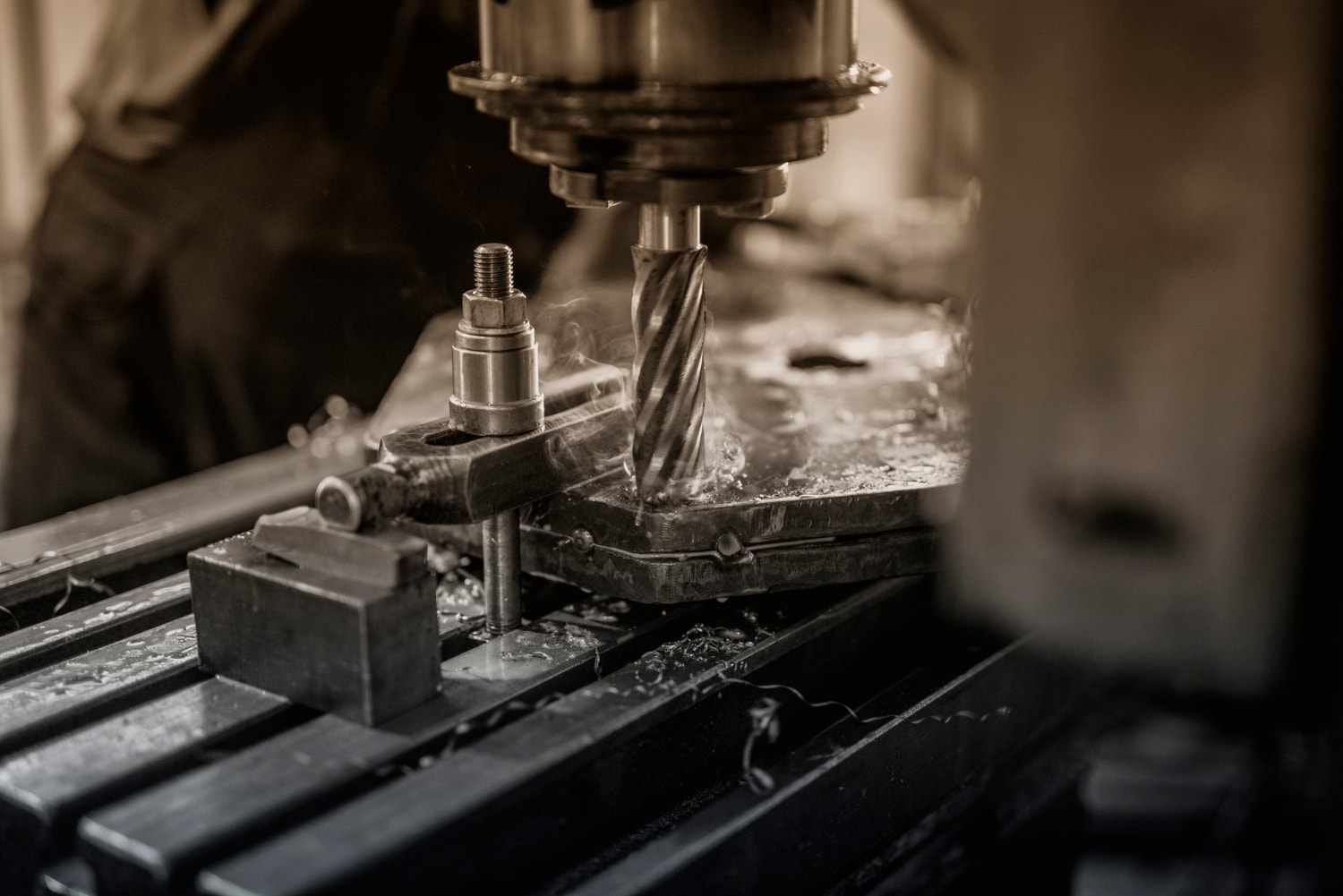
Talk to our engineering team about design optimization, material selection, cost reduction, and production planning. We support global customers from prototype to production with fast, reliable manufacturing solutions.